This site is supported by our readers. We may earn a commission, at no cost to you, if you purchase through links.
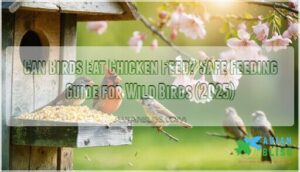 Yes, birds can eat chicken feed safely when you choose the right type. Most wild birds thrive on plain chicken scratch or layer feed without medications or artificial additives.
You’ll want to avoid medicated feeds, as antibiotics meant for chickens can harm songbirds. Cracked corn, millet, and sunflower seeds in basic chicken feed mirror what birds naturally eat.
Start small amounts and watch how your backyard visitors respond. Cardinals, sparrows, and finches particularly enjoy these grains.
However, chicken feed shouldn’t replace specialized bird food entirely. The secret lies in understanding which specific ingredients benefit different bird species and how feeding methods can make or break your bird-watching success.
Table Of Contents
- Key Takeaways
- Benefits of Chicken Feed for Birds
- Choosing The Right Chicken Feed for Birds
- Risks and Considerations of Feeding Chicken Feed to Birds
- Feeding Chicken Feed to Birds Safely and Effectively
- Alternatives to Chicken Feed and Additional Options
- Frequently Asked Questions (FAQs)
- Can wild birds eat chicken feed?
- Should you feed cooked chicken to birds?
- Can birds eat fried chicken?
- Can chickens eat chicken feed?
- Why do birds eat chicken feed?
- Can birds eat leftover chicken?
- Is chicken feed ok for birds?
- Can birds and chickens eat the same food?
- What is the cheapest way to feed wild birds?
- Will squirrels eat chicken feed?
- Conclusion
Key Takeaways
- You can safely feed wild birds plain chicken scratch or layer feed, but avoid medicated versions since antibiotics meant for chickens can harm songbirds.
- You’ll want to choose organic chicken feed with natural ingredients like corn, millet, and sunflower seeds while avoiding artificial additives, preservatives, and excessive protein levels.
- You should introduce chicken feed gradually and monitor birds for adverse reactions, always providing fresh water and mixing it with specialized bird foods rather than using it as their sole nutrition source.
- You’ll attract common backyard birds like cardinals, sparrows, and finches with chicken feed, but it’s more cost-effective to use it as a supplement alongside species-appropriate bird seed mixtures that match their natural dietary needs.
Benefits of Chicken Feed for Birds
You’ll find that chicken feed offers birds essential nutrients like protein, vitamins, and minerals that support their health and energy needs.
When you choose high-quality, organic chicken feed without harmful additives, you’re providing wild birds with a nutritious supplement that contains grains like corn, wheat, and millet.
Nutritional Value of Chicken Feed
Chicken feed’s nutritional profile packs a serious punch for our feathered friends.
This protein-rich blend contains essential vitamins and minerals that can supplement a bird’s diet effectively.
Here’s what makes chicken feed nutritionally valuable:
- Protein Content ranges from 16-20%, supporting healthy feather development and muscle growth
- Vitamin Composition includes B-complex vitamins and vitamin E for immune system support
- Mineral Balance provides calcium, phosphorus, and trace minerals for strong bones
- Calorie Density offers concentrated energy from quality grains and seeds
However, chicken feed nutrition differs from wild birds’ natural dietary needs.
Types of Birds That Can Eat Chicken Feed
Not all birds eat chicken feed, but many do thrive on it.
Backyard birds like chickens, turkeys, and ducks benefit from its protein-packed nutrients. Game birds and waterfowl species, such as quail and geese, also digest poultry feed well.
However, chickens shouldn’t consume wild bird food as it lacks essential nutrients.
- Chickens: Great for their energy and egg production.
- Ducks: Supports growth and feather health.
- Turkeys: Provides essential vitamins for robust health.
Alternatives to Chicken Feed for Wild Birds
While chicken feed works for many species, wild bird seed offers superior nutrition suited to natural dietary needs.
Suet cakes provide essential winter energy, while fresh fruits and berries deliver vitamins.
DIY feeders filled with nuts and seeds create cost-effective feeding stations.
These alternatives support proper bird nutrition without the risks associated with chicken feed.
| Food Type | Best Season |
|---|---|
| Suet cakes | Winter months |
| Fresh berries | Spring/summer |
| Mixed seeds | Year-round |
Choosing The Right Chicken Feed for Birds
You’ll need to examine chicken feed labels carefully to find products with natural ingredients like corn, wheat, and millet that won’t harm wild birds.
Look for organic options without artificial preservatives, additives, or excessive protein levels that could upset a bird’s digestive system or create nutritional imbalances.
Natural Ingredients and Organic Options
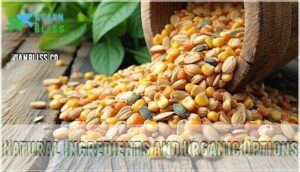
Smart shoppers know quality matters when selecting chicken feed for wild birds. Organic options deliver superior bird nutrition through carefully sourced natural ingredients like millet, corn, and wheat. These natural blends support healthy growth while avoiding harmful chemicals.
Quality chicken feed with organic ingredients gives wild birds the clean nutrition they deserve without harmful chemicals.
Consider these organic benefits:
- Additive-free feed eliminates unnecessary preservatives
- Sustainable practices protect environmental health
- Ingredient sourcing guarantees consistent nutritional quality
Choose feeds that prioritize purity over convenience.
Avoiding Artificial Additives and Preservatives
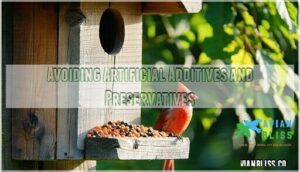
Reading chicken feed labels protects wild birds from harmful chemicals.
Artificial additives and preservatives can damage bird health over time.
Choose feeds with these qualities:
- No artificial colors or synthetic dyes
- Preservative-free formulations using natural alternatives
- Organic certification ensuring ingredient transparency
- Natural feed sources without chemical enhancers
Your birds deserve clean nutrition without additive health risks.
Consider organic feed options for healthier birds.
Considerations for Specific Bird Species
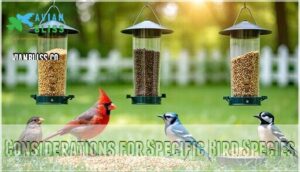
Each bird species brings unique Species-Specific Needs that you can’t ignore when offering chicken feed.
Dietary Variations between songbirds, waterfowl, and ground feeders mean what works for chickens won’t necessarily work for cardinals or blue jays. Small finches can’t handle large corn kernels, while Nutritional Imbalances from excessive protein can stress their kidneys.
Toxicity Risks emerge when you feed inappropriate formulations to sensitive species like hummingbirds or woodpeckers. Safe Alternatives include species-appropriate bird seed mixtures that match natural foraging patterns.
Understanding your local bird species helps you choose wild birds feed that supports rather than harms their health. The chicken gut contains diverse bacterial populations which may not be beneficial to wild birds.
Checking for Allergens and Harmful Substances
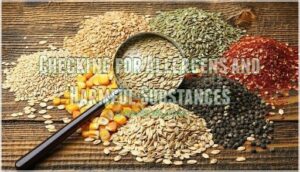
Smart shoppers know that checking chicken feed labels protects birds from toxic additives and preservative dangers.
Allergen identification becomes vital when selecting safe ingredients to prevent feed contamination.
Here’s your safety checklist:
- Scan for artificial additives like BHA, BHT, and ethoxyquin that pose serious health risks
- Identify common allergens including soy, wheat, and corn that trigger reactions in sensitive birds
- Choose preservative-free options to avoid toxic foods for birds and guarantee safe bird foods
Risks and Considerations of Feeding Chicken Feed to Birds
While chicken feed can provide nutrition for birds, you’ll need to understand several important risks before offering it to wild species.
These concerns include potential disease transmission, nutritional imbalances, and unintended consequences that can affect both individual birds and entire ecosystems, which are critical to consider for the well-being of the birds and the ecosystems.
Avian Diseases and Invasive Species
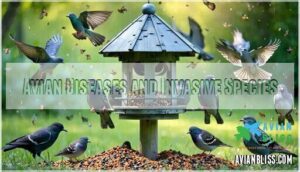
Disease transmission becomes a serious concern when you offer chicken feed to wild birds.
Salmonella and avian influenza can spread rapidly between species, turning your backyard into a disease hotspot.
Wild birds carrying these pathogens can infect domestic poultry, creating a dangerous cycle.
Feed contamination occurs when multiple bird species congregate around the same food source, increasing bacterial growth and infection rates.
Invasive species also exploit chicken feed as an easy meal ticket.
European starlings and house sparrows can quickly dominate feeding areas, pushing out native birds and disrupting local ecosystems.
These aggressive species multiply rapidly when provided consistent food sources, altering the natural balance you’re trying to support in your yard.
Attracting Predators and Altering Migration Patterns
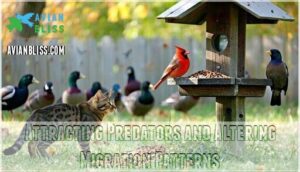
When you set up feeding stations, you’re rolling out the welcome mat for more than just birds.
Cat Predation becomes a serious threat as felines hunt near these Wildlife Attraction zones.
Your well-meaning gesture can trigger Migration Disruption, causing Unnatural Congregation that throws off natural timing.
Invasive Species often dominate these areas, pushing out native birds and creating lasting ecological imbalances.
Importance of High-Quality Food and Avoiding Unhealthy Options
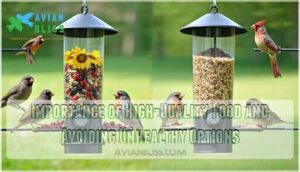
When picking out food for birds, quality feed matters more than you might think.
Bird health risks increase dramatically when you offer low-grade options packed with harmful additives like artificial colors, preservatives, or fillers.
These ingredients can cause digestive problems, weaken immune systems, and disrupt natural behaviors.
Your bird nutrition guide should prioritize safe ingredients and nutritional value.
Look for high-quality food with natural grains, seeds, and proteins.
Avoid chicken feed containing chemical preservatives, excessive salt, or moldy grains that can poison birds.
It’s also important to note that dirty feeders pose risks to bird health.
Balanced nutrition means offering variety beyond just chicken feed.
Mix in sunflower seeds, millet, and fresh fruits.
Think of it like this: you wouldn’t eat fast food every day, so don’t limit birds to one food source.
Check labels carefully.
Skip anything with artificial dyes, sugar, or mystery ingredients.
Your bird health diet decisions directly impact their survival, reproduction, and overall well-being.
Feeding Chicken Feed to Birds Safely and Effectively
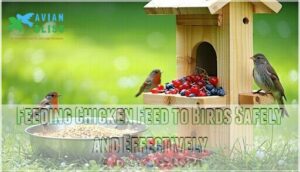
You can offer chicken feed to wild birds safely by introducing it slowly and watching how they respond to prevent digestive problems.
Make sure you provide fresh water daily and mix chicken feed with other seeds and fruits to create a balanced diet that meets their nutritional needs.
Introducing Chicken Feed Gradually
When introducing chicken feed to wild birds, think of it like teaching someone a new dance – you wouldn’t jump into complex moves right away.
Start with small amounts mixed into their regular diet, allowing for proper Digestive Adaptation over several days. This Gradual Introduction prevents stomach upset and helps you monitor how well birds eat chicken feed.
Watch for Adverse Reactions like lethargy or digestive issues during this shift period. Quantity Monitoring guarantees you’re not overwhelming their systems.
Remember, is chicken feed safe depends partly on how slowly you introduce it alongside Varied Supplementation from other natural food sources.
To further enhance bird safety, consider reducing window collisions around your home.
Monitoring Consumption and Ensuring Fresh Water
When birds eat chicken feed, track their consumption rate analysis to spot unusual eating patterns.
Fresh water must stay clean and accessible—dirty water sources can harm bird health.
Position feeders using smart feeder placement strategy to minimize waste reduction methods. Consider using a reliable bird waterer to maintain hydration.
Watch for changes in eating habits, as these reveal important health information about your feathered visitors, and help identify unusual eating patterns.
Observing for Adverse Reactions and Providing Varied Diets
While observing birds after gradual introduction of chicken feed, watch for adverse reactions like lethargy, unusual droppings, or poor digestion.
These adverse symptoms signal potential problems with dietary changes. Always make certain water availability since proper hydration supports healthy processing of new foods.
Don’t rely solely on chicken feed – varied diets prevent nutritional imbalances that harm bird health. Mix seeds, fruits, and nuts into their menu.
Varied nutrition keeps birds thriving, just like a balanced human diet prevents health issues.
Alternatives to Chicken Feed and Additional Options
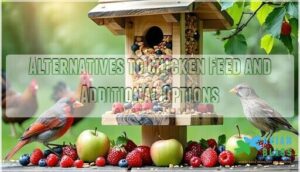
You can provide wild birds with specialized alternatives that better match their natural dietary needs than standard chicken feed.
Wild bird seed mixes, suet cakes, fresh fruits, nuts, and insects offer balanced nutrition while reducing the risk of disease transmission and nutritional imbalances that chicken feed may cause, providing a better option with natural dietary needs.
Suet Cakes and Fruits for Winter Nutrition
When temperatures drop, winter suet becomes your backyard birds’ best friend.
These high-fat food options provide essential calories that help birds survive harsh conditions.
Suet cakes mixed with dried fruits create perfect high-energy food combinations.
Apple pieces, cranberries, and raisins offer fruit benefits like vitamins and natural sugars.
Simple cake recipes and smart feeding strategies match diverse bird preferences effectively.
Some feeders even include tail props for support.
Nuts, Seeds, and Insects for Balanced Diets
Beyond chicken feed, wild birds thrive on diverse natural foods that meet their specific nutritional needs.
Creating a balanced feeding program requires understanding what your feathered visitors truly need for peak health.
Consider these essential diet supplementation options:
- Insect protein from mealworms and crickets supports growing chicks
- Seed variety including sunflower and nyjer attracts different species
- Nut selection like peanuts provides healthy fats and energy
- Fresh insects offer complete amino acid profiles
- Mixed nutrition combinations guarantee complete dietary balance
Bird Netting and Chicken Scratch for Wild Birds
Beyond nuts and seeds, strategic protection makes chicken scratch feeding more effective.
You’ll find bird netting creates safe feeding zones while reducing disease prevention concerns.
Chicken scratch naturally attracts wild birds through its grain composition, offering significant cost reduction compared to premium birdseed.
Many factors influence bird netting’s overall performance.
Here’s your protection strategy:
- Install 1/2-inch mesh bird netting around feeding areas for netting effectiveness
- Position feeders away from chicken coops to prevent cross-contamination
- Monitor scratch composition – corn and wheat attract diverse species
- Use covered stations that allow wild bird attraction while deterring larger pests
Frequently Asked Questions (FAQs)
Can wild birds eat chicken feed?
Sure, wild birds can physically eat chicken feed, but it’s like giving them fast food daily.
The high protein content and fortified vitamins aren’t balanced for their needs, potentially causing health issues.
Should you feed cooked chicken to birds?
You shouldn’t feed cooked chicken to wild birds.
It’s not part of their natural diet and can cause nutritional imbalances.
Stick to seeds, nuts, and fruits that provide proper nutrition for their species-specific needs.
Can birds eat fried chicken?
Like a forbidden feast, fried chicken’s greasy armor spells danger for our feathered friends.
You shouldn’t offer it—the oils, salt, and spices can harm their delicate digestive systems and cause serious health problems.
Can chickens eat chicken feed?
Yes, chickens can definitely eat chicken feed – that’s exactly what it’s designed for!
Commercial chicken feed provides the balanced nutrition, protein, vitamins, and minerals your flock needs for peak health and egg production.
Why do birds eat chicken feed?
Wild birds consume up to one-third of chicken feed supplies on farms.
Birds eat chicken feed because it’s packed with high-protein grains like corn and wheat that provide essential energy for survival.
Can birds eat leftover chicken?
Birds can safely eat small amounts of cooked chicken without seasoning or bones.
However, you shouldn’t make it a regular meal since birds need balanced diets with seeds, fruits, and insects for proper nutrition.
Is chicken feed ok for birds?
Chicken feed isn’t ideal for wild birds. While they can eat it, the high protein content and specific vitamin formulations are designed for chickens, not wild birds’ nutritional needs.
Can birds and chickens eat the same food?
Like sharing a dinner table, birds and chickens can technically eat the same food, but you shouldn’t make it a habit.
Chicken feed’s high protein content doesn’t match wild birds’ nutritional needs perfectly.
What is the cheapest way to feed wild birds?
Budget-friendly options include offering kitchen scraps like breadcrumbs, seeds from fruits you’re eating, and leftover grains.
You’ll save money while providing variety—just make certain scraps are fresh and avoid anything salty or processed, which helps in maintaining a variety.
Will squirrels eat chicken feed?
Approximately 70% of backyard chicken owners report squirrel raids on their feed supplies.
Yes, squirrels absolutely love chicken feed’s corn and grain content.
You’ll need secure, squirrel-proof containers or elevated feeders to protect your investment.
Conclusion
Sarah watched her backyard cardinals ignore expensive birdseed for weeks until she tried plain chicken scratch.
Within days, her feeders bustled with activity.
Remember, can birds eat chicken feed depends entirely on choosing unmedicated varieties with natural ingredients.
Start with small portions, monitor your feathered visitors closely, and always provide fresh water nearby.
While chicken feed works wonderfully as a supplement, combine it with specialized bird foods for ideal nutrition.
Your patience and careful selection will create a thriving backyard habitat.
- https://www.narayanahealth.org/blog/how-to-maintain-a-balanced-diet/
- https://www.google.com/chrome/
- https://vet.tufts.edu/tufts-wildlife-clinic/resource-library/birdfeeders-and-wildlife
- https://news.uga.edu/wild-birds-and-backyard-chickens/
- https://grubblyfarms.com/blogs/the-flyer/how-to-feed-a-mixed-flock-of-poultry?srsltid=AfmBOorfhsG1mIEJMHNgSSlO_rSoPEjhrlv_F78LsOrL6dHZOL3da0ev