This site is supported by our readers. We may earn a commission, at no cost to you, if you purchase through links.
The first bird that landed on my feeder was a black‑capped chickadee—bold, tiny, completely unimpressed by me pressing my face against the window. That single moment turned a quiet backyard into something I actively looked forward to every morning.
What surprised me most wasn’t the birds themselves, but how much a few small decisions—feeder type, seed choice, placement—determined whether my yard attracted a crowd or crickets. Bird feeding tips for beginners tend to gloss over this part: the setup matters enormously. Get it right, and birds find you within days.
Table Of Contents
- Key Takeaways
- Choosing The Right Bird Feeder
- Best Birdseed and Food Choices
- Safe Feeder Placement for Birds
- Clean Feeders and Deter Squirrels
- Top 9 Bird Feeding Essentials
- 1. Woodlink Cedar Platform Bird Feeder
- 2. Squirrel Stopper Steel Bird Feeder Pole
- 3. Essential Backyard Bird Feeding Guide
- 4. Backyard Birding Tips Guide
- 5. Clorox Performance Laundry Bleach
- 6. Jacobi Jayne Orange Bird Seed Scoop
- 7. Behrens Galvanized Steel Trash Can
- 8. Plexon Pre Galvanized Outdoor Trash Can
- 9. WindowAlert Leaf Medley Bird Decal
- Frequently Asked Questions (FAQs)
- What is the 5 7 9 rule for bird feeders?
- How to feed birds for beginners?
- What is the bird feeding strategy?
- How long does it take for birds to find a new feeder?
- How do I prevent ants in feeders?
- What’s the best food for winter birds?
- How often should I refill bird feeders?
- Can birds eat kitchen scraps safely?
- How do I keep squirrels off feeders?
- How do I attract specific bird species to feeders?
- Conclusion
Key Takeaways
- Feeder type and seed choice matter more than most beginners expect — match them to the birds you want, and your yard fills up fast.
- Placement is everything: keep feeders 5–6 feet high, near natural cover, and away from windows to keep birds safe and coming back.
- Black-oil sunflower seeds are your best starting point — they attract the widest variety of birds and store well for up to a year.
- Clean your feeder every two weeks with a diluted bleach solution, store seed in galvanized steel containers, and use baffles to stop squirrels before they take over.
Choosing The Right Bird Feeder
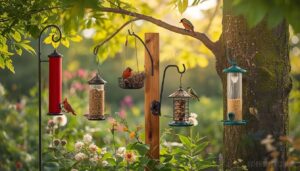
The feeder you choose makes a bigger difference than most beginners expect. Different designs attract different birds — and some work far better than others depending on what’s in your backyard.
Once you find a setup that works, you might also enjoy exploring the common songbirds of the Pacific Northwest to better match your feeder choices to the birds in your area.
Here are the five main types worth knowing about.
Hopper Feeders for Tidy Seed Dispensing
If you want tidy, fuss-free feeding, a hopper feeder is your best friend. Seed flows through gravity-fed flow directly into the easy-clean tray — no scooping chaos! The transparent seed window shows you when to refill, and weather-resistant construction keeps seed dry.
Here’s why beginners love them:
- Anti-clumping design prevents soggy seed
- Holds 1.5–6 lbs of mixed seed
- Multiple perches welcome chickadees, finches, and sparrows
Tube Feeders for Mixed Seed Blends
Hopper feeders keep things neat — but if you’re drawn to watching birds up close, a tube feeder is especially fun. Clear tube visibility means you’ll instantly spot low seed levels, and the weather-resistant materials handle rain and sun without cracking.
| Feature | Why It Matters |
|---|---|
| Clear polycarbonate tube | See seed levels at a glance |
| Port size optimization | Fits mixed birdseed mixes perfectly |
| Dual-port design | Multiple birds feed simultaneously |
| Spill-deflector mechanism | Less mess, more seeds eaten |
| UV-stabilized construction | Lasts through every season |
Solid bird feeding tips for beginners: feeder placement near shrubs maximizes visits fast!
Platform and Tray Feeders for Ground-feeding Birds
Now, if you love watching robins and sparrows do their thing, a platform feeder or tray feeder is your best friend.
The Mesh Drainage Design keeps seed dry, while Rim Spill Control means less waste. Weather Shield Features protect your bird feeding station year-round.
Easy Seed Switching lets you test mixes fast — perfect Ground Species Attraction guaranteed!
Nyjer Feeders for Finches and Small Seeds
Switching gears from ground feeders — nyjer feeders are a whole different world! These slim tube-style feeders use Port Size Optimization (ports just 1–2mm wide) and Mesh Material Choice to keep goldfinches happy while locking bigger birds out.
Why your finches will flip for a nyjer feeder:
- Feeder Visibility Design lets you track seed levels instantly
- Seed Moisture Control through vented caps keeps nyjer seed fresh longer
- Seasonal Seed Rotation with nyjer attracts pine siskins in winter
- Smart bird feeder placement near shrubs gives shy finches confidence
- A targeted seed mix means zero waste — birds eat every bit
Suet Cages for Winter Energy Needs
Cold snaps are where suet cages truly shine — these wire enclosures hold fat-packed blocks that give woodpeckers, chickadees, and nuthatches the calories they desperately need in freezing temps. Your winter feeding strategies for birds get a serious upgrade with smart Seasonal Suet Rotation and Suet Flavor Variations.
Suet cages shine in cold snaps, fueling woodpeckers and chickadees with the fat-packed calories winter demands
| Feature | Why It Matters | Beginner Tip |
|---|---|---|
| Predator Safe Hanging | Keeps birds secure | Hang 5–6 ft high |
| Wind Protection Strategies | Slows fat spoilage | Choose a shaded spot |
| Fat Block Storage | Prevents rancidity | Store in cool, dry place |
| Suet Flavor Variations | Attracts more species | Try nut or insect blends |
| Bird feeder placement | Reduces collision risk | Stay away from windows |
Best Birdseed and Food Choices
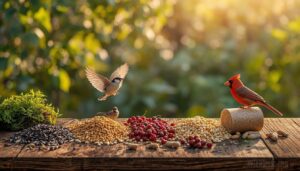
What you put in your feeder matters just as much as the feeder itself. Different seeds attract different birds — so picking the right mix is how you go from a quiet yard to a busy one.
the five best food choices to get you started.
Black-oil Sunflower Seeds for Broad Bird Appeal
Black-oil sunflower seeds are the best crowd-pleaser at any bird feeder. Cardinals, chickadees, finches, woodpeckers — they all show up!
These seeds pack serious Nutritional Benefits, with 20–25% protein and high fat that meets Seasonal Energy Needs in cold months.
For beginners, they’re your best starting point in any seed mixes.
Shelf Life Tips: store in cool, dry spots — they last 6–12 months easily.
For even longer freshness, check out these squirrel-resistant bird feeder food storage tips to keep your seed safe from pests too.
Safflower Seeds to Reduce Squirrel Interest
Safflower seeds are your secret weapon against squirrels — and birds absolutely approve! That bitter seed deterrent taste and hard hull protection make squirrels skip right past your feeder. Cardinal preference is strong here, and chickadees love them too.
- Works great in any seed mix selection
- Offers seasonal seed rotation year‑round
- Store in squirrel‑proof storage containers to stay fresh
Smart feeder placement strategies help even more!
Nyjer Seed for Goldfinches and Siskins
Want a feeder that practically glows with color? Fill it with nyjer seed — goldfinches and siskins can’t resist it!
Peak activity spikes in cool weather, so watch your observation tips pay off at dawn and dusk.
Its high oil content benefits birds’ energy levels fast.
Unlike bulkier seed mixes, nyjer’s long seed shelf life rewards smart feeder placement strategies year‑round.
Cracked Peanuts for High-protein Feeding
Cracked peanut hearts are basically a superfood for your backyard visitors. Packed with 25–30% protein and roughly 1,600 calories per kilogram, they’re a serious energy boost — especially in winter when birds burn through fat fast.
Understanding bird feeding nutrition means knowing when to lean into seasonal fat needs. Sprinkle peanut hearts into seed blends sparingly — portion control matters — and store them in airtight containers to keep them fresh.
Millet and Cracked Corn in Small Amounts
Think of millet and cracked corn as the supporting cast — not the stars — of your seed selection. Used in small amounts, they round out your seasonal mix beautifully.
- Millet draws finches, sparrows, and ground feeders.
- Cracked corn adds quick energy for doves.
- Together, they support nutrient balance without waste.
Feeder drainage and portion control keep mold prevention simple when starting bird feeding for beginners.
Safe Feeder Placement for Birds
Where you put your feeder matters just as much as what you put in it. A poorly placed feeder can stress birds out, invite predators, or send them straight into your windows.
Here are the placement basics that’ll make your setup actually work for the birds you’re trying to attract.
Keep Feeders Near Cover for Quick Escape

Birds need a quick escape route — that’s just survival 101. Place your feeder within 10–15 feet of natural cover like native shrubs or dense evergreens for smart Natural Cover Placement. Your Predator Visibility Buffer matters too, so keep sightlines broken with layered vegetation.
| Escape Route Design | Cover Type | Distance |
|---|---|---|
| Multiple Exit Points | Dense shrubs | 10–15 ft |
| Seasonal Cover Strategies | Evergreen + deciduous mix | Year-round |
| Bird feeding location | Brush piles | 3–5 ft |
Hang Feeders at a Practical Height
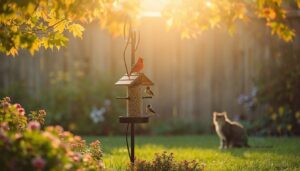
Height matters more than most beginners realize. Your Ideal Height Range sits between 5–6 feet — high enough to frustrate cats and raccoons, low enough to refill without a ladder. That’s your sweet spot for predator safety height.
Tube feeders can go up to 7 feet.
Seasonal Height Adjustments after storms, and always use weather-resistant mounts on your bird feeding station.
Place Feeders Away From Windows
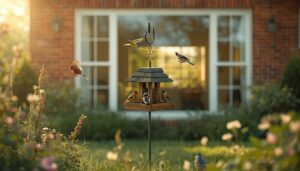
Now that feeder’s at the right height, let’s talk windows.
Placing feeders within 3 feet or beyond 30 feet is your two best collision zones to avoid.
Too close, and birds can’t build dangerous speed.
Too far, and reflections create deadly line of sight traps.
Add WindowAlert window decals or reflective film to your nearest glass — preventing window collisions saves lives.
Use Shaded, Quiet Feeding Spots

Quiet matters just as much as location. For shade optimization and noise minimization, tuck feeders under a tree canopy — away from foot traffic, loud pets, and bright lights.
Think of it as creating a backyard bird sanctuary, your visitors actually trust. Concealed perches and camouflaged feeders work best when you follow these best practices for feeder placement:
- Position under dense foliage for continuous daytime shade
- Stay 15+ meters from noise sources like grills or fountains
- Use natural windbreaks — shrubs reduce drafts that spook birds
- Apply seasonal pruning so cover stays consistent year-round
Feeder placement and predator safety go hand-in-hand here too.
Add a Water Source Nearby

Don’t overlook the power of fresh water — it’s often what seals the deal for backyard visitors!
Place a shallow basin or bird bath 10–15 feet from feeders for predator safe placement. Add a moving water feature to grab attention fast.
For smart seasonal water management, swap in warm water during cold snaps.
Good water quality keeps birds coming back daily.
Clean Feeders and Deter Squirrels
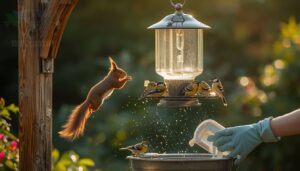
A dirty feeder is basically a disease trap — and squirrels? Don’t get me started.
Keeping your setup clean and critter-proof is honestly one of the best things you can do for the birds you’re trying to help. Here’s what actually works.
Clean Feeders on a Regular Schedule
Think of feeder cleaning like brushing your teeth — skip it, and things get gross fast. A solid feeder cleaning routine every two weeks keeps mold prevention on track during mild weather.
Bump your cleaning frequency to every five to seven days in summer heat. A cleaning checklist and timer feeding schedule make maintaining clean feeding stations smooth — even when life gets busy.
Disinfect With a Safe Bleach Solution
Once you’ve scrubbed your feeders, disinfecting is the real difference-maker.
Mix a bleach dilution ratio of 1 part bleach to 9 parts water — that’s your go-to for cleaning and disinfecting feeders safely.
Always wear protective gear: gloves, eye protection.
Apply the solution, then allow the right contact time — at least one minute.
Follow with a thorough rinse procedure, and air-dry completely before refilling.
Remove Hulls and Spilled Seed
Hulls and spilled seed are sneaky troublemakers — they invite mold, pests, and soggy messes fast. Make hull removal techniques part of your weekly bird feeder cleaning routine: use a seed scoop to clear seed husks, then sweep spilled seed immediately.
seed sorting methods and spill prevention strategies keep your feeding station fresh, tidy, and safe for every visitor.
Store Seed in Rodent-proof Containers
Your seed storage game matters more than you’d think! Choose metal or thick plastic containers with an Airtight Seal Design — silicone gaskets block moisture and smells that attract rodents.
Chewing-Resistant Materials like galvanized steel stop gnawing. Elevated Dry Storage by placing containers 18 inches off the floor.
Lockable Security Features and Moisture Control keep your birdseed fresh, safe, and ready.
Use Baffles to Block Squirrel Access
Squirrels are smart — but baffles are smarter! A well-placed squirrel stopper pole setup blocks 90% of access attempts using squirrel‑proof designs built from powder‑coated steel. Here’s what makes squirrel control actually work:
- Baffle Height: Mount 4–5 feet up for true squirrel‑proof coverage
- Material Selection: Choose metal — squirrels can’t chew through it
- Installation Tips: Secure with set screws; no wobbling allowed
- Maintenance Checks & Ground Baffle Design: Inspect seasonally and anchor base baffles firmly
Top 9 Bird Feeding Essentials
Getting started doesn’t have to mean buying everything at once — just the right things. nine products cover the gear, guides, and small extras that genuinely make a difference for beginner bird feeders.
Here’s what’s worth having from day one.
1. Woodlink Cedar Platform Bird Feeder
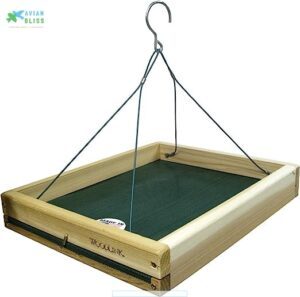
The Woodlink Cedar Platform Bird Feeder is a backyard classic — and for good reason.
Built from rot-resistant inland red cedar, it holds up to 3 lbs of seed and welcomes everything from finches to cardinals.
The slide-out tray and powder-coated metal screen make cleaning genuinely easy, not just "technically possible."
You can hang it, mount it on a pole, or set it low for ground-feeding birds.
At $37.53, it’s a solid investment for any beginner ready to get serious.
| Best For | Backyard birders who want a durable, easy-to-clean feeder that attracts a wide variety of birds without a lot of fuss. |
|---|---|
| Price (USD) | $37.53 |
| Primary Material | Cedar wood |
| Outdoor Use | Yes |
| Bird-Related | Direct feeder |
| Ease of Use | Moderate |
| Beginner Friendly | Yes |
| Additional Features |
|
- Cedar construction naturally resists rot, so it holds up through seasons of rain and sun without falling apart.
- The slide-out tray and removable screen make cleaning quick — which actually matters for keeping birds healthy.
- Hang it, pole-mount it, or put it on the ground — it works however your yard is set up.
- Mounting hardware isn’t included, so factor in extra cost if you want a pole or post setup.
- The open design means rain gets in, and wet seed sticks to the screen — expect more cleanup after storms.
- Some buyers have run into wood splitting or loose screws right out of the box, so quality control can be hit or miss.
2. Squirrel Stopper Steel Bird Feeder Pole
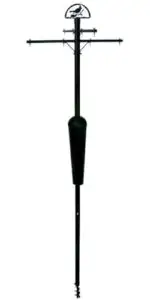
Once your feeder is set up, keeping squirrels off is the real challenge — and the Squirrel Stopper Steel Bird Feeder Pole makes that fight much easier.
The spring-loaded, inverted cone baffle bounces and wobbles every time a squirrel tries to climb. They give up fast.
The heavy-duty steel pole holds up to eight feeders across four arms, stands about eight feet tall, and screws into the ground with a built-in auger. No tools needed.
Solid, sturdy, and genuinely squirrel-proof.
| Best For | Backyard bird lovers who are tired of squirrels raiding their feeders and want a sturdy, low-maintenance setup that handles multiple feeders at once. |
|---|---|
| Price (USD) | $Not listed |
| Primary Material | Alloy steel |
| Outdoor Use | Yes |
| Bird-Related | Feeder support |
| Ease of Use | Moderate |
| Beginner Friendly | Yes |
| Additional Features |
|
- The patented squirrel-proof baffle actually works — squirrels and raccoons can’t get past it, so your seed stays where it belongs.
- Holds up to eight feeders on one pole, which saves space and keeps your yard looking clean.
- No tools needed for assembly — the built-in auger screws right into the ground and you’re done.
- The hooks run small, so if you’ve got larger planters or heavier accessories, they might not fit.
- The spring-loaded baffle can pop loose if you drop the pole, so you’ll want to handle it carefully.
- Rocky or hard clay soil makes installation a real headache — you may need to dig extra deep or use a conduit pipe to get it in solid.
3. Essential Backyard Bird Feeding Guide
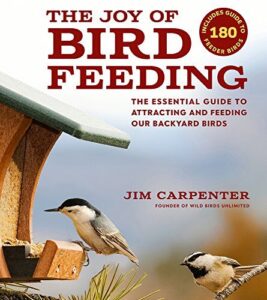
Want all of that knowledge in one place? The Essential Backyard Bird Feeding Guide by Jim Carpenter — founder of Wild Birds Unlimited — packs 432 pages of real field experience into one book.
You get feeder setup steps, a photo ID guide covering 180+ bird species, and solid advice on deterring squirrels and other wildlife. At just $8.01, it’s basically a steal. Perfect for beginners, but experienced birders still find gems in it.
| Best For | Backyard birders of any experience level who want a solid, all-in-one reference for attracting, feeding, and identifying birds at home. |
|---|---|
| Price (USD) | $8.01 |
| Primary Material | Paper/Print |
| Outdoor Use | Reference only |
| Bird-Related | Bird ID guide |
| Ease of Use | Easy |
| Beginner Friendly | Yes |
| Additional Features |
|
- Covers 180 species with color photos, so you can actually figure out what’s visiting your feeder
- Practical advice on keeping squirrels and raccoons from wrecking everything
- At $8.01, it’s hard to argue with the value for 432 pages of real-world experience
- Focused on North American birds, so it’s not much help if you’re outside that region
- Published in 2017, meaning some product recommendations may be a bit dated
- It’s a chunky book — great for the coffee table, not so much for tossing in a backpack
4. Backyard Birding Tips Guide
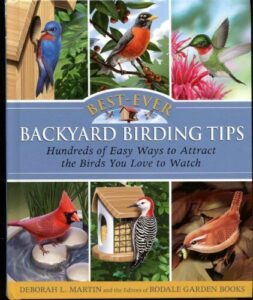
Another solid resource to keep nearby is the Backyard Birding Tips Guide — published by Rodale Press. It covers everything from feeder types and seed blends to bird-friendly garden landscaping.
At just $16.11 for a used copy, it’s an easy yes.
You get 356 pages of practical guidance, DIY feeder instructions, and species-specific tutorials.
It’s not glossy — mostly black-and-white illustrations — but the hands-on advice more than makes up for it.
Great for beginners who want a real reference, not just a pretty picture book.
| Best For | Beginners who want a hands-on, practical guide to setting up a backyard bird habitat from scratch. |
|---|---|
| Price (USD) | $16.11 |
| Primary Material | Paper/Print |
| Outdoor Use | Reference only |
| Bird-Related | Bird guide |
| Ease of Use | Easy |
| Beginner Friendly | Yes |
| Additional Features |
|
- Covers a wide range of topics — feeders, food, plants, and pest management — all in one place
- Includes DIY instructions for building feeders and preparing bird foods like grape jelly and mealworms
- At $16.11 for a used copy, it’s a solid reference without breaking the bank
- Mostly black-and-white illustrations, which can make visual bird ID trickier
- Some editorial errors — repeated text, incomplete sentences — that may interrupt the reading flow
- Used copy condition can vary, so what you get might not match the listing description
5. Clorox Performance Laundry Bleach
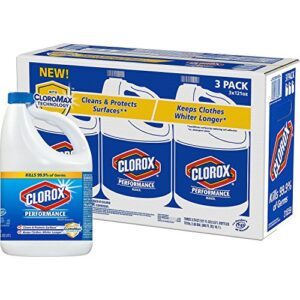
Keeping your feeders clean is non‑negotiable — and Clorox Performance Bleach makes it easy. A 10% bleach solution (one part bleach, nine parts water) kills bacteria and mold that can seriously harm birds.
This 121‑oz bottle lasts a long time, and the CloroMax formula means you’re getting real disinfecting power, not just a rinse.
Scrub your feeders every two weeks, rinse thoroughly, and air‑dry in sunlight. Clean feeders = healthy birds. It’s that simple.
| Best For | Households that do a lot of laundry and cleaning and want a reliable, bulk supply of bleach on hand without frequent restocking. |
|---|---|
| Price (USD) | $Not listed |
| Primary Material | Plastic/Chemical |
| Outdoor Use | Yes |
| Bird-Related | Feeder cleaning |
| Ease of Use | Easy |
| Beginner Friendly | Yes |
| Additional Features |
|
- Tackles tough stains and whitens laundry effectively, plus doubles as a hard-surface disinfectant for bathrooms, kitchens, and more.
- The 3-pack means fewer reorder trips — great if getting to the store is a hassle.
- Works with HE washing machines, so no compatibility headaches.
- The bottles are heavy at over 9 lbs each, which can be tough if you have limited strength or back issues.
- Pricier than store-brand bleach, especially from third-party online sellers.
- If a seal is compromised during shipping, you could end up with a leaky mess — always check bottles on arrival.
6. Jacobi Jayne Orange Bird Seed Scoop
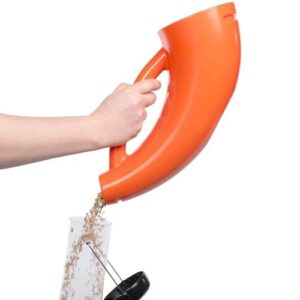
Refilling your bird feeders shouldn’t feel like a wrestling match with a seed bag. The Jacobi Jayne Orange Bird Seed Scoop makes the whole process genuinely easy — scoop, carry one-handed, and pour with control thanks to its narrowed tip.
The flat base means it stands upright while you prep your feeder. Bright orange, so you’ll actually find it in the shed.
Holds 5–6 cups per scoop, which covers most standard feeders in one clean fill.
| Best For | Bird enthusiasts who refill multiple feeders regularly and want a no-fuss, one-handed scoop that cuts down on mess and trips back to the seed bag. |
|---|---|
| Price (USD) | $Not listed |
| Primary Material | Plastic |
| Outdoor Use | Yes |
| Bird-Related | Feeder filling |
| Ease of Use | Easy |
| Beginner Friendly | Yes |
| Additional Features |
|
- Narrow pour tip gives you real control so seed goes in the feeder, not on the ground
- Flat base keeps it standing upright while you get the feeder ready — no balancing act
- Bright orange means it’s easy to spot in a cluttered shed or garden
- Pricier than your basic plastic scoop, so it’s a harder sell if you only have one feeder
- The open side can spill if you’re not careful carrying a full load
- The large capacity might feel awkward for anyone with limited grip strength or when filling feeders with tiny openings
7. Behrens Galvanized Steel Trash Can
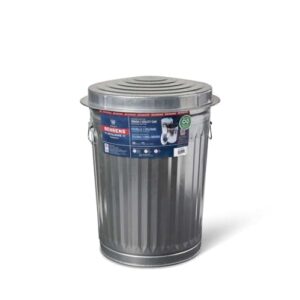
Seed storage is the unsung hero of a great bird feeding setup.
The Behrens Galvanized Steel Trash Can holds 20 gallons — enough to keep a serious stash of black-oil sunflower or safflower seeds fresh and protected.
The galvanized steel shrugs off rain, snow, and rust, while the tight-fitting rim lid keeps rodents out for good.
No chewed-through plastic bags, no soggy seed.
It’s a one-time buy that outlasts every plastic bin you’ve ever owned.
| Best For | Bird feeding enthusiasts and pet owners who want a durable, long-term solution for storing seed, pet food, or other outdoor supplies without dealing with pests or weather damage. |
|---|---|
| Price (USD) | $Not listed |
| Primary Material | Galvanized steel |
| Outdoor Use | Yes |
| Bird-Related | Seed storage |
| Ease of Use | Moderate |
| Beginner Friendly | Yes |
| Additional Features |
|
- Built to last — 100% galvanized steel resists rust, rain, and rodents far longer than any plastic bin
- Solid 20-gallon capacity keeps a serious supply of seed or feed on hand without constant restocking
- Made in the USA from fully recyclable materials, so it’s a buy-once, feel-good choice
- Costs more upfront than a basic plastic bin, which might sting if you’re on a tight budget
- The lid has no handle — you press the whole rim to open it, which gets awkward with one hand
- 20 gallons sounds like a lot until it isn’t — heavy feeders or multi-pet households may wish it came bigger
8. Plexon Pre Galvanized Outdoor Trash Can
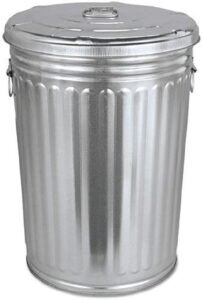
If the Behrens is your heavy-duty workhorse, the Plexon Pre Galvanized Outdoor Trash Can is its sleeker sibling — and just as serious about protecting your seed.
galvanized steel build, same rust resistance, but with a more compact 11‑inch footprint that tucks neatly into tighter spaces. At just 7.6 pounds empty, it’s genuinely easy to move around. The tight-fitting lid keeps moisture and critters out — no soggy seed, no midnight raccoon raids.
A smart backup for any bird feeding station.
| Best For | Anyone who wants a durable, rust-resistant steel trash can for outdoor use — whether that’s yard waste, birdseed storage, or general garden cleanup. |
|---|---|
| Price (USD) | $Not listed |
| Primary Material | Galvanized steel |
| Outdoor Use | Yes |
| Bird-Related | Seed storage |
| Ease of Use | Moderate |
| Beginner Friendly | Yes |
| Additional Features |
|
- Galvanized steel holds up in rain, sun, and everything in between without rusting out
- Handles and snap-on lid make it easy to carry and use solo
- Works great for storing bulk outdoor items like pet food or birdseed, not just trash
- Steel makes it heavier than a plastic bin, which can be a hassle when it’s full
- No wheels, so hauling a full 20 gallons takes some muscle
- The lid has no lock or latch — a strong gust of wind can pop it right off
9. WindowAlert Leaf Medley Bird Decal

Windows are invisible walls to birds — and that’s a real problem. The WindowAlert Leaf Medley Decals fix that quietly and beautifully.
Each pack comes with five static-cling vinyl decals coated in UV-reflective material that birds see as a bright glow, while you barely notice them. No adhesive, no residue, no drama. Just clean them onto your exterior glass and space them roughly every 9 square feet.
Replace every 4 months to keep the UV signal strong. Simple protection that saves lives.
| Best For | Homeowners, renters, and bird lovers who want a simple, residue-free way to protect wild birds from window collisions without sacrificing the look of their glass. |
|---|---|
| Price (USD) | $7.95 |
| Primary Material | Vinyl |
| Outdoor Use | Yes |
| Bird-Related | Bird safety |
| Ease of Use | Easy |
| Beginner Friendly | Yes |
| Additional Features |
|
- Birds see a bright UV glow that humans can’t, so the decals do their job without cluttering your view
- No adhesive means zero residue — easy to reposition or remove anytime, which is great for renters
- Made in the USA from vinyl, and the static cling restores easily with a little warm water if it weakens
- The UV coating fades after about 4 months, so you’ll need to keep buying replacements to stay effective
- Large windows can get pricey fast — you need one decal per 9 sq ft, and packs are only five decals for $7.95
- They only work on clean, untreated glass — tinted or filmed windows won’t hold them properly
Frequently Asked Questions (FAQs)
What is the 5 7 9 rule for bird feeders?
The 5-7-9 rule places feeders 5 feet high, 7 feet from structures where squirrels launch, and 9 feet below overhanging branches — creating a safe zone that stumps pests and welcomes birds.
How to feed birds for beginners?
Start small — a single feeder, black-oil sunflower seeds, and a sheltered spot. Birds will find you faster than you’d expect. Clean it every two weeks, and you’re already doing great.
What is the bird feeding strategy?
Pick the right feeder, use quality seed, place it safely, keep it clean, and stop squirrels before they take over. Simple steps, big results — your backyard birds will thank you!
How long does it take for birds to find a new feeder?
Most birds find a new feeder within 1 to 3 days in busy suburban yards. Rural spots may take 1 to 2 weeks. Patient watching pays off!
How do I prevent ants in feeders?
Think of your feeder as a castle — ants are relentless invaders. A water moat hangs above the feeder stops them cold.
Clean up spilled seed fast, and they’ll lose interest quickly.
What’s the best food for winter birds?
Cold nights drain birds fast — they need serious fuel. Load your feeders with black-oil sunflower seeds, suet blocks, and peanut kernels.
These high-fat, high-protein options keep your backyard visitors warm and energized all winter long.
How often should I refill bird feeders?
Refill most feeders every 2–3 days during fall and winter. Quiet yards may stretch to 4–5 days. Check daily in cold snaps — hungry birds won’t wait!
Can birds eat kitchen scraps safely?
Many kitchen scraps are safe for birds — think plain cooked grains, chopped greens, or fruit scraps.
Just skip anything salty, seasoned, or moldy.
Always offer scraps as a supplement, not a replacement for birdseed.
How do I keep squirrels off feeders?
Squirrels are persistent — but beatable!
Mount your feeder on a pole with a cone-shaped baffle at least 17 inches wide, position it 7–10 feet from any jumping point, and switch to safflower seeds they hate.
How do I attract specific bird species to feeders?
Match the seed to the bird! Black-oil sunflower seeds pull in the widest crowd. Nyjer attracts finches. Suet brings woodpeckers. Safflower invites cardinals while keeping squirrels away.
Conclusion
single restless morning—maybe you were avoiding emails or just staring out the window—can turn into a full‑blown passion. That’s exactly how most backyard birders get started.
The best bird feeding tips for beginners aren’t complicated: choose the right feeder, pick quality seed, place everything thoughtfully, and keep it clean. Do those things, and your yard quietly becomes a place birds trust.
That first chickadee will convince you it was always worth it.
- https://jcswildlife.com/squirrel-stopper-deluxe-squirrel-proof-bird-feeder-pole-system-with-baffle/?ref=hVhUWmk6vKk1IL
- https://www.pinterest.com/search/pins/?q=diy%20bird%20feeder%20pole&rs=typed&term_meta[]=diy%7Ctyped&term_meta[]=bird%7Ctyped&term_meta[]=feeder%7Ctyped&term_meta[]=pole%7Ctyped
- https://www.youtube.com/birdwatchinghq
- https://www.audubon.org/magazine/addictive-homemade-suet-will-keep-your-birds-returning-more
- https://en.wikipedia.org/wiki/Bird_feeding