This site is supported by our readers. We may earn a commission, at no cost to you, if you purchase through links.
 Your parrot suddenly plucks out her chest feathers. Your finch refuses to eat anything but millet seeds. Your cockatiel develops respiratory problems seemingly out of nowhere. These aren’t random misfortunes—they’re warning signs that well-meaning owners missed the mark on essential care practices.
Birds hide illness remarkably well, a survival instinct that makes spotting problems difficult until they’ve progressed considerably. Even experienced bird owners can fall into patterns that compromise their feathered companions’ health, often because outdated advice or pet store recommendations don’t align with current veterinary understanding.
Recognizing and correcting common bird care mistakes early can mean the difference between a thriving, vocal companion and years of preventable medical interventions.
Table Of Contents
- Key Takeaways
- Choosing The Wrong Bird Species
- Providing an Inadequate Cage Environment
- Overlooking Proper Bird Nutrition
- Neglecting Health and Hygiene Practices
- Failing to Meet Social and Mental Needs
- Frequently Asked Questions (FAQs)
- Are bird feeders safe?
- Do birds return to the same nesting spot every year?
- How do you protect birds from predators?
- How often should a bird feeder be cleaned?
- How often should I replace cage liners?
- What temperature range is safe for birds?
- Can birds live safely with other pets?
- How do I bird-proof my home properly?
- When should I start training my bird?
- Conclusion
Key Takeaways
- Birds hide illness as a survival instinct, making species-specific care research and routine veterinary check-ups critical for catching health problems before they progress into serious medical interventions.
- Inadequate cage environments—including undersized spaces, unsafe perches, lack of enrichment toys, and insufficient exercise time—directly cause physical issues like muscle weakness and behavioral problems like feather plucking in over 60% of improperly housed birds.
- Seed-only diets create dangerous nutritional deficiencies in vitamin A, calcium, and essential amino acids, while a balanced approach with pellets and fresh produce comprising 20-40% of daily intake prevents obesity, immune compromise, and shortened lifespans.
- Social isolation and mental understimulation trigger stress-related behaviors in up to 40% of birds, requiring daily interaction, 2-3 hours of out-of-cage time, and cognitive enrichment through training and puzzle feeders to maintain psychological wellbeing.
Choosing The Wrong Bird Species
Bringing a bird into your home is a big decision, and one of the most common mistakes happens right at the start—choosing a species that doesn’t match your lifestyle or experience level. What seems like a charming, manageable pet can quickly become overwhelming if you haven’t considered noise levels, activity patterns, or how much space your bird actually needs.
Let’s look at three critical factors that many new bird owners overlook when selecting their feathered companion.
Ignoring Species-Specific Needs
When you assume all birds share the same needs, you’re setting yourself up for serious health problems down the road. With over 9,700 bird species worldwide, each has unique requirements that a one-size-fits-all approach simply can’t address.
Consider these critical species-specific factors before bringing a bird home:
- Dietary diversity: Feeding guilds range from 15 billion invertivores to 479 million nectarivores, each requiring specific nutrition
- Social structures: About 45% of bird families display cooperative breeding behaviors needing specific accommodations
- Habitat mismatch: Wrong environments increase stress and stereotypic behaviors
- Lifespan considerations: Parrots can live 70 years with distinct behavioral enrichment needs
Breed research prevents countless health issues. Routine check-ups are essential for bird health. Species-specific mistakes like ignoring natural ecology lead to chronic stress and aggression in over 40% of mismatched birds.
Underestimating Noise and Activity Levels
Beyond habitat needs, you need to understand species loudness and daily activity patterns before committing. A macaw’s 105 dB vocalizations rival a chainsaw, contributing to 36% of parrot relinquishments. Noise impact drives owner preparedness failures, with 29% of first-time owners regretting their choice after one year. Activity mismatch causes stress reduction problems and behavioral effects, including feather destruction in 17% of birds. Studies show that chronic noise exposure can negatively impact bird health.
| Species | Peak Decibels | Rehoming Rate |
|---|---|---|
| Macaws | 105+ dB | High |
| Cockatoos | 120 dB | 61% noise-cited |
| Conures | 85-100 dB | Moderate-High |
| Cockatiels | 70+ dB | Lower |
Understanding your bird’s environment care needs prevents bird behavior problems. Dawn and dusk bring threefold increases in vocal output across all species.
Not Considering Space Requirements
Noise isn’t the only dealbreaker—your bird’s cage size matters just as much. Industry standards recommend cages at least twice your bird’s wingspan in all directions. A budgie needs 18″ x 18″ x 24″ minimum, while African Greys require 36″ x 28″ x 48″+.
Overcrowding effects include muscle weakness and stereotypic behaviors like feather picking, documented in over 60% of inadequately housed birds. Providing adequate cage size prevents these behavioral impacts through proper space enrichment.
Providing an Inadequate Cage Environment
Your bird’s cage isn’t just a place to sleep—it’s their entire world. When that space falls short, whether in size, safety, or stimulation, your feathered friend can develop serious physical and behavioral problems.
Let’s look at four common cage environment mistakes that might be putting your bird’s health at risk.
Selecting Cages That Are Too Small
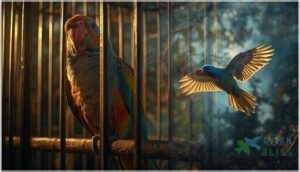
You might think any cage will do, but cage size impact on your bird’s wellbeing is significant. A 2020 survey found 32% of pet birds spend most of their time in small cages—far below minimum cage dimensions recommended for their species.
These exercise limitations lead to serious welfare concerns: reduced activity by up to 55%, increased stress hormones, and behavioral effects like feather-plucking. Providing adequate cage size isn’t optional—it’s essential preventive medicine.
Using Unsafe or Harmful Perches
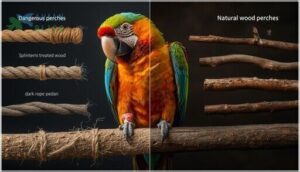
Your perch choices matter more than you’d think. Toxic perch wood like cedar or treated lumber can poison your bird, while sandpaper perches cause painful foot abrasions in 30% of exposed birds.
Focus on bird foot care by:
- Choosing natural wood perches with varying diameters
- Avoiding rope perches that cause gastrointestinal blockages
- Maintaining proper perch size and regular perch cleaning
These bird care mistakes create an unsafe environment for your birds’ feet.
Failing to Offer Enrichment and Toys
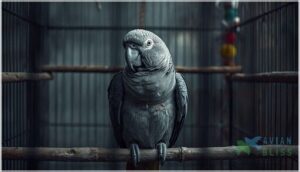
When you skip providing bird mental stimulation through interactive toys and enrichment, you’re setting up your bird for serious welfare impacts.
Birds without toys exhibit boredom behaviors like feather picking twice as often as enriched birds, and they spend 80% less time on natural activities.
This toy deprivation triggers cognitive decline, activity reduction, and increased aggression—problems that persist even after you reintroduce mental stimulation.
Not Allowing Sufficient Exercise
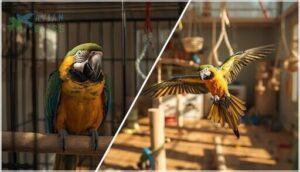
Exercise deficiency ranks among the most overlooked bird care mistakes, yet up to 16% of owners provide no structured activity for their pets. Without at least one hour of daily activity—including supervised flight, climbing, and interactive play—your bird faces obesity, heart disease, and muscle atrophy.
Inadequate cage size compounds the problem by preventing natural movement, while lack of mental stimulation triggers feather plucking and aggression.
Overlooking Proper Bird Nutrition
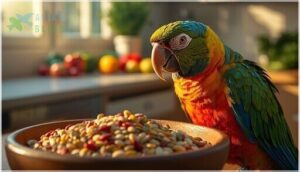
You might think tossing a handful of seeds into your bird’s dish each morning is enough to keep them healthy, but this common approach can actually set the stage for serious nutritional deficiencies. Many well-meaning bird owners don’t realize that what seems convenient can lead to obesity, malnutrition, and a shortened lifespan for their feathered companions.
Let’s look at the most common nutritional mistakes that could be putting your bird’s health at risk.
Relying on Seed-Only Diets
A seed-only diet might seem convenient, but it’s one of the most harmful dietary mistakes you can make. Seeds lack essential vitamins and minerals your bird needs to thrive, leading to serious health consequences:
- Nutrient deficiencies in vitamin A, calcium, and amino acids cause respiratory problems and weak bones
- Obesity risks from high-fat content shorten lifespan through heart disease
- Immune function weakens dramatically, increasing infection susceptibility
- Owner misconceptions about “complete” seed mixes persist despite clear evidence
- Diet improvement with pellets and fresh produce is essential for balanced bird nutrition
Offering Unsafe or Poor-Quality Foods
When you purchase low-quality bird food, you’re unknowingly inviting serious health threats into your bird’s diet. Mycotoxin contamination in feeders has reached aflatoxin levels up to 61,710 µg/kg—far exceeding safe limits—while filler ingredients like corn and wheat create waste and attract pests. Disease transmission accelerates through spoiled food, and toxic foods like bread, chocolate, and fruit pits can poison your bird. Quality control deficiencies in unregulated seed mixes mean you can’t rely on price alone. Choose reputable brands offering balanced diet options to protect your bird’s nutrition and health.
| Food Risk | Health Impact |
|---|---|
| Mycotoxin contamination | Liver damage, immune suppression, death |
| Filler ingredients (80% of cheap mixes) | Malnutrition, waste, pest attraction |
| Spoiled/moldy seed | Aspergillosis, salmonella, trichomoniasis |
| Toxic foods (bread, chocolate, avocado) | Poisoning, deformities, organ failure |
| Unregulated quality | Contamination from substandard ingredients |
Neglecting Fresh Fruits, Vegetables, and Pellets
Your bird’s body can’t manufacture the nutrients it desperately needs when you skip fresh produce and quality pellets. Birds fed seed-only diets suffer deficiencies in vitamin A, calcium, and protein—setting the stage for obesity, immune compromise, and hepatic lipidosis.
Here’s what a balanced diet requires:
- Fresh fruits and vegetables comprising 20–40% of daily intake
- Species-specific pellets providing essential amino acids and minerals
- Vitamin A–rich options like carrots, squash, and papaya
- Gradual introduction of new produce over 3–5 days
Without these components, your bird’s growth rate drops by 18%, feather quality declines, and preventable diseases become likely. Don’t underestimate how fresh fruits, vegetables, and pellets transform your bird’s diet from barely surviving to truly thriving.
Inconsistent Access to Clean Water
You can’t ignore water quality—it’s one of the most common bird care mistakes affecting bird diet and nutrition. Maintaining fresh food and water means scrubbing dispensers every two weeks minimum, since 70% of household bird water sources exceed safe E. coli limits.
Waterborne pathogens like Salmonella cause respiratory distress and septicemia, while dehydration risks appear when contamination statistics climb. The long-term effects? Reduced growth rates and preventable disease outbreaks threatening your bird’s well-being.
Neglecting Health and Hygiene Practices
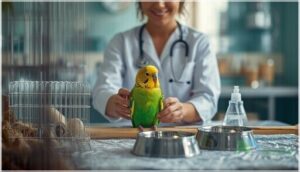
A clean cage isn’t just about appearances—it’s the foundation of your bird’s health. When you let hygiene slide or skip important preventive care, you’re opening the door to infections, illnesses, and avoidable health complications.
Let’s look at four common hygiene and health mistakes that can put your feathered friend at serious risk.
Infrequent Cage and Dish Cleaning
Too many bird owners skip cleaning their cage environment daily, but that’s a risky habit. Disease transmission through bacteria buildup happens fast when droppings and spoiled food sit for even 48 hours. To prevent respiratory infections and fungal growth, you need consistent cage disinfection:
- Wash food and water dishes with hot soapy water every single day
- Remove droppings and debris daily from the cage floor
- Deep-clean the entire cage weekly with bird-safe disinfectant
A clean environment isn’t optional—it’s what keeps your bird healthy. Maintaining this routine prevents 72% of disease outbreaks traced to poor bird environment cleaning practices.
Skipping Regular Veterinary Check-Ups
Keeping your bird’s cage spotless matters, but preventive care through regular checkups is just as essential. Sadly, only about 12% of bird owners schedule veterinary care annually, unlike dog or cat owners.
Your bird hides illness instinctively, so undiagnosed conditions like respiratory infections or nutritional deficiencies often progress silently. Early detection through routine avian vet visits protects both your pet’s health and public health, preventing costly complications down the line.
Allowing Overgrown Beaks and Nails
Addressing overgrown beaks and nails shouldn’t wait until there’s a problem. These tissues grow continuously, and without natural wear from textured perches and chewable toys, overgrowth becomes inevitable.
Home beak trimming or nail trimming risks hitting blood vessels and nerves, causing pain and bleeding.
During vet checkups, professionals assess beak health safely and identify overgrowth causes like liver disease or infections, preventing feeding difficulties and toe injuries.
Exposure to Toxic Substances and Fumes
Birds possess highly efficient respiratory systems that make them exceptionally vulnerable to airborne toxins—think of them as nature’s canary in the coal mine. Teflon poisoning from nonstick pans, smoke inhalation, aerosol dangers from cleaning products, and heavy metals like lead all pose serious threats.
Birds’ highly efficient respiratory systems make them exceptionally vulnerable to airborne toxins like Teflon fumes, smoke, aerosols, and heavy metals
Kitchen fumes, toxic chemicals, and aerosols can trigger respiratory failure within minutes, making fume sensitivity awareness critical for your bird’s survival.
Failing to Meet Social and Mental Needs
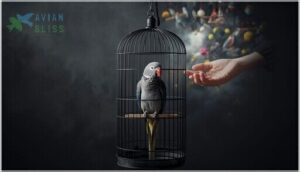
Birds are surprisingly social creatures, and when their emotional and mental needs go unmet, they can develop serious behavioral and health problems. You might think providing food and a clean cage is enough, but your feathered friend needs interaction, stimulation, and understanding just as much as physical care.
Let’s look at some of the most common ways bird owners unknowingly neglect these critical aspects of their bird’s well-being.
Lack of Social Interaction or Companionship
Your bird’s health depends on more than food and water—social interaction is just as important. Isolation distress triggers stress hormones, feather-plucking, and unwanted behaviors in up to 40% of lonely birds.
Species needs vary: parrots crave daily attention and socialization, while finches thrive with flockmates. Watch for behavioral signs like excessive screaming or aggression.
Social enrichment and companionship are proven mitigation strategies that dramatically reduce these problems.
Insufficient Out-of-Cage Time
When your bird stays caged all day, exercise deprivation sets in—and the health consequences are serious. Studies show 32% of pet birds spend most time confined, yet experts recommend at least 2-3 hours of daily freedom for best wellbeing.
Insufficient out-of-cage time triggers:
- Obesity and weakened bones
- Behavioral issues like aggression and screaming
- Social isolation and depression
- Feather plucking from chronic boredom
- Overgrown nails requiring veterinary attention
Owner practices matter—allowing exercise prevents these problems entirely.
Not Providing Mental Stimulation or Training
Just like your mind needs puzzles and conversation, your bird’s brain craves cognitive enrichment—without it, behavioral issues escalate fast. Parrots deprived of mental stimulation show 85% more repetitive behaviors and 60% higher rates of feather plucking. Daily training techniques using puzzle feeders and interactive games reduce abnormal behaviors by 48%, meeting species needs while strengthening your bond.
Providing bird mental stimulation through bird training and enrichment prevents cognitive decline and keeps your feathered friend thriving mentally and physically.
| Training Tools | Impact on Engagement Patterns |
|---|---|
| Tablet-based games | 85% improved cognitive response |
| Puzzle feeders | 75% better problem-solving |
| Foraging wheels | 120% increased natural behavior |
| Structured sessions (15-30 min) | 92% sustained engagement |
Misunderstanding Bird Body Language
Your bird’s body language speaks volumes—but are you listening? Seventy-one percent of new owners misread pupil dilation as aggression when it often signals excitement. Tail fanning warns of defensiveness, yet 62% miss this cue. Beak grinding generally means contentment, not illness.
Recognizing stress signals and wing fluttering prevents common mistakes and bite risks. Understanding bird behavior and training through accurate body language interpretation protects your bird’s welfare and strengthens your bond.
Frequently Asked Questions (FAQs)
Are bird feeders safe?
Feeder hygiene matters more than you might think. When you maintain a clean environment and follow proper bird safety protocols, bird feeders can be safe—but disease transmission, predation risks, and environmental hazards require vigilant attention.
Do birds return to the same nesting spot every year?
Many species show striking nest site fidelity, with 80-90% returning to successful breeding locations.
Reproductive success, habitat quality, mate stability, and low predation risk all strengthen this avian homing instinct year after year.
How do you protect birds from predators?
You can boost nest success and bird safety through predator exclusion methods like installing guards on boxes, habitat management with dense vegetation, and backyard strategies including elevated feeders—all creating a birdsafe environment.
How often should a bird feeder be cleaned?
You should clean bird feeders every two weeks to prevent disease transmission, though environmental factors like humidity require weekly cleaning.
Hummingbird feeders need cleaning every 3-5 days due to rapid bacterial growth.
How often should I replace cage liners?
You should replace cage liners daily to maintain a clean environment and prevent bacteria, fungi, and parasites from accumulating.
Environmental soiling factors like humidity and diet can accelerate contamination, affecting your bird’s health.
What temperature range is safe for birds?
Your bird needs an ideal temperature between 65°F and 80°F to thrive.
Overheating signs include panting and wing spreading, while cold stress causes huddling and rapid breathing.
Use cooling methods or heating as needed.
Can birds live safely with other pets?
Predator stress and zoonotic risks make cohabitation challenging. Cats kill billions of birds annually; dogs also pose threats.
Safe introduction requires species compatibility assessment, constant supervision needed, and creating a bird-safe environment through careful birdproofing of household items.
How do I bird-proof my home properly?
You mightn’t realize it, but your home harbors invisible threats. Birdproofing means addressing window collisions, toxic chemicals, electrical hazards, air quality issues, open water sources, toxic houseplants, and household items to create a birdsafe environment.
When should I start training my bird?
You can start training your bird once it’s calm and receptive, usually after meals.
For parrots, begin around three to four weeks old using positive reinforcement and short sessions focused on trust-building.
Conclusion
Getting your bird care “off the perch” starts with awareness. By avoiding these common bird care mistakes—from nutrition missteps to environmental hazards—you’re setting the foundation for a healthier, happier companion.
Your feathered friend depends on you to interpret their subtle signals and provide species-appropriate care. Small adjustments in diet, housing, and routine veterinary visits create ripples of well-being that last a lifetime. Your bird’s vitality reflects the choices you make today.
- https://pmc.ncbi.nlm.nih.gov/articles/PMC7984256/
- https://agriculture.vic.gov.au/livestock-and-animals/animal-welfare-victoria/other-pets/pet-birds/petcare-practices-research-results
- https://www.scientificamerican.com/article/bird-feeders-are-good-for-some-species-but-possibly-bad-for-others/
- https://georgiawildlife.com/dnr-clean-feeders-save-birds-0
- https://onlinelibrary.wiley.com/doi/full/10.1002/ece3.4902