This site is supported by our readers. We may earn a commission, at no cost to you, if you purchase through links.
Your first trip to the bird seed aisle can feel overwhelming. Rows of colorful bags promise to attract dozens of species, but many new birders end up with seed that sits untouched in feeders or attracts more squirrels than birds. The truth is that most backyard birds have strong preferences, and choosing the wrong seed means wasted money and empty feeders.
Black oil sunflower seeds attract over 106 species and work for most beginners, but matching specific seeds to the birds in your area brings faster results. Understanding which seeds draw cardinals versus finches transforms your backyard from quiet to bustling with activity.
Table Of Contents
Key Takeaways
- Black oil sunflower seeds attract over 100 bird species and serve as the most reliable starting point for beginners because their thin shells and high fat content appeal to cardinals, chickadees, and finches year-round.
- Safflower seeds solve the squirrel problem while drawing cardinals at 60% higher rates than other seeds, making them a strategic choice when pest deterrence matters as much as bird attraction.
- Proper feeder placement within 3 feet of windows dramatically reduces collision deaths, while positioning feeders at least 10 feet from trees cuts squirrel access by over 60%.
- Buying seed in bulk from local feed stores cuts costs by up to 50% compared to small packages, but you should only purchase what you’ll use within two to three months to prevent mold and maintain freshness.
Essential Bird Seed Types for Beginners
Choosing the right bird seed makes all the difference when you’re just starting out. The best seeds attract a wide variety of species while staying fresh and easy to manage.
Here are five essential seed types that will bring birds to your backyard and help you build confidence as a new birder.
Black Oil Sunflower Seeds – The Top Choice
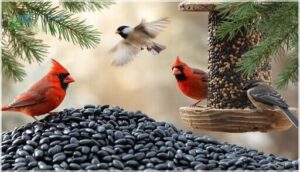
Black oil sunflower seeds stand out as the top choice for bird feeding. Their thin shells make them easy for small birds to crack, while their high fat content (24-28%) provides essential energy during winter months. They also boast a high oil content, making them a nutritious option.
Here’s why you should start with this seed type:
- Over 106 bird species visit feeders stocked with these seeds
- Cardinals, chickadees, and finches readily consume them year-round
- Compatible with most feeder styles including tube and tray designs
- Reduced waste compared to hulled alternatives keeps your feeding area cleaner
Safflower Seeds for Cardinals and Squirrel Deterrence
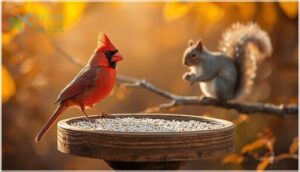
Safflower seeds offer a smart solution for attracting cardinals while deterring squirrels from your feeders. Cardinals consume up to 80% of safflower offerings at mixed feeders, with visitation rates increasing 60% compared to other seeds.
The bitter taste discourages squirrels, with 72% of backyard birders reporting fewer intrusions. Safflower seed is a great way to keep squirrels away from your bird feeders.
Use tray or platform feeders for best results, as cardinals prefer open feeding areas.
Nyjer Seeds for Finches and Songbirds
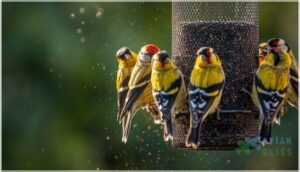
Nyjer seed stands out as the top choice for attracting finches and small songbirds to your yard. Goldfinches especially favor these tiny black seeds, which contain 30-40% oil content for energy during breeding and molting seasons.
You’ll want specialized feeders for best results:
- Fine mesh sock feeders prevent seed spillage
- Tube feeders with small ports accommodate multiple finches
- Metal construction withstands weather and pests
- Proper airflow keeps seeds fresh longer
- Multiple feeding stations reduce crowding
The high nutritional value promotes vibrant plumage and bird health.
White Proso Millet for Ground-Feeding Birds
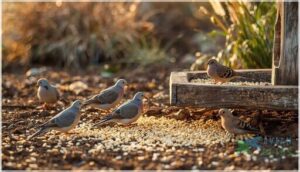
Ground-feeding birds like mourning doves, native sparrows, and juncos thrive on white proso millet. Over 41 species consume this seed, making it a smart choice for boosting species diversity in your yard.
Scatter it directly on the ground or use platform feeders to match natural foraging behaviors. Its high carbohydrate content provides energy while being easily digestible for ground feeders.
Peanuts for High-Energy Birds
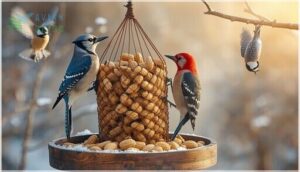
Peanuts pack a serious nutritional punch with roughly 45% fat and 24% protein. Their sustained energy helps birds through winter and migration when nutritional needs peak.
You’ll attract woodpeckers, blue jays, chickadees, and nuthatches with these high-energy foods. Offer shelled or chopped peanuts in mesh or tray feeders to reduce choking risks for smaller species while attracting birds to your backyard year-round.
Top 9 Bird Seeds and Products for New Birders
Now that you know which seed types work best, let’s look at specific products you can trust.
The following nine recommendations cover everything from staple seeds to specialty treats that attract different bird species.
Each option has been chosen for its quality, availability, and effectiveness in bringing birds to your backyard.
1. Black Oil Sunflower Bird Seed
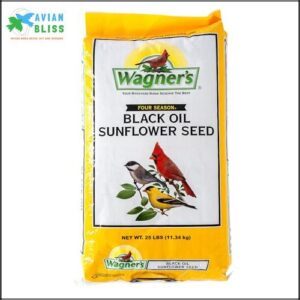
Black oil sunflower seeds stand out as the best choice for beginners in bird feeding. These seeds attract over 70 species, including cardinals, chickadees, and finches, thanks to their thin shells and high-energy content.
You’ll find them cost-effective at around $1 to $2 per pound when bought locally. Their 51% fat content makes them perfect for seasonal feeding during winter months when birds need extra energy.
Use tray or hopper feeders for best results. The nutritional value benefits healthy bird populations year-round while keeping your feeder placement simple and your costs manageable.
Best For: Backyard bird enthusiasts looking for a budget-friendly, high-energy seed that attracts the widest variety of songbirds year-round.
- Attracts over 70 bird species including cardinals, chickadees, finches, and woodpeckers due to thin shells and high fat content
- Cost-effective at $1-2 per pound locally, with bulk options dropping to $1.09 per pound for 20-40 lb bags
- Provides 584 kilocalories per 100 grams with 51% fat content, making it ideal for winter feeding when birds need extra energy
- Seed hulls accumulate quickly under feeders, requiring regular cleaning to prevent mold and rodent attraction
- May attract squirrels and other wildlife that compete with birds for food
- Some bags contain debris like twigs and dirt, and larger bags may lack resealable closures leading to spills
2. C&S Orange Delight Suet Cake
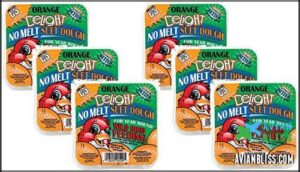
Suet offers concentrated energy that seed alone can’t match. C&S Orange Delight Suet Cake contains rendered beef suet, roasted peanuts, and papaya for high fat content—15% minimum—that fuels woodpeckers, cardinals, and orioles year-round.
This product stays solid even at 100°F, preventing summer melt. You’ll see benefits like minimal waste and increased bird diversity by up to 35% during migration.
Each 11.75-ounce cake lasts two to seven days depending on visitor traffic. Consumer feedback shows over 90% satisfaction, with birders praising its effectiveness across seasons.
Best For: Backyard birders who want to attract fruit-eating species like orioles and woodpeckers year-round without dealing with melted suet or messy feeders.
- High-energy formula with 15% fat content stays solid up to 100°F, making it reliable for summer feeding when birds need extra calories.
- Attracts a wider variety of species than seed alone—users report up to 35% more bird diversity during migration seasons.
- Minimal waste and mess compared to loose seed since birds consume the entire cake, and it lasts 2–7 days depending on traffic.
- Some customers report the product arriving damaged or crumbled due to poor shipping packaging.
- Not all bird species or individual birds take to it—at least one user found their local birds ignored it completely.
- At roughly $3 per 11.75-ounce cake, frequent refilling during high-traffic periods can add up compared to bulk seed options.
3. Nyjer Seed Wild Bird Food
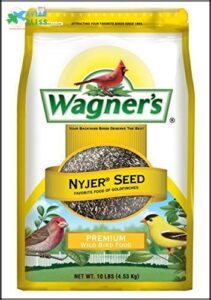
Nyjer seed stands out as the best choice for finch attraction, bringing American Goldfinches, House Finches, and Pine Siskins to your feeders with impressive consistency. This tiny black seed—sometimes labeled thistle—delivers outstanding seed nutrition with high oil content that fuels birds during cold snaps.
Imported primarily from India and Ethiopia, Nyjer undergoes heat treatment to prevent sprouting, ensuring waste reduction beneath your feeders. Though it ranks among pricier seed types due to global sourcing costs, you’ll appreciate how efficiently finches consume it with minimal mess.
Best For: Backyard birders who want to attract goldfinches and other small songbirds while keeping squirrels and larger birds away from their feeders.
- Attracts a wide variety of finches and small songbirds consistently, with minimal interest from squirrels or larger pest birds.
- High oil and protein content provides excellent energy for birds, especially during winter months when natural food sources are scarce.
- Creates very little waste since birds consume nearly all the seed and the heat-treated shells don’t sprout under feeders.
- More expensive than most other birdseed types due to import costs from India and Ethiopia, plus required heat treatment processing.
- Seed shells can accumulate below feeders and create a mess, requiring thoughtful feeder placement in your yard.
- Quality control issues with packaging may occur, including occasional leaks or tears in bags during shipping.
4. Wingfield Farm Virginia In Shell Peanuts
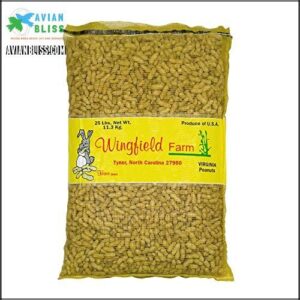
Feeding larger backyard visitors becomes much easier when you select the right peanut feeder types for your space. Wingfield Farm Virginia In-Shell Peanuts provide superior nutritional benefits with roughly 560 calories per 100 grams and 25% protein content.
These raw peanuts attract jays, woodpeckers, and nuthatches consistently while managing squirrel competition through specialized wire feeders. Check for freshness indicators like firm shells and absence of mold before offering.
This 25-pound bag delivers great value for regular bird feeding throughout the season.
Best For: Backyard bird enthusiasts who want to attract larger species like jays, woodpeckers, and nuthatches while also providing high-energy food for squirrels and other wildlife.
- Delivers exceptional nutritional value with 560 calories per 100g and 25% protein content, supporting birds during breeding, migration, and winter months.
- Attracts a diverse range of wildlife including blue jays, woodpeckers, nuthatches, crows, and squirrels, increasing backyard biodiversity.
- The 25-pound bag offers excellent value for regular feeders, with consistently high customer satisfaction ratings and fresh quality.
- Not suitable for human consumption, limiting its versatility compared to culinary peanuts.
- Requires proper storage in cool, dry conditions to prevent mold growth and aflatoxin contamination.
- May be considered expensive by some buyers, and larger birds or squirrels can dominate feeders if not managed with appropriate feeder designs.
5. Kaytee Nyjer Wild Bird Food Seed
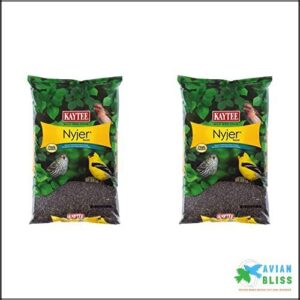
Small seed specialists like goldfinches and siskins need a dedicated food source. Kaytee Nyjer Wild Bird Food Seed delivers 35% crude fat and 18% protein in completely hull-free grains. You won’t deal with messy shells scattered across your patio.
This seed type’s choice offers excellent feeder compatibility with tube and mesh sock designs. The nutritional value promotes high-energy finches throughout migration seasons.
Sustainable sourcing practices and excellent seed freshness ratings make this bird seed reliable for consistent finches attraction. Refill your Nyjer seed feeder every three to five days for best results.
Best For: Backyard birders who want to attract goldfinches, siskins, and other small finches without dealing with messy seed hulls or wasted spillage under feeders.
- High nutritional value with 35% crude fat and 18% protein provides excellent energy for finches, especially during migration and colder months.
- Completely hull-free formula means zero mess under feeders—no shells, sprouts, or debris on patios and flowerbeds.
- Works perfectly in tube and mesh sock feeders designed for small seeds, with minimal interest from squirrels and chipmunks.
- Some bags may contain twigs that can clog feeders, requiring occasional cleaning or picking through the seed.
- Needs to be replaced every 1–2 months and refilled every 3–5 days to maintain freshness and attract birds consistently.
- Quality can vary between batches, with some users reporting more debris than expected compared to previous orders.
6. Wild Bird Ground Feeding Seed Mix
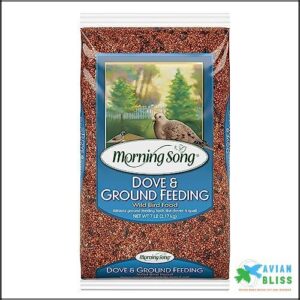
Ground-feeding birds like sparrows, juncos, and doves prefer different food than perch feeders attract. Wild Bird Ground Feeding Seed Mix contains white proso millet, black oil sunflower, and finely cracked corn to meet these species’ needs. Premium ground mixes usually combine 50% sunflower with 35% millet for best attraction.
You’ll notice less seed waste compared to discount blends that include fillers birds won’t eat. Scatter this mix on platform feeders or directly on cleared ground patches. Adding a seasonal grit supplement during winter months aids your birds’ digestion and calcium intake.
Best For: Backyard birders who want to attract ground-feeding species like sparrows, doves, and juncos with a quality seed mix that minimizes waste.
- Contains a solid blend of white proso millet and black oil sunflower that over 25 species of ground-feeding birds actually prefer, so you’re not paying for filler seeds that get tossed aside.
- Works well in platform feeders or scattered directly on the ground, giving you flexibility in how you feed without needing specialized equipment.
- The 7-pound bag offers decent value compared to discount blends since more of the seed gets eaten rather than wasted, and it’s made in the USA.
- Some buyers report their local birds weren’t interested in this particular mix, which can happen since bird preferences vary by region and season.
- The seed variety might feel limited if you’re hoping to attract a wider range of species beyond typical ground feeders.
- Smaller seeds like millet can fall through the mesh on some platform feeders, leading to spillage you’ll need to clean up.
7. Safflower Seed Wild Bird Food
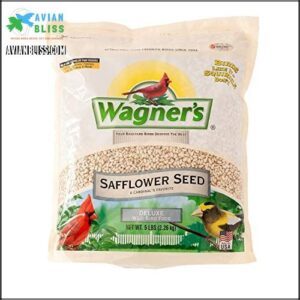
If you’re hoping for reliable Cardinal attraction and squirrel deterrence, safflower seeds are a smart pick. Their bitter taste keeps most squirrels and bully birds away, letting cardinals, chickadees, and finches thrive at your feeder.
Safflower’s seed nutrition—rich in fat and protein—fuels birds’ energy needs, especially during colder months. You’ll get the best results using platform or large hopper feeder types.
Keep in mind, regional variations exist; some squirrels may still sample safflower, but overall, it’s a proven choice for selective bird feeding.
Best For: Birders who want to attract cardinals and songbirds while keeping squirrels and pest birds like grackles away from their feeders.
- Attracts desirable birds like cardinals, chickadees, and finches thanks to its high fat and protein content that provides essential energy.
- Effectively deters most squirrels and bully birds due to its naturally bitter taste, reducing seed waste and feeder crowding.
- Produces minimal hull debris under feeders because of thin shells, making cleanup easier compared to sunflower seeds.
- Costs 20-35% more than standard sunflower or millet seed, which can add up for frequent feeders.
- Some birds may refuse to eat it, and in certain regions, squirrels have adapted to tolerate the bitter flavor.
- Requires feeders with firm surfaces like platform or hopper styles since the seeds are large and tough to crack.
8. Kaytee Nut and Fruit Wild Bird
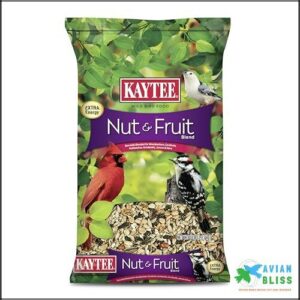
For a premium seed selection that goes beyond standard sunflower seeds, Kaytee Nut and Fruit Wild Bird delivers on nutritional benefits with 42% fat content and a nutrient-dense formula. This seed mix attracts woodpeckers, cardinals, and nuthatches with its blend of peanuts, cherries, and raisins.
Customer reviews consistently praise increased species diversity at feeders. At $16.99 for five pounds, pricing analysis shows it’s an investment in quality bird feeding.
Follow storage guidelines by sealing tightly in cool, dry conditions to prevent the high-oil content from spoiling.
Best For: Bird enthusiasts looking to attract a diverse range of songbirds like cardinals, woodpeckers, and nuthatches with a high-energy, premium blend that minimizes filler ingredients.
- High nutritional value with 42% fat content provides excellent energy for birds during cold weather and active periods
- Attracts a wide variety of species including woodpeckers, cardinals, nuthatches, and grosbeaks with its mix of nuts, sunflower seeds, and dried fruit
- Backed by over 150 years of expertise with minimal filler grains, resulting in less waste and more frequent bird visits
- Higher price point at $16.99 for 5 pounds may not fit all budgets
- High oil and nut content requires careful storage in cool, dry conditions to prevent spoilage
- Fruit pieces can occasionally clog certain feeder types and may be less appealing to smaller finch species
9. C and H Pure Cane Sugar
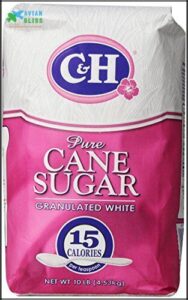
While seed feeders attract finches and cardinals, you’ll also want to bring hummingbirds to your backyard. C and H Pure Cane Sugar is the ideal choice for making safe nectar.
Mix one part sugar with four parts water for the perfect nectar recipe that promotes hummingbird health without harmful additives. This 100% cane sugar option ensures sugar purity and sustainable sourcing practices.
At around $1 per pound, it’s an affordable addition to your bird feeding tips arsenal for attracting backyard birds year-round.
Best For: Birders who want to make safe, budget-friendly hummingbird nectar at home with a pure, non-GMO sugar that dissolves quickly and mimics natural flower nectar.
- Pure cane sugar with zero additives or fillers makes it the safest choice for hummingbird health, unlike raw or brown sugars that can be toxic to birds.
- Extra-fine crystals dissolve rapidly in water, making nectar preparation quick and easy with the standard 4:1 water-to-sugar ratio.
- At roughly $1 per pound, it’s an affordable way to attract hummingbirds year-round, especially compared to pre-made nectar mixes.
- Some customers mention the price has crept up over time, which can add up if you’re feeding multiple hummingbirds throughout the season.
- You’ll need to mix your own nectar rather than buying ready-made solutions, which requires a bit more effort and measuring.
- Feeders still need frequent cleaning every 2-3 days in warm weather to prevent mold, regardless of using pure cane sugar.
Attracting Backyard Birds and Deterring Pests
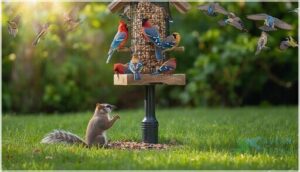
Getting the right birds to visit your feeder while keeping squirrels away comes down to choosing the right seed. Different bird species have distinct feeding preferences that you can use to your advantage.
Understanding these patterns will help you attract the songbirds you want while making your yard less appealing to pests.
Matching Seed Types to Bird Species
Matching seed types to bird species isn’t guesswork—it’s about understanding seed-species affinity and nutritional needs. Different birds evolved with specific dietary preferences that shape feeder selectivity:
- Black oil sunflower attracts over 20 species including cardinals and chickadees due to its 28% fat content and thin shells accessible to various beak sizes.
- Nyjer seeds draw finches exclusively, with goldfinches making up 80% of visitors.
- White proso millet targets ground feeders like juncos and sparrows, accounting for 72% of consumption at low feeders.
Understanding these seed preferences helps you attract your desired bird species while recognizing dietary overlap among regional populations.
Tips for Attracting Colorful Songbirds
Beyond seed choice, colorful feeder tips and songbird habitat enhancements transform your yard. Plant bird-friendly plants like native berry shrubs to increase species diversity by 60%. Add water feature designs—moving fountains boost visits by nearly double.
Sunflower seeds and Nyjer seed in green or silver feeders draw finches and other songbirds. Smart garden layout planning with three native species fosters breeding populations year-round.
Preferences of Ground-Feeding Birds
You’ll notice that ground-feeding species like juncos, doves, and native sparrows show distinct foraging habits. These ground-feeding birds’ preferences lean heavily toward white proso millet and black oil sunflower seeds scattered at ground level.
Platform feeders with good drainage work well, though about 59% of species simply prefer seed scattered directly on bare soil where their natural foraging behavior thrives.
Deterring Squirrels and Unwanted Pests
Squirrels can dominate your feeders and empty them in hours. Research shows that safflower seeds deter squirrels while still attracting cardinals and grosbeaks. You’ll also want to explore these proven pest control methods:
- Install squirrel baffles on poles – These reduce squirrel access by 80-90%
- Choose squirrelproof feeders with weight-activated mechanisms – They cut seed loss by up to 80%
- Place feeders 10+ feet from trees – This decreases successful squirrel access by over 60%
Bird Feeding Tips and Best Practices
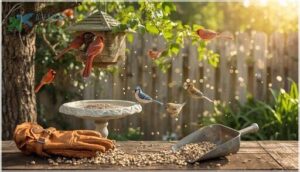
Offering the right seed is just the beginning. How you set up and maintain your feeding station can make the difference between occasional visitors and a thriving backyard bird community.
Let’s walk through the key practices that will keep your feathered guests healthy and coming back.
Choosing The Right Feeder for Each Seed
Your choice of bird feeders matters as much as the seed types you offer. Black oil sunflower seeds work best in wire mesh tube feeders or platform feeders, while hopper feeders suit safflower seeds perfectly. Nyjer seeds require specialized mesh screen feeders with small openings to prevent waste.
| Seed Type | Best Feeder Types | Key Features |
|---|---|---|
| Black Oil Sunflower | Tube, Platform, Hopper | Multiple ports for variety |
| Safflower | Hopper, Large-port Tube | Squirrel deterrence |
| Nyjer | Mesh/Thistle Feeders | 0.5 lb capacity reduces waste |
| Peanuts | Metal Mesh Tube | Antimicrobial coating preferred |
Ground-feeding species like sparrows and doves prefer white proso millet scattered on low platforms rather than elevated feeders.
Feeder Placement for Safety and Visibility
Positioning bird feeders within 3 feet of windows greatly reduces collision risks, since backyard birds can’t build dangerous flight speeds from that distance.
Place feeders at 6-foot heights to improve predator avoidance while maintaining visibility for observation.
Keep feeders at least 10 feet from trees to prevent squirrel access, but position them near escape cover for safety.
Cleaning and Maintenance for Bird Health
Once your feeders are positioned well, maintaining clean bird feeders becomes critical for disease prevention. Dirty stations spread Salmonella and other pathogens that threaten your backyard visitors.
Follow this feeder maintenance schedule:
- Clean seed feeders every two weeks in summer, weekly in winter
- Scrub with 10% bleach solution after removing debris
- Discard moldy seeds immediately—aflatoxins cause serious illness
Regular feeder cleaning frequency protects bird health while keeping your feeding station thriving.
Seasonal Feeding Considerations
Birds don’t eat the same way year-round, so you’ll want to adjust your offerings as seasons change. Winter hyperphagia drives birds to consume high-energy foods like suet and peanuts before migration. Spring migrants arrive hungry for diverse seeds, while summer mold risks increase with heat. Autumn caching behavior means birds store food for later, affecting local bird species population dynamics throughout breeding season cycles.
| Season | Recommended Foods |
|---|---|
| Winter | Black oil sunflower, suet, peanuts |
| Spring | Millet mixes, nyjer, diverse blends |
| Summer | Fresh seeds (rotated often), mealworms |
| Autumn | High-fat seeds, nuts, native berries |
| Year-round | Clean water source, regular monitoring |
Storing Bird Seed and Feeding on a Budget
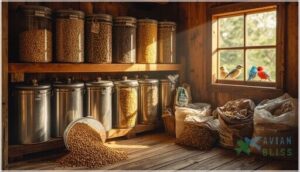
Proper storage keeps your bird seed fresh and prevents waste from mold or spoilage. You can also save money by making smart purchasing decisions and avoiding common mistakes that lead to rejected seed.
The following tips will help you maintain quality seed while keeping your feeding hobby affordable.
Proper Storage Methods for Freshness
To protect seed freshness and quality, you need to control moisture and choose the right storage containers. Airtight packaging extends seed shelf life markedly compared to open bags.
Follow these guidelines:
- Use metal or strong plastic containers with tight lids to block moisture and pests
- Store in cool, dry locations below 60°F to prevent mold
- Label containers with dates for seed rotation
- Inspect regularly for clumping or bad odors
Buying Bird Seed in Bulk Vs. Small Quantities
When buying in bulk, you can save up to 50% compared to small packages. A 50-pound bag of black oil sunflower seed often costs around $0.28 per pound versus $2.00 for smaller quantities.
Bulk storage tips include using airtight metal containers to maintain seed freshness and quality. However, only purchase what you’ll use within two to three months to preserve seed quality and avoid spoilage.
Avoiding Seed Waste and Mold
To prevent mold and spoilage, you need smart seed storage and feeder maintenance practices. Low-cost mixes often contain up to 73% waste seed that birds reject, creating ground accumulations that attract mold and rodents.
Follow these waste reduction and bird health strategies:
- Store seed in airtight metal containers in cool, dry locations away from moisture
- Clean feeders monthly with bleach solution to eliminate mold spores and bacteria
- Discard clumping or musty-smelling seeds immediately to prevent avian disease transmission
Cost-Effective Choices for Beginners
Your seed budgeting starts with smart bird seed choices. Black oil sunflower seeds and white proso millet deliver the best cost savings while attracting diverse species. Buying in bulk from local feed stores cuts per-pound costs by up to 50% compared to online retailers.
Here’s your beginner tips guide to choosing quality bird seed:
| Seed Type | Cost Per Pound |
|---|---|
| Black Oil Sunflower | $1.00–$2.00 |
| White Proso Millet | $0.80–$1.50 |
| Nyjer (Small Qty) | $2.50–$4.00 |
| Safflower | $1.50–$2.50 |
Focus on feeding on a budget through feeder optimization and proper bird seed storage in airtight containers.
Frequently Asked Questions (FAQs)
How often should I refill my bird feeders?
You’ll find this surprising: the best refill schedule isn’t daily. Most backyard birds thrive when feeders hold 2-3 days’ worth of seed, balancing freshness with convenience while preventing waste and mold.
Can bird seed attract unwanted rodents or pests?
Yes, bird seed attracts rodents like mice and rats, especially when spilled beneath feeders. Proper seed storage in sealed containers, regular cleanup of fallen seed, and strategic feeder placement help minimize pest problems effectively.
Whats the best feeder height above ground?
You should place most bird feeders at 5 to 6 feet above ground. This height balances predator deterrence with human accessibility while reducing window collisions and accommodating the species preferences of common backyard birds.
Do birds prefer certain seed colors or sizes?
Here’s the thing: birds do show color and size preferences. Studies reveal songbirds favor green over red or yellow seeds.
Smaller, oil-rich sunflower seeds often win in seed selection trials due to easier handling and energy rewards.
Should I feed birds year-round or seasonally?
Winter feeding markedly boosts survival rates during harsh conditions, but year-round feeding aids breeding and molting seasons too.
Regular feeder maintenance prevents disease transmission regardless of season.
Choose high-energy foods and adapt seed selection based on seasonal bird activity and climate impact.
Conclusion
The early bird gets the worm, but the prepared birder gets cardinals, finches, and chickadees gathering in their backyard. These bird seed recommendations for beginners eliminate guesswork and deliver results within days.
Start with black oil sunflower seeds to attract multiple species, then experiment with safflower or nyjer as you identify your visitors. Fresh seed in clean feeders creates the foundation for years of rewarding observation.
- https://www.nwf.org/garden-for-wildlife
- https://www.sunflowernsa.com/magazine/articles/default.aspx?ArticleID=3932
- https://www.perkypet.com/advice/bird-feeding/bird-food/black-oil-sunflower
- https://todayshomeowner.com/lawn-garden/guides/black-oil-sunflower-seeds-vs-striped-sunflower-seeds/
- https://www.wbfi.org/2023/06/17/wild-bird-products-market-overview-and-future/