This site is supported by our readers. We may earn a commission, at no cost to you, if you purchase through links.
A single contaminated food bowl wiped down the wrong way can spread Psittacosis through an entire flock before you notice the first bird showing symptoms.
Most aviculturists learn this the hard way—once.
The difference between a thriving aviary and a disease-ridden one rarely comes down to exotic treatments or expensive equipment.
It comes down to discipline, sequencing, and surface choices made before a single bird enters the enclosure.
Keeping bird aviaries clean isn’t a weekend chore; it’s a system built from daily habits, the right materials, and a deep cleaning protocol that leaves no crevice untouched.
Table Of Contents
- Key Takeaways
- Choose Sanitary Aviary Surfaces
- Gather Bird-Safe Cleaning Supplies
- Follow a Daily Cleaning Routine
- Deep-Clean Weekly and Monthly
- Prevent Disease, Odors, and Pests
- Frequently Asked Questions (FAQs)
- How often should aviary perches be replaced?
- Can outdoor aviaries be cleaned in winter?
- Whats the best way to clean mesh?
- How do I remove stubborn bird droppings?
- Should I clean during breeding season?
- What plants are safe inside a bird aviary?
- How do you clean an aviary during cold weather?
- Should UV lighting be used inside bird aviaries?
- Conclusion
Key Takeaways
- Sealed concrete floors with proper drainage beat dirt and wood every time — they’re the only surfaces that let you clean deep enough to actually break parasite cycles.
- Your daily routine is your first line of defense: pull uneaten food, swap liners, scrub bowls, and spot-clean perches before bacteria and mold get a foothold.
- Disinfection only works on visually clean surfaces — skip the soap-and-scrub step first, and your bleach solution won’t reach the pathogens that matter.
- Every new bird is an unknown risk; a 30-day quarantine at least 10 metres from your flock isn’t overcautious — it’s what keeps one sick bird from becoming your whole flock’s problem.
Choose Sanitary Aviary Surfaces
surface your aviary is built on determines how clean you can actually get it — and that directly affects your birds’ health. Some setups make daily maintenance straightforward; others quietly work against you no matter how often you clean.
Choosing the right outdoor aviary cage covers can also reduce debris buildup on your flooring, making the whole cleaning routine noticeably easier.
Here’s what to think about before you commit to a design.
Suspended Cages Vs. Walk-in Aviaries

Suspended cage design to prevent parasites works on a simple principle: droppings fall away from the birds, not under their feet.
That’s first line of defense for parasite cycle disruption and waste capture efficiency.
Traditional walk-in aviaries give birds full floor access, which demands tighter cleaning methods for aviary floors and stronger biosecurity measures in bird breeding to compensate.
Implementing proper daily cage maintenance practices helps prevent disease spread.
Why Sealed Concrete Floors Clean Best

Sealed concrete is where floor hygiene starts making sense. Its Smooth Surface keeps droppings from soaking in, and the Washable Finish means soap actually cleans — not just smears.
In any soil versus grid flooring hygiene comparison, dirt simply can’t compete.
Stain Resistance, Durable Flooring, and built-in Pest Control make cement the backbone of serious cleaning methods for aviary floors.
Using suspended cage design can break parasite cycles.
Using Drains and Sloped Flooring
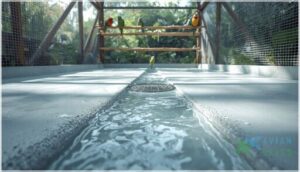
A cement floor with a drain takes cage sanitation to the next level. Proper Drain Placement — at the room’s lowest point — ensures Water Flow Optimization during washdowns. Aim for roughly 1/8 inch per foot Slope Angle so rinse water moves continuously.
- Sloped floors prevent pooling and speed drying
- Drain Maintenance matters: feathers and debris clog fast
- Smooth sealed surfaces support Slip Prevention for handlers
- Grid cage hygiene improves when floors drain cleanly underneath
- Standing water invites bacterial growth — good drainage stops that cycle
Why Dirt and Wood Increase Parasite Risk
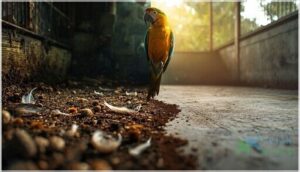
Even perfect drainage won’t protect your birds if the floor beneath them is dirt or wood. Both materials trap Hidden Debris — droppings, seed husks, feathers — where parasites thrive. Moisture Retention in porous surfaces keeps ascarid worm infestation cycles alive for months. Mite Shelter forms inside wood grain. Limited Cleanability means Egg Survival beats your hygiene protocols.
Dirt and wood floors trap the debris, moisture, and mite shelter that let parasites outlast your cleaning routine
Soil versus grid flooring hygiene comparison isn’t close — concrete wins every time.
Safe Liners for Tracking Droppings

Choosing the right cage liner turns your tray that collects falling debris into a daily diagnostic tool. Plain paper—newspaper, butcher paper, or paper towels—gives you reliable visual dropping monitoring at a glance.
- Paper Liner Color matters: white or light backgrounds make abnormal droppings obvious immediately
- Ink‑Free Materials prevent toxic exposure; avoid glossy inserts
- Replacement Frequency should be daily, sometimes twice daily
Seal used liners promptly. Disposal practices keep pests out.
Gather Bird-Safe Cleaning Supplies
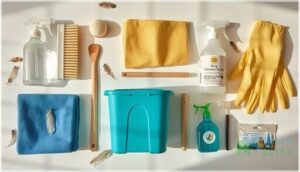
Before you scrub a single perch, you need the right tools in your hands.
Stock up on bird-safe cage cleaning supplies and techniques before you start, so you’re never improvising with products that could harm your bird.
Using the wrong cleaner or sharing wash bins between contaminated and clean items can undo every bit of effort you put in. Here’s exactly what to stock up on before you start.
Soapy Water, Brushes, and Separate Wash Bins
Start with the right tools, and cleaning becomes a system rather than a chore. Use a mild soap at one teaspoon per liter of warm water — that Soap Concentration Ratios matter for cage coatings.
Nylon Brush Selection is straightforward: stiff but non-metal bristles handle bars without scratching.
Color-Coded Bins for your Three-Stage Wash System — wash, rinse, sanitize — keep cross-contamination out.
Finish on an Air-Dry Rack Setup; never reassemble while damp.
Bird-safe Disinfectants and Bleach Dilution
Once soap has stripped the organic matter away, disinfection is where real pathogen control begins. Your bleach solution — one cup of bleach to one gallon of water — works only when Dilution Ratios, Contact Time, and Residue Rinsing align correctly.
- Label Compliance: Follow brand‑specific dilution and dwell times exactly.
- Contact Time: Keep surfaces visibly wet for at least five to ten minutes.
- Non‑Corrosive Alternatives: F10 or chlorhexidine products protect metal cages long‑term.
- Rinse thoroughly: Remove all residue before returning bird‑safe cleaning agents or birds.
Towels, Trays, and Waste Bags
Your drying tools matter as much as your disinfectants. Microfiber towel benefits show up immediately — they trap feather dander and droppings without shedding lint across clean bowls or tray edges.
For tray liner selection, white or clear disposable liners beat dark materials because you can actually monitor droppings daily.
Seal waste bags before moving them out.
A solid cleaning rotation system keeps fresh liners and towels ready before you start, not after.
Gloves, Ventilation, and Cleaning Safety
Glove material selection isn’t optional — nitrile disposables resist most bird‑safe cleaning agents and block direct contact with droppings. For heavy washdowns, use reusable gloves and follow a double-glove protocol so the outer layer comes off first.
Chemical fume extraction matters too: move birds out, open vents, and let bleach fumes clear.
Respiratory protection — a fitted N95 — completes your PPE decontamination routine.
Proper Storage for Cleaned Bowls and Tools
Once your bowls and tools are clean, where you store them determines whether they stay that way.
Use airflow drying racks to air dry everything completely before putting anything away — trapped moisture on stainless steel breeds bacteria fast.
Store items in airtight storage bins on nonporous shelving, apply color‑code labeling by aviary zone, and keep humidity control below 60% to protect your bird hygiene investment.
Follow a Daily Cleaning Routine
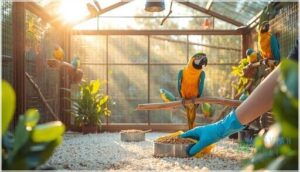
A daily routine is what separates a healthy aviary from a problem waiting to happen.
Skipping even one day lets bacteria, mold, and parasites get a foothold — and once they do, you’re playing catch-up.
Here’s what your daily checklist should cover.
Remove Uneaten Food, Feces, and Wet Waste
Removing waste every morning isn’t optional — it’s the foundation of daily cleaning.
Uneaten food spoils within four hours, especially in humidity, so pull it first. Use dedicated scoops for droppings collection and a wet rag for feces on bars.
Moisture control matters here: bag wet waste separately to limit mold. Tool segregation prevents cross‑contamination.
Follow a consistent waste disposal protocol, and your birds stay healthier, longer.
Wash, Rinse, and Dry Food Bowls
Once you’ve cleared the morning waste, don’t let the bowls sit. Soak them first — warm water loosens stuck food fast.
Then scrub with a soft‑bristled brush, not a wire one, using mild soap like Dawn. Your sanitizing schedule matters: rinse thoroughly, multiple passes, no residue.
Dry bowls in sunlight for natural disinfection. Store them off the ground, away from insects.
Refresh Water Dishes Without Leaving Residue
Water carries its own mess.
Hard water leaves chalky mineral rings fast — that’s where vinegar mineral removal earns its place. Swirl diluted vinegar, rinse using proper rinse water technique, then air‑dry to keep residue from reforming.
Stainless steel bowls resist staining and scratch less than plastic.
Use filtered water to reduce buildup, and always wash food and water dishes with bird‑safe cleaning agents before refilling.
Spot-clean Perches, Bars, and Cage Surfaces
Once the dishes are dry, turn your attention upward. Clean perches first — top roosting spots collect the heaviest daily deposits.
Moisten dried droppings with a damp cloth for moisture control, then scrub with a soft brush. Wipe down everything: bars, joints, flat surfaces. Use a bird-friendly disinfectant, practice glove hygiene, and let airflow management and UV drying finish the job.
Replace Paper Liners for Easy Feces Monitoring
Swapping out the liner is your quickest daily health check.
Lay plain kraft paper or unprinted newspaper flat across the tray — liner material choice matters because color contrast benefits are real: light backgrounds reveal droppings clearly.
Follow frequency change guidelines by replace liners daily, or sooner if wet.
Tray fit optimization keeps paper from bunching, and fragrance‑free standards protect sensitive airways throughout your cage liner hygiene routine.
Deep-Clean Weekly and Monthly
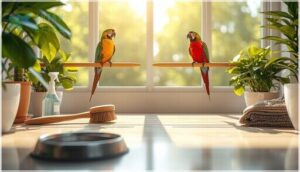
Daily spot-cleaning keeps things manageable, but it won’t catch everything. Once a week — and again each month — you need to go deeper. Here’s exactly how to break it down.
Remove Birds and Accessories Before Cleaning
Before you touch a single bar, move your birds into a temporary cage setup — one with perches, water, and food — to keep stress reduction measures in place throughout the cleaning process.
Gentle bird handling matters here; use both hands or a towel to avoid injury. Accessory segregation by grouping metal, plastic, and wood separately. Ventilation timing so airflow runs a full 30 minutes before birds return.
Soak and Scrub Bowls, Toys, and Perches
Soaking is where the deep clean actually begins. Match your soak duration and brush types to each material — no shortcuts.
- Bowls: Submerge stainless steel for 5–10 minutes; ceramic up to 20. Follow disinfection procedures for bird bowls using bleach diluted 1:32.
- Toys: Use old toothbrushes for acrylic joints; sponges on metal. These are your best bird‑safe cleaning agents.
- Perches: Apply vinegar at a ratio of 1:1 for material‑specific care. Air‑dry wooden perches via sunlight — drying methods matter; damp wood breeds mold fast.
Clean Trays, Grates, Corners, and Crevices
Trays and grates are where hidden buildup wins if you’re not paying attention.
Wash the cage tray daily or weekly — scrape hardened waste, wipe with bird-safe cleaner, and prioritize tray drying completely before reinstalling.
Scrub the grate using a stiff brush; hot soapy water loosens dried droppings fast.
For corner access and crevice tools, reach seams with a toothbrush.
Moisture prevention starts here.
Disinfect Surfaces After Removing Organic Matter
Disinfection only works on visually clean surfaces — organic matter removal must come first, or your disinfectant simply won’t reach the pathogens. Apply a bleach sanitation solution mixed to EPA label compliance specifications, then let it sit.
Contact time importance can’t be overstated here; most avian health management protocols require ten minutes of wet surface contact.
Always run ventilation safety measures while working with any cleaning and disinfection chemicals.
Rinse Thoroughly and Dry Completely Before Reassembly
Rinsing isn’t optional — leftover bleach or detergent residue irritates airways and skin on contact. Your disinfection protocol means nothing if chemical traces stay behind. Follow these drying techniques to protect your birds:
- Rinse every surface twice with clean water for thorough residue detection
- Run airflow optimization by drying in ventilated spaces, not sealed rooms
- Practice moisture monitoring on seams, corners, and joints before reassembly timing
- Confirm completely dry, odor‑free equipment — your avian hygiene and cleaning schedule depend on it
Inspect for Rust, Cracks, and Loose Parts
Once the cage is dry, run a hands-on inspection before putting anything back. Check welds, corners, and hinges for rust and corrosion — orange spots mean oxidation is already weakening the structure.
Crack detection on plastic trays matters too; gaps wider than 2mm harbor bacteria. Practice fastener tightening on loose or missing screws, test damaged latches and doors, and apply bird-safe lubricant for smooth hinge lubrication and long‑term joint stability.
Prevent Disease, Odors, and Pests
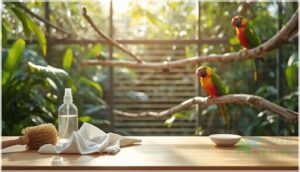
Cleaning is only half the battle — keeping disease, odors, and pests out is what actually protects your birds long-term.
A few targeted habits make a real difference here, and they’re easier to build than most people expect.
Here’s what you need to focus on.
Breaking Parasite and Reinfestation Cycles
Breaking the reinfection cycle means treating the bird and the environment together — skip one, and you’re fighting the same battle next month.
- Remove droppings daily for precise egg removal timing before oocysts turn infectious
- Use suspended cage design to cut floor contact and halt ascarid cycles
- Apply strict quarantine protocols — minimum of 30 days for every new arrival
- Segregate tools between enclosures for reliable tool segregation
- Practice consistent litter management by bagging waste immediately
Reducing Bacteria, Mold, and Fungal Growth
Once parasites are under control, bacterial contamination prevention becomes your next battle. Moisture Management is everything here — damp surfaces are where bacteria, mold, and fungi thrive. Prioritize Non-porous Materials, strip organic waste before any cleaning and disinfection, and use UV Light Disinfection by sun‑drying bowls after washing.
| Threat | Cause | Sanitation Practice |
|---|---|---|
| Mold | Humidity above 60% | Dry all surfaces completely |
| Bacteria | Bird droppings management neglect | Daily removal + bleach solution |
| Fungi | Porous bedding moisture | Replace with washable liners |
Improving Ventilation and Controlling Humidity
Moisture Management doesn’t stop at surfaces. Airflow Design determines how fast damp air clears before it settles.
Negative‑Pressure Systems pull stale air out while controlled Inlet Placement draws fresh air high along walls, keeping wire mesh and suspended cages dry.
Target 50–65% humidity using Humidity Sensors, and always dry thoroughly or air‑dry cleaned surfaces before birds return.
Managing Waste to Deter Flies and Rodents
Waste builds up fast, and flies don’t need an invitation. Prompt Waste Removal — pulling droppings, spilled feed, and wet litter before they ferment — is your first defense against rodent and insect exclusion failures.
- Use Tight Lid Bins to seal odors immediately
- Practice Dry Waste Storage by keeping bins moisture‑free
- Bag contaminated waste right away for Odor Control
- Apply Secure Waste Placement on pavement, away from aviary walls
- Disinfect surfaces after clearing waste and droppings in bird cages
Consistent sanitation practices and preventing bacterial contamination in pet bird environments start with not letting waste sit.
Quarantining New Birds and Monitoring Health Signs
Every new bird you bring home is an unknown variable. Keep it at least 10 metres from your main flock — that Isolation Distance isn’t arbitrary; it limits aerosol transmission.
30-day minimum Quarantine Duration is your baseline for infection prevention, though Symptom Monitoring through daily Health Checklists often extends that.
Fluffed feathers, abnormal droppings, or labored breathing restart the clock.
Veterinary Testing, including fecal checks for parasites, protects your entire collection from zoonotic risks associated with bird pathogens.
Frequently Asked Questions (FAQs)
How often should aviary perches be replaced?
ounce of prevention is worth a pound of cure.
Inspect perches weekly.
Replace wooden ones every 2–3 months, rope every 1–2.
Splinters, cracks, or foul odors are clear Safety Signs demanding immediate replacement.
Can outdoor aviaries be cleaned in winter?
Yes, you can clean outdoor aviaries in winter.
Focus on daily spot‑cleaning, remove frozen droppings before they build up, and save wet washes for milder days when drainage management and proper drying stay practical.
Whats the best way to clean mesh?
Brush off loose debris with non‑abrasive tools first, apply soap and water, then follow with a disinfectant rinse.
air‑flow drying finish the job, and finish with a quick mesh inspection.
How do I remove stubborn bird droppings?
Spray warm soapy water directly onto hardened droppings and let it soak for 10–15 minutes. Add white vinegar to break down uric acid crystals, then scrub with a stiff nylon brush.
Should I clean during breeding season?
Absolutely — but timing is everything. Keep daily spot-cleaning light, focusing outside the nest. Avoid full deep cleans during active nesting; egg safety and chick stress demand minimal intrusion until fledging.
What plants are safe inside a bird aviary?
Spider plant, Boston fern, and Areca palm are solid choices. Herb rosemary doubles as safe foliage and a natural perch.
Always rinse new plants thoroughly — nursery chemicals linger and become toxic fast.
How do you clean an aviary during cold weather?
Cold weather slows your routine but raises the stakes.
Use hot soapy water to cut through frozen waste, make sure winter ventilation strategies keep fumes moving, and always air dry surfaces completely before birds return.
Should UV lighting be used inside bird aviaries?
Yes — your bird lives indoors, yet still needs sun rays it can’t access. Run a UVB bulb 3–4 hours daily for vitamin D support, bone health, and stronger immunity.
Conclusion
Old aviculturists used to say that a clean aviary is built between cleanings—and they weren’t wrong. Keeping bird aviaries clean isn’t about reacting to illness; it’s about making disease irrelevant through disciplined routine.
Every sealed surface, rinsed bowl, and replaced liner is a quiet decision that protects your flock before a threat ever materializes. Master the system outlined here, and you won’t just maintain birds—you’ll raise them with the confidence of someone who’s already solved tomorrow’s problems today.
- https://www.thesprucepets.com/common-diseases-in-pet-birds-390443
- https://ask.ifas.ufl.edu/publication/VM006
- https://www.parrotsdailynews.com/tony-silva-news-q-a-what-aviary-structure-and-components-are-best/
- https://hari.ca/uk/avian-care/designing-an-outdoor-parrot-flight-or-aviary/
- https://www.petstation.com.au/vetafarm-avicare-concentrate-5l