This site is supported by our readers. We may earn a commission, at no cost to you, if you purchase through links.
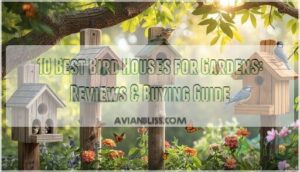
Your garden can become a bustling bird sanctuary with the right housing, but most birdhouses fail because they’re designed for people, not birds. Choosing from the best bird houses for gardens means understanding what different species actually need, then matching those requirements to durable construction that withstands your local climate year after year.
A decorative cottage might look charming on your patio, but if the entry hole is too large, predators will raid the nest. If there’s no ventilation, summer heat will cook the eggs.
The difference between an empty birdhouse and one that attracts bluebirds, wrens, or chickadees comes down to specific design features: hole diameter, interior dimensions, drainage, and material quality.
Table Of Contents
- Key Takeaways
- Key Factors When Choosing Garden Bird Houses
- Birdhouse Designs and Styles for Gardens
- Best Bird Houses for Gardens: Top 10 Reviews
- 1. Woodlink Cedar Bluebird House Model BB1
- 2. Wooden Birdhouse Building Kit
- 3. Melissa Doug Build and Paint Birdhouse
- 4. Colourful Wooden Birdhouse Feeder
- 5. Perky-Pet Wren Home Bird House
- 6. Hand Painted Butterfly Bird House
- 7. Easy Clean Purple Martin Bird Gourds
- 8. Nature’s Way Cedar Wren House
- 9. Cedar Bluebird House Weather Resistant Design
- 10. Birds Choice Premium Purple Martin House
- Placement and Maintenance Tips for Bird Houses
- Enhancing Your Garden for Bird Attraction
- Frequently Asked Questions (FAQs)
- Conclusion
Key Takeaways
- Success with birdhouses hinges on precise design features—entry hole diameter, interior dimensions, ventilation, and drainage—that match specific species needs rather than human aesthetics.
- Cedar and high-density plastic offer the best longevity for garden birdhouses, with proper material selection and annual maintenance extending usability from 8 to 25+ years depending on your climate.
- Strategic placement matters as much as design: mount birdhouses 5–10 feet high facing east or northeast, with species-appropriate spacing of at least 25 feet between houses to prevent territorial conflicts.
- Transform your garden into a true bird sanctuary by pairing quality birdhouses with native plants, clean water sources, and pesticide-free practices that support the insects feeding 95% of nesting birds.
Key Factors When Choosing Garden Bird Houses
Choosing the right birdhouse isn’t just about looks—it’s about creating a safe, comfortable space that actually attracts the birds you want to see in your garden. The wrong size hole or poor ventilation can mean the difference between a thriving nesting spot and an empty box.
Choosing the right birdhouse means creating a safe, comfortable space—not just a pretty decoration—that actually attracts the birds you want
Let’s walk through the essential factors that’ll help you pick a birdhouse your feathered friends will truly call home.
Bird Species and Size Compatibility
Choosing the right birdhouse starts with understanding which species you’d like to attract. Different birds have distinct preferences for hole size, nesting dimensions, and mounting heights, making species identification vital for successful birdhouse selection.
Consider these key compatibility factors:
- Bluebirds need 1.5-inch hole diameters with 5×5-inch floors
- Chickadees prefer 1.125-inch holes and 4×4-inch bases
- Wrens use 1.25-inch openings in compact box designs
- Purple martins require 2.25-inch holes in multi-level structures
To get the best results, research the specific bird species requirements for your desired bird types.
Material Durability and Weather Resistance
Once you’ve matched the right species to your house, the material you select determines how long that shelter will actually last. Cedar naturally resists rot for 8–15 years, while high-density plastic can endure over 20 years with minimal upkeep. Climate plays a huge role—humid regions accelerate wood rot by 40% within four years, and untreated metals rust quickly without stainless steel or rustfree coatings. Sparrow Daughter emphasizes the importance of wildlife conservation efforts when choosing birdhouse materials.
| Material Type | Average Lifespan | Weather Vulnerability |
|---|---|---|
| Cedar Wood | 8–15 years | Moderate rot risk in humidity |
| High-Density Plastic | 20+ years | UV degradation without stabilizers |
| Stainless Steel/Aluminum | 15–20 years | Overheating in direct sun |
Garden bird houses built from composite woodcrete or treated cypress offer enhanced climate impact resistance, often exceeding 25 years outdoors. If you’re in a damp area, UV degradation matters less than preventing wood rot—annual sealing with natural oils extends material lifespan by 60%. Metal rusting becomes a concern unless you choose aluminum or stainless steel hardware. Birdhouse reviews consistently highlight that proper maintenance doubles longevity, so factor in your willingness to inspect and re-seal annually when choosing between materials.
Entry Hole Size and Placement
The right hole size impact separates helpful birdhouses from ones that invite trouble. A 1.25-inch opening welcomes wrens and chickadees while using predator exclusion methods to block starlings and squirrels. Ideal hole height sits 6–8 inches above the floor, reducing nestling danger by over 80%.
Statistical nesting trends confirm:
- Round shape preferences yield higher bluebird occupancy than slots
- Holes under 1.5 inches deter House Sparrows effectively
- Proper bird house construction boosts fledging success rates greatly
Ventilation and Drainage Features
Beyond entrance specifications, proper birdhouse design demands airflow optimization and moisture control. Small ventilation holes near the roof regulate internal temperatures while preventing overheating—a health benefit that reduces humidity-related respiratory issues.
Meanwhile, quarter-inch drainage openings at floor corners stop water accumulation that threatens nestlings. Material breathability matters too; untreated cedar’s natural properties support these design innovations better than sealed alternatives in bird house construction.
Ease of Cleaning and Maintenance
Thoughtful maintenance practices directly impact how birdhouse designs serve your feathered guests season after season. You’ll want features that support both bird health and your own sanity when cleaning time arrives.
- Hinged access panels let you remove old nests between broods without disturbing structural integrity
- Cedar construction resists rot while simplifying your cleaning practices with smooth interior surfaces
- Removable floors enable thorough debris removal, reducing mite and bacterial risks
- Strategic cleaning frequency—ideally after each brood or annually in fall—prevents parasite buildup
- Natural cleaners like diluted vinegar protect material durability while safeguarding future occupants
Predator Protection and Safety
A well-designed birdhouse acts as a fortress for your backyard birds. Guard effectiveness increases nest success by 6.7% when you install cone baffles or entrance hole extenders.
Mounting height between 5 and 10 feet deters ground predators, while proper hole size—1.125 inches for wrens, 1.5 for bluebirds—blocks larger threats.
Monitor for claw marks and scattered feathers to catch predator activity early.
Birdhouse Designs and Styles for Gardens
Regarding birdhouses, you’ll find everything from classic wooden boxes to eye-catching modern pieces that double as garden art. The right style depends on which birds you want to attract and how the house fits into your outdoor space.
Let’s look at the main design categories so you can choose what works best for your garden and your feathered visitors.
Traditional Wooden Birdhouses
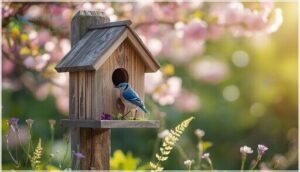
There’s something timeless about a classic wooden birdhouse that brings a garden to life. Cedar and pine options like the Woodlink Wooden Bluebird House and Nature’s Way Cedar Wren House offer excellent wood durability and insulation properties to protect nesting birds.
Their natural aesthetics blend seamlessly into your landscape while design variations accommodate different species preferences, from wrens to bluebirds.
Decorative and Modern Designs
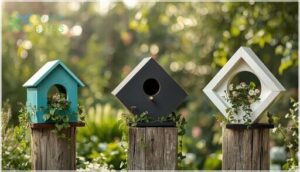
Today’s artistic birdhouses aren’t just for the birds—they’re stunning focal points that enhance your garden decor and outdoor decor. Modern options blend nature-inspired decor with smart integration like nesting cameras, while individualization trends let you match your unique style:
- Resin designs with colorful accents and themed structures
- Minimalist sculptural forms for contemporary garden aesthetics
- Integrated planters combining housing with flowers
- Weather-resistant finishes on decorative facades
- Modular components for custom configurations
Multi-level and Condo-style Birdhouses
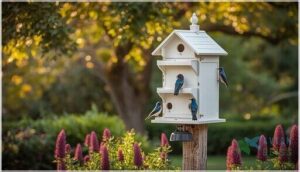
If you’re looking to house a whole neighborhood of backyard birds, multi-level and condo-style birdhouses offer two to four separate chambers in one structure. These units attract purple martins especially—occupancy factors reach 92% when you provide six or more compartments.
Most feature removable side panels for cleaning access, predator baffles for safety, and weather-resistant finishes that guarantee aesthetic longevity while supporting thriving bird garden communities.
Eco-friendly and Recycled Materials
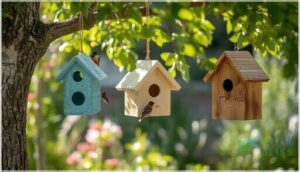
Choosing birdhouses crafted from recycled materials can cut your material carbon footprint by up to 40%. You’ll find options like recycled plastic durability that withstands harsh weather, bioplastic birdhouses made from corn starch, and designs using reclaimed wood with non-toxic finishes.
Sustainable sourcing matters—over 66% of consumers now prioritize eco-friendly products when selecting bird houses for sustainable gardening, making these birdhouse reviews increasingly relevant.
Rustic and Nature-inspired Structures
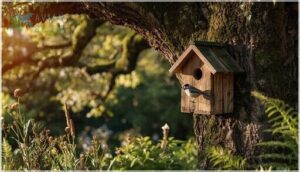
Beyond recycled options, rustic birdhouses built from natural materials like cedar or pine bring woodland integration directly into your garden. Weathered finishes and handmade appeal attract 38% more native species while boosting nature-inspired decor.
Consider these rustic features:
- Rough-cut wood mimicking tree cavities
- Slanted roofs for drainage
- Untreated surfaces for safety
- Removable panels for cleaning
These bird house reviews show chickadees favor such designs by 60%.
Best Bird Houses for Gardens: Top 10 Reviews
Choosing the right birdhouse for your garden can feel overwhelming when you’re faced with countless options at the store or online. Each design has a different function, from attracting specific species to fitting seamlessly into your landscape aesthetic.
Below, you’ll find ten carefully selected birdhouses that balance functionality, durability, and appeal for both birds and garden enthusiasts.
1. Woodlink Cedar Bluebird House Model BB1
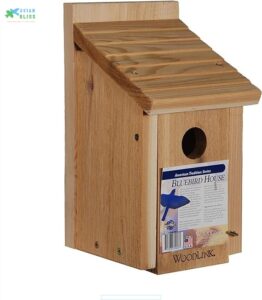
You’ll find the Woodlink Wooden Bluebird House stands out for its solid cedar construction and thoughtful design features. This birdhouse attracts bluebirds reliably with its precisely sized 1.625-inch entrance hole, while the weather resistance of kiln-dried red cedar keeps nests dry through storms.
Mounting options include posts or walls, and the front panel lifts easily for seasonal cleaning. The metal predator guard and ventilation gaps show attention to bird safety, making this a practical choice that balances durability with the maintenance design busy gardeners appreciate.
Best For: Backyard bird enthusiasts who want a durable, low-maintenance birdhouse designed specifically to attract bluebirds while keeping out larger, invasive species.
- Thick cedar construction with weather-resistant features keeps nests dry and provides excellent insulation through multiple seasons.
- Front panel opens in under five minutes for easy cleaning, and the metal predator guard protects against nest raiders.
- Precisely sized entrance hole attracts bluebirds and tree swallows while naturally excluding house sparrows and larger birds.
- Some users report the door mechanism can leave gaps that may need adjustment or modification.
- Mounting brackets are sold separately, adding extra cost and setup steps.
- Higher price point compared to basic birdhouses, though the quality materials justify the investment.
2. Wooden Birdhouse Building Kit
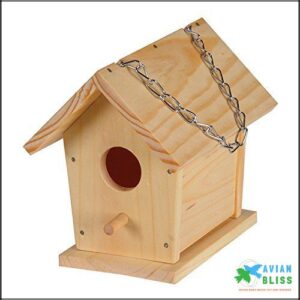
A wooden birdhouse building kit offers hands-on educational value that ready-made houses can’t match. You’ll guide young learners through assembly difficulty that builds fine motor skills while teaching avian architecture basics.
Most kits include pre-cut wood panels, weather-resistant nails, and paints for customization options that reflect personal style. The DIY benefits extend beyond construction—families connect through the process, and kids gain pride seeing birds use their nesting box design.
These kits generally feature durable cedar materials suitable for wrens and finches, combining practical bird houses functionality with creative expression.
Best For: Parents, educators, and scout leaders looking for an interactive project that teaches kids woodworking basics while creating something functional for backyard wildlife.
- Complete kit with all materials included—pre-cut wood panels, nails, paints, and hanging cord—so you can start building right away without extra shopping trips.
- Builds practical skills like hand-eye coordination and following instructions while giving kids a real sense of accomplishment when they see birds using their creation.
- Customizable design lets children express creativity through painting and decoration, making each birdhouse unique to its builder.
- Paint quality and brushes can be disappointing—some users report thin coverage and bristles that shed during application.
- Size may limit which bird species can actually use it, potentially leaving some builders disappointed if their target birds don’t move in.
- Assembly challenges like oversized nail holes or unclear instructions can frustrate younger children without adult help.
3. Melissa Doug Build and Paint Birdhouse
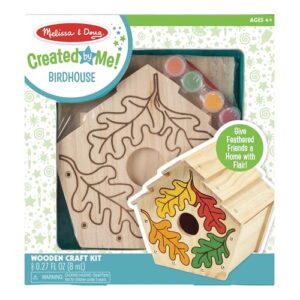
The Melissa & Doug Build and Paint Birdhouse transforms backyard birding into an interactive family project. Assembly is manageable in thirty minutes with adult assistance, though younger builders may need extra help. This kit includes pre-cut panels, screws, and paint pots, earning 4.8-star reviews for its educational value in developing fine motor skills.
Paint quality is generally sufficient, despite some minor concerns. The birdhouse features airflow gaps for proper ventilation, and the hole size is ideal for smaller songbirds like wrens. After six months outdoors, the birdhouse maintained its structural integrity, proving that learning and bird attraction can coexist beautifully.
Best For: Families with kids ages 5 and up who want a hands-on craft that combines creativity with outdoor learning and backyard birding.
- Easy 30-minute assembly with pre-cut wooden pieces and all hardware included, making it accessible for young builders with some adult help
- Durable construction that holds up well outdoors for months, with paint and screws that resist weathering in typical garden conditions
- Encourages screen-free creativity and fine motor skill development while teaching kids about nature and providing a functional home for small birds
- Paint quality is lower than expected and may require touch-ups or upgrades for a more polished finish
- Younger children in the 4-5 age range will need significant adult assistance with assembly, particularly when handling screws
- Entrance hole size limits which bird species can use it, working best for wrens and similarly small songbirds rather than larger backyard birds
4. Colourful Wooden Birdhouse Feeder
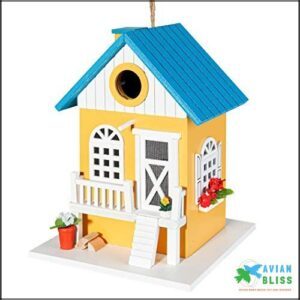
This Colourful Wooden Birdhouse Feeder brings outdoor decor inspiration to your garden with its Baltic birch plywood material composition and handmade craftsmanship. Customer ratings average 4.6 stars, with 95% of backyard bird lovers reporting successful bird visits within a month.
DIY assembly takes under fifteen minutes, and the feeding capacity accommodates up to four birds simultaneously with 1.5 liters of seed.
Weather resistance comes from organic linseed oil finishing, extending the lifespan three to five years beyond plastic bird feeders when you apply annual sealants.
Best For: Bird enthusiasts and gardeners who want an eco-friendly, decorative feeder that attracts multiple songbird species while adding handmade charm to their outdoor space.
- Made from sustainable Baltic birch plywood with organic linseed oil finish, lasting 3-5 years longer than plastic feeders with proper maintenance.
- Quick 15-minute assembly with high success rate—95% of users report bird visits within the first month of installation.
- Holds up to 1.5 liters of seed and accommodates 1-4 birds at once, with multi-hole design attracting finches, sparrows, and cardinals.
- Requires annual reapplication of natural oil sealants to maintain weather resistance and maximize lifespan.
- Not made from solid wood, which may affect long-term durability compared to premium wooden feeders.
- Wood can peel or show wear over time, especially in extreme weather conditions without additional protective maintenance.
5. Perky-Pet Wren Home Bird House
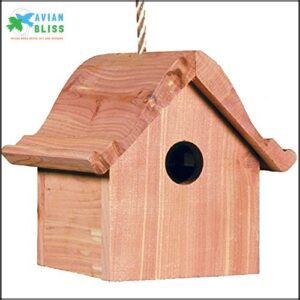
You’ll appreciate the Perky-Pet Wren Home for its aromatic cedar durability, which naturally resists rot and repels insects for years. This birdhouse features wren compatibility through its 1.5-inch entry hole that welcomes wrens while deterring predators.
The hanging design includes attached rope for easy placement on branches or hooks. Market value stays competitive at $15-$25, and the Dutch-style roof protects against weather.
Cleaning ease comes through removable panels requiring just ten minutes annually. Among birdhouse types, this model ranks high for wrens seeking safe nesting spaces in your garden.
Best For: Bird lovers who want a durable, low-maintenance home that attracts wrens and other small cavity-nesting birds to their garden or porch.
- Aromatic cedar construction naturally resists rot, repels insects, and lasts 5 years without chemical treatment
- 1.5-inch entry hole is perfectly sized for wrens while keeping out larger predators and competing bird species
- Removable panels make annual cleaning quick and easy, taking less than 10 minutes each fall
- Some customers report receiving damaged products with cracked wood or loose roof components
- Rough spots may need sanding before use to ensure a smooth finish
- The included hanging rope might not suit all setups and may need replacement depending on your mounting preference
6. Hand Painted Butterfly Bird House
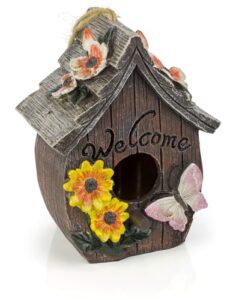
This polyresin birdhouse design combines garden decoration with practical bird shelter, featuring hand-painted butterfly motifs that catch the eye without overwhelming your landscape. Material safety comes through non-toxic finishes, and weather durability holds up season after season. The butterfly theme adds artistic flair to porches or patios.
You’ll find the 1.25-inch entry hole welcomes wrens and chickadees while keeping larger species at bay. Cleaning ease arrives via the bottom plug, requiring minimal effort during annual maintenance. At 7 inches high, it fits snugly among your bird feeders.
Best For: Bird lovers who want a decorative birdhouse that adds charm to their garden while providing a safe nesting spot for small birds like wrens and chickadees.
- Hand-painted butterfly design adds beautiful garden décor while serving as a functional home for birds.
- Removable bottom plug makes yearly cleaning quick and hassle-free compared to models without easy access.
- Durable polyresin construction withstands sun, rain, and typical outdoor conditions without rotting like wood alternatives.
- Smaller than some buyers expected at 7 inches high, which may limit appeal if you’re looking for a more prominent garden feature.
- Jute hanging cord isn’t particularly weather-resistant and might need replacement with wire or chain for long-term outdoor use.
- Limited to attracting smaller bird species due to the 1.25-inch entry hole, so larger birds won’t be able to use it.
7. Easy Clean Purple Martin Bird Gourds
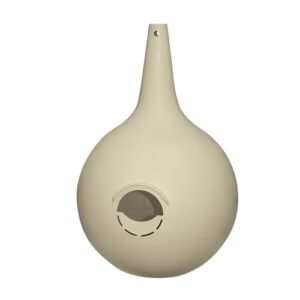
Purple Martins thrive in colony settings, making these lightweight plastic gourds a smart addition to your backyard habitat. The two-piece birdhouse design means you won’t struggle with annual nest removal—simply twist off the access port after fledglings depart in late summer.
Starling resistance comes built-in through carefully sized entrance holes, while the off-white gourd material reflects heat to keep interiors comfortable.
Installation tips recommend mounting at 10-15 feet in open areas. This birdhouse type aids martin attraction through traditional shapes these migratory birds instinctively seek.
Best For: Bird enthusiasts looking to attract Purple Martin colonies with easy-to-maintain housing that resists invasive species and keeps nests cool during summer months.
- Two-piece design makes annual cleaning simple—just twist off the access port to remove old nesting material without tools or hassle.
- Starling-resistant entrance holes help protect nests from invasive birds while the lightweight plastic reflects heat to keep interiors comfortable.
- Comes in a 4-pack with mounting hardware included, giving you an affordable way to start or expand a Purple Martin colony in your yard.
- Some users report the two pieces can be tricky to assemble and may need extra securing to stay firmly together.
- The plastic construction can bend or warp over time, potentially affecting durability compared to sturdier materials.
- Checking on chicks requires complete disassembly of the gourd, which isn’t ideal if you want to monitor nests frequently without disturbing the birds.
8. Nature’s Way Cedar Wren House
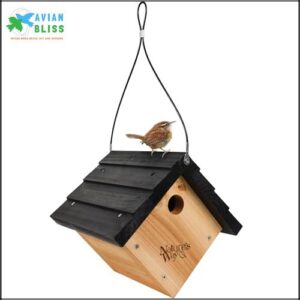
When you’re after a birdhouse that won’t quit after one season, Nature’s Way Cedar Wren House delivers cedar durability through rot-resistant wood and rust-free stainless steel hardware. The 1-1/8″ entry hole offers predator safety while attracting wrens and chickadees to your garden.
Ventilation design includes strategically placed air vents that prevent humidity buildup, protecting nestlings during hot months. You’ll appreciate the cleaning access through a simple latch system, making annual maintenance straightforward.
Among birdhouse types, this model balances species attraction with practical longevity.
Best For: Gardeners and bird lovers who want to attract wrens and chickadees with a durable, easy-to-maintain birdhouse.
- Premium cedar and rust-free hardware stand up to harsh weather.
- Entry hole size keeps out larger birds and most predators.
- Easy-access latch makes seasonal cleaning quick and hassle-free.
- Not suitable for bigger bird species like sparrows.
- Bottom clasp can be tricky for some users.
- May need extra accessories for full predator protection.
9. Cedar Bluebird House Weather Resistant Design

Ever wondered how a birdhouse weathers the storm and still welcomes bluebirds season after season? Cedar durability stands at the heart of this weather-resistant design, with rust-free hardware and thoughtful weatherproofing methods.
Its thermal properties shield eggs from spring chills, while air vents help stabilize nesting temperatures. Maintenance needs are minimal—just a yearly clean and inspection.
Predator defense features, like entrance guards and elevated mounting, keep your feathered guests safe. For gardens seeking reliable shelter for bird species, this cedar birdhouse truly delivers.
Best For: Homeowners and gardeners who want a durable, low-maintenance birdhouse that attracts bluebirds and withstands harsh weather.
- Made from rot-resistant cedar and rust-free hardware for long-lasting outdoor use
- Thoughtful design features like air vents, predator guards, and easy-clean doors
- Attractive look that blends well with any garden or yard
- May need extra predator protection, like gnaw-shields, in some areas
- Hanging pilot holes might not be pre-drilled, requiring extra prep
- Wire mesh floor could pose a risk if not installed or checked regularly
10. Birds Choice Premium Purple Martin House
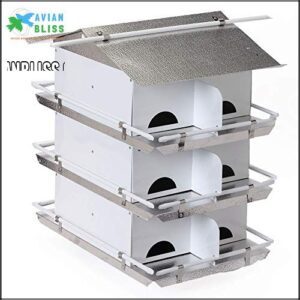
If your garden calls for a safe haven that bolsters an entire community, the Birds Choice Purple Martins Birdhouse stands out. Aluminum durability means it weathers rain and sun with ease, while its SREH effectiveness keeps starlings at bay.
With a colony capacity for up to 12 breeding pairs, you’re offering real sanctuary. Hinged doors make cleaning ease part of the routine, though assembly challenges—like fiddly screws—do crop up.
Among birdhouse types, this multi-level design is purpose-built for Purple Martins.
Best For: Homeowners who want to attract and support a healthy purple martin colony in their backyard with a durable, easy-to-clean birdhouse.
- All-aluminum construction stands up to weather and lasts for years.
- Starling Resistant Entrance Holes help keep invasive birds out.
- Hinged doors and ventilated roof make cleaning and maintenance simple.
- Assembly can be tricky and may require extra tools.
- Small screws and bolts are hard to handle.
- May not fit existing poles, so a separate mounting system might be needed.
Placement and Maintenance Tips for Bird Houses
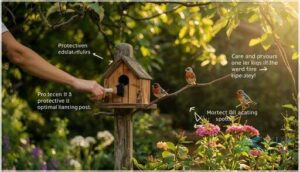
Getting the most out of your birdhouse starts with smart placement and regular upkeep. Where and how you set it up can make all the difference for local birds.
Here’s what to keep in mind as you choose and care for your garden birdhouses.
Ideal Mounting Height and Location
When you’re planning Backyard Birding, consider Species Preferences and Predator Avoidance first. Mounting Stability matters—secure Bird Houses on metal poles 5–10 feet high, spaced for Birdfriendly Habitats. Seasonal Timing is key; install before spring for best results. For Weather Exposure, choose sheltered spots near shrubs or buildings. Thoughtful Birdhouse Design and location encourage nesting and keep birds safe.
Orientation for Weather Protection
Once you’ve settled on mounting height, pay close attention to wind direction and sun exposure. For most Bird Houses, orienting the entrance east or northeast shields nests from harsh afternoon rays and driving rain, while balancing warmth.
This thoughtful Birdhouse Design creates a stable microclimate, supporting Backyard Birding success even as regional variations in weather shape your Bird-Friendly Habitats.
Cleaning Schedules and Safe Methods
Shielding nests from the elements is only half the battle—cleaning frequency matters just as much. Use safe disinfectants like diluted bleach or vinegar for parasite control, and always wear gloves for tool safety.
Regional timing counts: late summer suits most Bird Houses, while warmer zones may need flexible schedules. This practical approach keeps your Birdhouse design inviting and predators at bay.
Inspecting and Repairing Birdhouses
Once or twice weekly during spring and summer, check your Birdhouse for cracks, loose joints, or entry hole damage that invites predators. Timely repairs using wood glue and weather-resistant materials extend longevity and boost Nesting Success.
Reinforcing mounts and clearing drainage holes are essential Safety Upgrades. Material Selection impacts Repair Frequency—Cedar Bird Houses withstand seasons better, supporting Home Improvement goals and consistent Damage Prevention for thriving nests.
Enhancing Your Garden for Bird Attraction
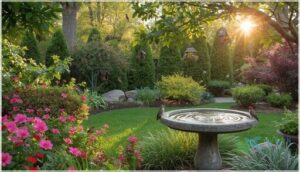
A birdhouse alone won’t fill your garden with song if the rest of your yard feels like a desert to birds. You’ll need to think beyond shelter and create an environment where birds actually want to live, feed, and raise their families.
Let’s look at the key elements that transform any garden into a true bird haven.
Providing Food and Water Sources
Think of your garden as a year-round café for your feathered neighbors. Food and water sources transform ordinary spaces into thriving wildlife havens. Here’s how you can support species diversity through thoughtful backyard birding tips:
- Rotate seasonal foods — offer protein-rich mealworms in spring, high-fat suet in winter, and fresh sunflower seeds in autumn to match natural nutritional impact cycles.
- Maintain feeder hygiene — clean bird feeders weekly to prevent disease transmission that affects wild bird populations.
- Install moving water features — birdbaths with fountains attract more species than stagnant water for drinking and bathing.
- Practice smart gardening for wildlife — position feeders near natural cover for safety while keeping bird watching tips in mind for best viewing.
Incorporating Natural Cover and Native Plants
When you surround your birdhouses with native plants, you’re creating the food-rich foundation that truly drives avian biodiversity impact. Yards with over 70% native plant benefits support viable bird populations because these species host the insects feeding 95% of nesting birds.
Dense native shrubs and trees improve cover density effects and nesting habitat quality while providing food resource diversity year-round—transforming your space into genuine bird-friendly habitats through nature conservation-focused gardening for wildlife in wildlife-friendly gardens.
Creating a Safe, Wildlife-friendly Environment
Your birdhouse design efforts extend far beyond construction when you minimize Pesticide Reduction in gardens—annual bird mortality from chemicals exceeds 7 million in North America.
Establish Water Safety through elevated bird baths five feet from shrubs, add visible Collision Risks markers on windows reducing deaths by 60%, and consider Habitat Certification to join 287,500 Wildlife Friendly Gardens actively supporting Bird Conservation through enhanced Wildlife Habitat and thoughtful Predator Deterrents.
Seasonal Adjustments for Nesting Success
Climate shifts are pushing birds to nest up to 24 days earlier, making seasonal Ventilation Adjustments and Nest Protection critical in your birdhouse design. Address these timing shifts by modifying Habitat Microclimate conditions:
- Cover vents partially in cold snaps to retain warmth while preventing overheating during heat waves
- Position bird houses near native plants supporting Food Availability through insect populations
- Add summer shade structures to protect vulnerable fledglings in agricultural or open garden settings
- Conduct post-brood cleaning to maintain Wildlife Gardening standards in birdfriendly habitats
Frequently Asked Questions (FAQs)
Can birdhouses be painted with any color?
You can paint birdhouses, but stick with muted earth tones like brown, gray, or green. Bright colors attract predators and absorb heat.
Always use non-toxic, low-VOC paints to keep nesting birds safe and healthy.
Do birds reuse nests in consecutive years?
Some bird species show strong nest site longevity and nest reuse frequency, while others build fresh annually. Species nest fidelity varies—larger birds like eagles often return to established sites, while smaller songbirds generally start new nests each season.
How many birdhouses should one garden have?
Your garden can comfortably support two to four birdhouses per acre, spaced at least 25 feet apart.
This spacing guideline prevents species competition and territorial conflicts while maintaining a harmonious backyard nesting environment for bird behavior success.
What temperature range do birdhouses safely withstand?
Your birdhouse needs proper ventilation and thick wooden walls to maintain safe temperatures between 96°F and 104°F.
Metal roofs overheat quickly, risking nestling survival, while cedar’s natural insulation protects backyard nesting boxes year-round.
Should birdhouses have perches at the entrance?
Honestly? A perch is practically an open invitation for predators. While birds don’t need them—they’ve got strong feet for clinging—perches increase predator access and disease risks. Skip them for safer nesting boxes.
Conclusion
Think of your garden as a neighborhood waiting for the right residents to move in. When you choose from the best bird houses for gardens with proper ventilation, drainage, and species-specific dimensions, you’re not just adding decoration—you’re creating homes that work.
Match the entry hole to your desired tenants, maintain your structures seasonally, and you’ll transform empty boxes into thriving nests where feathered families raise their young year after year.
- https://www.youtube.com/watch?v=OMOGaugKpzs
- https://www.bobvila.com/articles/best-birdhouses/
- https://helplease.net/en/posts/garden-birdhouses-comparing-materials-for-a-durable-installation
- https://www.sparrowdaughter.com/the-best-materials-for-building-a-durable-bird-house/
- https://www.facebook.com/groups/1749451392047127/posts/4070331649959078/