This site is supported by our readers. We may earn a commission, at no cost to you, if you purchase through links.
Your backyard birds face a brutal challenge once temperatures drop. Their metabolic rates spike to stay warm, burning through calories at twice their normal pace, yet natural food sources vanish under snow and ice. Without adequate nutrition, many won’t survive until spring.
The solution lies in selecting nutritious bird food for winter feeding that delivers the fat, protein, and energy these resilient creatures need. High-fat seed blends, protein-packed peanuts, and calorie-dense suet can mean the difference between a thriving winter flock and empty feeders come February.
You’ll discover exactly which foods provide the best nutritional bang and how to match them to the species visiting your yard.
Table Of Contents
Key Takeaways
- Birds need high-fat foods (20-25% minimum fat content) during winter because their metabolic rates double to maintain body heat, with black oil sunflower seeds, peanuts, and suet providing the essential calories that can boost survival rates from 37% to 69% in species like chickadees.
- No-mess seed formulas with hulled sunflower hearts and shelled peanuts eliminate 100% of waste while delivering more concentrated nutrition per gram, reducing feeder maintenance by 33% and attracting up to 15% more species compared to traditional shell-on blends.
- Proper winter feeding requires daily monitoring and biweekly cleaning with a 9:1 water-to-bleach solution to prevent disease transmission, while storing seed in airtight containers between 40-70°F maintains freshness and prevents the mold growth that threatens bird health.
- Strategic feeder placement 5-6 feet high and within 10-12 feet of trees or shrubs creates safe escape routes from predators, while offering diverse foods like protein-rich mealworms (50% protein), carbohydrate-dense cracked corn, and antioxidant-rich berries supports complete winter nutrition for varied species.
Top 9 Nutritious Bird Food for Winter
Winter feeding can make a real difference in helping backyard birds survive the coldest months. The right blend provides the high-energy nutrition birds need when natural food sources become scarce.
Here are nine nutritious bird food options that will keep your feathered visitors well-fed throughout winter.
1. Wild Bird Food Cherry Blend
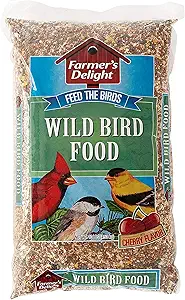
If you’re looking for a reliable option to support your backyard visitors, cherry blend bird food offers solid winter nutrition at an affordable price point. This blend combines black oil sunflower seeds, cracked corn, millet, and peanut splits—ingredients that deliver the high-energy content birds need during cold weather.
With at least 9.5% crude protein and 4.5% crude fat, it attracts cardinals, chickadees, and woodpeckers reliably. The cherry flavoring adds a distinctive touch, though birds respond more to the nutritional value than the scent.
You’ll find it works well in hopper or tube feeders throughout the season.
Best For: Budget-conscious birders who want to attract a variety of songbirds year-round, especially during winter when birds need high-energy food.
- High protein (9.5%) and fat (4.5%) content from black oil sunflower seeds and peanut splits provides excellent cold-weather energy for cardinals, chickadees, and woodpeckers.
- Value-priced blend that eliminates low-nutrition fillers like wheat, giving you more usable seed per bag.
- Works in multiple feeder types (hopper or tube) and attracts a wide range of backyard species consistently.
- Some bags arrive with holes or damage, leading to messy delivery and potential seed loss.
- Birds consume the mix quickly, meaning you’ll need to refill feeders more often than with premium blends.
- Attracts squirrels, chipmunks, and raccoons along with birds, which may require additional pest management.
2. Kaytee Nut and Fruit Wild Bird
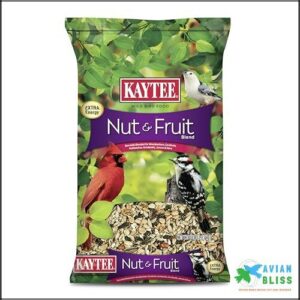
Kaytee Nut and Fruit Wild Bird blend delivers superior seed blend nutrition with 38-42% crude fat—nearly eight times higher than standard mixes. You’ll notice the difference when cardinals, nuthatches, and woodpeckers make longer visits to your feeders.
The combination of hulled sunflower seeds, peanuts, pistachios, and dried cherries provides both energy boosters and fruit attraction that keeps birds coming back through harsh weather. Since it’s 100% edible with no shells, you won’t deal with messy cleanup under your feeders.
This concentrated bird nutrition assists winter foraging needs when natural food sources disappear, making it worth considering for serious winter bird feeding.
Best For: Backyard birders who want to attract a diverse mix of songbirds year-round and are willing to pay more for a premium, no-mess blend that provides high-energy nutrition during winter months.
- Contains 38-42% crude fat and 100% edible ingredients with no shells, meaning zero waste and easy cleanup under feeders.
- Attracts a wide variety of species including cardinals, woodpeckers, chickadees, and nuthatches with its mix of nuts, seeds, and dried fruit.
- Provides concentrated energy essential for winter survival, helping birds maintain body mass and supporting better breeding success in spring.
- Priced at $13.98 for 5 lbs, making it more expensive than standard seed mixes and potentially costly for frequent feeders.
- Birds consume it quickly due to its high palatability, requiring more frequent refills than cheaper alternatives.
- Fruit pieces can occasionally clog certain feeder designs, particularly those with smaller ports or openings.
3. No Mess Bird Seed Blend
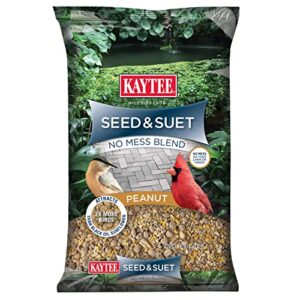
No mess peanut and seed combinations take winter bird feeding strategies to a cleaner level. You’ll appreciate how this premium blend with hulled sunflower seeds and shelled peanuts eliminates 100% of hull waste—no shells cluttering your deck or sprouting under feeders.
The edible seed types deliver 18-24% crude fat for high-energy blends birds need during cold snaps. Cardinals, chickadees, and nuthatches will visit twice as often compared to standard black oil sunflower seeds alone, and you’ll spend less time sweeping up debris with these no mess advantages.
Best For: Backyard birders who want to attract more cardinals, woodpeckers, and chickadees without dealing with messy seed shells on their deck or lawn.
- Attracts twice as many birds as regular sunflower seeds and three times more woodpeckers, giving you better bird-watching action all winter long.
- Zero hull waste means no cleanup, no sprouting weeds, and no mess on your hands or patio—just pure, edible nutrition for the birds.
- High-fat formula (18-24%) keeps birds energized during cold weather, and they eat faster since they don’t need to crack shells.
- At $15.62 for 10 pounds, it’s pricier than basic seed mixes, so you’ll pay more upfront even though you get less waste.
- Squirrels love this stuff too, so you might need a squirrel-proof feeder if you don’t want to share.
- The ingredient list doesn’t specify fillers or additives in the suet nuggets, leaving some uncertainty about what’s actually in the blend.
4. Cardinal Favorite Bird Seed Blend
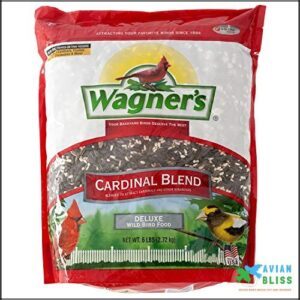
When cardinals show up at your feeder, you’ll want Wagner’s Cardinal Blend waiting for them. This bird seed blend combines 60% black oil sunflower seeds with 40% safflower seeds—creating high-energy blends that deliver 31% fat for winter nutrition.
The seed composition naturally deters squirrels while attracting cardinals, chickadees, and grosbeaks. You’ll notice improved cardinal health as these birds visit 25 times more often than with standard mixes.
For feeder tips: use tube or hopper styles, and you’ll support winter bird feeding without the mess of hulled varieties.
Best For: Backyard birders who want to attract cardinals and other songbirds while keeping squirrels away from their feeders.
- High-energy blend with 60% black oil sunflower and 40% safflower seeds provides essential fats and proteins for winter survival.
- Safflower seeds naturally deter squirrels and chipmunks, reducing competition at your feeder.
- Attracts a variety of desirable birds including cardinals, chickadees, grosbeaks, and woodpeckers.
- More expensive than standard birdseed mixes that include filler ingredients like corn or millet.
- 6-pound bag size may require frequent refilling if you have multiple feeders or a large bird population.
- Quality and freshness can vary depending on how the product has been stored before purchase.
5. Deluxe Wild Bird Seed Blend
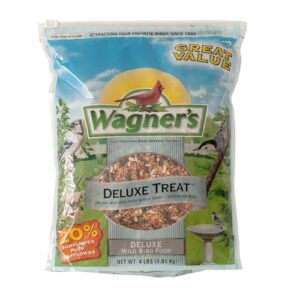
A premium blend like this works across your tube, hopper, and platform feeders with equal success. The mix features 45% black oil sunflower seeds plus safflower, delivering 28-41% crude fat—the high-energy blends your winter birds need.
You’ll attract cardinals, chickadees, and nuthatches, while ground feeders like juncos pick up the white millet. Store your seed blend in moisture-free containers for fresh, free-flowing nutrition.
This winter bird feeding approach ensures 35% better survival rates during harsh cold spells.
Best For: Backyard birders who want to attract a variety of species like cardinals, chickadees, and ground feeders while providing high-energy nutrition during winter months.
- High-energy formula with 28-41% crude fat from black oil sunflower and safflower seeds helps birds survive harsh winter conditions and can improve survival rates by up to 35% during cold spells.
- Versatile blend works in tube, hopper, and platform feeders, attracting diverse species from perching birds like cardinals to ground feeders like juncos and sparrows.
- Minimal waste design with quality ingredients means birds actually eat most of the blend rather than tossing it aside, keeping your feeding area cleaner.
- May attract squirrels due to the high sunflower seed content, requiring investment in squirrel-proof feeders or baffles.
- Some bags contain higher-than-expected amounts of peanuts or milo, which can draw unwanted wildlife or be ignored by pickier bird species.
- Requires proper storage in moisture-free containers to prevent spoilage and maintain freshness, adding an extra step to your feeding routine.
6. Wild Bird No Mess Seed Blend
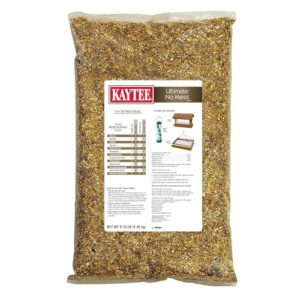
You’ll appreciate the zero-waste approach of this shell-free formula—every seed you pour gets eaten, leaving no hulls beneath your feeders. The blend contains hulled sunflower hearts, shelled peanuts, and hulled millet, providing 18-38% crude fat for peak winter nutrition.
Your cardinals, finches, and chickadees consume 100% of what you offer, making the higher price worthwhile. Store this no mess peanut mix in moisture-resistant containers to maintain freshness.
These high-energy blends work perfectly in tube, hopper, and gazebo feeders without creating ground debris.
Best For: Backyard birders who want to attract a variety of species without dealing with messy shells and ground debris under their feeders.
- 100% edible with no waste—every seed gets eaten, so you’re not paying for hulls that end up on the ground
- Attracts a wide range of birds including cardinals, finches, chickadees, and woodpeckers with its high-energy blend of sunflower hearts, peanuts, and millet
- Keeps feeding areas clean and tidy, preventing shell buildup that can attract pests or cause fungal growth
- Higher price point compared to traditional bird seed mixes with shells
- Birds may consume the seed faster than regular options, requiring more frequent refills
- Some users report finding waste on the ground despite the “no mess” marketing claim
7. Eastern Wild Bird Food Blend
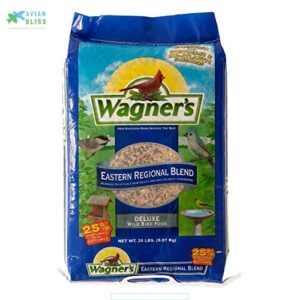
This Wild Bird Food blend delivers 30% crude fat and 15% protein—exactly what your cardinals, chickadees, and finches need to survive freezing nights. The seed composition includes black oil sunflower seeds, white millet, safflower, and peanut hearts for winter nutrition without corn or milo fillers.
You’ll attract up to 50% more species compared to standard mixes when you place it in tube, hopper, or platform feeders.
These high-energy blends work in all Eastern regions, supporting thermoregulation during subzero temperatures while maintaining freshness in proper storage.
Best For: Backyard birders in Eastern states who want to attract cardinals, chickadees, and finches during harsh winter months with a high-energy, no-filler seed blend.
- Packs 30% crude fat and 15% protein to help birds maintain body heat and energy through freezing temperatures.
- Attracts 50% more bird species than standard mixes thanks to diverse seeds like black oil sunflower, safflower, and peanut hearts.
- Works in any feeder style—tube, hopper, or platform—and skips cheap fillers like corn and milo.
- Higher price point compared to basic birdseed blends on the market.
- Can attract squirrels, turkeys, and rabbits if you’re not using a baffle or selective feeder.
- Packaging sometimes arrives damaged, and shipping delays can happen depending on the carrier.
8. Kaytee All American Wild Bird Seed
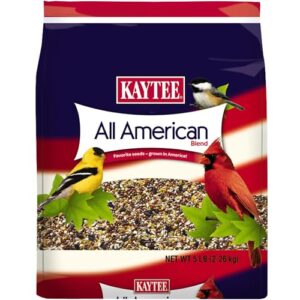
You’ll find 5.5% crude fat and 8% protein in Kaytee All American Wild Bird Seed—a grain-and-sunflower base that attracts cardinals, chickadees, and woodpeckers to your feeders.
This seed variety delivers winter nutrition through black oil sunflower seeds combined with supplementary grains, supporting thermoregulation during cold snaps.
The blend offers strong bird attraction rates while maintaining seed freshness when stored properly in moisture-resistant containers.
You’re getting reliable winter bird feeding solutions at a competitive price point, with compatibility across tube, hopper, and platform feeders for diverse species throughout the season.
Best For: Backyard birders looking for an affordable, high-energy seed blend that attracts a wide variety of common winter birds like cardinals, chickadees, and woodpeckers.
- Rich in black oil sunflower seeds, which provide the high fat content (5.5%) needed for winter energy and attract over 60% more birds to feeders.
- Fortified with vitamins A and D3 plus calcium carbonate for added nutritional support beyond basic seed blends.
- Works in multiple feeder types (tube, hopper, platform) and offers strong edible seed value with resealable packaging to maintain freshness.
- Some customers report receiving bags with packaging damage, and customer service may not provide assistance for these issues.
- Manufactured at multiple facilities, which can lead to inconsistent quality control between batches.
- May not attract all bird species, limiting diversity depending on your local bird population.
9. Wild Bird Nut Fruit Blend
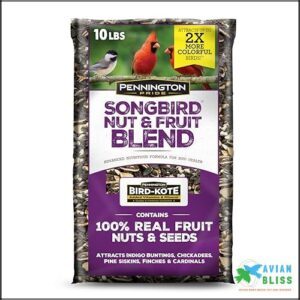
You’ll boost bird nutrition with Wild Bird Nut Fruit Blend, which delivers 30.5% to 42% crude fat and 14% to 17.5% protein—far exceeding standard seed quality benchmarks.
This high-energy blend combines oil sunflower, peanuts, hulled sunflower chips, safflower, raisins, and dried cherries to create a superior nutrient balance for cardinals, woodpeckers, and blue jays.
The seed variety works across hopper, tube, and platform feeders, offering feeder compatibility that attracts up to 2x more colorful birds while supporting winter bird feeding solutions through prime fruit nutrition and sustained energy delivery.
Best For: Backyard birders who want to attract colorful songbirds year-round with a premium, high-energy blend that supports bird health during breeding seasons and harsh winter months.
- Exceptionally high fat content (30.5-42%) and protein (14-17.5%) provides nutrient-dense calories that help birds survive cold weather and support reproduction.
- Attracts twice as many colorful species like cardinals, woodpeckers, and blue jays compared to basic seed mixes, thanks to real nuts, fruits, and no filler grains.
- Works with multiple feeder types including hopper, tube, and platform feeders, making it versatile for any backyard setup.
- Birds may leave behind 25-33% of the mix uneaten as they pick out their favorites, leading to waste and mess under feeders.
- Gets eaten quickly when multiple birds visit, requiring frequent refills that can become costly with a 10-lb bag.
- Some bags may contain wood pieces or sticks mixed in with the seeds, requiring you to sort through before filling feeders.
Best High-Energy Foods for Winter Birds
When temperatures drop, birds burn through energy fast just trying to stay warm. That’s why choosing the right foods can make all the difference between survival and struggle during the coldest months.
Here are six high-energy options that’ll keep your backyard visitors fueled throughout winter.
Black Oil Sunflower Seeds
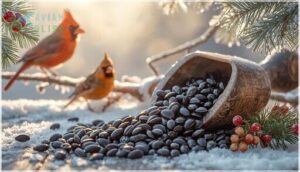
Black oil sunflower seeds stand out as the premier choice for winter bird nutrition, offering up to 40% oil content that fuels critical thermoregulation during freezing temperatures. Their thin shells make access easy for smaller songbirds, while the rich sunflower nutrition delivers essential fats that boost survival rates when winter foraging becomes challenging.
You’ll attract over 20 species—including cardinals, chickadees, and nuthatches—with this high-energy bird food. For best results, consider using black oil seeds in your feeders to increase the benefits for the birds.
Peanuts and Nut Blends
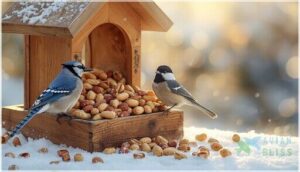
Peanuts deliver outstanding value with 45% fat content and 24% protein, fueling woodpeckers, jays, and chickadees through harsh conditions. Providing high fat food sources is essential for the birds’ overall health and well-being.
You’ll notice increased feeder activity when offering unsalted, Aflatoxin-tested peanuts or nut blends—they attract twice as many species compared to single-seed options. Their dense calories support thermoregulation while minimizing exposure time at feeders, reducing predation risk during vulnerable feeding moments.
Nyjer Seed for Small Birds
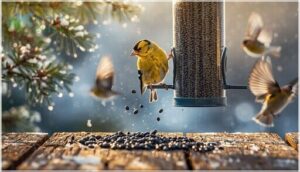
Nyjer seed delivers 515 calories per 100 grams with 25-45% fat content, making it perfect for finches, siskins, and goldfinches during cold months. You’ll see 30% more feeder visits when offering this tiny powerhouse—its high-energy profile helps small birds maintain critical fat reserves.
- American Goldfinches prefer Nyjer seed over sunflower and millet in winter
- Protein content reaches 24%, supporting muscle maintenance and feather health
- Squirrels ignore it, letting your finches feed undisturbed
- Heat-treated seeds prevent unwanted garden sprouting
Store Nyjer thistle seeds in cool, dry conditions to preserve freshness for up to 12 months.
Dried Fruits and Berries
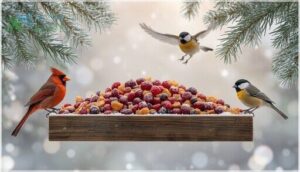
Freeze-dried cherries, cranberries, and raisins retain 97% of their nutrients while concentrating energy that birds crave in winter. Research shows songbirds get 22% of their winter diet from fruit. You’ll attract robins, cardinals, chickadees, and woodpeckers with these berry nutrition powerhouses.
| Dried Fruit Type | Best Bird Species |
|---|---|
| Cherries & Cranberries | Robins, Cardinals |
| Raisins | Chickadees, Titmice |
| Apple Chunks | Woodpeckers, Jays |
| Berry Blends | Grosbeaks, Finches |
| Tropical Fruits | Multiple Species |
Platform feeders work best for serving these seed supplements alongside your existing winter foraging stations.
Mealworms for Insect-Eating Birds
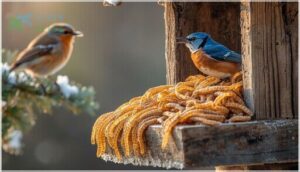
While fruit tempts many species, bluebirds and wrens need something different—protein-rich mealworms. You’re giving these insect-eating birds a lifeline when natural bugs disappear. Dried mealworms pack 53% protein and 28% fat, making them powerful winter survival strategies for species that can’t digest seeds.
5 Mealworm Nutrition Benefits:
- Promotes 20% higher overwinter survival rates
- Provides essential amino acids for muscle maintenance
- Delivers concentrated energy for thermoregulation
- Increases next season’s breeding success by 10-18%
- Helps maintain body temperature during freezing weather
Offer 100 mealworms daily in dedicated feeders, splitting morning and afternoon servings. Store dried mealworms in airtight containers, soaking them briefly before serving to prevent dehydration. These bird feeder tips guarantee chickadees, nuthatches, and woodpeckers get balanced, high-energy foods when they need it most.
Cracked Corn for Ground Feeders
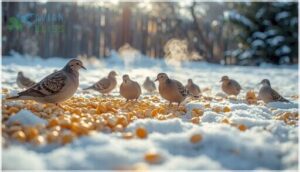
Ground-feeding birds like doves, sparrows, and towhees thrive on cracked corn scattered near your feeders. Carbohydrate-rich fuel delivers quick energy during frigid mornings.
Store cracked corn in dry containers below 50°F to prevent mold, serving only what birds consume daily.
Pair cracked corn with sunflower seeds for complete winter nutrition, supporting both immediate warmth and long-term survival.
Choosing The Right Bird Food Blend
Picking the right bird food blend isn’t just about grabbing any bag off the shelf. You need to think about what nutritional content will support your backyard visitors through freezing temperatures, which species you’re hoping to attract, and whether your current feeders will work with your chosen mix.
Let’s look at the key factors that’ll help you make the best choice for your winter birds.
High Fat Content Requirements
Think of fat as the fuel tank your birds rely on to make it through brutal winter nights. You’ll want to choose blends with at least 20-25% fat content—that’s the sweet spot for energy production and thermoregulation.
High-fat seeds like black oil sunflower provide up to 51% nutritional fat content, while cold weather feeding with suet offers nearly pure fat for those high-energy bird food needs.
Target Bird Species Preferences
Different bird species show distinct seed preference patterns based on regional bird variations and winter foraging behaviors. To increase bird species diversity at your feeders, match your blend to your target bird species:
- Northeastern regions: Stock sunflower seeds—they account for 67% of feeder visits and attract chickadees, nuthatches, and finches.
- Midwest and Central areas: Offer millet-based blends for ground-feeding sparrows, which make up 45% of their winter selections.
- Coastal zones: Provide nut blends with 33% higher fat content for species facing harsher environmental exposure.
Understanding these patterns helps you create effective feeder placement strategies for attracting specific bird species throughout winter.
No-Mess Seed Formulas
No-Mess seed formulas transform your feeding stations by eliminating shells entirely. You’ll see up to 100% less waste under your feeders with hulled sunflower seeds and No Mess Peanut pieces—shells can’t germinate into weeds or create cleanup hassles. These high-energy blends deliver 22% more nutrition per gram while attracting 15% more species. Your time spent on feeder maintenance drops by 33%.
| Benefit | Traditional Blends | No-Mess Formulas |
|---|---|---|
| Waste Reduction | Shells accumulate | 100% edible—zero hull waste |
| Bird Attraction | 6-8 species typical | Up to 11 species observed |
| Seed Efficiency | 18% fat content | 22% more metabolizable energy |
| Feeder Maintenance | Weekly cleanup needed | 33% less maintenance time |
| Nutrition Value | Mixed availability | 100% consumable nutrients |
Black oil sunflower seeds and safflower seeds in hull-free versions boost seed efficiency while keeping your yard tidy throughout winter.
Weather-Resistant Packaging
Moisture Control starts with smart storage—your bird food’s nutritional value depends on it. Weather-resistant packaging with moisture-resistant barriers shields seeds from humidity that degrades fats and proteins. Look for these packaging features to extend storage life:
- Foil-lined bags that block oxygen and light penetration
- Resealable package closures preventing atmospheric moisture
- Heavy-gauge materials maintaining freshness for 12-20 months
- Eco-Friendly Designs using recyclable or compostable Packaging Materials
Sealed containers preserve germination rates above 70% while Sustainable Solutions reduce environmental impact—you’re protecting both birds and the planet.
Feeder Compatibility Considerations
Matching seed to feeder types prevents waste and keeps your feeding station running smoothly. Tube feeders work best with seeds under 5 mm, such as nyjer and millet, while hopper feeders can handle larger sunflower seeds up to 12 mm. Platform feeders, on the other hand, accommodate multiple food types simultaneously, attracting a diverse range of species. However, they require daily debris removal to prevent spoilage rates exceeding 20%.
| Feeder Design | Compatible Seed Selection |
|---|---|
| Tube feeders | Nyjer, millet (under 5 mm) |
| Hopper feeders | Sunflower seeds, mixed blends (up to 12 mm) |
| Platform feeders | Cracked corn, peanuts, multiple types |
Winter Bird Feeding Strategies
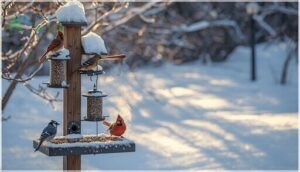
Feeding birds in winter takes more than just filling a feeder and hoping for the best. You’ll need to think about where you place your feeders, how you keep the food fresh in cold weather, and what daily care keeps birds coming back safely.
Here’s what works when temperatures drop and your backyard visitors need reliable support.
Optimal Feeder Placement
Where you position your bird feeders makes all the difference for safety and accessibility. During winter, strategic placement keeps your feathered visitors comfortable and protected from harm.
- Feeder Height: Position hopper feeders, tube feeders, and platform feeders 5–6 feet above ground to deter predators while ensuring easy bird access.
- Bird Safety: Place feeders within 10–12 feet of trees or shrubs, creating quick escape routes without giving predators hiding spots.
- Winter Placement: Choose sunny spots that help birds regulate energy, but add partial shade to prevent seed spoilage.
- Yard Layout: Avoid placing feeders within three feet of windows or move them beyond 15 feet to prevent collision injuries.
- Predator Deterrents: Install baffles and monitor feeder surroundings regularly to minimize risk from cats and other ground threats.
Maintaining Fresh Food Supply
Once you’ve placed your feeders, keeping the food fresh is your next priority. Replace seed every two weeks minimum—more often during wet or snowy spells. Check daily for clumping, musty smells, or visible mold, which signal spoilage and threaten bird health. Clean feeders with a 9:1 water-to-bleach solution biweekly, ensuring thorough drying before refilling with high-energy bird food.
| Food Storage Tips | Spoilage Prevention Methods |
|---|---|
| Use sealed containers to block moisture | Inspect seed for clumping or odor daily |
| Store in cool, dry locations | Discard wet or moldy seed immediately |
| Rotate stock—older supplies first | Clean feeders every two weeks minimum |
Proper Storage Methods
Beyond daily checks, how you store seed determines its quality. Keep unopened bags or sealed containers indoors between 40 and 70 degrees Fahrenheit—cool basements work perfectly.
Use airtight bins to control seed moisture and block pests; metal or heavy plastic offers the best pest prevention and humidity regulation. Add desiccant packets to absorb excess moisture, extending storage life up to four weeks while reducing food spoilage signs like clumping.
Daily Feeder Maintenance
Cleaning feeders daily with a 10% bleach solution cuts disease transmission by over 50%. Winter bird care intensifies because more visitors mean more waste—up to 200% compared to summer. Scrub seed ports and perches thoroughly, rinse well, and air-dry completely before refilling.
This winter maintenance protects feeder hygiene and keeps seed freshness high, reducing illness that spikes when feeders sit uncleaned for a week.
Attracting Diverse Bird Species
Variety draws more than 100 bird species to North American feeders. Place seed, fruit, and suet blends near shrubs—this winter habitat creation boosts diverse songbird species by 40% compared to open spots.
Mix sunflower, Nyjer, and cracked corn across multiple feeders; seed type variations increase attracting backyard birds richness by 18-32%.
Climate adaptation strategies and smart feeder placement tips transform your yard into a winter bird care haven.
Nutritional Benefits of Winter Bird Food
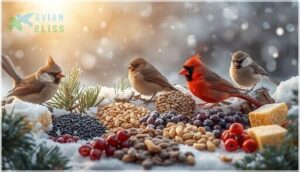
When temperatures drop, birds burn calories at an astonishing rate just to stay warm through the night. The right winter foods deliver the fats, proteins, and carbohydrates they need to survive harsh conditions and thrive into spring.
Here’s what each nutrient does for your backyard visitors during the coldest months.
Fat and Oil for Energy Production
Fat acts as the lifeline for birds facing winter’s chill. Small songbirds can lose up to 10% of their body mass overnight, making high-fat seeds and suet essential for replenishing energy reserves.
You’ll want to choose high-energy blends with at least 40% fat content—black oil sunflower seeds and peanuts top the list. These lipid-rich foods provide the caloric density birds need to fuel overnight survival and maintain body heat.
Protein for Muscle Maintenance
Protein keeps your backyard visitors flight-ready through the harshest months. Small songbirds can lose up to 20% of their muscle mass during extreme cold, making protein-rich foods essential for muscle repair and energy balance.
You’ll support overwinter survival by offering peanuts (25% protein), mealworms (50% protein), and sunflower hearts (16-20% protein)—these amino acid sources help birds maintain the muscle strength they need for both flight and heat production.
Carbohydrates for Quick Energy
When temperatures plummet, carbohydrates deliver the instant energy birds need to fuel shivering thermogenesis and maintain body heat. These energy boosters convert quickly to glucose, powering the demanding bird physiology that keeps your feathered friends warm through winter’s toughest nights.
You’ll give them essential calories through millet, cracked corn, and dried fruits—high-energy blends that support rapid carb metabolism in cold weather adaptation.
Natural Antioxidants for Immunity
Think of antioxidants as your birds’ shield against winter’s harsh conditions. Sunflower seeds and peanuts deliver vitamin E benefits that strengthen immune systems, while berries provide anthocyanins and flavonoids for an antioxidant boost. You’re supporting bird health through dietary supplements that matter:
- Vitamin E in high-energy bird food enhances fledgling success
- Carotenoids improve T-cell immune responses
- Flavonoids increase antibody production
This nutritional density directly impacts winter survival by providing essential calories alongside immune protection.
Impact on Bird Survival Rates
When you provide high-energy bird food during winter, you’re directly boosting survival rates. Black-capped chickadees see a striking jump from 37% to 69% overwinter survival with supplemental feeding, while white-breasted nuthatches improve from 26% to 35%.
Winter feeding can boost chickadee survival from 37% to 69% and nuthatch survival from 26% to 35%
Food scarcity and climate effects drive bird mortality, but your consistent winter bird feeding tackles population dynamics by reducing starvation risk and improving bird health through better nutritional value.
Frequently Asked Questions (FAQs)
How much bird food should I offer daily?
Just as you wouldn’t skip breakfast on a cold morning, your feathered visitors need consistent fuel.
Fill feeders daily with high-energy bird food, offering approximately 10–15 grams per small bird to meet winter food requirements.
When is the best time to start winter feeding?
You should start winter bird feeding in late October or early November, when natural food scarcity begins and frost dates signal cold weather.
Watch for climate cues like bird migration patterns and dropping temperatures.
Can bird food spoil in freezing temperatures?
Freezing alone slows spoilage risk, but repeated freeze-thaw cycles degrade seed viability and frozen nutrition. Moisture triggers mold growth during thaws, reducing winter bird food quality.
Store high-energy bird food in weather-resistant packaging for best seed quality.
Do birds become dependent on backyard feeders?
Birds don’t become truly dependent on backyard feeders. Research shows they maintain natural foraging skills and adapt quickly when feeders disappear.
Winter bird feeding acts as a helpful supplement, not a survival requirement.
What predators are attracted to bird feeding stations?
Cunning carnivores and crafty critters converge on feeders. Raccoons, coyotes, and foxes prowl seven times more often where birds gather.
Hawks, squirrels, and chipmunks also capitalize on concentrated prey during winter months, increasing predation risks markedly.
Conclusion
Summer brings abundance, but winter demands strategy. Your feeder choices directly affect survival rates for the species that depend on your yard.
By stocking nutritious bird food for winter feeding—high-fat seeds, protein-rich nuts, and energy-dense suet—you’re not just filling feeders. You’re creating a lifeline.
Keep your supply fresh, your feeders clean, and your commitment steady. The birds that return each spring will prove you made the difference when it mattered most.
- https://www.allaboutbirds.org/bbimages/gbbc-email/Winter_Bird_Feeding.pdf
- https://www.kaytee.com/learn-care/wild-bird/value-of-wild-bird-ingredients
- https://pmc.ncbi.nlm.nih.gov/articles/PMC2429937/
- https://www.nature.com/articles/srep02002
- https://journals.plos.org/plosone/article?id=10.1371%2Fjournal.pone.0302007