
This site is supported by our readers. We may earn a commission, at no cost to you, if you purchase through links.
A chickadee burns through calories faster than a hummingbird crosses a continent—and in winter, that metabolic furnace needs serious fuel.
Most store-bought suet cakes deliver the basics, but once you understand what goes inside them, you’ll never look at a rendered block of fat the same way.
The right bird suet cake ingredients do more than hold a shape; they deliver targeted nutrition that keeps birds warm, active, and coming back to your yard.
Getting the fat-to-binder ratio right, choosing add-ins that match your local species, and knowing which products actually perform—that’s where the real difference shows.
Table Of Contents
- Key Takeaways
- Essential Suet Cake Ingredients
- Best Fat Choices for Suet
- Binder and Filler Mixes
- Bird-Attracting Add-Ins
- Top 6 Suet-Making Products
- Frequently Asked Questions (FAQs)
- What ingredients should I avoid in suet cakes?
- Is it cheaper to make your own suet cake?
- What suet cakes do cardinals like?
- What are bird suet cakes made of?
- What are the ingredients in suet?
- How to make your own suet balls for birds?
- Can birds develop allergies to suet ingredients?
- How long does homemade suet last outdoors?
- Does suet attract beneficial insects to my garden?
- Should different suet recipes be used day/night?
- Conclusion
Key Takeaways
- Beef tallow delivers over 3,000 calories per cup, making it the most energy-dense fat choice for cold-weather suet cakes.
- Peanut butter acts as the structural backbone, binding dry ingredients into a firm block — use a 1:2 ratio with fat for the best hold.
- Adding dried mealworms gives birds a serious nutritional boost, with roughly 49% protein and 38% fat per serving.
- Homemade suet lasts only 3–5 days outdoors in warm weather, so freshness checks and proper storage are non-negotiable for bird safety.
Essential Suet Cake Ingredients
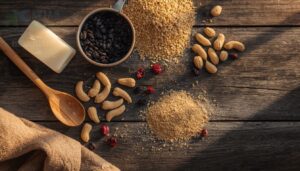
Making suet at home starts with knowing which ingredients actually do the work. Each one plays a specific role — from holding the cake together to fueling birds through cold nights.
Understanding each ingredient’s job makes the whole process click — and a good guide to winter bird food supplies can help you choose the right fats and fillers for your local birds.
Here’s what you’ll need to get started.
Beef Tallow, Lard, and Bacon Drippings
For homemade suet cake recipes for wild birds, your fat choice makes all the difference.
Each option brings something unique:
- Beef tallow has the highest nutrient content and a long shelf life — months without refrigeration
- Pork lard has a lower melting point, making it easier to mix on cool days
- Bacon drippings add a savory flavor profile birds find irresistible
- All three have a smoke point above 370°F, so gentle heat is all you need
Its high smoke point suitability makes it ideal for deep‑frying.
Peanut Butter as a Binder
Peanut butter does more than add flavor — it’s suet cake’s backbone. Its sticky fat matrix grips dry particles through Protein Network Formation, locking ingredients into a firm, cohesive block.
For DIY suet cake preparation, smooth peanut butter works best for even binding; chunky varieties add texture but reduce hold.
| Factor | What to Do |
|---|---|
| Binding Temperature Control | Chill mixture before molding |
| Oil Separation Prevention | Avoid overheating peanut butter |
Cornmeal, Flour, and Oats for Structure
Once peanut butter locks things together, your dry ingredients take over. Cornmeal gives homemade suet cake recipes their firmness and enhances Crumb Density Control. Flour sets quickly, while quick cooking oats slow Thermal Setting Time and improve Moisture Retention. Together, they hit a natural Texture Balance.
Gluten Free Options, swap flour with extra oats or cornmeal — your suet cakes recipe stays solid either way.
Unsalted Seeds, Nuts, and Birdseed Blends
Now for the fun part — what you mix in. Unsalted shelled peanuts, sunflower seeds, and millet turn a basic suet cake into a winter-boost blend, birds can’t resist.
Black oil sunflower seeds deliver roughly 500–600 kilocalories per 100 grams. Shell-free blends and allergy-safe mixes keep things clean and safe.
Low-salt formulations and energy-dense seeds round out any quality birdseed mix.
Dried Fruits and Insects for Extra Nutrition
Want to give birds a real nutritional edge? Add raisins and dried mealworms to your suet mix.
Here’s why this combo works:
- Antioxidant Boost — raisins deliver polyphenols that support cellular health
- Protein-Carb Balance — insects plus fruit fuel long flights
- Chitin Prebiotic — mealworm chitin promotes healthy gut bacteria
- Micronutrient Synergy — together, they cover vitamins, minerals, and fiber benefits your birds need
This insect-enriched suet cake is genuinely high energy bird food.
Best Fat Choices for Suet
The fat you choose is the foundation of every suet cake you make.
Not all fats behave the same way — some pack in more calories, some melt faster, and some are easier to work with depending on the season.
Here are the best options to evaluate.
Beef Fat for High-energy Cakes
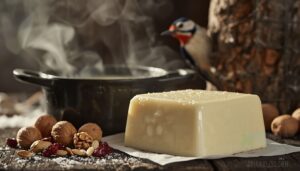
Beef fat is the most energy-dense option you can use — over 3,000 calories per cup. That makes it perfect for woodpeckers and nuthatches burning through fuel in cold months.
Its smoke point advantages mean it won’t break down during melting, which helps with shelf life extension and safe melted fat handling.
Its stability also makes it a smart choice for outdoor setups, and pairing it with the right equipment—like options from this guide to best bird feeders for small yards—keeps both your feed and feeding station in better shape longer.
Pair it with nuts or dried fruit for smart flavor pairing strategies and a real nutrient density boost in every energy-dense suet cake.
Lard for Easier Mixing in Cool Weather
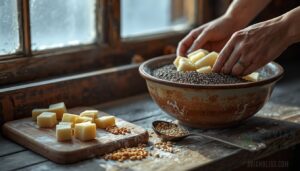
When the temperature drops, pork lard becomes your best friend in the mixing bowl. It stays workable longer than beef fat in cool weather, and chilled lard cubes blend cleanly into dry ingredients without turning greasy.
Lard particle size also matters — smaller pieces mean faster, more even coating of seeds and grains. Cold-work lard naturally shortens your lard mixing time, and lard dough cohesion holds firm once the cakes set.
Bacon Drippings for Flavor and Calorie Boost
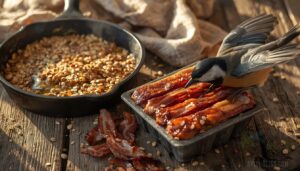
Bacon drippings bring a smoky aroma that birds simply can’t resist. As a calorie‑rich animal fat, each tablespoon packs 110–120 calories — real umami enhancement that seeds alone can’t deliver. That melt stability keeps your homemade suet cake recipes for wild birds firm longer, too.
- Boosts calorie density naturally
- Extends shelf life through low moisture content
- Adds nutritional value without artificial additives
- Keeps energy dense suet cohesive in cold weather
Coconut Oil as a Vegan Alternative
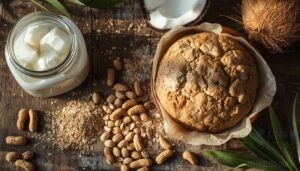
Coconut oil is a smart plant-based swap in homemade suet cake recipes for wild birds. Its mild tropical aroma adds subtle appeal, while its solid texture facilitates vegan binding without animal fat.
For bird nutrition, it delivers steady energy.
Just remember — its melting point sits above 76°F, so shelf stability drops fast in warm weather. Stick to cool conditions for best results.
When to Avoid Overheated or Rancid Fat

Bad fat can ruin a batch fast — and the birds will simply avoid it. Before you melt anything, do a quick rancid smell test. If it smells sour, sharp, or paint-like, toss it.
Watch for these spoilage signs:
- Darkened color or tacky texture
- Moisture buildup or mold on the surface
- Off flavors during a small taste test
Never exceed the heat threshold of 60°C when rendering. Use airtight storage containers, practice label date tracking, and keep finished cakes in the freezer. Preventing suet spoilage and mold is simple bird feeding safety — fresh fat is everything.
Binder and Filler Mixes
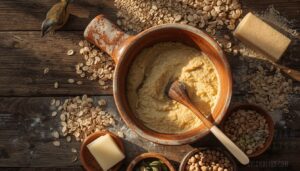
Getting the binder and filler mix right is what holds your suet cake together — literally. The fat alone won’t cut it; you need the right dry ingredients to give your cake structure, firmness, and staying power.
Here’s what works best.
Peanut Butter and Cornmeal Ratio
Getting the ratio right is everything in a peanut butter suet recipe. Use 1 part peanut butter to 2 parts fat — that’s your foundation for mix consistency and calorie optimization.
Cornmeal balances it out, adding structure without making it crumbly. For seasonal ratio tweaks, increase cornmeal slightly in warmer months.
Texture balance keeps your DIY bird feeding with animal fat cake firm and attractive.
Flour and Oats for Firm Texture
Flour and oats do quiet, important work in your suet cake. All-purpose flour increases density and manages moisture absorption well, while quick cooking oats add structure through oat particle size variation.
fat-to-flour ratio matters — too much fat and the cake stays soft.
texture testing steps:
- Press the mix firmly into molds
- Refrigerate 30 minutes before freezing
- Slice a corner to check firmness
Gelatin or Syrup for No-melt Recipes
Once your oats and flour are sorted, no-melt options take things further—especially when temperatures climb above 50°F.
Gelatin bloom strength and Karo syrup concentration work together through gel-syrup synergy to keep your NoMelt Suet Cake firm outdoors. Cooling temperature matters too—chill gradually between 35–40°C for a clean set.
| Ingredient | Role | Ratio |
|---|---|---|
| Gelatin | Sets structure | 1 tbsp per cup |
| Karo Syrup | Binds and firms | 2 tbsp per cup |
| Peanut Butter | Adds cohesion | ¼ cup per batch |
| Cold Water | Blooms gelatin | 3 tbsp per tbsp gelatin |
| Fat Base | Carrier medium | 1 cup base |
Texture testing confirms your suet cakes recipe holds through seasonal considerations.
How Fillers Affect Hardness and Shape
Think of fillers like cornmeal and flour as your cake’s skeleton. Their platelet orientation and aspect ratio determine how firmly the structure holds.
Good dispersion uniformity means no soft spots — birds peck evenly across the whole surface. Hydrophobic coatings on particles also slow fat migration, boosting thermal stability in your freezer and outdoors.
- Cornmeal’s flat shape improves surface hardness
- Uniform flour distribution prevents crumbling under bird beaks
- Higher aspect ratio fillers resist shape loss in warm weather
Balancing Binders With Melted Fat
When your binder-fat ratio is off, the whole cake falls apart — literally. Aim for roughly 1 part peanut butter to 2 parts dry fillers like flour or oats.
Beef tallow and vegetable shortening both support emulsion stability when mixed at warm temperatures.
Add gelatin for extra moisture retention.
Cooling duration matters too — give it at least two hours to set firmly.
Bird-Attracting Add-Ins
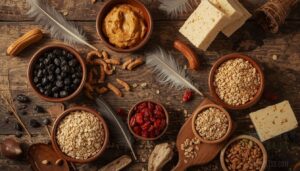
Once you’ve nailed your fat-and-binder base, the real fun begins — choosing what goes into it. The right add-ins can mean the difference between a feeder that sits ignored and one that draws a crowd by morning.
Here’s what works best, and which birds each ingredient usually brings in.
Unsalted Peanuts and Sunflower Seeds
Both unsalted peanuts and sunflower seeds punch well above their weight in any homemade suet cake recipes for wild birds. Together, they build a strong protein profile and impressive calorie density — peanuts hit around 570 calories per 100 g, sunflower seeds close behind.
Here’s why both belong in your birdseed mix:
- Protein Profile — Peanuts offer 25–30 g of protein per 100 g; sunflower seeds deliver about 20–21 g.
- Mineral Richness — Sunflower seeds supply selenium and copper; peanuts add potassium and magnesium.
- Vitamin E Boost — Sunflower seeds are especially high in vitamin E, protecting birds’ cells.
- Calorie Density — Both fuel birds through cold nights when energy burns fast.
- Shelf Stability — Store extras in airtight containers away from light to prevent rancidity.
Always use unsalted versions in your suet cake recipe — sodium stresses small birds quickly.
Cracked Corn and Millet for Variety
Cracked corn and millet bring real texture contrast to your birdseed mix — and that matters more than you’d think. Cracked corn’s coarse chunks suit jays and cardinals, while millet’s smaller seeds attract finches and sparrows, giving you genuine multi-species appeal.
For DIY suet recipes for backyard birds, a 1:1 mix ratio works well. Both deliver a solid seasonal energy boost through cold months.
Raisins, Cranberries, and Apricots
Dried fruits quietly do a lot of work in homemade suet cake recipes for wild birds.
Raisins bring raisin iron and natural sugars — no added sweeteners needed. Cranberries add cranberry vitamin C and a tartness contrast that balances the richness. Apricots deliver apricot vitamin A for migrating species needing quick cellular support.
All three have a solid shelf life, making them easy DIY suet ingredients to keep stocked year‑round.
Mealworms for Insect-eating Birds
Mealworms might be the most underrated add-in for insect-enriched suet cake.
Dried mealworms pack about 49% protein and 38% fat — serious winter energy in a tiny package.
Dried mealworms deliver 49% protein and 38% fat, making them serious winter fuel in every tiny bite
Fresh vs dried both work, but dried are easier to store and prevent mold.
Add a small handful per batch.
Feeding frequency matters too; replace mealworm-laced cakes every two days for nutrient balance.
Choosing Add-ins by Target Species
Think of your suet cake as a custom menu — each bird has its own order.
- Woodpeckers love woodpecker nut pieces and cracked corn for lasting energy.
- Finches flock to a finch millet mix with sunflower seeds.
- Warblers need warbler insect protein like chopped mealworms.
- Doves prefer dove ground grains scattered nearby.
- Chickadees and nuthatches thrive on high‑fat peanut butter blends.
Attracting specific bird species with suet starts with knowing what they eat.
Top 6 Suet-Making Products
Having the right supplies makes the whole process easier and more enjoyable. These six products cover everything from mixing and molding to hanging your finished cakes.
Here’s what’s worth keeping on hand.
1. Gray Bunny Dual Shepherd Hook Metal
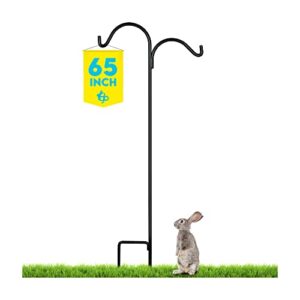
Once your suet cakes are ready, you need a reliable spot to hang them. The Gray Bunny Dual Shepherd Hook makes that easy.
It stands 65 inches tall with a sturdy half-inch alloy steel pole and a rust-resistant black finish.
The dual hooks let you hang two feeders at once — great for attracting different species.
It anchors firmly into soil with its double-prong base, so wind won’t knock it over. Just remember, it won’t stop determined squirrels.
| Best For | Gardeners and bird enthusiasts who want a sturdy, dual-purpose hook for hanging feeders, lanterns, or planters outdoors. |
|---|---|
| Primary Material | Alloy Steel |
| Country of Origin | Not specified |
| Package Quantity | 1 pole |
| Intended Use | Outdoor garden |
| Reusability | Reusable |
| Allergen Risk | None |
| Additional Features |
|
- Holds two feeders at once with the dual-hook design — handy for attracting different birds
- Built tough with half-inch alloy steel that stands up to wind and storms without budging
- Rust-resistant finish keeps it looking clean through the seasons
- The fixed 65-inch height might not cut it if your garden has tall foliage blocking feeder access
- Won’t stop squirrels or chipmunks from helping themselves to whatever’s hanging
- The paint can peel over time, and there’s no way to adjust the height once it’s in the ground
2. Wagners Greatest Variety Bird Seed
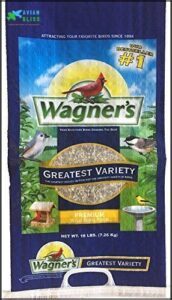
Once your feeder is set up, you’ll want something worth hanging in it. Wagner’s Greatest Variety blend packs 11 ingredients into one bag — black oil sunflower, striped sunflower, white and red millet, cracked corn, peanut pieces, and more.
That mix draws cardinals, finches, woodpeckers, and ground feeders all at once. It works in tube, hopper, or platform feeders.
Just transfer it to an airtight container after opening — the bag isn’t resealable and moisture can cause mold quickly.
| Best For | Bird watchers and backyard wildlife enthusiasts who want to attract a wide variety of songbirds without juggling multiple seed types. |
|---|---|
| Primary Material | Mixed Seeds/Grains |
| Country of Origin | USA |
| Package Quantity | 1 bag |
| Intended Use | Wildlife feeding |
| Reusability | Single-use |
| Allergen Risk | Peanuts/nuts |
| Additional Features |
|
- 11-ingredient blend brings in everything from cardinals and finches to woodpeckers and doves
- Works with tube, hopper, and platform feeders — no need to buy specialty equipment
- Made in the USA with quality grains, including 40% sunflower varieties that birds love
- Bag isn’t resealable, so you’ll need an airtight container on hand right away
- Peanuts in the mix can pull in squirrels along with the birds
- Pricier than basic bulk seed, and a few buyers have run into mold or clumping issues
3. Crisco All Vegetable Shortening
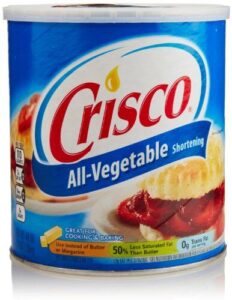
Seed blends give birds variety, but fat is what fuels them through cold nights. That’s where Crisco All Vegetable Shortening earns its place in your suet toolkit.
It’s made from soybean oil and hydrogenated palm oil, stays solid at room temperature, and melts cleanly without scorching.
One 3-pound can goes a long way. It’s vegan-friendly too, which matters if you’re skipping animal fats. Just melt it low and slow — no rushing needed.
| Best For | Home bakers and cooks who want a reliable, plant-based fat for flaky pastries, frying, and even cast-iron seasoning. |
|---|---|
| Primary Material | Vegetable Oils |
| Country of Origin | USA |
| Package Quantity | 1 can |
| Intended Use | Cooking/baking |
| Reusability | Reusable |
| Allergen Risk | Soy |
| Additional Features |
|
- Stays solid at room temp and melts cleanly — great for pie crusts, biscuits, and deep frying
- A 3-pound can lasts a long time and works across a ton of recipes
- Vegan-friendly and free of animal fats, so it works for more dietary preferences
- Contains palm oil, which raises sustainability concerns for eco-conscious buyers
- Some recent batches have had a gritty texture, so quality isn’t always consistent
- High in saturated fat and includes TBHQ, which some people prefer to avoid
4. Crazy Richards Creamy Peanut Butter
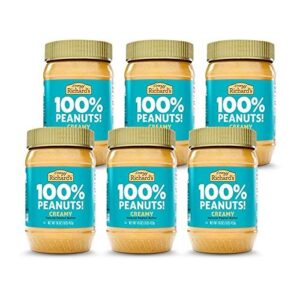
Fat gets the suet cake solid, but peanut butter holds it all together. Crazy Richard’s Creamy Peanut Butter is a great pick here. It’s 100% peanuts — no added salt, sugar, or fillers.
That matters because birds can’t handle extra sodium. Each serving packs about 8 grams of protein and 16 grams of fat.
It blends smoothly into melted fat without clumping. The natural oil separation actually helps it mix in evenly. Just stir well before adding it to your batch.
| Best For | Anyone who wants a clean, no-fuss peanut butter for bird suet recipes, plant-based eating, or cooking without added salt, sugar, or fillers. |
|---|---|
| Primary Material | Peanuts |
| Country of Origin | USA |
| Package Quantity | 6 jars |
| Intended Use | Food spread |
| Reusability | Reusable |
| Allergen Risk | Peanuts |
| Additional Features |
|
- Pure 100% peanuts — no additives, so it’s safe for birds and great for health-conscious humans too
- 8g of protein per serving with natural fat that blends smoothly into suet or recipes
- Certified non-GMO, gluten-free, vegan, and kosher — works for a wide range of diets
- Natural oil separation means you have to stir it every time, and the texture stays pretty runny
- May need a few hours in the fridge to get spreadable, which isn’t always convenient
- Pricier than most store-brand peanut butters, so the value depends on where you buy it
5. DOBI Disposable Aluminum Muffin Pan
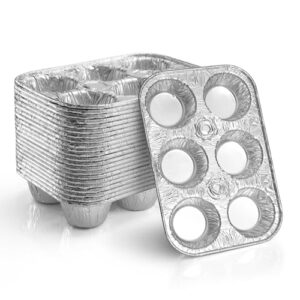
Molding your suet cakes doesn’t have to be complicated. DOBI Disposable Aluminum Muffin Pan makes it simple.
Each pan holds six cups, sized at about 2.5 inches wide and 1.25 inches deep — just right for individual suet portions. The aluminum conducts heat evenly, so your cakes set firmly in the freezer.
When you’re done, toss or recycle the pan. No scrubbing, no mess. It’s a small thing that makes the whole process a lot easier.
| Best For | Bird enthusiasts and wildlife feeders who make suet cakes in bulk and want a hassle-free, no-cleanup mold for individual portions. |
|---|---|
| Primary Material | Aluminum Foil |
| Country of Origin | Not specified |
| Package Quantity | 20 pans |
| Intended Use | Baking/events |
| Reusability | Single-use |
| Allergen Risk | None |
| Additional Features |
|
- Even heat conductivity means your suet sets consistently every time — no soft spots or uneven cakes.
- Toss or recycle after use, so there’s zero scrubbing involved.
- Great for batch making — 20 pans per pack means you can knock out a big supply in one go.
- Single-use only, so costs can add up if you’re making suet cakes regularly.
- Cups run slightly smaller than standard muffin tins, which might not work for every suet recipe.
- Needs to be handled carefully when full — the foil can tear if you’re not supporting the bottom.
6. Vaseline Healing Jelly for Dry Skin
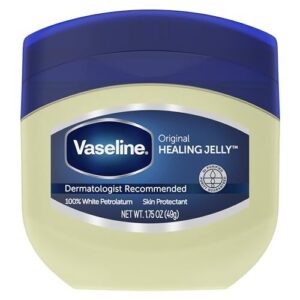
All that rendering and mixing means your hands take a beating. That’s where Vaseline Healing Jelly earns its spot on this list.
Its triple-purified petroleum jelly formula creates an occlusive barrier that locks in moisture — no fragrances, no additives, nothing that irritates skin. It’s hypoallergenic and non-comedogenic, so it works for sensitive skin too.
Apply a thin layer after cleanup. A little goes a long way with this 1.75 oz tube, and it genuinely helps heal dry, cracked hands fast.
| Best For | Anyone who works with their hands regularly and deals with dryness, cracking, or sensitivity — especially those who need a no-fuss, fragrance-free option. |
|---|---|
| Primary Material | Petroleum Jelly |
| Country of Origin | Not specified |
| Package Quantity | 1 tube |
| Intended Use | Skin care |
| Reusability | Reusable |
| Allergen Risk | None |
| Additional Features |
|
- Triple-purified formula is hypoallergenic and non-comedogenic — safe for even the most sensitive skin
- Creates a solid moisture barrier that speeds up healing on dry, cracked, or irritated skin
- Free of fragrances, dyes, and additives, so it won’t cause reactions or make things worse
- At 1.75 oz, it runs out fast if you’re using it daily on more than just your hands
- Can feel greasy if you apply too much — and it will stain fabrics if you’re not careful
- Pricier than generic petroleum jelly options for what’s essentially a small tube
Frequently Asked Questions (FAQs)
What ingredients should I avoid in suet cakes?
Avoid chocolate, salted fats, and anything rancid. Skip artificial sweeteners, avocado, and heavily seasoned kitchen drippings. These ingredients stress birds’ kidneys, disrupt digestion, or are outright toxic to many species.
Is it cheaper to make your own suet cake?
Yes, homemade suet cakes are usually cheaper. A basic batch using lard, peanut butter, and oats costs roughly half the price of store-bought blocks, especially when made in larger batches.
What suet cakes do cardinals like?
Cardinals love suet made with beef tallow, peanut butter, and black oil sunflower seeds. Add cracked corn and dried cranberries for extra pull.
Keep it dense so it holds up in cold weather.
What are bird suet cakes made of?
Bird suet cakes are made of rendered animal fat — usually beef tallow or lard — mixed with binders like peanut butter and fillers like cornmeal, oats, or flour to hold everything together.
What are the ingredients in suet?
Suet’s secret is simple: rendered animal fat — usually beef tallow or lard — blended with binders like peanut butter, cornmeal, or oats, then packed with seeds, nuts, or dried fruit for extra nutrition.
How to make your own suet balls for birds?
Making suet balls is easier than you’d think. Melt your fat, mix in peanut butter, cornmeal, and oats, then roll into 1–5 inch balls. Chill until firm before hanging.
Can birds develop allergies to suet ingredients?
Yes, birds can develop allergy-like reactions to suet ingredients. Peanut proteins and certain seeds are common triggers.
If you notice respiratory or feather changes, try swapping the binder or seeds first.
How long does homemade suet last outdoors?
Homemade suet lasts about 3 to 5 days outdoors in warm weather. In cool, shaded spots, it can hold up 1 to 2 weeks. Always toss it if it smells sour or looks moldy.
Does suet attract beneficial insects to my garden?
Not really. Suet is designed for birds, not insects. Beneficial insects get what they need from flowers and soil. Properly placed suet won’t pull them away from your garden.
Should different suet recipes be used day/night?
Not exactly — but temperature matters more than time of day. Daytime cakes need heat resistance, while nighttime ones benefit from extra fat to help birds stay warm through cooler hours.
Conclusion
Winter nights are unforgiving, and somewhere in the dark, a small bird is counting on what you put out tomorrow morning.
right bird suet cake ingredients—quality fat, a solid binder, and smart add-ins—turn your feeder into a genuine lifeline.
You’ve got the knowledge now. Render the fat, mix in the seeds, and press it firm.
first chickadee clinging to your feeder will tell you everything went exactly right.