This site is supported by our readers. We may earn a commission, at no cost to you, if you purchase through links.
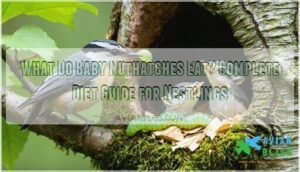 When you’re wondering what do baby nuthatches eat, you’ll find these tiny birds need a protein-packed menu to fuel their rapid growth.
Parent nuthatches bring their nestlings small insects like caterpillars, beetles, and spiders. They also feed them crushed nuts, seeds, and occasionally tree sap.
If you’re caring for an orphaned nuthatch, you can offer mealworms, hard-boiled egg yolk, and moistened high-quality dog food. These energetic little acrobats need feeding every 15-20 minutes during daylight hours.
Their diet shifts as they grow, moving from soft insects to harder foods. Getting the timing and nutrition right makes all the difference for healthy development.
Table Of Contents
- Key Takeaways
- What Do Baby Nuthatches Eat?
- What Do Young Nuthatches Eat?
- Essential Foods for Nuthatch Chicks
- Nutritional Needs of Baby Nuthatches
- Mealtime for Baby Nuthatches
- Supporting Nuthatch Fledglings’ Growth
- Care for Altricial Nuthatch Nestlings
- Feeding Tips for Nuthatch Juveniles
- Frequently Asked Questions (FAQs)
- What does a baby nuthatch eat?
- How do you befriend a nuthatch?
- How long do nuthatch babies stay in the nest?
- What is the best feed for Nuthatches?
- What is the best food for nuthatch birds?
- What seeds do nuthatches eat?
- How to befriend a nuthatch?
- What are the best bird feeders for baby nuthatches?
- Do baby nuthatches need extra water?
- Can I feed baby nuthatches dried fruit?
- Conclusion
Key Takeaways
- You’ll need to feed baby nuthatches protein-rich insects like beetles, caterpillars, and spiders along with crushed nuts and seeds to support their rapid growth and development.
- You must maintain a demanding feeding schedule of every 15-20 minutes during daylight hours for the first week, gradually extending intervals as the nestlings mature.
- You can’t rely on bread, milk, or processed foods – these are harmful to baby nuthatches and lack the essential nutrients they need for healthy development.
- You’ll see their diet naturally shift from soft insects to harder foods like black oil sunflower seeds and suet as they grow stronger and prepare for independence.
What Do Baby Nuthatches Eat?
Baby nuthatches depend on Insect Variety and Seed Selection from their parents for survival.
Your nuthatch nestlings food should include protein-rich beetles, spiders, ants, and caterpillars that support rapid growth. Parental Roles involve delivering these essential nutrients every 15-30 minutes during daylight hours.
The baby nuthatch diet also requires Diet Supplements like black oil sunflower seeds and suet, providing healthy fats.
This nuthatch chick diet foundation helps develop vital Foraging Skills for independence.
A high-protein diet is essential for growth.
What Do Young Nuthatches Eat?
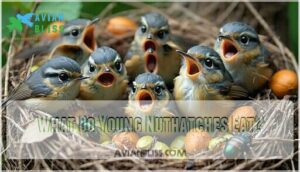
You’ll discover that young nuthatches need a protein-rich diet filled with insects like beetles, spiders, and caterpillars to fuel their rapid growth.
These nestlings also require black oil sunflower seeds and suet to provide the essential fats and energy they need for healthy development.
Nutritious Diet for Nestlings
Young nuthatch nestlings thrive on a carefully balanced diet that mirrors what their parents would naturally provide in the wild. Understanding their nutritional needs helps you support healthy growth during these critical early weeks.
Just like their wild parents, baby nuthatches need the perfect balance of protein-packed insects and energy-rich seeds to flourish.
Diet Composition: Your nuthatch nestlings need a mix of insects and seeds for ideal development. Insect Protein forms the foundation of their baby nuthatch diet, while seeds provide necessary energy and fats.
Protein Requirements: Beetles, spiders, ants, and caterpillars deliver the protein punch these growing birds need. These insects make up the bulk of nuthatch nestlings food during their first weeks of life.
Seed Preference: Black oil sunflower seeds are perfect for nuthatch chick diet plans. These seeds offer Fat Sources and essential nutrients that support rapid growth.
Here’s what makes a nutritious nuthatch fledgling diet:
- High-quality Insect Protein from beetles and caterpillars
- Seed Variety including sunflower and pine seeds
- Adequate Fat Sources for energy and development
- Proper Calcium Needs through varied insects
- Consistent Water Intake for hydration
- Balanced feeding baby nuthatches approach.
To guarantee proper development, consider protein rich foods for perfect growth.
Feeding Schedule for Young Birds
Getting the timing right makes all the difference when caring for nuthatch chicks. During their first week, you’ll need to provide food every 15-20 minutes throughout daylight hours – that’s roughly 12-14 hours of constant attention.
As they grow stronger, feeding frequency gradually decreases. Second-week nestlings require meals every 30-45 minutes, while third-week birds can wait 45-60 minutes between feedings.
Parental roles shift dramatically during weaning stages. Both parents alternate feeding duties, ensuring consistent baby bird nutrition. By the fourth week, you should reduce feeding frequency to encourage natural foraging behaviors.
Seasonal changes affect what baby birds eat, with protein-rich insects dominating the nuthatch fledgling diet during breeding season. These insects provide essential protein sources for their rapid growth. Remember, supplementing diet becomes less critical as young birds develop independence. This careful progression from intensive nuthatch chick feeding to self-sufficiency mirrors nature’s perfect timing.
Essential Foods for Nuthatch Chicks
You’ll need to focus on protein-rich insects and nutrient-dense seeds when feeding nuthatch chicks.
These growing birds require beetles, spiders, caterpillars, and black oil sunflower seeds to support their rapid development and energy needs.
Providing High-Energy Nourishment
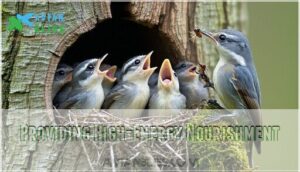
When feeding baby nuthatches, you’ll need to focus on high-energy nourishment that fuels their rapid growth.
Think of it as providing premium fuel for tiny engines.
Suet supplementation delivers essential fats, while mealworm benefits include important protein for developing muscles.
Winter feeding becomes especially important when natural food sources are scarce, making your role as caregiver essential for their survival.
Incorporating Insects and Seeds
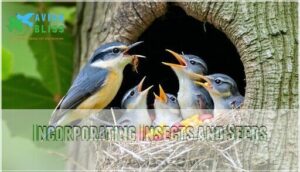
Building on high-energy nourishment, insect protein forms the backbone of feeding baby nuthatches. Parents deliver beetles, caterpillars, and spiders packed with growth-promoting nutrients.
Seed variety becomes important as chicks mature – sunflower seeds and pine nuts provide essential fats. Feeding methods vary seasonally, with more insects during breeding and increased seeds in winter.
This nutritional balance supports rapid development. Young nuthatch food must include both nuthatch insect larvae and seeds for ideal growth throughout their insect diet for nuthatches.
Adult nuthatches can feed their young over one hundred times daily, providing a diverse range of prey, and nuthatch diet is omnivorous.
Nutritional Needs of Baby Nuthatches
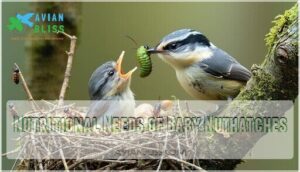
Understanding what baby nuthatches need nutritionally helps you provide the right foods for their rapid growth and development.
You’ll want to focus on protein-rich insects and healthy fats from nuts and seeds since these nutrients support strong bones, feather development, and energy for their active lifestyle, with healthy fats being crucial.
Importance of Protein and Healthy Fats
Protein sources and fat benefits form the foundation of healthy baby nuthatch development.
These tiny birds need specific growth factors to build strong muscles and feathers.
Essential nutrients for feeding baby nuthatches include:
- Beetles and spiders – provide complete amino acids for muscle development
- Caterpillars and ants – deliver essential proteins for feather growth
- Sunflower seeds – supply healthy fats for energy needs
- Suet mixtures – offer concentrated calories for rapid growth
- Mealworms – combine protein and fat for dietary balance
Benefits of Dried Fruit and Nuts
During winter feeding seasons, dried fruit and nuts serve as a concentrated energy source for baby nuthatches.
These safe options provide nutritional variety that supports digestive health and growth. The best food for baby birds includes small pieces of unsalted nuts and sulfur-free dried fruits.
This combination mirrors natural nuthatch feeding habits while delivering essential vitamins and minerals. Many bird enthusiasts purchase chewy dried fruit for supplemental feeding to support the health of baby birds, providing them with a natural nuthatch feeding experience.
Mealtime for Baby Nuthatches
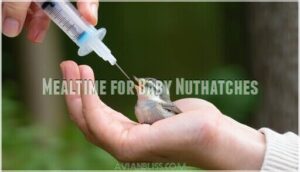
You’ll need to establish a strict feeding schedule when caring for baby nuthatches, as these tiny birds require frequent meals throughout the day.
The right commercial hand-feeding mixture combined with proper timing guarantees your nestlings get the nutrition they need to grow strong and healthy.
Suitable Commercial Hand-Feeding Mixtures
When hand-feeding baby nuthatches, you’ll want to select commercial formulas designed specifically for nestlings.
These protein-rich mixtures provide essential nutrients that support rapid growth during critical development stages.
- Kaytee Exact Hand-Feeding Diet: This powdered commercial formula offers balanced nutrition with high protein content, making it ideal for baby nuthatches requiring supplementation needs and proper hydration methods for healthy development.
It’s available via online retail options.
Frequency and Quantity of Feedings
Baby nuthatches need consistent feeding intervals to thrive.
During their first week, offer baby bird food types every 15-30 minutes throughout daylight hours. This demanding schedule mirrors natural parental workload patterns.
Quantity progression increases as nestlings grow – start with small portions and gradually expand meal sizes. Growth correlation directly links to feeding frequency, making regular meals essential for healthy development.
| Age | Feeding Frequency |
|---|---|
| Week 1 | Every 15-30 minutes |
| Week 2 | Every 30-45 minutes |
| Week 3 | Every 45-60 minutes |
| Week 4 | Every 60-90 minutes |
| Week 5 | Independent foraging |
Supporting Nuthatch Fledglings’ Growth
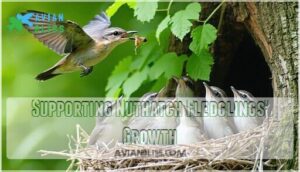
You’ll need to maintain a balanced diet for nuthatch fledglings as they move from nestling to independent forager.
Consistent feeding intervals guarantee these young birds receive proper nutrition to support their rapid growth and development during this critical stage.
Maintaining a Balanced Diet
When caring for nuthatch fledglings, maintaining proper nutrient proportions becomes your top priority for healthy development. Baby nuthatches require specific ratios of proteins, fats, and carbohydrates that mirror what parent birds naturally provide in the wild.
Food Safety: Make certain all baby bird food types remain fresh and free from contamination. Store nuthatch larvae food and nuthatch caterpillar diet options in cool, dry conditions to prevent spoilage.
Supplementation: Consider vitamin additions only after consulting wildlife experts, as over-supplementation can harm nestlings more than help them.
Seasonal Variation: Adjust food offerings based on natural availability patterns that adult nuthatches would encounter.
Water Sources: Provide clean, shallow water dishes that fledglings can access safely without drowning risk.
Food Storage: Keep all prepared mixtures refrigerated and discard any uneaten portions after 24 hours to prevent bacterial growth.
Monitor your fledglings’ responses to different foods, watching for signs of healthy growth and normal behavior patterns that indicate proper nutrition.
Ensuring Regular Feeding Intervals
Every successful nuthatch fledgling depends on Consistent Feeding at Scheduled Intervals to thrive during their critical growth phase. You’ll need to establish a reliable routine that mirrors what parent birds naturally provide.
Watch for Hunger Signs like open beaks and vocal chirping – these baby nuthatches aren’t shy about demanding their next meal.
Growth Monitoring becomes your compass for adjusting feeding frequency. Healthy nestlings double their weight within days when fed properly. This structured approach also offers Parent Relief if you’re caring for orphaned birds.
Here’s your feeding roadmap:
- Feed every 15-30 minutes during daylight hours for week-old nestlings
- Provide nuthatch diet insects like beetles and caterpillars as primary nuthatch larvae food
- Gradually extend intervals as fledglings mature and develop independence
Care for Altricial Nuthatch Nestlings
You’ll need to provide specialized care for nuthatch nestlings since they’re born helpless and depend completely on their parents for survival.
These young birds require frequent feedings of protein-rich insects and careful attention to avoid foods that could harm their developing digestive systems.
Avoiding Harmful Foods
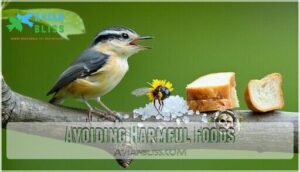
Several toxic foods can seriously harm baby nuthatches and should never be offered.
Avoid bread, milk, salty foods, and processed foods which lack proper nutrition for nestlings.
Moldy seeds contain dangerous toxins, while pesticide exposure from contaminated insects poses severe risks.
It’s essential to understand potential food dangers to keep them safe.
Kitchen scraps and sugary treats disrupt natural nuthatch diet insects requirements, potentially causing fatal digestive issues in developing birds.
Temporary Diet Suggestions
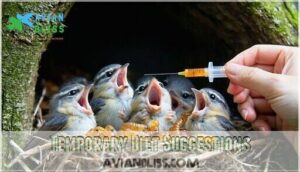
When insects run short, you’ll need emergency foods to keep baby nuthatches thriving.
These short-term solutions work as substitute insects until natural prey returns:
- Live or dried mealworms – Quick fixes that provide essential protein for growing nestlings
- Commercial hand-feeding formulas – Supplement options specifically designed for insectivorous birds, offering balanced nutrition when caterpillars aren’t available.
Consider vitamin fortified options to boost nutrition.
Feeding Tips for Nuthatch Juveniles
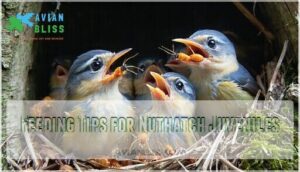
You’ll need to watch how juvenile nuthatches respond to different foods to verify they’re getting proper nutrition during this critical growth phase.
Offering a mix of protein-rich insects, quality seeds, and healthy fats helps these young birds develop the strength they need for independent foraging.
Monitoring Feeding Responses
Watch your baby nuthatches for key feeding signs that show they’re thriving.
Healthy nestlings display steady weight gain and make soft begging calls when hungry.
Notice their food preferences as they develop – some may favor insects over seeds.
Check crop fullness after meals and observe parental behavior patterns.
These bird feeding responses help you track proper bird growth monitoring in altricial nestlings.
Providing Varied and Nutrient-Rich Foods
Once you’ve mastered monitoring feeding responses, providing varied and nutrient-rich foods becomes your next priority. Baby nuthatches thrive on food variety that mirrors their natural foraging habits. Think of their diet like a colorful palette – the more colors you add, the healthier they become.
Balanced nutrition requires mixing different food sources throughout the day. Your nuthatch nestlings need this dietary diversity to develop properly and build strong immune systems. To further protect these vulnerable birds, consider reducing window collisions around your home.
Here’s how to create the perfect menu for these growing birds:
- Protein powerhouses: Offer beetles, spiders, ants, and caterpillers alongside mealworms for muscle development
- Energy boosters: Black oil sunflower seeds and suet with peanut butter provide essential fats
- Seasonal foods: Include dried cranberries, blueberries, and chopped nuts like almonds or walnuts
- Natural supplements: Fresh fruit pieces and tree nuts add vitamins and minerals to their bird diet
Rotate these nuthatch food sources daily to prevent boredom and guarantee complete nutrition for healthy nestlings.
Frequently Asked Questions (FAQs)
What does a baby nuthatch eat?
Baby nuthatches need protein-rich insects like beetles, spiders, ants, and caterpillars for healthy growth.
You’ll also see parents feeding them black oil sunflower seeds, which provide essential fats and nutrients for development.
How do you befriend a nuthatch?
One birder won over a shy white-breasted nuthatch by placing suet feeders near her kitchen window and sitting quietly nearby each morning.
You’ll attract nuthatches by offering sunflower seeds, peanuts, and suet while maintaining consistent, patient presence.
How long do nuthatch babies stay in the nest?
Nuthatch babies typically remain in their nest for about 18-26 days after hatching.
You’ll notice they develop flight feathers during this period, preparing for their first adventure outside the safety of their tree cavity home.
What is the best feed for Nuthatches?
While backyard birds often settle for basic seeds, you’ll want premium options for nuthatches.
Offer suet blocks, black oil sunflower seeds, and unsalted peanuts.
These high-energy foods match their natural foraging preferences perfectly.
What is the best food for nuthatch birds?
You’ll attract nuthatches best with suet blocks, black oil sunflower seeds, and unsalted peanuts.
They love protein-rich insects like mealworms too.
Offer these foods in winter when natural sources become scarce.
What seeds do nuthatches eat?
Black oil sunflower seeds are nuthatches’ top choice, providing essential fats and nutrients.
You’ll also attract them with safflower seeds, nyjer seeds, and cracked corn. These protein-rich options support their high-energy lifestyle perfectly.
How to befriend a nuthatch?
Ironically, you can’t really "befriend" these wild acrobats, but you’ll create trust by consistently offering suet, peanuts, and sunflower seeds.
Move slowly, stay quiet, and they’ll eventually visit while you’re nearby.
What are the best bird feeders for baby nuthatches?
Baby nuthatches don’t use feeders directly.
Instead, you’ll need shallow platform feeders or tray feeders offering mealworms, crushed suet, and finely chopped insects to support parent birds feeding their hungry nestlings.
Do baby nuthatches need extra water?
Like tiny feathered sponges, nestling nuthatches get most hydration from their insect-rich diet.
You don’t need to provide extra water since parents deliver moisture through food.
Natural water sources nearby help, but it’s not essential for survival.
Can I feed baby nuthatches dried fruit?
Yes, you can offer dried fruit to baby nuthatches as occasional treats.
They provide vitamins and energy, but shouldn’t replace their primary diet of protein-rich insects, which are essential for proper growth and development.
Conclusion
Watching parent nuthatches make over 300 feeding trips daily shows their dedication to nourishing their young.
Understanding what do baby nuthatches eat helps you provide proper care if needed. These growing birds require protein-rich insects, crushed nuts, and frequent feedings every 15-20 minutes.
Their diet changes from soft foods to harder items as they develop. You’ll give orphaned nestlings the best chance at survival by following their natural feeding patterns and nutritional needs.
- https://biokids.umich.edu/critters/Sitta_carolinensis/
- https://www.wbu.com/birds/nuthatches/
- https://www.mpgranch.com/dispatches/do-red-breasted-nuthatch-migrate-triennially
- https://www.tandfonline.com/doi/abs/10.2989/00306525.2021.1923582
- https://www.hummingbirdsplus.org/nature-blog-network/feeding-a-baby-bird-the-importance-of-a-strict-schedule/