This site is supported by our readers. We may earn a commission, at no cost to you, if you purchase through links.
A single gap no wider than a thumb can roll out the red carpet for every city pigeon and curious sparrow in the neighborhood. Maybe you’ve heard the soft scuffle above your ceiling or found a scatter of twigs near your window—signs that birds treat your place as their own private retreat.
What most don’t realize is just how creative birds get, squeezing through attic vents or settling near open chimneys, sometimes outsmarting store-bought fixes. Mastering the best bird proofing tips means more than blocking holes; it’s about understanding these persistent visitors and building real peace of mind, one smart adjustment at a time.
Table Of Contents
- Key Takeaways
- Assessing Bird Risks in Your Home
- Securing Entry Points Against Birds
- Effective Bird Deterrents and Barriers
- Eliminating Indoor Bird Hazards
- Maintaining a Bird-Proof and Safe Environment
- Frequently Asked Questions (FAQs)
- How do you birdproof a room?
- Where can I buy bird proofing materials?
- Does bird proofing deter birds?
- Why should you use professional bird proofing services?
- How do I protect my home from birds?
- Can bird proofing use spikes?
- How do you bird-proof outdoor patios and decks?
- Can bird-proofing impact existing landscaping or gardens?
- What are safe ways to bird-proof balconies?
- How to guard small pets from wild birds indoors?
- Conclusion
Key Takeaways
- Birds exploit even tiny gaps around vents, chimneys, or windows, so a thorough inspection and sealing of all entry points is foundational for effective bird proofing.
- Physical barriers like mesh, netting, and spikes work best when installed securely and checked regularly for gaps or damage.
- Combining visual deterrents, like reflective tape or moving decoys, with eco-friendly auditory deterrents helps disrupt birds’ habits and discourages repeated visits.
- Ongoing maintenance—including cleaning droppings, inspecting proofing measures, and managing indoor hazards—is key to keeping your home safe, clean, and bird-free.
Assessing Bird Risks in Your Home
Before you can keep birds out, it’s important to understand where and how they enter your home. Not all bird risks look the same, and some can be easy to overlook.
Here are the key things to watch for when evaluating your space.
Identifying Common Bird Entry Points
How can a bird slip past your defenses? Start by identifying common bird entry points: roof vulnerabilities, open chimneys, attic vents without screens, window gaps, and even foundation holes. Birds exploit openings as small as three centimeters, slipping through unscreened skylights or gaps around wires.
Birdproofing means inspecting every crack—because if you spot it, a bird already noticed it first. Buildings with architectural vulnerabilities are especially prone to bird infestations.
Recognizing Bird Species and Their Behaviors
After you spot vulnerable entry points, it’s time to sharpen your Urban bird ID skills. Watch for pigeons and doves using ledges, notice sparrows and house finches darting into eaves, and listen for aggressive territorial displays. You’ll pick up on patterns quickly:
Many have a high degree of adaptability to environments.
- Nesting adaptations in artificial nooks
- Opportunistic feeding habits near food sources
- Startle responses to noise or light
Spotting Signs of Potential Infestation
When your quiet morning routine gets interrupted by unusual noises in the walls or attic, it’s time to look closer—especially if you’re spotting nesting materials piled near eaves or fresh droppings damage around entry points.
Visual evidence such as displaced feathers or persistent bird activity often signals hidden health hazards, so identifying bird entry points early is key to preventing bird infestations.
Securing Entry Points Against Birds
Birds are clever at finding their way inside, so staying one step ahead is key. Securing major entry points will keep your home safe and bird-free.
Let’s walk through some straightforward ways to close off those common gaps.
Sealing Gaps, Vents, and Chimneys
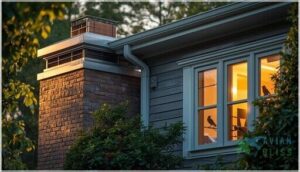
Think an open vent is just a draft problem? It’s often a front door for birds and their nests. Sealing entry points, like gaps, vents, and chimneys, is the backbone of bird proofing.
Go further with these essentials:
- Use chimney caps meeting national standards.
- Invest in professional vent cover materials for lasting results.
- Schedule maintenance inspection to guarantee ongoing gap sealing effectiveness.
Installing Bird-Proof Screens and Netting
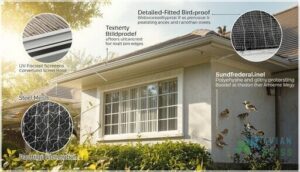
Over eaves, across windows, and around rooftop edges, netting and screens serve as quiet sentinels. When you select UV-stabilized polyethylene or steel mesh, you’re investing in Netting Material Types built to last.
Focus on Installation Best Practices: tight fittings, hidden edges, and full coverage.
Screens cost less than $0.15 per square foot—true Cost-Effectiveness Analysis—while maintaining appearance and Regulatory Compliance.
Using Weather Stripping on Windows and Doors
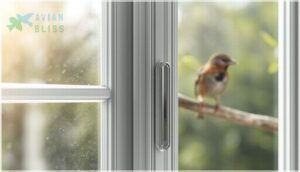
With weather stripping, you close the door—quite literally—on bird intrusions. Sealing entry points at windows and doors is a smart move that delivers durable Ingress Prevention.
Pick materials for Stripping Material Durability; professionally installed weather stripping boosts Energy Efficiency and shrinks Installation Error Rates.
Keep up with Maintenance Schedules, and bird proofing with these barriers becomes a long-term solution.
Effective Bird Deterrents and Barriers
When birds keep returning, you need practical ways to keep them moving along. There are different kinds of deterrents and barriers that cut down on unwanted visits.
Here’s how you can make your home less inviting to feathered pests.
Visual Deterrents (Reflective Tape, Decoys)
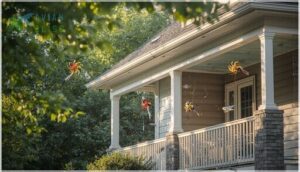
Visual deterrents turn your property into a place birds simply don’t want to be. Reflective tape—especially when visible and dancing in the breeze—disrupts flight paths and dramatically cuts down on Crop Protection issues.
Decoy Placement is key; moving predator models beat static ones, since birds quickly adapt.
Market Trends show smarter, more humane visual deterrents are leading bird proofing strategies.
Auditory Deterrents (Ultrasonic Devices, Distress Calls)
Wondering if all those bird control gadgets actually work? Here’s the truth: ultrasonic devices rarely move the needle, as most birds can’t hear those high sound frequencies. By contrast, distress call systems—especially when part of combined systems—offer safe deterrents, but you need variety to outsmart species adaptation. For reliable device effectiveness, remember environmental impact and rotate your auditory deterrents:
- Choose bio-acoustic distress call systems.
- Avoid relying on ultrasonic-only deterrents.
- Rotate calls to prevent species adaptation.
- Prioritize eco-friendly, low-impact devices.
Physical Barriers (Spikes, Wire Mesh, Netting)
Think of physical barriers as the security fence for your home—effective, subtle, and humane. Bird spikes quickly reduce landings by up to 95%, often slashing cleaning bills, while spike installation costs and aesthetic impact remain reasonable.
Choose wire mesh with the right mesh size to seal entry points for lasting bird proofing, or trust netting material durability for netting on broad, irregular structures.
Eliminating Indoor Bird Hazards

To keep your birds safe inside, a few simple changes make a world of difference.
There are some common hazards you’ll want to clear out right away. Here’s what to focus on first.
Removing Toxic Substances and Unsafe Foods
Did you know a single drop of avocado can be deadly for budgies? Preventing accidental poisoning means knowing more than the obvious—Teflon dangers, metal toxicity from old hardware, even toxic plants and chemical fumes belong on your radar.
Regularly check for unsafe foods and hidden toxic substances throughout your space. Identifying toxic substances is the backbone of bird safety in every household.
Managing Electrical Cords and Open Flames
After combing your space for hidden toxins, shift focus to cord safety and flame barriers. Electrical cords attract curious beaks—protect them with covers and cable management. Inspect devices regularly for hazards.
Open flames demand sturdy barriers and distance from birds. Keep water away from outlets, and use alarm systems near heat sources to spot issues before they become emergencies, boosting overall home safety.
Choosing Safe Materials and Bird Toys
After cord and fire safety, choosing bird toys made from birdsafe materials anchors a safe space. Stainless steel tops the Toy Material Safety list, while Safe Wood Types like applewood or pine keep chewing worry-free.
Watch Rope Material Risks—opt for natural, not frayed. Avoid Plastic Toy Dangers; cheap pieces break and pose threats.
DIY Toy Safety means steering clear of painted or treated supplies.
Maintaining a Bird-Proof and Safe Environment
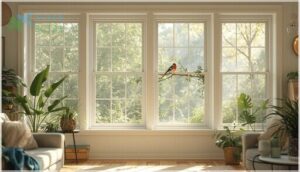
Keeping your home safe for birds isn’t a one-and-done job—it takes a little upkeep. A few simple habits can go a long way toward making sure your space stays secure. Here’s what you’ll want to keep in mind moving forward.
A safe home for birds isn’t automatic—it’s the ongoing habits that keep your space truly secure
Regular Cleaning of Droppings and Nesting Materials
Regularly clearing away bird droppings and old nesting materials is non-negotiable for maintaining a clean environment. Dropping removal frequency should match bird activity, especially in summer.
Prompt nesting material disposal reduces pathogens and pests, supporting long-term maintenance and disease prevention.
Choose cleaning product safety over harsh chemicals—mild, bird-safe solutions keep you and your feathered residents protected while minimizing hazardous bird debris indoors.
Routine Inspection of Bird-Proofing Measures
Bird-proofing doesn’t stop once the barriers are up. Inspection frequency matters—monthly checks of screens, vents, and netting keep device maintenance on track while spotting new risks early.
Use a simple checklist: look for tears, loose fittings, or gaps that invite bird intrusions. Document findings, noting any droppings or structural changes, to support ongoing nesting prevention and avoid costly property damage.
Frequently Asked Questions (FAQs)
How do you birdproof a room?
To birdproof a room, focus on sealing entry points and using interior barriers to prevent indoor bird collisions.
Integrate bird-safe lighting, manage household hazards, maintain clean air quality, and prioritize dropping cleanup for lasting pet bird safety.
Where can I buy bird proofing materials?
You’ll find bird proofing materials at Online Retailers like Amazon, local Hardware Stores, and Garden Centers. Pest Suppliers offer specialized bird deterrents and physical barriers.
Market trends show increasing options for birdproofing your home and stopping unwanted nesting.
Does bird proofing deter birds?
Like changing up the locks in a well-worn fable, bird proofing deters birds effectively, especially when you combine visual, auditory, and physical deterrents.
Habituation trends make deterrent maintenance key for long-term success—no single method works forever.
Why should you use professional bird proofing services?
Expertise matters when dealing with bird intrusions. Professionals deliver sophisticated solutions for bird proofing, ensuring compliance assurance and health mitigation.
Their pest control know-how protects your property, offering true cost-effectiveness and preventing lasting property damage from ineffective DIY bird control.
How do I protect my home from birds?
Just as birds flock to unprotected crumbs, homes with open entry points and unsecured outdoor structures invite bird intrusions.
Use a mix of DIY bird-proofing methods, tested deterrents, and professional services for cost-effective, lasting protection.
Can bird proofing use spikes?
Yes, bird proofing can absolutely use spikes—these physical barriers are highly effective at deterring pigeons and larger birds from entry points.
Humane spikes require proper installation, regular maintenance, and legal compliance but offer long-term cost savings and reliable deterrence.
How do you bird-proof outdoor patios and decks?
Isn’t it charming when your patio turns into the neighborhood bird hangout?
Netting solutions above and around your outdoor structures, careful deterrent placement, and a regular cleaning regimen make bird proofing and furniture protection both practical and humane.
Can bird-proofing impact existing landscaping or gardens?
Bird-proofing can shift your garden’s ecosystem. Netting may block pollinators, impact biodiversity, or unintentionally raise pest levels.
Thoughtful landscape design using native, bird-friendly plants, bird baths, and habitat features helps balance safety with pest control and beauty.
What are safe ways to bird-proof balconies?
Let’s face it, feathered guests on balconies cause more headaches than charm. Netting materials create secure zones, while visual deterrents, safe alternatives, and auditory options act as gentle bird proofing—all best paired with steady maintenance practices.
How to guard small pets from wild birds indoors?
Keep wild bird pests out by sealing entry points and using physical barriers. Maintain supervised interaction in safe zones.
Prompt cleaning, parasite prevention, and minimizing household hazards for birds all reduce disease transmission, stress, and risk of injury indoors.
Conclusion
Birds see your attic as opportunity, but you see it as a sanctuary—that contrast defines the heart of the best bird proofing tips. Balancing vigilance with humane prevention transforms intrusion into harmony.
Each small fix is a quiet act of control, reinforcing to both birds and yourself where boundaries lie. In protecting your home, you’re shaping an environment that’s safe, clean, and truly yours—proof that mastery hinges not on force, but on thoughtful, persistent care.
- https://pmc.ncbi.nlm.nih.gov/articles/PMC12017283/
- https://www.scitechnol.com/peer-review/evaluation-of-mistnetting-technique-for-capturing-field-birds-IsZH.php?article_id=7821
- https://www.birdbgone.com/products/bird-deterrents/
- https://tc.canada.ca/en/aviation/publications/evaluation-efficacy-products-techniques-airport-bird-control-03-1998-tp-13029
- https://www.frontiersin.org/journals/plant-science/articles/10.3389/fpls.2024.1365275/full