This site is supported by our readers. We may earn a commission, at no cost to you, if you purchase through links.

That dusty nest tucked behind your porch light isn’t just an eyesore—it’s a thriving ecosystem for mites, fleas, and parasites that can persist for weeks between hosts. Up to 90% of abandoned bird nests harbor these unwanted inhabitants, creating genuine health risks alongside pest infestations.
Yet the instinct to simply clear it away immediately often backfires, running straight into legal protections for migratory birds that can carry fines up to $15,000.
Knowing when and how to clean out old bird nests safely means understanding the difference between an active breeding site and a true hazard, respecting the birds that depend on your birdhouses, and protecting your own health in the process.
Table Of Contents
- Key Takeaways
- When to Remove Old Bird Nests
- Risks of Leaving Old Nests in Place
- Preparing for Safe Nest Removal
- Step-by-Step Guide to Removing Old Nests
- Cleaning and Disinfecting Birdhouses
- Ethical and Conservation Considerations
- Preventing Unwanted Bird Nests
- Encouraging Healthy Birdhouse Habitats
- Frequently Asked Questions (FAQs)
- Conclusion
Key Takeaways
- Up to 90% of abandoned bird nests harbor mites, fleas, and parasites that can persist for weeks and create genuine health risks, including histoplasmosis, salmonellosis, and fire hazards near your home.
- Federal law under the Migratory Bird Treaty Act prohibits disturbing active nests, with violations carrying fines up to $15,000 and possible jail time, so you must confirm a nest is truly inactive before removal.
- Safe nest removal requires N95 respirators, gloves, eye protection, and proper disposal in sealed bags to prevent pathogen exposure, with bleach solutions (1:9 ratio) eliminating 99.9% of bacteria when applied for at least 10 minutes.
- Clean birdhouses annually after the breeding season ends (late August through October), and birds naturally build fresh nests to escape parasites, so cleaning improves nesting success by over 20% without needing to reuse old nesting material.
When to Remove Old Bird Nests
Timing your nest removal correctly protects both you and the birds while keeping you on the right side of the law. You’ll need to distinguish between nests that are still in use and those that have been abandoned, understand the seasonal windows that work best for cleanup, and navigate the legal guidelines that govern when you can—and can’t—remove nests.
Let’s break down these three essential considerations so you can approach nest removal with confidence and care.
Identifying Active Vs. Inactive Nests
How can you tell if a nest is still in use? Look for adult bird activity—over 90% of active nests show regular visits. Fresh nest material, like newly added twigs or feathers, appears in 76% of active sites. Listen for vocalizations near the nest, and check for eggs or nestlings inside.
Nest progress can be tracked using status codes. Monitor at least three times per breeding cycle to confirm status before removing any nest.
Best Times of Year for Nest Removal
Once you’ve confirmed a nest is inactive, timing matters. The post-breeding window—late August through October in temperate North America—offers the safest removal period after the nesting season ends. Regional variance means southern climates start earlier, while northern sites extend into early September.
For pre-season prep, late winter cleaning prepares boxes before spring breeding begins. It’s important to remove nests to prevent disease transmission.
Key seasonal timing windows:
- Fall clean-out — Remove old nests after the final brood fledges, generally September through October depending on your climate considerations
- Between broods — Clean after each nest cycle during breeding season once fledglings permanently leave
- Early spring prep — Clear winter months debris in March before the new nesting season starts
Legal Restrictions on Nest Removal
Before you remove any nest, understand that federal law draws a hard line. The Migratory Bird Treaty Act protects over 1,000 native species, making it illegal to disturb active nests without permit requirements. Violations bring fines up to $15,000 and possible jail time—enforcement actions don’t distinguish between intentional harm and ignorance.
Federal law prohibits disturbing active nests, with violations carrying fines up to $15,000 and possible jail time
Protected species need your ethical responsibility. MBTA compliance isn’t just legal necessity; it’s conservation efforts in action.
Risks of Leaving Old Nests in Place

Leaving old nests in your birdhouses might seem harmless, but it can create serious problems for both you and future nesting birds.
These abandoned structures become breeding grounds for unwanted guests, health hazards, and even safety risks around your property.
Understanding what can go wrong helps you protect your family, your home, and the birds you’re trying to support.
Pest Infestation and Parasite Risks
Old nests become crowded apartments for harmful organisms you definitely don’t want near your home. Surveys show up to 90% of abandoned nests harbor mites, fleas, and blowfly larvae—ectoparasites that won’t hesitate to move indoors.
These pest infestations create rodent reservoirs in attics and walls, while parasite survival rates remain high for weeks between hosts, increasing your family’s exposure to zoonotic diseases and insecticide residues.
Disease Transmission Concerns
When you disturb dried droppings and nest debris, you’re releasing airborne spores that cause histoplasmosis—a fungal infection with attack rates exceeding 80% in exposed groups. Bacterial zoonoses like salmonellosis and psittacosis spread through contaminated dust, while avian flu requires intensive bird contact.
These disease transmission risks worsen in poorly ventilated spaces, making protective measures essential before you begin any nest removal work.
Fire Hazards From Nest Material
Because dry twigs, grass, and feathers ignite rapidly when exposed to sparks, nest flammability poses genuine risks near chimneys and dryer vents. Between 2014 and 2018, 44 wildfires stemmed from nest-related electrical incidents, while blocked ventilation systems have caused transformer fires affecting hundreds of homes.
You’ll reduce property damage substantially by removing old nesting material before ignition sources trigger costly incidents.
Preparing for Safe Nest Removal

Before you approach any old nest, you need the right gear and a solid plan to protect both yourself and the birds that may return. Proper preparation isn’t just about comfort—it’s about preventing exposure to pathogens, allergens, and other health risks that come with old nesting material.
Here’s what you need to have ready before you start the removal process.
Essential Safety Gear and Supplies
Before you reach for that old nest, think of your protective gear as your first line of defense. You’ll need latex or rubber safety gloves, a dust mask or HEPA filter respirator, and safety goggles to shield against droppings and parasites.
Gather a sturdy trash bag for safe disposal, a diluted bleach cleaning solution, and brushes for scrubbing. This PPE importance can’t be overstated—it protects you from disease-carrying materials.
Minimizing Exposure to Allergens and Pathogens
When you disturb an old nest, airborne spore risks escalate—fungi like Histoplasma can launch thousands of spores per cubic meter, triggering serious respiratory illness. Allergen mitigation starts with proper ventilation and a quality N95 respirator.
Pathogen persistence means bacteria and disease-causing organisms linger for months in droppings and debris. Following strict cleaning protocols—wet methods over dry sweeping—cuts disease transmission by over 90%, protecting you from harmful organisms that thrive in neglected nests.
Protecting Yourself and The Birds
Balancing human health risks with bird welfare first requires intentional timing—you can’t rush into removal without verifying the nest is truly inactive. Ethical considerations demand that you protect current residents while preventing disease transmission.
Safe nest disposal and preventative measures work hand in hand, creating a safe environment that shields you from parasites and harmful organisms while safeguarding bird health for generations ahead.
Step-by-Step Guide to Removing Old Nests
Once you’ve prepared your safety gear and assessed the situation, it’s time to tackle the actual removal process. The following steps will walk you through accessing the nest site, disposing of materials properly, and handling any unexpected discoveries like unhatched eggs or deceased birds.
Each phase requires specific techniques to protect both you and future nesting birds.
Safely Accessing Birdhouses and Nest Boxes
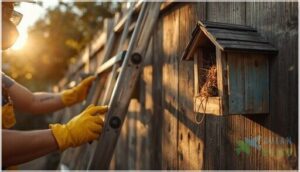
Before you clean out old nesting material, ladder safety becomes your first priority. Position your ladder on stable ground near the nest box, and always wear appropriate PPE—gloves, an N95 respirator, and eye protection—to guard against zoonotic risks from dried droppings.
Most birdhouse injuries happen below 16 feet, so secure your footing carefully and avoid overreaching when accessing elevated bird houses.
Proper Nest Material Disposal Methods
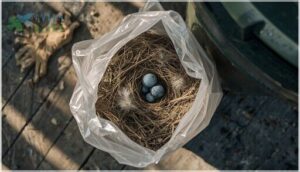
Once you’ve removed the nest, proper disposal protects both you and your local ecosystem. U.S. Fish & Wildlife Service guidelines confirm you can dispose of old nesting material from inactive nests without concern, but how you handle it matters for parasite prevention and limiting waste stream impact.
Safe nest material disposal involves these steps:
- Double-bag natural debris in a sealed plastic bag to contain mites or lice—found in 28% of sampled nests
- Separate anthropogenic materials like plastic or rope into your regular trash bag
- Don’t compost it or reuse material, as 21% harbor Salmonella despite disinfection concerns
- Dispose in yard waste bins for natural matter, general trash for synthetics
Handling Unhatched Eggs and Deceased Birds
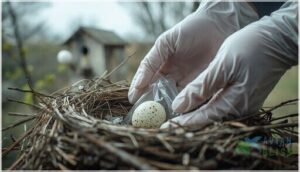
After safe nest material disposal, you may find unhatched eggs and deceased birds inside—don’t rush. Federal law prohibits removing these from active nests, so wait four weeks past expected hatch dates to confirm inactivity.
When handling unhatched eggs or deceased birds, wear gloves and masks, as they harbor disease-causing organisms and harmful avian diseases. Seal them in plastic bags before disposal to minimize mortality risks and conservation impact.
Cleaning and Disinfecting Birdhouses
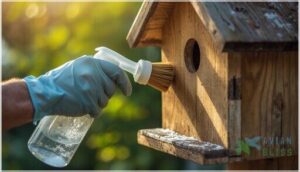
Once you’ve removed the old nest and disposed of it properly, the next step is to clean and disinfect the birdhouse to eliminate parasites, bacteria, and fungi that could harm future occupants. This process doesn’t require complicated equipment, but it does demand attention to detail and the right approach to make certain the structure is truly ready for new tenants.
The following sections will walk you through the cleaning solutions you’ll need, how often to perform this maintenance, and the proper way to dry and reassemble your birdhouse.
Recommended Cleaning Solutions and Techniques
After you’ve removed old nesting material, selecting the right cleaning solution makes all the difference. A bleach solution—1 part bleach to 9 parts water—eliminates up to 99.9% of bacteria when applied for at least 10 minutes. Alternatively, white vinegar mixed with hot water offers gentler cleaning methods, removing 70-80% of pathogens. Enzymatic cleaners target organic waste effectively.
Always follow thorough rinsing practices to protect returning birds.
Frequency of Birdhouse Cleaning
You’ll want to establish a nest box cleaning schedule suited to your bird community. Most species thrive with annual maintenance—ideally in late fall after the last brood fledges. However, bluebirds benefit from cleaning after each nesting attempt, sometimes two or three times per season.
Species variations matter: wrens and chickadees usually need less frequent attention.
Seasonal impacts and health implications make consistent birdhouse cleaning essential for reducing parasites by up to 90%.
Drying and Reassembling Birdhouses
Once your birdhouse has been thoroughly scrubbed and rinsed, proper drying methods prevent water damage and mold growth that can threaten future nesting birds.
- Air-dry outdoors in direct sunlight for four to six hours with good airflow around all surfaces.
- Check ventilation holes remain clear to prevent moisture buildup.
- Inspect for warping or splits before reassembly steps begin.
- Add untreated wood shavings for birdhouse interior maintenance.
- Reinstall panels using corrosion-resistant fasteners once completely dry.
Ethical and Conservation Considerations

Cleaning out old bird nests isn’t just about keeping your birdhouses tidy—it’s about making thoughtful choices that benefit the birds you’re trying to help. Your approach to nest removal can either support local populations or inadvertently harm them, depending on how and when you act.
Let’s look at three key ways to keep conservation and ethics at the heart of your birdhouse maintenance.
Supporting Local Bird Populations
Your backyard ecosystem doesn’t end when you clean out old nests—it’s just the beginning. Supporting local bird populations means creating bird-friendly habitats through native plant cover, which attracts more avian visitors and sustains essential food webs.
You can contribute through citizen science programs, population monitoring, supplemental feeding, or even advocating for agri-environment schemes. Effective habitat maintenance transforms your yard into a thriving refuge for generations of birds.
Avoiding Disturbance to Nesting Birds
When nesting birds are raising their young, even well-intentioned actions can disrupt the nesting cycle and harm nestlings. You’ll need to respect buffer zone size—usually 30 to 300 meters depending on species—and avoid active bird nests during the legal breeding season, usually March through August.
Here’s how you protect nesting birds effectively:
- Keep your distance during territory establishment to prevent abandonment and nest relocation stress
- Monitor nest sites remotely using binoculars rather than approaching directly
- Time activities outside breeding periods when seasonal timing impacts are minimal
- Recognize human habituation effects vary by species and urban adaptation
- Respect flush distances where birds naturally leave nests due to proximity
Remember, nesting cycle disruption can reduce breeding success by up to 24% in some species.
Reusing or Recycling Nesting Material
While old nest material tempts reuse, it’s best discarded rather than recycled. Most wild birds build fresh nests to escape accumulated parasites and pathogens—a strategy that boosts fledging success by over 20%.
Instead, channel that ecological impulse into habitat creation: arrange pruned branches as brush piles for shelter, scatter pesticide-free leaves and feathers outdoors for natural nesting resources, or compost dry plant matter separately from soiled material to minimize fungal spore exposure. This approach honors both bird health and legal protections under the Migratory Bird Treaty Act.
Preventing Unwanted Bird Nests

While attracting birds to your birdhouses is rewarding, you also want to be intentional about which species nest in your yard and how you manage their habitats. The good news is that thoughtful maintenance, smart design choices, and strategic placement give you real control over who calls your birdhouses home.
Let’s look at practical ways to support the birds you want while minimizing problems from unwanted visitors.
Birdhouse Maintenance and Design Tips
Think of your birdhouse as preventive medicine—proper design keeps birds healthy and nest boxes functional for years. Focus on these essentials for birdhouse maintenance:
- Install drainage holes (0.95–1.27 cm diameter) in the floor to prevent water pooling and mold growth
- Add ventilation openings near the roofline on each side wall for airflow and moisture control
- Use untreated cedar or pine for durability, insulation, and safety without toxic preservatives
- Mount on smooth poles with predator baffles to exclude climbing threats like raccoons and snakes
Proper Material Selection and Mounting Techniques create lasting Bird Houses that support healthy nesting cycles.
Deterring Problematic Species
House Sparrows and European Starlings, non-native species unprotected by federal law, can dominate nest boxes and displace native cavity nesters. Your most effective nest box management combines exclusion methods with active monitoring.
Install entrance hole reducers (smaller than 1.5 inches) to block access for larger invasive species while allowing bluebirds and wrens entry. Remove House Sparrow nests promptly during the breeding season—studies show this substantially reduces invasive occupancy rates across successive cycles, protecting native fledging success.
Safe Placement of Birdhouses
Where you position your birdhouse matters as much as keeping it clean. Placement directly influences predator access, habitat context, and your birds’ breeding success.
Mount boxes at species-specific heights—bluebirds at 3–6 feet, chickadees at 5–15 feet—in open settings that reduce predator pathways. Space nest boxes at least 25 feet apart to minimize territorial conflicts. Orient entrance holes away from common winds, usually facing east.
These strategic decisions create bird-friendly habitats that complement your maintenance efforts.
Encouraging Healthy Birdhouse Habitats
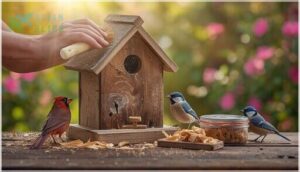
Once you’ve got your birdhouses clean and ready, the real work begins—creating spaces where birds actually want to settle in. The right setup depends on knowing what species live in your area and what they’re looking for, so let’s walk through how to make your nest boxes genuinely inviting.
We’ll cover selecting the right house for your local birds, keeping watch on what’s happening inside throughout the year, and maintaining boxes that stay fresh and appealing.
Choosing The Right Birdhouse for Local Species
Getting the right birdhouse means matching design to your local birds’ needs. Different species have distinct requirements for entrance size, floor dimensions, and placement spacing that directly affect occupancy rates and breeding success.
Consider these factors:
- Eastern Bluebirds need 5¾ by 5½-inch floors with 1½-inch entrance holes
- Carolina Chickadees prefer 4 by 4-inch floors with 1⅛-inch openings
- Material impact matters—wood-crete boxes yield 70–80% occupancy versus standard wood
- Space boxes 300 feet apart for bluebirds, 8–10 feet for tree swallows and bluebirds together
Research your region’s native species through citizen science databases before installing birdhouses.
Monitoring Nesting Activity Throughout The Year
Once you’ve installed the right birdhouse, keeping tabs on what’s happening inside becomes your window into breeding success. Weekly nest box checks during the March–August breeding season let you track the nesting cycle—from egg laying through fledging. You’ll gather critical egg counts, hatchling numbers, and fledging rates that reveal how your local bird populations are thriving.
| Monitoring Metric | Frequency | What It Tells You |
|---|---|---|
| Eggs laid | Weekly checks | Clutch completion and timing |
| Nestlings hatched | Weekly checks | Breeding productivity rates |
| Fledglings departed | Weekly checks | Nesting success and survival |
Consider joining citizen science programs like NestWatch, where your observations contribute to nationwide nesting trends and conservation decisions.
Maintaining Clean and Inviting Nest Boxes
Your monitoring work pays off when you follow through with regular maintenance. Clean nest boxes attract birds more reliably than neglected ones—research shows eastern bluebirds reuse cleaned boxes at considerably higher rates. Here’s what keeps your boxes inviting:
- Remove all nesting material once yearly after breeding season ends
- Rinse interiors with hot water and allow thorough air-drying to reduce parasites
- Inspect boxes for structural damage and repair as needed
This nest box hygiene prevents disease carryover and signals quality habitat to returning birds.
Frequently Asked Questions (FAQs)
What should I do with found unhatched eggs during cleanup?
You’ve discovered nature’s failed experiment—now what? Unhatched eggs harbor Salmonella and fungal pathogens.
Wear gloves, dispose in trash or bury twelve inches underground away from nesting areas. Never compost near birdhouses. Wash hands thoroughly afterward.
Legal compliance requires destruction, not retention.
How long does the cleaning and disinfection process typically take?
A typical birdhouse cleaning and disinfection takes about 10 minutes of active work. Scrubbing with cleaning solution adds 5–10 minutes, then you’ll need at least 24 hours drying time before reassembly.
Frequency impacts your annual commitment: cleaning once yearly requires minimal cumulative effort.
Can I reuse the same birdhouse immediately after cleaning?
Yes, you can reuse birdhouses immediately after proper cleaning. A bleach solution eliminates 99% of pathogens, while 2–4 hours of sun-drying ensures safety.
Most cavity-nesting birds build new nests anyway, so cleaning efficacy matters more than timing for renesting success.
Should I wear a respirator or just a standard dust mask?
A standard dust mask won’t cut it. N95 respirators filter 95% of airborne particles, including fungal spores and bacteria from bird droppings.
The CDC recommends N95 or higher for nest removal to prevent histoplasmosis and psittacosis exposure.
Conclusion
Balanced, biological, and beneficial—this is the framework for cleaning out old bird nests safely. By respecting both resident wildlife and regulatory requirements, you protect your household while preserving the ecosystem that thrives on your property.
Your dedication to proper nest maintenance demonstrates that stewardship and safety coexist harmoniously. The birds returning to your birdhouses will thank you with songs of gratitude, and your home will remain healthier for it.
- https://www.sciencedirect.com/science/article/pii/S0048969725000737
- https://nestwatch.org/blog/to-clean-or-not-to-clean-your-nest-box/
- https://gadnr.org/dnr-clean-feeders-save-birds-0
- https://pdfs.semanticscholar.org/4fb2/8da2f5e7e9a2345db21dffc731bab5f4558c.pdf
- https://www.arkwildlife.co.uk/blogs/wildlife-guides/nest-box-maintenance