
This site is supported by our readers. We may earn a commission, at no cost to you, if you purchase through links.
Stale bird seed doesn’t just get ignored—it can quietly make birds sick. Oxidized fats and degraded nutrients in old seed reduce immune function and energy, which means the birds visiting your yard may look fine while running on empty. Most backyard birders never connect the dots between a dull feeder crowd and a seed bag left open in the garage since last fall.
Humidity, pests, and heat do more damage than most people realize. Mold can develop in hours when moisture levels climb, and a single mouse visit can contaminate an entire supply with Salmonella.
Smarter bird supply food storage ideas protect both your seed and the birds you’re feeding—and the right container setup makes it almost easy.
Table Of Contents
- Key Takeaways
- Why Proper Bird Food Storage Matters
- Choosing Bird Food Storage Containers
- Best Storage Conditions and Locations
- Storing Different Bird Seed Types
- Top 10 Bird Food Storage Containers
- 1. Navaris Metal Bird Seed Box
- 2. Gamma2 Vittles Vault Airtight Pet Food Container
- 3. IRIS USA Airtight Pet Food Bin
- 4. IRIS USA Airtight Pet Food Container
- 5. More Birds Bird Seed Storage Tote
- 6. Buddeez Bird Seed Storage Containers
- 7. DEAYOU Metal Pet Food Storage Tin
- 8. Brabtod Portable Airtight Bird Seed Container
- 9. SQUSIMEI Bird Seed Storage Container
- 10. Brabtod Bird Seed Storage Container
- Frequently Asked Questions (FAQs)
- Can I store different seed types together?
- How do I revive slightly stale bird seed?
- Whats the best way to transport bulk seed?
- Should I refrigerate bird seed in summer?
- How often should I replace storage containers?
- Can bird food be stored outdoors safely?
- How do I store live or dried mealworms?
- Does bird food expire if unopened?
- Can different seed types be mixed during storage?
- How often should storage containers be cleaned?
- Conclusion
Key Takeaways
- Stale, poorly stored seed quietly harms birds by degrading fats and vitamins before you ever notice a problem.
- Humidity above 50% and a single rodent visit can ruin your entire seed supply within hours through mold or Salmonella contamination.
- An airtight container with a solid gasket seal, stored below 70°F in a cool, shaded spot, is the single biggest upgrade you can make for seed freshness.
- Oil-rich seeds like nyjer go rancid faster than other varieties, so they deserve their own sealed container and the shortest shelf life on your rotation.
Why Proper Bird Food Storage Matters
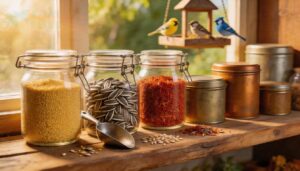
The way you store bird food makes a bigger difference than most people realize. Bad storage leads to moldy seeds, pest problems, and wasted money — none of which your backyard birds deserve.
Proper storage is just one piece of the puzzle — the backyard bird feeding guide covers everything else that keeps your feathered visitors healthy and coming back.
Here’s what you need to know to get it right.
How Freshness Affects Bird Nutrition
Think about what stale seed actually costs your birds. Poor seed freshness quietly drains vitamin retention, fat quality, and protein digestibility before you notice anything wrong.
Oxidized fats cut energy efficiency, so birds burn more food for less fuel. Degraded vitamins and amino acids weaken immune support too.
Fresh seed, stored right, delivers the full nutrition your backyard birds actually need. Consider using airtight containers for seed storage to preserve nutrition.
Humidity, Mold, and Seed Spoilage Risks
Moisture is seed’s worst enemy. Once humidity climbs past 50%, you’re in risky territory — and at 70% RH, seed moisture can spike to dangerous levels within hours.
Watch for these spoilage indicator tests and warning signs:
- Musty or sour odors developing in stored seed
- Visible mold colors like tan, white, or bluish-green
- Caking, clumping, or a sticky texture
- Condensation forming inside containers after temperature swings
- Any heating or hot spots in your seed pile
Smart condensation management and a solid temp-humidity balance — keep temperature plus RH at or below 100 — are your best defense. Airtight storage locks moisture out before mold species like Aspergillus or Penicillium ever get a foothold.
Pest Contamination and Feeder Safety
Mold isn’t your only headache. Mice, rats, and grain beetles can infiltrate stored seed fast — and rodent droppings carry Salmonella that stays infectious for weeks.
Rodent-proof feeders, airtight containers, and seal integrity checks are non-negotiable for food safety for birds.
Weight-activated ports cut squirrel spillage. Ant moat barriers block bacteria trails.
pest monitoring logs and you’ll catch problems before they spread.
Shelf Life, Waste Reduction, and Cost Savings
Pest-proofing saves seed — and money. When you nail your storage setup, bird seed stays viable for 6 to 12 months instead of weeks.
- Track Cost Per Pound by buying in bulk and reusing containers
- Set Expiration Date Alerts on labeled bins
- Run monthly Waste Auditing to catch spoilage early
- Practice Seed Viability Testing before refilling feeders
Choosing Bird Food Storage Containers
The right container makes all the difference between seed that stays fresh for weeks and seed you’re tossing out early.
Not every bin, tin, or jar is built the same — and a few key features separate the good ones from the ones you’ll regret buying.
Here’s what to look for before you pick one.
Airtight Seal Quality for Longer Freshness

A clicking lid isn’t a promise — it’s just a start. What actually keeps seed fresh is compression uniformity: even gasket pressure all the way around the rim. A silicone seal or snaplock lid with a silicone-lined gasket blocks air and moisture far better than a loose-fitting cap. Vacuum seal options go further, but a quality airtight seal with lid click assurance manages everyday storage beautifully.
A clicking lid is just a start; true freshness demands even gasket pressure sealing every inch of the rim
| Feature | What It Does | Why It Matters |
|---|---|---|
| Gasket Material | Creates the airtight barrier | Prevents moisture and air ingress |
| Compression Uniformity | Even pressure around rim | No gaps, no staling |
| Seal Longevity | Maintains tight seal over time | Protects seed batch after batch |
Check your gasket before every refill. Cracked or dirty seals quietly fail — and your birds pay the price.
Metal Vs Plastic Vs Glass Containers
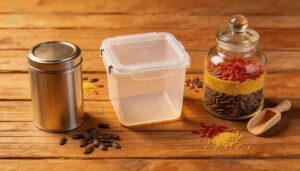
Each material brings something different to the table — so the right pick really depends on your setup.
- Metal containers win on impact resistance and durability over time; rodents can’t chew through steel.
- Plastic bins with tight lids score best on material weight — easy to lift when full.
- Glass jar storage offers transparency, visibility, and zero odor absorption.
- Thermal Conductivity runs highest in metal, which can affect seeds in hot garages.
BPA Free and Food Grade Materials
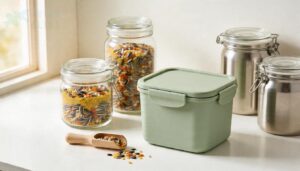
Not all plastics are created equal. BPA‑Free Resin matters because older plastics could leach chemicals into stored food — and that’s the last thing you want near your birds’ seed.
Look for BPA‑free storage containers with Food Grade Certification, ideally polypropylene (code 5) for its Polypropylene Heat Resistance. Prefer Glass Non‑Porous options or Stainless Steel Durability for zero chemical migration and long‑lasting freshness.
Rodent Proof and Insect Resistant Features
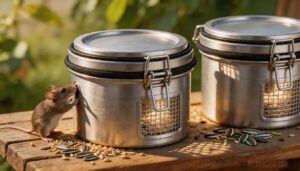
determined mouse can squeeze through a gap the size of a dime — so your container needs to be ready for that. Heavy gauge steel walls stop rodents cold, while rubber gasket seals and insect‑blocking latches close off the tiny gaps they exploit.
Steel mesh vents keep airflow moving without letting pests through. Sealed entry points complete your pest resistant, rodent and insect proof setup.
Size and Capacity for Daily or Bulk Use
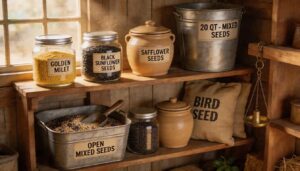
Size isn’t just a shelf decision — it shapes your whole feeding routine. Match your container to how often you refill, not just how much seed you buy.
- Daily Quantity Guidelines: A 4–6 quart bin works perfectly for quick top-ups every few days.
- Bulk Bin Dimensions: A 10-gallon can holds roughly 50 lb — ideal for busy backyard stations.
- Weight-to-Volume Ratio: Seed density varies, so check both pounds and liters before buying.
- Portability and Handling: Smaller 10–15 lb bins are far easier to lift and maneuver daily.
Easy Pouring, Scooping, and Cleaning
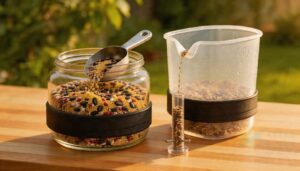
A wide top opening changes everything.
With a Wide Mouth Design, your measuring cup slides in cleanly without knocking seed everywhere.
Dual Pour Spouts let you direct flow into narrow tube feeders or wide hoppers — no funnel needed.
A Scoop Friendly Shape means less mess per refill.
Smooth Clean Interiors rinse fast and dry completely.
Ergonomic grips make the whole process feel smooth, even with full containers.
Best Storage Conditions and Locations
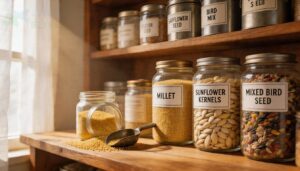
Where you store your bird seed matters just as much as what you store it in. The right conditions can mean the difference between seed that stays fresh for weeks and seed that goes bad in days.
Here’s what you need to know to get your storage setup right.
Cool, Dry Spaces Below 70 °F
Temperature runs the show with respect to seed freshness. Keeping your stash in a cool dry place — ideally between 40 and 70 °F — slows oil breakdown and extends shelf life noticeably. Think basements, interior pantries, or garages with Temperature‑Stable Shelving away from appliances.
Cool Zone quick wins:
- Target 40–70 °F for peak freshness
- Use Insulated Container Placement away from heat sources
- Add Cool Zone Monitoring with a simple thermometer
- Choose Ventilated Storage Units to prevent heat pockets
Keeping Humidity Under 50 Percent
Once you’ve nailed the temperature, humidity becomes your next hurdle. Keep it under 50 percent — anything higher invites mold fast.
A hygrometer placement inside your airtight container gives you real readings on moisture absorption before clumping starts. Toss in a desiccant pack for backup.
The importance of a dry environment can’t be overstated: silica gel, seal integrity testing, and smart airflow gap design keep your seeds genuinely fresh.
Avoiding Sunlight and Heat Exposure
Humidity sorted? Good. Now think about light and heat sneak in.
Direct sunlight breaks down the oils in seeds fast — especially in high-fat varieties like sunflower. Even a warm garage shelf does quietly damage over time. Opaque Container Choice and smart Shade Placement Strategies are your best defense here:
- Store away from windows to support dry environment importance
- Use temperature control with a thermometer near your storage spot
- Pick shaded indoor spots for better Ventilation and Airflow
- Avoid hot cars, attics, or sheds — heat exposure accelerates staleness
- Plan Seasonal Rotation Planning around summer heat spikes to keep seed dry
Raising Containers Off The Floor
Keep containers off the ground — it’s one of those small moves that pays off fast. A 6-inch gap does three things at once: cut rodent access, improve airflow and under-bin benefits, and make easy under-bin cleaning a real possibility.
| Support Option | Key Benefit |
|---|---|
| Pot feet / risers | Rodent-resistant feet, stable base |
| Wooden pallet | Weight distribution stability for bulk bins |
| Wire shelf rack | Elevated support platforms with full airflow |
| Plastic storage blocks | Moisture barrier from damp floors |
| Metal stand | True pest-proof storage solutions |
The importance of a dry environment is evident here as well — floors collect condensation, which migrates upward.
Indoor Pantry, Basement, and Garage Options
Your best spot for indoor bird seed storage depends on how stable your space stays year-round.
A pantry wins for temperature management and humidity control — it’s naturally cool, dark, and consistent. Basements work great too, as long as moisture barriers and proper ventilation strategies are in place.
Garages? Trickier. Wild temperature swings make airtight containers and floor insulation non-negotiable for pest-proof storage and space optimization.
Labeling, Stock Rotation, and Weekly Inspections
Label your containers the moment you bring seed home — date, seed type, done. A simple Rotation Log Sheet keeps your FIFO system honest, so older stock always moves first.
Run a Weekly Visual Audit every seven days: check for mold, sniff for musty odors, and inspect seed bags for insect activity. Your Container Seal Verification and Expiration Alert System catch problems before birds do.
Storing Different Bird Seed Types
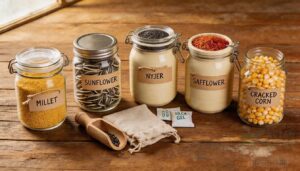
Not all bird seeds are created equal — and how you store them matters just as much as which ones you buy. Different seed types have their own quirks regarding staying fresh, handling heat, or resisting moisture.
Here’s what you need to know for each one.
Sunflower Seeds and Black Oil Sunflower Seed
Sunflower seeds — especially black oil sunflower seed — are a powerhouse for backyard birds. Their oil richness and shell thinness make them easy to crack open, even for small species.
That energy density and protein-fat balance matter most during seasonal feeding in winter.
Store them in airtight containers below 70°F with moisture and temperature control in storage, using pest-proof storage solutions for birdseed.
Nyjer Seeds and Freezer Storage Ideas
Nyjer seeds are delicate — they go rancid fast when moisture sneaks in.
The best move? Freeze birdseed in smaller portions using freezer bag types with vacuum sealing to lock out air.
Airtight containers with a moisture indicator take the guesswork out of seed freshness preservation.
Thaw only what you need using a simple room-temperature thawing method.
Proper moisture control keeps nyjer seeds viable for up to a year.
Safflower Seeds and Heat Protection
Safflower seeds are surprisingly heat-sensitive. Drying temperature control matters more than most people realize — heat-induced cracking can quietly damage the seed’s oil-rich interior before you even notice.
Keep them in a cool, dry environment with a moisture content target around 6–7%. An airtight seal is non-negotiable in hot weather, since oil oxidation prevention depends on blocking both heat and humidity.
Vacuum sealing benefits safflower seeds especially well for longer storage.
Mixed Wild Bird Seed Blends
Mixed wild bird seed blends are practically a balancing act in a bag. Nutritional balance varies wildly between brands, so knowing what’s inside matters for Species Targeting. Store all wild bird seeds in airtight containers and add a silica gel packet to handle humidity spikes.
Watch for these red flags:
- Weed Contamination from milo-heavy, Cost-Effective Mixes
- No rotation plan to rotate stock
- Wrong Seasonal Adjustments for your region
When to Freeze Clumped or Damp Seed
Clumped seed is a warning sign, not a freezer candidate. Before freezing bird seed for long-term preservation, you need to hit the right moisture threshold — meaning the seed feels dry and loose, never sticky.
Spread damp seed in a thin layer somewhere cool and shaded first. Drying before freezing prevents frost damage risk, seed clumping, and mold prevention failures that quietly kill seed viability timing.
Signs Seed Should Be Discarded
Even dry-looking seeds can hide spoilage. Here’s what to watch for:
- Mold Appearance — White, green, or black fuzzy patches signal seed spoilage throughout the bag.
- Off Odor — A rancid or musty smell means oil rancidity has set in.
- Moisture Clumping — Seed clumping or stickiness confirms excess seed moisture.
- Insect Presence or Discolored Texture — Weevils, webbing, or faded seeds mean mold and pests have moved in.
Top 10 Bird Food Storage Containers
Finding the right container makes a bigger difference than most people expect. The good news is there are solid options out there for every budget and storage setup.
Here are ten worth your attention.
1. Navaris Metal Bird Seed Box
The Navaris Metal Bird Seed Box is a tidy little option if you’re storing smaller quantities of seed near a garden or porch. Its iron body feels sturdier than a plastic tub, and the included scoop makes daily feeder refills quick and mess-free.
It holds about 4.9 liters — enough for a week’s worth of mixed blend.
Just know the lid friction-seals rather than locks, so it’s not your best pick for truly airtight, long-term storage.
| Best For | Bird and small-pet owners who want a good-looking, functional seed storage tin for everyday use near the porch or feeding station. |
|---|---|
| Capacity | 4.9 L (1.3 gal) |
| Seal Type | Friction lid seal |
| Material | Coated iron |
| Includes Scoop | Yes |
| Indoor Use | Yes |
| Pest Protection | Dust/moisture only |
| Additional Features |
|
- Iron body feels solid and holds up better than plastic for everyday indoor or sheltered use
- The included scoop makes portioning seed quick and waste-free
- Decorative design actually looks nice sitting out — not an eyesore like most storage containers
- Handles have a reputation for snapping quickly, so carry it carefully or not at all
- The lid friction-seals rather than locks, so it’s not truly airtight
- 4.9 liters fills up fast if you’re feeding multiple birds or buying seed in bulk
2. Gamma2 Vittles Vault Airtight Pet Food Container
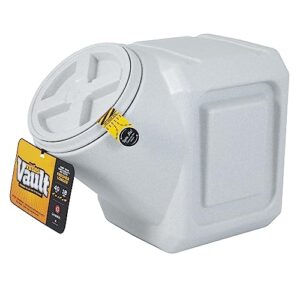
If you need something that can handle serious volume, the Gamma2 Vittles Vault is worth a look. Its Gamma Seal lid uses a threaded lock and double gaskets — that’s a genuinely airtight closure, not just a snug fit.
It comes in sizes from 15 lb up to 80 lb, so you can match it to your feeding setup. The BPA-free HDPE construction is food-safe and surprisingly tough. Stackable too, which helps if storage space is tight.
| Best For | Pet owners with multiple animals or large breeds who need bulk dry food storage in a garage, barn, or pantry. |
|---|---|
| Capacity | 40 lb (18 kg) |
| Seal Type | Threaded Gamma Seal + double gaskets |
| Material | BPA-free HDPE plastic |
| Includes Scoop | No |
| Indoor Use | Yes |
| Pest Protection | Moisture, insects, odors |
| Additional Features |
|
- The Gamma Seal lid is genuinely airtight — threaded lock plus double gaskets keeps moisture, bugs, and odors out for real
- BPA-free HDPE is food-safe and built to last through daily scooping and stacking
- Stackable rectangular shape saves floor space, especially handy in tight storage areas
- Stacking can get wobbly if the grooves don’t line up just right — a full top container makes this worse
- The lid threads can feel stiff, and over-tightening risks stripping the screw top
- You can’t drop the whole bag in — food has to be transferred out first, which is a bit of a chore
3. IRIS USA Airtight Pet Food Bin

IRIS USA Airtight Pet Food Bin punches well above its weight for birdseed storage.
Its foam gasket and snap-lock latches create a genuine moisture barrier — not just a loose lid you hope for the best with.
At 33 qt, it holds around 30 lb of seed comfortably.
The BPA-free translucent body lets you check your supply at a glance.
Bonus: the attachable caster wheels mean you’re rolling it to the feeder, not hauling it.
| Best For | Bird lovers and pet owners who want a sturdy, no-fuss container that keeps large amounts of dry food or seed fresh and easy to move around. |
|---|---|
| Capacity | 33 qt (30 lb) |
| Seal Type | Foam gasket + snap-lock latches |
| Material | BPA-free polypropylene |
| Includes Scoop | No |
| Indoor Use | Yes |
| Pest Protection | Moisture, odors (not rodent-proof) |
| Additional Features |
|
- The foam gasket and snap-lock latches actually seal tight — your seed stays dry and odor-free without any extra effort.
- Caster wheels make it easy to roll to the feeder instead of wrestling a heavy bin across the floor.
- The translucent body lets you see exactly how much is left without digging around or lifting the lid.
- The rear latch can unhook on its own sometimes, so you may need to double-check it’s fully closed.
- It’s not rodent-proof — if you’re storing birdseed outdoors or in a garage, determined pests can chew through.
- Real-world capacity runs closer to 25 lb for most users, so the 30 lb claim is a bit optimistic.
4. IRIS USA Airtight Pet Food Container
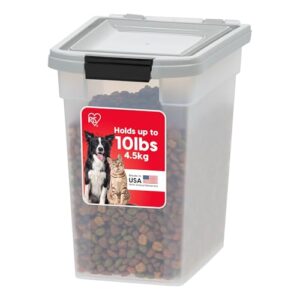
Think of this one as the compact cousin of the larger IRIS bin — smaller footprint, same reliable airtight thinking.
The snap-lock latch and foam seal keep humidity out, which matters when you’re storing sunflower or safflower seeds that go stale fast.
It holds up to 13 pounds of dry feed, and the translucent body means you’ll know when you’re running low before you’re out.
BPA-free and FDA-compliant materials make it a safe choice for your backyard flock.
| Best For | Pet owners who want a compact, easy-to-move storage solution for dry dog, cat, or small-animal food and prefer to keep things organized in the kitchen or pantry. |
|---|---|
| Capacity | 10 lb (4.5 kg) |
| Seal Type | Snap-lock latch |
| Material | BPA-free polymer plastic |
| Includes Scoop | No |
| Indoor Use | Yes |
| Pest Protection | Moisture, odors (not rodent-proof) |
| Additional Features |
|
- The snap-lock latch and airtight seal lock out moisture, so dry food stays fresh way longer than it would in an open bag.
- Translucent body lets you check food levels at a glance — no digging around or guessing.
- Built-in wheels make it easy to roll from the pantry to wherever you need it, even when it’s full.
- The latch can pop loose on its own sometimes, which means you’ll need to double-check it’s actually sealed.
- Not rodent-proof — if you’re storing it in a garage or basement, small critters can chew right through the lid.
- The real-world capacity tends to fall short of what’s advertised, so very large bags may not fit as well as you’d hope.
5. More Birds Bird Seed Storage Tote
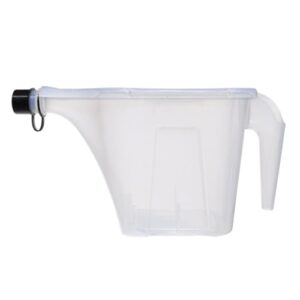
Sometimes the simplest tool makes the biggest difference. The More Birds 3N1 Bird Seed Super Tote holds 5 lbs of seed and earns its spot through smart design — a tapered pour spout that cuts down on mess when topping off tube or hopper feeders.
No fumbling with a separate scoop. The snap-on lid keeps seed fresh and pest‑free between uses.
It’s stackable, clear-walled so you can see your supply at a glance, and at $14.99, it’s a practical grab for everyday feeder maintenance.
| Best For | Backyard bird watchers who refill feeders regularly and want a cleaner, more organized way to handle seed. |
|---|---|
| Capacity | 5 lb (2.27 kg) |
| Seal Type | Snap-on lid |
| Material | Clear molded plastic |
| Includes Scoop | No |
| Indoor Use | Yes |
| Pest Protection | Insects/rodents (snap lid) |
| Additional Features |
|
- The tapered pour spout makes refilling tube and hopper feeders easy without spilling seed everywhere.
- A snap-on lid keeps seed fresh and blocks out pests between uses.
- Clear walls and a stackable design make storage simple — you always know how much seed you have left.
- The handle can feel a little awkward when the tote is packed with a full 5 lbs of seed.
- The lid doesn’t stay open on its own, so you’re constantly setting it down and picking it back up while pouring.
- The plastic can crack if dropped, and at $14.99 it runs slightly higher than basic seed containers.
6. Buddeez Bird Seed Storage Containers
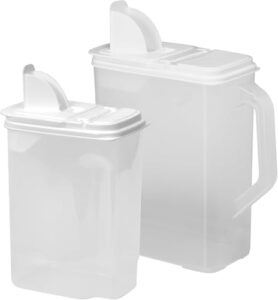
Buddeez takes a clever approach with its bag-in design — you drop the original seed bag right inside the container, so you never lose the nutrition label or accidentally mix blends.
The 8-quart model holds up to 8 pounds of seed and pours cleanly through an EZ-Flip spout that keeps mess off your deck.
Clear walls let you check your supply without opening anything.
BPA-free, food-grade resin, and a slim profile make it easy to tuck into a pantry or garage shelf.
| Best For | Bird owners and pet parents who want a clean, no-fuss way to store dry seed or kibble without losing track of what’s inside. |
|---|---|
| Capacity | 8 qt + 3.5 qt |
| Seal Type | EZ-Flip airtight lid |
| Material | BPA-free food-grade resin |
| Includes Scoop | No |
| Indoor Use | Yes |
| Pest Protection | Air and moisture only |
| Additional Features |
|
- The EZ-Flip pour spout makes filling feeders quick and mess-free
- Clear walls let you see exactly how much seed is left at a glance
- BPA-free, food-grade plastic keeps dry food fresh and is easy to clean
- Dry foods only — not built for anything liquid or even semi-moist
- The smaller container’s grip indentation isn’t great when it’s packed full
- Leave it outside and squirrels will absolutely figure it out
7. DEAYOU Metal Pet Food Storage Tin
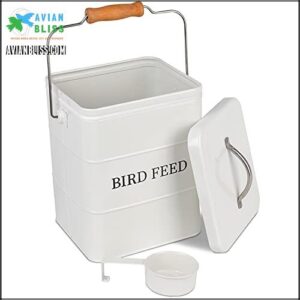
If you want something small and sturdy for daily use, the DEAYOU Metal Pet Food Storage Tin punches above its weight. It holds 5 to 6 pounds of seed in a compact 7×6×9-inch frame — just right for a busy feeder station without taking over your shelf.
The coated carbon steel body shrugs off drops, and the rubber-sealed lid keeps moisture out.
A built-in scoop hangs neatly on the grips. Best for sheltered spots indoors or in a covered garage.
| Best For | Bird owners and small-pet keepers who want a tidy, durable storage solution for dry feed in indoor or sheltered spaces. |
|---|---|
| Capacity | 5–6 lb (2.3–2.7 kg) |
| Seal Type | Rubber/vinyl lid seal |
| Material | Coated carbon steel |
| Includes Scoop | Yes |
| Indoor Use | Yes |
| Pest Protection | Moisture and pests |
| Additional Features |
|
- Tough coated carbon steel body holds up to drops and daily handling without denting or cracking.
- Rubber-sealed lid keeps moisture and pests out, so your seed or kibble stays fresh longer.
- Built-in scoop hangs right on the lid handles — no digging around for a separate measuring tool.
- Handles can pull away from the can when it’s packed to capacity, especially with heavier seed.
- The lid seal isn’t fully airtight, so it’s not ideal for long-term moisture-sensitive storage.
- The scoop only holds around 8 oz, which might feel too small if you’re feeding a larger flock.
8. Brabtod Portable Airtight Bird Seed Container
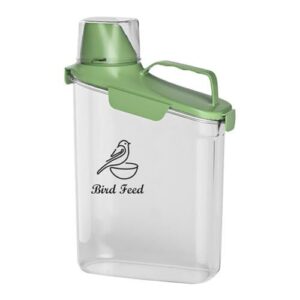
Small but mighty — that’s the Brabtod Portable Airtight Bird Seed Container in short.
It holds about 3 lb (2.8 L) of seed, so it won’t replace your bulk bin, but it’s perfect for daily top-ups.
The silicone-sealed lid keeps moisture and pests out.
A clear body lets you see seed levels at a glance.
The built-in measuring cup makes portioning easy and tidy.
BPA-free plastic and a carry handle round out a genuinely handy grab-and-go option.
| Best For | Backyard bird lovers who want a clean, mess-free way to refill feeders daily without hauling out a big bag every time. |
|---|---|
| Capacity | 3 lb (2.8 L) |
| Seal Type | Silicone airtight seal |
| Material | BPA-free plastic |
| Includes Scoop | Yes (measuring cup) |
| Indoor Use | Yes |
| Pest Protection | Moisture, dust, rodents |
| Additional Features |
|
- Airtight silicone seal keeps seed fresh and locks out moisture, dust, and pests
- Built-in measuring cup makes portioning quick and surprisingly tidy
- Compact and portable — easy to grab, carry, and pour right at the feeder
- At ~3 lb capacity, it’s too small if you’re managing a lot of feeders or buying seed in bulk
- The pour spout can be a bit imprecise, so expect the occasional minor spill
- $22 is a little steep compared to a basic scoop-and-bucket setup
9. SQUSIMEI Bird Seed Storage Container
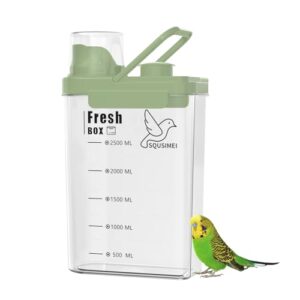
If the Brabtod felt like a quick grab-and-go, the SQUSIMEI Bird Seed Storage Container takes a similar approach with a few thoughtful extras.
It holds 3 qt (2.8 L) of seed — enough for regular feeder refills without hoarding bulk supply. The 2 cm silicone lid seal keeps moisture and pests out reliably.
There’s even a desiccant compartment built into the lid, which is a smart touch. BPA-free, lightweight, and paired with a measuring cup for tidy portioning.
| Best For | Bird owners who want a compact, airtight storage solution for regular feeder refills without the bulk of a large container. |
|---|---|
| Capacity | 3 qt (2.8 L) |
| Seal Type | Silicone ring seal (2 cm) |
| Material | BPA-free polypropylene |
| Includes Scoop | Yes (measuring cup) |
| Indoor Use | Yes |
| Pest Protection | Air, moisture, pantry moths |
| Additional Features |
|
- The 2 cm silicone seal does a solid job keeping moisture, dust, and pests out
- Built-in desiccant compartment is a genuinely useful touch for keeping seed fresh longer
- Attached measuring cup and easy-pour spout make refilling feeders clean and simple
- 3 qt capacity fills up fast — not ideal if you’re feeding a large flock or buying in bulk
- Some users have received units missing the small cap for the auxiliary holes
- You may need to grab multiple containers if your storage needs run above 5 qt
10. Brabtod Bird Seed Storage Container
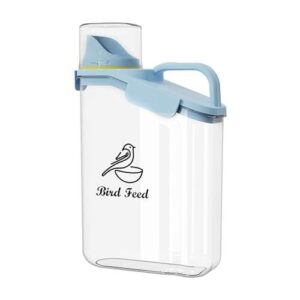
Think of this as the SQUSIMEI’s close cousin — same compact 3 lb capacity, but with a slightly different personality. The Brabtod’s clear BPA-free plastic lets you see exactly how much seed you have left, so no surprise empty-container moments mid-refill.
The silicone-sealed lid keeps moisture out, and the built-in pour spout makes filling feeders cleaner than you’d expect. Add the ergonomic handle and included measuring cup, and daily feeder runs genuinely feel easy.
| Best For | Bird owners and backyard feeder enthusiasts who want a clean, organized way to store and dispense seed daily without the mess. |
|---|---|
| Capacity | 3 lb (2.8 L) |
| Seal Type | Silicone airtight seal |
| Material | BPA-free clear plastic |
| Includes Scoop | Yes (measuring cup) |
| Indoor Use | Yes |
| Pest Protection | Moisture, dust, squirrels |
| Additional Features |
|
- Clear plastic body lets you see seed levels at a glance — no guessing when it’s time to refill.
- Silicone-sealed lid and squirrel-proof design keep seeds fresh, dry, and critter-free.
- The built-in measuring cup and pour spout make portioning quick and spill-free.
- At roughly 3 lbs capacity, you’ll be refilling often if you have multiple feeders or hungry birds.
- The grip can feel slick at first, so it takes a little getting used to before pouring feels confident.
- It’s priced higher than basic containers, which might be hard to justify if you just need something simple.
Frequently Asked Questions (FAQs)
Can I store different seed types together?
Yes, you can — but only if every seed is dry, fresh, and has similar storage needs.
Oil-rich seeds like nyjer do better on their own, since they turn rancid faster than others.
How do I revive slightly stale bird seed?
If it still smells clean and nutty, mix it with fresh seed to stretch it. Spread damp seed thin indoors to dry first.
When in doubt, toss it — birds deserve better.
Whats the best way to transport bulk seed?
Use sealed, moisture-resistant bags or airtight totes for bulk seed transport. Keep routes short, avoid rough roads, and shield seed from heat and humidity the whole way.
Should I refrigerate bird seed in summer?
Refrigerating bird seed in summer isn’t necessary if you store it somewhere cool and dry below 70°F. A basement or air-conditioned pantry works just as well without the hassle.
How often should I replace storage containers?
your containers like running shoes — even a good pair wears out. Replace plastic bins every six to twelve months with heavy use.
Swap any container immediately if it cracks, smells, or won’t seal tightly.
Can bird food be stored outdoors safely?
Yes, but only with the right setup. Keep seed in a shaded, rodent-proof metal container with a locking lid. Avoid direct sunlight and rain exposure, or spoilage happens fast.
How do I store live or dried mealworms?
Live mealworms are best kept refrigerated around 45–50°F in a smooth plastic container with dry bran bedding.
Dried mealworms just need a sealed airtight container in a cool, dry spot away from sunlight.
Does bird food expire if unopened?
Sealed doesn’t mean safe. Yes, unopened bird food still expires — oils break down, seeds lose nutrition, and moisture sneaks in over time. Most bags stay fresh 6 months to 2 years.
Can different seed types be mixed during storage?
You can mix different seed types, but it’s not always ideal. Oil-rich seeds like nyjer go stale faster and can drag down the whole batch. Keep them separate when possible.
How often should storage containers be cleaned?
Clean containers every time you refill them. Do a deeper scrub monthly — lid, gasket, corners, and all.
If you spot mold or pests, wash it out immediately before adding fresh seed.
Conclusion
What happens next is entirely up to you. Every bag of seed you leave unsealed, every container stored near a heat vent, quietly work against the birds that depend on your feeder.
But the right bird supply food storage ideas flip that equation completely.
Fresh seed means stronger birds, fewer wasted dollars, and a feeder worth watching.
You already know what works now. The only question left is whether you’ll actually use it.
- https://www.harvestwildlife.com/guide-to-storing-bird-food/
- https://birdseedandbinoculars.com/wordpress/storing-birdseed-three-easy-ways/
- https://www.wbu.com/7-tips-for-storing-bird-food/
- https://www.audubon.org/magazine/11-tips-feeding-backyard-birds
- https://ct.audubon.org/sites/default/files/east_rock_park_iba_conservation_plan.pdf