This site is supported by our readers. We may earn a commission, at no cost to you, if you purchase through links.
Stale seed is one of the quietest reasons backyard birds stop showing up. Moisture sneaks into a poorly sealed bag overnight, mold takes hold within days, and what looked like fresh seed becomes something no bird will touch.
Squirrels and rodents make it worse—they’ll chew through plastic bags and thin lids before you’ve finished your morning coffee.
The right outdoor bird food storage solves all of this at once, keeping seed dry, pest-free, and nutritionally intact from the first scoop to the last. These nine containers are worth a close look.
Table Of Contents
- Key Takeaways
- Why Outdoor Seed Storage Matters
- Features That Keep Seed Fresh
- Best Materials for Outdoor Use
- Top 9 Outdoor Storage Options
- 1. IRIS USA Airtight Pet Food Container
- 2. IRIS USA Airtight Pet Food Storage
- 3. More Birds Bird Seed Storage Tote
- 4. Buddeez Bird Seed Storage Dispenser
- 5. DEAYOU Metal Pet Food Storage Container
- 6. Brabtod Bird Seed Storage Container
- 7. SQUSIMEI Airtight Bird Seed Container
- 8. Ctomche Airtight Bird Seed Container With Handle
- 9. Lolytama Airtight Bird Seed Container
- Placement and Maintenance Tips
- Frequently Asked Questions (FAQs)
- How to store bird food outside?
- Why should you sprinkle coffee grounds around your bird feeder?
- Can I store seed directly on garage floor?
- How long does unopened seed stay fresh outdoors?
- Should I rotate old and new seed batches?
- Can bird seed containers be used for other feeds?
- How often should outdoor storage containers be replaced?
- Do storage containers work well in freezing temperatures?
- Conclusion
Key Takeaways
- Moisture above 12% triggers rapid mold growth, so an airtight seal with a silicone gasket isn’t a nice-to-have — it is what keeps your seed from going bad between refills.
- Galvanized steel containers stop squirrels and rodents cold, because plastic bags and thin lids won’t survive a determined chewer for long.
- Matching container size to your actual feeding volume matters — too much stored seed means spoilage, especially with high-oil seeds like Nyjer that go stale faster than millet.
- Where you place your bin is just as important as what it’s made of — shade it from afternoon sun, lift it off damp ground, and clean it between refills to get the most out of whatever container you choose.
Why Outdoor Seed Storage Matters
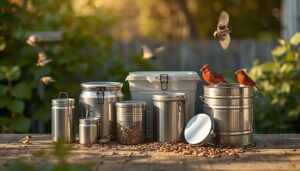
Storing bird seed outside sounds simple until moisture, pests, and heat quietly ruin a full bag between fill-ups. The right container makes the difference between seed that stays fresh for weeks and seed you’re throwing out by the handful.
Pairing the right container with the right seed for your backyard birds means less waste and more of the visitors you actually want.
Here’s what you need to know before picking the best option for your yard.
Preventing Mold, Spoilage, and Stale Seed
Even a small amount of trapped moisture can turn a full container of birdseed into a moldy mess within days. When seed moisture climbs above 12%, spoilage accelerates fast. That’s why Pre-Storage Seed Drying and an airtight seal matter so much.
- Oxygen Scavenger Packs slow oxidation, protecting seed freshness
- Moisture Indicator Strips help you catch problems before they spread
- Anti-Mold Additives and Temperature Insulation Layers preserve quality longer
Protecting Bird Food From Rain and Humidity
Mold isn’t the only threat — rain and rising humidity can silently ruin your seed just as fast.
That’s where weatherproof outdoor bird food storage solutions earn their keep. Look for containers with a solid humidity barrier, Moisture‑Proof Lining, and Weather‑Resistant Coatings that hold up through storms. Rain Guard Shelters and Ventilation Control help maintain dry storage conditions.
Seal Integrity Testing confirms your container’s moisture protection actually holds.
Deterring Rodents, Insects, and Squirrels
Rain seals keep seed dry, but what about the creatures trying to break in? Squirrels, mice, and insects follow their noses straight to your supply. Rodent-proof birdseed storage containers with galvanized steel walls resist chewing forces that would defeat ordinary plastic.
Galvanized steel walls stop squirrels, mice, and insects that would defeat ordinary plastic
Scent-based repellents like peppermint oil, mechanical guard devices, and gap-sealing methods add extra layers of protection. These measures deter pests drawn to stored seed.
Pest-proof design and squirrel-proof locking lids handle the rest, ensuring comprehensive defense against intruders.
Preserving Seed Nutrition and Freshness
Good pest-proofing protects your supply — but seed quality matters just as much as security. Nutrient preservation starts with an airtight seal and a moisture barrier that blocks humidity before oxidation control becomes a problem.
Outdoor bird food storage solutions should support:
- Temperature stability below 70°F
- Desiccant optimization using silica gel
- Viability monitoring through regular inspections
- Consistent nutrient retention in sealed containers
Reducing Waste and Replacement Costs
Smart outdoor bird food storage solutions cut down on waste more than most people expect. When you invest in a container with an airtight seal and enough bulk storage for your feeding volume, Bulk Buying becomes practical and affordable.
Inventory Monitoring, Shelf-life Planning, and Restocking Efficiency all improve naturally — and with eco-friendly materials, Waste Reduction follows without extra effort.
Features That Keep Seed Fresh

Not every container is built to handle rain, pests, and shifting temperatures at once. The right storage comes down to a handful of features that actually make a difference in keeping your seed fresh.
Here’s what to look for before you buy.
Airtight Seal Quality
Airtight seal quality for seed preservation depends on compression fit, rim surface, and gasket material working together. A silicone gasket conforms better than rubber, especially in outdoor environments with temperature fluctuations. Closure pressure from a snap-lock mechanism ensures the seal remains secure.
Even minor seal wear can compromise integrity, as small gaps allow moisture intrusion. Vigilance is key to maintaining preservation effectiveness.
Rodent- and Insect-proof Lid Designs
A lid that locks out pests starts with the right engineering.
Rodent-proof bird seed storage containers rely on a continuous gasket around the full perimeter seal, blocking scent trails that attract mice and insects. A snap lock lid or clip lock mechanism requires hand dexterity that rodents simply don’t have.
Look for:
- Steel reinforced edge to stop gnawing
- Edge-flush lid that removes pry points
- Silicone gasket for flexible, lasting contact
- Rodent-proof mesh venting where airflow is needed
Size and Capacity for Feeding Volume
Size matters more than you might think. A compact 3-quart bin works fine for a single feeder, but if you’re running multiple stations, adjustable bin sizes — from 25-pound totes up to large 165-quart bulk containers — give you real storage capacity planning flexibility.
Match your container’s capacity-to-weight ratio to how fast you actually go through seed, so you’re never over-storing and risking spoilage.
Easy Pouring, Scooping, and Refilling
Refilling feeders shouldn’t feel like a juggling act. The right container makes it simple — a tapered pour spout controls the stream, while funnel scoop ergonomics let you collect and guide seed in one smooth motion.
One-hand operation keeps your free hand available for feeder lids.
- Snap-shut spouts prevent spills between trips
- Wide top openings allow ease of access for refilling and cleaning
- Mess-free refilling means less wasted seed on the ground
Clear Visibility for Seed Monitoring
Transparent walls and side panels let you check seed levels without ever opening the lid. Clear fill checks become routine when the visibility of contents is this immediate — spot clumping, moisture, or low supply in one glance.
Wide-mouth lids expose the full surface for inspection, while level indicators and a simple labeling system help you track what’s left and what needs rotating.
Locking Mechanisms for Outdoor Security
Seeing what’s inside is half the job — but keeping pests out is the other half. A snaplock lid or locking lid tabs stop squirrels cold.
For real outdoor security, your options go further:
- Keyed padlocks with weatherproof housings resist cutting and rust
- Combination locks offer keyless, resettable access
- Deadbolt security anchors heavier steel bins firmly
- Smart lock integration facilitates remote monitoring
A cliplock mechanism keeps containers rodentproof and pestproof daily.
Best Materials for Outdoor Use
The material your container is made from does more work than you’d think — especially when it’s sitting outside through rain, heat, and the occasional determined squirrel. Some materials handle the elements better than others, and knowing the difference helps you pick something that’ll actually last.
Here’s a look at the key material types worth considering.
BPA-free Plastic Storage Containers
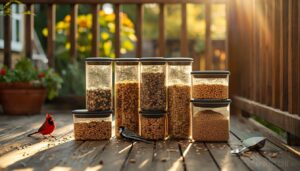
BPA-free plastic is one of the smartest choices for outdoor bird seed storage. These containers skip bisphenol A entirely, using food-grade plastic like polypropylene — marked with recycling codes 1, 2, 4, or 5 — approved for direct food contact. You gain lightweight portability, a stackable design that saves porch space, and an airtight seal to keep seed dry and pest-proof.
| Feature | Why It Matters |
|---|---|
| Food-grade certification | Safe for storing seed long-term |
| Additive transparency | Confirms no hidden harmful chemicals |
HDPE Durability and Impact Resistance

Food-grade HDPE takes outdoor punishment that would crack lesser plastics. Its impact energy absorption withstands drops and bumps without failing, while tensile strength keeps walls rigid under heavy seed loads. Temperature resilience holds up from freezing winters to summer heat. Here’s what makes it dependable weatherproof storage:
- Crack resistance through rough handling
- Wear hardness that survives repeated opening
- Material durability and weather resistance for outdoor use
- Airtight seal integrity across seasons
- Moisture absorption near zero, keeping seed dry
Galvanized Steel for Pest Resistance
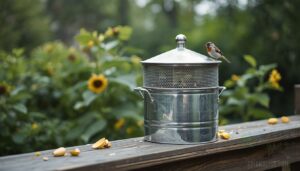
Galvanized steel steps up when plastic falls short, thanks to its zinc barrier longevity. This weatherproof coating sacrifices itself to protect the underlying metal from rust.
Chew-resistant panels thwart rodents, as steel’s hardness prevents gnawing. A low-odor surface further deters pests by minimizing scent cues, reducing infestation risks.
Mesh size optimization—featuring quarter-inch openings—reliably blocks insects while maintaining functionality.
Together, these features ensure rodentproof bird seed storage containers built from galvanized steel deliver unmatched, long-term durability.
UV Resistance for Sun Exposure

Direct sunlight gradually destroys unprotected containers over months. To combat this, UV stabilizers — including HALS technology and carbon black — are integrated into quality outdoor storage plastics. These additives significantly slow material breakdown, preserving structural integrity over time.
Studies confirm that UV stabilizer benefits include reduced color fading and sustained mechanical strength. Beyond chemical protection, physical design enhances durability: thick wall construction gradually absorbs heat, preventing rapid temperature spikes that accelerate degradation.
Additional safeguards like UV coating layers provide surface-level defense, shielding against fading and cracking. These combined measures — chemical stabilizers, heat-absorbing designs, and protective coatings — are not optional extras. They form the critical distinction between reliable outdoor storage and inferior indoor alternatives, particularly for applications like bird food preservation.
Rust and Corrosion Protection
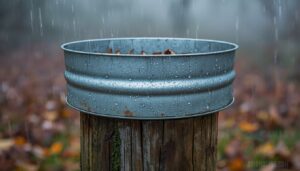
Metal containers earn their keep outdoors only when rust protection is done right. Galvanized coating thickness determines how long zinc shields the steel underneath — thicker zinc means longer-lasting weather resistance.
Barrier coating adhesion and passivation layer integrity keep moisture out, while proper surface preparation methods ensure coatings bond tightly.
Powder-coated galvanized iron adds another layer, making rust-resistant metal containers genuinely reliable season after season.
Plastic Vs. Metal Storage Performance
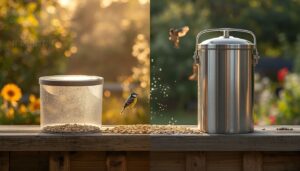
Choosing between plastic and metal bird seed containers hinges on your specific needs. Plastic excels in portability versus weight, offering lighter construction for easier handling during frequent refills.
Metal containers, however, provide superior impact toughness, odor resistance, and long-term cost-effectiveness outdoors. Their durability and weather resistance make them ideal for exposed, year-round conditions.
Both materials deliver solid airtight seals, but metal outperforms in temperature regulation, material durability, and weather resistance over time.
Top 9 Outdoor Storage Options
Finding the right bird seed container doesn’t have to be complicated. These nine options cover a range of sizes, materials, and features to match different yard setups and feeding habits.
Here’s a closer look at each one.
1. IRIS USA Airtight Pet Food Container
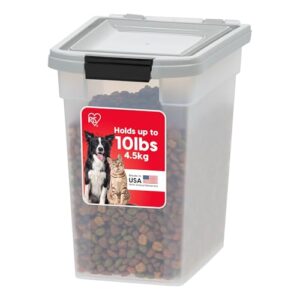
This IRIS USA container is a dependable choice for everyday outdoor use. It’s crafted from BPA-free polypropylene, built in the USA, and designed to hold up to 25 pounds of dry seed in its 33-quart version.
The container features a snap-lock latch and silicone gasket to keep moisture out, ensuring contents stay dry. Its translucent body allows users to check seed levels without opening the lid, adding convenience.
Built-in casters enable effortless mobility, letting users roll the container to feeding stations without heavy lifting.
| Best For | Pet owners who store large amounts of dry food like kibble, bird seed, or treats and want an easy-to-move, airtight solution that keeps things fresh. |
|---|---|
| Capacity | 10 lb |
| Material | BPA-free polypropylene |
| Seal Type | Snap-lock with silicone gasket |
| Pest Resistance | Moisture and odor blocking |
| Transparency | Translucent clear/gray body |
| Dispensing Method | Open lid access |
| Additional Features |
|
- The snap-lock latch and silicone gasket do a solid job keeping moisture and odors out, so food stays fresh longer.
- Built-in wheels make it easy to roll around — no straining to drag a heavy container across the floor.
- The clear body lets you see how much food is left at a glance, no lid-opening needed.
- The lid can occasionally unhook on its own, which means you might need to re-snap it more often than you’d like.
- It’s not rodent-proof — a determined mouse or rat can chew right through the plastic lid.
- If you’re buying in bulk (think 30 lb bags), this container may not cut it and you’d need to size up.
2. IRIS USA Airtight Pet Food Storage
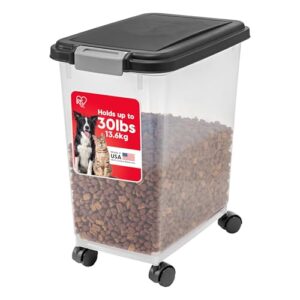
If you need more capacity than the first IRIS model offers, this version scales up without losing what makes it useful. It is available in sizes ranging from 12 quarts to 69 quarts — enough to hold 54 pounds of dry seed.
The same snap-lock foam seal keeps moisture out, and the translucent body allows you to monitor levels at a glance.
Casters are available on larger sizes, ensuring moving a full bin won’t strain your back.
| Best For | Pet owners who go through large amounts of dry kibble, bird seed, or other bulk dry food and want a rolling, airtight storage solution that’s easy to move around. |
|---|---|
| Capacity | 33 qt / ~22-26 lb |
| Material | BPA-free polypropylene |
| Seal Type | Snap-lock with foam seal |
| Pest Resistance | Moisture and odor blocking |
| Transparency | Not transparent |
| Dispensing Method | Open lid access |
| Additional Features |
|
- The snap-lock foam seal keeps moisture and odors out, so food stays fresh longer.
- Caster wheels mean you can roll a fully loaded bin across the room instead of hauling it.
- The translucent body lets you see how much food is left without opening the lid.
- Don’t expect a full 30 lb bag to fit — real-world capacity is closer to 22–26 lb depending on kibble size.
- The lid latch and wheels can occasionally come loose and need to be reattached.
- The flexible polypropylene walls aren’t super rigid, so stacking other items on top can be tricky.
3. More Birds Bird Seed Storage Tote
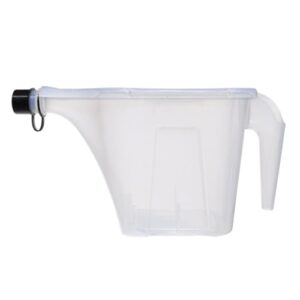
The More Birds Bird Seed Storage Tote is built for one job — getting seed into feeders quickly and cleanly.
Its tapered pour spout, about 1.25 inches wide, fits narrow tube feeders without funneling seed all over the ground. The snap-on lid seals tightly to block moisture and pests between fills.
At 5 lb capacity and just 1 lb empty, it’s light enough to carry with one hand.
Stackable units also let you store multiple seed varieties without cluttering your garage or shed.
| Best For | Backyard bird enthusiasts who refill feeders regularly and want a cleaner, more organized way to store and pour seed. |
|---|---|
| Capacity | 5 lb |
| Material | Rigid plastic |
| Seal Type | Attachable secure lid |
| Pest Resistance | Pest deterrent lid |
| Transparency | Clear rigid plastic |
| Dispensing Method | Tapered pour spout |
| Additional Features |
|
- The tapered spout fits narrow tube feeders well and keeps spillage to a minimum
- Snap-on lid does a solid job keeping moisture, bugs, and rodents out between uses
- Stackable design makes it easy to store multiple seed varieties without taking up much space
- The handle gets uncomfortable pretty fast when the tote is fully loaded at 5 lbs
- The lid cap won’t stay open on its own, so you’re juggling it every time you pour
- At $14.99, it costs more than basic seed containers, which may be a hard sell for casual feeders
4. Buddeez Bird Seed Storage Dispenser
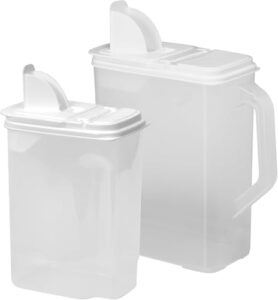
If you’re juggling more than one seed type, the Buddeez Bird Seed Storage Dispenser’s 2-pack design makes that easier. The larger 8-qt container holds up to 8 pounds of seed, while the smaller 3.5-qt unit accommodates a secondary mix — both stack neatly to save shelf space.
The built-in pop-up pour spout keeps refills clean and controlled. Walls are crystal-clear BPA-free resin, so you can see exactly how much seed remains without lifting the lid.
| Best For | Bird owners and pet parents who store multiple dry feed types and want a clean, space-saving way to keep everything fresh and organized. |
|---|---|
| Capacity | 8 qt + 3.5 qt |
| Material | BPA-free food-grade resin |
| Seal Type | EZ-Flip airtight lid |
| Pest Resistance | Limits air and moisture |
| Transparency | Crystal-clear walls |
| Dispensing Method | Narrow pour spout |
| Additional Features |
|
- The stackable 2-pack keeps two seed or kibble types neatly stored without eating up shelf space.
- The pop-up pour spout makes refilling feeders and bowls easy — no mess, no fumbling.
- Clear walls let you see how much is left at a glance, no lid-lifting required.
- The smaller container has no real handle — just an indentation — which can feel awkward when it’s full.
- Lids need to be fully latched; a loose seal means a potential spill of seed everywhere.
- Not squirrel-proof, so outdoor storage isn’t a great idea if wildlife is nearby.
5. DEAYOU Metal Pet Food Storage Container
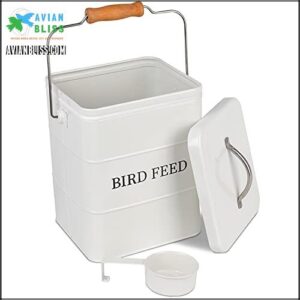
The DEAYOU Metal Pet Food Storage Container offers a classic-looking design ideal for shelves or porches. Constructed from coated carbon steel with a white enamel finish, it combines sturdy, shatterproof durability with effortless wipe-clean maintenance.
Its tight-fitting lid features a removable rubber seal, effectively blocking moisture and pests to preserve freshness.
Measuring 7×6×9 inches, the container holds 5 to 6 pounds of seed, while the included angled scoop ensures tidy, efficient refills.
| Best For | Bird owners and pet lovers who want a sturdy, no-fuss container to store seed or kibble on a shelf, counter, or porch. |
|---|---|
| Capacity | 5-6 lb |
| Material | Coated carbon steel |
| Seal Type | Rubber/vinyl removable seal |
| Pest Resistance | Pest and moisture protection |
| Transparency | Opaque white enamel |
| Dispensing Method | Included metal scoop |
| Additional Features |
|
- Solid metal build with a white enamel finish looks great and holds up way better than a plastic bag or cardboard box
- The rubber-sealed lid does a solid job keeping moisture and pests out, so your feed stays fresher longer
- The included scoop hangs right on the lid handle — small touch, but super convenient for daily feeding
- The seal isn’t fully airtight, so if long-term freshness is a priority, you might notice a difference over time
- The lid handles can struggle under the full 5–6 lb load — better to lift from the side handles
- At about 8 oz, the scoop is on the smaller side, so larger portions mean more scoops
6. Brabtod Bird Seed Storage Container
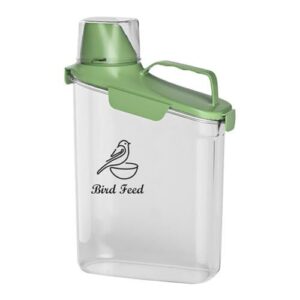
The Brabtod is ideal for smaller seed quantities, holding about 3 pounds in a compact 7×3.3×11.9-inch design. Its slim profile ensures it fits neatly in cabinets or on shelves, making storage effortless.
The silicone-sealed lid effectively blocks moisture and pests, while the built-in pour spout and measuring cup enable clean, precise refills. These features prioritize convenience and accuracy during use.
Constructed from BPA-free materials, the container is lightweight and easy to carry outdoors. Its durable yet portable build suits varied environments, from gardens to workshops.
Note that it offers only a single-size option, which may limit practicality for bulk buyers requiring larger storage solutions.
| Best For | Casual bird feeders or pet owners who need a compact, airtight container for storing small amounts of seed or dry feed in tight spaces. |
|---|---|
| Capacity | 3 lb / 2.8 L |
| Material | BPA-free plastic |
| Seal Type | Silicone-sealed airtight lid |
| Pest Resistance | Airtight pest-proof seal |
| Transparency | Opaque green plastic |
| Dispensing Method | Integrated pour spout |
| Additional Features |
|
- The silicone-sealed lid keeps moisture, dust, and pests out, so your seed stays fresh longer.
- The built-in measuring cup and pour spout make refilling feeders clean and easy with minimal waste.
- Slim, rectangular shape fits nicely on a shelf or in a cabinet without hogging space.
- Only comes in one size, so if you buy seed in bulk, you’ll likely need multiple containers.
- The pour spout has a reputation for occasional leaking, which can get messy.
- It runs a bit pricier than basic storage containers, which might feel hard to justify for what you get.
7. SQUSIMEI Airtight Bird Seed Container
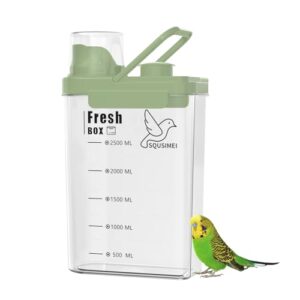
If the Brabtod feels a touch too slim for your needs, the SQUSIMEI steps up with a 3-quart, BPA-free polypropylene build that’s still compact enough for a cabinet shelf.
Its 2 cm silicone lid seal blocks moisture and pests reliably, while the clear body lets you see seed levels at a glance.
The integrated measuring cup and pour spout keep refills clean and quick. A separate desiccant compartment in the lid adds smart, built-in freshness protection.
| Best For | Backyard bird enthusiasts or small flock owners who want a tidy, airtight storage solution that fits neatly on a shelf. |
|---|---|
| Capacity | 3 qt / 2.8 L |
| Material | BPA-free polypropylene |
| Seal Type | Silicone ring airtight lid |
| Pest Resistance | Moisture, dust, pest-proof |
| Transparency | Opaque green plastic |
| Dispensing Method | Measuring cup pour spout |
| Additional Features |
|
- The 2 cm silicone seal does a solid job keeping moisture, dust, and pests out
- Built-in desiccant compartment is a thoughtful touch for keeping seed fresh longer
- The measuring cup and pour spout make refilling feeders clean and hassle-free
- 3 quarts fills up fast if you’re feeding a larger flock — you may find yourself refilling often
- Some users have run into a missing cap for the auxiliary holes, which is a minor but annoying fix
- No exact dimensions listed, so it’s hard to know if it’ll fit your shelf before it arrives
8. Ctomche Airtight Bird Seed Container With Handle
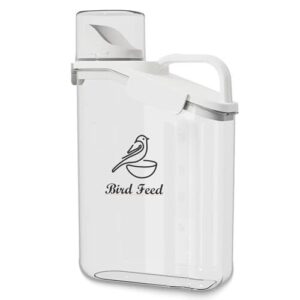
The Ctomche holds 2.8 liters, ideal for daily feeder refills without hauling bulky bins. Its clear PET body allows visibility of remaining seed, preventing unexpected shortages.
The handled lid ensures effortless carrying and pouring, while the built-in pour spout minimizes mess. Its BPA-free, odorless construction and wide-mouthed design simplify cleaning.
One honest caveat: The detachable measuring cup may crack over time with heavy daily use.
| Best For | Bird owners and pet keepers who want a compact, easy-pour seed container for daily feeder refills without the hassle of a bulky bin. |
|---|---|
| Capacity | 3 lb / 2.8 L |
| Material | BPA-free plastic |
| Seal Type | Airtight silicone-sealed lid |
| Pest Resistance | Rodent and squirrel resistant |
| Transparency | Clear plastic body |
| Dispensing Method | Measuring cup pour spout |
| Additional Features |
|
- Clear body lets you see exactly how much seed is left at a glance—no guessing, no lid-popping.
- The pour spout and built-in handle make refilling feeders quick and mess-free.
- BPA-free, odorless PET keeps seed fresh and is easy to rinse out between uses.
- The detachable measuring cup is prone to cracking with regular daily use.
- The lid seal can loosen over time, which means spills if it gets knocked over.
- The 2.8L capacity falls just short of fitting a full 3 lb bag of seed or pet food.
9. Lolytama Airtight Bird Seed Container
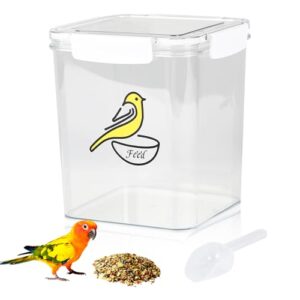
The Lolytama holds around 4.2 liters — enough seed to keep your feeders going without daily trips to restock. Its BPA-free body lets you see exactly how much is left, ensuring you’re never caught off guard.
Four locking clips and a rubber gasket seal reliably keeps moisture and pests out.
The included scoop makes portioning clean and easy. Just note that some buyers reported the scoop missing from their order, so double-check yours on arrival.
| Best For | Bird owners and backyard feeder enthusiasts who want a clean, airtight way to store seed without restocking every day. |
|---|---|
| Capacity | 2.8 L / ~3 lb |
| Material | Food-grade PET plastic |
| Seal Type | Side-locking lid with silicone seal |
| Pest Resistance | Moisture ingress prevention |
| Transparency | Transparent PET body |
| Dispensing Method | Integrated pour spout |
| Additional Features |
|
- Clear body lets you see exactly how much seed is left without opening it
- Airtight four-clip lock with rubber gasket keeps moisture and pests out
- BPA-free, food-grade plastic is safe for both wild bird feed and pet bird seed
- Some buyers received their order without the advertised scoop
- 4.2L capacity may not cut it if you’re storing seed in bulk
- The clip-lock can take more effort to open and close than a basic twist lid
Placement and Maintenance Tips
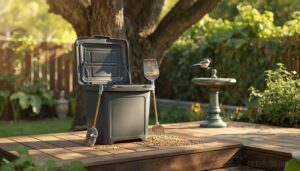
Even the best container won’t do much good if its sitting in the wrong spot or going months without a rinse. Where you place your storage bin and how often you tend to it makes a real difference in how long your seed stays fresh.
These six simple habits will help you get the most out of whichever container you choose.
Keeping Containers in Shaded Outdoor Areas
Direct sunlight is one of the fastest ways to ruin a bag of seed. For smart container positioning, place bins where a tree, overhang, or awning blocks afternoon heat — shade timing matters most between noon and 4 p.m.
Light-colored containers support heat reflection, while airflow optimization and ground heat mitigation improve when you avoid concrete or asphalt surfaces nearby.
Elevating Bins Off Damp Ground
A damp surface underneath your bin is a slow leak for freshness. Set containers on a raised platform—even a simple pallet or rubber-footed stand—to create a drainage gap that lets air circulate and water escape. This moisture barrier protects your seed from below.
Stability anchoring matters too: caster height adds mobility without sacrificing a solid, rodent-proof birdseed storage container footprint on uneven ground.
Using Moisture Absorbers Safely
Silica gel packets provide humidity control and mold prevention within airtight seals—but handle them with care.
Child safety and pet safety are critical: keep packets sealed and out of reach, as they pose choking hazards.
Ensure proper ventilation by avoiding direct contact between packets and seeds. Use leak-containment style tray designs for secure placement.
Follow safe disposal guidelines when packets are spent.
Cleaning Containers Between Refills
Every refill is a fresh start — but only if the container is actually clean. Old seed dust and oils left behind can spoil new seed fast.
- Residue Scrubbing: Empty completely, then hand wash or use a dishwasher-safe cycle with hot soapy water, scrubbing seams and corners.
- Gasket Hygiene: Remove and wash the seal separately — packed debris breaks the airtight closure.
- Drying Techniques: Air-dry upside down; never refill anything that still feels damp inside.
Stick to a simple Cleaning Schedule and use dedicated tools for Tool Sanitization — your cleaning and maintenance of dry food containers routine protects every bird that visits.
Inspecting Seed for Mold or Pests
A clean container only does half the job — the seed inside still needs a regular check. Pour a small amount onto a tray and use a Light Inspection under bright light, scanning for fuzzy patches, clumping, or discoloration. A quick Smell Test catches sour or musty odors before your birds do.
Use gloves for Separation Protocol, and follow Tool Hygiene after handling anything suspect.
Rotating Bird Food for Freshness
Once you’ve cleared out suspect seed, rotation keeps the rest fresh. A simple FIFO Rotation — first in, first out — ensures older stock is used before new bags are opened. Batch labeling by purchase date takes the guesswork out of it.
- Keep only a small stock: two weeks’ worth in warm weather, four in cooler months.
- Use a bottom-fill system to move older seed forward automatically.
- Follow a clean refill cycle — empty and wipe the bin before adding fresh seed.
- Make seasonal adjustments, tightening your labeling and rotating bird seed inventory when heat and humidity spike.
Airtight seal quality is most important for seed preservation once rotation is consistent.
Frequently Asked Questions (FAQs)
How to store bird food outside?
Store bird food outside using a sealed, weatherproof container placed in a shaded spot. Prioritize airtight seal quality for seed preservation and rodent-proof bird seed storage containers to protect against pests.
Monitor temperature consistently to keep seeds fresh longer, ensuring the storage environment remains stable and optimal.
Why should you sprinkle coffee grounds around your bird feeder?
Sprinkling coffee grounds around your feeder creates a natural squirrel scent barrier, offering cost-effective pest control while enriching the soil with nutrients.
This eco-friendly recycling habit keeps your feeding area tidier, combining practicality with environmental benefits.
Can I store seed directly on garage floor?
It’s not ideal. Concrete pulls in moisture, raising condensation risk and accelerating spoilage.
Raise your container — a shelf or pallet buffers temperature swings, blocks pest ingress, and makes inspection far easier.
How long does unopened seed stay fresh outdoors?
Ironically, ‘sealed’ doesn’t mean ‘safe’ outdoors. Unopened seed usually lasts 6–12 months, but heat degradation, humidity impact, and seed type longevity vary widely — high-oil seeds like nyjer spoil faster than millet.
Should I rotate old and new seed batches?
Yes, always rotate old batches forward and newer ones behind — a First-In-First-Out habit keeps seed freshness high, reduces waste, and ensures your birds always get the most viable feed possible.
Can bird seed containers be used for other feeds?
Oddly enough, the same container that keeps your seed fresh can do just as well for pet kibble, suet preservation, mealworm bins, or livestock feed — multi-feed versatility is built right in.
How often should outdoor storage containers be replaced?
Most outdoor containers last 5–10 years for plastic and up to 25 for galvanized steel. Replace sooner if seals crack, lids warp, or rodent damage appears.
Do storage containers work well in freezing temperatures?
Most containers handle cold winters well. HDPE and galvanized steel resist cold-induced cracking, though seal stiffness and lid freeze-thaw cycles can cause minor air gaps — placing containers indoors overnight helps.
Conclusion
Birds don’t care how expensive your feeder is—they care what’s inside it. Stale, moldy seed sends them somewhere else, quietly and permanently.
The right outdoor bird food storage options close that gap between good intentions and a yard that actually attracts birds. Choose a container that seals tightly, resists pests, and holds enough for your feeding routine. Get that part right, and the birds will handle everything else.
- https://www.perkypet.com/more-birds-3n1-bird-seed-super-tote
- https://www.ritchiefeed.com/products/more-birds-3n1-bird-seed-super-tote
- https://feederspetsupply.com/more-birds-3-in-1-super-tote-bird-food-storage-5-lb/
- https://livingacozylife.com/bird-seed-storage-container/
- https://birdseedandbinoculars.com/wordpress/storing-birdseed-three-easy-ways/