This site is supported by our readers. We may earn a commission, at no cost to you, if you purchase through links.
A bird that plucks its own feathers isn’t being destructive—it’s telling you something is wrong, and the message is often urgent. Feather plucking can escalate from occasional over-preening to open wounds within weeks, yet many caregivers mistake early signs for normal molting until significant damage is done.
The behavior has roots in medical triggers like parasites, hormonal imbalances, and internal pain, but nutrition gaps and chronic stress play an equally powerful role.
Catching the pattern early and understanding what drives it gives you a real path forward—one that targets the cause rather than just the feathers.
Table Of Contents
- Key Takeaways
- Spot Early Feather Plucking Signs
- Identify Medical Plucking Triggers
- Feed for Healthy Feather Growth
- Improve Cage Setup and Enrichment
- Cut Stress and Boredom
- Keep Skin Clean and Hydrated
- Use Positive Behavior Training
- Seek Avian Vet Care Quickly
- Build a Long-Term Prevention Plan
- Frequently Asked Questions (FAQs)
- Can feather plucking be permanently cured or reversed?
- How long does recovery typically take?
- Are certain bird species more prone to plucking?
- Can feather plucking spread to other birds?
- What are safe alternatives to medication for treatment?
- Can feather plucking be fully cured permanently?
- Do certain bird species pluck more than others?
- At what age does feather plucking typically start?
- Can plucking spread between birds living together?
- Does seasonal change affect feather plucking rates?
- Conclusion
Key Takeaways
- Feather plucking is rarely just a bad habit — it’s usually your bird’s way of signaling something medical, nutritional, or emotional that needs your attention.
- Early signs like broken feathers, frantic preening, and quiet withdrawal are easy to miss, but catching them before bald patches appear dramatically improves your bird’s recovery.
- Diet and environment do more heavy lifting than most caregivers realize — closing vitamin gaps, offering foraging enrichment, and stabilizing daily routines can quiet plucking without a single medication.
- When home adjustments don’t stop the cycle, avian vet’s diagnostic workup — bloodwork, skin tests, parasite screening — is the fastest route to finding the real driver and treating it directly.
Spot Early Feather Plucking Signs
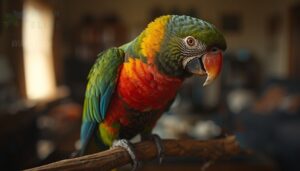
Catching feather plucking early makes a real difference in how quickly your bird recovers. The signs aren’t always obvious at first, but once you know what to look for, they’re hard to miss.
Knowing the early warning signs—like bare patches or restless preening—can help you take action before things get worse, and this guide on stopping bird feather plucking walks you through exactly what to watch for.
Here’s what to watch for before the behavior becomes a habit.
Broken Feathers Vs. Normal Molting
Normal molting follows a predictable timing rhythm — gradual, seasonal, and fairly symmetrical across feather tracts. Plucking looks different.
You’ll notice broken shaft integrity, frayed edges, or half‑grown feathers in the same spots repeatedly. Pin feather development gets disrupted when a bird interferes during regrowth.
That pattern — uneven, persistent, localized — is your clearest early sign of feather damage rather than healthy molting vs plucking. Observing broken quills indicate plucking helps distinguish the two processes.
Bald Patches and Raw Skin
Once broken feathers reveal a pattern, bald spots often follow. When skin is exposed, irritated, or bleeding, you’re no longer looking at simple feather loss — inflammation control becomes urgent. Raw patches carry real patch isolation risks: exposed follicles struggle with regeneration, and scab formation prevention matters because repeated trauma stalls regrowth entirely.
Watch for:
- Red, visibly inflamed skin where feathers are absent
- Rough or uneven texture from repeated beak contact
- Moisture management concerns — damp raw areas worsen skin irritation relief efforts
- Scabbing where fluid has dried on repeatedly bitten skin
- Swelling spreading beyond the original bald spot
Frantic Preening and Biting
Frantic preening looks different from routine grooming — the beak pressure patterns become forceful and repetitive, often targeting one spot long after it looks clean. This localized irritation trigger can rapidly cause preening-induced skin damage as barbs break and follicles inflame.
social allopreening deficits leave your bird understimulated, escalation to aggression against its own feathers follows naturally, making early behavioral interventions critical.
Behavior Changes to Watch
Beyond preening behavior, watch for subtler behavioral signs: perch avoidance, where your bird suddenly shuns favorite spots; grooming duration spikes that stretch well past normal; sleep disturbances like restless nights or position changes; and food intake shifts, including dropped food or skipped meals.
Quiet withdrawal — less talking, less interaction — often surfaces early too.
These behavioral triggers signal the right moment for behavioral interventions.
Identify Medical Plucking Triggers
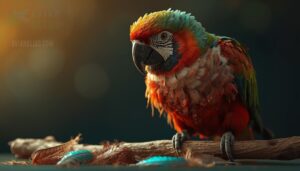
Sometimes feather plucking isn’t about stress or boredom — it’s your bird’s body sending a distress signal.
Sometimes feather plucking is not a mood — it is your bird’s body sending a distress signal
A range of medical conditions can drive this behavior, and identifying them early makes a real difference in how quickly your bird recovers. Here are the key physical triggers worth knowing.
Parasites and Skin Infections
Parasites are a surprisingly common—and overlooked—trigger for feather plucking. In avian dermatology, we see this cycle regularly: a bird itches, plucks, and the skin breaks down further.
Here’s what to watch for:
- Mite identification — look for tiny gray lines or red bumps on bare skin
- Lice control starts with spotting frantic, localized preening
- Myiasis management requires immediate attention if you see open wounds or swelling
- Secondary bacterial risk rises fast once skin integrity is compromised
- Parasite prevention depends on regular cage sanitation and diagnostic testing in avian medicine
Allergies and Irritants
What your bird breathes matters just as much as what it eats. Volatile organic compounds from paints, fragrances, and smoke trigger skin irritation that looks identical to stress-related plucking. Dust mite control, mold prevention, and fragrance-free zones substantially reduce allergic flare-ups.
| Irritant | Source | Control Strategy |
|---|---|---|
| VOC Exposure | Paints, sprays | Ventilate and use air filtration |
| Dust Mites | Bedding, fabrics | Wash weekly, reduce soft furnishings |
| Mold Spores | Damp areas | Fix leaks, improve airflow |
| Fragrance Compounds | Perfumes, candles | Establish fragrance-free zones |
| Combustion Fumes | Smoke, cooking | Remove bird during cooking |
Environmental toxins and toxic exposure cause both fast-onset skin infections and chronic inflammation — two things that quietly escalate plucking before you notice the pattern.
Hormonal or Metabolic Issues
Hormonal disruption is one of the most overlooked triggers of feather plucking. Thyroid Imbalance, Insulin Resistance, Cortisol Excess, and Sex Hormone Changes all alter skin health and feather integrity in measurable ways.
Since hormonal shifts affect birds from the inside out, addressing them safely—without topical sprays—is covered in depth in this guide to avian feather plucking solutions and hormonal triggers.
Adipokine Inflammation from excess fat tissue compounds the problem further.
Diagnostic testing in avian medicine can identify these issues through blood panels measuring TSH, glucose, and cortisol — guiding targeted treatment before plucking becomes chronic.
Pain and Internal Illness
Internal illness is often the hidden driver behind feather plucking. Gut Pain Triggers like cramping or visceral discomfort signals from digestive organs push birds to obsessively preen the area they "feel."
Neuropathic Itch Pain creates burning sensations that won’t settle without beak contact.
Internal inflammation effects and Systemic Illness Indicators — fatigue, posture shifts, timing patterns — all point toward diagnostic testing in avian medicine.
Feed for Healthy Feather Growth
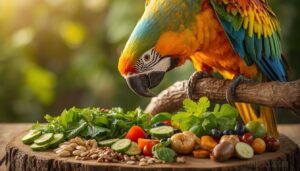
What your bird eats directly shapes the quality of every feather it grows. Nutritional gaps are one of the most overlooked drivers of plucking, and the fix is often simpler than you’d expect.
Here’s what to focus on when building a diet that promotes strong, healthy plumage.
High-quality Pelleted Diets
Think of a quality pellet as your bird’s nutritional insurance policy. Unlike seed mixes, pellets deliver Nutrient Balance Guarantees in every bite, eliminating selective feeding gaps.
When choosing a brand, prioritize:
- High Pellet Durability Index (above 90%) to reduce wastage
- Ingredient Transparency with clearly listed High-quality Proteins
- Manufacturing Consistency across production batches
- Portion Feeding Strategies that limit seeds to under 20% of intake
Vitamin A, E, and C Support
Feathers don’t grow in a vacuum — the quality of what your bird eats shows up directly in plumage condition. Retinoid skin health depends on steady vitamin A intake, supporting follicle integrity and keratinization. Vitamins A, E, and C create antioxidant synergy, with vitamin C driving collagen synthesis boost in damaged skin while regenerating vitamin E’s protective capacity.
| Vitamin | Key Role | Top Food Sources |
|---|---|---|
| A | Retinoid skin health, follicle repair | Sweet potato, leafy greens |
| E | Fat-soluble storage, oxidative protection | Almonds, fortified pellets |
| C | Collagen synthesis boost, wound healing | Bell peppers, kiwi |
| A + E | Combined fat-soluble storage stability | Balanced pelleted diet |
| C + E | Antioxidant synergy, tissue recovery | Mixed fresh produce |
Nutritional deficiencies in any of these vitamins quietly erode feather quality before visible plucking begins. Dietary adjustment toward fresh produce and quality pellets promotes consistent vitamin timing — especially critical for vitamin C, which your bird can’t store. Thoughtful nutritional supplementation and plumage health go hand in hand, but always confirm vitamin supplementation dosages with your avian vet.
Omega-3 Fats for Plumage Health
Beyond vitamins, omega-3 fatty acids offer meaningful anti-inflammatory benefits that directly support skin barrier support and feather shine. Sources like flaxseed, chia seeds, or fish oil provide EPA and DHA, which reduce skin irritation that often drives plucking.
They also serve as a molting aid, supporting healthier regrowth.
Consider omega-3 sources as a practical dietary adjustment worth discussing with your avian vet.
Limit Seed-heavy Diets
Seeds make a fine treat, but letting them dominate your bird’s bowl creates real problems. Phytate mineral binding reduces calcium and zinc absorption, while excess fat load management becomes harder when seeds crowd out high-quality proteins and vitamins A and E.
Keep seeds under 20% of daily intake, and schedule a gradual shift to pellets to avoid stress-triggered plucking.
Improve Cage Setup and Enrichment
Your bird’s environment does more for its mental health than most people realize. A well-designed cage can quiet anxious behaviors before they turn into plucking habits.
Here’s what to look at when setting up your bird’s space.
Right Cage Size and Layout
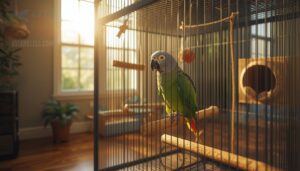
The right cage size isn’t just about square footage — it’s about what your bird can actually do inside it. Bar spacing must match your species’ head size to prevent entrapment injuries.
Floor area should allow natural horizontal movement, and wing clearance needs to be completely unobstructed. Don’t forget a sheltered retreat zone, and always prioritize hazard avoidance by keeping the cage away from drafts and high-traffic areas.
Varied Perches and Textures
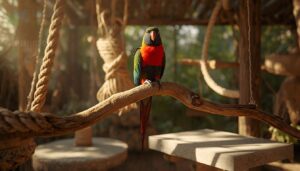
Once your cage layout is sorted, perch variety becomes your next lever. Natural Wood Branches offer uneven grain that challenges grip strength and satisfies chewing instincts. Here’s how to build effective Environmental enrichment for pet birds through perching:
- Use Natural Wood Branches from safe species for texture variety
- Add Rope Perch Dynamics for balance-training flexibility
- Include Concrete Foot Care perches to manage nail length
- Place Platform Resting Zones for low-stress lounging
- Consider Heated Perch Benefits during cooler months for comfort
Foraging Toys and Rotation
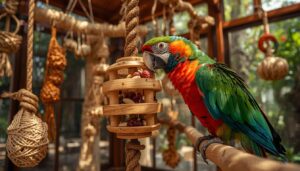
Foraging enrichment toys are one of the most effective behavioral interventions for reducing plucking-driven boredom.
Interactive food dispensing turns mealtime into a small hunt — your bird pushes, pulls, or rotates parts to earn treats.
Match Puzzle Difficulty Levels to your bird’s skill.
Follow a Toy Rotation Schedule every two weeks, vary Placement Height Variation, and always perform Secure Attachment Checks before leaving interactive toys unattended.
Safe Lighting and Sleep Space
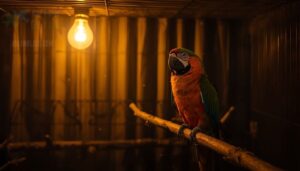
Poor lighting is one of the most overlooked factors in habitat and cage design considerations. Aim for a consistent 10–12 hour light-dark cycle, using dimmable bulbs — but check for dimmer compatibility issues, since mismatched LEDs can flicker and stress your bird.
Blackout curtains handle curtain light blocking effectively.
Keep the sleep area your darkness‑zone design priority, and choose warm night light temperature bulbs to support restful sleep.
Cut Stress and Boredom
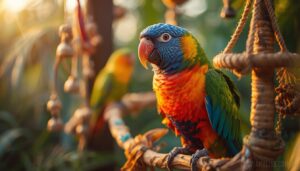
Stress and boredom are two of the most common — and most overlooked — reasons birds start plucking. Once you understand what’s driving your bird’s anxiety, the fixes are usually straightforward.
Here’s where to start.
Keep Routines Consistent
Birds thrive on predictability. Feeding Time Consistency, Lighting Schedule Stability, and Sleep Area Routine aren’t just good habits — they’re the foundation of a calm, feather-intact bird.
When your routine wavers, anxiety fills the gap.
- Match Handling Timing Regularity to the same daily window
- Schedule Enrichment Session Timing before restless evening hours
- Treat Routine Establishment like Patience and Consistency — both take time
Reduce Noise and Disruption
Sudden noise is one of the most underestimated environmental stressors for parrots. Sound Dampening Barriers — like acoustic panels or furniture placement — help reduce noise levels reaching your bird’s space.
Quiet Time Scheduling, Visual Consistency, and Predictable Handling all reinforce Stable Lighting routines as core Stress Reduction Strategies.
Thoughtful Habitat and Cage Design Considerations, combined with Environmental Enrichment, give your bird the calm it needs to stop plucking.
Increase Daily Interaction
Daily interaction is one of the most effective tools you have against feather plucking. Think of social interaction for birds as a form of preventive medicine — not optional enrichment. Try building these into your day:
- Hand-feeding Sessions and Puzzle Feeding Sessions reinforce bonding with your pet bird while keeping attention away from preening.
- Talk and Sing softly during Scheduled Social Visits to provide consistent auditory engagement.
- Eye Contact Exercises paired with positive reinforcement training reward calm, non-plucking behavior naturally.
Support Social Bonding Needs
Your bird doesn’t just want company — it needs it. Caregiver consistency builds social trust faster than any toy or treat. Through gentle handling, shared play, and reliable communication feedback, you reinforce that your presence means safety.
Companion pairing can also reduce isolation when you’re away. Social enrichment and meeting your bird’s social interaction and companion needs strengthen bonding with your pet bird at every level.
Keep Skin Clean and Hydrated
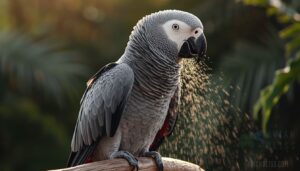
Healthy skin is the foundation of healthy feathers, and your bird’s daily care routine makes a real difference. Dry, irritated skin can trigger or worsen plucking even when everything else is going right.
Here’s what to focus on to keep your bird’s skin and feathers in good shape.
Regular Misting or Bathing
Skin that stays dry is skin that’s already struggling. Implementing consistent bathing routines—two to three times per week—gives your bird the hydration and bathing support its feathers genuinely need. Keep these practical points in mind:
- Misting Frequency & Droplet Pattern: Light, intermittent misting lets feathers dampen naturally without soaking skin.
- Water Temperature & Safe Water Zones: Use lukewarm water, targeting upper body and wings only.
- Airflow Drying & Bath Time Routines: Mist during warmer daytime hours so feathers dry fully before rest.
Gentle Feather Cleaning
Once misting is part of your routine, targeted cleaning is the natural next step.
Use lukewarm water paired with soft cloth application and barb direction brushing—always stroking with the feather, never against it.
The spot blotting technique removes residue without twisting barbs. Finish with draft-free drying so feathers realign naturally.
| Cleaning Step | Key Detail |
|---|---|
| Brush direction | Always follow barb direction |
| Moisture removal | Blot gently, never wring |
| Drying area | Warm, draft-free space only |
Bird-safe Skin Soothing
After cleaning, irritated skin needs more than just moisture. Aloe zinc sprays — combining aloe-based sprays with zinc gluconate — offer gentle soothing techniques that calm inflammation without harsh chemicals.
Enzyme barrier formula products add a protective layer supporting natural healing.
These non-toxic application options are ingestion-safe, so preening won’t cause harm.
Anti-plucking sprays with bitter agents also discourage feather handling during topical skin treatments and skin and feather care during recovery.
Daily Cage and Perch Cleaning
All that skin care work loses ground fast if the cage stays dirty. A Liner Replacement Daily habit removes droppings before bacteria multiply.
Your Dish Scrubbing Routine keeps bowls free of fermented residue.
Perch Spot Wiping addresses visible mess immediately, while a Toy Hygiene Check clears old food from foraging areas.
Always practice Drying Before Reassembly — damp surfaces undo everything you’ve just done.
Use Positive Behavior Training
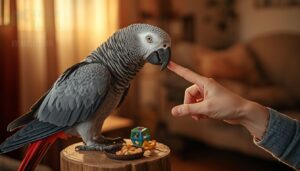
Behavior training isn’t just for dogs — birds respond remarkably well to it too. With the right approach, you can gently steer your bird away from plucking and toward healthier habits.
Here’s where to start.
Redirect Preening to Toys
When preening urges peak at roosting time, that’s your best window to redirect with a well-placed toy. Match the preening cue by introducing calm perch alternatives, your bird can safely mouth and shred instead of feathers:
- Use woven straw or palm frond shredders for toy timing at quiet moments
- Choose natural, untreated materials for material safety
- Rotate rope, straw, and shredder styles for toy variety
- Offer foraging toys and interactive toys at perch height
- Apply positive reinforcement training and behavioral enrichment and environmental enrichment consistently to build the habit
Reward Calm, Non-plucking Behavior
Timing is everything in positive reinforcement training for feather plucking birds. The moment your bird shows calm criteria — relaxed posture, beak away from feathers — deliver a small reward within seconds.
Start with short calm intervals and build gradually through progressive training. Neutral cues like consistent lighting and perch placement help your bird predict success.
Patience and consistency transform calm into habit.
Track Trigger Patterns
Patterns don’t lie — they point. Start a simple log that captures timing, location, and what your bird was doing just before each episode.
Log Timing and Location Mapping reveal whether plucking spikes near a window, after meals, or during evening noise. Trigger Frequency and Behavior Correlation turn raw observations into an Environmental Cue Chart that makes Identifying Causes of Feather Plucking far less guesswork.
Build Short Enrichment Sessions
Short, focused sessions beat marathon play every time. Think of them as micro-foraging bursts — quick windows where your bird works, finds, and resets.
- Offer Rapid Puzzle Challenges, hiding food in 3–4 spots for brief play intervals throughout the day.
- Introduce Quick Sensory Stimuli, via novel textures or interactive toys, then swap them out.
- Use Mini Skill Drills to redirect beak activity toward foraging enrichment instead of feathers.
- End each session calmly to support smoother behavioral enrichment routines tomorrow.
Seek Avian Vet Care Quickly
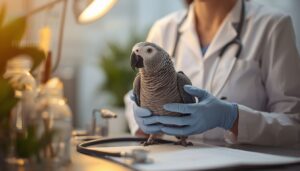
When feather plucking won’t stop despite your best efforts at home, it’s time to bring in professional help. An avian vet can uncover what you simply can’t see — from hidden infections to hormonal shifts quietly driving the behavior.
Here’s what a proper veterinary workup usually involves.
Exams, Bloodwork, and Skin Tests
A proper workup tells you why your bird is plucking, not just that it is. Your avian vet will run a CBC interpretation to flag inflammation or anemia, a serum chemistry panel to check organ function, and dermatology scraping or allergen patch testing to uncover skin-level triggers. Radiographic imaging rounds out medical diagnosis for feather plucking when internal issues are suspected.
| Diagnostic Test | What It Reveals |
|---|---|
| CBC Interpretation | Immune response, anemia, systemic illness |
| Serum Chemistry | Liver, kidney, and metabolic function |
| Dermatology Scraping | Mites, surface irritants, avian dermatology clues |
| Allergen Patch Testing | Environmental or contact triggers affecting skin health in birds |
Regular veterinary checkups make identifying underlying medical issues far easier before the cycle worsens.
Ruling Out Parasites and Infection
Parasites and infections are easy to miss until real damage is done.
Your vet will run a Skin Scraping Procedure and Microscopic Feather Exam to catch mites or fungal activity, a Bacterial Culture Analysis to identify any skin infections, and a PCR Pathogen Test to rule out medical issues at the microbial level.
An Environmental Parasite Survey completes this diagnostic evaluation, guiding targeted parasite control.
Medication for Confirmed Conditions
Once diagnostics confirm what’s driving the plucking, treatment becomes targeted — not guesswork.
- Antiparasitic Protocols address confirmed mites or lice with species- and weight-adjusted doses, plus environmental disinfection.
- Antifungal Therapy runs several weeks to fully clear confirmed fungal infections, topically or systemically.
- Antibiotic Stewardship means prescribing only after bacterial confirmation, completing the full course without stopping early.
- Allergy Management pairs antihistamines or carefully dosed corticosteroids with removing confirmed irritant sources.
- Metabolic Support corrects hormonal or nutritional deficiencies through lab-guided supplementation and medication.
Behaviorist Help When Needed
When medication alone doesn’t stop the plucking, a Professional Behavior Assessment is your next step.
A certified bird behaviorist builds Custom Modification Plans targeting your bird’s specific triggers, using Progress Monitoring Tools to track real improvement.
Behavioral Modification Techniques for Feather Plucking — like toy redirection and reinforcement timing — require professional guidance from avian veterinarians and behaviorists when Crisis Intervention Strategies become necessary.
Build a Long-Term Prevention Plan
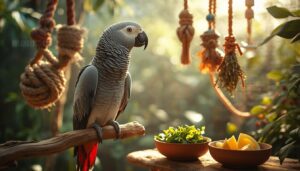
Getting your bird through a plucking episode is one thing — keeping it from coming back is another. Long-term prevention isn’t a single fix; it’s a set of ongoing habits you’ll build over time.
solid prevention plan actually looks like in practice.
Scheduled Health Check-ups
Regular veterinary checkups aren’t just reactive — they’re your strongest tool for staying ahead of feather plucking. A thorough physical exam checklist covers posture, skin condition, feathering, and hydration assessment all in one visit.
Here’s what a standard health check-up protocol normally includes:
- Routine blood work to catch internal imbalances early
- Behavioral observation to identify stress or compulsive patterns
- Parasite and allergy screening to rule out skin-level triggers
- Vaccination review and medication plan updates based on current findings
Schedule these every 4–6 weeks when managing active plucking.
Monitor Feather Regrowth
Once checkups are scheduled, tracking what happens between visits matters just as much. Photo Tracking the same spot weekly — same angle, same light — makes feather regrowth progress visible.
Compare Pin Feather Length side-to-side using Symmetry Comparison to catch feather follicle damage early. Skin Redness Checks and Growth Timeline Charts round out a solid feather care routine, supporting early detection of monitoring bird behavior for plucking patterns.
Adjust Diet and Habitat as Needed
As your bird’s needs shift with the seasons, so should your approach. Seasonal Food Rotation keeps nutritional deficiencies from creeping in — swap fresh produce with what’s available and nutrient-dense.
Dietary strategies to prevent feather plucking include maintaining Protein Balance and Water Quality Management year-round.
Adjust Humidity Control and Environmental Enrichment alongside creating diverse perching options for birds, because the role of diet in preventing feather plucking works hand-in-hand with Seasonal Habitat Changes.
Watch for Relapse Signs
Even after a successful recovery, Recurring Feather Damage can quietly return.
Watch for Patterned Preening that ramps up around predictable times, Dermal Irritation Return on previously healed skin, and Regrowth Stagnation where bare patches stop filling in.
Trigger Re-exposure — a schedule shift, new noise, or stress load increase — often explains the relapse.
Monitoring bird behavior for plucking patterns and tracking energy or appetite changes helps you catch early signs of feather damage in pet birds before they escalate.
Frequently Asked Questions (FAQs)
Can feather plucking be permanently cured or reversed?
Not always — and that’s an honest answer.
Follicle Damage Limits regrowth permanently in chronic cases.
Medication Relapse Risks are real, and Compulsive Behavior Persistence means full reversal isn’t guaranteed without sustained Owner Commitment Role.
How long does recovery typically take?
Recovery timelines vary, but most birds show early improvement within a few weeks once triggers are addressed.
Full feather regrowth pace usually spans several months, depending on skin barrier closure and how long damage persisted.
Are certain bird species more prone to plucking?
Yes. African Grey Risk is especially high, and Cockatoo Susceptibility and Macaw Vulnerability are well-documented.
Budgerigar Sensitivity rises under crowding.
Species Sensitivity varies, but stress and nutritional deficiencies drive avian behavior issues across pet bird care.
Can feather plucking spread to other birds?
Feather plucking doesn’t spread like a cold, but social contagion is real.
Copying behavior means a stressed bird can influence cage mates, while infectious transmission, like PBFD, spreads through environmental vectors such as feather dust.
What are safe alternatives to medication for treatment?
Safe alternatives include Environmental Enrichment, Behavioral Interventions, Nutritional Management for Avian Health, Feather-safe sprays, Aloe‑Based Sprays, Calming music, Probiotic foods, herbal remedies, Herbal supplements, and Aromatherapy diffusers — ironic that the simplest changes often outperform complex treatments.
Can feather plucking be fully cured permanently?
Not every bird reaches a full cure — the honest answer sits somewhere between cure vs control.
Prognosis variability is real, and irreversible feather loss can persist even after behavioral relapse stops.
Do certain bird species pluck more than others?
Not all birds are wired the same way.
Species susceptibility varies widely — cockatoos, African greys, and hormonal cockatiels top the list for avian self-mutilation, while finches rarely show the same patterns.
At what age does feather plucking typically start?
Most parrots begin plucking around sexual maturity — usually between 60 and 82 months of age, depending on species.
Young adults carry the highest risk, making that window your most critical period to watch.
Can plucking spread between birds living together?
Yes, it can — through social contagion, parasite transmission, and shared stress cues.
Learned behavior, feather dust spread, and poor hygiene protocols all raise the risk when social species dynamics go unmanaged.
Does seasonal change affect feather plucking rates?
Seasonal changes can raise plucking rates.
Photoperiod shifts, humidity fluctuations, temperature swings, and breeding hormone cycles all increase stress load, causing seasonal molting overlap that makes it harder to differentiate molting and feather plucking for even experienced caregivers.
Conclusion
Some birds pluck despite attentive care, and that doesn’t mean you’ve failed—it means the underlying cause hasn’t been fully identified yet.
Feather plucking prevention isn’t a single intervention; it’s a layered process of ruling out medical triggers, closing nutritional gaps, and reshaping the daily environment.
When you treat the whole bird—body, mind, and habitat—feathers follow.
Stay consistent, partner with your avian vet, and trust that each small adjustment moves the needle forward.