This site is supported by our readers. We may earn a commission, at no cost to you, if you purchase through links.
That bird bath you set up to attract cardinals and finches? It’s also rolling out the welcome mat for mosquitoes. Female mosquitoes can lay up to 300 eggs in a single batch, and your bird bath’s standing water provides the perfect nursery. Within just 48 hours, those eggs hatch into larvae, starting a breeding cycle that puts your family at risk for West Nile virus and other mosquito-borne illnesses.
Households near bird bath areas report 14% more indoor mosquito bites, and disease transmission rates climb 1.4 times higher in frequent breeding zones.
The good news? Bird bath mosquito control doesn’t require harsh chemicals or abandoning your feathered visitors. Simple maintenance routines, strategic design choices, and a few natural interventions can interrupt the breeding cycle while keeping your bird bath safe and inviting.
Table Of Contents
Key Takeaways
- Female mosquitoes lay up to 300 eggs in bird baths, with larvae hatching within 48 hours and completing their breeding cycle in 7–14 days, increasing West Nile virus risk by 1.4 times in areas with standing water.
- Changing bird bath water every 1–3 days interrupts the mosquito life cycle before larvae develop, reducing potential breeding sites by over 90% without requiring chemical treatments.
- BTI larvicides (like mosquito dunks) deliver 80–100% larval mortality within 24–72 hours while remaining completely safe for birds and wildlife when applied according to product directions.
- Installing solar fountains or water agitators creates continuous surface movement that disrupts egg-laying behavior, resulting in 40–70% fewer mosquitoes around treated bird baths during peak breeding season.
Why Mosquitoes Breed in Bird Baths
Your bird bath might be a perfect mosquito nursery without you even realizing it. These insects don’t just show up randomly—they’re specifically drawn to certain conditions that standing water provides.
Understanding what attracts them and how they develop helps you recognize problems early and take action before your backyard becomes a breeding ground.
Mosquito Life Cycle in Standing Water
Understanding mosquito ecology starts with their life cycle in standing water. When female mosquitoes lay eggs in your bird bath, they hatch into mosquito larvae within 24 to 48 hours in warm conditions. Larval development progresses through the pupal stage over 7 to 14 days, depending on water temperature and available food.
This rapid mosquito breeding cycle makes mosquito control essential for keeping your bird bath safe. Effective learning strategies, such as those found in AP study guides, can help individuals better comprehend complex life cycles.
Health Risks of Mosquitoes in Bird Baths
Beyond the life cycle itself, mosquito breeding in your bird bath creates real human health risks. Studies link backyard bird baths to increased mosquito-borne illnesses like West Nile virus, especially in areas with active mosquito surveillance zones.
Consider these outdoor health risks from standing water:
- Households report 14% more indoor mosquito bites near bird bath areas
- Container breeding raises local mosquito populations by up to 25%
- Disease transmission rates climb 1.4 times higher in frequent breeding zones
- Untreated baths generate 200+ larvae weekly during peak season
Effective mosquito control and mosquito prevention protect your family from mosquito-borne diseases while maintaining water quality impact for visiting birds. Understanding research networks is essential for developing strategies to mitigate these risks.
Signs of Mosquito Breeding Activity
Knowing what mosquito breeding looks like helps you act fast. Within 5–7 days of warm stagnation, you’ll spot wriggling larvae—those tiny “maggots”—and translucent pupae when you disturb the water. Cloudy, algae-laden water with surface film signals higher larval detection. Local mosquito surveillance often traces rising counts back to standing water within a kilometer, making your pest monitoring efforts essential for mosquito prevention.
| Breeding Indicator | What You’ll See |
|---|---|
| Larvae presence | Small wriggling forms in still water |
| Water quality decline | Cloudy water, surface scum, algae buildup |
| Egg-laying signs | Organic debris on margins, suitable habitat |
Essential Bird Bath Maintenance for Mosquito Control
Keeping your bird bath mosquito-free starts with consistent maintenance—it’s your first line of defense against turning a backyard oasis into a breeding ground.
The good news is that a few simple habits can break the mosquito life cycle before it even starts. Let’s walk through the essential practices that’ll keep your water fresh and your feathered visitors safe.
How Often to Change Bird Bath Water

Water change frequency directly interrupts mosquito breeding cycles—your most powerful defense. Replace your bird bath water every 1–3 days to stop larval development before it begins. Daily water changes during warm months slash potential breeding sites by over 90%. In hot climates, consider twice-daily water refresh rates during peak season.
Replace bird bath water every 1–3 days to stop mosquito breeding before it starts
This simple birdbath maintenance strategy delivers effective mosquito control while maintaining water quality management for visiting birds.
Proper Cleaning Techniques
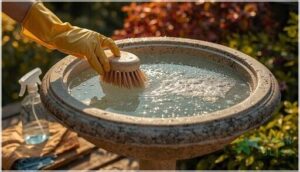
Three cleaning schedules transform your approach to birdbath maintenance and mosquito control. Scrub your bird bath every 4 days with a brush and mild detergent, removing all algae—this slashes larval habitat by 52%. Rinse thoroughly with water quality management in mind; residual soap affects birds.
For deeper disinfection, apply a diluted bleach solution (1:9 ratio), wait one minute, then rinse completely using proper rinse methods.
Removing Debris and Preventing Stagnation
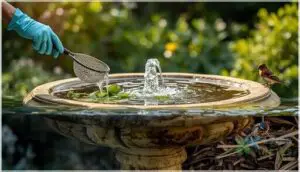
Clear, circulating water keeps mosquitoes at bay—debris removal is your first line of defense. You’ll cut mosquito breeding by 60% when you remove floating leaves and organic material weekly.
Stagnation prevention depends on basin cleaning every 2–3 days; this simple water circulation habit reduces larvae control challenges by up to 90%. A water agitator or moving water feature disrupts egg-laying, making bird bath maintenance straightforward and effective for mosquito control.
Best Placement for Mosquito Prevention
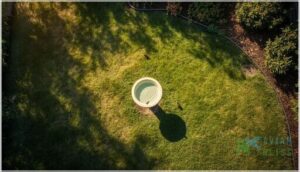
Your yard layout influences mosquito control more than you might expect—placement decisions can reduce breeding activity by 40%. Distance factors and vegetation management around your outdoor water features create conditions mosquitoes can’t tolerate.
Strategic positioning boosts mosquito prevention methods:
- Place your bird bath 10+ feet from dense shrubs and flower beds
- Choose open areas with moderate sun exposure to maintain water circulation
- Avoid proximity to gutters, ponds, or other standing water
- Position away from moisture-retaining mulch zones
- Guarantee adequate water flow by selecting sites with gentle breezes
Natural Mosquito Control Methods for Bird Baths

You don’t need harsh chemicals to keep mosquitoes out of your bird bath. Nature offers several proven options that work with your backyard ecosystem instead of against it.
Let’s look at practical methods you can start using today to control larvae naturally while keeping birds safe.
Using Essential Oils Safely
Essential oils like citronella oil and lemon eucalyptus oil can disrupt mosquito olfactory cues, but you’ll need proper essential oil dilution and bird-friendly oils to avoid harming your feathered visitors. While 70% of users report no adverse effects, these aromatic repellents work inconsistently outdoors. Always follow oil safety guidelines—high concentrations may irritate birds’ respiratory systems, making natural mosquito repellents a supplement, not a standalone solution.
| Essential Oil | Mosquito Disruption | Bird Safety Concern | Outdoor Efficacy | Recommended Use |
|---|---|---|---|---|
| Citronella Oil | Moderate olfactory disruption | Low at proper dilution | Inconsistent in open air | Supplement only |
| Lemon Eucalyptus Oil | Contains natural citronella | Moderate respiratory risk | Variable results | Use with caution |
| Geraniol | Disrupts sensory cues | Low to moderate | Limited field data | Test small areas first |
| Lemongrass Oil | Affects mosquito detection | Potential dermal irritant | Unpredictable outdoors | Dilute heavily |
| General Essential Oils | Species-dependent | Monitor for irritation | Requires additional measures | Never use alone |
Beneficial Predators for Mosquito Reduction
You can utilize predator diversity to achieve mosquito suppression without chemicals. Mosquito fish (Gambusia affinis) slash larval control needs by 40–80% in containerized features, while dragonfly nymphs naturally tackle mosquito larvae in shallow habitats.
These biological agents restore ecosystem balance, making them effective natural mosquito repellents. Combined mosquito control methods using multiple predators often outperform single-species approaches, delivering 40–70% reductions in breeding activity.
Mosquito-Repelling Plants Around Bird Baths
Strategic plant selection around your bird bath can boost your natural mosquito repellent arsenal, though results vary. Consider this garden layout approach:
- Lemongrass releases citronella oil that cuts adult landings by roughly 30% within spray range
- Marigolds offer modest pest resistance, reducing bites 1–2 meters out
- Mint varieties create localized deterrence when concentrated, aided by wind patterns
Combine plants with lemon eucalyptus oil applications for layered organic repellents in your landscape design.
Safe Home Remedies for Larvae Control
Beyond planting repellents, you can target larvae directly. Vinegar solutions require a 15% ratio to kill larvae in 24 hours—too acidic for birds. Oil films suffocate mosquito larvae but contaminate plumage. Skip soap alternatives in bird baths; they harm wildlife.
Instead, reach for Bti products like mosquito dunks. Bacillus thuringiensis israelensis kills larvae safely, letting birds drink without risk while you maintain natural mosquito repellents around the bath’s perimeter.
Using Bird Bath Design to Deter Mosquitoes
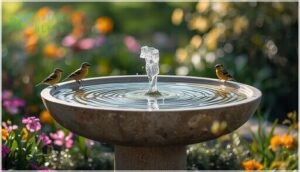
The design of your bird bath plays a bigger role in mosquito control than you might think. Certain features make it harder for mosquitoes to complete their life cycle, while others actively discourage them from landing in the first place.
Let’s look at the design choices that give you the upper hand against these persistent pests.
Choosing Mosquito-Resistant Bird Bath Styles
Your bird bath’s design can work against mosquitoes before they even arrive. Smart choices in basin materials, bowl shapes, and water depth create habitats that naturally resist larvae while still welcoming birds. Focus on features that disrupt standing water and simplify bird bath maintenance:
- Shallow, wide bowls with smooth surfaces reduce stagnant zones by 25–40%
- Non-porous ceramic or enamel resists biofilm, cutting buildup 10–25%
- Sloped sides eliminate corner refuges where larvae thrive
Pair these designs with mosquito dunks or a solar fountain for complete control.
Installing Solar Fountains or Water Agitators
Adding a solar fountain or water agitator transforms your bird bath into hostile territory for mosquitoes. Continuous water agitation disrupts egg-laying by Culex mosquitoes, which prefer calm surfaces.
Field studies show 40–70% fewer mosquitoes around treated setups during peak season. These devices maintain constant surface movement at 2–5 cm depth, slashing larval emergence by 30–60%.
Installation costs $40–$120, paying for itself within one breeding season.
Shallow Vs. Deep Bird Baths for Prevention
Water depth effects markedly shape mosquito habitat risk in your bird bath. Shallow water (1–2 inches) accelerates larval development rates by 20–40%, creating prime breeding zones. Deeper basins (over 6 inches) reduce egg-laying events by 20–30% and delay mosquito maturation by 2–3 days.
Bath design tips: choose deeper models and pair them with mosquito dunks or a water agitator for maximum mosquito control.
Safe Chemical and Biological Solutions
Sometimes maintenance alone isn’t enough to keep mosquito populations in check, and that’s when targeted treatments come into play. The right biological or chemical solutions can stop larvae before they mature—without putting birds or other wildlife at risk.
Here’s how to use these methods safely and effectively in your backyard.
Applying BTI Larvicides Effectively
Bacillus thuringiensis israelensis (BTI or Bti) bacterial insecticides, like mosquito dunks, deliver 80–100% larval mortality within 24–72 hours. Treatment frequency runs every 14–21 days during peak season, depending on your bird bath’s conditions.
BTI dosage rates follow the product label strictly—usually one dunk per few liters of water. Efficacy factors include temperature and sunlight exposure.
Store products sealed and away from children to maintain potency.
Evaluating Safety for Birds and Wildlife
Wildlife protection starts with understanding toxicity levels and ecological balance. You want mosquito control, but not at the expense of bird safety or species conservation. BTI larvicides, when applied as directed, offer effective mosquito control in your bird bath with minimal risk.
For wildlife-friendly gardening, keep these in mind:
- Use BTI products labeled for bird baths.
- Avoid chemical drift.
- Change water regularly.
Monitoring Bird Bath for Mosquito Activity
Consistently, you’ll want to check your bird bath weekly for wriggling mosquito larvae—a clear sign breeding patterns have started. Water quality matters: debris-laden water shows 1.8 times higher larvae detection rates.
Visual inspections combined with mosquito surveillance help you catch activity early, before larvae mature.
This proactive bird bath maintenance, alongside mosquito dunks and mosquito repellents, strengthens your mosquito control strategy effectively.
Community Strategies for Mosquito Reduction
Beyond your backyard, joining neighborhood initiatives transforms mosquito control from solo effort to shared success.
Community engagement through public education events—cited by 62% of households—makes mosquito monitoring a collaborative effort.
When neighbors adopt pest control practices together, including mosquito dunks with BTI for mosquito larvae, local nuisance drops by 30–50%, proving that collective action outperforms individual strategies.
Frequently Asked Questions (FAQs)
Can mosquito dunks harm hummingbirds or small birds?
Hummingbirds visiting your feeder might also sip from nearby water sources. Mosquito dunks containing BTI are safe for hummingbirds and small birds when used as directed, showing no toxic effects in field studies.
Do copper pennies actually prevent mosquito breeding?
No, copper pennies don’t reliably prevent mosquito breeding. Studies show dissolved copper from pennies doesn’t reach concentrations needed for larval control, making routine water changes and approved BTI larvicides far more effective for bird bath mosquito control.
What temperature stops mosquitoes from breeding outdoors?
When ambient temperatures drop below 50°F (10°C), mosquito breeding virtually stops outdoors. Most species need sustained warmth above 60°F (15°C) for successful larval development and completion of their life cycle.
Should I cover my bird bath overnight?
Covering your bird bath overnight can deter egg-laying mosquitoes temporarily, but larvae may still develop beneath the cover if water remains stagnant.
Pair overnight coverage with regular water changes and bird bath maintenance for effective mosquito control.
How do winter months affect mosquito control needs?
When temperatures plunge below 10°C, mosquito activity drops by up to 90%—but don’t let that fool you. Larvae can overwinter in hidden spots, so maintaining your bird bath with mosquito dunks during seasonal maintenance prevents spring surges.
Conclusion
Ironically, the same backyard oasis meant to celebrate nature can become a disease factory—unless you take control. Bird bath mosquito control isn’t complicated: change water every two days, add movement with a fountain, and apply BTI when needed.
Your feathered guests won’t notice the difference, but mosquitoes will find themselves evicted. A few minutes of weekly maintenance protects your family from bites and disease while keeping your bird bath exactly what it should be—a refuge, not a risk.