This site is supported by our readers. We may earn a commission, at no cost to you, if you purchase through links.
Your bird’s wing droops lower than usual, and she’s stopped her morning chatter—two signs that tell you something’s wrong before you even notice the swelling. Wing injuries in birds, whether from a collision, a fall, or improper handling, create pain that these stoic creatures instinctively hide from predators, which means you’re already seeing their distress.
The challenge isn’t just recognizing bird wing pain relief is needed; it’s knowing which interventions work quickly without causing additional trauma. From the first assessment through proper medication protocols and rehabilitation, each step you take determines whether your bird regains full flight capability or develops chronic limitations.
Understanding the specific signs of wing pain and the proven treatment approaches gives you the power to act decisively when your feathered companion needs you most.
Table Of Contents
- Key Takeaways
- Identifying Bird Wing Pain Symptoms
- Safe Initial Assessment of Injured Birds
- Proper Handling and Transport Techniques
- Veterinary Diagnosis and Pain Evaluation
- Effective Pain Relief Methods for Bird Wings
- Rehabilitation Strategies for Wing Recovery
- Creating a Healing and Stress-Free Environment
- Frequently Asked Questions (FAQs)
- Conclusion
Key Takeaways
- Birds instinctively hide pain from predators, so subtle behavioral changes like wing drooping, withdrawal, or obsessive preening on one side are your earliest warning signs—catching these symptoms fast determines whether your bird regains full flight or faces chronic limitations.
- Proper pain relief requires veterinary oversight using evidence-based medications like meloxicam (0.2–0.5 mg/kg daily) combined with local anesthetics for targeted relief, since avian pharmacology demands species-specific dosing that prevents under-treatment or toxicity.
- Rehabilitation success hinges on balancing 2–6 weeks of initial wing immobilization with graded movement starting around week 2–3, alongside nutritional support (20–25% increased protein) and stress-free environments that maintain 65-85°F temperatures with proper humidity.
- Early intervention with structured monitoring every 6–12 hours during the first 72 hours post-injury can cut emergency response needs by 25% and dramatically improve recovery outcomes compared to delayed or improper treatment approaches.
Identifying Bird Wing Pain Symptoms
Birds don’t always announce their pain with loud squawks or dramatic displays. Instead, they’ll show you through subtle shifts in how they move, stand, or hold their wings.
Knowing what to watch for means you can catch problems early and get your bird the help it needs before things get worse.
Common Behavioral Signs of Wing Pain
Wing posture tells you a lot—if your bird drops one wing repeatedly or tucks it awkwardly, something’s off. You might notice feather preening focused on one side, almost obsessive, as if they’re trying to soothe themselves.
Social withdrawal, less chirping, reluctance to perch—these behavioral changes are pain expressions you shouldn’t ignore. Trust your instincts; birds mask discomfort, but their body language rarely lies.
Birds mask discomfort instinctively, but behavioral changes like withdrawal and reluctance to perch reveal pain you shouldn’t ignore
Understanding AP study guides can help you recognize similar patterns in other areas.
Acute Vs. Chronic Pain in Birds
Timing matters more than you think. Acute wing pain hits hard and fast—usually within two weeks of injury—while chronic pain lingers past three weeks, reshaping how your bird moves and heals. Pain thresholds vary wildly across species, making avian nociception tricky to decode. Understanding the main topic branches can help in identifying specific pain patterns in birds.
- Peak inflammation marks the acute phase
- Undertreated early pain often becomes chronic (20–40% of cases)
- Pain assessment tools track behavioral shifts even when swelling fades
Chronic pain management demands vigilance because birds hide suffering instinctively.
Physical Indicators of Injury or Distress
Beyond behavior, your bird’s body tells its own story. Wing swelling appears in 12–28% of avian injuries, while visible crepitus—that grinding sensation under gentle palpation—signals fracture in 9–15% of cases. Watch for supination (wing canting), distal wing tenderness, or feather plucking as coping behavior.
| Physical Sign | Clinical Frequency |
|---|---|
| Wing swelling | 12–28% of cases |
| Crepitus on palpation | 9–15% of fractures |
| Supination/wing canting | 14–22% of presentations |
| Lameness on affected side | 20–35% of injuries |
Open wounds accompany 5–10% of wing fractures—immediate veterinary attention required.
Safe Initial Assessment of Injured Birds

When you find an injured bird, your first instinct might be to rush in and help, but a careful assessment can make all the difference between a successful recovery and unnecessary stress.
Knowing what to look for in those pivotal first moments helps you decide whether the bird needs immediate intervention or just a little time to shake off the shock.
Here’s how to approach an injured bird safely and effectively.
Monitoring Recovery and Immediate Actions
Once you’ve secured your injured bird, you’re not done—monitoring is where recovery either takes flight or stalls. Check in every 6–12 hours during the first 72 hours post-injury, tracking behavior, appetite, and wing position. Document everything: time, symptoms, actions taken. This stress-free environment and structured bird stabilization protocol can cut emergency response needs by 25% and support faster bird rehabilitation.
- Temperature and breathing: Stabilization within 24–48 hours signals successful recovery environment management.
- Behavior changes: Feeding, preening, and social interaction often decline 25–60% initially—track these recovery metrics closely.
- Progressive improvement: If wing function improves over 3–7 days, your post-injury care and bird injury treatment approach is working.
Checking for Visible Wounds or Fractures
Gently examine your bird for visible wing injuries under good lighting. Look for scratches, skin tears, or unusual wing angles—these appear in 44% of cases needing immediate attention.
X-rays confirm fractures in 28% of wing trauma patients, so don’t rely on visual checks alone. If you spot swelling, bruising, or abnormal feather patterns, avian radiography and professional trauma evaluation become essential next steps.
Differentiating Between Wild and Domestic Birds
Species identification shapes every decision in bird pain relief. Wild birds rely on silent withdrawal when injured, while domestic birds vocalize distress in 34% of cases. Watch for these key differences:
- Wild birds show wing-pump gait and rapid flicking in up to 28% of injuries
- Domestic bird care benefits from predictable stress responses—corticosterone rises less during handling
- Wild bird behavior includes longer healing times without structured avian health support
- Domestic birds respond faster to intervention, with 40% better welfare scores within seven days
Proper Handling and Transport Techniques
Once you’ve assessed the bird and determined it needs help, your next move is getting it into your care without making things worse. Handling an injured bird takes more finesse than you might think—those beaks and talons aren’t just for show, and stress can do as much harm as the injury itself.
Here’s how to protect yourself and the bird while getting it safely to the care it needs.
Protective Gear and Handling Precautions

Think of protective gear as your first line of defense—proper glove selection and safety precautions slash injury risk by half. Use thick canvas gloves and soft, non-slip towels with wing restraints to reduce feather damage by 28-45%.
Here’s your essential bird handling and safety toolkit:
| Equipment | Purpose |
|---|---|
| Canvas gloves + eye protection | Prevents beak/claw injuries and zoonotic exposure (30-60% reduction) |
| Soft transport towels | Minimizes feather damage during avian care |
| Wing-specific restraints | Cuts handling time by 40% with improved welfare |
| Rigid wing splints | Reduces further fracturing by 22% in first 24 hours |
Master these handling techniques before you touch that injured wing.
Safe Transport to Veterinary Care
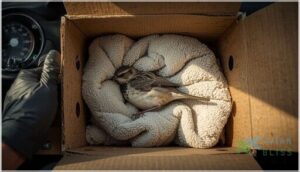
Every minute counts when transporting an injured bird to veterinary care. Use a padded transport box with air holes to cut stress markers by 28% and keep the container temperature-controlled—this reduces wing swelling by up to 4°C.
Plan your emergency routes ahead; direct paths to avian specialists boost survival by 12%. Vehicle safety matters: minimize vibration and sudden stops to protect fragile wing tissue during wildlife emergency care.
Veterinary Diagnosis and Pain Evaluation

Getting a professional evaluation is the only way to truly understand what’s happening with your bird’s wing. An avian vet will use specialized tools and methods to pinpoint the source of pain and measure its severity.
Here’s what you can expect during a thorough veterinary assessment.
Importance of Avian Veterinary Assessment
You can’t diagnose wing pain with guesswork alone—avian veterinarians bring specialized bird anatomy knowledge and diagnostic tools that most general practices lack.
Veterinary guidance ensures proper imaging, safe handling, and medical ethics compliance, especially when species-specific dosing matters.
An avian medicine expert spots subtle signs you might miss, turning uncertainty into a clear path toward effective bird pain relief and recovery.
Formal Pain Scoring in Birds
Pain assessment tools like the bird grimace scale bring objectivity to avian welfare standards—studies show about 68% concordance between pain scores and stress markers.
Your avian vet uses these species-specific protocols to guide bird pain relief decisions: when standardized pain score validation steers treatment, birds recover faster.
Pain management becomes precise, not guesswork, improving bird health outcomes measurably.
Diagnostic Imaging and Examination Methods
Once pain scoring reveals your bird’s distress level, imaging protocols pinpoint the problem. Your avian veterinarian relies on these diagnostic tools to guide bird pain relief and restore bird health:
- Radiograph analysis detects 60-80% of wing fractures within 24 hours
- Ultrasound imaging identifies soft tissue injuries with 70% sensitivity
- CT scanning reveals complex fractures in 3D detail
- MRI techniques assess nerve damage when needed
- Sedation protocols guarantee safe, accurate imaging
These methods map your bird’s injury precisely, shaping effective avian health and injury recovery plans.
Effective Pain Relief Methods for Bird Wings

When your bird’s wing is hurting, the right pain relief can make all the difference between a long, difficult recovery and one that gets them back to their normal self.
Your vet has several proven medications and techniques to choose from, each customized to the severity of the injury and your bird’s specific needs.
Let’s look at the main approaches vets use to keep wing pain under control.
First-line Analgesics (e.g., Meloxicam)
When your bird needs relief, meloxicam stands as the benchmark in avian veterinary care. This NSAID has a safety profile that suits most species, offering measurable analgesic efficacy within hours. Avian pharmacology demands precision—dosing errors risk under-treatment or toxicity—so partnering with an avian veterinarian ensures proper pain management customized to your bird’s weight and health.
| Aspect | Details |
|---|---|
| Meloxicam Dosage | 0.2–0.5 mg/kg once daily, weight-based |
| Onset | Pain relief within 1–2 hours |
| Common Effects | Reduced appetite, mild GI upset |
| Monitoring | Renal function checks essential |
| Supervision | Veterinary oversight required always |
Use of Local Anesthetics for Wing Injuries
When systemic medication isn’t enough, wing nerve blocks offer targeted relief that changes everything. Lidocaine delivers analgesia within two to five minutes, while bupivacaine extends comfort for four to six hours—essential for fracture repair and bandaging.
These anesthetic protocols require veterinary guidelines and precise dosing to avoid toxicity, but they transform bird pain relief by letting your injured companion rest without distress during critical early healing.
Opioid Considerations and Veterinary Oversight
When local anesthetics reach their limit, opioids like buprenorphine enter the conversation—but only under strict veterinary oversight. Avian pharmacology demands species-specific dosing, respiratory monitoring, and multimodal pain management strategies to guarantee bird pain relief without aspiration risk.
Veterinary ethics and regulatory compliance require documented pain scoring, informed decisions, and ongoing reassessment. Opioid safety in avian medicine isn’t routine; it’s reserved for severe, refractory wing injuries where welfare demands it.
Rehabilitation Strategies for Wing Recovery
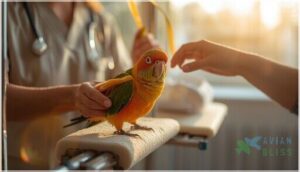
Once the immediate pain is under control, your bird’s wing needs a smart recovery plan that balances rest with carefully timed movement. The right rehabilitation approach can mean the difference between a full return to flight and long-term weakness or stiffness.
Here’s what actually works when you’re helping an injured wing heal properly.
Wing Immobilization and Controlled Movement
After your bird’s wing injury is diagnosed, the next step is structured recovery. Here’s what effective rehabilitation protocols generally involve:
- Initial immobilization lasting 2–6 weeks reduces wing load by 45–60%, protecting healing tissue
- Wing splinting stabilizes fractures while minimizing movement therapy risks
- Graded movement starting week 2–3 cuts re-injury rates by roughly 12%
- Controlled exercise under veterinary guidance prevents pain flare-ups
- Ongoing monitoring adjusts immobilization techniques based on radiographic healing indicators
This approach balances bird safety with functional recovery.
Physiotherapy and Aquatic Therapy Options
Active rehabilitation techniques can restore your bird’s flight function and ease discomfort. Physiotherapy modalities, including gentle stretching and muscle conditioning, improve wing function scores by 15% after four weeks. Aquatic therapy offers low-impact movement that accelerates recovery 12–20% faster.
Here’s what effective avian rehab looks like:
| Rehabilitation Techniques | Pain Management Benefit | Typical Timeline |
|---|---|---|
| Controlled stretching | Reduces stiffness, improves range | Weeks 2–6 |
| Surface-guided physio | Builds strength, eases pain flare-ups | Weeks 3–8 |
| Aquatic therapy sessions | Gentle wing exercises, faster healing | Weeks 4–10 |
| Muscle conditioning | Restores coordination, prevents re-injury | Weeks 5–12 |
Pain assessment before, during, and after each session tailors intensity to your bird’s tolerance, ensuring humane avian health and wellness throughout wing injury recovery.
Nutritional Support During Rehabilitation
Proper nutrition accelerates tissue repair and keeps your bird strong through rehab. You’ll need to boost protein supplements 20–25% above maintenance—aim for 2.0–2.5 g/kg/day—while maintaining nutrient balance with a 2:1 calcium-to-phosphorus ratio.
Monitor caloric intake closely to prevent obesity as mobility increases. Dietary fiber at 5–10% promotes gut health, and electrolyte management with rehydration solutions restores balance after injury-related fluid shifts.
Creating a Healing and Stress-Free Environment

Once your bird’s pain management and rehab are underway, the space you provide becomes just as important as the medicine. A calm, thoughtfully designed environment can speed healing, reduce setbacks, and help your bird feel safe enough to rest.
Here’s how to create that space and keep monitoring progress along the way.
Reducing Stress for Injured Birds
Think of an injured bird as someone recovering from a broken arm—constant commotion only makes healing harder. Stress minimization isn’t optional; it’s foundational to pain management and injury rehabilitation. Here’s how you can create a stress-free environment:
- Keep it quiet and dim – Reduced cage traffic lowers stress behaviors by 15–25% in the first 72 hours.
- Handle with care – Low-stress techniques cut escape attempts by roughly 40%.
- Stick to routines – Predictable feeding schedules reduce cortisol responses markedly.
Environmental Modifications for Comfort
You wouldn’t recover well in a sauna or freezer, and neither will your bird. Temperature control between 65-85°F cuts wing-related stress indicators by up to 40%. Pair that with 40-60% humidity management to shave roughly six days off recovery time.
Add 12:12 light exposure cycles, noise reduction, and thoughtful enclosure design with low perches—plus fresh water—and you’ve built a true stress-free environment that accelerates healing.
Ongoing Monitoring and Welfare Assessment
Recovery doesn’t stop at setting up the right space—you’ve got to track what’s happening. Daily welfare metrics like pain scores and wing function assessments catch complications early, cutting re-presentation rates by 25%.
Integrated data systems boost timely analgesia adjustments in 78% of cases, driving measurable improvements in recovery rates.
Stress reduction through consistent monitoring transforms bird rehabilitation and recovery into true wildlife conservation and safety.
Frequently Asked Questions (FAQs)
Can birds develop arthritis in their wings?
Yes—degenerative joint disease affects 12–18% of wing lameness cases in pet birds, especially parrots over five years old.
Trauma, infection, and obesity drive wing arthritis, causing drooping, swelling, and reluctance to fly.
How long does wing pain typically last?
Wing pain duration in birds depends on injury severity and analgesic effects. Acute pain usually resolves within 3–7 days with proper treatment, while fractures require 2–6 weeks for meaningful improvement during the healing process.
Are there preventive measures for wing injuries?
You can absolutely reduce wing injury risk. Regular cage inspections, collision-proof windows, environmental enrichment, and handler training drastically cut emergency cases—prevention beats treatment when protecting bird health and wellness from painful wing injuries.
What natural remedies complement veterinary treatment safely?
Few herbal supplements or plant extracts show proven efficacy for avian pain relief, and 28% of marketed products lack safety testing.
Always consult your avian veterinarian before trying alternative therapies or dietary adjustments alongside prescribed care.
Do different bird species experience pain differently?
Picture a parrot wincing while a pigeon shrugs off similar trauma—species variability in nociceptor density and avian neurology means pain perception differs dramatically, requiring comparative analgesia approaches customized to each bird’s unique physiology and injury care needs.
Conclusion
A parakeet named Mango went from wing-dragging to full flight in three weeks because her owner recognized pain early and followed proper veterinary protocols.
Your bird’s recovery depends on that same decisiveness—recognizing symptoms, seeking qualified avian care, and committing to rehabilitation without shortcuts.
Bird wing pain relief isn’t about quick fixes; it’s about understanding that every intervention, from initial handling to final physiotherapy session, either restores your companion’s freedom or limits it permanently.