This site is supported by our readers. We may earn a commission, at no cost to you, if you purchase through links.

A chickadee landing on a frozen bird bath doesn’t give up and fly away—it waits, fluffs its feathers, and hopes. Winter water is harder for birds to find than food, yet most bird lovers don’t realize their bath turned to solid ice hours before dawn.
Shallow basins lose heat fast, wind strips warmth right off the surface, and a cold night does the rest.
The good news is that keeping water open all winter doesn’t require much effort or money. A few smart bird bath freezing solutions—some electric, some not—can mean the difference between a bath birds return to and one that sits frozen and forgotten until spring.
Table Of Contents
- Key Takeaways
- Why Bird Baths Freeze
- Electric Bird Bath Heating Solutions
- No-Electricity Freeze Prevention Methods
- Insulation and Water Movement Tricks
- Winter Bird Bath Safety Tips
- Frequently Asked Questions (FAQs)
- How often should I refill my bird bath in winter?
- Can birds drink from partially frozen bird baths?
- What temperature triggers bird bath water to freeze?
- Do bird bath fountains use too much electricity?
- Where should I place my bird bath during winter?
- Which birds visit bird baths in winter?
- How often should heated baths be inspected?
- Can bird baths attract predators during winter?
- What landscaping plants support winter bird activity?
- Do bird baths need covers during heavy snowfall?
- Conclusion
Key Takeaways
- Shallow water, wind, shade, and basin material all work against you, so fixing even one of these factors noticeably slows how fast your bird bath freezes.
- Electric de-icers and heated bowls are the most reliable option in hard winters, but always plug them into a GFCI outlet and match the wattage to your basin size.
- If you’d rather skip electricity, south-facing sunny spot, dark rocks, floating balls, and a daily lukewarm refill can keep water open through most winter mornings.
- Never add salt, antifreeze, or boiling water to your bird bath — lukewarm tap water and a weekly vinegar scrub are all you need to keep it safe for birds.
Why Bird Baths Freeze
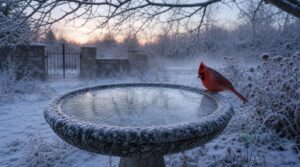
Bird baths freeze faster than you might expect, and a few simple reasons explain why. Understanding what’s working against you makes it much easier to fix. Here’s what causes the water to ice over in the first place.
The good news is that simple ways to keep your bird bath from freezing don’t require much effort or money once you know what you’re dealing with.
Shallow Water Cools Faster
Bird baths are shallow by design — and that’s exactly what makes them freeze so fast. Shallow water loses heat quickly because it has a high surface area ratio compared to its volume. There’s simply not enough thermal mass to hold warmth once temperatures drop.
- Evaporative cooling pulls heat from the surface continuously
- Convection loss moves warm air away, chilling the water faster
- Less depth means the whole bath cools at once — no warm layer beneath
Wind Speeds Ice Formation
Wind makes a cold night far more punishing than the thermometer suggests. When air moves across your bird bath, it strips warmth from the water surface through boundary layer cooling — constantly sweeping away the thin cushion of warmer air sitting just above the water. Ice can form noticeably faster once wind speeds pass 5 to 8 meters per second.
That’s why windbreak placement matters so much.
Basin Material Matters
What your bath is made of changes everything.
Ceramic basins hold heat reasonably well and are easy to clean, but they crack under freeze-thaw stress.
Metal and resin shed ice faster and survive hard winters.
Dark-colored basins absorb more solar warmth than light ones — a small detail that genuinely delays freezing.
Choose your material thoughtfully, and winter becomes far more manageable.
Shade Limits Solar Warmth
Where you place your bird bath makes a bigger difference than most people expect.
A spot under a tree or near a wall might look cozy, but shade limits solar warmth considerably. Without direct sun, the water stays colder and freezes faster — even on bright winter days.
Birds Need Winter Water
Even in the coldest months, birds need fresh water every single day — not just food.
Here’s what bird hydration in winter promotes:
- Efficient digestion of dry seeds
- Healthy feather preening for insulation
- Breathing-related water loss
- Energy balance in freezing temps
- A stronger immune system
Adequate water supplies help water promotes thermoregulation during cold periods.
A heated bird bath and morning refill routine makes freeze prevention simple and reliable.
Choosing the right wattage makes all the difference, so check out this guide to bird bath heaters safe for families with kids before you buy.
Electric Bird Bath Heating Solutions
When the temperature drops and passive tricks just aren’t enough, electricity becomes your most reliable ally. A few well-chosen electric options can keep your bird bath open even on the coldest nights. Here’s what’s worth knowing before you plug anything in.
Heated Bird Bath Bowls
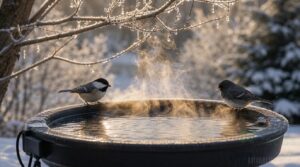
A heated bird bath is probably the most reliable way to keep water open when temperatures drop hard. These bowls come with an integrated heating system built right into the base, so there’s no separate equipment to manage. The temperature-controlled feature activates automatically near freezing, which means you’re not running power all day — just when it’s needed.
Most bowls range from 13 to 20 inches in diameter, giving birds plenty of room to drink and bathe comfortably. You’ll also find BPA-free plastic construction on quality models, along with a non-slip base design that keeps things steady when birds land on the rim. Look for UL certification standards and an auto shutoff feature for added peace of mind outdoors.
Plug-in De-Icers
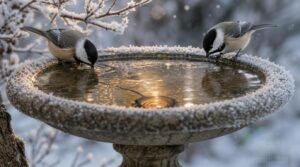
If you already have a bird bath you love, a plug-in de-icer might be all you need. These submersible deicers drop right into your existing basin — no replacement required. Most are thermostatically controlled, switching on around 35°F and shutting off near 45°F, so they only run when the water actually needs it.
- Submersible aluminum models consume around 150 watts and cost just $20–$40
- UL certification confirms the unit meets outdoor safety standards
- Heating element placement inside the water targets ice where it forms first
- Temperature sensor integration prevents overheating and protects your basin
- Overheat protection features shut the electric heater down if water levels drop
Always plug your deicer into a ground fault circuit interrupter outlet, and tuck the power cord along the bath stand to keep it safely out of reach.
Thermostatic Heater Controls
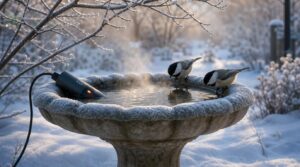
A thermostatic heater control takes the guesswork out of keeping your bird bath open. It watches the water temperature and kicks the heater on only when needed — usually between 0 and 10°C — then shuts off automatically. That means you’re not burning energy all day.
Look for overheat protection and GFCI compatibility to keep the setup safe and efficient.
Safe GFCI Installation
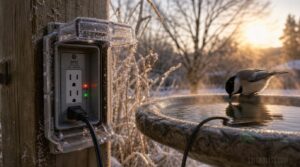
Running electricity outdoors near water demands real respect. Any heater or de-icer you plug in must connect to a GFCI-protected grounded outlet — one rated for wet locations. A GFCI detects tiny current leaks and cuts power within milliseconds, protecting you and the birds.
- Mount a weatherproof outlet rating enclosure above ground
- Test your GFCI monthly using the built-in test button
- Confirm ground fault detection trips and resets correctly
- Use a licensed electrician for panel-level circuit breaker protection
Choosing Proper Wattage
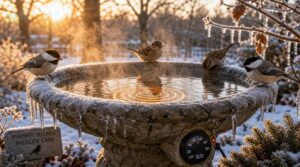
Think of wattage like a coat — too thin and the birds suffer, too heavy and you’re wasting energy. A 1–2 gallon bath needs just 40–60W, while a 3–5 gallon basin works best at 80–100W.
Match your bird bath heater to your bath size, and a thermostat differential control keeps things efficient without running the heater all day.
No-Electricity Freeze Prevention Methods
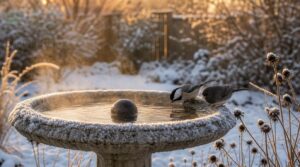
You don’t always need to plug something in to keep water from freezing solid. A few smart, low-effort habits can make a real difference through even the coldest mornings. Here’s what actually works when you skip the extension cord.
Sunny South-Facing Placement
Where you place your bird bath makes a real difference in winter. A south-facing sunny spot catches the most daylight hours, giving the water a natural head start against freezing.
Here’s what good placement does for you:
- Solar heat absorption warms the basin gradually through the day
- Reflected light boost from nearby walls adds extra warmth
- Elevation placement advantage helps catch more winter sunlight
Dark Liners and Rocks
Sunny placement gets you started, but the color of your basin and its lining can quietly do extra work. Dark liners and black rocks absorb solar energy throughout the day, releasing that warmth back into the water when temperatures begin to drop.
It’s a small change with a noticeable payoff on cold but sunny mornings.
Windbreaks Near Shrubs
Wind chill is one of the quietest threats to an open bird bath. Positioning your bath near dense shrubs creates a natural windbreak that cuts convective cooling and slows ice formation noticeably.
For best results, consider:
- Planting evergreen conifers with broadleaf shrubs for year-round wind coverage
- Aligning your shrub belt perpendicular to prevailing winds
- Keeping plantings tight, around 1 to 2 meters apart, to avoid wind tunneling
This sheltered microclimate can raise temperatures around your bath and help retain heat longer into the evening.
Floating Balls for Movement
Shrubs block the wind, but movement keeps the water alive. Floating balls are one of the simplest tools you can add to a bird bath — no power needed, no complicated setup.
A ping pong ball or tennis ball sits on the surface and shifts with every breeze. That gentle motion creates micro-currents that interrupt ice formation before it takes hold.
| Floating Item | How It Helps |
|---|---|
| Ping pong ball | Light, moves easily in the wind |
| Rubber duck | Larger surface disruption |
| Small ball | Works well in compact baths |
Drop one in tonight — it costs almost nothing and works quietly all winter long.
Daily Lukewarm Refills
Every morning, top up your bird bath with lukewarm water — around 30 to 40°C from the tap works well. Aim to fill it to 40 to 60 percent full.
That consistent warm water slows ice formation and keeps birds coming back.
A simple daily refill schedule costs nothing and quietly does more than you’d expect.
Insulation and Water Movement Tricks
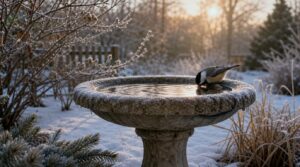
Sometimes the simplest fixes make the biggest difference on a cold winter morning. A little insulation and some gentle water movement can keep your bird bath from turning into a solid block of ice overnight. Here are five easy tricks worth adding to your routine.
Wrap Basin Sides
Think of wrapping your bird bath like putting a winter coat on it. A good insulation layer around the basin sides can cut heat loss by up to 40 percent. Use polyurethane foam wrap — roughly half an inch to one inch thick — for solid results without bulk.
Here’s what makes a wrap worth doing:
- Choose hydrophobic wrap materials so moisture doesn’t soak in and kill the insulation’s performance.
- Add a reflective foil backer to bounce sunlight back toward the water.
- Seal every seam with cold-rated seam tape to block sneaky cold air gaps.
- Extend the wrap 2 inches above the rim to stop heat escaping from the water surface.
- Check weekly for tears — a small gap can undo your work fast.
Thermal R-values between R-3 and R-6 are realistic targets. Non-toxic materials only — birds drink nearby, so that matters.
Add Foam Underneath
Slipping a layer of foam under your bird bath is one of the simplest upgrades you can make.
A closed-cell foam pad acts as a thermal barrier between the basin and whatever cold surface it sits on, slowing heat loss noticeably.
Aim for 3 to 6 millimeters of foam thickness — enough insulation without adding unnecessary bulk.
Use Solar Aerators
A solar aerator is one of the smartest tools you can add to a winter bird bath. It keeps water moving without any wiring or ongoing electricity costs.
Small panels — usually 5 to 20 watts — power a submersible pump that creates gentle circulation, making it much harder for ice to form across the surface.
Try Battery Wigglers
When there’s no sun to power a solar aerator, battery wigglers pick up the slack. These small, battery-powered water agitators create gentle movement that helps prevent water from freezing — no outlet needed.
Place your bird bath wiggler near the center of the basin for the best coverage. AA or AAA batteries usually last several weeks, so you won’t be swapping them out constantly.
Scrape Thin Ice Daily
Each morning, take a minute to scrape thin ice before birds arrive. A flat plastic scraper works perfectly — it removes the overnight layer quickly without scratching the basin.
Morning ice removal is easiest because the ice bonds loosely after a short freeze.
Keep water around two inches deep, and you’ll maintain enough thermal mass to slow overnight refreezing naturally.
Winter Bird Bath Safety Tips
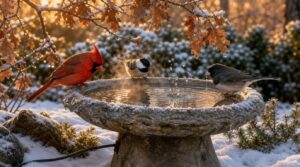
Keeping water open all winter is only half the job — keeping it safe for birds is just as important. A few small mistakes can do more harm than the cold ever would. Here’s what to watch for as you head into the season.
Avoid Salt and Additives
It’s tempting to reach for salt when ice appears, but salt harms birds. Even small amounts can damage their kidneys. Skip sodium chloride, glycerin, and any commercial deicers near the bath.
Instead, try herbal water enhancements — tuck citrus peels or fresh rosemary nearby for a natural draw. Unsalted seed attractants placed close to the bath keep birds coming without any risk.
Never Use Antifreeze
Skipping salt is a good call — but antifreeze is a far more serious danger. Never add antifreeze to your bird bath under any circumstances.
Ethylene glycol, its main ingredient, is highly toxic and can cause kidney failure even in tiny amounts. Its slightly sweet quality makes it especially risky for birds, pets, and children.
Antifreeze is sweetly deceptive — irresistible to birds, pets, and children, yet fatally toxic in even tiny amounts
Skip Boiling Water
Here’s one thing that might seem helpful but actually isn’t — pouring boiling water into your bird bath. It can cause thermal shock, cracking thinner basins over time. It also creates a steam hazard near feeding areas.
Birds naturally drink at ambient water temperature, so lukewarm tap water works just as well and keeps them coming back comfortably.
Clean Water Weekly
Fresh water matters as much as warm water. Make weekly cleaning part of your routine — rinse the basin and scrub it with a distilled vinegar solution to prevent algae and bacteria buildup. This keeps the water safe and helps your bath stay cleaner between refills. Birds notice the difference, and they’ll keep coming back.
- Scrub weekly with a vinegar-water mix
- Rinse thoroughly before refilling
- Check for debris after storms
Store Fragile Baths Indoors
If your bird bath is ceramic, glass, or decorative stone, bring it indoors before the first hard freeze hits. These materials crack easily when water expands inside tiny surface pores. Store it on a padded, stable surface away from heaters and drafts, keeping the room between 18 and 22°C. That simple step protects your bath all winter.
| Care Step | What to Do | Why It Matters |
|---|---|---|
| Placement | Set on non-slip padded tray | Prevents tipping and edge damage |
| Temperature | Keep room at 18–22°C | Reduces thermal expansion stress |
| Humidity | Maintain 30–50% humidity | Stops surface condensation buildup |
| Cleaning | Wipe with mild pH-neutral cleaner | Protects glaze and finish |
| Transport | Use two people to lift | Prevents shattering during moves |
Frequently Asked Questions (FAQs)
How often should I refill my bird bath in winter?
Check your bird bath every morning in winter. For unheated baths, refill every one to two days. With a heater, top it up daily to keep the water level above the heating element.
Can birds drink from partially frozen bird baths?
Yes, birds can drink from partially frozen baths. They sip from thin melt pockets and sun-warmed edges where liquid water lingers. Sparrows and chickadees are especially good at finding these small open spots.
What temperature triggers bird bath water to freeze?
Water freezes at 32°F (0°C). Once air temperature drops to that point, thermal mass retention slows the process — but shallow, still water hits the threshold fast.
Do bird bath fountains use too much electricity?
Most bird bath fountains use very little electricity. A typical pump runs just 2–5 watts. At average rates, that’s under $5 a year — less than a single cup of coffee.
Where should I place my bird bath during winter?
Place your bird bath in a sunny, south-facing spot with wind protection nearby. Keep it on a stable elevated stand, close to feeders and shelter, where you can easily refill it each day.
Which birds visit bird baths in winter?
Several familiar winter bird species stop by regularly. Chickadee bath visits, nuthatch winter drinking, titmouse water needs, and sparrow cold weather sipping all depend on you keeping fresh water available.
How often should heated baths be inspected?
Once a year is your baseline for a heated bird bath inspection. Switch to twice-yearly checks at seasonal transitions if you’re in a freezing climate, and keep a simple maintenance log to track findings.
Can bird baths attract predators during winter?
Yes, they can. Unfrozen water in winter draws more birds — and more birds draw predators. Place your bath near shrubs or low branches so birds can escape quickly if needed.
What landscaping plants support winter bird activity?
The right plants can transform your yard into a winter wildlife haven. Winterberry holly, cotoneaster, and viburnum keep berries available all season. Add coneflowers and sunflowers for seeds, plus evergreen shrubs for shelter and warmth.
Do bird baths need covers during heavy snowfall?
A cover helps a lot. Draping a waterproof tarp over the bath before a storm keeps snow out of the basin, reduces rapid cooling, and makes morning cleanup much easier for you.
Conclusion
Small steps save small lives.
Your bird bath freezing solutions don’t need to be complicated—a well‑placed heater, a dark basin in full sun, or a simple daily refill can keep clean water flowing all winter long.
Birds burn precious energy searching for open water on cold mornings. When your bath stays liquid, you become part of their survival story.
That’s a quiet kind of good worth doing every single season.
- https://blog.mountain-plover.com/2017/02/13/winter-water-solution-heated-birdbaths
- https://featheredguru.com/how-to-keep-bird-baths-from-freezing-in-winter
- https://www.homesandgardens.com/gardens/how-to-stop-a-bird-bath-from-freezing-in-winter
- https://thebackyardnaturalist.com/wordpress/portfolio-items/bird-bath-heaters-deicers