This site is supported by our readers. We may earn a commission, at no cost to you, if you purchase through links.
Most people set up their bird feeder wherever it looks nice and call it a day. Then they wonder why the birds seem nervous, the seeds keep going bad, or worse—they find a stunned bird on the patio.
Placement isn’t just about aesthetics. It’s the difference between a backyard that birds trust and one they avoid. Get it wrong, and you’re basically running a very stressful diner.
Knowing where to place a bird feeder in your yard means thinking like a bird: safe landing zones, clear sightlines, escape routes.
A few smart decisions up front make everything else fall into place.
Table Of Contents
- Key Takeaways
- Why Bird Feeder Placement Matters
- How Far Should a Bird Feeder Be From The House?
- Choosing The Safest Spot in Your Yard
- Step-by-Step Guide to Placing Your Bird Feeder
- Tips for Attracting More Birds Safely
- Frequently Asked Questions (FAQs)
- How far away from a house should a bird feeder be?
- What direction should a bird feeder face?
- Can I place feeders near vegetable gardens?
- Do wind patterns affect bird feeder placement?
- Should feeders be moved during nesting season?
- How close can multiple feeders be together?
- How do I keep feeders from swaying in wind?
- Should feeders face a specific direction or compass point?
- How far apart should multiple feeders be placed?
- Do feeders need shade in hot summer months?
- Conclusion
Key Takeaways
- Keep your feeder either within 3 feet of windows or beyond 30 feet — that middle zone is where birds are most at risk.
- Mount your feeder 5–6 feet off the ground and stay at least 10 feet from dense shrubs so predators can’t use them as a hiding spot.
- Face your feeder east or southeast to catch gentle morning light, which also helps seeds dry faster and slows spoilage.
- Hang multiple feeders at different heights and space them 10–15 feet apart to attract more species without fighting.
Why Bird Feeder Placement Matters
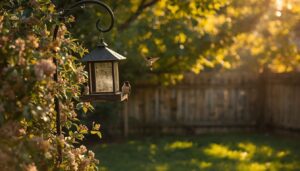
Placement isn’t just about picking a pretty spot — it directly affects whether birds feel safe enough to visit, and whether you actually get to watch them.
A spot near a window with natural cover nearby checks both boxes — and pairing good placement with non-toxic bird food ingredients makes your feeder genuinely hard for birds to resist.
Get it wrong, and you’re basically setting up an empty restaurant. Here’s what’s really at stake.
Impact on Bird Safety and Well-being
Where you put your feeder matters more than most people realize. A bad spot doesn’t just mean fewer birds — it can genuinely hurt them. I’ve watched cardinals bounce off windows and seen cats crouch behind feeders positioned too close to dense shrubs. That’s not a backyard habitat. That’s a trap.
A poorly placed feeder doesn’t just attract fewer birds — it turns your backyard into a trap
Safe placement of bird feeders is really about stacking small, smart decisions:
- Preventing window collisions with birds starts with distance — keep feeders under 3 feet or beyond 30 feet from glass
- Predator avoidance for backyard birds means elevating feeders 5–6 feet up and clearing ambush cover nearby
- Feeder hygiene practices reduce disease risk — clean every two weeks, more often in wet weather
- Stress reduction comes from quiet, stable spots that cut flight fatigue and unnecessary energy expenditure
Done right, your feeder becomes a sanctuary — not a hazard. Nationwide, glass collision statistics show that about a billion birds die each year from striking windows.
Effects on Bird Visibility and Enjoyment
Safety isn’t the only reason placement matters. Where you set up your feeder shapes how much you actually see. High-contrast feeders against a muted background make birds pop — especially during a seasonal plumage display. Morning light angles work in your favor too, lighting up feathers in ways that feel almost cinematic.
A comfortable viewing perch inside, clear sightlines outside — that’s when birdwatching stops being a hobby and starts feeling like a ritual.
Influence on Attracting Diverse Species
Placement also decides who shows up. Hang feeders at different heights—you’re basically setting a table for everyone. Finches work the mid-levels, doves stick low, and woodpeckers hug the trunk. Vertical feeding layer approach, paired with seed mix diversity, pulls in far more visitors.
Adding native shrubs for edge habitat integration suddenly you’ve got a yard worth watching.
How Far Should a Bird Feeder Be From The House?
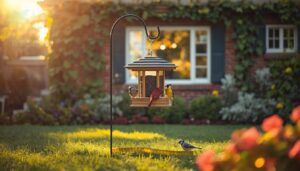
Distance from the house is one of those details that looks simple but makes a real difference for the birds visiting your yard. Get it wrong, and you’re either watching collisions happen or trudging across the lawn every time the feeder runs empty.
Nail the placement, and you’re well on your way to building the kind of welcoming setup covered in this backyard bird feeding guide for beginners.
Here’s what actually works.
Preventing Window Collisions
Windows are silent killers for backyard birds — over a billion die annually from strikes in the US alone. The fix isn’t complicated, but timing and placement matter. Migration seasons spike collision risk, so act before spring and fall hit.
Here’s what actually works for preventing window collisions for backyard birds:
- Place feeders within three feet of windows to cut impact speed
- Apply UV window films, invisible to us but readable by birds
- Space exterior decals no more than 2 inches apart — decal spacing is everything
- Use exterior shading like louvers to break up reflective glare
- Plant a vegetation buffer 10–30 feet out to help birds spot the glass earlier
Optimal Distances for Bird Safety
Distance is your best defense. Keep feeders either within three feet of windows or beyond 30 feet — anything between those marks is the danger zone for preventing window collisions.
For ideal feeder height recommendations, aim for 5–6 feet off the ground.
Factor in your feeder spacing distance, ground clearance buffer, squirrel launch clearance, seed spill radius, and fence proximity gap to keep every visit stress-free.
Accessibility for Refilling and Maintenance
Let’s be honest — if refilling feels like a chore, you’ll skip it. Keep your feeder within easy reach, ideally with these three things in mind:
- Choose a Top Filling Port with a Fill Level Indicator so you never overfill
- Use Quick Release Latches and Adjustable Height settings for stress-free weekly cleaning
- Look for Tactile Labels to simplify your maintenance schedule
Consistent, easy-to-refill setups keep birds coming back.
Choosing The Safest Spot in Your Yard

Finding the right spot in your yard takes a little more thought than just picking a pretty corner. Birds are picky — they want to feel safe, not exposed.
Here’s what to focus on when you’re scouting your space.
Proximity to Natural Shelter
Think of trees and dense shrubs as your birds’ security blanket. Aim for a shrub buffer zone of 10–15 feet between your feeder and nearby cover — close enough that a Chickadee can bolt to safety when a hawk swoops in, but far enough to avoid ambush spots.
An evergreen hedge shield or canopy proximity from native plants creates a sheltered microclimate birds genuinely love, boosting visits noticeably.
Avoiding Predator Hideouts
Cats and hawks treat dense shrubs near feeders like a free buffet with a blindfold on — and you’re the one setting the table. Good predator protection starts with sightline clearance and ground cover trimming around your setup. Here’s what actually works:
- Stay 10+ feet from thick bushes to eliminate ambush danger zones
- Do regular feed spillage cleanup to avoid luring predators in
- Mount barrier baffles and predator guards on poles
Seasonal predator monitoring keeps your yard safe year-round.
Height and Stability Considerations
Getting feeder height right is half the battle. Mount yours 5 to 6 feet up — that’s the sweet spot, frustrating ground predators without forcing you onto a ladder every refill day.
Solid pole base design matters more than most people realize; a wobbly setup in wind or under snow load capacity stress is an accident waiting to happen.
Use anti-rust mountings, check bolts quarterly, and your feeder placement guidelines will basically run themselves.
Step-by-Step Guide to Placing Your Bird Feeder
Now that you’ve picked a safe spot, it’s time to actually set things up the right way.
A few simple checks before you hang anything can make a real difference in how many birds show up — and how long they stick around.
Here’s what to walk through, one step at a time.
Assessing Sunlight and Shade

Sunlight plays a more critical role in bird feeder placement than many realize. A solid strategy begins with shade mapping your yard—morning sun helps keep seeds fresh, while harsh afternoon heat accelerates spoilage.
Seasonal sun angles also shift, meaning a placement that works in July might leave your feeder exposed to harsh heat by August.
- Aim for spots with 3–6 hours of sun, avoiding peak afternoon exposure
- Use Temperature Effects and Light Heat Balance to protect seed quality
- Revisit Sun Duration patterns each season as shade shifts with foliage changes
Ensuring Clear Flight Paths
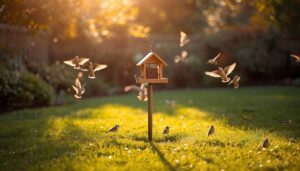
Once you’ve sorted out the sunlight, it’s time to think about airspace — and this part trips people up more than you’d expect. Birds don’t fly in straight lines when they’re nervous. They weave, break hard, and sometimes bolt straight into glass. That’s bird collision prevention 101, and it starts with open spaces around your feeder.
Keep clear approach corridors on multiple sides so birds can land and leave without dodging obstacles. Wide flight zones — at least 10 feet from branches, wires, or hanging décor — make obstacle-free landing much easier. For window strike prevention, stay out of the danger zone: anything between 3 and 30 feet from glass is risky. Balanced escape space and unobstructed perches give birds both visibility and safety every single visit.
Positioning for Easy Viewing and Cleaning
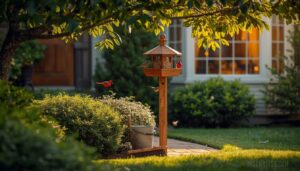
Once your flight path is clear, it’s time to ensure you can enjoy and care for your setup. Position feeders at 5–6 feet for ideal height and placement—an easy reach without a step stool. Choose a spot with an unobstructed view from your favorite window; prioritize lighting to avoid glare. Balancing visibility for birdwatchers and safety for birds hinges on simple choices:
- Feeder visibility — face it toward your main viewing window
- Maintenance space — leave a clear 3-foot path for bucket-and-brush access
- Stable installation — level ground prevents wobbling during cleaning
- Shade placement — partial shade maintains cleanliness by slowing seed spoilage
Tips for Attracting More Birds Safely
Getting birds to actually show up takes more than just hanging a feeder and hoping for the best.
A few small tweaks — from what you’re offering to how you set things up through the seasons — can make a real difference.
Here’s what works.
Using Multiple Feeder Types and Foods
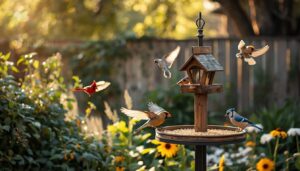
Think of your yard as a little diner with different menu stations — that’s the heart of a smart Feeder Diversity Strategy. Hang tube feeders high for finches craving nyjer, set up a platform tray for cardinals and jays who prefer sunflower or cracked corn, and mount a suet cage for woodpeckers.
Keep separate nectar stations away from seed feeders so hummingbirds aren’t competing with everybody else.
This Vertical Feeding Layers approach, combined with Seasonal Seed Rotation and thoughtful Specialty Food Pairings, fills your yard with multiple bird feeders targeting specific species.
The result? Less fighting, more birds, more fun.
Providing Water Sources Nearby
Once your feeders are stocked with the right foods, add water — birds need both. Ensure shallow water dishes are placed 15–20 feet from feeders to create a true bird-friendly oasis without crowding the feeding zone.
Incorporate moving water features, like a small dripper or fountain, to attract birds quickly. Change water every one to two days as part of your cleanliness routine.
Strategic water placement transforms your yard into a backyard birds’ favorite stop.
Seasonal Placement Adjustments
Your yard changes with every season — and your feeder placement should too.
Here’s how to make simple seasonal adjustments to feeder locations that keep birds safe and well-fed:
- Spring canopy placement and fall-foliage clearance — Move feeders near trees in spring for cover, then clear dense brush in fall for better visibility for migration timing shifts.
- Summer-heat shelter — Shift to shaded spots so seed stays fresh longer.
- Winter-warmth placement — Face feeders toward the sun to melt ice naturally.
Frequently Asked Questions (FAQs)
How far away from a house should a bird feeder be?
Keep it within 3 feet of windows or push beyond 30 feet — the middle ground is where birds get hurt. A 10-foot safety buffer zone from walls works well for most yards.
What direction should a bird feeder face?
Face your feeder east or southeast. That eastward angle brings gentle morning light, facilitates glare reduction, and helps with heat control through the afternoon.
This simple feeder placement strategy quietly improves bird safety every day.
Can I place feeders near vegetable gardens?
Position 10 to 15 feet from vegetable beds when placing feeders. This distance prevents seed spillage, crop contamination, and pest attraction.
Maintain this spacing to allow birds to provide beneficial insect support nearby while safeguarding your crops.
Do wind patterns affect bird feeder placement?
Wind absolutely affects where your feeder works best. Strong gusts scatter seed, spook shy birds, and topple poorly mounted feeders.
Leeward placement behind windbreak vegetation keeps feeding zones calm, stable, and way more inviting.
Should feeders be moved during nesting season?
Moving a feeder mid-nesting season is like rerouting a delivery driver mid-shift — parent birds rely on parental feeding continuity.
Disrupting that routine risks nest disturbance, predator exposure shift, and real breeding success impact.
How close can multiple feeders be together?
Keep feeders 10 feet apart as a starting rule. That distance reduces competition, slows disease spread, and gives each species room to settle in without constantly chasing off neighbors.
How do I keep feeders from swaying in wind?
A weighted base, rigid brackets, and ground anchors stop most sway. Windbreak placement near dense shrubs or trees cuts gusts naturally. Balanced load and metal construction do the rest.
Should feeders face a specific direction or compass point?
East‑Facing Benefits make it the top pick — morning sun dries seeds fast. North‑Facing Coolness suits hot yards.
Skip south or west; South‑Facing Heat and West‑Facing Drawbacks spoil seed quickly.
How far apart should multiple feeders be placed?
Think of it as giving each bird its own little territory. Space feeders 10 to 15 feet apart to ease aggression mitigation and create natural foraging zones without crowding.
Do feeders need shade in hot summer months?
Shade genuinely helps in summer. It slows seed mold growth, aids nectar sweetness retention, and prevents material warping.
Morning sun with afternoon shade hits the sweet spot for seed preservation and heat stress mitigation.
Conclusion
Picture your yard as a quiet refuge—a place where wings catch the morning light and nervous eyes finally relax. That transformation starts with one good decision: knowing where to place a bird feeder in your yard.
A few feet in the right direction means the difference between birds that linger and birds that bolt. Get the placement right, and you’re not just feeding wildlife—you’re earning their trust, one visit at a time.
- https://wildwoodoutdoorliving.com/news/top-5-bird-feeding-mistakes/
- https://www.adn.com/alaska-life/gardening/2023/11/02/place-bird-feeders-very-close-to-windows-and-other-best-practices/
- https://www.allaboutbirds.org/news/how-to-clean-your-bird-feeder/
- https://www.youtube.com/birdwatchinghq
- https://www.birdsandblooms.com/birding/attracting-birds/feeding-birds/bird-feeding-tips-feeder-placement/?srsltid=AfmBOoo7Keb-LpViwOlfA0Ue2l5222AmqZo2GLxGnVcexBV0ZtMYnPUR