This site is supported by our readers. We may earn a commission, at no cost to you, if you purchase through links.
A backyard bird feeder teaches kids more than you’d expect. Watch a child sit still for ten minutes—completely absorbed—as a goldfinch discovers fresh nyjer seed for the first time. That kind of quiet wonder is rare, and a feeder placed at the right window height makes it happen again and again.
Bird feeders for kids do double duty. They spark genuine curiosity about nature while sneaking in real science: why certain beaks crack seeds, what birds need to survive winter, how different species share the same small space.
The nine picks ahead—plus five DIY builds any kid can make—cover every budget, skill level, and backyard.
Table Of Contents
- Key Takeaways
- Best Bird Feeders for Kids: Top 9
- 1. Kaytee Nut Fruit Bird Seed
- 2. Natural Bamboo BBQ Skewers
- 3. Wagner’s Deluxe Sunflower Safflower Bird Food
- 4. Karlash jumbo birch wood craft sticks
- 5. Natural Jute Twine String Roll
- 6. Elmer’s White Washable School Glue
- 7. Backpack Explorer Bird Watch Activity Book
- 8. Bird Watching Guide for Kids
- 9. Growth Mindset Robin Bird Book
- Kid-Friendly DIY Bird Feeder Ideas
- Safe Materials for Children’s Feeders
- Educational Bird Watching Benefits
- Placement and Feeding Tips
- Frequently Asked Questions (FAQs)
- How often should we refill bird feeders?
- What birds visit feeders in our region?
- Can squirrels damage homemade bird feeders?
- Do bird feeders spread diseases among birds?
- When is the best time to start feeding birds?
- How do birds find feeders in my yard?
- Can bird feeders attract unwanted pests inside?
- What birds visit feeders during summer months?
- How often should kids refill bird feeders?
- Do bird feeders help endangered bird species?
- Conclusion
Key Takeaways
- A bird feeder placed at the right window height (32–36 inches) gives kids a front-row seat to nature and sparks genuine scientific curiosity about beaks, seeds, and bird behavior.
- Simple DIY feeders made from pinecones, toilet paper rolls, or orange peels cost almost nothing and turn recycled materials into hands-on learning projects any child can build.
- Choosing the right seed matters — safflower discourages squirrels, nyjer attracts goldfinches, and high-energy mixes like sunflower and peanuts keep birds coming back all winter.
- Bird watching naturally grows into bigger life skills — journaling sightings, recognizing bird songs, and tracking seed preferences quietly builds observation, patience, and conservation awareness in kids.
Best Bird Feeders for Kids: Top 9
You don’t need to buy a fancy bird feeder to get started — the right supplies make all the difference. These nine picks give kids everything they need to build, watch, and learn. Let’s look at what made our list!
Whether you’re just starting out or expanding your setup, this roundup of bird care food and feeder supplies has you covered for every feathered friend in your life.
1. Kaytee Nut Fruit Bird Seed
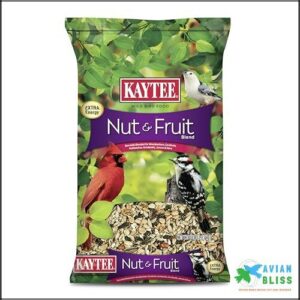
Kaytee Nut & Fruit Bird Seed is a great starting point for any backyard bird project. This cherry-infused mix packs sunflower seeds, peanuts, raisins, and real fruit pieces into every scoop. That variety is what pulls in cardinals, chickadees, and woodpeckers — all at once!
Birds need to eat ¼ to ½ of their body weight daily, so this high-energy mix really helps. Just know it refills fast — popular feeders go quickly!
| Best For | Backyard bird enthusiasts who want to attract a wide variety of songbirds — especially cardinals, woodpeckers, and chickadees — and enjoy watching frequent, lively feeder activity year-round. |
|---|---|
| Primary Use | Bird Feeding |
| Material | Seed & Nut Mix |
| Child Safety | Safe for all ages |
| Setting | Outdoor |
| Size / Quantity | 5 lb bag |
| Reusability | Consumable |
| Additional Features |
|
- Cherry-infused blend of sunflower seeds, peanuts, nuts, raisins, and fruit pieces attracts a diverse range of species all at once
- High-energy formulation supports sustained feeding activity, meaning birds stick around longer
- Works great for camera feeder setups and year-round backyard bird watching
- Likely to attract squirrels, chipmunks, and deer, so extra feeder protection may be needed
- Pricier than basic seed mixes, which can add up over time
- Popular with birds means it gets consumed quickly and needs frequent refilling
2. Natural Bamboo BBQ Skewers
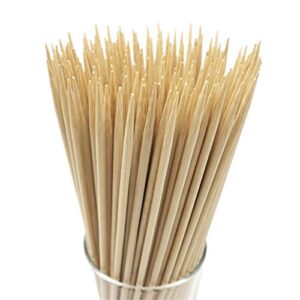
Once you’ve sorted the seed, you need something to hold it all together. Natural bamboo skewers are a surprisingly useful craft tool for bird feeder projects. They’re sturdy, splinter-resistant, and completely food-safe — no chemicals, no coatings.
The 4mm thickness means they won’t snap when kids thread fruit slices or seed-coated treats onto them. Just soak them briefly before any heat exposure, and keep those pointed tips away from little hands.
| Best For | Families, outdoor grillers, and craft enthusiasts who need a sturdy, natural skewer for everything from backyard kebabs to bird feeder projects with kids. |
|---|---|
| Primary Use | Grilling & Crafts |
| Material | Bamboo |
| Child Safety | Adult supervision advised |
| Setting | Indoor & Outdoor |
| Size / Quantity | 6-inch, multi-pack |
| Reusability | Single-use |
| Additional Features |
|
- Thick 4mm construction holds up to heavy foods without snapping
- Fully polished and splinter-resistant, making them safe and comfortable to handle
- Versatile enough for grilling, air frying, parties, and creative DIY projects
- Need to soak in water before grilling to avoid burning
- Sharp tips require extra caution around young children
- Some users report inconsistent sizing or counts between batches
3. Wagner’s Deluxe Sunflower Safflower Bird Food
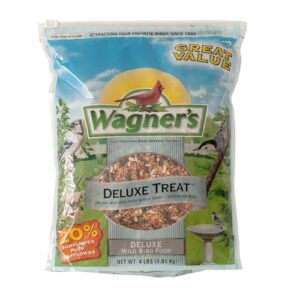
Now that you’ve got the structure covered, you need something worth filling it with. Wagner’s Deluxe mix combines black oil sunflower and safflower seeds — a mix that draws in cardinals, chickadees, nuthatches, and jays.
The safflower content is a quiet win. Squirrels tend to skip it, so your kids get more birds and fewer unwanted guests. It works in tube, hopper, or platform feeders. And since it’s made in the USA, you know exactly what you’re putting out.
| Best For | Backyard bird enthusiasts who want to attract a wide variety of songbirds with a quality, versatile seed mix. |
|---|---|
| Primary Use | Bird Feeding |
| Material | Seed Blend |
| Child Safety | Safe for all ages |
| Setting | Outdoor |
| Size / Quantity | 4 lb bag |
| Reusability | Consumable |
| Additional Features |
|
- Attracts a great mix of popular songbirds like cardinals, chickadees, nuthatches, and jays
- Works with tube, hopper, and platform feeders — no need for a specific setup
- Made in the USA with an allergen-free formula safe for all bird life stages
- Squirrels may still be drawn to the feeder despite the safflower content
- Popular with birds means you’ll likely be refilling it more often than cheaper mixes
- The price per pound runs higher than budget seed options
4. Karlash jumbo birch wood craft sticks
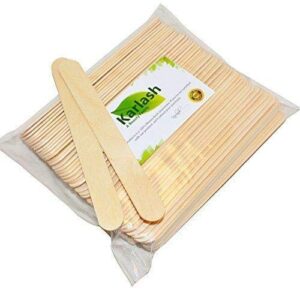
Birch wood sticks open up a whole new world of feeder building. These Karlash jumbo craft sticks are 6 inches long, smooth, and safe for kids to handle — no splinters, no sharp edges.
Your kids can stack and glue them into simple platform feeders. The untreated birch takes paint and glue without any prep. 100 sticks per pack means plenty of room for mistakes and experiments.
| Best For | Parents, teachers, and camp counselors looking for a safe, versatile craft supply for kids’ projects, from bird feeders to puppets and beyond. |
|---|---|
| Primary Use | Crafts & Projects |
| Material | Birch Wood |
| Child Safety | Safe for children |
| Setting | Indoor |
| Size / Quantity | 100-count, 6-inch |
| Reusability | Single-use |
| Additional Features |
|
- Smooth, splinter-free birch wood that’s safe and easy for kids to handle
- Untreated surface takes paint and glue well — no prep needed
- 100 sticks per pack gives plenty of material for group projects or trial and error
- At just 0.01 inches thick, they’re quite delicate and can snap under pressure
- Not suited for anything structural or heavy-duty
- Jumbo size may be too large for smaller-scale or detail-oriented craft work
5. Natural Jute Twine String Roll
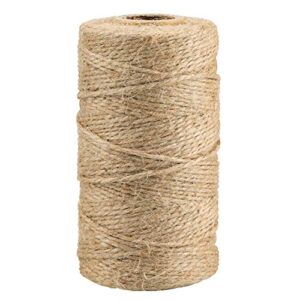
Every bird feeder needs something to hang it up! That’s where natural jute twine comes in.
Jute twine is a go-to choice for these projects because it’s sturdy, biodegradable, and pairs perfectly with the natural suet bird feeder ideas that make the best use of simple, eco-friendly materials.
This KINGLAKE roll gives you 656 feet of jute — more than enough for dozens of feeders. It’s made from 100% plant fibre, so it’s safe and eco-friendly. Kids can tie it easily, and it grips tight without slipping.
Best of all, it breaks down naturally outdoors. No plastic waste, just a simple, kid-safe hanging solution your whole family can feel good about.
| Best For | Families, crafters, and gardeners looking for an affordable, eco-friendly twine for light tasks like hanging bird feeders, macrame, or supporting garden plants. |
|---|---|
| Primary Use | Crafts & Gardening |
| Material | Natural Jute |
| Child Safety | Safe for all ages |
| Setting | Indoor & Outdoor |
| Size / Quantity | 656 feet |
| Reusability | Reusable |
| Additional Features |
|
- 656 feet of twine gives you plenty to work with across dozens of projects
- Made from 100% natural jute — biodegradable, plastic-free, and kid-safe
- Grips well when tied, making it easy to use for hanging and crafting
- Light-duty only — not strong enough for heavy loads or thick branches
- Thin profile can snap if pulled too tight or rubbed against sharp edges
- May not hold up well in wet conditions over extended periods
6. Elmer’s White Washable School Glue
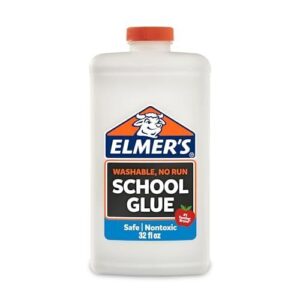
Sticky crafts need the right glue — and Elmer’s delivers every time.
This washable school glue is non-toxic and ACMI certified safe for kids. It bonds paper, wood, fabric, and ceramics without harsh chemicals. White before it dries, it goes clear once set, so your feeder looks clean and polished.
The no-run formula stays put while little hands work, and any mess wipes off skin or fabric easily. Simple, safe, and reliable!
| Best For | Kids, teachers, and DIY crafters who need a safe, easy-to-use glue for school projects, slime-making, and everyday arts and crafts. |
|---|---|
| Primary Use | Arts & Crafts |
| Material | Liquid Adhesive |
| Child Safety | Non-toxic, child-safe |
| Setting | Indoor |
| Size / Quantity | 32 fl oz |
| Reusability | Consumable |
| Additional Features |
|
- Non-toxic and washable, making it worry-free for children and easy to clean up from skin or fabric
- Dries completely clear for a polished, professional-looking finish on any project
- Versatile enough to bond paper, wood, fabric, and ceramics, plus works great as a slime base or paper mache medium
- The cap can be prone to looseness, which may lead to leaks or drying out if not stored carefully
- The liquid consistency, while smooth, can make dispensing messy if you’re not cautious
- Not ideal for heavy-duty bonding needs where a stronger, permanent adhesive would be required
7. Backpack Explorer Bird Watch Activity Book

Once your feeder is built, the learning doesn’t have to stop there. The Backpack Explorer Bird Watch Book turns backyard watching into a real adventure. It comes with 12 interactive field guides, 50 stickers, a pull-out journal, and an actual magnifying glass — everything a young birder needs.
Kids aged 4 to 8 can track sightings, complete scavenger hunts, and learn why different beaks suit different diets. It fits right inside a backpack, ready for any outdoor trip.
| Best For | Kids ages 4–8 who love being outdoors and are just starting to discover the world of birds. |
|---|---|
| Primary Use | Bird Education |
| Material | Paper Book |
| Child Safety | Safe ages 4+ |
| Setting | Indoor & Outdoor |
| Size / Quantity | 48 pages |
| Reusability | Reusable |
| Additional Features |
|
- Packed with hands-on features — stickers, a real magnifying glass, a pull-out journal, and 12 field guides — so there’s always something to do
- Compact enough to toss in a backpack and take anywhere, from the backyard to a nature trail
- Covers real bird science (anatomy, habitats, migration) in a way that’s fun and accessible for early readers
- At only 48 pages, older or more advanced kids might outgrow it quickly
- The stickers and magnifying glass are part of the experience, so the book loses some appeal once those are used up
- Very young kids (under 4) may find the content a bit much without a lot of adult guidance
8. Bird Watching Guide for Kids
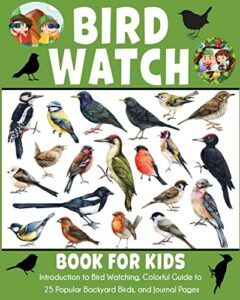
Ready to take bird watching a step further? The Bird Watching Guide for Kids covers 25 popular North American backyard birds with full-color photos, detailed profiles, and field notebook pages for sketching and tracking. It’s designed for ages 8–12, making it a perfect fit for curious young naturalists.
Kids can use the checklists during hikes, camping trips, or just in the backyard. It even works with homeschool science curricula and Scout programs — genuinely useful beyond the feeder.
| Best For | Kids ages 8–12 who love the outdoors and want a hands-on introduction to birdwatching, whether at home, on hikes, or during Scout activities. |
|---|---|
| Primary Use | Bird Education |
| Material | Paper Book |
| Child Safety | Safe ages 8+ |
| Setting | Indoor & Outdoor |
| Size / Quantity | 65 pages |
| Reusability | Reusable |
| Additional Features |
|
- Full-color photos and detailed profiles make identifying 25 common backyard birds easy and engaging
- Built-in journal and checklist pages turn every outing into an interactive activity
- Versatile enough for homeschool science units, camping trips, and Scout achievement programs
- Only covers 25 North American backyard species, so kids looking for broader coverage may outgrow it quickly
- Notable gaps in coverage — bird types like cuckoos aren’t included
- At 65 pages, some buyers may find the price-to-content ratio a stretch
9. Growth Mindset Robin Bird Book

Bird watching becomes so much richer when it connects to growth and courage. This sweet picture book follows a young robin’s first flight, using rhyming text and watercolor illustrations to show kids that trying — even when it’s scary — matters most.
It’s perfect for ages 3–8, and teachers love it for pre-K and autism classrooms. The end pages give kids concrete birdwatching challenges that bring the growth mindset message right into your backyard.
| Best For | Young children ages 3–8, especially those in pre-K or autism classrooms, who benefit from gentle storytelling that builds courage and curiosity about the natural world. |
|---|---|
| Primary Use | Bird Education |
| Material | Paper Book |
| Child Safety | Safe ages 3+ |
| Setting | Indoor |
| Size / Quantity | 32 pages |
| Reusability | Reusable |
| Additional Features |
|
- Combines a sweet, rhyming story with real educational value — kids pick up robin facts and growth mindset lessons without it ever feeling like a lesson
- Watercolor illustrations make emotions feel relatable, helping children connect the robin’s first flight to their own scary-but-exciting milestones
- Comes with hands-on birdwatching activities and discussion prompts, so the learning naturally extends beyond the book
- Focuses entirely on robins, so it won’t scratch the itch for kids interested in a wider variety of birds or animals
- At 32 pages, it’s a quick read — families looking for a longer, more detailed nature story may want to pair it with additional books
- Physical condition can vary by seller, so it’s worth ordering from a reliable retailer if you’re giving it as a gift
Kid-Friendly DIY Bird Feeder Ideas
Making a bird feeder at home is easier than you think — and kids absolutely love it. You don’t need fancy supplies, just a few simple materials you probably already have. Here are five fun DIY feeders your family can make together this weekend.
Pinecone Seed Feeders
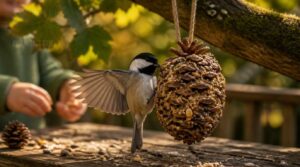
Nature hands you the perfect craft supply right off the ground! Pinecone bird feeder crafts for kids start with one simple find. Roll your pinecone in peanut butter, then coat it in birdseed — sunflower, millet, or cracked corn all work great. You can use the Merlin ID app to identify the different species that visit.
- Watch chickadees grip the textured surface
- Refill every few days during cold weeks
- Let kids pick their own mix
Hang it up and enjoy!
Toilet Paper Roll Feeders
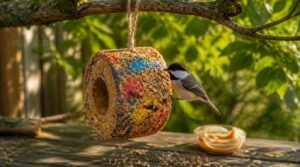
What a simple swap from the pinecone feeder! Grab a toilet paper roll, spread peanut butter around the outside, then roll it through birdseed until fully coated. Thread natural jute twine through both ends and hang it up.
Kids can decorate the tube with washable paint before coating — a quick, cheerful recycled craft with zero waste.
Recycled Carton Feeders
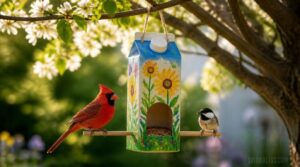
Milk cartons make surprisingly sturdy feeders! Strengthen the corners with folded carton tabs, poke in a wooden dowel for a perch, and cut a small opening for birds.
The plastic and paper layers resist moisture, keeping seed dry longer. Use water-based glue to seal edges — safe for kids, easy to clean.
Orange Peel Feeders
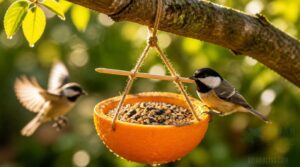
Orange peels take recycling one step further — they’re the feeder! Hollow out a half, cross two wooden skewers through the top, and tie twine to hang it from a branch. Fill it with mixed seeds like sunflower and millet.
The peel is fully compostable when done, so cleanup is as easy as tossing it in the garden.
Canning Lid Feeders
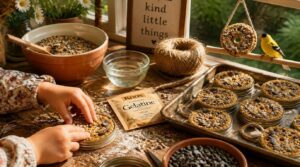
From orange peels to something even sturdier — canning lid feeders are a fun recycled craft.
Mix 3½ cups of birdseed with flour, a gelatin packet, and half a cup of water, then press the mixture firmly into a greased lid. Bake, cool, and hang with twine. Kids love decorating the edges before it sets!
Safe Materials for Children’s Feeders

For kids and crafts, the materials you choose matter just as much as the project itself. The good news is that safe, bird-friendly options are easier to find than you might think. Here are the best materials to keep your little builders safe and happy.
Non-toxic Washable Glue
Water-based glue is your safest pick for bird feeder crafts. Look for ACMI non-toxic certification — it means the formula is solvent-free and kid-tested. Elmer’s Washable School Glue checks every box:
- Polymer-based, skin-friendly adhesive
- Rinses off hands with soap and water
- Bonds paper, cardboard, and craft sticks well
- Mild scent, zero harsh fumes
Perfect for any DIY recycled nature craft!
BPA-free Recycled Plastics
Plastic containers are perfect for upcycled feeders — but check the label first. BPA-free recycled plastics go through migration testing to confirm no chemicals transfer to food or little hands. Look for third-party safety certifications on any plastic you reuse.
Recycled HDPE and PET are great choices. They support a circular economy and keep your feeder craft safe and eco-friendly!
Smooth Wooden Craft Sticks
Craft sticks and popsicle sticks are a go-to for DIY bird feeders. Birch is the top pick — it’s strong, smooth, and takes paint beautifully. That means your kids get clean, streak-free colors every time.
The splinter-free surface keeps little hands safe during STEM building projects. No sanding needed!
Rounded Edges and Fasteners
Sharp edges are the hidden hazard in DIY bird feeder crafts for kids. Rounded edges of 1–3mm keep little fingers safe during building and refilling.
Look for these three features:
- Smooth, rounded fastener heads to prevent snagging
- Chamfered entry angles on holes for easy assembly
- Corner fillets to strengthen joints and reduce stress
Safe design makes crafting with kids worry-free!
Weather-safe Hanging Twine
The twine holding your feeder matters more than you’d think. Choose UV-stabilized polypropylene or polyester twine — it resists sun, rain, and freezing temperatures down to -20°C without snapping. Natural jute rots quickly outdoors, so skip it.
For heavier DIY bird feeders, double your strand to boost strength. A simple bowline knot keeps things secure and easy to untie.
Educational Bird Watching Benefits
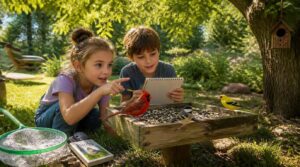
Building a feeder is just the beginning of the adventure. Once birds start visiting, kids naturally want to know more — what kind of bird is that, why does it like those seeds, what does it sound like? Here are some of the best ways bird watching turns into a real learning experience for children.
Backyard Bird Identification
Once your feeder is up, the real fun begins — figuring out who’s visiting!
Start by checking beak shape: thick, conical bills mean seed-eaters like cardinals, while slender bills belong to insect hunters. Watch flight patterns too — some birds dip and bob, others fly straight. Colors, wing bars, and tail shapes each tell a story worth learning.
Observation Journals for Kids
Once you know who’s visiting, write it down! A simple journal helps kids record the date, time, weather, and species spotted each day.
Try these journal basics:
- Sketch the bird and label its colors
- Note the weather and time of day
- List behaviors like feeding or preening
- Add new bird names to a vocabulary page
- Set a weekly "new bird" challenge
Sketching and labeling builds memory fast!
Bird Songs and Calls
After journaling who visits, try listening! Birds don’t just look different — they sound different too.
A tiny organ called the syrinx lets birds sing complex melodies. Males use these songs to attract mates, while short alarm calls warn the flock of danger nearby.
Help kids download a free bird song app. Matching a sound to a bird feels like cracking a secret code!
Seed Preference Learning
Birds have favorites, just like kids do! Watching which seeds disappear fastest teaches children to predict bird tastes naturally. Nyjer attracts goldfinches, while cardinals love black-oil sunflower seed. Try color-coded compartments to make analyzing preference signals visual and fun.
Over time, kids build their own adaptive feeding model — adjusting what they offer based on who keeps showing up!
Nature Conservation Lessons
Learning which seeds birds love is just the start. Every feeder your child builds connects them to something bigger — wildlife conservation starts in your own backyard.
Every backyard bird feeder is a child’s first lesson in wildlife conservation
- Kids learn how native species support local food webs
- They discover why healthy habitats matter for birds
- Simple wildlife surveys build real observation skills
- Children see how their choices protect ecosystems
- Feeders spark lifelong nature-based learning habits
Placement and Feeding Tips
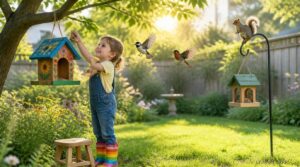
Building the feeder is just the beginning — where you put it makes all the difference. A few smart placement choices can mean more bird visits, less squirrel drama, and easier refills for little hands. Here’s what to keep in mind before you hang it up.
Window-height Viewing Spots
The sweet spot for kids is 32 to 36 inches from the floor — low enough to see clearly without standing on tiptoes. A small window seat at 16 to 22 inches high gives toddlers a perfect line of sight.
Place your DIY bird feeder just outside that window. Your child can watch, sketch, and attract birds without ever leaving their seat!
Squirrel-resistant Hanging Locations
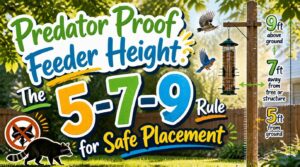
Squirrels are surprisingly athletic — they can leap ten feet horizontally from a branch or rooftop!
- Hang feeders four feet off the ground
- Stay ten feet from trees or fences
- Use a smooth, slippery pole they can’t grip
- Add a dome-shaped baffle below the feeder
Check your setup each season — branches grow and shrink launch distances!
Winter Feeding Support
Winter is tough on birds — they burn extra energy just staying warm. Keep feeders filled with high-energy suet or peanut butter mixes so birds always have fuel on cold days. Consistent feeding really matters; if food disappears too often, birds won’t come back.
Place feeders in sheltered, wind-free spots, and offer an unfrozen water source nearby too.
Easy Refill Designs
The best bird feeder DIY projects keep refilling simple. Look for snap-in cartridges and magnetic couplings — kids can reload with one hand, no tools needed. Spill-resistant gaskets catch stray birdseed before it hits the ground.
Color-coded pods make it easy to match the right seed to the right feeder every time!
Regular Feeder Cleaning
A clean feeder is a safe feeder. Rinse yours at least once a week during busy seasons, and right away if you spot mold.
Mix one part bleach to nine parts water to sanitize, then rinse well. Use an old toothbrush to scrub tight spots. Let everything air dry completely before refilling — damp seed spoils fast and can make birds sick.
Frequently Asked Questions (FAQs)
How often should we refill bird feeders?
Refill every 2–3 days in winter when birds need extra energy. In summer, every 4–6 days works. Watch your feeder — if it empties fast, birds are hungry and need more!
What birds visit feeders in our region?
Common backyard visitors in Saxony include great tits, blue tits, chaffinches, and house sparrows. Robins and blackbirds forage near feeders too. In winter, look for fieldfares and siskins passing through!
Can squirrels damage homemade bird feeders?
Yes, squirrels can damage homemade feeders. They gnaw through plastic and wood, spill seeds, and break seals. Place feeders 10 feet from trees and use metal parts where you can!
Do bird feeders spread diseases among birds?
Bird feeders can spread disease. When birds cluster together, bacteria like Salmonella and fungi travel through shared surfaces and droppings. Damp, dirty feeders are the biggest risk. A weekly soap-and-water scrub fixes that fast.
When is the best time to start feeding birds?
Early morning is the best time to start feeding birds. Just before dawn, birds begin foraging after a night without food. Consistency matters — fill your feeder at the same time each day!
How do birds find feeders in my yard?
Like tiny scouts on patrol, birds use bright colors and movement to spot feeders fast. They follow familiar flight paths, watch other birds feed, and return to spots where food is easy to find.
Can bird feeders attract unwanted pests inside?
Feeders can attract rodents and insects when birdseed spills beneath them. Clean up debris daily and use anti-spillage trays to keep pests away. Smart placement and tidy habits make backyard wildlife watching safe and fun!
What birds visit feeders during summer months?
Summer brings a colorful rush of backyard wildlife to your feeders. Hummingbirds seek nectar, goldfinches love nyjer seed, and woodpeckers want suet. Juvenile birds tag along with parents, making it a great time for bird watching!
How often should kids refill bird feeders?
Check feeders every 2–3 days in winter. In summer, every 4–6 days works. After rain, always check for mold. Kids can track refills on a simple calendar!
Do bird feeders help endangered bird species?
Yes, bird feeders can help endangered species. They provide critical energy reserves for migratory birds and habitat specialists. Proper care reduces disease transmission risks. Even so, invasive species may compete for food.
Conclusion
Something magical is about to happen in your backyard. Maybe tomorrow, maybe next week—but the moment a child presses their face against the glass, breath fogging up, watching their first cardinal land on a feeder they built? That’s unforgettable.
Bird feeders for kids do more than attract birds. They grow curious, patient observers who see the world differently. Start simple. Hang it low. Then step back and watch wonder do the rest.