This site is supported by our readers. We may earn a commission, at no cost to you, if you purchase through links.
You hang a bird feeder in your backyard, fill it with seed, and wait. A week later, you’re staring at an untouched feeder while cardinals flock to your neighbor’s yard. The problem isn’t the birds—it’s the feeder. Different species have distinct feeding preferences, and a tube feeder that works beautifully for finches will be completely ignored by ground-loving juncos.
The right bird feeder matches your target species‘ natural behaviors, from perch preferences to feeding heights. Understanding these patterns transforms your backyard from an empty stage into a bustling avian restaurant, attracting everything from chickadees to woodpeckers with the right combination of feeder style, placement, and seed selection.
Table Of Contents
Key Takeaways
- Match your feeder type to specific bird behaviors—platform feeders attract ground-feeders like cardinals and sparrows, while tube feeders draw finches and chickadees that prefer vertical perches.
- Prioritize durability features like powder-coated steel or UV-resistant plastic, easy-to-clean designs with removable parts, and squirrel-proof mechanisms such as weight-activated perches or baffles to reduce maintenance and protect your investment.
- Position feeders 10-12 feet from windows to prevent collisions, 10-15 feet from dense cover for predator protection, and at species-appropriate heights—5-6 feet works for most songbirds while ground-feeders need platform access near soil level.
- Black-oil sunflower seed attracts the widest variety of species due to its thin shell and high oil content, while specialized options like nyjer seed target finches and suet cakes provide essential winter nutrition for woodpeckers and nuthatches.
Types of Bird Feeders and What They Attract
Different bird feeders attract different species, so matching the design to your backyard visitors makes all the difference. Some feeders work best for ground-feeders like juncos and sparrows, while others bring in acrobatic songbirds or nectar-loving hummingbirds.
Here’s a breakdown of the main feeder types and the birds you can expect at each one.
Platform Feeders for Ground-Feeding Birds
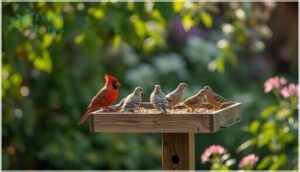
Platform feeders are your best bet for ground bird attraction and maximizing bird species diversity. These tray feeders sit low or hang freely, mimicking the natural feeding behavior of cardinals, doves, and sparrows. You’ll notice they offer excellent feeder placement tips for beginners:
- Wide, open surfaces let multiple birds feed simultaneously without competition
- Easy seed type comparison since all offerings remain visible
- Low feeder maintenance costs with simple designs that clean quickly
Choose platform feeders when bird feeder selection feels overwhelming. When evaluating the effectiveness of platform feeders, consider the importance of methodological rigor in scientific studies.
Hopper Feeders for All-Purpose Use
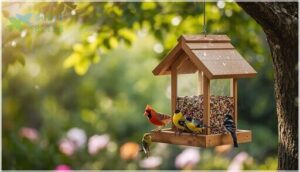
If you want versatility in your backyard birding setup, hopper feeders are where it’s at. These enclosed structures protect seed from rain while holding multiple pounds at once—your feeder capacity worries disappear for days.
Chickadees, finches, cardinals, and jays all visit thanks to their perching design. Bird attraction improves because the seed variety stays fresh longer.
Most hopper feeder models use weather-resistant materials that simplify maintenance tips: just wipe down weekly and you’re set.
Tube Feeders for Small Songbirds
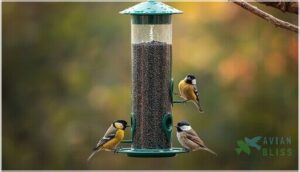
Tube feeders excel at drawing in finches, chickadees, and sparrows—species that thrive on perches surrounding vertical feeding ports. Their design keeps larger birds out while protecting seed from weather damage.
Here’s what makes them work:
- Multiple feeding ports increase bird attraction
- Blackoil sunflower seed fits perfectly in standard tubes
- Hanging options improve feeder placement flexibility
- Clear tubes let you monitor seed levels
- Regular feeder maintenance prevents clogs and disease
Nyjer Feeders for Finches
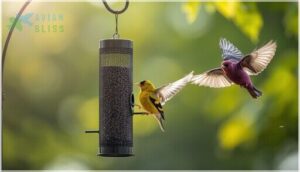
If finches are your target, you’ll want a feeder that holds tiny nyjer seed—sometimes called thistle. These specialized tube feeders feature small ports that match finch seed preferences while excluding larger species.
Goldfinches and Pine Siskins can’t resist them, especially during finch migration periods. The mesh or micro-perch designs accommodate their unique bird behavior patterns, making nyjer feeders essential for attracting these colorful visitors year-round.
Suet Feeders for Woodpeckers and Nuthatches
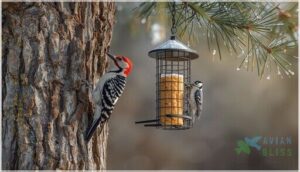
High-energy suet cakes draw insect-eating specialists straight to your yard, especially woodpeckers and nuthatches. These birds cling to vertical surfaces, so mounting cage-style suet feeders on tree trunks works perfectly.
Consider these suet feeder options:
- Wire cage holders for standard suet cakes
- Tail-prop designs for larger woodpecker species
- Upside-down feeders to exclude starlings
- Log-style feeders mimicking natural nuthatch behavior
- Double-cake capacity for high-traffic feeding stations
Window Feeders for Close-Up Viewing
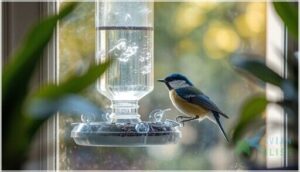
Window feeders transform your glass into a front-row seat for bird behavior you’d never catch from across the yard. These compact feeders suction directly onto windows, letting you watch chickadees, finches, and sparrows from inches away.
The close-up viewing turns casual bird watching into an intimate study of feeding patterns and social dynamics. Just position them thoughtfully—window placement matters for bird safety and feeder design affects which species visit.
Hummingbird Feeders for Nectar Lovers
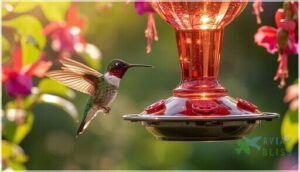
These specialized hummingbird feeders hold sugar water mixtures that fuel rapid metabolisms and long migration journeys. You’ll want a 1:4 sugar water ratio—one part white sugar to four parts water—changed every three to five days.
- Red components attract hummingbirds without harmful dyes in nectar recipes
- Perch rings let birds rest while feeding, conserving precious energy
- Wide-mouth designs simplify feeder cleaning and prevent mold growth
- Multiple feeding ports accommodate several visitors simultaneously
- Ant moats and bee guards keep insects from stealing nectar
Key Features to Look for When Choosing
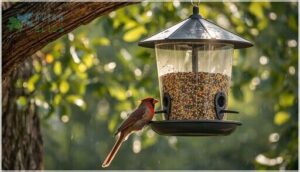
Not all bird feeders are built the same, and the difference between a great feeder and a frustrating one often comes down to a few essential features. You’ll want something that stands up to the elements, keeps your seed fresh, and doesn’t turn into a squirrel buffet within days.
Let’s look at the key factors that separate feeders worth your money from those that’ll leave you disappointed.
Durability and Weather-Resistant Materials
Your feeder won’t last if it can’t handle the elements. Material selection drives longevity—powder-coated steel and stainless options resist corrosion, while UV-resistant plastics won’t crack under sunlight.
Rust prevention and weather resistance keep squirrel baffles, suet feeders, and squirrel-proof feeders functional year-round. Corrosion control reduces bird feeder maintenance, so you spend more time watching birds and less time replacing gear.
| Material Type | Best For |
|---|---|
| Powder-coated steel | Rust prevention in wet climates |
| Stainless steel | Maximum corrosion control |
| UV-resistant plastic | Affordable weather resistance |
| Cedar wood | Natural rot resistance |
| Galvanized steel | Mixed-climate durability |
Easy-to-Clean Design
You’ll clean your feeder monthly—or more often if you spot mold—so material selection matters. Look for bird feeder types like tube feeders and suet feeders with removable trays, wide openings, and dishwasher-safe parts.
Design innovations such as antimicrobial surfaces and drain holes reduce cleaning frequency while boosting sanitation features. These maintenance tips keep your setup healthy and your birds safe.
Seed Capacity and Refill Frequency
Larger seed storage means fewer trips to refill, which matters if you’re juggling a busy schedule. Hopper feeders and tube feeders differ in capacity, so match your choice to your refill schedules and the bird feeder types you prefer.
- Hopper feeders hold 4 to 6 pounds of birdseed, requiring refills every 2 to 5 days during peak seed consumption.
- Tube feeders carry 1 to 2 pounds, with refill intervals of 2 to 4 days under heavy use.
- Nyjer feeders store 150 to 300 grams, needing refills every 1 to 3 days when finches visit frequently.
- Platform feeders demand more frequent attention, often 1 to 2 times weekly depending on feeder sizes and local species.
Squirrel-Proof Mechanisms
You want squirrels kept out, not just discouraged. Weight-activated perches close off seed ports when anything heavier than a songbird lands. Magnetic lids resist prying, while pole mounting with a squirrel baffle blocks climbers from below.
Baffle designs—dome or cylinder—stop access from above.
Squirrelproof feeders combine these squirrelproofing techniques, so you refill less often and feed the birds you actually invited.
Perch Design for Different Bird Sizes
Small songbirds need narrow perches spaced closely, while larger species require wider spacing to avoid tail contact with the feeder. Textured materials grip better in wet conditions than smooth metal. Multiple perch sizes on one feeder boost species diversity and reduce crowding.
Match perch design to your bird feeder types—tube feeders need slender options, platform feeders benefit from multiple points for backyard birds of all sizes.
Best Bird Feeders for Your Backyard
Now that you know what features matter most, let’s look at some feeders that actually deliver. Each one on this list brings something different to the table, whether it’s squirrel resistance, easy cleaning, or attracting specific species.
You’ll find options for every budget and backyard setup.
1. Birds Choice Recycled Hopper Bird Feeder
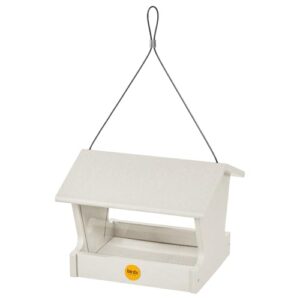
If you’re choosing the right bird feeder with sustainability in mind, the Birds Choice Recycled Hopper Bird Feeder deserves your attention. This eco-friendly option combines hopper design efficiency with recycled materials that withstand weather without cracking.
The 3-quart capacity attracts Cardinals, Woodpeckers, and Titmice while reducing refill trips. Its patented mesh bottom promotes healthy bird attraction by preventing mold buildup.
Among types of bird feeders, hopper feeders like this one balance durability and functionality. You’ll appreciate how bird feeder types and uses align here—practical, planet-conscious feeding that works.
| Best For | Eco-conscious birders who want a durable, low-maintenance feeder that attracts a variety of songbirds while supporting sustainability through recycled materials. |
|---|---|
| Material | Recycled plastic |
| Capacity | 3 quarts |
| Feeder Type | Hopper |
| Weight | 3.24 lbs |
| Easy Cleaning | Yes |
| Durability | Weather-resistant |
| Additional Features |
|
- Made from recycled plastic that’s weather-resistant and won’t crack in freezing temperatures, meaning it lasts through multiple seasons
- The patented mesh bottom keeps birds healthier by promoting airflow and making cleanup easier than solid-bottom feeders
- Holds 3 quarts of seed, so you’re not constantly refilling, and works well with sunflower or mixed seed blends
- The landing area is smaller than some birders prefer, which might discourage larger species from feeding comfortably
- Some buyers reported the actual color didn’t match what they saw online, which can be disappointing if aesthetics matter to you
- Requires regular cleaning every few weeks to prevent mold and salmonella, so it’s not a set-it-and-forget-it option
2. iBorn Metal Bird Feeder
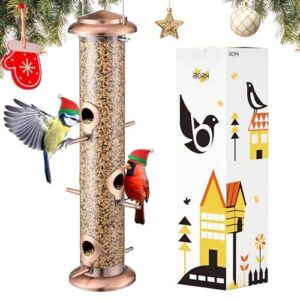
You’ll find that metal construction makes all the difference with the iBorn feeder. Its brushed copper finish catches sunlight while resisting rust and squirrel damage—a smart choice for bird feeder durability.
Six feeding ports with perches welcome finches, sparrows, and woodpeckers simultaneously, showing how bird feeder types and uses align perfectly here.
The flip-top seed dispenser simplifies refills and cleaning, critical for preventing mold. At 15.6 inches tall, this tube-style option balances capacity with manageability, making bird feeder selection straightforward when you’re choosing the right bird feeder for lasting bird attraction.
| Best For | Backyard birders who want a durable, multi-port feeder that attracts various songbirds while standing up to weather and squirrels. |
|---|---|
| Material | Aluminum and Metal |
| Capacity | Not specified |
| Feeder Type | Tube |
| Weight | 15.5 oz |
| Easy Cleaning | Yes |
| Durability | Metal construction |
| Additional Features |
|
- Metal construction with brushed copper finish resists rust and squirrel damage better than plastic alternatives
- Six feeding ports let multiple birds eat at once, attracting finches, sparrows, and woodpeckers
- Flip-top design makes refilling and cleaning quick and hassle-free
- Some users report rust or corrosion developing over time despite the protective finish
- Size may be smaller than expected for those wanting a high-capacity feeder
- Squirrel resistance varies depending on placement and surrounding trees or structures
3. Kingsyard Platform Bird Feeder
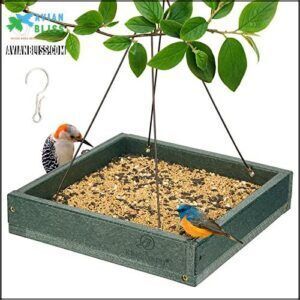
Platform design opens up your backyard birding world like nothing else. The Kingsyard Platform Bird Feeder holds 3.5 pounds of seed in an 11.34-inch tray, giving cardinals, doves, and bluebirds room to land and feed comfortably—something tube feeders can’t match.
Its recycled plastic construction withstands weather without warping, boosting feeder durability season after season. The four-chain suspension keeps seed capacity stable during wind, while bottom mesh prevents mold through drainage.
For bird attraction across multiple species, this platform feeder simplifies bird feeder selection with practical, low-maintenance backyard birding.
| Best For | Backyard bird enthusiasts who want to attract ground-feeding species like cardinals, doves, and bluebirds with a durable, large-capacity feeder that’s easy to refill and maintain. |
|---|---|
| Material | Recycled plastic |
| Capacity | 3.5 lbs |
| Feeder Type | Platform |
| Weight | 2.16 lbs |
| Easy Cleaning | Yes |
| Durability | Recycled plastic |
| Additional Features |
|
- Holds 3.5 pounds of seed with an open 11.34-inch platform that gives multiple birds plenty of room to feed at once
- Built from recycled plastic that handles weather without warping, plus metal mesh drainage keeps seed dry and prevents mold
- Comes pre-assembled with a four-chain system that hangs securely and stays stable in wind
- The seed platform doesn’t come off, which makes deep cleaning harder than it should be
- Wire connection points may need extra sealant over time to stop rust from forming
- Only works as a hanging feeder, so you can’t mount it on a pole or deck rail if you prefer those setups
4. Kingsyard Recycled Suet Bird Feeder
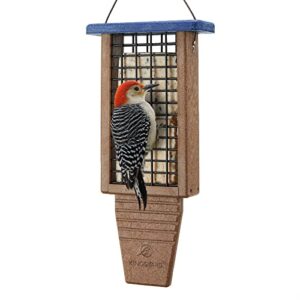
Woodpeckers need a solid anchor for their tails while feeding—that’s where the Kingsyard Recycled Suet Bird Feeder shines. Its tail prop design lets downy woodpeckers, nuthatches, and chickadees feed comfortably, matching their natural clinging behavior.
This eco-friendly design holds two standard suet cakes in recycled plastic housing with stainless steel mesh, measuring 8 by 16 inches. Backyard birding gets simpler with top-loading access and removable mesh for quick cleaning.
Bird feeder safety matters, though squirrels may test its durability—consider placement carefully for best woodpecker attraction.
| Best For | Bird lovers who want to attract woodpeckers and clinging birds while supporting eco-friendly backyard feeding with easy maintenance. |
|---|---|
| Material | Recycled Plastic |
| Capacity | 2 suet cakes |
| Feeder Type | Suet |
| Weight | Not specified |
| Easy Cleaning | Yes |
| Durability | Weatherproof |
| Additional Features |
|
- Tail prop design lets woodpeckers feed naturally while stainless steel mesh and recycled plastic construction hold up through seasons
- Holds two suet cakes with top-loading access and removable mesh that makes refilling and cleaning quick
- Attracts multiple species including downy woodpeckers, nuthatches, chickadees, and titmice to your yard
- Squirrels can chew through the plastic housing and reach the suet cakes inside
- Lacks rain protection so suet may get soggy during wet weather
- Not suitable for bear-prone areas or oversized suet cakes larger than 4.5 x 1.5 inches
5. Droll Yankees Sunflower Bird Feeder
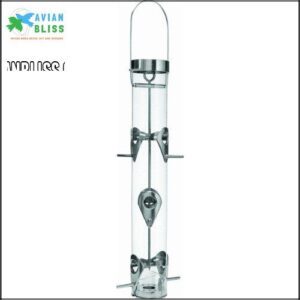
The Droll Yankees A-6RP is a workhorse for busy backyards, featuring six feeding ports and a 1.5-pound seed capacity. It attracts cardinals, chickadees, and finches with consistent seed flow dynamics.
Constructed from UV-stabilized polycarbonate, this feeder ensures durability through seasons. The Ring Pull Advantage allows for quick disassembly and easy maintenance.
While marketed with squirrel resistance features, adding a dedicated squirrel baffle provides real protection. Made in the USA, it balances bird attraction with practical cleaning, making it ideal for year-round sunflower seed feeding.
| Best For | Backyard birders who want a reliable, American-made feeder with multiple feeding stations and easy cleaning for high-traffic bird activity. |
|---|---|
| Material | Metal |
| Capacity | 1 lb |
| Feeder Type | Tube |
| Weight | 0.01 oz |
| Easy Cleaning | Yes |
| Durability | UV-stabilized |
| Additional Features |
|
- Six feeding ports and 1.5-pound capacity reduce refill trips while accommodating multiple birds at once
- Ring Pull Advantage simplifies disassembly for quick cleaning and maintenance
- UV-stabilized polycarbonate construction withstands outdoor elements season after season
- Not fully squirrel-proof without adding a separate baffle
- Metal bar assembly can be tricky for first-time setup
- Size may not match expectations—check dimensions before purchasing
6. Woodlink Platform Bird Feeder
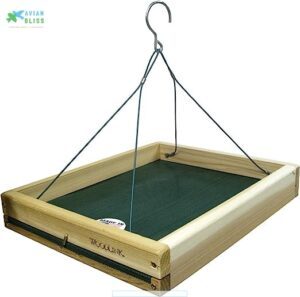
If you’re looking for versatility, the Woodlink PLAT2 Platform Bird Feeder delivers. Constructed from kiln-dried inland red cedar with a powder-coated metal screen bottom, this feeder is a durability champion that holds up to 3 pounds of mixed seed.
The platform design welcomes backyard birds of all sizes—jays, cardinals, even ground feeders—while the removable screen simplifies cleaning and provides excellent drainage.
You can post-mount it, hang it, or place it directly on the ground, making it perfect for wildlife-friendly gardening setups that adapt to your landscape’s unique needs.
| Best For | Birdwatchers who want a flexible feeder that attracts a wide variety of species and can be positioned in multiple ways around the yard. |
|---|---|
| Material | Wood |
| Capacity | 3 lbs |
| Feeder Type | Platform |
| Weight | 3.29 lbs |
| Easy Cleaning | Yes |
| Durability | Kiln dried cedar |
| Additional Features |
|
- Holds up to 3 pounds of seed and features a removable metal screen for quick cleaning and good drainage
- Made from durable kiln-dried red cedar with powder-coated metal parts that resist weather and rust
- Works as a post-mount, hanging feeder, or ground platform—adapts to any backyard setup
- Some buyers report quality control issues and mixed opinions on long-term durability
- Seeds and shells can get wet and stick to the screen bottom during rainy weather
- Higher price point compared to many other platform feeders on the market
7. Squirrel Proof Bird Feeder
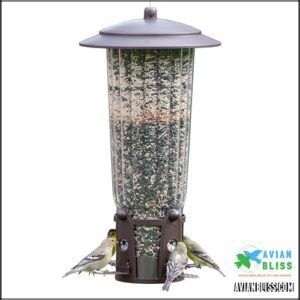
Squirrels can turn your bird sanctuary into a buffet line faster than you can refill the seed. That’s where the Perky-Pet 334-1SR changes the game.
This metal-framed feeder uses a weight-activated Seed Shield that closes feeding ports when squirrels climb aboard, while its Sure-Lock cap keeps them from prying off the lid.
Holding 4 pounds of mixed seed, it features Flexports that let birds feed comfortably and ladder-style perches for various species.
Add a squirrel baffle to your pole mount for maximum pest control.
| Best For | Backyard birders who are tired of squirrels hogging the seed and want a feeder that holds plenty while keeping pests at bay. |
|---|---|
| Material | Metal |
| Capacity | 4 lbs |
| Feeder Type | Tube |
| Weight | 2.21 lbs |
| Easy Cleaning | Yes |
| Durability | Weather-resistant |
| Additional Features |
|
- Weight-activated perches and Seed Shield work together to block squirrels when they try to feed
- Holds up to 4 pounds of seed, so you’re not refilling constantly
- Ladder-style perches let different bird sizes feed comfortably at the same time
- Flexports can wear out faster than expected and may need replacing
- Squirrels sometimes find workarounds, like lifting the lid or chewing plastic parts
- Condensation can build up inside and cause seed to clump or spoil
Where and How to Place Your Feeder
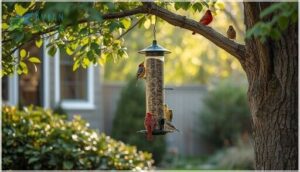
You’ve picked out the perfect feeder, but where you put it makes all the difference in attracting birds while keeping them safe. The right placement protects your feathered visitors from window strikes and predators, while also making refills and maintenance easier for you.
Let’s look at the key factors that’ll help you find the ideal spot in your yard.
Safe Distance From Windows and Predators
Where you place your feeder makes all the difference for bird safety. Position feeders at least 10–12 feet from windows for effective collision prevention, or mount window feeders directly on glass. For predator control, keep feeders 10–15 feet from dense cover where ambushers lurk.
Consider these bird safety essentials:
- Install a squirrel baffle on poles
- Mount at 5–6 feet height
- Use window decals near feeders
- Add squirrel proofing your feeder mechanisms
- Clean regularly for bird feeder maintenance and care
Mounting Options: Poles Vs. Hanging
Once you’ve nailed down a safe location, you’ll need to decide between pole stability and hanging setups. Poles offer enhanced wind resistance and straightforward squirrel proofing with baffles. Hanging heights work well for tube feeders and nyjer feeders but require sturdy mounting hardware and sway prevention measures. Both options support proper bird feeder maintenance and care when installed correctly.
| Feature | Pole Mount | Hanging |
|---|---|---|
| Stability | Excellent ground support | Moderate sway possible |
| Squirrel Defense | Easy baffle placement | Requires special hardware |
| Flexibility | Fixed location | Adjustable positioning |
Ideal Height for Different Bird Species
Your mounting method matters, but so does height—different bird species prefer different elevations. Most songbirds thrive when feeders sit 5 to 6 feet up, providing predator avoidance while keeping refills manageable. Ground-feeding species like doves appreciate platform feeders within a foot of soil level, while woodpeckers favor sturdy perches around 6 to 8 feet high.
- Position most tube and hopper feeders at 5–6 feet for chickadees, finches, and cardinals
- Set platform feeders near ground level for doves and juncos
- Lift suet feeders to 6–8 feet for woodpeckers and nuthatches
- Hang hummingbird feeders at 4–6 feet near flowering plants
Proximity to Cover and Water Sources
Height sets the stage, but nearby shelter and water complete your bird habitat. Position feeders 10 to 15 feet from dense shrubs or low branches—close enough for quick escapes yet visible for backyard bird watching. Adding a water source within 20 feet boosts visitation and aids wildlife-friendly gardening. This proximity enhances feeder safety while creating a thriving ecosystem.
| Element | Ideal Distance | Benefit |
|---|---|---|
| Dense cover | 10–15 feet | Predator protection |
| Water source | 15–20 feet | Hydration access |
| Flight path | 5–10 feet | Quick escape route |
| Window clearance | 3+ feet | Collision prevention |
| Vegetation | Moderate | Natural bird habitat |
Choosing The Right Seed for Your Feeder

You’ve got the feeder and the perfect spot picked out. Now it’s time to think about what you’re actually putting in it.
The seed you choose determines which birds show up and how often they visit, so let’s look at your best options.
Black-Oil Sunflower for Maximum Variety
If you want the widest possible guest list at your bird feeder, black-oil sunflower seed is your go-to choice. This high-energy seed attracts finches, chickadees, nuthatches, and doves thanks to its thin shell and rich oil content.
Birds crack it faster than striped varieties, making your tube feeder a hotspot for diverse species year-round while supporting wildlife conservation efforts in your backyard.
Nyjer Seed for Finches
Finches flock to Nyjer seed like nothing else. This tiny, oil-rich option—sometimes called thistle seed—draws goldfinches and pine siskins straight to your feeder.
You’ll need specialized Nyjer feeders with small ports to prevent waste, and proper storage in a cool, dry spot keeps it fresh.
The high oil content fuels these vibrant birds year-round, turning your yard into a finch magnet.
Suet Cakes for Winter Feeding
When temperatures drop, suet cakes become your secret weapon for winter nutrition. These fat-rich blocks pack serious bird energy that woodpeckers, nuthatches, and chickadees desperately need during cold weather.
Here’s what makes suet feeders essential for backyard birding tips:
- High fat content meets increased calorie demands on frigid days
- Added nuts or fruit in suet recipes attract diverse species
- Specialized suet feeder designs prevent starlings from monopolizing food
- Proper placement in shade prevents melting and spoilage
- Fat supplements sustain birds through extended foraging bouts
Position your bird feeder away from direct sunlight for best results.
Avoiding Filler Seeds Birds Won’t Eat
Many backyard enthusiasts discover that mixed seed blends contain fillers like milo that native passerines simply ignore. Black oil sunflower seeds and nyjer seed offer excellent bird nutrition with minimal seed waste, boosting feeder efficiency. Safflower works well too.
When you skip filler seed in favor of high-acceptance options, you’ll notice increased seed preference among chickadees, finches, and cardinals—no more scattered, uneaten bird seed beneath your feeder.
Cleaning and Maintaining Your Bird Feeder
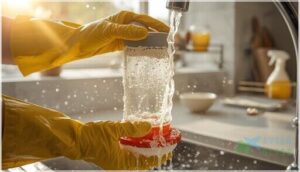
A clean feeder isn’t just about appearances—it’s essential for keeping your backyard birds healthy and safe from disease. Regular maintenance prevents mold growth and bacterial contamination that can spread quickly through bird populations. Proper feeder placement strategies—like spacing multiple feeders 6–8 feet apart—also help minimize disease transmission by reducing crowding and competition.
Regular feeder maintenance isn’t cosmetic—it prevents deadly mold and bacteria from spreading through your backyard bird population
Here’s what you need to know about cleaning schedules, proper techniques, and when it’s time to retire a worn-out feeder.
How Often to Clean Different Feeder Types
Your bird feeder’s cleaning schedule depends entirely on its design and the species it attracts. Proper feeder sanitation protects bird health and prevents disease outbreaks in your backyard flock. Here’s what feeder maintenance looks like for different types:
- Platform and tray feeders: Clean every 1–2 weeks to limit mold from seed debris.
- Tube feeders: Weekly cleaning prevents bacteria in warm, wet conditions.
- Suet feeders: Every 2–4 weeks works, but increase frequency when temperatures rise.
- Nyjer feeders: Clean every 1–2 weeks, focusing on clogged mesh ports.
Consistent cleaning schedules keep your bird feeders safe and inviting.
Step-by-Step Cleaning Process
Proper bird feeder maintenance starts with emptying all seed and debris, then washing each component with hot water and dish soap. Scrub feeding ports and perches with a small brush to remove buildup.
For stubborn mold removal, apply a 10% bleach solution to plastic feeders or white vinegar to metal ones. Rinse thoroughly and dry completely before refilling—this protects bird health.
Preventing Mold and Disease
Think of your feeder as a bird café—you wouldn’t serve food in a dirty restaurant. Disease control starts with smart moisture management and regular feeder sanitation.
- Empty and clean feeders every two weeks to prevent mold buildup
- Store seed in cool, dry containers to maintain seed quality
- Position feeders in sunny, well-ventilated spots away from ground moisture
Fresh seed and dry conditions keep your feathered visitors healthy and coming back.
When to Replace Old or Damaged Feeders
Even with diligent yard maintenance, your bird feeder won’t last forever. Conduct regular feeder inspection for cracks in housing or loose perches—damage assessment reveals when structural integrity fails.
Replace any suet feeder showing persistent mold despite sanitation checks, or tube feeders with corroded ports.
Durability tests matter: if your squirrel baffle is bent or weathered components compromise function, it’s replacement timing. Fresh equipment protects your backyard visitors.
Frequently Asked Questions (FAQs)
How do I keep ants away from feeders?
Just as water guards a castle moat, an ant-moat barrier under your bird feeder creates an impassable zone.
Combine proper feeder placement with squirrel baffles and regular cleaning for effective pest control.
Whats the best feeder for rainy climates?
You’ll want bird feeders with drip edges and weathered materials for rainproof designs.
Look for hopper or tube feeders offering seed protection and moisture control—they outlast tray feeders, suet feeders, and nyjer feeders in wet conditions.
How many feeders should I have in total?
Most backyards thrive with 2 to 3 bird feeders—enough to boost species variety by 20–40% without overcrowding.
Start with two, then add a third during winter when activity peaks and feeder placement matters most.
Conclusion
Picture the first cardinal landing on your new hopper feeder, its striking red plumage catching morning light as it cracks sunflower seeds. That moment transforms your backyard into something remarkable.
Learning how to choose the right bird feeder means matching species behavior to feeder design, placing it thoughtfully, and maintaining it consistently. Your empty yard won’t stay quiet long—the right setup turns any space into a thriving sanctuary where birds return daily.