This site is supported by our readers. We may earn a commission, at no cost to you, if you purchase through links.

Your parrot’s first trip to the vet doesn’t have to end with a frantic chase around the exam room, and that weekend getaway shouldn’t mean leaving your feathered companion behind in boarding. The right travel bird cage transforms these potentially stressful situations into manageable experiences, keeping your bird safe and comfortable while you maintain control of unpredictable circumstances.
Whether you’re dealing with a medical emergency at midnight or planning a cross-country move, the cage you choose becomes your bird’s portable safe haven. Selecting one that prioritizes proper ventilation, secure locks, and species-appropriate sizing isn’t just about convenience—it’s about your bird’s wellbeing.
We’ve evaluated dozens of options to identify the carriers that meet both veterinary safety standards and real-world travel demands, so you can make a confident decision that protects your bird during every journey.
Table Of Contents
Key Takeaways
- A proper travel cage prioritizes ventilation quality, secure locking mechanisms, and species-appropriate sizing to protect your bird’s wellbeing during vet visits, emergencies, and trips rather than just offering convenience.
- The five top-rated carriers range from lightweight soft-sided options like the halinfer Portable Carrier (1.5 lbs) for budgies to sturdy wrought iron designs like the VIVOHOME cage (14 lbs) for parrots, each balancing portability with safety features suited to different travel needs.
- Essential features include bar spacing between 1/2 to 3/4 inch for small-to-medium birds, cross-ventilation mesh systems maintaining 40-60% humidity, double-acting tamper-proof latches, and ergonomic handles rated for 5-7 kg to prevent escapes and reduce transport stress.
- Successful travel requires acclimating your bird to the carrier at least two weeks before departure, maintaining cabin temperatures between 65-80°F, performing pre-trip safety inspections of latches and ventilation, and offering hydration every four hours to prevent dehydration beyond the six-hour threshold.
Top 5 Travel Bird Cages Reviewed
We’ve carefully evaluated dozens of travel cages to bring you the five best options that balance safety, portability, and comfort for your feathered companion.
If you’re also looking for everyday housing, check out our guide to the best bird cages for small birds to find a permanent home setup.
Each cage on this list has been selected based on ventilation quality, secure locking mechanisms, and real-world durability during transport.
For colder climates or travel during winter months, pairing a secure cage with proper warming techniques for birds helps maintain your pet’s comfort and health throughout the journey.
Whether you’re planning a quick vet visit or a weekend getaway, you’ll find a carrier here that meets your bird’s specific needs and your travel style.
From compact soft-sided bags to spacious backpack designs, these comfortable bird carriers for travel help you choose the right fit for every trip.
1. Portable Small Bird Travel Carrier
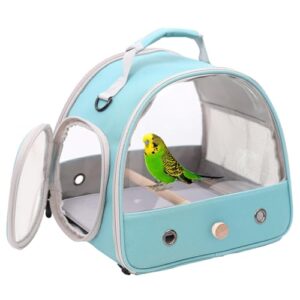
When you’re preparing for a vet visit or weekend getaway, the halinfer Portable Small Bird Travel Carrier offers a lightweight, thoughtfully designed solution that keeps your feathered companion safe and comfortable.
Weighing just 1.5 pounds with dimensions of 12″L x 8″W x 10″H, this green polyester bird carrier features two clear windows for visibility, mesh ventilation panels for proper airflow, and a soft mat plus wooden perch inside.
The side mesh pocket stores snacks and essentials, while the adjustable strap and top handle guarantee easy carrying for budgies, parakeets, and cockatiels during transport.
| Best For | Bird owners who need a compact, easy-to-carry solution for transporting small to medium-sized birds like budgies, parakeets, or cockatiels to vet appointments or short trips. |
|---|---|
| Dimensions | 12″L x 8″W x 10″H |
| Portability | Lightweight with handle and strap |
| Visibility | 2-side clear window |
| Primary Material | Polyester |
| Suitable Birds | Budgies, parakeets, parrots, conures |
| Ease of Cleaning | Side zipped opening |
| Additional Features |
|
- Lightweight at just 1.5 pounds with clear windows and mesh ventilation that keep your bird visible and comfortable during travel.
- Comes with thoughtful extras like a wooden perch, soft mat, and side pocket for storing treats and supplies.
- Easy to clean thanks to the side zipper opening, and folds down for simple storage when not in use.
- Mesh material can wear down over time from persistent chewing or sharp claws.
- Zipper may snag or stick occasionally, which can be frustrating when you’re in a hurry.
- Not suitable for larger birds or extended housing—it’s strictly a transport carrier, not a permanent cage.
2. Texsens Bird Carrier Backpack
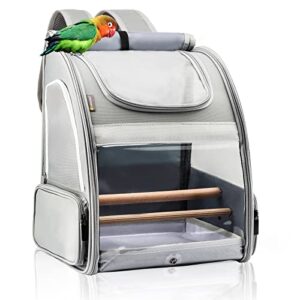
If you’re looking for a hands-free option that keeps your bird visible and secure during outdoor adventures, the Texsens Bird Carrier Backpack delivers both convenience and comfort.
This light gray Oxford backpack measures 12.6″L x 11.42″W x 15.55″H, and it’s designed with breathable mesh areas, a transparent window for scenery viewing, and padded double-straps with a chest buckle to stabilize your load during hiking or errands.
You can toss the detachable cushion pad in the wash after messy trips, which helps you maintain a hygienic carrier environment between outings.
You’ll appreciate the upgraded tray, standing perches, side pockets for storing toys and food, and the fabric shade cover that provides privacy when your cockatiel or green cheek needs a break from stimulation.
| Best For | Bird owners who want a hands-free carrier for small to medium birds like cockatiels or green cheeks during travel, vet visits, or outdoor activities. |
|---|---|
| Dimensions | 12.6″L x 11.42″W x 15.55″H |
| Portability | Padded double-strap with chest buckle |
| Visibility | Transparent window |
| Primary Material | Oxford, PVC |
| Suitable Birds | Small to medium birds |
| Ease of Cleaning | Upgraded tray |
| Additional Features |
|
- Breathable mesh and transparent window let your bird see out while staying secure and well-ventilated
- Padded straps with chest buckle and side pockets make it comfortable to carry with room for essentials
- Includes upgraded tray and perches, plus a fabric shade for privacy when your bird needs downtime
- Some users notice a chemical or plastic smell right out of the box that needs airing out
- The included perch sticks can be too smooth for certain birds to grip comfortably
- Won’t work for larger birds or species that need more space to move around
3. Prevue Parakeet Bird Cage
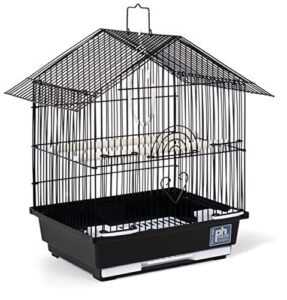
When you need something sturdier than a backpack but still travel-ready, the Prevue Parakeet Bird Cage offers a balanced solution for vet visits or weekend getaways with your small bird. This metal and plastic cage measures 12″L x 9″W x 16″H with 3/8″ wire spacing, and it includes a pull-out tray for quick cleaning, two plastic cups, two perches, and a house-style roof with a carrying handle.
While the cage assembly is straightforward and provides adequate bird comfort for short trips, you’ll want to remember this portable option works best as a temporary bird travel carrier rather than permanent housing.
For longer-term housing, you’ll want to review proper bird cage size requirements to ensure your parakeet has enough space to thrive.
| Best For | Bird owners who need a lightweight, portable cage for transporting parakeets, canaries, or other small birds to vet appointments, outdoor excursions, or temporary quarantine situations. |
|---|---|
| Dimensions | 12″L x 9″W x 16″H |
| Portability | Handle for carrying |
| Visibility | House-style design |
| Primary Material | Metal, Plastic |
| Suitable Birds | Parakeets, canaries, small birds |
| Ease of Cleaning | Pull-out tray |
| Additional Features |
|
- Pull-out tray and simple design make cleaning quick and hassle-free between trips
- Compact 12″ x 9″ x 16″ size with carrying handle fits easily in vehicles for travel
- Comes complete with two cups and two perches so you don’t need to buy extras
- Flimsy construction makes it unsuitable for permanent or long-term housing
- Food and water door latches can be difficult to open and close
- Too small for larger birds or extended use beyond temporary transport
4. Suertree Bird Travel Carrier Bag
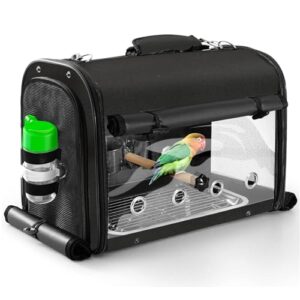
If you want a softer alternative that won’t jostle your feathered companion, the Suertree Bird Travel Carrier Bag combines 600D polyester fabric with breathable mesh panels to keep cockatiels, conures, and parakeets comfortable during vet appointments or quick road trips.
This lightweight bird carrier backpack measures 17.6″L x 10.6″W x 13.3″H and includes removable bowls, a water bottle, perches, and a transparent window, so you can monitor your bird without opening the bag.
The collapsible design makes storage easy, and reinforced zippers with secure locks prevent accidental escapes while you’re on the move.
| Best For | Bird owners who need a soft, portable carrier for small to medium birds like cockatiels and conures during vet visits or short trips. |
|---|---|
| Dimensions | 17.6″L x 10.6″W x 13.3″H |
| Portability | Portable and collapsible |
| Visibility | Transparent window |
| Primary Material | Cotton, Nylon, Polyester |
| Suitable Birds | Cockatiels, conures, parakeets |
| Ease of Cleaning | Removable bowls and tray |
| Additional Features |
|
- Breathable mesh panels on all sides keep your bird cool and comfortable without sacrificing security
- Comes with everything you need—removable bowls, water bottle, and perches included
- Collapses flat for easy storage when you’re not using it
- Hard plastic sides can turn it into an oven if you leave it in direct sunlight
- The clear plastic wrap on windows and tray is a pain to peel off
- Price point runs higher than some owners expect for a travel carrier
5. VivoHome Wrought Iron Bird Travel Cage
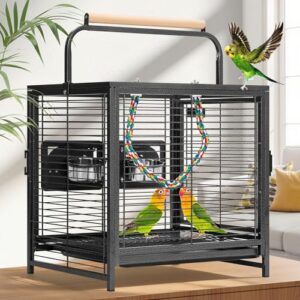
When structural strength matters more than soft-sided convenience, the VIVOHOME Wrought Iron Bird Travel Cage delivers iron construction that withstands the rigors of frequent transport while keeping parrots, conures, and lovebirds secure.
This portable bird cage weighs 14 lbs and measures 18.9″L x 15″W x 25.6″H, and we appreciate the 0.6″ bar spacing that prioritizes bird safety without sacrificing visibility.
The low-carbon steel frame with black coating resists rust, and cage materials include a removable debris tray, though you’ll want to secure it during carrying to prevent sliding.
| Best For | Bird owners who frequently travel or transport medium to small birds like parrots, conures, and lovebirds and need a durable, secure cage that can handle repeated trips without bending or breaking. |
|---|---|
| Dimensions | 18.9″L x 15″W x 25.6″H |
| Portability | Portable with lightweight design |
| Visibility | Open bar design |
| Primary Material | Low Carbon Steel |
| Suitable Birds | Parrots, conures, lovebirds, parakeets |
| Ease of Cleaning | Debris catch tray |
| Additional Features |
|
- Sturdy wrought iron frame with 0.6″ bar spacing keeps birds safely contained while providing excellent airflow and visibility during transport
- Rust-resistant black coating and reinforced construction hold up well to regular travel wear, with a removable bottom tray that makes cleaning between trips simple
- 2-in-1 design includes a wooden perch on top, giving your bird a familiar resting spot while keeping the 14 lb weight manageable for carrying
- The debris tray can slide out when you’re carrying the cage, which means you’ll need to secure it or risk a mess during transport
- Bar spacing may be too wide for very small birds like parakeets, and the wooden perch can sometimes be removed by clever, skilled birds
- At 14 lbs, it’s heavier than soft-sided carriers and may feel cumbersome for longer trips or if you have mobility concerns
Essential Features to Consider
When you’re shopping for a travel cage, you’ll want to keep a few critical features in mind that directly impact your bird’s safety and comfort during transport.
We’ve identified five essential considerations that separate a great travel cage from one that just looks the part, and understanding these factors will help you make a confident choice for your feathered companion.
Let’s walk through what really matters regarding selecting the right cage for your bird’s needs.
Size and Portability for Different Bird Species

Choosing the right size isn’t one-size-fits-all, and that’s where species compatibility really matters when you’re shopping for portable bird cages. Small birds like finches need about 12–18 inches of interior length, while cockatiels and budgies thrive in 20–24 inch carriers with foldable bird cage designs for compact storage.
Large parrots require 28–36 inches to accommodate their wingspan, so you’ll want portable enclosures with durable cage material that respects bird weight limits and travel restrictions without sacrificing portability features.
Ventilation and Air Circulation Systems

Airflow dynamics in portable enclosures can make or break your bird’s comfort, so we always recommend checking for cross ventilation with mesh patterns that promote steady air exchange without creating harsh drafts.
Quality bird travel cages feature vent openings that maintain air quality and humidity control between 40–60%, and airline-approved designs often include adjustable ventilation to help your feathered companion breathe easy throughout the journey.
Security Locks and Escape Prevention

A faulty latch can turn your peaceful trip into a frantic search, so we always urge you to select bird travel carriers with double-acting latches and tamper-proof lock mechanisms that resist clever beaks and paws.
Secure latches with corrosion-resistant materials guarantee escape prevention during bumpy rides, and quality portable bird cages feature interlocking safety features that click audibly when engaged, giving you confidence your companion stays protected throughout every journey.
Bar Spacing and Material Durability

Your bird’s safety hinges on choosing portable cages with bar spacing between 1/2 inch and 3/4 inch for small to medium species, preventing beak or toe injuries while ensuring proper ventilation throughout every adventure.
When evaluating cage durability and materials, we recommend focusing on these critical features:
- Stainless steel mesh construction offers exceptional corrosion resistance and wire gauge strength that outlasts painted metals
- Powder-coated finishes on bird travel cages reduce chipping during handling
- Welded joints maintain structural integrity better than snap-assembly designs
- Quality cage materials withstand durability tests across repeated trips
Easy-Carry Handles and Foldable Designs
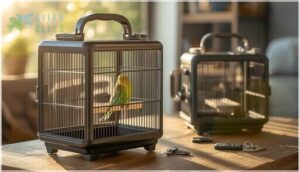
When you’re juggling carriers, vet paperwork, and a nervous bird, ergonomic grips rated for 5–7 kg make all the difference in reducing hand strain during frequent transfers.
Foldable frames with quick-release latches collapse in under 60 seconds, cutting storage height by 50% while maintaining cage stability through reinforced attachment points and non-slip base feet.
These portable travel cages transform stressful trips into manageable routines for small birds.
When and How to Use Travel Cages
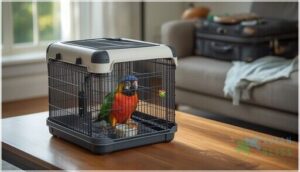
Travel cages aren’t just for vacations—they’re essential tools for everything from routine vet visits to unexpected emergencies, and knowing when to use them keeps your bird safe and comfortable. We recommend introducing your bird to their travel cage well before you actually need it, which reduces stress and makes every trip smoother for both of you.
Whether you’re planning a weekend getaway or preparing for airline travel, understanding the right situations and preparation techniques ensures your feathered companion stays secure throughout the journey.
Vet Visits and Medical Appointments
Medical transport demands careful preparation, and your bird’s health depends on choosing the right portable travel cage for vet visits. When you’re heading to the clinic, these bird carrier essentials matter most:
- Rigid sides with secure latches prevent escape and injury during sudden stops
- Paper-towel lining lets your vet assess droppings quickly
- Light towel cover blocks drafts and visual stressors in the waiting room
- Seat-belt restraint keeps the bird travel cage stable during braking
- Bring cage paper samples to support accurate avian first aid diagnosis
For safe transport, consider investing in high-quality bird travel carriers to guarantee your bird’s comfort and security.
Weekend Trips and Vacation Travel
Weekend getaways call for more space than clinic runs, so your bird travel cage should allow wing stretches and perching—think 18–24 inches wide for parakeets.
Secure the portable bird cages on rear seats with seat belts, avoiding airbag zones, and keep cabin temps between 65–80 °F.
At your hotel, skip scented sprays and nonstick pans; both release fumes deadly to birds, turning vacation planning into a safety checklist you can’t ignore.
Before traveling, consider consulting a bird travel guide to guarantee a safe and enjoyable trip for your bird.
Emergency Evacuations and Relocations
Wildfires and hurricanes won’t wait for you to fold up a bird carrier, which is why emergency evacuations demand a hard-sided bird travel cage already assembled and staged near exits, complete with pre-written contact details stuck right on the bars.
Stock emergency kits with seven days of food, bottled water, meds, and a light-colored cover to shield your bird from smoke, noise, and visual chaos during the scramble to safety.
Acclimating Your Bird Before Travel
Before you grab the carrier and head out, let’s talk about bird habituation, because springing a strange enclosure on your parrot fifteen minutes before a vet visit is a recipe for panic.
Don’t introduce your bird to a travel carrier fifteen minutes before departure—start acclimating them at least two weeks early to avoid panic
Place your bird travel cage in plain sight for at least two weeks, leave the door open, toss in favorite treats, and let your bird explore voluntarily—this acclimation technique cuts stress by half and builds trust in your avian travel solutions.
Airline Travel Requirements and Guidelines
Before you book your bird’s first flight, understand that airline policies vary wildly by carrier and species—most North American airlines require IATA Container Requirement 13 compliance for checked birds, while only select carriers allow household birds in cabin with strict under-seat dimensions around 18×14×10 inches.
You’ll need advance reservations, health certificates, and cargo regulations knowledge, because showing up without airline-approved bird travel cage documentation means your feathered companion stays grounded.
Maintenance and Safety Best Practices

Keeping your bird’s travel cage clean and safe isn’t rocket science, but it does require a consistent routine that protects your feathered companion from illness and injury.
We’ve seen too many preventable accidents happen when owners skip basic maintenance checks or forget to monitor conditions during transport, and those moments can turn a smooth trip into a stressful emergency.
Let’s walk through the essential practices that’ll keep your bird healthy and secure every time you hit the road together.
Regular Cleaning and Disinfection Schedule
Keeping your travel bird cages spotless isn’t optional—it’s a cornerstone of bird safety and pet bird care. Daily sanitizing of food dishes and liners prevents bacterial buildup, while weekly deep cleans tackle hidden grime. Here’s a practical cleaning schedule that ensures strong biosecurity measures and cage hygiene:
- Spot-clean droppings and change liners daily to reduce contamination
- Wash all surfaces with hot, soapy water weekly, then apply safe disinfectant options like diluted vinegar
- Deep-clean monthly, disassembling perches and toys for thorough scrubbing
Pre-Trip Safety Inspections
Before every journey, you need to run through a systematic safety check—your bird’s life depends on it. These travel risks demand emergency prep, because cage durability and bird safety start with thorough inspections.
Inspect door latches, ventilation openings, and fastener security to prevent escapes and guarantee adequate airflow. Test grips for stability, confirm perches are firmly attached, and verify no sharp edges lurk inside.
| Inspection Point | What to Check |
|---|---|
| Doors & Locks | Latches close fully, no gaps for escape |
| Ventilation Openings | All sides clear, mesh secure and intact |
| Interior Layout | Perches fixed, no toys or sharp corners |
| Structural Integrity | No cracks, loose fasteners, or corrosion |
| Vehicle Stabilization | Seat belt fits, cage won’t slide or tip |
Proper Food and Water During Transport
Your bird’s well-being hinges on proper hydration management and metabolic stability during every trip. Water deprivation beyond six hours triggers measurable dehydration in most species, so you’ll need to think strategically about food and water sources in your bird travel cage.
Here’s your action plan:
- Offer fresh water within four hours before departure
- Use moistened sponges or cucumber slices as portable hydration solutions
- Schedule stops every hour for journeys exceeding short trips
- Monitor droppings and behavior for early dehydration signs
Temperature Control and Ventilation Monitoring
You’re basically creating a mobile life-support system when you transport birds, and temperature control is your first line of defense. Maintain ambient conditions between 65°F and 80°F throughout the journey, because heat stress can develop rapidly above 86°F while cold exposure threatens hypothermia.
Monitor your bird travel cage ventilation continuously—adequate air exchange prevents ammonia buildup and respiratory compromise, even during climate-controlled trips in portable bird cages.
Frequently Asked Questions (FAQs)
What accessories should I pack for bird travel?
Wondering what’ll keep your bird calm and healthy on the road? Pack familiar food containers, no-spill water bottles, quiet travel toys, bird-safe first aid supplies, absorbent cage liners, and essential travel accessories for birds.
How do I calm an anxious bird during trips?
Calming techniques like covering the bird carrier with a breathable cloth, playing soft music, and offering familiar toys can reduce anxious behavior during trips.
Though, consult your avian veterinarian before considering bird sedation for travel stress management.
Can I use a travel cage as primary housing?
No, you shouldn’t use travel cages for birds as primary housing. These portable and compact bird enclosures lack adequate cage size for avian health, violating housing standards and causing long-term effects on bird welfare.
What bird species require specialized travel cages?
When push comes to shove, large macaws and cockatoos need reinforced bird travel cages with thick walls, while small passerines require tightly spaced bars, and falconry cages demand solid-sided designs for safe bird carrier solutions.
How do I introduce multiple birds to one carrier?
Quarantine new birds for 30–45 days, then gradually place their separate cages closer together.
Monitor calm body language and normal feeding before introducing both birds into the carrier with adequate space and duplicate resources.
Conclusion
Think of your bird’s travel cage as their wings when they can’t fly—it carries them safely through every journey you share. By choosing one of these trusted bird cages for travel, you’re not just buying equipment; you’re investing in your companion’s security and your own peace of mind.
With proper preparation, regular maintenance, and attention to your bird’s unique needs, every trip becomes an opportunity to strengthen your bond rather than a source of stress.
- https://blog.wordvice.com/formatting-research-paper-headings-and-subheadings/
- https://vcahospitals.com/know-your-pet/transporting-your-bird
- https://www.dickinsonanimalhospital.com/blog/what-to-do-when-taking-your-bird-to-the-vet
- https://www.originvetsclinic.co.uk/travelling-your-bird
- https://avianenrichment.com/index.php/learn/physical-needs/environment/cage-size-guide