This site is supported by our readers. We may earn a commission, at no cost to you, if you purchase through links.
Your balcony barely fits a bistro set, yet mourning doves somehow found the six-inch ledge you call a railing. They’re not alone. Chickadees, finches, and even the occasional cardinal will work with whatever real estate you offer—if you give them the right setup.
The challenge isn’t attracting birds to small spaces; it’s choosing feeders that won’t overwhelm your three square feet of usable yard while keeping squirrels from turning the whole operation into their personal buffet.
Window mounts, slim tube designs, and weighted perches transform tight quarters into surprisingly active feeding stations. You’ll need strategic placement, the right seed mix, and gear built for vertical efficiency rather than sprawling suburban lawns.
Table Of Contents
- Key Takeaways
- Best Bird Feeders for Small Yards
- Choosing The Right Feeder Type
- Placement Strategies for Small Spaces
- Maintenance Tips for Small Yard Feeders
- Space-Saving Features and Smart Solutions
- Frequently Asked Questions (FAQs)
- What is the 5 7 9 rule for bird feeders?
- Why should you sprinkle coffee grounds around your bird feeder?
- What month should you put out bird feeders?
- Why put a potato in the bird feeder?
- How do I keep cats away from bird feeders?
- Whats the best seed for winter bird feeding?
- Can bird feeders attract unwanted pests or rodents?
- How many feeders should I use in small yards?
- Do bird feeders need to be moved seasonally?
- Conclusion
Key Takeaways
- Small yards need vertical-focused feeders like window mounts, tube designs, and caged models that maximize limited space while using the 5-7-9 rule (five feet high, seven feet from structures, nine feet below branches) to block squirrels.
- Choosing the right feeder type depends on your target species—tube feeders attract finches and chickadees, suet cages draw woodpeckers and nuthatches, while specialty feeders like hummingbird nectar stations or Nyjer seed tubes bring in specific visitors.
- Weekly cleaning with soap and water, plus monthly bleach sanitization, prevents mold and disease in concentrated feeding areas, while strategic seed storage in airtight containers below 75°F stops spoilage before it starts.
- Smart placement near natural cover (3-5 feet from shrubs) gives birds quick escape routes from predators, while vertical mounting on wall brackets and shepherd’s hooks transforms unused wall space into productive feeding stations without cluttering ground areas.
Best Bird Feeders for Small Yards
You don’t need a sprawling backyard to bring birds into your world.
A budget-friendly bird camera can turn even a small patio or window ledge into your personal wildlife viewing station.
You don’t need a sprawling backyard to bring birds into your world
The right feeder transforms even the smallest patio, balcony, or city yard into a thriving bird habitat.
Here are seven feeders designed to make the most of your limited space while attracting the species you actually want to see.
1. Audubon Squirrel Proof Bird Feeder
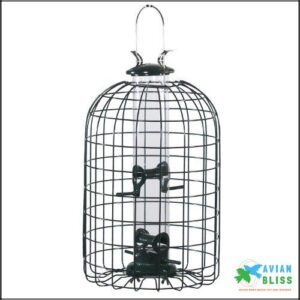
The Audubon Squirrel Proof Bird Feeder lets chickadees and finches eat in peace while blocking bullies—both four-legged and feathered. Its powder-coated steel cage wraps around a one-quart seed tube with four ports, keeping out squirrels, jays, and grackles without taking up much room.
At 9.5 inches square and just over two pounds, it won’t overwhelm a compact patio or balcony rail. You’ll fill it through the top, clean it without wrestling latches, and watch small songbirds claim their quiet corner.
| Best For | Homeowners who want to attract chickadees, finches, and sparrows without feeding squirrels or aggressive larger birds like jays and grackles. |
|---|---|
| Material | Plastic/Wire |
| Target Species | Small birds |
| Ease of Cleaning | Easy |
| Weather Resistance | Powder coated steel |
| Capacity | 1 quart |
| Installation | Hanging |
| Additional Features |
|
- Steel cage design keeps squirrels and big birds out while letting small songbirds feed safely
- Compact size fits easily on patios, balconies, or smaller yards without taking up much space
- Simple to fill and clean with no complicated latches or mechanisms
- Narrow tube opening makes refilling slightly awkward compared to wider feeders
- Baby squirrels or determined woodpeckers may still find ways to reach the seed
- Higher price point than basic tube feeders without protective caging
2. Aspects Window Cafe Window Mount Bird Feeder
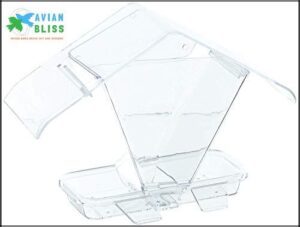
If you’d rather see chickadees eat breakfast six inches from your nose, the Aspects Window Cafe mounts flat against glass with three heavy-duty suction cups.
Its 0.75-quart polycarbonate hopper slides out for refills without peeling the whole feeder off, and the roof overhang keeps rain from turning seed into mush.
Two feeding ports let a couple of birds share the tray while you watch from your desk. At 10.5 inches long, it disappears on most windows—and the manufacturer backs it with a lifetime guarantee.
| Best For | Anyone who wants to watch small birds like chickadees and finches up close from inside their home, especially if they have pets who’d enjoy the entertainment. |
|---|---|
| Material | Plastic |
| Target Species | Small birds |
| Ease of Cleaning | Simple cleaning |
| Weather Resistance | Plastic construction |
| Capacity | Variety of seeds |
| Installation | Window mount |
| Additional Features |
|
- Super easy to refill—the seed hopper slides out so you don’t have to remove the whole feeder from the window
- Strong suction cups keep it secure, and it comes with a lifetime guarantee from the manufacturer
- The roof design protects seeds from rain and keeps them fresh longer
- Won’t work well for larger birds like cardinals since it’s designed for smaller species
- Suction cups might fail in extreme weather like heavy winds or if not installed properly
- Made in China, which might matter if you prefer buying US-made products
3. Woodlink Absolute II Squirrel Resistant Bird Feeder
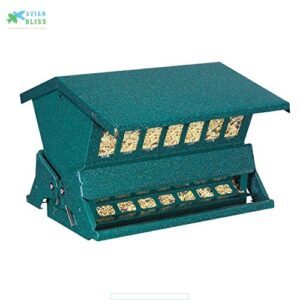
When squirrels treat every feeder like an all-you-can-eat buffet, the Woodlink Absolute II shuts them down with weight-activated perches that swing closed when anything heavier than a songbird lands. Its powder-coated steel body resists chewing, holds 12 pounds of seed, and features a locking top that raccoons can’t pry open.
You get double-sided access for multiple birds, a clear window to check seed levels, and a roof that keeps everything dry. Mount it on the included pole or hang it—either way, you’ll refill less and smile more.
| Best For | Homeowners tired of squirrels raiding their feeders who want a durable, high-capacity option that keeps songbirds fed without constant refills. |
|---|---|
| Material | Alloy Steel/Polycarbonate |
| Target Species | Variety of birds |
| Ease of Cleaning | Easy |
| Weather Resistance | Durable steel |
| Capacity | 12 lbs |
| Installation | Pole/hanging |
| Additional Features |
|
- Weight-activated perches close when squirrels or large birds land, protecting your seed investment
- Holds 12 pounds of seed with a weather-resistant design and clear windows to monitor levels
- Includes both pole and hanger options so you can mount it wherever works best in your yard
- Not completely squirrel-proof—determined squirrels may still find workarounds without extra baffles
- The included pole can feel flimsy or too short for some setups
- Gets heavy when full and some users reported sharp edges that need smoothing to keep birds safe
4. Aspects Hummingbird Feeder
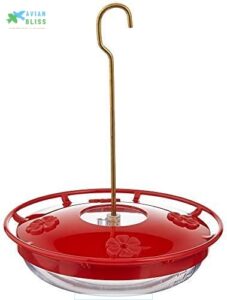
If you’d rather skip the seed mess altogether, the Aspects Hummingbird Feeder turns your yard into a nectar station for these tiny aerial acrobats. Its 12-ounce capacity and four feeding ports serve multiple birds at once, while the built-in ant moat keeps crawling pests out of the mix.
If hummingbirds still aren’t showing up, check whether common feeder placement mistakes or poor habitat setup might be keeping them away.
The bright red cover pulls hummingbirds in from blocks away, and the unbreakable polycarbonate construction survives drops, bumps, and weather swings. You’ll love the high view perch—it lets hummingbirds rest between sips, giving you unobstructed photo ops.
| Best For | Birdwatchers who want a durable, low-maintenance feeder that attracts hummingbirds while keeping ants and other pests away. |
|---|---|
| Material | Plastic |
| Target Species | Hummingbirds |
| Ease of Cleaning | Easy |
| Weather Resistance | Unbreakable polycarbonate |
| Capacity | 12 oz |
| Installation | Hanging |
| Additional Features |
|
- Built-in ant moat blocks crawling insects without extra accessories
- Unbreakable polycarbonate holds up through drops and rough weather
- High perch lets hummingbirds rest while you get clear views and photos
- Higher price point compared to basic feeders
- Lid can crack if you press it down too hard when filling
- No nectar guards means bees and wasps might still show up
5. More Birds Suet Feeder Cage
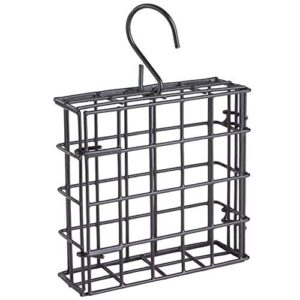
Clinging birds like woodpeckers, nuthatches, and chickadees need a feeder that matches their acrobatic style, and the More Birds Suet Feeder Cage delivers. This 5″L x 2″W x 5″H metal cage holds a single suet cake in a black powder-coated frame that weathers year-round abuse without rusting out.
The double-locking closure pops open for quick refills, and the cage grid gives birds solid footholds while they peck. Just know that squirrels and deer can reach through—you might need twist ties or an extra lock to keep raiders out.
| Best For | Backyard birders who want to attract clinging species like woodpeckers, nuthatches, and chickadees with a durable, weather-resistant suet feeder. |
|---|---|
| Material | Metal |
| Target Species | Clinging birds |
| Ease of Cleaning | Easy |
| Weather Resistance | Powder-coated finish |
| Capacity | 1 suet cake |
| Installation | Hanging |
| Additional Features |
|
- Durable powder-coated steel construction handles weather and lasts through multiple seasons
- Double-locking closure makes refilling quick and easy while keeping suet secure
- Cage grid design lets clinging birds feed comfortably in their natural style
- Squirrels and deer can reach through the cage bars to steal suet
- May need extra security like twist ties or locks to keep pests out
- Some users report squirrels chewing on the feeder despite the metal construction
6. C&S Pure Beef Suet
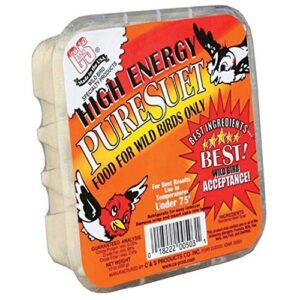
Pure beef suet gives high-energy birds a real-deal fat source—no fillers, no seeds, just rendered kidney fat that stays firm below 75°F. This C&S block attracts woodpeckers, nuthatches, and wrens while keeping invasive starlings and sparrows at bay.
One block lasts two to three months, making it the thrifty choice for year-round feeding. Just pop it into your existing suet cage and watch clinging birds work it over. In summer heat it’ll soften, so grab it at dawn before it turns sticky.
| Best For | Birders who want to attract native clinging birds like woodpeckers and nuthatches without feeding invasive species like starlings or sparrows. |
|---|---|
| Material | Beef Suet |
| Target Species | Woodpeckers/nuthatches |
| Ease of Cleaning | Moderate |
| Weather Resistance | Temperature sensitive |
| Capacity | Single block |
| Installation | Cage feeder |
| Additional Features |
|
- Pure beef fat with no fillers delivers high energy that truly appeals to woodpeckers, nuthatches, and wrens
- One block lasts two to three months, making it an economical year-round feeding option
- Naturally deters invasive species like House Sparrows, starlings, and blue jays
- Softens and becomes sticky above 75°F, so summer placement requires morning handling or shade
- Won’t attract seed-loving birds, limiting the variety of species at your feeder
- Can collect droppings and debris if not cleaned regularly
7. Goodeco Metal Bird Feeder
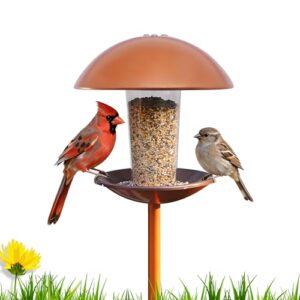
This powder-coated steel feeder weighs around 1.5 pounds and stands up to rain without flaking or rusting. Its vented seed reservoir cuts moisture buildup when summer humidity creeps in, keeping seed fresh longer.
Perches welcome chickadees and goldfinches while blocking larger grackles from hogging the ports. You’ll refill it often—that small cylinder empties fast—but setup takes seconds on a pole or shepherd’s hook.
Just watch for curious squirrels; the low height gives them easy access if you skip the 5-7-9 rule.
| Best For | Backyard birders who want a rust-resistant feeder for small songbirds like chickadees and goldfinches and don’t mind frequent refills. |
|---|---|
| Material | Metal |
| Target Species | Cardinals/small birds |
| Ease of Cleaning | Simple |
| Weather Resistance | Metal construction |
| Capacity | Small |
| Installation | Pole stand |
| Additional Features |
|
- Powder-coated steel holds up in rain and humidity without flaking or rusting
- Vented reservoir helps keep birdseed dry and fresh during humid weather
- Perch design naturally favors smaller birds while discouraging larger species
- Small seed cylinder requires frequent refilling, sometimes daily in active areas
- Low mounting height makes it easy for squirrels to reach without proper placement
- Some users report durability issues with the plastic feed cylinder feeling flimsy
Choosing The Right Feeder Type
Not every feeder works in a tight space, and picking the wrong one means wasted seed, frustrated birds, or a cluttered corner you’ll avoid looking at.
The right feeder type fits your yard’s footprint, attracts the species you want, and stays manageable when it’s time to clean or refill. Here’s how different designs solve different small-yard challenges.
Window Feeders for Minimal Space
When tiny yards leave you with zero room for traditional stands, window feeders become space savers that bring birds inches from your glass. These compact units attach with heavy-duty suction cups designed for smooth surfaces, offering unparalleled bird visibility indoors while demanding minimal outdoor footprint.
- UV-stabilized feeder materials resist cracking and maintain clarity through seasons
- Removable seed trays simplify bird feeder maintenance without disturbing mounting hardware
- Weight-activated doors on some models keep squirrels outside the protected feeding zone
For more information, check out these features of window feeders that improve birdwatching for small spaces.
Compact Tube and Suet Feeders
When floor space vanishes, tube feeders and suet feeders rise to the vertical rescue, converting slim pockets of air into thriving bird zones.
| Feature | Tube Feeders | Suet Feeders |
|---|---|---|
| Feeder Material | UV-resistant plastic, stainless steel mesh | Galvanized or powder-coated steel cages |
| Seed Capacity | Holds mixed seed or Nyjer in central tube | Fits standard 4.5×6-inch suet blocks |
| Best Tube Designs | Multiple ports with squirrelproof weighted perches | Cage-style with small openings, hinged doors |
| Suet Types | N/A | Pure beef suet, high-energy fat blocks |
| Bird Attraction | Finches, chickadees, nuthatches | Woodpeckers, wrens, starlings (larger openings) |
Squirrelproof mechanisms, such as metal reinforcement, keep pests off your seed supply, while straightforward bird feeder maintenance—weekly washes and thorough drying—prevents mold in tiny yards.
For top durability and quality, many birders trust industry-leading tube feeder construction.
Platform and Caged Feeders for Small Birds
Platform feeders and caged bird feeders offer a revelation for tiny yards: they let small birds dine together while keeping bullies at bay.
Cage spacing around 1.25–2 inches admits finches and chickadees but blocks starlings, and most platforms include drainage design to prevent soggy seed.
Small bird perches align with natural hopping patterns, while squirrelproof cages and predator deter shields protect your flock from ground threats.
Specialty Hummingbird and Nyjer Feeders
Hummingbird feeders and Nyjer seed stations turn small yard gardening into a pollinator hub. Look for nectar formulas with ant moats and bee guards, plus UV-resistant reservoirs that simplify monitoring.
For goldfinches, choose Nyjer seed types in tubes with tiny ports to cut spillage:
- Window-mount hummingbird attractants with suction cups
- Gooseneck hangers for fence-line placement
- Metal-caged Nyjer feeders that resist squirrels
Feeder durability matters—polycarbonate and stainless steel endure sun and rain in wildlife-friendly gardens.
Placement Strategies for Small Spaces
Getting a bird feeder into a small yard is half the battle—the other half is putting it where birds actually want to visit and where squirrels can’t stage a raid.
You’ll need to think about sunlight, safety from predators, and the eternal war against backyard bandits with bushy tails.
Here’s how to position your feeders so they work with your space, not against it.
Assessing Yard Layout and Sunlight

Before you hang a single feeder, map your yard’s sunlight patterns by tracking sun exposure throughout the day—you’ll discover microclimates that make or break seed freshness.
Note where morning light hits eastern exposures and afternoon sun shifts westward, creating seasonal shifts that affect bird activity. This shade analysis transforms small yard gardening into strategic outdoor space optimization, turning your backyard birding setup into a wildlife friendly garden designed with purpose.
Using Vertical Space and Wall Brackets
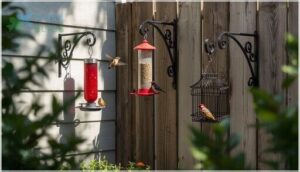
Once you know where light lands, mount bird feeder designs on vertical gardening structures—shepherd’s hooks and wall bracket options turn unused wall space into feeding stations.
Heavy-duty L brackets anchored into studs support window feeders, tube feeders, and suet feeders without eating up ground space. Choose rust-resistant bracket materials and apply washers to distribute load, ensuring your hummingbird feeders stay secure through wind and weather.
Applying The 5-7-9 Rule for Squirrels
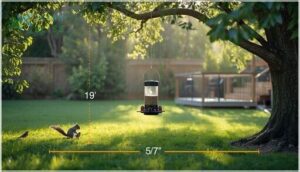
After you’ve secured those brackets, outsmart Squirrel Behavior with the 5-7-9 rule: hang your squirrelproof feeders five feet off the ground, seven feet from any launch point, and position them nine feet below overhangs.
This Vertical Barriers approach makes horizontal leaps impractical and keeps squirrels out of their jump range, turning even stubborn yard layouts into squirrel-proof zones without bulky squirrel baffle hardware.
Positioning Near Natural Cover for Bird Safety
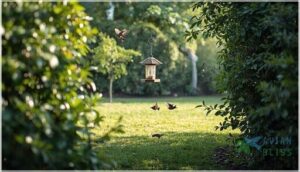
Beyond squirrel deterrence methods, smart bird feeding strategies balance access and Predator Avoidance by placing your feeder three to five feet from shrubs or low branches—close enough for quick Bird Escape Routes, far enough to prevent ambush.
In wildlife friendly gardens, this Cover Density gives small birds the Safety Barriers they need, while Seasonal Adaptation means shifting feeders slightly as foliage changes throughout the year.
Maintenance Tips for Small Yard Feeders
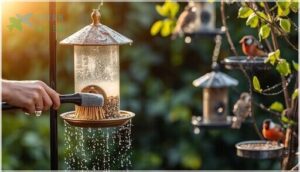
Even the best feeder becomes a health hazard when neglected, and in a small yard, you can’t afford to let maintenance slide.
Your limited space means birds will concentrate around fewer feeding stations, making regular cleaning and smart seed management absolutely essential.
Here’s how to keep your feeders fresh, safe, and attractive to the birds you actually want to see.
Regular Cleaning and Sanitation Routines
Cleaning your feeders every two weeks isn’t just housekeeping—it’s essential for bird health. Scrub tubes and cages weekly with warm, soapy water using dedicated cleaning tools, then rinse and air-dry completely for mold prevention.
Monthly sanitation schedules should include a diluted bleach solution—one part bleach to nine parts water. Inspect components for wear during feeder maintenance; worn parts compromise both hygiene and bird feeding strategies.
Preventing Seed Spoilage and Mold
Moisture ruins even premium seed faster than you’d think. Mold prevention starts with smart seed storage tips and humidity control—keep relative humidity below 60 percent and temperatures under 75 degrees.
Core seed quality safeguards:
- Store seed in opaque, airtight containers with silica gel packs to maintain dry conditions
- Check storage monthly for musty odors indicating mold development
- Discard any seed with visible mold before refilling suet feeders or tube models
Refilling and Monitoring Seed Levels
You’ll waste less seed and keep birds coming back when you check feeder levels at the same time each day. Refill when seed drops to about one-quarter full—this prevents spoilage and maintains consistent bird access without overfilling.
| Monitoring Method | Best For |
|---|---|
| Transparent tube feeders | Quick visual checks at a glance |
| Daily same-time inspection | Establishing predictable refill schedules |
| Simple refill log | Tracking bird feeding patterns and consumption |
| Clear ports on squirrel proof bird feeders | Monitoring without disturbing visitors |
| Magnetic level indicators | Automated monitoring for busy schedules |
Store seed in airtight containers following solid seed storage tips, and rotate batches to avoid old product sitting too long in suet feeders or tube models.
Attracting Diverse Bird Species With Varied Seeds
Seed variety transforms your compact setup into a hotspot for cardinals, finches, and chickadees. A strategic mix keeps bird diversity high year-round and helps bird migration energy needs with smart seed rotation every 4–6 weeks.
- Black oil sunflower seeds for cardinals and grosbeaks
- Nyjer seed in tube bird feeders for goldfinches
- Safflower to deter squirrels while attracting chickadees
- Millet for ground-foraging sparrows
- Sunflower kernels for mess-free small space gardening
Feeder placement near cover enhances visits.
Space-Saving Features and Smart Solutions
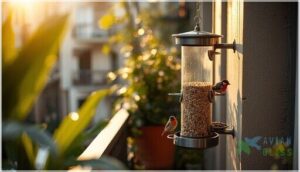
When your yard barely has room to turn around, every square inch counts.
The right feeder design can transform a cramped corner into a thriving bird station without cluttering your space or making maintenance a headache.
Here’s how modern feeders squeeze serious functionality into surprisingly small footprints.
Narrow and Rust-resistant Feeder Designs
When you’re working with tight quarters, a narrow frame built from powder-coated aluminum or stainless steel 304 brings corrosion resistance and space efficiency without sacrificing durability.
These tube feeder and caged tube feeder designs—often part of squirrel proof bird feeders—use rust prevention coatings and watertight seals to resist moisture, while their slim profiles optimize vertical real estate and keep bird feeder designs accessible for years.
Squirrel-proof Mechanisms for Compact Areas
Squirrel deterrence methods that don’t eat up precious space include weighted perches that close seed ports under heavy load, trip mechanisms that pivot away when a squirrel lands, and cage designs with wire spacing tight enough to exclude bushy-tailed raiders.
A squirrel baffle mounted above your feeder creates a barrier that works even in cramped layouts, while motion deterrents use solar-powered pulses to startle without alarming songbirds.
Clear Tubes and Easy-clean Features
Transparent construction offers tube design benefits you’ll appreciate every time you glance outside—no guesswork about when to refill.
UV-resistant plastic resists sun damage, while removable end caps and dishwasher-safe trays simplify bird feeder maintenance and care.
Anti-mold features like ventilated caps and quick-drain channels keep seed fresh longer, protecting small bird species from spoiled food in your squirrel-proof bird feeders.
Smart Feeders With Real-time Monitoring
Wi-Fi-enabled smart feeders pair sensor technology with feeder cameras to log every visitor, sending real-time alerts when seed runs low or a rare species arrives.
Data analytics track feeding patterns over weeks, while feeder automation adjusts portions based on bird species tracking—essential for squirrel-proof bird feeders in tight quarters.
Bird feeder reviews confirm these devices simplify bird feeder maintenance and care, letting you monitor from indoors.
Frequently Asked Questions (FAQs)
What is the 5 7 9 rule for bird feeders?
Good fences make good neighbors—and smart spacing keeps squirrels at bay.
The 5-7-9 rule places feeders five feet high, seven feet from structures, and nine feet below branches, minimizing squirrel raids while supporting bird safety.
Why should you sprinkle coffee grounds around your bird feeder?
Coffee grounds around bird feeders improve soil enrichment for nearby plants, act as a squirrel deterrent, attract worms that draw small birds, and support ecosystem balance while serving as garden mulch in wildlife friendly gardens.
What month should you put out bird feeders?
Start feeding in early fall—around September in Ashburn, Virginia—when seasonal shifts trigger bird arrival and migration.
Winter feeding helps backyard birding through cold snaps, while climate timing adjusts your small birds’ bird conservation strategy perfectly.
Why put a potato in the bird feeder?
You may think it’s odd, but potatoes in bird feeders deliver high-energy carbs that help backyard birding friends—especially small birds—survive winter’s chill, offering essential energy sources and feeder variety when natural food is scarce.
How do I keep cats away from bird feeders?
Install pole-mounted squirrel proof bird feeders at least 10 feet from structures, add a squirrel baffle or predator control guard below, and position motion sensors to trigger deterrents when cats approach the feeding zone.
Whats the best seed for winter bird feeding?
Black oil sunflower seeds deliver high-fat nutrition for chickadees and cardinals, while nyjer seed draws finches.
Smart seed selection boosts bird attraction—store fresh options in airtight containers to maintain feeder capacity year-round.
Can bird feeders attract unwanted pests or rodents?
Yes—seed spills and poor feeder hygiene draw mice, rats, and squirrels fast. Squirrel-proof designs, baffles, regular cleaning, and rodent-proof seed storage keep pests away while protecting your bird-watching setup.
How many feeders should I use in small yards?
Don’t put all your eggs in one basket. Start with a single tube or platform feeder to gauge bird traffic, then add specialty feeders spaced six to ten feet apart to enhance backyard birding without overwhelming your small space.
Do bird feeders need to be moved seasonally?
Feeders don’t require seasonal moves, but shifting them closer to sheltered spots during winter or near cover in migration windows helps small birds refuel safely while protecting seed from harsh weather.
Conclusion
Suburban homeowners with wraparound porches get commemorative plaques; you get three square feet and a dustpan. Yet your setup—strategic bird feeders for small yards, weighted perches, vertical mounts—will outperform their sprawling lawn ornaments.
Chickadees don’t measure success in acreage. Clean your feeders weekly, apply the 5-7-9 rule, and watch cardinals claim your balcony railing like it’s prime real estate. Turns out, the best bird habitat isn’t the biggest. It’s the one that actually works.