This site is supported by our readers. We may earn a commission, at no cost to you, if you purchase through links.
You filled the feeder, hung it in the yard, and waited. Nothing.
A week later, still nothing—just a full feeder and a growing suspicion that your birds moved on without leaving a forwarding address.
Birds aren’t random in their habits. They’re cautious, selective, and surprisingly opinionated about where they eat.
A feeder that feels unsafe, smells off, or sits in the wrong spot gets ignored fast.
The fix is usually simple once you know what to look for—and most problems come down to a short list of factors well within your control.
Table Of Contents
- Key Takeaways
- Why Aren’t Birds Visiting My Feeder?
- Is My Bird Feeder Set Up Correctly?
- Does My Bird Food Attract The Right Birds?
- How Can I Make My Yard More Bird-Friendly?
- What Maintenance Keeps Birds Coming Back?
- Frequently Asked Questions (FAQs)
- Can weather patterns explain sudden feeder abandonment?
- Do nearby feeders reduce birds at mine?
- How does fledging season affect feeder traffic?
- Should I use multiple feeder heights simultaneously?
- Can keeping a bird journal improve results?
- Do certain feeder colors deter or attract birds?
- How does neighborhood bird population density impact visits?
- Does feeder height affect which bird species visit?
- Conclusion
Key Takeaways
- Birds skip feeders that feel unsafe — wrong placement, no nearby cover, or a single hawk flyover can shut down visits for days.
- Seed quality matters more than most people realize; old, moldy, or cheap filler seed sends birds elsewhere faster than an empty feeder ever would.
- Small setup details — feeder height, staging perches, and a shallow water source — often do more work than the feeder itself.
- Consistency is what keeps birds coming back: clean feeders, fresh seed on a reliable schedule, and native plants turn a yard into a place birds actually want to stay.
Why Aren’t Birds Visiting My Feeder?
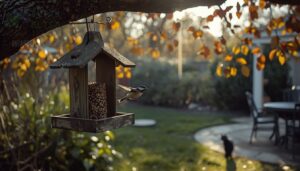
You’ve filled the feeder, picked a decent spot, and waited — but the birds just aren’t showing up. It’s frustrating, but the fix is usually simpler than you’d think.
A quick look at bird food tips for beginner bird watchers can help you figure out if the wrong seed — not just the spot — is keeping birds away.
few key things tend to drive birds away, and once you know what they’re doing, you can actually do something about it.
Common Reasons Birds Avoid Feeders
Birds don’t avoid feeders randomly — there’s always a reason. Providing appropriate food types like sunflower and nyjer can boost visitation. Most cases come down to a handful of fixable problems:
- Predators nearby make birds skittish, sometimes for days after a single sighting.
- Old or moldy food and wet seed signal danger through smell and texture.
- Poor placement exposes birds to sun glare, loud noise, or open sky with no escape cover.
- Dirty or unmaintained feeders, unfamiliar feeder color, airborne pesticides, and competition from other feeders quietly push birds elsewhere.
How Bird Behavior Affects Feeder Visits
Even when your setup looks right, behavior drives the real traffic. Territorial signaling from dominant residents blocks newcomers at peak dawn timing — prime hours when social hierarchy plays out fast.
Intra-species competition shortens every visit. Predator vigilance shrinks the crowd after just one hawk flyover.
Your bird behavior analysis should watch for these patterns:
- Early arrivals claim best perches
- Subordinate species wait or leave
- Predator presence clears feeders instantly
- Vocal alerts trigger group departures
- Quiet yards rebuild trust faster
Seasonal and Migration Influences
Seasons rewrite the rules entirely. Migration timing isn’t random — songbirds follow photoperiod effects, meaning day length triggers departure more reliably than temperature.
Once migration begins, your feeder sits right in the middle of the action. Insect emergence timing pulls insectivores away in spring, while weather-driven feeding shifts push cold-stressed birds back during storms.
Migration stopover quality matters too — high-fat seeds fuel transients between waves.
Is My Bird Feeder Set Up Correctly?
Sometimes the feeder itself is the problem, not the birds; where you place it, what style you choose, and whether birds feel safe enough to land all matter more than most people realize.
A good starting point is understanding where to place a bird feeder in your yard for both visibility and safety.
A few small adjustments can change everything.
Feeder Placement and Visibility
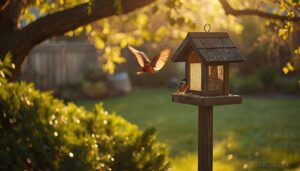
Think of your feeder as real estate — location is everything.
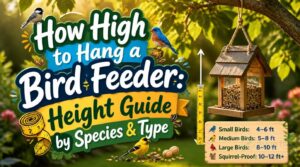
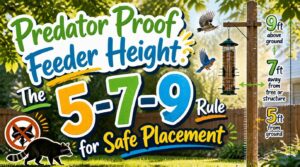
For smart feeder placement and height considerations, mount it four to six feet off the ground and keep it ten to fifteen feet from trees or shrubs. That sweet spot gives birds’ clear sightlines while keeping escape routes close.
Tuck it into quiet areas near trees rather than open lawns, and avoid spots directly under dense canopies.
Morning sun exposure helps too — it acts as one of the strongest visual cues for birds starting their day early.
Choosing The Right Feeder Type
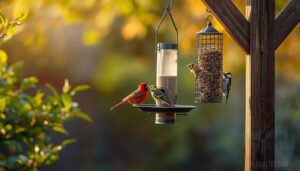
Not all feeders are created equal — and the wrong one is basically a "no birds allowed" sign.
Match your feeder design to your target species:
- Tube feeders attract finches and chickadees through small port openings that limit access to compact bills.
- Platform or tray styles welcome cardinals and larger ground-feeders who need wide, open feeding surfaces.
- Suet cages bring in woodpeckers, especially through winter.
When selecting appropriate feeder types, consider materials too. Metal vs. plastic matters — metal ports last years longer. Clear seed windows let you monitor levels fast. Weatherproof finishes and squirrel baffles keep things running smoothly between cleanings.
Using Staging Perches and Shelter
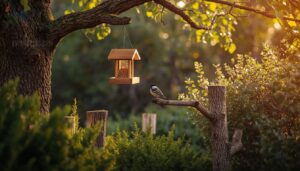
Birds won’t land where they feel exposed — that’s just behavioral ecology in action. Before approaching your feeder, most songbirds need a staging perch to scan for threats.
Place stable, rough-barked perches 4–6 feet from the feeder, following smart feeder placement guidelines and Perch Height Optimization principles.
- Perch Diameter Variety: Use natural wood between 0.6–1.25 inches wide. Different species need different grip sizes.
- Shelter Placement Strategy: Position low shrubs or brush piles within 3–5 feet of perches, providing shelter near feeders without blocking sightlines.
- Predator Guard Integration: Follow Material Safety Guidelines — untreated wood only, no toxic finishes — and add baffles below perch brackets.
Nail perch placement, and birds will show up like they’ve been waiting for an invitation.
Does My Bird Food Attract The Right Birds?
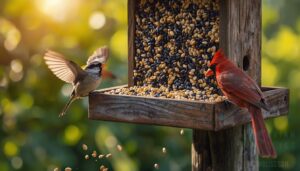
The feeder might be fine, but what’s inside it could be the real problem. Birds are picky — and they know the difference between good seed and cheap filler.
Here’s what actually works.
Best Seed Types for Local Species
Not all seeds pull equal weight.
Black Oil Sunflower is your go-to — finches, nuthatches, and blue tits can’t resist it.
Add Nyjer Thistle in a fine-port feeder, and goldfinches will show up reliably.
White Proso Millet brings in ground feeders like doves.
Cold snaps? A Suet Blend keeps resident birds fueled.
Match your seed preferences for birds you actually see, and you’ll fill your feeder fast.
Problems With Old or Low-Quality Seed
Old seed is a silent feeder killer. Moisture and heat trigger Mold Growth fast — and once that happens, birds can smell it and stay away. Seed Coat Damage weakens kernels, cutting Germination Decline from 85% down to 40% in under six months. Nutrient Depletion follows, leaving birds with empty calories. Spoiled seed also causes Inconsistent Emergence in any spilled growth nearby.
Here’s how to keep seed quality sharp:
- Store black-oil sunflower and Nyjer in airtight containers — seed storage and freshness go hand in hand.
- Sniff before you fill; fresh bird seed smells nutty, not sour.
- Toss anything clumped, dusty, or discolored — seed spoilage prevention starts with your eyes.
- Clean feeders before every refill to stop mold from contaminating your next batch.
Avoiding Filler Seeds and Human Food
Cheap mixes are basically junk food for your yard. Filler seeds like red milo and cracked corn have poor Nutrient Dense Blends value — they’re high in carbs, low in fat and protein, and most songbirds won’t touch them. Starlings and grackles will, though. That’s not the guest list you want.
Premium Seed Ratios: black-oil sunflower for cardinals and chickadees, Nyjer for goldfinches. Fresh bird seed smells nutty and clean — that’s your quality check. Seed freshness and spoilage go together, so Pest-Free Storage in sealed containers matters.
human food scraps at feeders is non-negotiable. Chocolate, avocado, and salty table scraps trigger real harm. Human food scraps also pull in rodents fast. Keep it simple — quality seed only.
How Can I Make My Yard More Bird-Friendly?
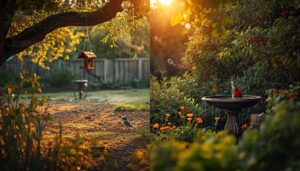
feeder alone won’t cut it — birds need a yard that actually feels safe and livable. Think of it less like a restaurant and more like a neighborhood they’d want to settle into.
smart changes to your space can make a real difference, starting with these.
Landscaping With Native Plants
Your yard is either a dead zone or a living habitat — native plants make the difference. When you layer native plant guilds (groundcover, shrubs, canopy trees), you create true habitat layering that birds instinctively seek out. Seasonal bloom sequences keep food available all year, and deep‑rooted natives deliver real soil health improvement and water‑efficient design.
Native plants transform your yard from a dead zone into a layered habitat birds instinctively seek out
landscaping moves that transform bird attraction strategies:
- Plant Festuca grasses for winter insect cover
- Add coneflowers and black-eyed Susans for seed heads
- Group shrubs in guilds for shelter and habitat enhancement
Providing Fresh Water Sources
Native plants bring the birds in — fresh water keeps them there. Shallow Bird Baths with 1–2 inches of water work for most species, but adding Dripper Fountains or Misting Sprinklers makes your setup far more visible and inviting. Movement catches their attention instantly. Natural Rock Pools mimic forest-floor water features and pull in ground-foragers too. Build a reliable water source for birds with these basics:
- Replace water daily in warm weather to stop bacterial buildup
- Position your bird bath 4–6 feet from dense cover for safe escape routes
- Add a Heated Winter Water source or heated birdbath so water stays liquid when temps drop
- Scrub weekly with hot water — skip the chemicals
Providing water sources for backyard birds year‑round consistently increases daily visits.
Reducing Predator and Pest Threats
Fresh water draws birds in — but predators push them right back out.
Start with Squirrel Baffle Strategies: mount baffles 4–5 feet up your pole to stop climbing raccoons and squirrels cold. Squirrel-proof feeders with weight-activated perches handle the rest.
For ground threats, clear a 10-foot radius around your setup and trim shrubs low.
- Use Motion Light Deterrents — they activate fast and startle without scaring off birds
- Practice Predator Activity Logging weekly to spot patterns early
- Apply Sealed Seed Storage in metal containers to cut off rats and mice
- Consider Electric Fence Design for persistent ground predator problems
What Maintenance Keeps Birds Coming Back?
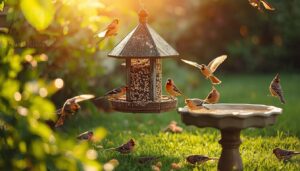
Getting birds to show up is one thing — keeping them around is another. A little routine goes a long way, and most of it takes less time than you’d think.
Here’s what actually makes the difference.
Cleaning and Disinfecting Feeders
A dirty feeder is a quiet "stay away" sign. Clean your feeders every two weeks — weekly when it’s hot or rainy.
Scrub with warm soapy water first, then use a bleach solution ratio of 1 part bleach to 9 parts water. Let it soak for 10 minutes. Rinse completely, then follow a simple air drying procedure: let every part dry fully before refilling.
Prefer eco-friendly disinfectants? White vinegar works for routine feeder hygiene. Either way, mold and spoilage in seed starts here.
Maintaining a Consistent Feeding Schedule
A clean feeder earns trust — but an unpredictable one loses it fast. Birds are creatures of habit, and your feeding schedule matters more than most people realize.
Aim for Morning Dawn Feeding and Evening Dusk Feeding as your two anchors. Stick within a 15-minute window daily.
- Use Reminder Alerts on your phone to stay consistent
- Keep Routine Logging in a simple notebook or app
- Maintain Feeder Height Consistency so birds recognize their spot
- Shift times 15–30 minutes seasonally as a seasonal feeding strategy
Monitoring Feeder Activity and Adjustments
Monitoring feeder activity and adjusting strategies doesn’t have to be complicated. Set up a simple log — visit times, species, weather correlation notes — and review it weekly.
Sensor calibration on perch-mounted counters adds precision, tracking visit duration metrics and flagging drops automatically via an automated alert system.
When data trend analysis shows two straight weeks of low visits, act: tweak feeder placement guidelines, swap seed, or add a perch.
Frequently Asked Questions (FAQs)
Can weather patterns explain sudden feeder abandonment?
Weather acts like a volume knob on feeder activity. Temperature extremes, rainfall impact, snow cover effects, and wind chill influence and trigger sudden shifts.
During drought stress, birds actually return more — natural food disappears fast.
Do nearby feeders reduce birds at mine?
Yes, neighboring feeders create feeder competition through resource dilution and species overlap.
Birds redistribute across available sites, so your feeder gets a smaller share of visits — especially if nearby options offer higher-value seed.
How does fledging season affect feeder traffic?
Fledging season brings a juvenile demand surge — young birds trailing parents to your feeder, creating temporal traffic spikes.
Parent foraging shifts intensify briefly, then fledgling vulnerability and bird migration scatter the crowd quickly.
Should I use multiple feeder heights simultaneously?
Absolutely — integrating multiple feeder heights is one of the smartest feeder placement and height considerations you can make. Height diversity benefits every species differently. Doves forage near the ground around three feet, chickadees prefer mid-height stations, and cardinals favor elevated perches above five feet. That’s species’ perching preferences working in your favor.
A staggered setup also manages spill reduction naturally, since higher feeders stay drier and waste less seed. Just watch for collision risk management — keep flight paths clear and align heights with nearby branches.
Adjust your layout seasonally too; seasonal height adjustment matters when migration brings new visitors with different habits.
Can keeping a bird journal improve results?
Purposeful, patient, precise — that’s what separates a good birder from a great one.
Keeping a journal turns casual watching into real pattern recognition, helping you track species, timing, and feeder placement with confidence.
Do certain feeder colors deter or attract birds?
Color does matter. Green and silver feeders tend to attract more visits, while red or yellow can deter some species.
Match your feeder color to your target birds for best results.
How does neighborhood bird population density impact visits?
More birds nearby means more visits — but also more competition.
Dense neighboring bird populations boost visit frequency by 10–40%, speed up social cue transmission, and trigger earlier morning burst timing and greater species richness.
Does feeder height affect which bird species visit?
Yes — feeder height matters. Ground-level visitors like sparrows and juncos prefer low platforms. Mid-range attractors (4–5 ft) suit cardinals and chickadees. Higher placements benefit finches and reduce squirrel access.
Conclusion
The birds were there all along—you just hadn’t earned their trust yet.
Understanding why birds aren’t coming to my feeder starts with seeing your yard through their eyes: every perch, every shadow, every stale seed sends a signal.
Fix the placement, freshen the food, clean the feeder, and add water.
Do those things consistently, and patience stops being a strategy—it becomes unnecessary.
The birds will simply show up.