This site is supported by our readers. We may earn a commission, at no cost to you, if you purchase through links.
Your parrot’s barely audible wheeze might seem like nothing—until you realize that by the time most avian respiratory infections produce obvious symptoms, fungal colonies have already established deep within the lung tissue. Unlike bacterial infections, which announce themselves quickly, fungal respiratory issues in birds operate as stealth invaders, exploiting compromised immune systems and contaminated environments with exceptional efficiency. Species like African greys, Amazon parrots, and cockatiels face particularly elevated risk due to their anatomical susceptibility and captive husbandry challenges.
The fungus Aspergillus fumigatus, ubiquitous in our homes yet usually harmless to humans, transforms into a life-threatening pathogen when inhaled by birds whose air sac systems—designed for the metabolic demands of flight—provide expansive surfaces for spore germination.
Understanding the interplay between environmental triggers, immune function, and clinical presentation becomes essential for anyone committed to safeguarding their feathered companion’s respiratory health.
Table Of Contents
- Key Takeaways
- What Are Fungal Respiratory Issues in Birds?
- Causes of Fungal Respiratory Infections
- Risk Factors for Bird Fungal Infections
- Recognizing Symptoms in Infected Birds
- Diagnosing Fungal Respiratory Diseases
- Treatment and Prevention Strategies
- Frequently Asked Questions (FAQs)
- What are the symptoms of a fungal respiratory infection?
- Can birds recover from aspergillosis?
- What are two clinical signs of Aspergillus in birds?
- How to treat fungal infection in birds?
- Can fungal infections spread between different bird species?
- How long does aspergillosis treatment typically last?
- Are there home remedies for mild fungal infections?
- What disinfectants effectively kill airborne fungal spores?
- Can birds fully recover from chronic aspergillosis?
- Conclusion
Key Takeaways
- Fungal respiratory infections like aspergillosis often go unnoticed until they’re advanced, making early detection crucial for your bird’s survival.
- Environmental management—especially cage hygiene, air quality control, and humidity below 60%—dramatically reduces your bird’s risk of inhaling dangerous fungal spores.
- Birds with weakened immune systems, poor nutrition, or chronic stress are far more likely to develop severe, life-threatening fungal infections.
- Successful treatment combines long-term antifungal medication with supportive care and strict environmental prevention, as these infections rarely spread directly between birds but thrive in contaminated surroundings.
What Are Fungal Respiratory Issues in Birds?
Fungal respiratory diseases represent one of the most challenging diagnostic scenarios you’ll encounter in avian medicine, primarily because the clinical signs often mirror bacterial infections, viral diseases, and even metabolic disorders—making early differentiation critical for your bird’s survival.
Understanding the differences between fungal and bacterial respiratory infections can help you recognize when your bird needs specialized antifungal treatment rather than standard antibiotics.
Fungal respiratory diseases in birds are notoriously hard to diagnose because their symptoms closely mimic bacterial, viral, and metabolic disorders
Aspergillosis, caused by ubiquitous Aspergillus species (particularly A. fumigatus and A. flavus), dominates the landscape of fungal respiratory pathology in captive and wild avian populations, though other mycotic agents can occasionally colonize compromised respiratory tissues.
Understanding what these infections are, how they manifest across different bird species, and why they pose such a significant threat to avian health will equip you with the knowledge to recognize early warning signs and seek appropriate veterinary intervention.
Definition of Fungal Respiratory Diseases
Fungal respiratory diseases—infections triggered when your bird inhales environmental fungal spores—infiltrate the lungs and airways, where they provoke inflammatory cascades that manifest as coughing, nasal discharge, and labored breathing. While avian respiratory diseases can strike healthy birds, you’ll find that fungal respiratory issues, particularly aspergillosis and other avian pathogens, disproportionately affect immunocompromised individuals with chronic illnesses; these insidious fungal infections don’t usually spread bird-to-bird through casual contact but rather through environmental exposure to contaminated substrates. Research into reveals that environmental management is essential in reducing disease risk.
Understanding fungal respiratory issues requires recognizing several critical characteristics:
- Infection mechanism: Fungal spore inhalation initiates respiratory disease when environmental fungi colonize your bird’s delicate pulmonary tissues
- Clinical presentation: Chronic ill thrift and progressive respiratory failure often replace sudden-onset illness in affected avian species
- Fungal toxicity: Inflammatory responses to fungal pathogens compromise gas exchange and tissue integrity
- Transmission dynamics: Infection control focuses on environmental management rather than bird-to-bird isolation protocols
- Immune dependency: Your bird’s immunological status determines whether inhaled spores cause subclinical colonization or life-threatening disease
Common Types Affecting Birds (e.g., Aspergillosis)
Among the respiratory diseases that threaten your bird’s health, aspergillosis—caused by Aspergillus fumigatus—stands as the predominant fungal infection, accounting for the majority of avian mycoses you’ll encounter in both domestic and wild species.
While other fungal pathogens (Candida, Cryptococcus) occasionally colonize respiratory tissues, Aspergillus represents the most clinically significant respiratory disease requiring aspergillosis treatment to preserve avian health.
For a detailed overview of risk factors for avian aspergillosis, consult current veterinary guidance.
How These Infections Impact Avian Health
Understanding aspergillosis requires recognizing how fungal load accumulates in your bird’s airways—spores colonize lung tissue and air sacs, compromising gas exchange and escalating respiratory failure if infection control measures aren’t implemented promptly.
This respiratory disease threatens bird welfare through:
- Chronic inflammation that scars lung parenchyma, permanently reducing oxygen uptake
- Secondary bacterial infections complicating treatment protocols in avian medicine
- Systemic dissemination to visceral organs, dramatically increasing avian mortality risk
Early intervention safeguards bird health.
Causes of Fungal Respiratory Infections

Understanding what triggers fungal respiratory infections in your birds—particularly aspergillosis, caused by ubiquitous Aspergillus spores—requires examining the intersection of environmental contamination, compromised immune defenses, and suboptimal husbandry practices.
Keeping feeders sanitary is one of your most powerful defenses—proper cleaning routines for bird feeders directly reduce spore buildup and minimize infection risk.
While Aspergillus fungi exist virtually everywhere in nature, certain conditions dramatically increase your bird’s vulnerability to clinical disease. Let’s explore the three primary causative factors that create the perfect storm for respiratory fungal infections.
Environmental Sources of Fungal Spores
Your bird’s respiratory health hinges on recognizing where Airborne Pathogens originate—both Outdoor Spores from soil, compost piles, and agricultural dust, and Indoor Mold thriving in damp HVAC ducts, overwatered houseplants, and water-damaged building materials. Understanding these Environmental Hazards is essential because Aspergillus and related fungal infections causing Aspergillosis and other avian mycoses proliferate wherever moisture meets organic matter, creating Fungal Contamination hotspots that threaten your bird’s respiratory health.
| Outdoor Environmental Sources | Indoor Environmental Sources |
|---|---|
| Soil, leaf litter, compost piles | HVAC systems, damp ducts |
| Forest/agricultural soils, manure | Houseplants, potted soils |
| Barns, stalls, moldy feed/bedding | Basements, kitchens, carpets |
| Construction sites, dust events | Water-damaged drywall, wallpaper |
| Rain splash, wind resuspension | Insulation, porous wall materials |
Bird Immune System Vulnerabilities
Immune System Weakness exposes your bird to Fungal Disease Susceptibility because avian defenses—heterophils analogous to mammalian neutrophils, the Bursa of Fabricius orchestrating B-cell maturation, and mucosal barriers lining the respiratory tract—fail when compromised by stress, malnutrition, or concurrent disease.
You should recognize that immunocompromised birds face heightened risk through:
- Corticosterone surges suppressing leukocyte activity and antibody production
- Vitamin A, D, E deficiencies impairing phagocyte function and epithelial integrity
- Microbiome Imbalance diminishing local respiratory tract defense against opportunistic avian mycoses
Husbandry and Hygiene Factors
Beyond genetics and immunity, your Husbandry Practices directly shape Fungal Spores exposure—Cage Cleaning frequency, Ventilation Systems providing ≥10 air changes hourly, and rigorous Hygiene Protocols collectively reduce environmental contamination by 90%.
Poor Air Quality, coupled with humidity >60%, transforms housing into a fungal incubator; that’s why Disease Prevention in Birds hinges on thorough Bird Care and Husbandry safeguarding the Avian Respiratory System against opportunistic Fungal Infections in Birds through relentless attention to Bird Health and Hygiene.
Risk Factors for Bird Fungal Infections
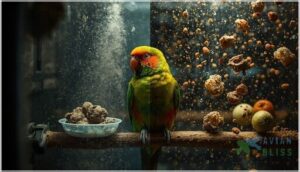
While Aspergillus spores exist virtually everywhere in your bird’s environment—from soil particles to aging food substrates—not every avian companion will develop clinical aspergillosis.
Your bird’s susceptibility to this opportunistic fungal pathogen depends on several interconnected factors, ranging from genetic predisposition and immune competence to environmental conditions within the enclosure.
Understanding these risk factors helps you to identify vulnerabilities specific to your bird’s species, health status, and housing situation.
Species Susceptibility and Genetic Predisposition
Your bird’s DNA can set the stage for respiratory vulnerability long before the first spore lands—genetic variance among species creates uneven fungal resistance, making some lineages naturally prone to avian aspergillosis while others mount strong defenses.
Consider these key susceptibility patterns:
- Species immunity differences: Parrots, finches, and cockatiels show distinct genetic predisposition profiles affecting respiratory problems in pet birds.
- Bird lineage variations: Certain breeding lines carry innate airway immune weaknesses that impair recognition of Aspergillus antigens.
- Inherited defense mechanisms: Polymorphisms in pattern recognition receptors determine how aggressively your bird’s system reacts to fungal infections in birds.
Effects of Stress, Malnutrition, and Illness
When you skimp on your bird’s diet or allow prolonged stress to linger, you’re effectively handing avian aspergillosis an engraved invitation—chronic stress elevates cortisol, which suppresses lymphocyte production and weakens mucosal barriers, while malnutrition effects directly impair neutrophil function and antibody synthesis.
Illness synergy compounds this vulnerability; preexisting respiratory mycoses create ideal niches for fungal infection proliferation, and hormonal responses during stress disrupt cytokine profiles that ordinarily mount antifungal defenses. Nutritional recovery with adequate protein, zinc, and vitamin D can restore immune system resilience against respiratory mycoses.
Impact of Ventilation and Humidity
When your aviary’s ventilation systems fail to exchange air every 60 to 120 minutes, fungal spore reduction becomes nearly impossible—stagnant conditions allow Aspergillus and other respiratory mycoses to flourish, particularly when humidity management lapses above 60 percent.
Proper air quality control, balanced humidity (ideally 40–60%), and continuous ventilation directly protect avian respiratory system function and prevent devastating fungal infections that compromise bird respiratory health.
Recognizing Symptoms in Infected Birds
Early detection of aspergillosis and other fungal respiratory diseases can mean the difference between successful treatment and devastating outcomes—but you’ll need to recognize what doesn’t look right in your bird’s behavior and breathing patterns.
The clinical signs of fungal infection aren’t always dramatic at first, which means you must watch for subtle changes that develop gradually over days or weeks. Let’s examine the key respiratory, behavioral, and secondary manifestations that signal your bird may be fighting a fungal infection.
Respiratory Distress Signs (tail Bobbing, Coughing)
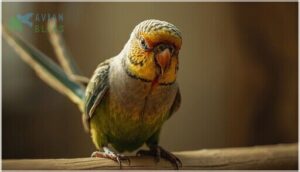
When your bird’s tail bobs rhythmically with each breath—muscles straining to expand the chest against rising airway obstruction—you’re witnessing a cardinal sign of respiratory failure.
Coughing fits, often high-pitched clicks or gasps rather than human-style coughs, signal airway irritation from aspergillosis or other fungal infections compromising avian respiratory system function; open-beak breathing and extended neck postures accompanying tail bobbing demand immediate veterinary intervention for breathing difficulty.
Behavioral and Physical Changes (lethargy, Weight Loss)

Lethargy signs—ruffled posture coupled with hours-long perching inactivity—reveal your bird’s energy levels plummeting as respiratory struggle from avian aspergillosis diverts metabolic resources toward immune defense; weight loss, measurable across the prominent keel bone (sternum), reflects diminished appetite and muscle wasting, while feather quality deteriorates from neglected preening.
Weight loss and diminished appetite are classic behavioral markers distinguishing fungal infection from transient illness in bird health and diseases surveillance.
Secondary Infections and Complications
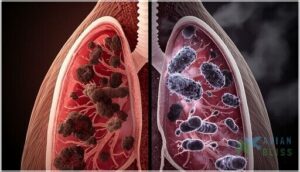
Beyond that visible wasting, secondary bacterial infections often layer onto fungal pneumonia—compounding respiratory failure and raising sepsis risk when pathogens spread from air sacs into bloodstream circulation.
Co-infections thrive under immune suppression, demanding simultaneous antifungal treatment and targeted antibiotics; worsening breath sounds, new nasal discharge, or persistent fever despite initial avian aspergillosis therapy all signal that opportunistic invaders have taken hold in already compromised respiratory tissues.
Diagnosing Fungal Respiratory Diseases
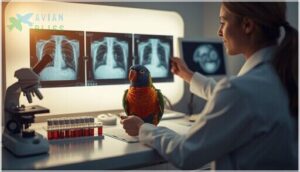
Diagnosing fungal respiratory diseases in your bird requires a combination of clinical expertise and specialized testing—unfortunately, visual symptoms alone won’t reveal the full picture of what’s happening inside your bird’s respiratory system.
Your avian veterinarian will employ several diagnostic approaches, ranging from basic blood work to sophisticated imaging techniques, each offering unique insights into the presence and extent of fungal colonization. Let’s examine the primary diagnostic methods your vet might use to confirm aspergillosis or other fungal infections.
Clinical Exams and Blood Tests
Your veterinarian begins with a thorough physical examination—checking your bird’s respiratory effort, nasal discharge, and overall body condition—before proceeding to avian hematology and blood smear analysis to detect inflammation or immune responses characteristic of fungal infections in birds. Fungal serology and respiratory culture may follow to identify Aspergillus species, while blood chemistry panels guarantee that your bird’s liver and kidneys can tolerate antifungal therapy safely.
- Physical exams reveal nasal discharge, abnormal lung sounds, and weight loss
- Complete blood counts detect white blood cell elevation indicating infection
- Serology tests identify antibodies against Aspergillus and other fungal pathogens
Imaging and Advanced Diagnostics
Once initial bloodwork points toward infection, diagnostic imaging becomes your next powerful ally—radiography often reveals subtle lesions in the lungs and air sacs, while computed tomography provides cross-sectional views that pinpoint fungal granulomas with remarkable clarity. Magnetic resonance imaging and nuclear medicine techniques, though less common, can assess airway inflammation and metabolic activity when aspergillosis spreads beyond the respiratory tract; contrast agents improve vessel delineation during these procedures, allowing your avian veterinarian to map the full extent of disease and tailor antifungal treatment accordingly.
| Imaging Modality | Primary Application | Key Advantage |
|---|---|---|
| Radiography (X-ray) | Lung patterns, air sac evaluation | Widely available, cost-effective |
| Computed Tomography | Cross-sectional airway visualization | Detects early granulomas |
| Magnetic Resonance Imaging | Soft tissue contrast, CNS assessment | Outstanding for inflammation mapping |
Laboratory Testing for Aspergillus
Molecular diagnostics reveal the fungal puzzle when imaging alone doesn’t tell the complete story. Your veterinarian will collect serum for galactomannan antigen detection via enzyme immunoassays like Platelia Aspergillus EIA, employ DNA analysis through polymerase chain reaction assays targeting Aspergillus species-specific genes, and measure beta-D-glucan to support clinical suspicion of invasive aspergillosis before initiating antifungal medications.
Key laboratory tests for fungal identification include:
- Serum testing for precipitating antibodies (IgG), which reveals prior exposure and helps confirm chronic infection
- Bronchoalveolar lavage fluid analysis, offering higher sensitivity for galactomannan than blood alone
- PCR-based molecular diagnostics from respiratory specimens, delivering rapid results that outpace traditional culture methods
- Beta-D-glucan assays, which indicate fungal burden but require clinical correlation due to cross-reactivity with other fungi
Treatment and Prevention Strategies

Once you’ve confirmed aspergillosis or another fungal respiratory infection in your bird, you’ll need to tackle treatment with a multi-pronged approach—antifungal medications work hand-in-hand with environmental adjustments and immune support to give your feathered companion the best chance at recovery.
Prevention, meanwhile, hinges on the same principles: keeping fungal spores at bay through careful husbandry and ensuring your bird’s defenses stay strong.
Here’s what you need to know about managing and preventing these challenging infections.
Antifungal Medications and Supportive Care
When you’re confronting aspergillosis or other fungal infections in your bird, antifungal therapy with azoles—such as itraconazole or voriconazole—forms the cornerstone of treatment, though drug resistance remains a concern that requires vigilant medication safety protocols.
Supportive care, including tube feeding, humidity adjustments, and hydration management, accelerates bird recovery by alleviating respiratory distress while antifungal medications work systemically to halt fungal treatment-resistant spores.
Cage Hygiene and Environmental Management
Beyond pharmaceutical intervention, you’ll need to master rigorous cage sanitation practices—daily waste removal and twice-weekly bedding replacement—to eliminate fungal spores from your bird’s immediate environment, thereby reducing aspergillosis recurrence.
Effective fungal prevention through environmental management in avian medicine and surgery hinges on four pillars:
- Maintain cross ventilation systems with 40–60% humidity control to deter mold proliferation
- Disinfect non-porous cage surfaces using pet-safe antifungal agents
- Replace damp substrates promptly to prevent spore accumulation
- Monitor air quality continuously to safeguard bird respiratory health
Boosting Immunity and Reducing Risk Factors
Immune System fortification demands multifactorial vigilance—you can’t simply medicate your way out of recurrent Fungal diseases without addressing nutritional deficits, environmental stressors, and preventive care protocols that underpin Bird Health and Disease Prevention in Avian Aspergillosis cases.
| Strategy | Implementation | Immune Benefit |
|---|---|---|
| Immune Diet | 1.0–1.2 g protein/kg daily plus antioxidant-rich produce | Aids cytokine production and cellular defense |
| Stress Management | 10–15 minute mindfulness sessions; consistent sleep schedules | Reduces cortisol-mediated immunosuppression |
| Proper Hygiene + Safe Environment | Cross-ventilated housing with 40–60% humidity control | Minimizes spore exposure and respiratory challenge |
Regular Checkups enable early detection of immune compromise—vitamin D deficiency, chronic viral loads, or subclinical organ dysfunction—that predispose your avian companion to opportunistic mycotic infections.
Frequently Asked Questions (FAQs)
What are the symptoms of a fungal respiratory infection?
Like watching a fog creep through a forest, fungal respiratory issues silently infiltrate your bird’s airways. Chronic coughing, open-mouth breathing, tail bobbing, thick nasal discharge, wheezing, appetite loss, and progressive weight decline signal advancing infection.
Can birds recover from aspergillosis?
Yes—your bird can recover from aspergillosis if you catch it early and commit to aggressive antifungal therapy.
Treatment outcomes depend heavily on immune strength, disease severity, and consistent environmental management.
What are two clinical signs of Aspergillus in birds?
Two hallmark Aspergillosis symptoms you’ll observe are respiratory distress—manifested through tail bobbing, labored breathing, or audible wheezes—and sudden lethargy accompanied by dramatic weight loss as Aspergillus colonizes your bird’s lungs and air sacs.
How to treat fungal infection in birds?
You’ll need to administer antifungal medications like itraconazole or voriconazole for several weeks, improve cage ventilation and hygiene, provide nutritional support, and schedule regular veterinary rechecks to monitor your bird’s recovery progress.
Can fungal infections spread between different bird species?
Unlike zoonotic diseases and birds that transmit through contact, fungal infections—especially Aspergillosis—don’t spread directly between species. Instead, cross-species transmission occurs when multiple birds inhale environmental spores from contaminated feed, bedding, or poorly ventilated shared housing where fungal spore spread accumulates.
How long does aspergillosis treatment typically last?
Antifungal therapy for aspergillosis usually lasts 6 to 12 weeks, though severe or chronic cases may require treatment duration extending up to 6 months—particularly in immunocompromised birds requiring continued monitoring for relapse prevention.
Are there home remedies for mild fungal infections?
True home remedies don’t effectively combat fungal infections like aspergillosis—antifungal treatment remains essential. However, improved home hygiene, air purification, and dietary changes supporting immune function can supplement veterinary-prescribed antifungal protocols for best possible recovery.
What disinfectants effectively kill airborne fungal spores?
Ironically, fresh air alone won’t banish Aspergillus—Hydrogen Peroxide vapor, UV Irradiation, Ozone Treatment, Quaternary Ammonium, and Thermal Fogging are your true allies, slashing airborne spores and safeguarding against fungal diseases and Avian Aspergillosis.
Can birds fully recover from chronic aspergillosis?
Recovery from chronic avian aspergillosis depends on early diagnosis and treatment, immune status, and environmental control. Many birds achieve long-term chronic management rather than a complete cure, requiring ongoing antifungal therapy and relapse prevention strategies.
Conclusion
Your parrot’s labored breath demands immediate attention, yet prevention remains far simpler than treating established fungal respiratory issues in birds. While Aspergillus spores saturate every environment, your vigilance—through rigorous cage hygiene, proper nutrition, and stress reduction—determines whether these ubiquitous fungi remain harmless or become invasive pathogens.
Recognition of subtle respiratory changes, combined with prompt veterinary intervention using targeted antifungal therapy, transforms prognosis dramatically; early action doesn’t just improve outcomes—it saves lives threatened by silent, relentless fungal colonization.