This site is supported by our readers. We may earn a commission, at no cost to you, if you purchase through links.
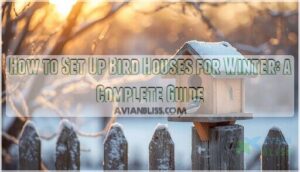
Most folks think bird houses are just for spring nesting, but here’s the thing: winter is when our feathered friends actually need shelter the most. When temperatures drop and icy winds whip through bare branches, small birds like chickadees, nuthatches, and bluebirds huddle together in cavities to survive brutal nights.
A well-placed winter bird house isn’t just a nice gesture—it’s a lifeline that can mean the difference between making it through till morning or freezing in the dark. Setting up proper winter housing takes a bit more thought than tossing up a basic nest box, but the steps are straightforward, and the payoff is worth it.
Table Of Contents
Key Takeaways
- Winter bird houses need specific features like 4×4 inch floor space, 8-12 inch height, and 1¼-1½ inch entrance holes to provide lifesaving shelter when small birds like chickadees and nuthatches huddle together through freezing nights.
- Cedar or spruce construction with thermal insulation cuts heat loss by 60 percent, while strategic placement 5-10 feet high in sheltered spots away from prevailing winds maximizes warmth and predator protection.
- Supporting winter birds requires more than shelter—you’ll need heated water sources and high-calorie foods like black oil sunflower seeds and suet positioned 10-12 feet from roost boxes to give birds easy access without attracting predators.
- Install roost boxes in early autumn before temperatures drop below 40°F, then maintain them through winter with regular cleaning and safety checks to prevent disease and ensure your backyard becomes a reliable refuge where birds thrive, not just survive.
Choosing The Right Winter Bird House
Not all bird houses are built the same, and winter shelters need a few special features to keep your feathered friends cozy when the temperature drops.
If you’re wondering which birds use bird houses in different seasons, you’ll find that winter residents often have different needs than spring nesters.
The right design can mean the difference between a bird surviving a cold snap or struggling through the night. Let’s look at what makes a winter bird house work, from the size and materials to the entry hole that keeps everyone safe.
The right winter bird house design—size, materials, and entry hole—can mean survival or struggle through a cold snap
Ideal Bird House Dimensions for Winter
Think of a winter roost box as a cozy studio apartment for birds—box size optimization really matters when temperatures drop. Your winter bird house plans should follow these winter roost dimensions:
- Floor space: At least 4 by 4 inches, or 5 by 5 for bluebirds
- Interior height: 8 to 12 inches for comfortable winter occupancy
- Ceiling clearance: 1 to 2 inches above the nest conserves heat
- Entrance hole design: 1¼ to 1½ inches keeps starlings out
- Roof angle importance: 30 degrees prevents snow buildup
These bird house construction specs create warm, protected shelters. Be sure to consult to verify your birdhouse suits the target species.
Best Materials for Cold Weather Durability
Once you’ve nailed dimensions, the right materials keep your winter roost box standing strong. Cedar and spruce resist rot through five winters or more, and their tight grain patterns handle cold stress testing without cracking.
Pair durable woods with thermal insulation—mineral wool cuts heat loss by up to 60 percent—and seal joints with weatherproof coatings. Your bird house construction will thank you, and so will your feathered guests!
Materials like brick or stone veneer, known for their cold weather durability benefits, can also inspire choices for building resilient bird houses.
Entry Hole Size and Predator Protection
Choosing durable wood is half the battle—now let’s talk about keeping your birds safe. Entry Hole Placement and proper sizing stop predators before they start:
- Keep holes at 1½ inches for chickadees and wrens, blocking starlings from barging in
- Add metal Predator Guard Materials around openings to resist raccoon claws
- Install removable guards on Winter Bird House Plans for easy seasonal adjustments
These simple Nesting Box Defenses protect roosting birds all winter long.
Recommended Designs for Common Winter Birds
Different backyard birds need different Bird House Designs, so matching Winter Bird House Plans to your local visitors pays off.
Bluebirds thrive in standard boxes with 1½-inch holes, while chickadees prefer snug Winter Roosting cavities.
To attract the right species, you’ll want to install birdhouses at the optimal time so they’re ready when breeding season arrives.
For maximum Cold Climate Designs flexibility, choose multi-perch Winter Roost Box layouts—they welcome wrens, nuthatches, and titmice all at once, creating adaptable Small Bird Habitats everyone can share.
Where to Place Bird Houses for Winter
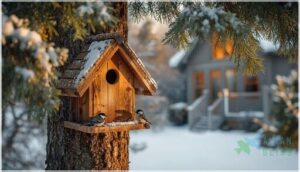
You’ve picked out the perfect winter bird house, but where you put it matters just as much as what you chose.
Birds need shelter that’s tucked away from harsh winds, protected from predators, and positioned to catch a little winter sun. Let’s walk through the key placement decisions that’ll turn your bird house into a cozy winter haven.
Selecting Sheltered Locations in Your Yard
Your winter bird house plans won’t work if you put the box where wind and snow batter it constantly. Scout your yard layout for sheltered spots—behind a shed wall, tucked near a fence corner, or under deep eaves where branches break the gusts.
These winter habitats keep your backyard birding guests warmer and safer, turning a simple winter roost box into real winter shelter that birds actually use.
Height and Orientation for Optimal Warmth
Between five and ten feet off the ground keeps roosting boxes above cold drafts while offering stable wall mounting against snow.
Align the entrance away from prevailing winds—north or northeast works well—so your winter roosting box holds warmth without blocking light.
A slight roof angle tilted toward the opening channels heat outward, reduces condensation, and aids thermal insulation, turning simple bird house plans into effective winter bird care shelters.
Using Natural Windbreaks and Vegetation
Positioning your bird house behind a dense row of shrubs or evergreens creates a natural windbreak design that shields your feathered neighbors from icy gusts.
Native shrubs like sumac or viburnum pair with evergreen planting to boost winter habitat, offering bird friendly landscaping that aids backyard wildlife conservation.
This simple avian habitat creation strategy makes winter bird care straightforward while delivering essential bird habitat and cozy winter shelter.
Avoiding Hazards and Predators
Predator control starts before you hang that first winter roosting box—smart siting keeps your birds safe. Here’s how to boost bird safety and hazard prevention:
- Mount boxes mid-height with metal predator guards to stop climbing raccoons and snakes
- Position away from dense shrubs that hide predators waiting to pounce
- Add baffles on poles for solid predator protection and nest protection
- Seal gaps over 6mm to block rodent entry and support bird house maintenance
Preparing and Assembling Winter Bird Houses
Getting your winter bird house ready doesn’t have to be complicated, but a few smart steps can make all the difference for your feathered visitors.
Whether you’re building from scratch or winterizing a house you already have, the right setup helps birds stay warm and safe during those brutal cold snaps. Let’s walk through the essentials to create a cozy roost that’ll actually get used.
Step-by-step Assembly Instructions
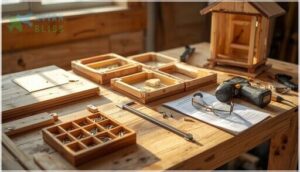
Before you pick up your hammer, gather all parts on a clean workspace and read the manual carefully. Start by loosely attaching the base to side panels using corner brackets, checking alignment with a carpenter’s square.
Tighten screws in a crossing pattern, then install internal braces. Wear safety glasses, use proper tools, and verify every fastener sits snug but not overtight to prevent cracking.
Adding Internal Perches and Insulation
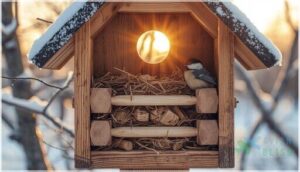
Once your box is framed, you’ll boost thermal efficiency by sliding half-inch dowel perches through pre-drilled side holes at staggered heights—natural wood gives roosting birds solid grip on cold nights.
Spread a thin layer of pine needles or dry grass on the floor for insulation types that trap warm air, then tuck loose fill along interior walls to cushion bluebird house plans against freezing temps.
Weatherproofing and Sealing Gaps
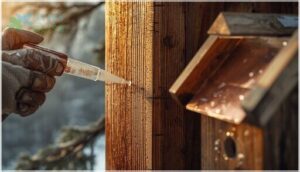
After insulation materials settle into place, you’ll protect your investment with weatherproof coatings and gap sealing techniques that keep roosting bird behavior comfortable all winter. Here’s how to lock out moisture:
- Brush non-toxic exterior sealant on cedar or pine surfaces to seal the grain.
- Run flexible silicone along every vertical joint before temperatures drop.
- Caulk gaps around the roof protection overhang to stop water intrusion.
- Add a rain shield above the entrance for extra shelter.
- Recheck sealant applications monthly during harsh weather cycles.
Modifying Existing Bird Houses for Winter Use
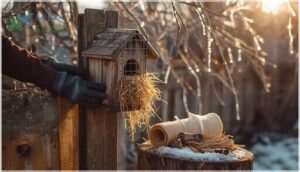
You don’t need to buy a brand new box if you’ve already got bird houses around your yard. Here’s how to convert what you have with simple winterization tips and cold weather adaptations:
| Modification | Materials Needed | Purpose |
|---|---|---|
| Entrance modifications | Predator guard, dark paint | Block wind, absorb heat |
| Bird house insulation | Dry straw or shavings | Trap warm air inside |
| Roost box conversions | Perching ladder, burlap | Accommodate roosting bird behavior |
| Seal ventilation holes | Natural fiber, caulk | Reduce drafts safely |
Rotate the entrance away from prevailing winds, add a removable inner lining of dry grass, and you’ll have a cozy winter birdhouse installation ready for occupancy.
Supporting Birds With Food and Water
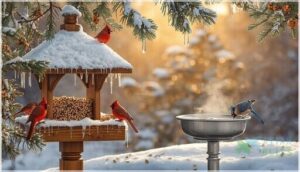
Setting up a cozy winter shelter is only half the battle in terms of helping your backyard birds survive the cold months. You’ll also need to provide reliable sources of food and water, which can be surprisingly hard for birds to find when temperatures drop.
Here’s how to create a complete winter haven that keeps your feathered friends well-fed, hydrated, and ready to weather whatever winter throws their way.
Setting Up Heated Bird Baths
When temperatures drop below freezing, a heated bird bath becomes a lifeline for your feathered visitors.
Look for models with built-in thermostats that activate around 32 degrees, using 60 to 120 watts for energy efficiency while preventing frozen water.
Place your heated bath on stable ground near shelter, away from harsh winds, and always plug into a GFCI outlet for heated bath safety.
Choosing High-calorie Winter Bird Foods
Fresh water meets one need, but your backyard birds also burn through serious energy just staying warm through icy nights.
High calorie foods like black oil sunflower seeds, suet options packed with nuts, and freeze-dried mealworms give songbirds the fat and protein they desperately need during winter.
Here are the best fuel sources for cold-weather bird feeding and nutrition:
- Fat rich seeds – Black oil sunflower seeds deliver 900 calories per pound, with thin shells that chickadees and finches crack easily
- Suet options – Rendered suet blocks with peanut and corn pieces provide over 1,000 calories per cup in weatherproof cages
- Seed blends – Winter energy mixes combine oil seeds and grains, offering 4,000 to 5,000 calories per kilogram for varied species
- Insect supplements – Freeze-dried mealworms supply 10 to 15 calories per gram, attracting bluebirds and thrushes when bugs are scarce
- Nut additions – Unsalted peanut halves give woodpeckers and jays quick energy with 45 percent fat and 25 percent protein
These winter bird feeding tips support wild bird nutrition while helping your feathered friends conserve precious energy reserves.
Placing Feeders Near Winter Bird Houses
Strategic feeder placement turns a winter bird house into a genuine safe haven by balancing easy access with roosting behavior. Position feeders 10 to 12 feet from the roost box, giving birds a short hop between shelter and food without crowding the entrance or leaving scent trails that attract predators.
| Distance from House | Best Food Type | Bird Traffic Benefit |
|---|---|---|
| 10–12 feet | Black oil sunflower seeds | Reduces noise near entrance |
| 20–40 feet | Suet cakes in cages | Minimizes disturbance during roosting |
| Multiple sides | Mixed seed blends | Distributes winter foraging activity |
| Near evergreens | Peanut halves | Offers quick predator deterrence cover |
| 5+ feet high | Heated bird bath with mealworms | Deters ground hunters, aids bird feeding and nutrition |
Mount feeders at least 5 feet above ground on sturdy poles to keep domestic cats and raccoons at bay, and set up stations on different sides of your winter bird house plans to prevent bottlenecks. This thoughtful layout follows winter bird feeding tips that respect how songbirds move between eating and resting, keeping your backyard haven calm and predator-free.
Creating an Inviting Winter Habitat
Creating winter habitat means layering shelter, food, and water into a backyard birds actually trust. Plant native shrubs like dogwood or sumac near your roost box for frost protection and habitat diversity.
Then add brush piles from fallen branches to welcome cavity nesters during bird migration slowdowns. This bird-friendly gardening approach fosters winter wildlife care and backyard bird conservation, giving cold climate songbirds the winter shelter they crave.
Maintaining Bird Houses Through Winter
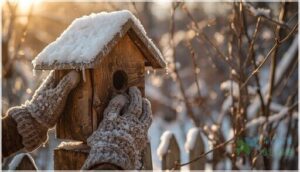
Just like you wouldn’t leave your porch furniture out all winter without checking on it, your bird houses need a little attention through the cold months.
Think of winter maintenance as a safety check and wellness visit rolled into one, making sure your feathered guests have a clean, sturdy shelter when they need it most. Here’s what you should focus on to keep those winter roosts in top shape.
Cleaning and Disinfecting for Health
Keeping bird houses clean isn’t just about tidiness, it’s about health protocols that protect winter visitors from disease.
You’ll want to use gentle cleaning products and proper disinfection methods in late winter, scrubbing out droppings and debris with a mix of soap and water. This surface sanitizing and germ removal helps prevent illness from spreading between roosting birds, making your birdhouse maintenance routine a critical part of successful bird feeding strategies.
Inspecting and Repairing for Safety
Ever wonder what keeps a birdhouse safe through wild winter nights? Structural Checks and Safety Inspections are your secret weapons! Test the base for wobble, inspect joints for cracks, and assess damage after storms.
Repair Techniques like sealing gaps and swapping rusty hardware keep roosting boxes cozy. Winterization Tips from bird house plans make Birdhouse Maintenance easy—your feathered guests will thank you!
Monitoring for Occupancy and Usage
Want to know if your feathered friends are actually using those roosting boxes? Bird watching from 20-50 yards away, around sunrise, won’t disturb your guests. Look for telltale signs like fresh droppings near the entrance, tiny feathers on perches, or condensation inside from body heat—nature’s way of leaving thank-you notes!
Thermal Imaging and Citizen Science apps help track Occupancy Rates and Bird Behavior for Winter Surveys, turning you into a backyard researcher.
- Fresh, moist droppings near entrances signal recent roosting activity
- Interior condensation on cold mornings reveals warm bodies spent the night
- Motion-activated cameras capture nest boxes usage without scaring birds away
Transitioning Bird Houses for Spring Nesting
As winter winds down, you’ll want to transform those roosting boxes into welcoming nesting sites for spring. Bird house renovation means removing old debris, checking entrance holes, and adding fresh substrate—Spring Cleaning Tips that prepare nest boxes for chickadees, wrens, and bluebirds.
Seasonal Maintenance in late winter ensures your roost box conversion creates safe, dry nesting box preparation that cavity nesters can’t resist!
Frequently Asked Questions (FAQs)
Do winter bird houses need ventilation holes?
Yes, your bird houses need ventilation holes—think of them as tiny chimneys that balance humidity control and airflow management.
They prevent dampness while preserving warmth, especially in winter roosting boxes.
When should I install a winter roost box?
Set up roost boxes in early autumn, ideally mid-September through October, before nighttime temperatures regularly drop below 40°F.
This gives birds time to discover these cozy winter shelters before the first hard frost arrives.
How do I attract birds to new roost boxes?
Place bird-friendly plants nearby and offer winter bird feed close to your roosting boxes.
Birds discover new roost box placement when food and water are easily accessible, creating a reliable bird habitat they’ll return to nightly.
Should I remove summer nesting boxes in winter?
You don’t need to remove nesting boxes in winter—they make excellent roosting boxes for sheltering birds during cold snaps.
Just clean out old nesting material by late autumn to reduce parasites and prevent disease buildup.
Conclusion
You might think a single bird house for winter won’t make much difference, but on a freezing February night, that little shelter could save half a dozen chickadees huddled together for warmth.
These small acts of preparation ripple outward—healthier birds mean better pest control, more pollination, and livelier mornings filled with song. Your backyard can become a winter refuge where birds don’t just survive, they thrive.
- https://en.wikipedia.org/wiki/Angel_wing
- https://arboristnow.com/news/providing-shelter-for-the-winter-birds-in-your-landscaping/
- https://chirpforbirds.com/wild-bird-resources/do-birds-use-birdhouses-in-winter/
- https://www.dcr.virginia.gov/state-parks/blog/backyard-birding-shelters
- https://nestwatch.org/news/winter-proofing-your-birdhouse/