This site is supported by our readers. We may earn a commission, at no cost to you, if you purchase through links.
 You’ll find Michigan’s skies filled with impressive giants that’ll make you stop and stare.
From towering Sandhill Cranes reaching four feet tall to majestic Trumpeter Swans with seven-foot wingspans, these large birds in Michigan command attention wherever they appear.
Great Horned Owls rule the night while Ospreys dominate daylight fishing spots.
Pileated Woodpeckers drum their territorial calls through old-growth forests, and Great Blue Herons stand motionless in wetlands like feathered statues.
Whether you’re spotting year-round residents or seasonal migrants, Michigan’s diverse habitats support an incredible variety of these winged titans that showcase nature’s remarkable engineering.
Table Of Contents
- Key Takeaways
- Types of Large Birds in Michigan
- Michigan’s Largest Birds
- Endangered Birds in Michigan
- Birds of Prey in Michigan
- Birds That Migrate to Michigan
- Waterbirds in Michigan
- Birds Found Year-Round in Michigan
- Large Birds in Michigan by Size
- Interesting Facts About Large Birds in Michigan
- Conservation Efforts for Large Birds in Michigan
- Frequently Asked Questions (FAQs)
- Conclusion
Key Takeaways
- You’ll encounter massive waterfowl like Trumpeter Swans weighing up to 28 pounds with 8-foot wingspans – these conservation success stories recovered from near-extinction and now thrive in Michigan’s northern lakes and wetlands.
- Michigan’s year-round residents include powerful predators like Great Horned Owls and Bald Eagles – these adaptable raptors do not migrate and can be spotted hunting throughout harsh winters near open water sources.
- Peak bird watching occurs during spring and fall migration seasons (April-May and August-October) – you’ll witness spectacular gatherings of Sandhill Cranes and seasonal visitors like Snowy Owls from Arctic territories.
- Conservation efforts have dramatically restored populations of endangered species – targeted habitat protection and wildlife management programs have successfully brought back Bald Eagles and Trumpeter Swans from critical population declines.
Types of Large Birds in Michigan
Michigan’s diverse ecosystems support an impressive variety of large bird species, from towering cranes in wetlands to powerful raptors soaring overhead.
You’ll encounter everything from the massive Trumpeter Swan with its 8-foot wingspan to the distinctive Pileated Woodpecker hammering away in mature forests.
Sandhill Crane
Across Michigan’s vast wetlands, you’ll encounter the magnificent Sandhill Crane, standing nearly five feet tall with impressive seven-foot wingspans.
These ancient birds gather in spectacular flocks during migration, their distinctive rolling calls echoing through marshes and prairies.
Michigan’s wetland conservation efforts have helped these waterbirds recover from near-extinction since the 1960s.
You’ll spot their pale gray plumage and red crowns in open habitats where they’ve adapted well to changing landscapes, making them prime subjects for bird watching enthusiasts.
Trumpeter Swan
When you spot a Trumpeter Swan gliding across Michigan’s waterways, you’re witnessing one of North America’s largest waterfowl success stories. These magnificent birds, weighing up to 28 pounds with wingspans reaching 8 feet, represent a remarkable conservation triumph after near-extinction from overhunting.
Michigan’s Trumpeter Swan population thrives in marshes, lakes, and rivers with dense vegetation. These waterbirds prefer shallow wetlands where they can easily access aquatic plants, their primary food source.
- Swan Habitat: Trumpeter Swans inhabit Michigan’s northern lakes and wetlands, requiring open water for takeoff due to their massive size
- Trumpeter Behavior: Pairs mate for life, often staying together over 20 years, demonstrating remarkable fidelity among Michigan bird species
- Swan Diet: They consume aquatic vegetation, small fish, and invertebrates through filter-feeding and dabbling techniques
- Bird Conservation: Reintroduced to Michigan wetlands during the 1980s-90s, representing successful wildlife management efforts
These majestic Michigan waterbirds undergo annual molts, becoming temporarily flightless while replacing flight feathers—a vulnerable period requiring protected Swan Habitat for survival.
Pileated Woodpecker
While swans glide gracefully across Michigan’s waters, the forests echo with a different sound entirely.
You’ll hear the powerful drumming of Pileated Woodpeckers before you spot these crow-sized birds with their striking red crests.
They’re North America’s largest woodpecker species, creating distinctive rectangular cavities in dead trees while hunting carpenter ants and wood-boring beetles.
| Attribute | Details | Notes |
|---|---|---|
| Size | 19.3 inches long | Largest woodpecker in Michigan |
| Weight | 12.3 ounces | Powerful build for excavating |
| Diet | Carpenter ants, beetles | Specializes in wood-boring insects |
| Habitat | Mature forests | Requires dead/dying trees |
These impressive birds play a vital role in Forest Ecology, their excavation work creating nesting sites for other species.
Their Woodpecker Habitat preferences include both deciduous and coniferous forests with substantial deadwood.
Pileated Woodpecker Nesting Patterns involve carving new cavities annually, typically 15-85 feet high in dead trees.
Caspian Tern
Looking for Michigan’s largest tern? You’ll recognize the Caspian Tern by its distinctive coral-red bill and impressive size among large birds in Michigan.
These seabirds command respect with their aggressive territorial behavior, especially around nesting sites on sandy or rocky islands throughout the Great Lakes. During bird watching Michigan excursions, you’ll spot them performing spectacular fishing dives for alewives, shad, and smelt.
Their powerful flight patterns make them standout Michigan bird species during spring and fall bird migration periods. Caspian Terns demonstrate remarkable coastal ecology adaptations, thriving in both freshwater and marine environments.
These magnificent birds contribute substantially to seabird conservation efforts across the region. Their tern habitat preferences include protected island areas where they can nest undisturbed. Michigan bird conservation groups actively monitor populations, so report your sightings to help protect these impressive aerial hunters for future generations.
Rough-legged Hawk
During winter, these arctic visitors become Michigan’s most distinctive hawk species through their unique hovering behavior and feathered legs.
Roughlegged Hawks excel at bird watching Michigan opportunities, displaying impressive Wing Span while executing precise Hunting Tactics over open terrain. Their Feather Camouflage adapts perfectly to snowy landscapes during Hawk Migration seasons.
- Specialized arctic adaptations – Feathered legs provide insulation during harsh Michigan winters
- Distinctive hovering flight – Only North American hawk that regularly hovers while hunting rodents
- Open habitat preference – Seeks grasslands and marshes throughout Michigan raptor birds territory
- Seasonal presence – Bird Habitat includes Michigan from November through March during migration cycles
Great Horned Owl
Great Horned Owl stands as one of Michigan’s most formidable raptors, commanding respect with its imposing 4-foot wingspan and piercing amber eyes.
You’ll recognize this Forest Dweller by its distinctive "horns" – actually feather tufts that aren’t ears at all.
This Michigan raptor bird excels at Night Hunting, using exceptional Owl Vision that’s 100 times more sensitive than human sight.
Their Feather Camouflage helps them blend seamlessly into bark patterns during daylight hours.
Unlike the Mute Swan’s graceful water lifestyle, these large birds in Michigan prefer diverse Owl Habitat from woodlands to suburban parks.
You might hear their haunting "hoo-hoo-hoo" calls echoing through winter nights.
These adaptable Michigan bird species tackle prey as large as skunks and domestic cats, making them one of nature’s most versatile predators in the Great Lakes region.
Great Gray Owl
Michigan’s massive Great Gray Owl stands as North America’s largest owl species, though you’re more likely to spot one during harsh winters when food becomes scarce up north.
These forest dwellers sport distinctive gray plumage with striking facial discs that act like satellite dishes, amplifying even the faintest sounds from beneath snow.
Unlike the Great Horned Owl’s aggressive hunting style, Great Gray Owls rely on patience and precision.
These nocturnal hunters perch motionless for hours, listening for voles scurrying under snowpack. Their owl behavior includes incredible hearing that pinpoints prey location within inches.
You’ll find these Michigan bird species in dense coniferous forests, particularly in the Upper Peninsula.
Their owl habitat preferences include mature woodlands with openings for hunting. While rare among large birds in Michigan, winter irruptions occasionally bring them south.
Gyrfalcon
Spanning across Arctic tundra during summer months, the gyrfalcon represents North America’s largest falcon species.
You’ll rarely spot this powerful predator in Michigan’s open fields during harsh winter months when prey becomes scarce in their northern territories.
These impressive raptors showcase remarkable hunting prowess, diving at speeds exceeding 130 mph to capture ptarmigan, waterfowl, and ground squirrels.
Their broad wings and sturdy build distinguish them from smaller falcon species found throughout Michigan’s diverse ecosystems.
Key characteristics of Michigan’s gyrfalcons:
- Gyrfalcon Habitat: Prefer open tundra and grasslands during winter visits
- Falcon Migration: Travel thousands of miles from Arctic breeding grounds southward
- Gyrfalcon Diet: Hunt medium-sized birds and mammals with exceptional precision
- Bird Conservation: Populations remain stable despite climate change pressures.
Michigan birding tours occasionally feature these magnificent visitors near bird sanctuaries.
Common Loon
While Gyrfalcons rule Arctic skies, you’ll find Common Loon calling Michigan’s northern lakes home during breeding season. These large birds in Michigan showcase remarkable water diving abilities that’ll leave you speechless.
Common Loon exhibits fascinating Loon Behavior as North America’s most skilled aquatic hunter. Their eerie calls echo across pristine waters, making Michigan birdwatching locations unforgettable. You’ll witness incredible Bird Migration patterns as they travel between breeding and wintering grounds.
- Black-and-white checkered plumage creating stunning lake reflections
- Crimson eyes piercing through morning mist
- Powerful legs positioned far back for underwater propulsion
- Sleek torpedo-shaped body cutting through crystal-clear depths
- Haunting wails echoing across moonlit waters
Loon Habitat requires pristine northern lakes with abundant fish populations. These Michigan bird species can’t walk well on land due to their specialized anatomy. Loon Conservation efforts focus on protecting nesting sites from human disturbance and reducing lead poisoning from fishing tackle.
Osprey
You’ll spot these fish-eating raptors near Michigan’s lakes and rivers during summer months.
Ospreys boast impressive 5-6 foot wingspans and unique reversible outer toes for grasping slippery prey.
Their osprey habitat includes nesting sites on platforms, dead trees, or cell towers near water.
Watch them execute spectacular fishing dives, plunging feet-first with remarkable precision.
Their feather camouflage features dark brown wings contrasting white undersides.
These Michigan hawk species follow predictable migration patterns, arriving in spring and departing by October.
DDT nearly wiped them out, but osprey populations rebounded impressively.
Their fish diet consists mainly of bass, pike, and perch from Michigan’s abundant waterways.
Michigan’s Largest Birds
When you’re hunting for Michigan’s largest bird species, size matters more than you’d think.
The Trumpeter Swan claims the heavyweight title at 401.6 ounces, while the American White Pelican boasts the most impressive wing span at 110 inches.
These giants showcase remarkable diversity in beak shapes and nesting habits across Michigan’s varied landscapes.
Here’s what’ll blow your mind about these feathered titans:
- Trumpeter Swans can weigh as much as a small dog and require extensive feather care routines
- Mute Swans dominate city parks with their 96-inch wing span and territorial attitudes
- Great Blue Herons stand motionless for hours, perfecting their fishing technique
- Sandhill Cranes gather in thousands during migration, creating nature’s loudest symphony
- American White Pelicans soar effortlessly on thermals without a single wingbeat
- Wild Turkeys surprise hikers with their 25-mph running speed through dense forests.
Michigan hawk species and Michigan eagle species represent different hunting strategies, but these massive birds prove that bigger often means better adapted for survival.
Understanding local bird species guides is essential for identifying and learning about these large birds in their natural habitats.
Endangered Birds in Michigan

You’ll find that Michigan’s conservation challenges have put several large bird species at serious risk of extinction.
The Mississippi Sandhill Crane and Bald Eagle represent two critical cases where habitat loss and human interference have pushed these magnificent birds to the brink.
Mississippi Sandhill Crane
Mississippi Sandhill Cranes represent one of Michigan’s most compelling conservation stories. These magnificent birds, standing nearly five feet tall, showcase remarkable Crane Behavior during their seasonal journeys.
You’ll find these large birds in Michigan primarily during migration periods, when Flocking Patterns become most visible across wetland areas.
| Migration Phase | Habitat Requirements | Conservation Status |
|---|---|---|
| Spring Arrival | Shallow wetlands, prairie edges | Recovering population |
| Breeding Season | Protected marshlands, minimal disturbance | Active monitoring required |
| Fall Departure | Staging areas, food-rich environments | Continued habitat protection |
| Winter Grounds | Southern wetland complexes | Multi-state coordination |
Bird Habitat preservation drives successful Crane Migration patterns. These Michigan bird species depend on Wetland Conservation efforts spanning multiple states.
Their recovery demonstrates how targeted protection of Michigan bird habitats creates lasting results. Observing their graceful movements during bird migration reveals nature’s remarkable resilience when we provide proper stewardship.
Conservation of warbler habitats is essential for maintaining biodiversity in Michigan’s ecosystems.
Bald Eagle
You’ll spot America’s national bird making a comeback across Michigan’s waterways. The Bald Eagle population has rebounded dramatically from DDT-related declines, though it remains threatened in Michigan.
These magnificent large birds in Michigan feature distinctive white heads and tails with dark brown bodies reaching 43 inches long.
Bald Eagle Habitat centers around lakes and rivers where they hunt fish. Eagle Nesting occurs in tall trees near water, with pairs returning to the same sites yearly. Eagle Migration brings northern populations south during harsh winters.
Unlike Mute Swan or Trumpeter Swan species, eagles are apex predators. Bird Rehabilitation centers across Michigan help injured eagles recover. Feather Conservation laws protect these Michigan bird species – even possessing eagle feathers without permits is illegal.
Birds of Prey in Michigan
Across Michigan’s diverse landscapes, birds of prey rule the skies with unmatched precision. You’ll find bald eagles soaring over Great Lakes shorelines, their massive eight-foot wingspans making them the state’s largest raptors. These apex predators demonstrate remarkable raptor behavior, diving at breakneck speeds to snatch fish from crystal-clear waters.
Great horned owls prowl nighttime territories, their distinctive ear tufts and cat-like eyes perfectly adapted for nocturnal hunting. Meanwhile, ospreys crash-dive into lakes at 50 mph, showcasing specialized falcon nesting and fishing techniques that’ll leave you amazed.
Michigan’s hawk migration patterns bring seasonal visitors like rough-legged hawks and northern goshawks. Eagle habitat conservation efforts have restored bald eagle populations from near-extinction to thriving communities. Red-tailed hawks patrol year-round, their piercing calls echoing across farmlands and forests.
From turkey vultures cleaning up roadkill to tiny American kestrels hovering over meadows, Michigan bird species showcase nature’s incredible diversity. Bird conservation in Michigan guarantees these magnificent hunters continue ruling their aerial domains. To learn more about these species, explore the michigan birds and their unique characteristics.
Birds That Migrate to Michigan
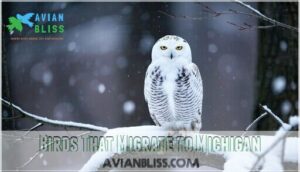
You’ll spot some of Michigan’s most impressive migrant birds during winter months when species like Snowy Owls and Golden Eagles arrive from northern territories.
These seasonal visitors bring remarkable hunting skills and striking appearances that make cold-weather birding an exciting adventure.
Snowy Owl
Arctic hunters arrive in Michigan each winter, transforming snowy fields into their temporary kingdom.
Snowy Owls migrate south from the tundra when prey becomes scarce, making Michigan bird species lists during cold months.
These large birds in Michigan feature distinctive snowy feathers with dark barring that provides perfect camouflage.
Their owl habitat includes open farmland and lakeshores where they hunt rodents.
Arctic birds like these showcase remarkable owl migration patterns, traveling hundreds of miles.
Their owl diet consists primarily of voles and mice.
Bird watching in Michigan peaks when these magnificent raptors grace our landscape, offering wildlife enthusiasts unforgettable encounters with true wilderness ambassadors.
The state’s location near key bird migration routes makes it an ideal spot for observing various species.
Golden Eagle
While snowy owls capture attention with their Arctic elegance, Golden Eagles command respect as North America’s most powerful raptors.
These magnificent birds grace Michigan’s skies during Eagle Migration periods, following ancient flyways across the Great Lakes region.
Golden Eagles demonstrate remarkable adaptability in their Golden Habitat preferences, from mountainous terrain to open prairies.
You’ll spot these large birds in Michigan primarily during spring and fall migrations, when they traverse the state seeking ideal hunting grounds.
- Wingspan reaches 6-8 feet, making them formidable aerial predators
- Feather Characteristics include dark brown plumage with distinctive golden head feathers
- Nesting Behaviors involve cliff-top eyries built from sticks and vegetation
- Hunt mammals weighing up to 15 pounds using incredible diving speeds
- Protected under federal Bird Conservation laws due to population vulnerabilities
These Michigan bird species face ongoing challenges from habitat fragmentation and human encroachment.
Their presence indicates healthy ecosystems, making Golden Eagle sightings particularly significant for Michigan bird habitats monitoring efforts.
Understanding the role of michigan birds is vital for effective conservation strategies and preserving the state’s rich avian biodiversity.
Waterbirds in Michigan
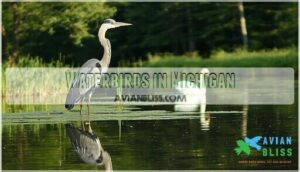
You’ll find Michigan’s waterbirds thriving in the state’s abundant lakes, rivers, and wetlands throughout the year.
These impressive species, including the towering Great Blue Heron and elegant Mute Swan, showcase remarkable adaptations for aquatic life.
Great Blue Heron
When you encounter Great Blue Herons along Michigan’s waterways, you’re witnessing nature’s perfect fishing machine in action.
These large birds in Michigan stand motionless in shallow water, using their spear-like bills to strike unsuspecting fish with lightning precision.
Heron habitat includes freshwater marshes, lakes, and rivers throughout the state.
Blue Heron nesting occurs in colonies called rookeries, where they build platform nests high in trees.
Their heron diet consists primarily of fish, frogs, and small mammals.
While heron migration patterns vary, many Michigan bird species remain year-round near open water sources.
The state’s diverse range of water bird species contributes to its rich avian ecosystem.
Mute Swan
You’ll spot the Mute Swan gliding across Michigan’s wetlands with its impressive 96-inch wingspan, making it one of the state’s most recognizable waterfowl.
These large birds in Michigan prefer shallow lakes and city parks for their Mute Swan Habitat, where they feed on aquatic vegetation.
Here are key Mute Swan characteristics:
- Size: 416 ounces with 62-inch body length
- Behavior: Aggressive territory defense during nesting season
- Diet: Primarily aquatic plants and algae through Bird Feeding
- Status: Invasive species affecting Waterfowl Conservation efforts
- Distribution: Found in Michigan bird sanctuaries and urban water bodies
Unlike their cousin the Trumpeter Swan, Mute Swans don’t migrate seasonally.
Their Swan Behavior includes distinctive S-curved neck posturing when threatened, making them easily identifiable on Michigan’s bird species list.
Birds Found Year-Round in Michigan

Throughout Michigan’s harsh winters, you’ll find Year Round Residents that’ve mastered survival in our challenging climate.
These Feathered Neighbors don’t abandon their Bird Habitats when temperatures plummet—they’re here to stay, adapting to whatever Mother Nature throws at them.
Local Flocks of hardy species thrive in diverse environments, from dense woodlands to Michigan Wetlands.
You’ll spot these resilient birds of Michigan even during January’s coldest snaps, proving their remarkable adaptability.
Notable year-round species include:
- Bald Eagles patrol open waters, hunting fish and waterfowl near unfrozen sections of lakes and rivers
- Ruffed Grouse forage actively in northern forests, surviving on winter buds and available vegetation
- Black-capped Chickadees maintain their cheerful calls while gleaning insects and seeds from tree bark
- Northern Cardinals brighten snowy landscapes, feeding on persistent fruits and accessible seed sources
These large birds in Michigan demonstrate incredible resilience, making them essential components of our state’s winter ecosystem and excellent subjects for cold-weather birding adventures.
Large Birds in Michigan by Size

When you compare Michigan bird species by size, you’ll discover remarkable differences in wing span, body weight, and overall dimensions.
The trumpeter swan claims the title as Michigan’s largest bird, stretching 72 inches long with a massive 102-inch wingspan and weighing up to 400 ounces. Close behind, the mute swan measures 62 inches with a 96-inch wingspan.
For bird size comparison, consider that great blue herons reach 52 inches in length, while bald eagles achieve impressive 96-inch wingspans despite shorter bodies.
Even feather length and beak shape vary dramatically among large Michigan birds. The great gray owl’s 33-inch frame carries surprisingly light weight at just 27 ounces, proving that wingspan doesn’t always correlate with body mass in Michigan bird species list rankings.
Understanding the habits of large birds in ohio can provide valuable insights into the behavior and characteristics of similar species in Michigan.
Interesting Facts About Large Birds in Michigan

You’ll discover Michigan’s large birds display remarkable adaptations that’ll captivate any Bird Watching enthusiast.
Sandhill cranes perform elaborate courtship dances with 7-foot wingspans, while trumpeter swans produce calls audible from miles away.
Bald eagles demonstrate precise Flight Patterns when diving for fish, reaching speeds of 100 mph.
These Michigan bird species showcase unique Nesting Habits—great blue herons build platform nests 100 feet high, while pileated woodpeckers excavate cavities in dead trees.
During Bird Migration, you’ll witness large birds in Michigan following ancient flyways, with some species traveling thousands of miles.
Their specialized Feather Care includes waterproofing techniques that keep waterfowl dry in frigid lakes, making Michigan large bird sightings truly spectacular year-round with remarkable adaptations and unique courtship dances.
Conservation Efforts for Large Birds in Michigan

Michigan’s bird conservation landscape demonstrates remarkable success through strategic collaboration between wildlife agencies and conservation groups.
The Kirtland’s warbler conservation program achieved species delisting through systematic tree planting and habitat management, while the Great Lakes Restoration Initiative continues funding species recovery efforts.
Your local birdwatching community plays a pivotal role in these conservation strategies through citizen science programs and habitat preservation initiatives.
Wildlife management professionals monitor Michigan bird migration routes using enhanced tracking systems that document breeding success and population health.
The Nature Conservancy’s protection of over 32,000 acres in the Keweenaw Peninsula exemplifies large-scale habitat preservation efforts.
These conservation strategies address multiple threats:
- Climate change impacts disrupting traditional nesting and feeding areas
- Development pressures fragmenting critical migration corridors
- Pollution effects degrading wetland ecosystems essential for waterbirds
Species protection programs like the Kirtland’s Warbler Alliance demonstrate how targeted interventions can reverse population declines, ensuring future generations will witness these magnificent birds soaring across Michigan’s skies.
Effective bird conservation requires the use of specialized bird conservation products to support habitat restoration and species protection efforts.
Frequently Asked Questions (FAQs)
What large birds visit Michigan during winter months?
Winter transforms Michigan into a birding wonderland!
You’ll spot Snowy Owls hunting during daylight hours, weighing up to 105 ounces with distinctive white plumage and black markings, making them rare but spectacular winter visitors.
Where do Michigans large birds typically nest?
You’ll find Michigan’s large birds nesting in diverse habitats: swans prefer shallow wetlands, eagles nest near water in tall trees.
Herons choose marshes, cranes use open wetlands, and owls select mature forests.
How can you identify large Michigan birds in flight?
Soaring overhead, you’ll spot Michigan’s giants by their distinctive silhouettes and wingbeats.
Look for wingspan size, flight patterns, and body proportions—swans show steady beats, eagles soar effortlessly, herons fly with necks folded.
What do Michigans largest birds primarily eat?
Michigan’s heavyweight birds feast on diverse diets: swans graze aquatic vegetation, pelicans gulp fish, turkeys gobble seeds and insects, while eagles snatch fish and carrion from waterways.
When is peak season for large bird watching?
Peak bird watching hits during spring migration (April-May) and fall migration (August-October). You’ll spot migrating waterfowl, raptors, and cranes alongside year-round residents like eagles and owls during these active periods.
Conclusion
Michigan’s avian landscape serves as nature’s grand theater, where these magnificent performers take center stage year after year.
You’ve discovered that large birds in Michigan represent some of North America’s most impressive species, from four-foot Sandhill Cranes to seven-foot-wingspan Trumpeter Swans.
Whether you’re tracking seasonal migrants like Snowy Owls or observing year-round residents such as Great Blue Herons, Michigan’s diverse ecosystems provide critical habitat for these remarkable creatures.
Your continued observation and conservation support help guarantee future generations can witness these winged giants soaring through Michigan’s skies.
- https://www.allaboutbirds.org/guide/Sandhill_Crane/overview
- https://therouge.org/creature-feature-a-symbol-for-conservation-and-hope/
- https://michigannature.wordpress.com/2021/08/19/michigans-amazing-animals-common-loon/
- https://www.visitkeweenaw.com/outdoors/birding/
- https://en.wikipedia.org/wiki/Sandhill_crane