This site is supported by our readers. We may earn a commission, at no cost to you, if you purchase through links.
A songbird’s daily energy demands rival those of a marathon runner, burning through calories at rates that would leave mammals exhausted. Their metabolisms operate at such intensity that missing a single meal can trigger physiological stress within hours.
You might fill your backyard feeders with generic seed mixes, but songbirds require precise ratios of protein, fats, and micronutrients that shift dramatically across seasons and life stages. Without adequate amino acids during spring breeding or sufficient fat reserves before fall migration, even common backyard visitors face survival challenges.
Understanding these specific nutritional requirements helps you support the health of songbirds year-round, whether you’re managing wild populations or caring for individual birds.
Table Of Contents
- Key Takeaways
- Key Nutritional Components for Songbirds
- Protein Requirements in Songbird Diets
- Role of Fats in Songbird Health
- Carbohydrates and Energy for Songbirds
- Essential Vitamins and Minerals for Songbirds
- Importance of Water in Songbird Nutrition
- Native Plants and Insects in Songbird Diets
- Dietary Needs Across Songbird Life Stages
- Common Nutritional Deficiencies and Disorders
- Tips for Providing a Balanced Songbird Diet
- Frequently Asked Questions (FAQs)
- What can you feed songbirds?
- What are the nutritional needs of birds?
- How long can songbirds go without food?
- How do songbirds digest seeds differently than mammals?
- Can songbirds eat foods toxic to other animals?
- What temperature affects songbird metabolism and feeding patterns?
- Do different songbird species have unique gut bacteria?
- How does air quality impact songbird nutritional absorption?
- Conclusion
Key Takeaways
- Songbirds burn calories at rates comparable to marathon runners, requiring precise ratios of protein (12-28% depending on life stage), fats (5-15%), and micronutrients that shift dramatically across seasons, breeding cycles, and migration periods.
- Essential amino acids like lysine and methionine cannot be produced by birds themselves, making high-quality protein sources from insects and varied seeds critical for feather growth, muscle development, and tissue repair throughout molting and breeding.
- Native plants create self-sustaining food webs by attracting diverse insects that deliver 40-65% protein content with distinct amino acid profiles, while also providing natural carbohydrate sources through fruits, berries, and seeds that match seasonal energy demands.
- Common nutritional deficiencies manifest through visible signs like weight loss of 5-10% over months, brittle or dull feathers, delayed molting, and weakened immune function, all preventable through dietary rotation that includes fresh foods, fortified options, and species-appropriate supplements.
Key Nutritional Components for Songbirds
Your songbird’s body runs on a delicate balance of nutrients that work together like instruments in an orchestra. Each component plays a specific role in keeping your feathered friend healthy, from building strong feathers to fueling their daily flights.
Understanding how these nutrients work in tandem helps you create meals that support everything from vibrant plumage to sustained energy levels.
A songbird’s body runs on nutrients working together like an orchestra, each playing a vital role in health
Let’s look at the essential nutrients that form the foundation of a proper songbird diet.
Proteins and Essential Amino Acids
Protein promotes feather growth, muscle development, and daily tissue repair in your songbirds. You’ll want to make certain their diet includes essential amino acids like lysine and methionine, which birds can’t produce themselves.
Lysine strengthens collagen and tissue structure, while methionine aids feather formation. Proper amino acid balance matters—insects offer better protein digestion compared to seeds alone, meeting avian dietary needs during growth and molting.
For more background on the building blocks of proteins, understanding amino acids is key to supporting avian nutrition.
Healthy Fats and Their Functions
Just as protein builds structure, healthy fats power your songbirds through fat metabolism and energy storage.
You’ll want to include omega benefits from sources like nuts and seeds—these fatty acid roles support brain function, reduce inflammation, and maintain lipid balance. Monounsaturated fats protect heart health in avian nutrition requirements, while polyunsaturated fats modulate immune responses.
Aim for 5-15% dietary fats to meet songbird diet and nutrition standards for bird health and wellness. For a deeper dive into the importance of essential fats and sources, be sure to consult additional expert guidance.
Carbohydrates for Energy
While fats keep your birds insulated, carb metabolism and energy sources fuel their day-to-day hustle. Glucose from grains powers flight muscles, fiber benefits gut health, and seasonal diet shifts let them bulk up before migration. Energy balance depends on glycogen storage in liver and muscles. For songbird diet and nutrition success, dietary requirements include varied seed-based diets plus fruits.
- Spring and summer birds burn steady carbs for nesting trips
- Autumn fattening relies on stored glycogen and dietary starches
- Winter diets emphasize quick energy to maintain body heat
Vitamins and Minerals Overview
Beyond macronutrients, vitamins and minerals power feather health, bone formation, and metabolic activity. Your birds need vitamin A for vision and cellular growth, D3 for calcium absorption, E for antioxidant defense, and B-complex for energy metabolism.
Iron carries oxygen during flight, zinc aids immunity, and calcium prevents metabolic bone disease. Avian nutrition depends on balanced dietary supplements to avoid mineral deficiency and maintain peak bird dietary needs.
Protein Requirements in Songbird Diets
Protein acts as the foundation of health, fueling everything from feather growth to daily energy needs. Different species require different amounts based on their size, age, and activity patterns.
Let’s look at how protein contributes to your bird’s body, what protein levels various species need, and where they get it in nature.
Importance of Protein for Growth and Maintenance
Your songbird’s body is constantly building and repairing itself, making protein synthesis essential for everything from muscle development to feather growth. Essential amino acids drive nutrient absorption and tissue renewal, supporting healthy wings and strong bones.
When amino acid balance is right, avian nutrition works like clockwork. Growing chicks need extra protein for rapid development, while adults maintain tissue integrity through steady amino acid requirements for birds.
Species-Specific Protein Needs
Each species brings its own metabolic blueprint to the table, with unique amino acid requirements for birds that reflect their ecological niche. Consider these species variation benchmarks in avian nutrition:
- Finches and canaries thrive on 12-20% dietary protein for maintenance and adult health.
- Larger species like macaws demand 20-25% protein to meet essential amino acid needs.
- Breeding adults require elevated levels of 20-28% to support egg production and chick development.
- Juveniles need higher mass-specific protein than adults due to rapid tissue formation.
- Methionine and lysine often become limiting factors in dietary protein balance across songbirds.
Your bird’s protein metabolism shifts with molting cycles and seasonal demands, making nutrient requirements a moving target.
Protein Sources: Insects, Seeds, and More
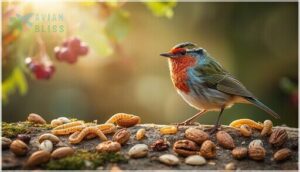
You’ll find protein sources in two powerhouse categories: insects and seeds. Mealworms and black soldier flies deliver essential amino acids with bioavailable calcium, while sunflower and millet seeds pack around 20 percent crude protein plus energy-dense fats.
Pairing these proteins with proper vitamin intake helps prevent signs your bird needs vitamins like feather deterioration or low energy.
Protein supplements work best when you rotate insect-rich and seed-heavy foods, mimicking natural foraging patterns. This mixed approach strengthens amino acid profiles for healthier feathers and muscles.
Role of Fats in Songbird Health
Fats aren’t just about extra calories—they play essential roles in keeping your songbirds healthy and strong.
You’ll want to understand which types of fats matter most, how much to include in their diet, and where these fats come from in nature. Let’s break down what you need to know about dietary fats for songbirds.
Types of Dietary Fats
Your songbird’s body processes fats as triglycerides—each molecule pairs a glycerol backbone with three fatty acids that power flight and feather growth.
Monounsaturated fats from seeds and certain fruits support cellular health, while polyunsaturated fats including omega-3 and omega-6 families reduce inflammation and maintain brain function.
Saturated fats occur naturally in some diet components but require careful balance.
Recommended Fat Intake
You’ll want to keep dietary fats between 5 and 15 percent of your songbird’s total caloric intake to support energy balance without tipping into obesity.
Most healthy adults thrive when fat accounts for roughly 10 percent of their diet—enough to power flight, maintain feather quality, and absorb fat-soluble vitamins. Adjust this range based on activity level, breeding status, and seasonal demands to meet shifting nutrient requirements.
Fat Sources in Natural and Supplemented Diets
Your bird’s natural diet delivers fats through seeds, insects, and fruits—each bringing unique fatty acids that support energy balance and fat metabolism. When wild sources fall short, nutrient supplements bridge the gap.
Consider these fat-rich options:
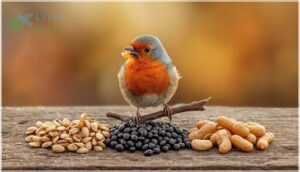
- Sunflower seeds and nuts like walnuts supply energy-dense calories for small songbirds.
- Mealworms and waxworms provide concentrated insect fats during molt.
- Suet blends offer winter energy without triggering avian obesity.
- Flax and chia seeds deliver essential omega-3s year-round.
Carbohydrates and Energy for Songbirds
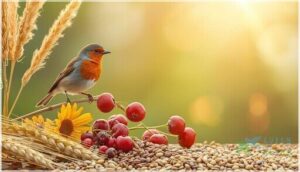
Songbirds rely on carbohydrates as their primary fuel source for everything from daily foraging to long-distance migration.
These quick-burning nutrients come mainly from seeds, grains, fruits, and berries found throughout their natural habitats.
Understanding how their energy needs shift with the seasons helps you support wild birds or provide better care for captive songbirds.
Carbohydrate Sources in The Wild
When you think about wild bird nutrition, carbohydrate sources vary widely across habitats. Fruit sugars from berries peak in late summer, delivering glucose and fructose concentrations up to 50%. Nectar sources and sap flow from native plant selection provide simple sugars during spring. Insect carbs, wild starches from seed heads, and honeydew round out songbirds’ energy intake.
| Source Type | Primary Carbohydrates |
|---|---|
| Fruits | Glucose, fructose |
| Sap & nectar | Sucrose, glucose |
| Seeds & tubers | Starch, complex sugars |
Seasonal Changes in Energy Needs
Your backyard visitors face wildly different energy demands as seasons turn. Cold weather raises thermoregulation needs, pushing energy expenditure up 20 percent in small passerines during frost.
Migration patterns trigger pre-flight fattening—energy budgeting shifts toward storing up to 30 percent more calories. Breeding season spikes metabolic rates by 15 percent for nest building and chick rearing.
Climate adaptation means foraging strategies must match these year-round nutrition cycles.
Carbohydrates During Breeding and Migration
Breeding and migration patterns demand you adjust carbohydrate offerings to match intense flight performance and courtship energy balance. During prebreeding preparation, birds store carbohydrates and fats for longer foraging bouts.
Migration fuels rely on glucose from seeds and fruit to maintain plasma levels during night flights, while dietary adjustments at stopover sites support rapid refueling and energy storage for sustained bird migration patterns.
Essential Vitamins and Minerals for Songbirds

Vitamins and minerals work behind the scenes to keep songbirds healthy, supporting everything from vision and bone strength to reproduction and immune function.
Without these micronutrients, even a protein-rich diet won’t sustain your birds through breeding seasons or molting periods.
Here’s what you need to know about the vitamins and minerals that matter most.
Vitamin A, D3, E, and B-Complex
You’ll want to prioritize four fat-soluble vitamins in your songbird’s diet: A, D3, E, and the B-complex group.
Vitamin A promotes bird vision and immune function, while D3 regulates calcium absorption for strong bones.
Vitamin E acts as an antioxidant protecting cells during stress. B vitamins drive metabolism and energy production, ensuring proper nutrient balance for ideal avian health.
Calcium and Phosphorus Balance
Mineral homeostasis keeps your songbird’s calcium and phosphorus levels balanced through hormonal regulation. Adequate calcium promotes bone health and strong eggshells, while controlled phosphorus intake prevents soft tissue deposits.
You’ll maintain avian osteology by offering calcium-rich greens and limiting high-phosphorus additives. Monitor feather quality and flight performance to assess mineral balance—calcium supplements help during breeding, but excess phosphorus disrupts bird nutrition and overall avian health.
Other Critical Micronutrients
Beyond calcium and protein, you’ll need to provide trace elements that promote metabolism and immune defenses. Manganese’s role includes bone formation, while copper benefits connective tissue and iron transport. Watch for zinc deficiency signs like poor feathers, but avoid selenium toxicity through careful supplementation.
Critical micronutrients your songbird requires:
- Manganese – facilitates carbohydrate metabolism and amino acid processing
- Copper – fosters red blood cell formation and tissue integrity
- Zinc – aids protein synthesis essential for feather growth
- Selenium – protects antioxidant defenses and thyroid function
- Iodine – regulates growth through thyroid hormone production
Importance of Water in Songbird Nutrition

Water is just as essential to songbirds as the seeds and insects they eat each day. Without enough clean water, even a perfectly balanced diet won’t keep your birds healthy and thriving.
Let’s look at how much water songbirds need, what warning signs to watch for, and how to keep their water supply safe.
Daily Water Requirements
Your songbirds need fresh water daily to replace what they lose through respiration, urination, and feeding. While insects and fruit provide some moisture, free water is essential—especially during hot days or dry periods when evaporative losses increase.
In gardens or captivity, change their water source daily to prevent contamination and maintain consistent water intake. During breeding and molt, they’ll drink more to stay properly hydrated.
Signs of Dehydration and Overhydration
Spotting fluid imbalance early can protect your songbird’s health and prevent serious complications. When water intake drops or spikes, your bird’s body sends clear warning signals that you can learn to recognize.
Watch for these dehydration symptoms:
- Dark yellow urine with a stronger odor and reduced frequency
- Dry mouth and beak corners with thick, sticky saliva
- Sunken eyes and visible skin tenting when gently pinched
- Lethargy accompanied by ruffled, dull-looking feathers
Overhydration risks include pale, swollen tissues and excessive clear urination.
Water Quality and Hygiene
Clean drinking water isn’t just about filling the dish—it’s about water protection. Water pollution from bacteria, heavy metals, and microplastics threatens avian hydration and can clog your bird’s delicate digestive system.
Keep water temperature between 6.5 and 25°C, change it daily, and rinse containers with mild soap to prevent biofilm buildup. The importance of water for birds demands careful attention to pet bird care basics.
Native Plants and Insects in Songbird Diets
You can’t replicate a songbird’s diet without understanding what they eat in the wild. Native plants and the insects they attract form the foundation of a healthy ecosystem that sustains these birds year-round.
Let’s look at how you can bring this balance into your own backyard.
Benefits of Native Flora

When you plant native flora, you’re building an entire food web that keeps songbirds thriving year-round. Native plants offer benefits that go far beyond simple nutrition.
- Biodiversity Support: Native plants sustain specialized insects that form the protein backbone of songbird diets
- Soil Health: Deep-rooted natives prevent erosion while enriching soil naturally
- Water Conservation: Established natives need minimal irrigation, reducing your maintenance burden
- Pest Resilience: Bird-Friendly Gardening with natives attracts beneficial predators that regulate pest populations naturally
This ecosystem balance transforms your garden into a self-sustaining habitat.
Insect Diversity as Protein Sources

Your garden’s insect variety directly shapes songbird nutrition and health through protein variability. Caterpillars, beetles, and flies deliver protein contents ranging from 40 to 65 percent, each offering distinct amino acid profiles that support dietary needs.
This entomophagy benefits breeding birds especially, while sustainable sources like insect farming reduce environmental impact. Biodiversity conservation through bird friendly gardens ensures year-round protein availability for songbirds.
Creating Bird-Friendly Gardens

You can transform your yard into a songbird nutrition hub by layering native plants from tall trees down to groundcover. Install bird feeders near safe cover and add shallow water features in sheltered spots for daily hydration.
This bird-friendly gardening approach promotes wildlife conservation while creating diverse foraging patches. Minimize pesticides to protect insects that fuel songbird nutrition and health throughout breeding seasons.
Dietary Needs Across Songbird Life Stages

A songbird’s nutritional needs shift dramatically from the moment it hatches to its final years.
Chicks require soft, protein-rich foods to fuel rapid growth, while adults balance maintenance with seasonal demands like migration and reproduction.
Understanding these life stage differences helps you provide the right nutrition at the right time.
Nutritional Needs of Chicks
Young chicks depend on you to meet their unique dietary needs during rapid growth. Their starter feeds should deliver 18-22 percent protein, which fuels tissue and feather development, while balanced calcium and vitamins support skeletal health.
- Provide high-protein sources like insects or quality seeds to meet essential amino acid requirements
- Make sure fresh water is always available to support digestion and prevent dehydration
- Monitor weight regularly to catch nutritional issues early
- Gradually introduce varied textures to strengthen beak and crop function
Adult Maintenance and Activity Levels
Once your birds reach adulthood, their daily energy needs stabilize around maintaining activity metabolism and healthy body weight. A balanced diet with 12-15 percent protein from insects and quality seeds promotes foraging behavior and flight endurance.
Monitor your songbirds to prevent obesity by adjusting portion sizes when activity drops, ensuring energy balance matches their natural movement patterns.
Breeding, Molting, and Aging Birds
Reproduction and feather replacement put your birds on a nutritional tightrope. Breeding nutrition demands protein increases of 15 to 25 percent to fuel egg production and chick growth, while molting cycles require concentrated amino acids for feather regrowth. As birds age, dietary adjustments help maintain plumage quality and skeletal strength through multiple seasonal transitions.
- Calcium sources become essential during breeding to support eggshell formation and bone maintenance
- Flight feather replacement follows orderly sequences during molt to preserve flight stability
- Aging factors like accumulated antioxidant status influence feather coloration and overall vitality
- Avian hormones interact with day length and temperature to time breeding and molting events
- Adequate phosphorus balance protects skeletal integrity during recurring molts across bird breeding and molting phases
Common Nutritional Deficiencies and Disorders

Even well-intentioned bird owners can miss the subtle signs that their songbirds aren’t getting proper nutrition. Deficiencies in key vitamins and minerals often show up gradually, while energy imbalances can tip the scale toward weakness or obesity.
Here’s what you need to watch for and how to keep your birds on track.
Signs of Malnutrition
When you spot unintentional weight loss of five to ten percent over three to six months, you’re looking at a red flag for malnutrition. Nutrient deficiencies show up in multiple ways that signal health decline before it becomes critical.
| Weight Loss Signs | Feather Condition | Bird Behavior |
|---|---|---|
| Visible thinning of body mass | Brittle, dull feathers | Persistent fatigue and weakness |
| Decreased muscle tone | Delayed or incomplete molt | Reduced activity levels |
| Hollow appearance around eyes | Frayed or broken plumage | Loss of appetite |
Common nutritional diseases in birds often start with poor feathers and energy drops. Nutritional disorders in songbirds manifest through recurrent infections, slower wound healing, and pale skin indicating anemia. Malnutrition effects extend beyond appearance—your bird’s immune system weakens, making recovery from illness more difficult.
Preventing Vitamin and Mineral Deficits
You prevent vitamin deficits by rotating your songbird’s diet to include fresh fruits, leafy greens, and fortified foods that deliver calcium, vitamin A, D3, and B-complex nutrients.
Dietary fortification through commercial pellets ensures consistent mineral supplements, while pairing vitamin C-rich items with protein improves nutrient absorption.
Clean water daily aids metabolism and vitamin balance, reducing deficit prevention challenges before they affect feather quality or immune function.
Managing Obesity and Energy Imbalances
When energy intake surpasses what your songbird burns through flight and daily activity, fat storage follows the same principle as in other species. You maintain healthy metabolism through portion control and balanced nutrition that includes adequate protein and calcium without excess carbohydrates.
- Monitor body condition weekly by gently palpating the keel bone
- Limit high-fat seeds like sunflower to 10-15% of total diet
- Increase cage space to encourage natural flight patterns
- Adjust nutrition therapy based on seasonal energy demands during breeding or molting
Weight management starts with obesity prevention rather than correction after imbalances develop.
Tips for Providing a Balanced Songbird Diet

You’ve learned what songbirds need to thrive, but putting that knowledge into practice requires some smart choices about food sources and feeding habits. The key isn’t flawlessness—it’s understanding how to balance commercial convenience with natural nutrition while staying flexible enough to adjust as your birds’ needs change.
Here are three practical approaches that’ll help you maintain a healthy and sustainable feeding routine.
Choosing Commercial Vs. Natural Foods
You’ll want to weigh commercial seed mixes against natural food gardens when planning year-round nutrition. High-quality seed mixes offer cost efficiency and meet food safety standards, but they can’t match the dietary flexibility of seasonal foraging.
Natural options provide nutrient variability through insects and native plants, though commercial songbird food guarantees consistent intake regardless of weather or bird seeds availability outdoors.
Supplementary Feeding Practices
Think of supplementary feeding as fine-tuning an engine—regular feeding schedules prevent stress and maintain steady energy. You’ll want to rotate food variety daily using high-quality seed mixes, insects, and feeder placement in sheltered spots.
Supplement types should shift with seasons: fat-rich seeds for winter, protein sources during breeding. Natural food gardens complement seed-based diets, creating year-round nutrition planning that promotes ideal health.
Monitoring and Adjusting Diets
Your dietary assessments should track daily weight tracking, body condition, and feather quality to catch early signs that something’s off.
Weekly food diary reviews reveal patterns in nutrient composition and guide feeding strategies.
Health monitoring includes watching water intake and activity levels, so you can make dietary adjustments for birds based on behavior and physiology—whether that’s tweaking protein during molt or recalibrating energy needs for migration.
Frequently Asked Questions (FAQs)
What can you feed songbirds?
You can offer high-quality seed mixes, fresh fruits cut into small pieces, insects like mealworms, unsalted nuts, and native plant seeds.
Food variety ensures songbirds receive balanced nutrition throughout changing seasons.
What are the nutritional needs of birds?
Like a finely tuned engine, your bird’s body needs specific fuel—high quality protein for feather growth, balanced calcium and phosphorus for strong bones, essential vitamins for immunity, and clean water daily.
How long can songbirds go without food?
Most songbirds tolerate fasting periods 24 to 48 hours depending on fat reserves and water availability.
Metabolic shifts prioritize energy conservation, but dehydration shortens survival time.
Cold weather accelerates energy depletion during food shortages.
How do songbirds digest seeds differently than mammals?
Think of your backyard feeder: you shell the sunflower, while the cardinal swallows it whole.
Your bird’s muscular gizzard grinds seeds into digestible particles, aided by gut microbes—no chewing required, unlike mammals.
Can songbirds eat foods toxic to other animals?
Yes, your feathered friends can process certain plant toxins that harm mammals.
Bird toxin metabolism relies on specialized liver enzymes and gut microbes, giving them notable plant toxin resistance through efficient avian detoxification pathways.
What temperature affects songbird metabolism and feeding patterns?
When ambient temperatures rise above thermoneutral zones, your songbird’s basal metabolic rate climbs, driving increased energy expenditure for active cooling and heat exchange.
Cold stress triggers even sharper metabolic rates, demanding higher food intake to generate body heat and maintain critical functions.
Do different songbird species have unique gut bacteria?
Each species harbors distinct gut bacterial communities shaped by diet, habitat, and physiology. Firmicutes and Bacteroidota vary across songbirds, with insectivorous birds hosting protein-digesting microbes while seed-eaters support polysaccharide-metabolizing bacteria.
How does air quality impact songbird nutritional absorption?
Air pollution degrades your songbird’s gut lining, reducing nutrient absorption and disrupting mineral balance.
Respiratory stress from ozone shifts metabolism, while toxic exposure alters gut health and impairs the efficiency of protein and fat uptake.
Conclusion
Every seed you offer and native plant you grow becomes part of a larger equation—one that determines whether the songbirds in your care can sustain their remarkable metabolic demands.
Meeting the nutritional needs of songbirds means understanding proteins, fats, vitamins, and seasonal shifts as interconnected pieces of survival.
Your backyard isn’t just habitat; it’s a carefully balanced buffet where what you provide directly impacts energy reserves, breeding success, and migration outcomes.