This site is supported by our readers. We may earn a commission, at no cost to you, if you purchase through links.
Most hummingbirds visiting backyard feeders are running a nutritional deficit. Sugar water keeps them coming back, but it can’t replace the wild nectar, minerals, and insects that make up a complete diet.
A ruby-throated hummingbird, for instance, catches up to 2,000 insects a day during breeding season—none of which come from a feeder.
Knowing how to feed hummingbirds naturally means understanding what their bodies actually need, not just what attracts them.
The difference between surviving and thriving often comes down to what you’ve planted, what insects you’ve protected, and how you’ve arranged it all.
Table Of Contents
- Key Takeaways
- What Does Feeding Hummingbirds Naturally Mean?
- Native Plants That Attract Hummingbirds
- Creating a Hummingbird-Friendly Garden
- Supplementing With Homemade Nectar Safely
- Providing Natural Insect Food for Hummingbirds
- Maintenance Tips for Natural Hummingbird Feeding
- Frequently Asked Questions (FAQs)
- Should I stop feeding hummingbirds in September?
- What is a hummingbird’s biggest enemy?
- What else can I feed hummingbirds besides sugar water?
- When should I start feeding hummingbirds each year?
- How do I keep bees away from flowers?
- Can hummingbirds survive without my garden or feeder?
- What colors besides red attract hummingbirds most?
- How many hummingbirds can one garden typically support?
- How do hummingbirds find feeders for the first time?
- Can hummingbirds recognize individual humans over time?
- Conclusion
Key Takeaways
- Sugar water keeps hummingbirds visiting, but insects — up to 2,000 a day for a ruby-throated — are what actually fuels muscle, feathers, and migration.
- Native tubular flowers like cardinal flower and coral honeysuckle deliver season-matched nectar, micronutrients, and minerals that no homemade mix can replicate.
- Skipping pesticides isn’t just good ethics — it protects the aphids, gnats, and spiders your hummingbirds depend on for real protein.
- A clean feeder (rinsed every 2–3 days, daily above 85°F) paired with smart native planting turns your yard from a pit stop into a reliable home base.
What Does Feeding Hummingbirds Naturally Mean?
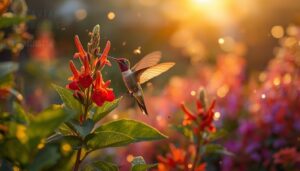
Feeding hummingbirds naturally isn’t just about hanging a feeder — it’s about meeting their whole diet, from nectar to tiny insects. These birds are remarkably specific about what they need, and your garden can deliver most of it.
Beyond nectar, hummingbirds rely on protein-rich insects, though painted redstarts and similar backyard visitors show just how intertwined colorful birds’ diets and garden ecosystems really are.
Here’s what that actually looks like in practice.
Importance of Natural Food Sources
Think of natural food as a complete sentence — artificial feeding is just a fragment. When hummingbirds forage from native flowering plants, they’re tapping into something a sugar feeder simply can’t replicate: micronutrient diversity, antioxidant benefits, and minerals drawn straight from the soil.
Natural foraging feeds hummingbirds what no sugar feeder can — micronutrients, antioxidants, and minerals from the soil itself
Here’s what whole, natural food actually delivers:
- Real sugars and micronutrients from natural flower nectar fuel migration and breeding
- Protein-rich insects — aphids, gnats, spiders — build muscle and promote molt
- Antioxidant benefits from wild plant foods help birds handle environmental stress
- Mineral enrichment through bark, sap, and mineral-rich soils promotes bone and beak health
- Seasonal food variation aligns their diet naturally with energy demands year-round
Differences Between Natural and Artificial Feeding
Natural flower nectar isn’t just sugar water with scenery. Its sugar composition shifts with the seasons, delivering fluctuating energy density that mirrors a hummingbird’s actual metabolic needs — something homemade nectar or artificial nectar simply can’t replicate.
| Factor | Natural Feeding | Artificial Feeding |
|---|---|---|
| Sugar composition | Variable, season-matched | Fixed 1:4 ratio |
| Seasonal availability | Bloom-driven, cyclical | Year-round, controlled |
| Microbial risk | Minimal | High without cleaning |
Behavioral impacts matter too. Wild foraging keeps birds sharp and active. Feeders are fine supplements — but never skip the insects, avoid artificial sweeteners, and keep red dye 40 far away from the mix.
Native Plants That Attract Hummingbirds
The right plants do more than look pretty — they’re what bring hummingbirds back year after year.
Native species, especially tubular bloomers, offer the high-quality nectar these birds are literally wired to seek out.
Here’s what’s worth growing, from crowd-favorite flowers to the best regional picks for your yard.
Top Nectar-Rich Native Flowers
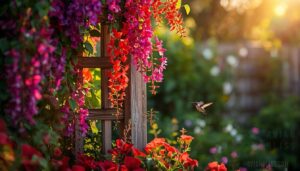
nectar-rich native flowers can transform your yard into a hummingbird magnet. Trumpet vine opens early with high nectar concentration levels, while bee balm carries mid-summer blooms in vivid red and pink — both strong flower color cues hummingbirds instinctively follow.
For a fuller seasonal lineup, native red flowers that attract hummingbirds naturally — like cardinal flower and coral honeysuckle — keep nectar flowing from spring right through fall.
Coral honeysuckle climbs trellises into fall, extending seasonal bloom timing beautifully. Scarlet lobelia and Indian pink fill lower layers, adding pollinator diversity benefits that support the whole garden ecosystem.
With smart plant spacing strategy — keeping tubular native plants two to three feet apart — these bird-friendly plants create clear flight paths and generous, reliable flower nectar all season. This approach leverages higher nectar volume to sustain hummingbirds throughout the season.
Tubular Blooms Hummingbirds Prefer
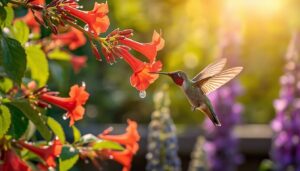
Shape matters more than you’d think. Hummingbirds have long bills built for one thing: reaching nectar tucked deep inside narrow tubular shapes — places bees and butterflies simply can’t reach.
Red Color Preference is hardwired in them. Red or orange tubular flowers like cardinal flower, trumpet creeper, and coral honeysuckle are top choices in any hummingbird-friendly garden.
Here’s what makes tubular native plants stand out:
- High Nectar Yield — cardinal flower and trumpet creeper produce generous nectar volumes per bloom
- Late Spring Bloom — penstemon and coral honeysuckle open early, bridging seasonal gaps
- Sun-Facing Placement — full sun maximizes nectar production in native plant selection for hummingbirds
Best Plants by Region
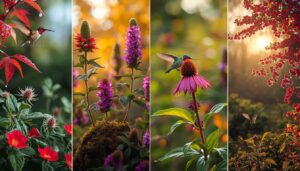
Every region has its own rhythm — and so do hummingbirds.
Red Maple and Serviceberry are reliable bird‑friendly plants that bloom early and handle hard winters.
Purple Coneflower and bee balm carry pollinators through late summer.
Coral Honeysuckle and Cardinal Flower love heat and humidity.
Desert Willow thrive through drought.
Pacific Northwest favorites — Red‑flowering Currant especially — round out your regional native plant selections for hummingbirds beautifully.
Creating a Hummingbird-Friendly Garden
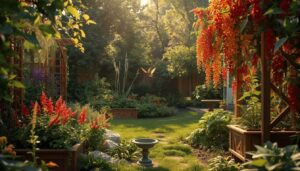
A good hummingbird garden isn’t just about planting flowers and hoping for the best. It’s about building a space that actually works — one where they can feed, rest, and feel safe enough to keep coming back.
Here’s what makes the real difference.
Garden Design Tips for Hummingbirds
Think of your yard as a living room for hummingbirds — layered, welcoming, and stocked with everything they need.
- Vertical Layers — Mix tall salvias, mid-height bee balm, and low tubular flowers along sunlit borders for clustered planting that feeds birds at every level.
- Seasonal Bloom Rotation — Rotate native plants with staggered bloom times so nectar flows spring through fall.
- Water Feature Placement — A shallow bath or dripper within 10 feet keeps your hummingbird-friendly garden complete.
Choosing The Right Plant Locations
Where you place your plants matters as much as which ones you choose. Position nectar-rich native plants 10–15 feet from perches — that short gap saves hummingbirds’ real energy.
For sunlight exposure, south- or east-facing beds catch morning light first, which drives peak nectar production.
Good soil moisture and airflow optimization (space plants 2–3 feet apart) keep blooms healthy longer.
Water proximity within 10 feet, a warm microclimate near light-colored walls, and thoughtful pollinator garden design complete the picture.
Providing Shelter and Perches
Hummingbirds rest more than you’d think — and where they rest matters. Sheltered roosting spots facing away from prevailing winds cut energy loss on cool mornings. For predator‑safe perches, use untreated wood or braided cotton, spaced 15–25 cm apart for quick takeoff. This is habitat enhancement, not decoration.
- Mount nesting boxes 6–10 feet high for overhead protection
- Apply windbreak placement near dense shrubs or fencing
- Choose artificial perch materials — smooth, untreated wood only
- Make seasonal shelter adjustments as blooms and temperatures shift
- Keep water within 10 feet for a truly bird‑friendly garden
Supplementing With Homemade Nectar Safely
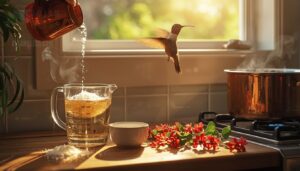
Making your own nectar is one of the simplest things you can do for hummingbirds — and one of the easiest to get wrong.
few small mistakes in the kitchen can do real harm, so the details matter here. Here’s what you need to know before you fill that feeder.
Best Sugar-to-Water Ratio
The standard 4:1 water-to-sugar ratio — four cups water, one cup plain white sugar — mirrors the roughly 20% sucrose concentration native flowers naturally produce.
That’s the sugar water ratio for hummingbirds that keeps their metabolism humming without digestive stress.
Don’t adjust for heat; the Heat Dilution Effect tempts people to add more sugar, but stick to the 4:1 water-to-sugar ratio.
Use mineral-free water when possible, and batch size scaling is simple: just multiply proportionally.
Proper Preparation and Storage
Cool your nectar completely before storing — heat speeds fermentation fast.
Refrigerate your nectar at 4°C in a BPA-free glass or opaque container; light exposure degrades sugar quality.
Label each jar with the prep date and discard anything older than seven days. Batch size planning helps here: small batches stay fresher longer.
Bring chilled nectar to room temperature before refilling so you’re never startling your visitors.
Avoiding Harmful Ingredients
Once your nectar is safely stored, what goes into it matters just as much. Skip honey, artificial sweeteners, and brown sugar — all contain compounds hummingbirds can’t process.
Red dye, despite seeming harmless, introduces non‑toxic dye concerns and hazardous chemicals for wildlife. Your feeder’s red color already does the attracting.
Use PFAS-free containers, lead-free pigments, and paraben-free nectar principles: plain white sugar, clean water, nothing else.
Dye-free hummingbird food is always the safest choice.
Providing Natural Insect Food for Hummingbirds
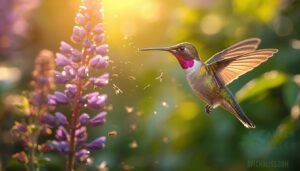
Most people don’t realize that nectar alone won’t keep a hummingbird healthy — insects are where the real nutrition comes from.
Tiny bugs like aphids, gnats, and fruit flies deliver the protein and amino acids these birds need to survive long migrations and raise their young.
Here’s how to make your yard a reliable source of that natural insect food.
Encouraging Beneficial Insects
Think of your yard as a living pantry.
Groundcover habitats, mulch refuges, two to three inches deep, dead wood shelters, and stone pile microhabitats all support the beneficial insects — aphids, gnats, fruit flies, spiders — that supply essential insect protein for birds.
Water feature edges draw even more.
Integrating beneficial insects for hummingbird protein is simple: plant native plants like asters and goldenrod, and let the ecosystem do the rest.
Avoiding Pesticides and Chemicals
Those beneficial insects you just invited in? A single pesticide application can wipe them out overnight.
Pesticide-free gardening keeps the food chain intact. Here’s how to protect it:
- Pesticide-Free Mulching — Layer 2–3 inches of wood chips to suppress weeds without chemical herbicides, cutting pesticide needs by up to 60 percent.
- Organic Fertilizer Choices — Swap synthetics for compost; healthier soil grows pest-resistant native plants naturally.
- Native Predator Planting — Asters and goldenrod attract lacewings and lady beetles for chemical-free pest control.
- Drip Irrigation Benefits — Keeping foliage dry reduces fungal pressure, eliminating the trigger for most chemical sprays.
Integrated Pest Management ties it together — sustainable gardening practices that protect every insect your hummingbirds depend on.
Supporting Hummingbird Protein Needs
Keeping pesticides out of your garden does more than protect insects — it feeds hummingbirds directly. Sugar water fuels their hover, but protein from insects takes care of everything else: muscle repair, feather growth, and egg production. Aphids, gnats, and spiders are their real grocery store.
| Protein Source | Why It Matters |
|---|---|
| Spider Web Protein | Amino acids for tissue repair |
| Seasonal Insect Surge | Pre-migration fattening fuel |
| Ground Beetle Boost | Steady late-season protein |
| Leafhopper Habitat | Native plants attract reliable prey |
Microhabitat Layers — shrubs, ground cover, leaf litter — support diverse insect prey for hummingbirds year-round. Supporting hummingbirds with native plants means weaving together flowering species that sustain beneficial insects across every season.
Maintenance Tips for Natural Hummingbird Feeding
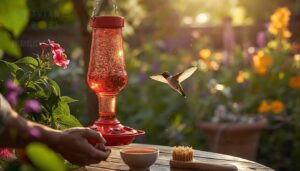
Feeding hummingbirds naturally doesn’t stop once the feeder is hung or the garden is planted.
little consistent upkeep is what keeps everything safe, fresh, and worth their return visits.
Here’s what to stay on top of throughout the season.
Cleaning Feeders and Garden Hygiene
A dirty feeder doesn’t just look bad — it’s quietly harmful. Rinse yours every two to three days, daily when temperatures climb past 85°F.
For deep feeder hygiene, soak disassembled parts in a 10 percent bleach disinfection solution for 10 minutes, then rinse until no trace of chlorine remains.
Check seals and gaskets for cracks each time. Sweep ground debris twice weekly, and keep a simple cleaning log to stay consistent.
Monitoring Nectar Freshness
Every refill is a freshness check. Look for cloudiness indicators — hazy nectar, foam formation on the surface, or a fermentation smell (sour, yeasty) — and replace immediately.
Temperature impact is real: above 85°F, fermentation risk spikes fast, so swap nectar daily.
Mold detection matters too; any film means clean before refilling.
Store refrigerated extras in labeled, airtight containers to keep fresh nectar ready.
Seasonal Adjustments for Feeding
Seasons shape everything about how hummingbirds feed — and your setup should shift right alongside them.
In spring, increase feeding frequency before local blooms catch up; birds arriving early need reliable fuel fast.
Summer heat demands daily nectar swaps to outpace fermentation.
Fall calls for late-blooming native plants to support migration.
Winter: Coastal gardens keep feeders running year-round, while inland spots scale back as natural sources fade.
Frequently Asked Questions (FAQs)
Should I stop feeding hummingbirds in September?
Not necessarily.
Hummingbirds follow photoperiod cues, not your feeder schedule. Keep it up through late September — ruby-throated birds often linger until early October, and that energy reserve matters for their 500-mile flight south.
What is a hummingbird’s biggest enemy?
Habitat loss is the biggest long-term threat, but sharp-shinned hawks, snake nest raids, severe weather, invasive plant competition, and disease transmission all chip away daily at hummingbird survival.
What else can I feed hummingbirds besides sugar water?
Think of sugar water as the bread basket—it keeps them at the table, but hummingbirds also need insects, tree sap, mineral-rich sap from sapsucker wells, berry patches, and native flowers for full nutrition.
When should I start feeding hummingbirds each year?
In Ashburn, Virginia, put feeders out by early March.
Ruby-throated hummingbirds follow spring migration north, and daily highs above 50°F, plus early blooms, are your clearest regional climate cues to act.
How do I keep bees away from flowers?
Honestly? Don’t. Bees pollinate the flowers that hummingbirds depend on.
Instead, use Plant Placement Strategies, Scent Deterrents like marigold borders, and Bee Physical Barriers near seating — protecting your space without breaking the pollinator partnership your garden needs.
Can hummingbirds survive without my garden or feeder?
Yes — hummingbirds survive just fine without your garden or feeder.
They rely on Wild Food Availability, seasonal nectar shifts, and insect prey for hummingbirds, expanding their territorial range whenever local blooms fade.
What colors besides red attract hummingbirds most?
Red gets all the credit, but orange flowers, pink blooms, purple-blue petals, yellow tubulars, and white petals all pull hummingbirds in — especially when tubular-shaped and loaded with nectar.
How many hummingbirds can one garden typically support?
Most gardens support 2–6 hummingbirds daily, though abundant nectar sources can attract up to 10 during peak bloom. Territorial behavior naturally limits simultaneous visitors to 2–4 per feeder.
How do hummingbirds find feeders for the first time?
Color contrast catches their eye first. A red feeder in an open flight path stops them mid-route. Visual landmarks anchor the location in memory — and they’re back tomorrow.
Can hummingbirds recognize individual humans over time?
They remember more than you’d think.
Through Visual Cue Memory and Facial Recognition, hummingbirds build Temporal Host Loyalty — returning to familiar faces, feeders, and routines with quiet, unmistakable Behavioral Trust Signals.
Conclusion
Think of your garden as a living pantry—stocked not just with sweetness, but with everything a hummingbird needs to truly thrive. Learning how to feed hummingbirds naturally isn’t about doing more; it’s about doing things right.
Plant native blooms, protect your insects, skip the pesticides, and keep feeders clean. When you align your space with what hummingbirds actually need, you stop being a pit stop—and start becoming home.