This site is supported by our readers. We may earn a commission, at no cost to you, if you purchase through links.
You’ve hung a feeder, filled it with generic birdseed, and waited. And waited. Meanwhile, your neighbor’s yard sounds like a percussion concert—tap-tap-tap—as woodpeckers work their feeders with relentless energy. What’s the difference?
These birds don’t just want food; they want specific food, delivered in ways that match their unique anatomy. Woodpeckers have evolved with zygodactyl feet (two toes forward, two back), reinforced skulls, and high-calorie needs that make them incredibly picky about what attracts woodpeckers to feeders.
Understanding their preferences—suet packed with 100 calories per tablespoon, vertical surfaces that support tail-propping, and insect-enriched blends—transforms your backyard from a quiet zone into a woodpecker hotspot. The secret isn’t luck; it’s knowing exactly what these specialized birds seek when they scout for feeding stations.
Table Of Contents
Key Takeaways
- Woodpeckers require specific high-calorie foods like suet (100 calories per tablespoon with 40-60% fat content), peanuts (25-30% protein), and mealworms (50% protein by dry weight) to meet their intense energy demands and specialized dietary needs.
- Feeder design must accommodate woodpeckers’ unique anatomy—zygodactyl feet (two toes forward, two back) and tail-propping behavior—through vertical surfaces, rough textures mimicking tree bark, and metal construction that absorbs pecking vibrations.
- Strategic placement matters significantly: position feeders 4-6 feet above ground near mature trees with 10-15 feet spacing between stations, while preserving dead wood and snags in your yard to provide natural foraging sites and nesting cavities.
- Creating a complete woodpecker habitat requires combining proper feeders with clean water sources, native trees (oaks, hickories, pines), pesticide-free yards that support insect populations, and seasonal adjustments to food offerings based on breeding cycles and migration patterns.
Foods That Attract Woodpeckers to Feeders
Want to turn your backyard into a woodpecker hotspot? The secret is in the menu!
Start with the right suet bird feeders for clinging birds, and you’ll see downy woodpeckers, nuthatches, and even flickers making daily visits.
Let’s look at the top foods that’ll have these striking birds tapping away at your feeders all year long.
Suet Varieties and Nutritional Benefits
Suet composition drives woodpecker attraction like nothing else! This high-fat powerhouse delivers 100 calories per tablespoon, with fat content ranging from 40 to 60 percent—perfect energy density for active birds. Different nutrient profiles offer unique benefits:
Suet’s high-fat composition—40 to 60 percent fat and 100 calories per tablespoon—makes it the ultimate energy source for attracting woodpeckers
- Peanut-based suet provides 20 percent peanut content for protein sources
- Insect-enriched blends add mealworms for muscle maintenance
- Plain beef suet stays solid in varying temperatures
You’re giving woodpeckers the concentrated fuel they need! Many bird species benefit from suet’s high calorie nutrition.
Peanuts, Sunflower Seeds, and Nuts
Beyond suet, you’ll find peanuts and sunflower seeds are woodpecker magnets! Peanuts deliver 25 to 30 percent protein per weight—serious muscle fuel. Sunflower seeds pack 50 percent healthy fats per 100 grams, supporting feather health. Shell-on options encourage natural foraging habits at your bird feeders!
| Food Type | Key Benefit |
|---|---|
| Peanut pieces | High protein density (25-30%) |
| Sunflower kernels | Rich vitamin E content |
| Mixed nuts | Omega-3 fatty acids |
Always choose unsalted varieties to keep your woodpecker-friendly feeders safe and toxin-free.
Mealworms and Insect-Based Options
Mealworms deliver 50 percent protein by dry weight—perfect mealworm benefits for breeding season! Live insects offer varied foraging opportunities, while dried versions provide convenient, shelf-stable insect nutrition.
Mix them with peanut pieces in your woodpecker-friendly feeders to extend visits. Place feeders 6 to 12 feet high with good drainage, and remember: bug attractants work best when you clean weekly to prevent mold!
Fruits and Supplemental Nectar Sources
Fruit types like apples and berries add natural sweetness! Cut them into sections, expose the flesh, and watch woodpeckers peck at the sugar-rich moisture. Sugar water or diluted fruit juice in specialized nectar recipes mimics natural sources—especially during migration!
- Place fruit feeders 5 to 10 feet high, away from dense brush
- Change nectar weekly to prevent dangerous mold growth
- Berry-flavored mixes provide aroma cues for berry attraction
- Fresh, exposed fruit sections encourage short, active visits
- Elevated feeder placement reduces predator ambush risk
Keep it fresh, and you’ll master attracting woodpeckers to bird feeders year-round!
Offering a Diverse Food Selection
Food Variety is key to attracting woodpeckers to bird feeders! Rotating suet types, nuts, mealworms, and fruit creates nutrient balance and keeps your woodpecker-friendly feeders buzzing with activity. Mix seasonal options weekly—peanuts in winter, insects during nesting—to match their natural cycles.
| Food Type | Best Season |
|---|---|
| Suet cakes | Winter, fall |
| Sunflower seeds | Year-round |
| Mealworms | Spring, summer |
| Fresh fruit | Late summer |
| Peanut pieces | Cold months |
Smart feeding strategies = more woodpecker visits!
Positioning your feeder on a tree trunk at the right height helps attract woodpeckers native to Louisiana that prefer vertical feeding surfaces.
Choosing The Best Feeders for Woodpeckers
Getting woodpeckers to visit your yard starts with offering the right food—but keeping them around? That’s all about the feeder!
Woodpeckers have unique feeding behaviors, preferring vertical surfaces where they can cling, peck, and feel secure. Let’s look at the best feeder types that match their natural instincts and make your backyard irresistible!
Suet Cake Feeders and Cages
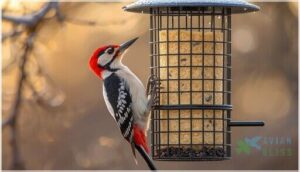
Suet cake feeders are the premier choice for attracting woodpeckers—period! You’ll find vinyl-coated wire or metal grid cages that hold one to four standard suet cakes securely, giving your backyard visitors perfect vertical clinging surfaces. Here’s what makes these woodpecker-friendly feeders so effective:
- Small mesh openings deter starlings and squirrels while allowing woodpecker access
- Powder-coated finishes resist rust and UV damage in all weather
- Protective hoods shield suet from rain, reducing melt and waste
- Easy-open latches make suet refill a breeze—no tools needed!
- Durable hanging hooks support full loads during storms
Many birders find that choosing a feeder built for markedly increases the diversity of suet-loving birds visiting their yard. Choose cage maintenance-friendly designs with removable components for quick rinsing!
Vertical Log and Mesh Tube Feeders
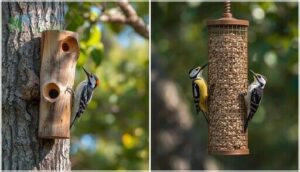
You’ll love how vertical log and mesh tube feeders mimic natural tree-trunk foraging! These designs let woodpeckers cling vertically while accessing suet, sunflower seeds, or mealworms through strategically spaced ports. Log materials with bark texture provide excellent grip, while rust-resistant mesh sizes (¼ to ½ inch) accommodate various beak widths.
| Feature | Vertical Log Feeders | Mesh Tube Feeders |
|---|---|---|
| Best Foods | Suet plugs, peanut kernels | Shelled sunflower seeds, mealworms |
| Capacity | 1-3 pounds | 1-2 pounds |
| Clinging Mechanisms | Bark texture, grooved surfaces | Wire mesh grid |
| Refill Systems | Removable caps, interior trays | Quick-disconnect end caps |
Look for powder-coated finishes and weather-resistant construction in both feeder designs!
Platform and Hopper-Style Feeders
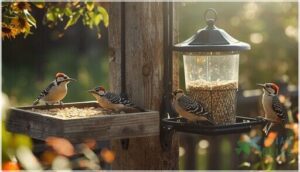
Think big trays meet steady seed supply! Platform structures offer flat horizontal surfaces where multiple woodpeckers perch and feed simultaneously, while hopper designs use gravity-fed dispensers with clear panels to monitor seed levels. Both styles accommodate sunflower seeds, peanuts, and even suet nuggets—making them woodpecker-friendly feeders that reduce your refill frequency!
- Removable trays and twist caps simplify cleaning and seed replacement
- UV-resistant plastics and stainless steel construction withstand harsh weather
- Weight-sensitive perches discourage larger, aggressive bird species
- Drainage holes prevent water accumulation after rain or morning dew
- Textured surfaces and vertical ridges support natural clinging behavior
Feeder Placement for Maximum Attraction
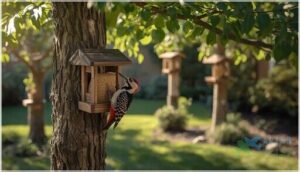
Where you hang your feeder changes everything! Position bird feeders 4 to 6 feet above ground to balance accessibility and predator safety, while maintaining clear bird sightlines for unobstructed approach.
Thoughtful yard layout matters—place woodpecker-friendly feeders near vertical trunks with 10 to 15 feet feeder spacing to prevent territorial squabbles. Wind protection and strategic suet feeder positioning increase visits dramatically, especially when you rotate placement seasonally!
Features That Support Clinging and Pecking
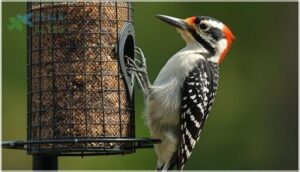
Your feeder design must accommodate zygodactyl feet—two toes forward, two back—by offering vertical surfaces with rough textures that mimic tree bark.
Look for cages with horizontal perching bars to support tail prop behavior, allowing woodpeckers to brace against the surface while their chisel beak hammers suet!
Choose feeders with thick metal construction that absorbs pecking vibrations, protecting skull structures during extended feeding sessions.
Creating a Woodpecker-Friendly Yard

Your yard isn’t just a place to hang feeders—it’s the whole ecosystem that keeps woodpeckers coming back! The right trees, water sources, and natural features create a habitat that meets their needs year-round.
Let’s walk through five key strategies to transform your outdoor space into a woodpecker paradise.
Importance of Trees and Deadwood
You’ll attract more woodpeckers by nurturing a diverse Tree Canopy filled with native trees—oaks, hickories, and pines work brilliantly!
Don’t rush to remove dead trees or snags, though. These Deadwood Benefits are huge for Forest Ecology: decaying tree trunks release nutrients, stabilize soil, and host the insects woodpeckers devour.
Your Woodland Habitat delivers critical Ecosystem Services while supporting tree conservation naturally!
Providing Nesting Sites and Boxes
Beyond protecting natural Tree Cavities in your yard, you can offer purpose-built nest boxes that mimic Woodpecker Habitats perfectly!
Nest Box Designs should use untreated cedar or pine with species-specific entrance holes—1.25 inches for Downy Woodpeckers, 1.5 inches for Hairy Woodpeckers.
Box Placement matters: mount them 6-15 feet high on sturdy poles, facing away from prevailing winds. Add wood shavings inside as Nesting Materials to simulate natural excavation!
Maintaining Clean Water Sources
Clean water is just as important as food! A fresh birdbath attracts woodpeckers year-round, especially during winter when natural sources freeze.
Maintain your water source with these proven Sanitation Methods:
- Drain and scrub every 2-3 days to prevent algae buildup
- Test water quality monthly for bacterial contamination
- Install mesh screens on Rainwater Collection systems to block debris
Filtration Systems and heated birdbaths keep water accessible even in cold weather!
Avoiding Pesticides and Encouraging Natural Foraging
Pesticides destroy the insects woodpeckers need for survival! Instead, embrace organic gardening practices that support natural pest control and boost soil health.
Plant native plantings like oak and hickory—they attract beneficial insects that woodpeckers love. Create wildlife conservation zones with leaf litter and log piles. Your garden wildlife will thrive, and woodpeckers will flock to your yard for natural foraging opportunities year-round!
Seasonal Adjustments to Habitat and Feeding
Throughout the year, your winter feeding adjustments make all the difference for attracting woodpeckers to your yard! Rotate woodpecker-friendly feeders every 20-30 meters to encourage foraging strategies and prevent overdependence.
Seasonal pruning balances open feeding spaces with protective cover, while habitat maintenance like preserving snags aids year-round woodpecker attraction strategies.
Track weather adaptation impacts on seasonal bird activity and migration—you’ll master woodpecker feeding habits and preferences quickly!
Top 5 Products to Attract Woodpeckers
You’ve created the perfect habitat, chosen the right feeders, and now you’re ready to stock your feeding stations with the best foods woodpeckers can’t resist! The products you select make all the difference in attracting species like Downy Woodpeckers, Hairy Woodpeckers, and Northern Flickers to your yard.
Here are five proven products that deliver the high-fat, high-protein nutrition woodpeckers need year-round.
1. Lyric Wild Bird Peanut Pieces Seed
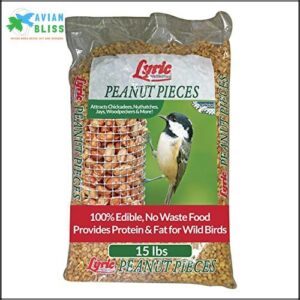
Lyric Peanut Pieces deliver exactly what woodpeckers need: high-fat fuel (40% minimum) and hearty protein (25% minimum) packed into shelled, easy-to-eat bits. The 15-pound bag is 100% edible with no fillers, so every piece counts!
You’ll attract pileated, downy, and other species thanks to the split and whole peanut mix, which reduces waste and accommodates different beak sizes.
Store it in a cool, dry spot, and pair it with suet or mealworms for an irresistible woodpecker buffet.
| Best For | Backyard birders who want to attract woodpeckers and other high-energy songbirds with nutrient-dense, zero-waste food. |
|---|---|
| Primary Ingredient | Peanuts |
| Weight | 15 pounds |
| Form | Pellet |
| Attracts Woodpeckers | Yes |
| High Protein | Yes |
| Attracts Multiple Species | Yes |
| Additional Features |
|
- 100% edible with no fillers, so nothing goes to waste and every piece delivers 40% fat and 25% protein
- Attracts a wide variety of birds including woodpeckers, nuthatches, and jays year-round
- Compatible with multiple feeder types and cost-effective compared to buying locally
- Rain can cause mold to form on the peanuts if feeders aren’t protected
- May attract unwanted visitors like squirrels and raccoons looking for an easy meal
- Some smaller birds struggle with larger peanut pieces and need them broken up first
2. Picky Neb Dried Mealworms Bird Food
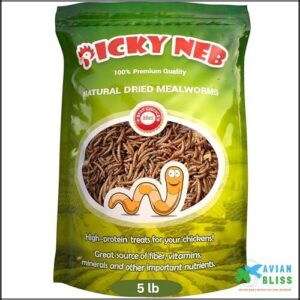
Picky Neb Dried Mealworms pack over 50% protein by weight, giving woodpeckers the high-fat fuel they crave, especially when winter insects vanish! This 5-pound bag contains 100% non-GMO mealworms with zero preservatives or additives, making it a natural, nutritious choice.
You’ll draw downy and red-bellied woodpeckers consistently—the scent and texture mimic their natural foraging perfectly. Offer them in a dedicated dish, keep portions moderate, and refill every 1-3 days during peak seasons. Store in a cool, dry spot to maintain freshness for months!
| Best For | Bird lovers who want to attract woodpeckers, bluebirds, and other high-protein feeders with a natural, preservative-free option that’s easy to store and serve year-round. |
|---|---|
| Primary Ingredient | Mealworms |
| Weight | 5 pounds |
| Form | Dried granule |
| Attracts Woodpeckers | Yes |
| High Protein | Yes |
| Attracts Multiple Species | Yes |
| Additional Features |
|
- Over 50% protein content with zero additives gives birds the nutrition they need, especially in winter
- Attracts a wide variety of birds including woodpeckers, bluebirds, and mockingbirds to your feeders
- No refrigeration needed and stays fresh for months when stored properly
- Birds can go through the 5-pound bag quickly, requiring frequent replenishment
- May attract squirrels and other non-bird species you weren’t planning to feed
- Starlings can dominate feeders and consume large amounts if fed in the morning
3. C&S Peanut Suet Nuggets
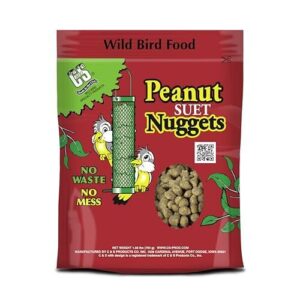
C&S Peanut Suet Nuggets deliver the high-energy blend woodpeckers need—corn, roasted peanuts, and rendered beef suet—without the mess of traditional suet cakes! Each nugget holds its shape in platform feeders or specialized nugget feeders, making refills fast and your hands cleaner.
You’ll attract nuthatches, chickadees, and especially downy and hairy woodpeckers who adore the protein boost. The no-melt formula works year-round, and the 10.1-pound bag offers excellent value. Mix with seed or serve solo—either way, you’re fueling serious activity!
| Best For | Bird lovers who want to attract woodpeckers, nuthatches, and chickadees with a mess-free, high-energy suet option that won’t melt in warm weather. |
|---|---|
| Primary Ingredient | Peanuts & Suet |
| Weight | 10.1 pounds |
| Form | Nugget |
| Attracts Woodpeckers | Yes |
| High Protein | Yes |
| Attracts Multiple Species | Yes |
| Additional Features |
|
- No-melt formula works in all seasons and keeps feeders cleaner than traditional suet cakes
- Packed with protein and healthy fats from real peanuts and rendered beef suet to fuel active birds
- Versatile feeding—use alone in nugget feeders or mix with seed in platform feeders
- Some birds need time to adjust to the nugget format and may ignore it at first
- Squirrels can figure out how to access the nuggets despite the design
- Price has increased over time, making it less economical than it used to be
4. Wildlife Sciences Suet Plugs

Wildlife Sciences Suet Plugs turn any drilled log feeder into a woodpecker magnet! These cylindrical plugs—roughly 3.75 inches long and 1 inch in diameter—fit snugly into vertical log feeders, mimicking the natural foraging experience woodpeckers crave.
You’ll get 16 plugs per pack, loaded with rendered beef suet, cracked corn, millet, and pecans for high-energy fuel. The melt-resistant formula holds up in warm weather, so you can feed year-round.
Downy, hairy, and red-bellied woodpeckers love clinging to vertical surfaces—these plugs deliver exactly that!
| Best For | Backyard birders with vertical log feeders who want to attract woodpeckers and other clinging birds with a mess-free, high-energy suet option. |
|---|---|
| Primary Ingredient | Suet & Corn |
| Weight | 12 ounces |
| Form | Stick |
| Attracts Woodpeckers | Yes |
| High Protein | Yes |
| Attracts Multiple Species | Yes |
| Additional Features |
|
- Fits perfectly into drilled log feeders, creating a natural foraging setup that woodpeckers love
- Melt-resistant formula works well in warm weather for year-round feeding
- Packed with energy-rich ingredients like beef suet, cracked corn, and pecans that appeal to multiple bird species
- Size may not fit all feeder types—some users found them too small for their setups
- Plugs can fall out when birds peck at them, leading to waste
- Aggressive species like blackbirds may dominate and scare off smaller birds
5. Stokes Select Seed Cake Bird Feeder
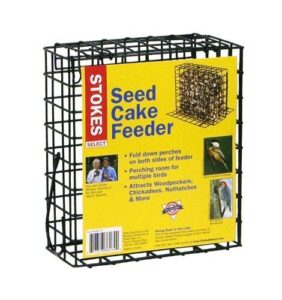
Want a feeder that works with suet and seed cakes? The Stokes Select Seed Cake Bird Feeder delivers versatility you’ll appreciate! This metal cage feeder—8″×7″×3″—features a grid design perfect for clinging birds like woodpeckers, nuthatches, and chickadees.
The fold-down perches accommodate multiple feeding styles, while the double-locking closure keeps cakes secure (though some users add zip ties for extra protection). Fill it with suet cakes, seed cakes, or even fruit—woodpeckers love the easy vertical access!
| Best For | Birders who want a flexible feeder that works with suet cakes, seed cakes, or fruit and attracts clinging birds like woodpeckers and nuthatches. |
|---|---|
| Primary Ingredient | Suet Cakes |
| Weight | Varies by cake |
| Form | Cake |
| Attracts Woodpeckers | Yes |
| High Protein | Yes |
| Attracts Multiple Species | Yes |
| Additional Features |
|
- Multi-purpose design lets you switch between suet, seed cakes, nesting materials, or fruit depending on the season
- Grid construction with fold-down perches accommodates both clinging and perching birds
- Attracts a wide variety of species including woodpeckers, chickadees, cardinals, and goldfinches
- Double-locking closure may not stay secure—some users need to add zip ties to keep squirrels out
- Large 8″×7″×3″ size requires jumbo suet cakes, which limits your options for standard-sized cakes
- Not ideal for birds with shorter beaks that can’t easily access food through the grid design
Frequently Asked Questions (FAQs)
How to attract woodpeckers to bird feeders?
You’ll attract woodpeckers by offering suet cakes with peanuts or insects, placing feeders 6 to 10 feet from mature trees, and mounting them 5 to 7 feet high for easy clinging access!
How do I deter squirrels from woodpecker feeders?
To outsmart squirrels, position your feeders at least 10 feet from trees and install a metal baffle on poles! Weight-sensitive perches and tight-sealing suet cages keep these bandits away while woodpeckers feast freely.
What sounds or calls attract woodpeckers to yards?
Territorial drumming on resonant surfaces travels far, drawing rivals and mates to your yard!
Red-headed woodpeckers emit sharp calls near dead trees, while hairy and downy species use softer notes when foraging.
Do woodpeckers prefer morning or evening feeding times?
Ever wonder if you’re missing peak woodpecker hours? Most species visit feeders more often in the early morning, usually around sunrise, when they need quick energy after waking!
Can woodpeckers damage my home or siding?
Yes, they can! Woodpeckers peck wood siding—especially cedar and pine—to find insects or create nesting cavities. You’ll see small drill holes, irregular patches, and even loosened paint that can lead to water damage.
How long before woodpeckers discover new feeders?
Woodpeckers usually discover a new feeder within 3 to 14 days, especially when placed near existing feeding areas.
Adults often visit within the first week, while juveniles take longer to notice new food sources!
Conclusion
Think woodpeckers are just opportunistic visitors? The data says otherwise. Every choice—the 100-calorie suet, the vertical mesh feeder, the preserved snag in your yard—directly influences what attracts woodpeckers to feeders.
These birds don’t guess; they assess energy return, grip stability, and protein density before committing. Your feeder isn’t decoration. It’s a calculated fuel station.
Match their evolutionary blueprint with precision feeding, and you won’t just attract woodpeckers—you’ll keep them coming back, season after season.
- https://www.google.com/search?q=diy+woodpecker+nest+box&sxsrf=ALeKk02XKqnPUzC9xiDJBogOlVmkayK3BQ%3A1629132744952&source=hp&ei=yJcaYYGnN5nM5OUPu4ub0Ak&iflsig=AINFCbYAAAAAYRql2OUydGvAKhgNWCaw-X2LQzvYr2Pu&oq=diy+woodpecker+nest+box&gs_lcp=Cgdnd3Mtd2l6EAMyBggAEBYQHjIGCAAQFhAeMgYIABAWEB46BAgAEEM6CAgAEIAEELEDOgUIABCABDoKCAAQgAQQhwIQFDoLCAAQFhAKEB4QiwM6CQgAEBYQHhCLAzoFCAAQhgNQvgFY4ipguytoAHAAeAGAAZsBiAHgDZIBBDIuMTOYAQCgAQG4AQI&sclient=gws-wiz&ved=0ahUKEwiBq7W0gLbyAhUZJrkGHbvFBpoQ4dUDCAk&uact=5
- https://www.birds.cornell.edu/home/
- https://www.audubon.org/
- https://www.wbu.com/birds/woodpeckers/
- https://en.wikipedia.org/wiki/Woodpecker