This site is supported by our readers. We may earn a commission, at no cost to you, if you purchase through links.
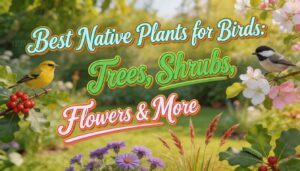
A tidy yard can look good to people and still leave birds hungry. The difference often comes down to one detail: whether your plants feed the insects, berries, and shelter birds rely on all year.
Oaks, dogwoods, asters, and little bluestem do more than fill space. They raise caterpillars for nestlings, offer cover from predators, and keep food coming when ornamentals fall short.
That’s why the best native plants for birds don’t work as single stars, but as a layered habitat. Once you see how trees, shrubs, flowers, and grasses each carry part of the load, your planting choices get easier.
Table Of Contents
- Why Native Plants Attract More Birds
- Best Native Trees for Birds
- Best Native Shrubs and Vines
- Viburnum for Berries and Dense Cover
- Winterberry for Late-fall and Winter Food
- Elderberry for Summer Fruit and Thicket Nesting
- American Beautyberry for Fall Color and Berries
- Blueberry for Edible Fruit and Bird Shelter
- Coral Honeysuckle for Hummingbirds and Berries
- Spicebush for Insects, Cover, and Autumn Fruit
- Best Native Flowers and Grasses
- Purple Coneflower for Finch-friendly Seed Heads
- Black-eyed Susan for Seeds and Pollinator Support
- Sunflowers for Abundant Late-season Bird Food
- Asters for Fall Nectar and Seed Production
- Goldenrod for Insect Life and Winter Seeds
- Bee Balm and Cardinal Flower for Hummingbirds
- Little Bluestem for Shelter and Winter Seed
- Choose Native Plants for Your Yard
- Frequently Asked Questions (FAQs)
- What plants attract birds?
- Are native plants good for birds?
- Are bird-friendly plants a good idea?
- Which trees attract birds?
- What native plants are good for birds?
- What plant attracts the most birds?
- How long do native plantings take to mature?
- Should bird feeders supplement a native plant garden?
- When should native plants be pruned for birds?
- How can I provide water near native plants?
- Conclusion
Why Native Plants Attract More Birds
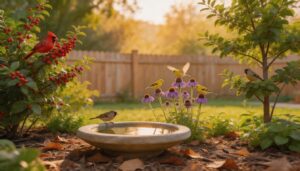
If you want a yard that birds actually use, native plants make a real difference. They offer the kind of food, cover, and seasonal support birds are already built to look for. Here’s what makes them so effective before you choose which ones to plant.
If you need ideas, these bird-friendly backyard tips show how native plants support birds year-round.
How Native Plants Support Insects Birds Need
Because birds follow food, native plants build the buffet ornamentals usually can’t. They increase Insect Host Diversity, support native insects and host plants for butterflies, and create Seasonal Insect Pulses through bloom, leaf, and bark. Add Pollinator Habitat Link, Leaf Litter Invertebrates, and Microhabitat Complexity, and your yard becomes a richer insect food source, with insect biodiversity all season, including caterpillars.
Research shows that 70% native plant coverage yields measurable ecological benefits for birds.
Why Caterpillars Matter for Nestling Nutrition
That richer insect food source matters most at the nest. Caterpillars are Protein Rich Prey, a Fat Energy Source, and an Immune System Boost rolled together, giving chicks Rapid Growth Support when feeding demands spike.
Seasonal Caterpillar Peaks on native insects and native host plants for butterflies help turn a yard into real bird habitat, not just pretty planting alone.
Caterpillars also supply protein-rich meals for birds, boosting nestling health.
Native Plants Vs. Non-native Ornamentals
That caterpillar flush is one reason native plants outperform ornamentals. Native trees and native shrubs feed local insects, bridge Seasonal Food Gaps, and strengthen Habitat Connectivity.
By contrast, nonnative cultivars impact food webs, while invasive species worsen Invasive Species Impact.
Add better Water Use Efficiency and a smarter Cost Comparison, and natives simply do more for birds in most yards.
Food, Shelter, and Nesting Benefits in One Planting
That extra wildlife value shows up fast: a Single-plant mosaic can offer Multi-seasonal synergy through Food-shelter integration.
Think Dual-purpose selection like viburnum or serviceberry, bird‑friendly plants and native shrub and tree recommendations that create continuous shelter, nesting sites, and winter berries. Providing food and shelter for nesting birds in one hardworking planting, feeding insects, hiding fledglings, and easing predator pressure.
Why Native Plant Diversity Improves Bird Activity
Because mixed plantings work like a well-stocked neighborhood, they keep birds in your yard year-round, with layers, bloom times, and berry crops supporting nestlings, migrants, and winter visitors when food fades.
- Seasonal Resource Continuity
- Structural Habitat Complexity
- Insect Biodiversity Boost
- Microhabitat Variety strengthens food and shelter for birds
- Climate Resilience, plant diversity, habitat diversity, bird-friendly native gardens support bird populations.
Best Native Trees for Birds
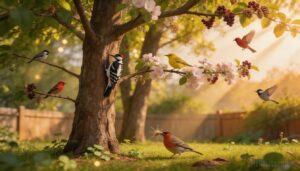
If you want birds to stick around, trees are where the real habitat begins. The best native choices do more than look good; they help turn your yard into a steady source of food and cover.
Here are some of the top native trees to keep in mind as you plan your planting.
Oaks for Caterpillars, Acorns, and Nesting Cover
Think of oaks as a bird pantry and nursery in one: Sunlit oak canopies fuel caterpillar host plants, while oak bark texture and cavity formation dynamics create nesting sites. mast year cycles supply winter food sources for birds, and leaf litter habitat shelters fledglings and insects.
In native shrub and tree recommendations, few trees work harder year‑round for backyard birds.
Serviceberry for Early Fruit and Spring Interest
Because it wakes up early, Serviceberry earns its place fast.
- Early Spring Bloom, Pollinator Magnet, smart Fruit Set Timing.
- Amelanchier brings sweet summer berries, Avian Food Supply, and Seasonal Color Display for small yards and quiet corners.
- In Native shrub and tree recommendations, it shines in Seasonal native plant selections for birds, providing food and shelter for nesting birds.
Dogwood for Berries and Understory Shelter
In native shrub and tree recommendations, Native Dogwoods support bird habitat restoration with Fruit Ripening, Canopy Density, Branch Complexity, and Understory Depth that shelter birds while berries linger before Winterberry. Fine branches and shallow roots keep foraging space open below.
Pair dogwoods with these backyard bird feeding and cleanup tips to protect shelter, seedheads, and natural winter forage.
| Food | Cover | Bonus |
|---|---|---|
| clusters | nesting | bird-friendly garden |
| access | perches | Dead Wood Habitat |
Holly for Winter Cover and Cold-season Fruit
- American holly provides Evergreen Shelter.
- Bright berries bring Winter Berry Nutrition, essential winter food sources for birds.
- Male Female Pollination matters for fruiting shrubs.
- Moisture Tolerant Soil suits these Evergreen shrubs.
- Holly Windbreak Design makes Native shrubs that provide winter berries for birds, safer with cover during cold snaps and long snowy spells for roosting ease.
Hackberry for Wildlife Value and Persistent Fruit
Few fruiting trees work harder for birds than the Hackberry Tree.
| Value | Benefit |
|---|---|
| Fruit Persistence | Seasonal food sources for songbirds |
| Corky Bark Habitat | Insect Microhabitat |
| Urban Food Bank | Migration Stopover |
| Native trees and shrubs | Birdfriendly backyard landscaping |
Its corky bark shelters insects, and drupes hang into winter, feeding robins, waxwings, flickers, catbirds, and thrashers when berries run short in town or country.
Willow for Early Insects and Migrant Support
After hackberry, willow keeps spring moving:
- Early catkin pollen feeds insects.
- Willow insect diversity bolsters the role of native insects in bird diets for migratory birds.
- Black willow and pussy willow strengthen riparian habitat corridors, offering migratory stopover roosting.
- Soil stabilization benefits matter too; think of integrating native trees for migratory bird fuel along wet yards, streambanks, and neighborhood edges.
Best Native Shrubs and Vines
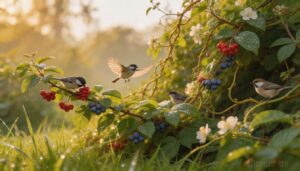
Shrubs and vines do a lot of the quiet work in a bird-friendly yard, filling in the middle layers where birds feed, hide, and rest. best native choices also keep that habitat useful across the seasons, from spring insects to fall fruit.
Here are some of the standout native shrubs and vines to think about for that job.
Viburnum for Berries and Dense Cover
Because birds need more than a quick meal, Native Viburnums stand out among Viburnum Species for Berry Nutrition and sturdy Thicket Architecture. Seasonal Flowering draws insects, then dense branching creates bird shelter and hidden nesting sites.
In mixed plantings with other fruiting shrubs, even Winterberry, they strengthen Habitat Connectivity, giving your yard cover, flowers, foliage, and berries across seasons.
Winterberry for Late-fall and Winter Food
After viburnums, Winterberry carries your yard into cold months.
With Male-Female Planting, Acidic Soil Preference, and a Cluster Planting Strategy, these fruiting shrubs hold berries deep into Winterberry Fruit Timing, giving wintering birds a Late-season Energy Source and strong wintering bird nutrition after frost, when other berries fade from branches.
- comfort
- color
- shelter
- sweetness
- hope
Elderberry for Summer Fruit and Thicket Nesting
After winterberry, Elderberry feels like summer’s working hedge, giving shy birds cover while flowers attract insects and damp soil keeps the whole shrub busy. Birds forage from ground level to mid-canopy through heat and storms.
| Trait | Benefit |
|---|---|
| Elderberry Thicket | bird nesting sites |
| Elderberry Berries | fruiting shrubs |
| Elderberry Insect Magnet, Elderberry Water Needs, Elderberry Shade Tolerance | native plants for bird-friendly garden |
American Beautyberry for Fall Color and Berries
By fall, American Beautyberry earns its keep fast. Vibrant Purple Berries line bare stems, while its autumn foliage hue glows yellow-orange.
This Drought-Resistant Shrub suits smart native plant selection, particularly for bird-friendly gardens. It offers Winter Shelter Structure, summer pollinator-attracting flowers, and reliable berries for seasonal native plant selections for birds.
The shrub thrives in sunny, well-drained yards with moderate moisture and cover, making it a versatile choice for sustainable landscaping.
Blueberry for Edible Fruit and Bird Shelter
Because Highbush Blueberries do double duty, they’re a smart native plant selection for habitat restoration. In your bird-friendly garden:
- Berry Timing feeds migrants.
- Shrub Height creates nesting spots.
- Soil pH 4.5–5.5 boosts fruit.
- Winter Shelter hides small birds.
- Mixed Species Planting strengthens insect life, cover, and late-summer food when berries draw thrushes, waxwings, and bluebirds.
Coral Honeysuckle for Hummingbirds and Berries
Because it climbs and feeds at the same time, Coral Honeysuckle is one of the smartest bird-friendly plants you can grow. Insect Host Plant draws hummingbirds with coral tubes, then follows with berries for songbirds.
Use sturdy structures for easy Trellis Planting Tips, better Seasonal Berry Timing, and Vertical Nectar Corridors.
Among native shrubs, it offers Low-Maintenance Wildlife value.
Spicebush for Insects, Cover, and Autumn Fruit
Want one shrub that pulls double duty?
Spicebush offers Early Spring Nectar, acts as a Moth Larval Host, and builds Invertebrate diversity that birds depend on. Its Dense Shrub Cover gives migrants shelter, while Female Fruit Yield feeds birds in autumn.
For Birdfriendly plants, mix Fruiting shrubs and Seedbearing shrubs, and keep Planting Group Size at three to five nearby plants.
Best Native Flowers and Grasses
Flowers and grasses do a lot of the quiet work in a bird-friendly yard. They help fill the gaps between trees and shrubs, adding seeds, shelter, and plenty of insect activity where birds can easily feed.
Here are some of the best native picks to add color, structure, and steady bird value through the seasons.
Purple Coneflower for Finch-friendly Seed Heads
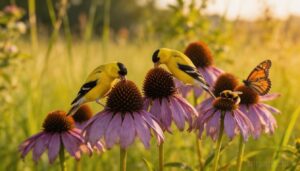
Purple Coneflower earns its keep twice.
First, Pollinator Overlap brings bees and butterflies in summer. Then Seed Head Timing kicks in as petals fade, feeding finches through classic Finch Feeding Patterns, one seed at a time.
With good Planting Density, these seed-producing plants boost Winter Seed Availability. Among bird-friendly plants and native plants, Purple Coneflower is a steady, practical favorite.
Black-eyed Susan for Seeds and Pollinator Support
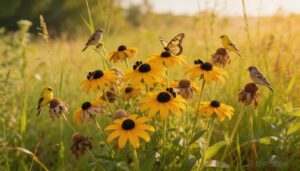
Black-eyed Susan pulls double duty in any pollinator garden. Its pollinator timing — mid-to-late summer — fills a gap when other natives are winding down. Then seed head longevity keeps bird food sources available well into winter.
Here’s what makes it a standout among seed-producing plants:
- Self seeding creates next year’s habitat complexity for free
- Drought tolerance means less watering, more thriving
- Seeds feed finches and sparrows for months
- Native plants like this one anchor the whole food web
Sunflowers for Abundant Late-season Bird Food
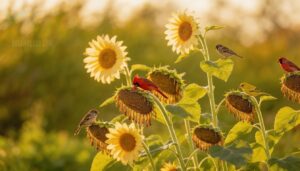
Then come sunflower workhorses. With strong Seed head retention, sunflower and Sunflower cultivars like Lemon Queen Sunflower, Helianthus mollis, and Helianthus angustifolius turn seed-producing plants into late-season foraging stations.
Their high-energy seeds and finch-friendly seeds help cardinals, sparrows, and finches refuel fast. Leave the heads standing, and your yard keeps feeding birds well after bloom fades, too.
Asters for Fall Nectar and Seed Production
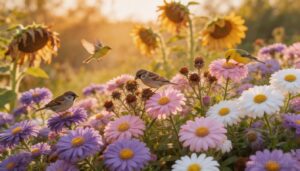
After sunflowers fade, Aster takes over. Think of Aster bloom timing and Aster nectar concentration as your fall refueling schedule for migratory birds.
These nectarrich flowers bring Aster color variation, while Aster seed size suits finches and sparrows. Use thoughtful Aster planting density in seedproducing plants beds, for Seasonal planting for migratory birds and Fall migration food source planning well.
Goldenrod for Insect Life and Winter Seeds
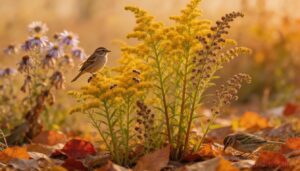
After asters peak, Goldenrod takes the baton. As a Goldenrod insect host, especially Solidago rugosa, it feeds late-season bees and other prey birds need—a quiet answer to the impact of insect decline on birds.
Goldenrod bloom timing, Goldenrod winter seeds, Goldenrod seed persistence, and Goldenrod structural cover all help winter food sources when creating birdfriendly native gardens work better.
Bee Balm and Cardinal Flower for Hummingbirds
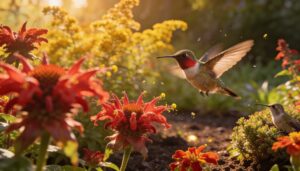
As goldenrod fades, Bee Balm and Cardinal Flower keep hummingbirds in the picture. Their Nectar Overlap and smart Bloom Timing create a Seasonal Corridor, while red blooms boost Color Attraction.
In a birdfriendly garden, group these native plants near shrubs for easy Perch Placement.
Bee Balm thrives in sun; Cardinal Flower shines in moist soil, extending nectar well into fall.
Little Bluestem for Shelter and Winter Seed
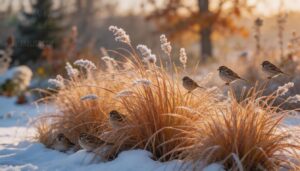
Although modest at first glance, little bluestem is a native plant that works hard in a bird-friendly yard, turning copper in fall and standing beautifully through winter.
- Clump Density boosts shelter for birds
- Seed Head Persistence extends winter food sources
- Winter Structure holds through snow
- Fire Tolerance strengthens resilient habitat
- Groundcover Benefits plus seed heads protect sparrows and finches too.
Choose Native Plants for Your Yard
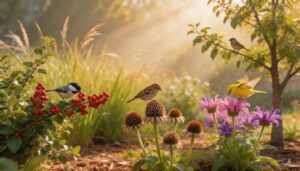
Choosing native plants gets much easier when you start with the basics of your yard and the birds you want to support. The next list will help you sort through what to plant based on your region, growing conditions, space, and seasonal food needs.
It also covers a few simple choices that can make your yard more useful to birds all year.
Match Plants to Your Region and Hardiness Zone
Start with place. Use the USDA Plant Hardiness Zone map, local Regional Species Lists, and Hardiness Zone Mapping to narrow true natives for your hardiness zones.
Then make Microclimate Adjustments for wind, walls, and cold pockets.
This sets up climate adaptation planting, climate adaptation, Native plant selection by habitat type, Soil pH Matching, and Seasonal Food Timing with fewer losses.
Choose by Sun, Soil, and Moisture Conditions
Since good habitat begins underfoot, choose native plants by Sun Exposure Zones, Soil Texture Matching, and Moisture Regime Selection for healthier insects, steadier cover, and easier care year-round.
- Use full sun to partial shade.
- Match soil moisture to roots.
- Favor Drought‑Tolerant Species in Xeriscaping in desert bird habitats.
- Try Microclimate Planting near walls.
- Add Water features to attract nearby birds.
Build Layers With Trees, Shrubs, and Flowers
Think of your bird-friendly yard as a living apartment building: Vertical Stratification and Multi-tiered Planting use native trees and shrubs, flowers, and grasses to create Structural Complexity, structural diversity, species diversity, and Microhabitat Connectivity.
A bird-friendly yard works best in layers, like a living apartment building of food, cover, and movement
Add Seasonal Layer Rotation through seasonal native plant selections for birds, so each layer offers cover, movement paths, and safer feeding space for nesting and rest.
Plan Blooms, Berries, and Seeds by Season
Use Seasonal Bloom Sequencing, Berry Timing Strategies, and Seed Maturation Planning to keep birds fed. Phenology Matching helps Successional Plant Layers work harder, with seasonal native plant selections for birds covering spring nectar, summer insects, fall berries, and winter seed.
Add planting fruitbearing shrubs for winter birds, mix seedbearing shrubs, seasonal planting, and fruiting plants, so something is always available.
Best Native Plants for Small Yards
- Vertical garden solutions
- Drought-tolerant natives
- Native pollinator corridors
- Microhabitat features
Choose Smallspace native planting for wildlife, using Seasonal native plant selections for birds and Native shrub recommendations for spring migrants.
A birdfriendly yard grows with Seasonal pruning strategies, helping urban bird habitat restoration, plus compact trees, grasses, and shrubs for cover in winter.
Avoid Pesticides to Protect Bird Food Sources
Even a small Bird-friendly yard works harder when you focus on avoiding pesticides to protect bird habitats.
Using native plants to support bird populations encourages an Insect Population Surge, Bird Food Security, and safer, chemical‑free nesting.
Pair Seasonal native plant selections for birds with organic weed management and clean water sources, so bird food sources stay abundant for breeding.
Leave Seed Heads and Leaf Litter for Habitat
Skip the tidy-up, too. Leaving seed heads and leaf litter habitat boosts Winter Food Supply, Insect Overwintering, and Microhabitat Complexity.
That means better Nest Camouflage, gentler seed dispersal, and Winter support for birds through leaf litter.
You also get Soil Health Benefits and Urban habitat enhancement for birds, another way, using native plants to support bird populations, pays off naturally.
Frequently Asked Questions (FAQs)
What plants attract birds?
As the saying goes, birds of a feather flock to Oaks, Viburnums, Serviceberry, Coneflower, and Highbush Blueberries, especially with Habitat Connectivity, Water Source Integration, Microhabitat Diversity, Bird-safe Mulch, and fewer Seasonal Food Gaps all year.
Are native plants good for birds?
Yes—native plants are excellent for birds, boosting bird health, biodiversity, habitat connectivity, and climate resilience.
Native plant choices support urban bird habitat restoration, conservation, native landscaping, urban heat mitigation, and community science in everyday yards.
Are bird-friendly plants a good idea?
Gramophone-clear, bird-friendly plants bring Economic Incentives, Educational Value, Habitat Connectivity, Water Savings, and Urban Heat Mitigation.
Each native plant strengthens a bird-friendly garden, and the benefits of native landscaping for wildlife make native landscaping worthwhile.
Which trees attract birds?
Choose oak trees, Willows, Eastern Red Cedar, honey locust, and black cherry—excellent Migratory Stopover Trees and Winter Fruit Trees.
Cavity Nesting Trees with Tree Disease Resistance and Bird-friendly Pruning offer birds’ food, shelter, and nesting cover.
What native plants are good for birds?
The old theory that feeders alone help birds misses the point; native oaks, serviceberry, dogwood, viburnum, coneflower, asters, and little bluestem supply insects, berries, seeds, shelter, and insect overwintering habitat in a bird-friendly landscape year‑round.
What plant attracts the most birds?
Oak usually attracts the most birds because its insect host diversity is unequaled, bird density metrics stay high, and habitat layering impact is strong.
Among bird-friendly plants, oaks are bird magnets and year-round bird favorites.
How long do native plantings take to mature?
The Establishment Timeline for native plantings is one to three years, but Species Maturity often takes three to five years.
Native trees and shrubs take longer where Soil Conditioning, Water Management, or Seasonal Growth lag locally.
Should bird feeders supplement a native plant garden?
Like a spare pantry in winter, bird feeders help.
Pair bird feeding stations with Feeder Placement, Feeder Hygiene, Seasonal Feeding, and Feeder Types; the Feeder Plant Synergy strengthens the Benefits of native landscaping for wildlife.
When should native plants be pruned for birds?
Late winter pruning and Early spring avoidance protect breeding birds and spring migrants.
Post-bloom thinning, Summer maintenance cuts, and Fall berry pruning come after fall migrants, supporting habitat connectivity, seasonal plantings for continuous bird food.
How can I provide water near native plants?
Drip Irrigation Zones, Rain Barrel Harvesting, Swale Water Capture
Mulch Moisture Retention, Smart Soil Sensors
Water Features to Attract Birds, A Water Feature, Bird Bath, Rain Garden, Providing Water Sources for Birds That Last
Conclusion
Branching out" with native plants can transform your yard into a bird-friendly haven. By choosing the best native plants for birds, you’re sowing seeds of success for local wildlife.
Trees, shrubs, flowers, and grasses work together like a symphony, providing food, shelter, and nesting sites.
With a layered habitat approach and the right native plants, you’ll be supporting a thriving ecosystem.
Your yard will become a welcoming space, rich with life, and always full of natural beauty.