This site is supported by our readers. We may earn a commission, at no cost to you, if you purchase through links.

Most backyard birdhouses go unoccupied—not because of the wrong design or bad location, but because they’re mounted at the wrong height.
A box hung too low becomes easy prey for neighborhood cats and raccoons. One mounted too high sits empty because the species you’re hoping to attract simply won’t use it.
Knowing how high to mount a birdhouse changes everything, and the answer depends on which birds you want to welcome.
From bluebirds nesting comfortably at 5 feet to purple martins that won’t settle below 12, height shapes whether your birdhouse becomes a home or just yard décor.
Table Of Contents
- Key Takeaways
- How High Should a Birdhouse Be Mounted?
- Species-Specific Birdhouse Height Recommendations
- Best Mounting Surfaces for Birdhouses
- Predator Protection at The Right Height
- Entrance Orientation and Environmental Placement
- Seasonal Height Adjustments for Better Results
- Maintenance Accessibility and Mounting Stability
- Frequently Asked Questions (FAQs)
- How high should a bird house be?
- Where should a bird house be mounted?
- How far apart should a birdhouse be?
- How do you mount a birdhouse?
- Where not to put a birdhouse?
- Should bird houses be in the shade or sun?
- How high off the ground should a birdhouse be placed?
- What time of year should you put up a bird box?
- Can multiple birdhouses share the same pole?
- How do I anchor a post in sandy soil?
- Conclusion
Key Takeaways
- Mounting your birdhouse between 5 and 15 feet covers most backyard species, keeps ground predators at bay, and makes cleaning easy without a ladder.
- The right height depends on the bird you’re inviting — bluebirds and wrens nest as low as 4 to 6 feet, while purple martins and owls won’t settle below 10 to 12 feet.
- Combining the correct height with predator guards like stovepipe baffles and a smooth metal pole raises nesting success by roughly 7%.
- Small details — entrance hole size, east-facing orientation, clear flight paths, and seasonal height adjustments — work together with height to turn your birdhouse from yard décor into a real home.
How High Should a Birdhouse Be Mounted?
Getting the height right is one of the most important decisions you’ll make when setting up a birdhouse. Most cavity-nesting birds have clear preferences, and mounting a box too low or too high can mean it sits empty all season.
For a deeper look at how height intersects with predator protection and pole placement, mounting birdhouses at the right height for each species is a solid place to start.
Here’s what you need to know about finding the right range for your setup.
General Recommended Height Range (5–15 Ft)
Most backyard birders find that mounting a birdhouse between 5 and 15 feet hits the sweet spot for safety, visibility range, and human accessibility. This ideal height range keeps boxes clear of ground predators while staying practical to maintain.
Here’s what that safety margin covers:
- 5–6 ft – Easy ladder-free cleaning access
- 6–9 ft – Reduces cat and raccoon interference
- 10–12 ft – Better elevation benefits for open-yard species
- 12–15 ft – Improved temperature control and wind clearance
Why Mounting Height Affects Occupancy Rates
Mounting height does more than just position the box — it shapes the entire living environment inside. The ideal height range directly affects microclimate temperature, ventilation flow, and territory visibility for nesting birds.
At 6 to 12 feet, songbirds experience reduced human disturbance and steadier interior conditions. Getting species-specific height recommendations right means more pairs actually move in and stay.
Minimum Height to Deter Ground Predators
Height isn’t just about comfort — it’s your first line of defense. A minimum mounting height of six feet deters most ground predators, but pushing to seven or eight feet considerably reduces access for agile climbers like raccoons.
In areas with heavy predator activity, combine ideal height range with base skirting and predator guards to block digging prevention attempts within 12 inches of the pole.
Species-Specific Birdhouse Height Recommendations
Not every bird is looking for the same setup, and height is where those differences really show up. The species you’re hoping to attract should guide exactly how high you hang that box.
Here’s a closer look at what works best for some of the most common backyard visitors.
Bluebirds and Wrens (4–10 Ft)

Bluebirds and wrens don’t need towering perches — they’re comfortable much closer to the ground. For bluebirds, an ideal height range of 5 to 7 feet works well in open fields. Wrens do fine at 4 to 6 feet near dense shrubs.
Your box material choice, box ventilation design, and nearby water sources all support occupancy when paired with the right species-specific height recommendations.
The recommended Eastern Bluebird mounting height is 3–6 feet, matching the ideal range for open fields.
Chickadees and Tree Swallows (6–15 Ft)
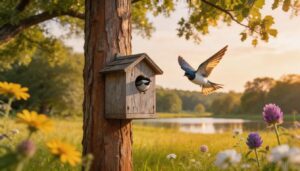
Both Chickadees and Tree Swallows thrive when you mount their boxes between 6 and 15 feet — a sweet spot that balances predator safety with easy monitoring. Chickadees prefer the higher end near wooded cover, while Tree Swallows do best in open areas near water sources and reliable food availability.
Microclimate effects, noise disturbance, and box coloration also influence success within these species-specific height recommendations.
Beyond height alone, factors like shade exposure, ambient noise, and box color all shape whether birds actually take up residence—much like the placement principles behind choosing the best suet feeder for attracting cavity-nesting species.
Purple Martins and Woodpeckers (10–20 Ft)
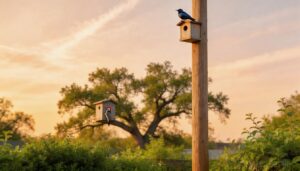
Purple Martins and Woodpeckers both need boxes mounted at 10 to 20 feet — higher than most backyard species.
Follow these species-specific height recommendations:
- Mount Purple Martin poles at 12–20 ft with a smooth pole diameter that blocks climbing predators
- Position boxes in open sky for clear insect visibility
- Install Woodpecker boxes at 15–18 ft with proper ventilation placement
- Choose neutral box color to reduce noise sensitivity and heat buildup
Eastern Screech Owls and Northern Flickers (10–20 Ft)
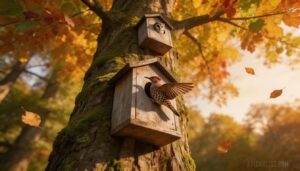
Eastern Screech Owls and Northern Flickers are two cavity nesters where mounting height truly shapes success. Both species thrive with boxes placed 10 to 20 feet high — aligned with their natural roosting habitat and nesting instincts.
A height of 12 to 18 feet facilitates courtship displays, suits their incubation duration needs, and keeps ground predators at a safe distance.
Best Mounting Surfaces for Birdhouses
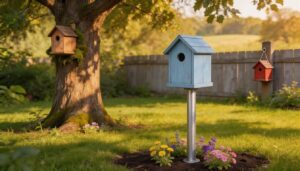
Where you mount a birdhouse matters just as much as how high you put it. The surface you choose affects predator control, stability, and whether the right birds will actually move in.
Here are the main mounting options worth knowing about.
Smooth Metal Poles for Predator Control
A smooth metal pole is one of the best tools you have for predator protection. Snakes and raccoons can’t grip the slick surface, so your birdhouse stays safer at the ideal height range of 6–15 ft.
Look for powder-coated poles with UV protective coating for long-lasting durability. Predator guard compatibility and sturdy pole mounting brackets make the full setup work together seamlessly.
Tree Trunks for Woodland Species
Tree trunks work beautifully for woodland species like chickadees and downy woodpeckers — but only when the conditions are right. Bark texture, trunk diameter, and natural cavity formation all influence whether birds accept the location.
- Rough bark and lichen communities signal a healthy, established tree
- Decay microhabitats attract the insects woodpeckers depend on
- Follow species-specific height recommendations: chickadees prefer 6–15 ft
- Choose trunks with visible cavity formation for the ideal height range
Building Walls and Brackets
Building walls offer a solid alternative when posts aren’t practical.
Choose brackets with good load distribution strategies — metal L-brackets or U-shaped mounts handle up to 20 pounds securely. Fastener corrosion resistance matters too, so use stainless steel or zinc-coated lag screws outdoors.
Wall surface preparation keeps mounts stable; position brackets 2–3 inches from siding to prevent moisture damage.
Aesthetic bracket integration lets your birdhouse blend naturally with your home’s exterior.
Why Hanging Setups Should Be Avoided
Unlike wall brackets, hanging setups create real problems you don’t want around a nest. Wind sway risks make boxes unpredictable — ropes and wires wear down over time, and line degradation can cause a sudden drop.
There’s also predator access to think about: animals can chew through lines. Pole mounting with solid ground anchoring is simply the safer, smarter choice.
Predator Protection at The Right Height
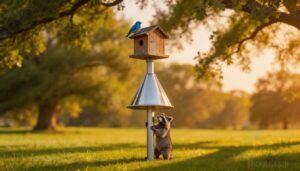
Getting the height right is only half the battle — what you pair with that height matters just as much. Predators like raccoons, cats, and snakes are persistent, and a well-placed birdhouse without proper protection is still vulnerable.
Here’s what you can do to give nesting birds a real fighting chance.
Using Stovepipe Baffles and Metal Cones
Adding the right predator protection and guard installation can make or break a nesting season.
Stovepipe baffles 4 feet up on your mounting pole — made from galvanized steel or aluminum for corrosion prevention — block snakes and raccoons effectively. A cone-shaped baffle at the ideal height range of 6–12 feet, installed at the correct installation angle, completes your defense.
Check baffle materials and cone designs quarterly for dents or rust.
Avoiding Perches That Aid Predators
Once your baffles are in place, check the box itself for perches. A perch-free design sounds simple, but it matters more than most people realize.
Perches give raccoons and cats a foothold right at the entrance. Perch elimination removes that advantage entirely.
No perch mounting, combined with your predator guards and proper mounting height, keeps the doorway clear — and safer for every bird inside.
How Height and Guards Raise Nesting Success
Height-guard synergy is where the real gains happen. Mounting your box in the ideal height range of 6–15 ft, combined with properly maintained predator guards, raises nesting success by roughly 7%. That’s not a small number.
Mounting birdhouses at 6–15 ft with predator guards raises nesting success by roughly 7%
Elevation also improves ventilation impact inside the box, helping regulate nest temperature on hot days. Together, these factors create conditions where birds actually thrive.
Entrance Hole Size by Species
The entrance hole size matters just as much as where you hang the box. Here’s a quick guide by species:
- Bluebirds – 1½ inch round hole; facilitates sparrow deterrence without blocking bluebird entry
- Wrens – 1 inch hole; competition mitigation keeps larger birds out
- Chickadees – 1⅛ inch; species-specific diameters limit starling access
- Purple Martins – 2½ inch opening for colony housing
- Screech Owls – 3 inch hole accommodates adults comfortably
Multi-species boxes with adjustable openings offer flexibility across seasons.
Entrance Orientation and Environmental Placement
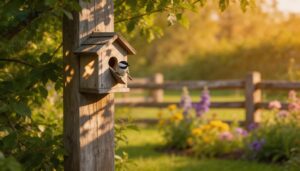
Getting the height right is only part of the equation — where you point that entrance hole matters just as much. few simple placement choices can mean the difference between a thriving nest and an empty box.
Here’s what to think about when positioning your birdhouse for the best results.
Facing Entrance East or Northeast
Pointing your birdhouse entrance toward the east or northeast is one of the simplest wins you can offer nesting birds. Morning sun benefits include gentle warmth that helps eggs and chicks stay comfortable early in the day, while the ideal height range works hand-in-hand with facing northeast or east to support thermal regulation.
This north- or east-facing entrance also improves visibility and safety, giving birds a clear, well-lit approach.
Avoiding Direct Afternoon Sun in Hot Climates
Managing sun exposure is critical for thermal regulation, especially in hot climates.
You can install a shade canopy above the birdhouse, choose light-colored poles, or add a reflective roof overhang to reduce afternoon heat. Deciduous tree planting offers seasonal shade.
Use a temperature sensor for monitoring, adjusting mounting height within the ideal range to balance climate considerations for birdhouses.
Keeping Clear Flight Paths From Vegetation
Think of the area around your birdhouse as a runway — birds need room to come and go without obstruction. Trim shrubs within six feet and maintain a 10–15 foot flight corridor width in front of the entrance.
Dead limb removal and vine management keep approach paths safe. A clear vegetation buffer zone around your ideal mounting height directly shapes how birds interact with and use the box.
Habitat-Specific Heights (Suburban, Woodland, Coastal)
Where you live shapes how high your birdhouse should go. Habitat wind exposure, predator pressure, and species-specific height recommendations all shift depending on your surroundings.
- Suburban yard layout: Mount 6–12 ft for easy monitoring and predator control
- Woodland edge proximity: Aim 8–15 ft to match chickadees and tree swallows
- Coastal dune positioning: Raise 8–14 ft to clear salt spray and gusts
- Elevation predator dynamics: Higher always helps where raccoons or cats roam freely
Seasonal Height Adjustments for Better Results
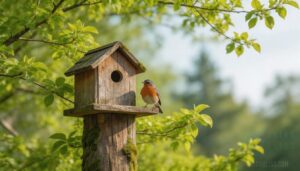
A birdhouse that works great in May might not be the best setup by October. Birds use these boxes differently across the seasons, and small height adjustments can make a real difference in how well your box gets used.
Here’s what to know for each part of the year.
Spring and Summer Nesting Heights
Spring and summer are when getting the height right really pays off. Most nest boxes do best at 5 to 15 feet during nesting season, but following species-specific height recommendations matters more than any single number.
Proper elevation aids temperature regulation, ventilation optimization, and sunlight exposure — all critical for healthy broods. Smart microclimate selection and wind protection through height variation to attract diverse species can make your yard a genuine nesting haven.
Lower Boxes in Fall for Roosting Birds
As nesting season winds down, making seasonal adjustments to birdhouse height can genuinely help birds survive colder months. Mounting roosting boxes between 5 and 12 feet offers ideal height range while staying accessible.
Insulated roost boxes with double-wall design, foam inserts, and cedar wood hold warmth effectively. Cluster interiors let birds huddle together, making seasonal height variation and height variation to attract diverse species, worth considering each fall.
Winter Wind Shields and Cold-Weather Sheltering
Beyond simply lowering boxes, adding removable shields makes a real difference in winter. A wind barrier design of 3 to 6 feet, built from lightweight shrubs or brush, cuts cold gusts and facilitates temperature regulation inside the cavity. Pair that with insulation layers like dry leaves or pine needles for thermal mass benefits.
Smart snow management and microclimate placement near east-facing walls complete your seasonal adjustments for wind and rain protection.
Maintenance Accessibility and Mounting Stability
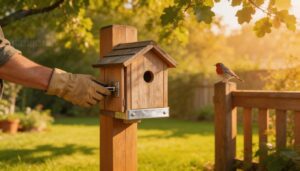
A well-placed birdhouse isn’t just about the birds — it also needs to work for you. Mounting it at a height you can actually reach makes cleaning and checking on nests far less of a hassle.
Here’s what to keep in mind regarding accessibility and keeping your setup solid.
Eye-Level Mounting for Ladder-Free Cleaning
Mounting your birdhouse at eye level—roughly 5 to 6 feet—makes regular cleaning far easier than you’d expect. Shoulder height brackets with a quick release mechanism let you detach the box without climbing.
ladder-free design enables ground-level access, keeping maintenance accessible and consistent. Ergonomic reach within the ideal height range means you can inspect and clean every surface safely, improving your maintenance cadence season after season.
Securing Hardware With Lag Bolts and Deck Screws
Once your box is at a comfortable height, keeping it there takes the right hardware. Use galvanized deck screws or stainless-steel lag bolts—corrosion-resistant fasteners hold up through wet seasons without rusting loose.
Always drill a pilot hole first to prevent wood splitting. Two screws spaced vertically improve load distribution and stop the box from rotating.
Check torque after any major storm.
Quarterly Inspections and Annual Bleach Cleaning
Regular quarterly checks keep your birdhouse safe and welcoming all year. During each inspection, test stability, look for moisture damage, and log your findings in an Inspection Log for easy trend tracking.
For annual cleaning, use a Bleach Dilution Ratio of 1:9—always wear Protective Gear. Let the box air-dry fully before reinstalling.
A consistent Cleaning Schedule protects occupancy at ideal height.
Inspecting Mounts After Storms for Wobble
After every storm, a quick Post‑Storm Visual Check can save your birdhouse from a slow‑motion collapse. Walk the perimeter and run a Wobble Measurement Technique—push gently near the top and watch for movement beyond a quarter‑inch.
Check Base Alignment Verification, run a Corrosion Inspection Protocol on bolts, and complete a Hardware Torque Reassessment.
Stability is essential, especially during seasonal adjustments for wind and rain protection.
Frequently Asked Questions (FAQs)
How high should a bird house be?
For most backyard birds, a birdhouse height between 5 and 15 feet works well. This ideal height range balances predator safety, visibility to birds, and easy rescue access for monitoring and cleaning.
Where should a bird house be mounted?
Location matters as much as height. Mount your birdhouse away from feeders, human traffic, and noise disturbance. Consider water proximity, predator protection, and safety for children when choosing your spot.
How far apart should a birdhouse be?
Space birdhouses at least 25 feet apart to reduce species competition. Bluebirds need 100 feet for territorial distance, while small birds tolerate closer habitat spacing.
Managing multiple birdhouses means balancing cluster distribution with human disturbance.
How do you mount a birdhouse?
Mount a birdhouse using rotational lock brackets or quick-release mounts on a smooth metal pole.
Drill pre-drilled pilot holes first, then secure with lag bolts for stability and solid predator protection.
Where not to put a birdhouse?
Don’t place a birdhouse near busy roads, under reflective windows, near pesticide-treated lawns, in flood-prone lowlands, or in high foot-traffic zones — these spots stress birds and reduce nesting success substantially.
Should bird houses be in the shade or sun?
Aim for morning sun with afternoon shade. This balance facilitates temperature regulation, humidity management, and mold prevention—keeping nestlings safe and comfortable throughout the day.
How high off the ground should a birdhouse be placed?
For most backyard birds, a height between 5 and 15 feet works well. That range balances predator protection, weather exposure, and easy monitoring without requiring a ladder every time.
What time of year should you put up a bird box?
Late winter to early spring is your sweet spot. In southern regions, aim for February. Northern regions should target mid-March.
Pre-breeding installation gives birds time to discover and claim the box before nesting season begins.
Can multiple birdhouses share the same pole?
Yes, multiple birdhouses can share one pole, but species compatibility matters. Avoid pairing territorial species. Pole spacing, load capacity, and secure mounting keep installation safe and nesting successful.
How do I anchor a post in sandy soil?
Sandy soil shifts easily, so stability is essential.
Use a deep gravel base, helical screw anchors, or concrete footing technique for solid support. Ground spike installation and sandbag stabilization also work well for lightweight pole mounts.
Conclusion
Imagine a birdhouse that’s a cozy haven, teeming with life, versus one that’s a predator’s playground or an empty decoration.
Mounting at the right height is the key. By considering the species you’re attracting and the challenges they face, you can create a thriving habitat.
The perfect spot is a delicate balance of accessibility and safety. Knowing how high to mount your birdhouse, especially when considering how high a birdhouse should be mounted, makes all the difference.
- https://happygardens.com/blogs/news/how-to-hang-a-bird-house?
- https://nestwatch.org/learn/all-about-birdhouses/nest-box-placement/
- http://www.bluebirdconservation.com/2015/02/predator-baffles-easy-inexpensive-and-effective/
- https://www.alamy.com/multiple-bird-houses-on-same-wooden-pole-image505550956.html
- https://teamwhitehorse.com/products/bird-houses-with-camera-copy