This site is supported by our readers. We may earn a commission, at no cost to you, if you purchase through links.
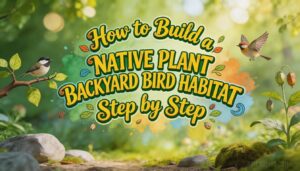
Most backyard feeders do one thing: dispense food. A single oak tree does something far more impressive—it hosts over 500 species of caterpillars, which happen to be the primary protein source for nearly every songbird nestling in North America. That gap in nutritional value explains why yards full of native plants consistently attract more bird species than yards anchored around feeders alone.
The difference isn’t just about food quantity. It’s about food quality, structural shelter, nesting sites, and a functioning insect web that birds actually depend on. Building a native plant backyard bird habitat gives you all of that—and far less weekend maintenance than scrubbing out a mold-rimmed seed tray.
Table Of Contents
- Key Takeaways
- Choose Native Plants to Attract More Birds
- Why Native Plants Outperform Feeders for Bird Health
- How Native Plants Support The Insect Food Chain
- Best Native Trees for Birds (Oak, Serviceberry, Dogwood, and More)
- Top Native Shrubs and Vines to Plant in Your Backyard
- Native Flowers and Grasses That Feed Ground and Seed-Eating Birds
- Nectar Plants That Attract Hummingbirds and Pollinators
- Design a Layered Bird Habitat Step by Step
- Match Plants to Your USDA Hardiness Zone and Soil Type
- Build Vertical Structure With Canopy, Shrubs, and Groundcover
- Sequence Bloom and Berry Times for Year-Round Food
- Plant in Masses and Groups for Maximum Habitat Value
- Add Microhabitats Like Brush Piles, Log Stacks, and Birdhouses
- Native Plant Groupings for Sunny, Shaded, Wet, and Urban Yards
- Provide Year-Round Food, Water, and Shelter for Birds
- Maintain Your Backyard Bird Habitat The Right Way
- Remove Invasive Plants Without Harming Native Biodiversity
- Avoid Broad-Spectrum Pesticides to Protect Insect Populations
- Follow Seasonal Care Routines From Spring Planting to Winter Rest
- Delay Fall Cleanup to Preserve Natural Food and Nesting Material
- Register With Certified Wildlife Habitat and Citizen-Science Programs
- Frequently Asked Questions (FAQs)
- Conclusion
Key Takeaways
- A single oak tree supports over 500 caterpillar species, making native trees far more valuable for bird health than any feeder you can buy.
- Layering native plants by height — canopy, shrubs, and groundcover — gives birds food, shelter, and nesting sites all in one yard.
- Skipping fall cleanup isn’t laziness; leaving seed heads, leaf litter, and dead wood keeps birds fed and insects alive through winter.
- Broad-spectrum pesticides wipe out the caterpillars and beetles your birds depend on, so integrated pest management and organic care protect the whole food web.
Choose Native Plants to Attract More Birds
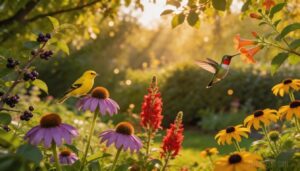
The plants you choose make or break your backyard bird habitat — more than any feeder ever could. Native species do the heavy lifting by feeding birds at every stage, from spring insects to winter berries.
Layering natives by height and bloom time is the real secret, as this guide to bird-friendly garden design shows beautifully.
Here’s what to plant to get started.
Why Native Plants Outperform Feeders for Bird Health
Feeders feel helpful, but native plants do so much more. They deliver high-quality seeds, natural insect abundance, and seasonal food resources for birds all year long — no refilling required.
That’s habitat structural diversity working quietly in your yard. Native plants also mean lower disease exposure since birds aren’t crowding a single spot.
They’re not just bird-friendly. They’re genuinely providing year-round food and shelter for birds.
overstory trees supply fruit offers essential nutrition for birds.
How Native Plants Support The Insect Food Chain
Native plants are the foundation of the insect food web — and that matters enormously for birds raising young. Here’s why it works:
- Caterpillar host species, like oak, support 500+ caterpillar species, delivering protein-rich prey for nestlings.
- Seasonal insect emergence aligns naturally with breeding cycles, creating reliable insect pulses when birds need them most.
- Ground beetle habitats thrive under leaf litter from native maples and birches.
- Sap-feeding insects on native hickory and willow expand insectivore food web diversity year‑round.
Best Native Trees for Birds (Oak, Serviceberry, Dogwood, and More)
Trees do the heavy lifting in any bird habitat. Oak canopies alone host 500+ caterpillar species — that’s your Caterpillar Host Trees doing real work for nestlings.
Serviceberry delivers early blooms and Migration Stopover Trees value for warblers.
Dogwood’s dense branching creates Cavity Nesting Species opportunities.
Add holly for Winter Berry Producers and hackberry for Acorn Energy Supply — structural habitat complexity, built from the ground up.
Top Native Shrubs and Vines to Plant in Your Backyard
Once your trees are doing the heavy lifting, shrubs and vines fill in the gaps.
Viburnum and winterberry holly pack the shrub layer with bird-friendly fruit. Red Dogwood Fruit and Spicebush Winter Berries carry birds through lean months.
Virginia Creeper Cover shelters late migrants. Buttonbush Seedheads, Summersweet Fragrant Spikes, and serviceberry round out a native shrubs lineup that feeds birds season to season.
Native Flowers and Grasses That Feed Ground and Seed-Eating Birds
Ground-feeding sparrows and juncos know exactly where to look — and seed-rich grasses like little bluestem point the way. Pair them with late-season forbs like purple coneflower and black-eyed Susan, and you’ve built seasonal resource continuity through fall and winter.
Drought-tolerant seed plants hold their seed heads long after frost, creating reliable ground-feeder habitat without extra work from you.
Nectar Plants That Attract Hummingbirds and Pollinators
Hummingbirds aren’t guessing — they’re following color. tubular flower types in red, orange, and pink signal high-reward nectar stops along their route.
Keeping your feeders and baths spotless through migration season matters too — these ceramic bird bath maintenance tips help prevent the fall disease spread that can harm birds mid-journey.
Cardinal flower peaks mid-to-late summer; bee balm carries you through fall.
Add trumpet honeysuckle along a fence for vine flight paths that double as visual highways.
This kind of seasonal bloom sequencing turns your pollinator garden into a bird-friendly, native plant landscaping powerhouse.
Design a Layered Bird Habitat Step by Step
Choosing the right plants is only half the work — how you arrange them matters just as much. Birds need layers, not just variety, and each layer provides a different purpose in keeping them fed, safe, and coming back.
Here’s how to build that structure from the ground up.
Match Plants to Your USDA Hardiness Zone and Soil Type
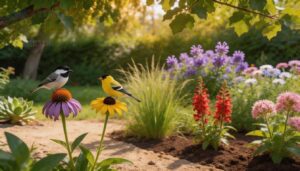
Before you plant a single thing, check your hardiness zone. Falkenstein sits in zones 6–8 depending on your microclimate—and using plant hardiness zones to guide native plant choices saves you from costly failures.
Soil texture matching matters just as much. Sandy soil needs drought-tolerant pH tolerant natives; clay calls for moisture-lovers.
Hardiness zone mapping combined with a basic soil test makes regional native plant recommendations actually work for your yard.
Build Vertical Structure With Canopy, Shrubs, and Groundcover
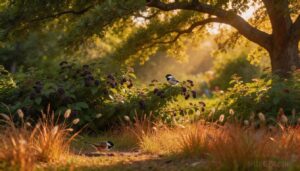
Think of your yard as a three-story apartment building for birds — every floor matters.
Canopy Height Diversity anchors the whole system: oaks and serviceberries up top, dense Shrub Density Planning in the middle, and Groundcover Seed Production at the base — including little bluestem.
Together, they deliver Vertical Habitat Connectivity, Layered Microclimate Management, and real habitat complexity and structural diversity in yards — creating a layered native garden for bird conservation with built-in evergreen shelter.
Sequence Bloom and Berry Times for Year-Round Food
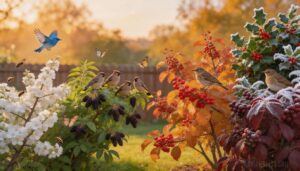
Birds don’t eat on a fixed schedule — your garden shouldn’t either.
Phenology Staggering means planting so something is always fruiting. Serviceberry kicks off in late spring, elderberry peaks mid-summer, and dogwood delivers fall berries right inside Migration Feeding Windows. Winter Berry Persistence from holly and chokeberry closes the Bloom-to-Seed Gap when everything else goes dormant.
| Season | Native Shrubs | What Birds Get |
|---|---|---|
| Spring | Serviceberry, Redbud | Early insects, nectar |
| Summer | Elderberry, Viburnum | Peak berries, Seasonal Fruit Overlap |
| Fall | Dogwood, Arrowwood | Migration fuel, dense fruit |
| Winter | Holly, Chokeberry | Persistent winter berries, shelter |
Seasonal bloom sequencing turns your yard into a reliable diner — open year-round.
Plant in Masses and Groups for Maximum Habitat Value
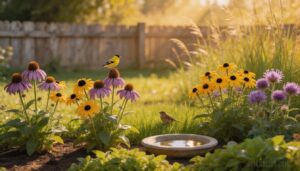
One plant rarely changes anything — a whole mass does. Mass Planting Strategies work because dense planting creates Microclimate Creation effects: cooler soil, retained moisture, and layered cover.
Use Irregular Edge Design to mimic nature and confuse predators.
Group planting to improve habitat value means Clustered Food Production and Weed Suppression Benefits built in. Plant in groups of three to five for real impact.
Add Microhabitats Like Brush Piles, Log Stacks, and Birdhouses
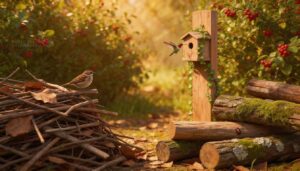
Beyond plants alone, microhabitat complexity fills the gaps. A brush pile placement near berry shrubs gives ground-foragers instant cover. Log stack design — loosely stacked, varied diameters — becomes an insect refuge design that feeds the whole food chain. Birdhouse height matters too: mount boxes at 6–12 feet for different species.
- Build brush piles 3–6 feet tall using branches and leaf litter
- Stack logs loosely for cavity nesting trees and beetle habitat
- Practice seasonal shelter refresh — clean birdhouses after the breeding season
Native Plant Groupings for Sunny, Shaded, Wet, and Urban Yards
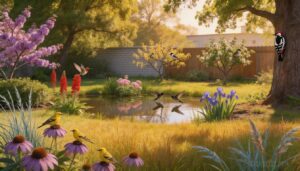
Your yard’s conditions don’t have to limit what you can offer wildlife — they just shape which plants go where. Match your site to the right grouping, and you’ll build genuine habitat layering without fighting your own soil.
| Site Type | Native Plants | Birds Attracted |
|---|---|---|
| Sunlit border mixes | Purple coneflower, little bluestem, serviceberry | Goldfinches, sparrows, waxwings |
| Shade-tolerant understory | Redbud, cardinal flower, Jack-in-the-pulpit | Hummingbirds, thrushes, warblers |
| Wetland edge natives | Swamp milkweed, blue flag iris, Joe Pye weed | Swallows, snipe, seed-eaters |
| Urban compact perennials | Dwarf serviceberry, witch hazel, purple love grass | Chickadees, robins, finches |
| Habitat connectivity planting | Oak, native blueberry, arrowwood viburnum | Migratory songbirds, woodpeckers |
Provide Year-Round Food, Water, and Shelter for Birds
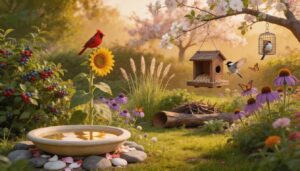
Designing your habitat is only half the work — keeping birds fed, hydrated, and sheltered through every season is where the real magic happens.
The good news is that a few smart, low-effort choices go a long way.
Here’s what to focus on.
Retain Seed Heads and Berries Through Fall and Winter
Most of your garden’s winter pantry is already growing — you just have to resist the urge to tidy it away. Seed head protection starts with one rule: put down the pruners until late winter. Skip late-season pruning on these, especially:
- Coneflowers and black-eyed Susans — finches cling to the dry stalks all season
- Switchgrass and little bluestem — seed heads stay above snowline, feeding sparrows and juncos
- Berry-producing shrubs, like winterberry and chokeberry — winter berry persistence feeds thrushes well into February
Staggered fruiting across species keeps winter food sources steady. Bird-friendly mulching around plant bases helps roots stay healthy so berries ripen fully instead of dropping early.
Install Shallow Water Features, Drippers, and Mud Puddles
Food sorted — now water. Birds need it year-round, and a simple setup goes a long way.
Keep Shallow Bath Depth to 1–2 inches — enough to drink and splash, not to drown. Add an Edge Substrate Lip to hold shape and slow erosion.
| Feature | Key Detail |
|---|---|
| Dripper Timing | Run 4–6 hours daily |
| Mud Puddle Habitat | Use clay-loam, sunny spot |
Seasonal Water Cleaning monthly keeps birds coming back.
Use Leaf Litter and Dead Wood to Support Overwintering Insects
Don’t rake everything away this fall. Those leaf piles you’re tempted to bag?
They’re Leaf Litter Microhabitats — a Moisture Retention Layer that keeps overwintering beetles, bees, and spiders alive through cold months.
A 2–5 cm layer delivers Dead Wood Refuges and Decomposer Nutrient Cycling that drives seasonal insect pulses in spring.
Leave dead branches, too — they add microhabitat complexity, insect host diversity, and real habitat complexity and structural diversity in yards that birds depend on.
Supplement With Feeders While Your Native Plants Establish
Native plants take time to establish — feeders bridge that gap.
Set up 2–3 bird feeding stations using a Seasonal Seed Mix of sunflower, suet, and millet to serve different species.
Feeder Placement matters: mount at Predator‑Safe Height (5–8 feet), partly shaded, away from dense brush.
Clean every two weeks.
As your habitat matures, scale back — the plants will take over.
Create Movement Corridors to Connect Habitat Patches
Think of your yard as one piece of a bigger puzzle. Birds move through neighborhoods, and patchy cover breaks that journey. Linking your habitat to neighbors’ yards builds real wildlife corridors.
- Follow Natural Route Alignment — trace fences, stream edges, or tree lines
- Target Corridor Width of 50–150 feet where possible
- Use Stepping Stone Patches when straight links aren’t feasible
- Apply Edge Habitat Design along boundaries to increase species richness
- Add Microhabitat Refugia — brush piles, dense shrubs — as rest stops
That connectivity turns your bird-friendly landscape into part of something larger.
Maintain Your Backyard Bird Habitat The Right Way
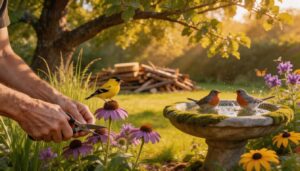
Getting your habitat planted is the exciting part — keeping it healthy is where the real work begins. Maintenance doesn’t have to be complicated, but a few key habits make the difference between a thriving bird sanctuary and a yard that slowly loses its edge.
Here’s what actually matters.
Remove Invasive Plants Without Harming Native Biodiversity
Invasive plants are quiet habitat thieves — they crowd out natives and collapse the insect food web on which birds depend.
Start with Early Detection Protocols: walk your yard seasonally and pull newcomers before they spread.
Use Mechanical Removal Techniques like hand-uprooting for smaller patches, then apply Targeted Herbicide Use via careful spot treatments on stubborn species.
Immediately restore cleared ground with native plants to prevent reinvasion and support native plant diversity.
Avoid Broad-Spectrum Pesticides to Protect Insect Populations
Broad-spectrum pesticides don’t just kill pests — they wipe out the caterpillars, beetles, and spiders your birds depend on. Integrated pest management gives you a smarter path: use pest monitoring thresholds to decide if you even need to spray, then choose selective pesticide use over chemical blankets.
Broad-spectrum pesticides don’t just kill pests — they silence the entire insect food web your birds depend on
Timing applications to early morning protects pollinators.
Organic yard care and beneficial insect habitats do most of the heavy lifting anyway.
Follow Seasonal Care Routines From Spring Planting to Winter Rest
Your habitat runs on seasons — miss one, and birds feel it.
- Spring Soil Prep: Add compost after last frost; plant in groupings before summer heat arrives.
- Seasonal Pruning Timing: Prune spring bloomers only after flowering ends.
- Summer Irrigation Strategies: Water deeply once or twice weekly; drip systems cut waste.
- Fall Mulch Management: Layer 2–3 inches around roots before cold sets in.
- Winter Shelter Maintenance: Leave brush piles and berrying shrubs untouched — they’re your birds’ pantry.
Delay Fall Cleanup to Preserve Natural Food and Nesting Material
Your tidy autumn instinct works against the birds.
Seasonal Debris Retention turns your yard into a Natural Food Bank — seed heads feed finches through cold snaps, leaf litter shelters overwintering insects, and dead wood aids the beetles and wrens, which hunt in February.
| What to Leave | Why It Matters |
|---|---|
| Seed heads & stems | Seasonal food resources for birds all winter |
| Leaf litter & dead wood | Overwintering Insect Habitat + Dead Wood Nesting sites |
Delayed Pruning Benefits extend into spring — those hollow stems become nest-building material, providing year-round food and shelter for birds long after the last berry drops.
Register With Certified Wildlife Habitat and Citizen-Science Programs
Once your yard becomes a living pantry, make it count beyond your fence line.
Register with the National Wildlife Federation’s Certified Wildlife Habitat program — the Application Process is straightforward; online Habitat Documentation that covers your food, water, and cover features. Then submit observations through iNaturalist or local bird counts:
- Track seasonal arrivals and departures
- Log plant-wildlife interactions
- Support Community Monitoring networks
- Contribute to Community-Based Native Plant Restoration efforts
Certification Benefits ripple outward.
Frequently Asked Questions (FAQs)
What native plants are good for birds?
Funny how the birds find your yard before you even finish planting. Oaks, serviceberries, and elderberries are your best starting point — they deliver insects, berries, and shelter across every season.
How do I make my backyard a bird sanctuary?
Turn your backyard into a bird sanctuary by combining predator control, cat exclusion, and light pollution reduction with native plants, habitat connectivity, and year-round food and shelter — a truly bird-friendly space.
What can I put in my yard for birds?
Native trees, shrubs, flowers, and grasses work best. Oaks, serviceberries, and dogwoods offer seeds, winter berries, and predator guarding cover — the best native plants for a bird-friendly yard.
What plant attracts the most birds?
Oak tops the list. It hosts over 500 caterpillar species—pure protein for nestlings—plus delivers acorns all winter. One tree, endless wildlife value.
Do native plants help with backyard stormwater runoff?
Yes — deeply rooted native plants act as natural biofilter beds, boosting soil porosity and infiltration.
They deliver serious runoff reduction and flood mitigation, making stormwater management and water conservation in gardens surprisingly easy.
How do native plants support bat and amphibian populations?
Your native plantings quietly pull double duty.
They drive insect prey abundance that feeds foraging bats, while wetland pond vegetation and seasonal insect emergence support amphibian breeding habitat — benefiting wildlife well beyond birds.
Conclusion
As you step outside into your newly created haven, coincidence isn’t needed to feel a sense of pride—you’ve crafted a thriving ecosystem. Your native plant backyard bird habitat isn’t just a pretty view; it’s a lifeline.
By choosing native plants and following these steps, you’ve provided a sanctuary for over 500 species of caterpillars and countless birds.
Your efforts will be rewarded with a vibrant, self-sustaining native plant backyard bird habitat teeming with life.