This site is supported by our readers. We may earn a commission, at no cost to you, if you purchase through links.

Somewhere between the cattails and the cordgrass, a shorebird lands—and you have about four seconds before it spooks. That’s the brutal math of wetland birding. A Dunlin and a Semipalmated Sandpiper look nearly identical in November, and hesitation costs you the ID.
The right field guide closes that gap. Not every guide covers mudflats, tidal marshes, and freshwater sloughs equally well—range maps matter, page durability matters, illustration contrast matters. The best bird field guides for wetland exploration treat those details seriously, not as afterthoughts.
What follows cuts through the options so you can spend less time choosing and more time watching.
Table Of Contents
- Key Takeaways
- Top 10 Bird Field Guides for Wetlands
- 1. National Geographic North America Bird Field Guide
- 2. Peterson Field Guide Birds Eastern Central North America
- 3. Peterson Field Guide Birds North America
- 4. Audubon Eastern North American Bird Guide
- 5. Kaufman Birds of North America Guide
- 6. Peterson Field Guide Birds Western North America
- 7. Sibley Field Guide Birds Eastern North America
- 8. Sibley Birds Guide Second Edition
- 9. Dumb Birds of North America Field Guide
- 10. Sibley West Bird Field Guide
- What Wetland Birders Need
- Print Vs Digital Field Guides
- Best Guide Features for Identification
- Wetland Birding Skills and Ethics
- Frequently Asked Questions (FAQs)
- Conclusion
Key Takeaways
- Wetland birding demands guides with seasonal range maps, durable pages, and fast-reference illustrations — features that most general guides treat as afterthoughts.
- Grouping birds by appearance rather than taxonomy (as Kaufman does) cuts identification time when a shorebird won’t sit still for long.
- Print guides don’t need batteries or signal, making them more reliable than apps in remote marshes — but pairing both gives you the sharpest ID workflow.
- Range maps are no longer static: species have shifted poleward 0.8 degrees latitude per decade since 1970, so guide currency matters as much as coverage.
Top 10 Bird Field Guides for Wetlands
Not every field guide pulls its weight at the water’s edge — some shine in wetlands, others fall flat. After testing options against real marsh and shorebird conditions, ten guides consistently stand out.
Here’s what made the cut.
1. National Geographic North America Bird Field Guide

The National Geographic Field Guide to the Birds of North America is a strong first choice for wetland work. It covers 1,023 North American species — 37 added in the 7th edition — with hand-painted illustrations annotated to highlight key field marks.
Its taxonomic precision and portable format make it a go-to reference covered in depth over at National Geographic bird identification guide for experts.
At under 2 lb and roughly 8 × 5.5 inches, it fits your field bag without complaint.
Range maps track seasonal shifts, which matter when you’re chasing shorebirds through migration windows.
Banding codes are a practical bonus for documentation.
| Best For | Birders of all experience levels who want a comprehensive, portable field guide for identifying North American species in the field or classroom. |
|---|---|
| Page Count | 592 pages |
| Coverage Region | North America |
| Publisher | National Geographic |
| Weight | 1.96 lb |
| Color Illustrations | Yes, hand-painted |
| Publication Year | 2017 |
| Additional Features |
|
- Covers 1,023 species with detailed hand-painted illustrations that highlight key field marks for males, females, and juveniles.
- Compact and lightweight (under 2 lb) — easy to toss in a bag for a day hike or backpacking trip.
- Range maps and banding codes make it genuinely useful for trip planning and field documentation.
- Paperback binding can take a beating in rough field conditions — it’s not built for serious weather.
- Coverage stops at the U.S. and Canadian border, so it’s not much help if you’re birding in Mexico or Central America.
- Taxonomy is based on the 2016 AOS revision, which means it’ll fall behind as classifications keep evolving.
2. Peterson Field Guide Birds Eastern Central North America

If you’re birding the Eastern flyways, Peterson’s guide for Eastern and Central North America earns its place in your vest pocket — almost.
At 5 × 8 inches and 1.26 lb, it’s not quite pocketable, but it’s light enough for long marsh walks.
The classic arrow system flags bill shape, leg color, and wing bars instantly.
Over 500 species covered, with updated range maps showing breeding and wintering zones.
At $17.46, it’s one of the best-value guides you’ll find.
| Best For | Birders of all skill levels exploring Eastern and Central North America who want a reliable, affordable field reference without relying on their phone. |
|---|---|
| Page Count | 392 pages |
| Coverage Region | Eastern & Central North America |
| Publisher | Mariner Books |
| Weight | 1.26 lb |
| Color Illustrations | Yes, painted |
| Publication Year | 2020 |
| Additional Features |
|
- The Peterson arrow system makes spotting key field marks fast — great when a bird won’t sit still for long.
- Updated range maps are genuinely useful for trip planning and tracking seasonal migration.
- At $17.46 for 500 species, the value is hard to beat.
- At 5 × 8 inches and 1.26 lb, it won’t fit in most pockets — you’ll want a bag or vest with a dedicated slot.
- Painted illustrations can miss real-world plumage variation, which may trip you up with tricky look-alikes.
- No digital version means no search, no updates, and no offline backup — a new edition is the only way to stay current.
3. Peterson Field Guide Birds North America

Want the full picture — East and West in one book? The Peterson Field Guide to Birds of North America has you covered.
All 920-plus species, including Hawaiian endemics, are in a single 520-page volume. The arrow-based field-mark system works just as well on a Pacific shorebird as a Gulf Coast wader.
At $18.55, it costs less than a decent pair of binocular lens caps. Fair warning: it weighs 2.16 lb, so your field bag will know it’s there.
| Best For | Birders who want one book that covers the whole continent — from backyard feeders to Hawaiian rarities — without buying two separate guides. |
|---|---|
| Page Count | 520 pages |
| Coverage Region | All North America incl. Hawaii |
| Publisher | Mariner Books |
| Weight | 2.16 lb |
| Color Illustrations | Yes, painted |
| Publication Year | 2020 |
| Additional Features |
|
- The Peterson arrow system makes spotting field marks fast and intuitive, even when a bird won’t sit still.
- 920-plus species in a single volume, including Hawaii — that’s serious coverage for $18.55.
- Side-by-side groupings for raptors, shorebirds, and warblers make comparisons a breeze.
- At 2.16 lb, it’s a noticeable addition to your pack on longer hikes.
- Some range maps have reported errors, so double-check before heading out based on them alone.
- The softcover binding isn’t built for rough weather — keep it dry or risk a soggy mess.
4. Audubon Eastern North American Bird Guide
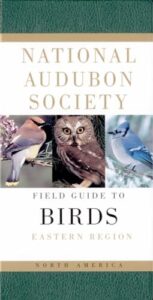
If weight’s a concern, the Audubon Eastern North American Bird Guide comes in at 1.3 lb — lighter than the Peterson North America edition. It covers eastern species with full-color photographs and includes range maps, habitat notes, and vocalization clues.
The split layout — photos up front, text in the back — can slow you down mid‑observation. Still, at $40.99, it’s a solid photographic reference for wetland beginners working marshes and tidal creeks east of the Rockies.
| Best For | Beginner birdwatchers in eastern North America who want a lightweight, photo-based field guide they can toss in a bag without worrying about battery life. |
|---|---|
| Page Count | 800 pages |
| Coverage Region | Eastern North America |
| Publisher | Alfred A. Knopf |
| Weight | 1.3 lb |
| Color Illustrations | Yes, photographs |
| Publication Year | 1994 |
| Additional Features |
|
- Hundreds of full-color photos make visual ID fast and satisfying, even if you’re just starting out
- At 1.3 lb, it’s easy to carry on hikes, marsh walks, or a morning by the feeder
- Covers range, habitat, and vocalizations in one compact package for $40.99
- Photos and text are split into separate halves, so flipping back and forth mid-sighting gets old fast
- Published in 1994, meaning some species ranges and taxonomy may be out of date
- Text pages are thinner and less water-resistant, so a surprise drizzle could cause real damage
5. Kaufman Birds of North America Guide
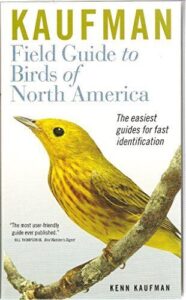
Kaufman’s guide does something clever — it groups birds by appearance, not taxonomy. That means similar-looking shorebirds and waterfowl sit side by side, exactly where you need them during a fast marsh encounter.
The facing-page layout keeps your range map, text, and photos on one spread.
At just $12.99 and under 1.1 lb, it’s genuinely pocket‑friendly.
Beginners especially appreciate the pictorial table of contents and color tabs — no fumbling mid‑observation while a Least Bittern disappears into the reeds.
| Best For | Beginners and casual birdwatchers who want a fast, no-fuss field guide they can actually fit in a jacket pocket. |
|---|---|
| Page Count | 392 pages |
| Coverage Region | North America |
| Publisher | Mariner Books |
| Weight | 1.04 lb |
| Color Illustrations | Yes, photographs |
| Publication Year | 2005 |
| Additional Features |
|
- Groups birds by appearance instead of taxonomy, so finding a look-alike species in the field is quick and intuitive
- The facing-page layout puts your range map, text, and photos all in one glance — no page-flipping mid-sighting
- At $12.99 and under 1.1 lb, it’s one of the most affordable and portable options out there
- Entries are pretty brief — if you want nesting behavior or detailed vocalizations, you’ll need a beefier guide
- Some photos don’t line up cleanly with their text descriptions, which can trip up newer birders
- Coverage stops at North America, so Mexican and Central American species are largely left out
6. Peterson Field Guide Birds Western North America

The West is a different birding world — coastal estuaries, high desert playas, Alaskan tundra. Peterson’s Fifth Edition covers 600-plus species west of the 100th meridian and manages that diversity well.
The dual-page layout keeps illustrations, field marks, and range maps together without page-flipping mid-observation.
Those 25 new Hawaii plates are a genuine bonus.
At 1.5 lb and $11.99, it’s affordable and packable.
Arrows pointing to diagnostic features like wing bars and bill shape make fast calls in busy wetlands feel manageable.
| Best For | Birders of all skill levels exploring Western North America — from beginners learning the basics to experienced birders tackling Hawaii or Alaska. |
|---|---|
| Page Count | 480 pages |
| Coverage Region | Western North America incl. Hawaii |
| Publisher | Mariner Books |
| Weight | 1.5 lb |
| Color Illustrations | Yes, painted |
| Publication Year | 2020 |
| Additional Features |
|
- Dual-page layout keeps illustrations, field marks, and range maps right where you need them — no flipping around mid-sighting.
- 25 new Hawaii plates make this a rare all-in-one guide for the full western region.
- At $11.99 and 1.5 lb, it’s easy on the wallet and packable enough for a day hike.
- At 5 × 8 inches, it won’t slip into a jacket pocket like a slimmer guide would.
- Range maps can be tough to read quickly, especially in low light.
- It’s not waterproof, so you’ll want a protective cover or bag for rainy or rugged conditions.
7. Sibley Field Guide Birds Eastern North America

If you’re birding east of the Rockies, Sibley’s Eastern guide belongs in your field bag. It covers 650 species with over 4,600 illustrations — depicting sexes, ages, seasonal plumage, and flight silhouettes in watercolor that’s calibrated for natural light conditions.
side-by-side column layout makes quick comparison simple.
More than 600 range maps, revised by 110 regional experts, show winter, summer, migration, and rare occurrences.
At 1.35 lb and $13.29, it’s both packable and affordable.
| Best For | Birders of all skill levels who spend time east of the Rockies and want a compact, illustration-rich guide they can actually carry into the field. |
|---|---|
| Page Count | 464 pages |
| Coverage Region | Eastern North America |
| Publisher | Knopf |
| Weight | 1.35 lb |
| Color Illustrations | Yes, painted |
| Publication Year | 2016 |
| Additional Features |
|
- Over 4,600 watercolor illustrations cover sexes, ages, and seasonal plumage — making it easier to ID what you’re actually seeing out there
- 600 range maps revised by 110 regional experts give you reliable, detailed info on where and when to spot each species
- At $13.29 and 1.35 lb, it’s hard to beat for the price and portability
- Small text can be tough on the eyes, especially in dim light — no large-print option available
- Published in 2016, so newer taxonomic updates or range shifts won’t be reflected
- It’s paper only — no digital version, app integration, or weatherproofing for rainy days in the field
8. Sibley Birds Guide Second Edition

Think of the Second Edition as the original Sibley, but sharper in every way. Nearly 7,000 paintings are digitally remastered, and illustrations are enlarged 15–20% — so those subtle covert patterns and bill shapes actually register at a glance.
You’re also getting 700+ updated range maps, 600 new paintings, and 85 family-level pages cross-referenced to species accounts.
It runs about $27 and weighs roughly 3 lb, so pack accordingly. For serious wetland work, that extra weight earns its place.
| Best For | Birders of all skill levels who want the most complete, visually detailed field guide to North American birds. |
|---|---|
| Page Count | 624 pages |
| Coverage Region | All North America |
| Publisher | Knopf |
| Weight | 3 lb |
| Color Illustrations | Yes, digitally remastered |
| Publication Year | 2014 |
| Additional Features |
|
- Nearly 7,000 remastered paintings with illustrations enlarged 15–20%, making it much easier to spot subtle field marks at a glance
- Packed with 700 updated range maps, 600 new paintings, and habitat and vocalization notes for every species
- At around $27, it’s a serious reference that punches well above its price
- At roughly 3 lb, it’s not something you’ll want to haul on a long hike
- Small, narrow text can be tough to read if your eyesight isn’t sharp
- Some print runs have minor color inconsistencies and occasional labeling errors
9. Dumb Birds of North America Field Guide
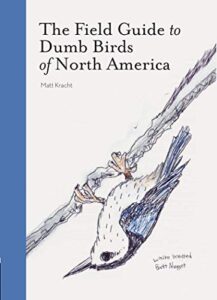
Not every guide needs to be serious. The Dumb Birds of North America ($8.98, Chronicle Books) covers 50 common North American species with full-color illustrations, humorous commentary, and real call and migration notes woven throughout.
It’s surprisingly useful for quick recall — humor sticks in memory better than dry text. At 176 pages and under 8 × 5 inches, it fits anywhere.
Don’t take it to your main wetland bag, but don’t dismiss it either. Sometimes laughing at a Tufted Titmouse is exactly what resets your focus.
| Best For | Bird lovers, nature enthusiasts, and anyone who appreciates irreverent humor — especially as a gift for a birthday, retirement, or holiday. |
|---|---|
| Page Count | 176 pages |
| Coverage Region | North America (50 species) |
| Publisher | Chronicle Books |
| Weight | 2.31 lb |
| Color Illustrations | Yes, illustrated |
| Publication Year | 2019 |
| Additional Features |
|
- Humor makes bird facts genuinely stick — you’ll actually remember what you read
- Compact and affordable at $8.98, easy to toss in a bag or leave on a coffee table
- Works for bird-watchers and non-watchers alike — no prior knowledge needed
- Heavy on profanity, so it’s not one to leave around kids or sensitive readers
- Only covers 50 species, so don’t expect deep or exhaustive field guide coverage
- Small print size could be a pain if your eyesight isn’t great
10. Sibley West Bird Field Guide

If you bird west of the Rockies, this one belongs in your bag.
The Sibley West Field Guide covers 715 species with over 5,000 illustrations — multiple angles, plumage variations, flight silhouettes.
Its 652 color-coded range maps show winter, summer, migration, and rarity ranges at a glance.
At 1.45 lb and 4.7 × 7.7 inches, it’s not ultralight, but it’s field-tested and reliable.
No battery. No signal needed.
Just clean, precise illustrations when a shorebird drops into your marsh and you need an answer fast.
| Best For | Birders of all skill levels—from weekend beginners to field researchers—who spend time west of the Rockies and want a reliable, no-fuss ID guide that works anywhere. |
|---|---|
| Page Count | 504 pages |
| Coverage Region | Western North America |
| Publisher | Knopf |
| Weight | 1.45 lb |
| Color Illustrations | Yes, painted |
| Publication Year | 2016 |
| Additional Features |
|
- Over 5,000 illustrations with multiple views make it easy to ID birds in weird angles or mid-flight
- 652 color-coded range maps give you winter, summer, and migration info all in one glance
- No battery, no signal—works perfectly in the backcountry when your phone doesn’t
- At 1.45 lb it’s heavier than true pocket guides, so long hikes may feel it
- Smaller print size means some details and illustrations can be tough to read in low light
- Skips a few rarities near the Western/Eastern boundary, so edge-case sightings might stump it
What Wetland Birders Need

wetland birding puts your gear through the wringer — mud, splash, and fast‑moving birds don’t wait for you to flip through the wrong guide.
Not every field guide is built for that kind of work.
Here’s what actually matters when you’re picking one for marsh, shore, and waterbird identification.
Range Maps for Marsh, Shore, and Waterbirds
Range maps are the quiet backbone of any solid wetland birdwatching strategy. A good shorebird field guide or waterfowl field guide layers Seasonal Habitat Layers—breeding, wintering, migration—so you read a species’ full year at a glance.
Look for these essentials:
- Grid Cell Resolution down to 1–5 km for marsh patches
- Migration Corridor Visualization along tidal flats and estuary mouths
- Breeding Site Symbols pinpointing nesting wetlands
- Climate Impact Overlays showing northward range creep
Waterproof or Durable Pages Near Water
Knowing where birds are is half the battle — keeping your guide readable through a marsh downpour is the other half.
| Feature | What It Does | Why It Matters |
|---|---|---|
| Synthetic Page Substrate | Resists water absorption | Pages stay legible after splashes |
| Micro‑Encapsulated Ink | Prevents smudging when wet | Field marks stay sharp mid-rain |
| UV‑Resistant Coatings | Blocks sun-driven fade | Color accuracy holds near open water |
Guides rated to IPX standards, printed with laminated ink protection and water‑resistant coating, deliver real field guide durability. For serious wetland birdwatching, sturdy construction isn’t optional.
Portable Size for Field Bags and Waders
Your guide needs to survive the commute to the water, not just the water itself. Most wader bags run 36–40 inches folded — enough room for a backpack-friendly guide like the National Geographic (just over a pound).
Compact Fold Design bags with Ventilation Mesh Panels, Durable Water-Resistant Zippers, and Adjustable Shoulder Straps keep everything accessible.
That sturdy construction protects your compact package on every muddy walk.
Clear Illustrations for Fast Identification
Speed matters at the marsh. When a flock drops into the reeds, you’ve got seconds—not minutes.
That’s where high-quality illustrations earn their keep. Look for a field guide with a minimalist layout: simplified silhouettes, a high-contrast palette, and quick-reference arrows pointing to wing bars or bill shape.
Standardized icons across plates mean your eye learns the visual identification system fast.
Regional Coverage for Your Travel Area
A guide that covers all of North America won’t tell you rail is calling from the reed beds along the Mulde in April. That’s the gap regional bird guide recommendations fill.
Local Habitat Maps, Regional Species Checklists, and Seasonal Migration Patterns help you anticipate what’s actually there. Pay attention to Site Access Restrictions and Regional Protection Regulations — some wetland habitat is closed during nesting season.
Conservation Status and Habitat Notes
Every serious field guide now flags conservation status — and it matters more than you’d think. Here’s what good habitat notes cover:
- Favourable Habitat Indicators like stable reed beds and open water.
- Unfavourable Marsh Trends from drainage and pollution.
- Invasive Species Impact on shorebird foraging zones.
- Hydrological Regime Monitoring data embedded in range maps.
- Natura 2000 Designations marking protected wetland habitat.
Check these before you go.
Print Vs Digital Field Guides
Choosing between print and digital comes down to where you are and how you work in the field. Each format has real trade-offs worth knowing before you head out.
Here’s what actually matters when you’re standing knee-deep in a marsh.
Battery-free Use During Long Wetland Trips

Print doesn’t die when your battery does. Out in the marsh at dawn, that matters.
| Power Source | Field Reliability | Best For |
|---|---|---|
| Solar Panel Packs | 14 days overcast | Extended wetland trips |
| Kinetic Harvesters | Continuous low output | Marsh crossings |
| Thermoelectric Generators | Boardwalk sensors | Stationary monitoring |
Your portable, backpack-friendly field guide needs zero supercapacitor storage or passive RFID sensors. Battery-free reliability is built in — water‑resistant coating included.
Offline Apps for Remote Birding Areas

No cell signal? No problem — your phone can still pull its weight in the marsh.
| App | Key Offline Feature |
|---|---|
| Merlin | Offline AI identification with Custom Region Packs |
| iBird Pro | Visual plates with Low-Data Map Tiles |
| eBird Mobile | Offline checklists and hotspot access |
The iBird Pro app also offers offline access via full library for uninterrupted identification.
Download your packs before you leave. Birding apps like these give you full offline access — no signal needed.
Audio Playback for Songs and Calls

Hearing a bird before you see it’s half the game in wetlands.
| Feature | App |
|---|---|
| Offline audio library | Merlin |
| Song analysis via BirdNET | BirdNET |
| Background playback | Both |
| Accessibility cues | Merlin |
| User control over call interruption handling | BirdNET |
Codec optimization keeps recordings crisp even on older hardware. Download audio packs before you wade in.
Photo-based IDs Versus Painted Field Marks

Photos show the bird as‑is. Illustrations show what matters.
| Factor | Photo ID vs. Field Marks |
|---|---|
| Visual Contrast | Paintings win in low light |
| Weather Resistance | Laminated marks outlast printed photos |
| Counterfeit Prevention | Illustrations harder to misrepresent |
| Maintenance Frequency | Digital photo IDs update instantly |
| Real-time Verification | Apps cross‑check photographic identification of birds |
In wetlands, painted field marks on warblers beat blurry photos every time.
Annotation Space for Personal Notes

Your field notes are only as good as your system for keeping them.
| Tool | Annotation Feature | Best Use |
|---|---|---|
| Digital Apps | Cloud Sync Privacy | Multi-device access |
| Margin Note System | Color-coded Confidence | Quick field recall |
| Template Note Formats | Audio Clip Linking | Habitat-specific logs |
Margin Tagging lets you flag shorebirds by behavior, molt, or wetland zone. Using margin notes and personal annotations in field guides beats scrambling through memory after a long day in the marsh.
Device Weight Versus Book Durability

Your margin notes are only as good as the guide that survives the trip.
| Factor | Digital | |
|---|---|---|
| Weight | 0.25–1.13 kg | Near zero |
| Durability | Water-resistant coating, synthetic vs hardcover binding | Battery-dependent |
A backpack-friendly guide with lamination weight impact kept low beats a cracked screen at mile six. Binding strength balance and page thickness tradeoff matter more in marsh mud than in your living room.
Best Guide Features for Identification

A good field guide earns its place in your bag by doing one thing well — helping you make the call fast.
For wetland birding, that means specific features matter more than page count or cover art. Here’s what to look for.
Seasonal Plumage and Molt Coverage
Wetland birds don’t stay the same — pre-basic molt reshapes everything from tone to texture.
Plumage color shifts can fool even experienced birders.
A good field guide tracks these changes clearly.
Look for guides that cover:
- Molt timing tied to migration and breeding cycles
- Structural color changes across seasonal plumage variation
- Regional plumage variation for marsh and estuary species
illustrations and range maps make all the difference.
Wing Bars, Bill Shape, and Leg Color
Beyond plumage shifts, three field marks sharpen your bird identification in wetlands, fast: wing bars, bill shape, and leg color.
| Feature | What to Notice | Example Species |
|---|---|---|
| Wing Bars | Width and contrast | Magnolia vs. Bay-breasted Warbler |
| Bill Shape | Slender vs. conical | Sunbird vs. Finch |
| Leg Color | Dark vs. pale | Glossy Ibis vs. Great Egret |
| Age-Related Variation | Fainter bars in juveniles | Yellow Warbler |
| Sexual Dimorphism | Stronger contrast in males | Wood Duck |
Field Mark Contrast reveals habitat-linked morphology — seasonal color shift affects legs and bills too. Your field guide must show it all.
Shorebird and Waterfowl Comparison Plates
Comparison plates are where a good field guide earns its keep. The best ones group migratory shorebirds and waterfowl side by side — Plumage Pattern Contrast, Leg Color Differentiation, Wing Silhouette Outline, and Feeding Posture Comparison all on one spread.
Co-occurring Species Layout helps you scan wetlands fast, without flipping pages.
Pair these plates with range maps and bird identification apps, and sharp ID follows.
Taxonomy Updates and Split Species
Taxonomy shifts can quietly make your field guide obsolete overnight. Genomic Splits have accelerated quickly — the 2023 eBird update alone added 124 splits worldwide. Lump vs Split decisions reshape range maps, Red List Impacts, and Species Complexes you rely on in wetlands.
Watch for these Taxonomic Revisions in current guides:
- Lesser Sand Plover — split into Tibetan and Siberian species
- American Goshawk — separated via taxonomic classification updates
- Genomic data — now drives most Species Complexes resolutions
- Red List status — shifts with every major split
Habitat Clues for Marsh and Estuary Birds
marsh tells you where to look before you even raise your binoculars.
Vegetation Height signals species immediately — tall Phragmites hides bitterns, while low cordgrass edges attract sandpipers. Water Depth Zones separate dabbling ducks from herons. Mudflat Invertebrate Peaks during low tide pull shorebirds in numbers. good field guide maps these habitat clues directly.
| Habitat Feature | Bird Identification Cue | Birding Technique |
|---|---|---|
| Water-Reed Edge | Rails, teals at waterline | Scan edge at dawn |
| Mudflat Invertebrate Peaks | Shorebird foraging concentrations | Time visits to low tide |
| Vegetation Height variation | Bitterns vs. warblers vs. sparrows | Note grass structure first |
| Water Depth Zones | Dabbling vs. wading vs. diving | Gauge depth visually |
| Tide-Driven Nest Sites | Elevated hummock nesters | Track tidal cycles weekly |
Use wetlands like a map. Let the habitat clues lead.
Climate-driven Range Shifts in Maps
Range maps aren’t static anymore — climate change rewrote them. Birds moved poleward an average of 0.8 degrees latitude per decade since 1970. Your guide needs to reflect that reality.
Climate change rewrote bird range maps — species have shifted poleward 0.8 degrees latitude per decade since 1970
Look for maps showing:
- Poleward shift velocity and updated breeding boundaries
- Elevation migration trends for upslope wetland species
- Habitat connectivity gaps slowing range expansion
- Temporal arrival shifts of up to two weeks earlier
Species distribution follows climate. Your maps should, too.
Wetland Birding Skills and Ethics

Knowing your guides is only half the equation. The other half is how you actually show up in the field — prepared, ethical, and tuned in to what’s happening around you.
Here’s what every wetland birder should be doing.
Using EBird for Local Species Checks
Before you even lift your binoculars, eBird does the homework for you. Pull up real-time checklists, and GPS-based suggestions show exactly which species are likely in your wetlands today.
Rare sightings alerts flag anything unusual — that orange "R" means pay attention.
Offline data sync keeps your checklist running without cell service, and hotspot species lists reveal what other birders are finding nearby.
Cross-referencing Apps With Field Guides
Think of your field guide and birding apps as a team, not competitors. Merlin’s photo ID and BirdNET’s song analysis work best when you cross-check results against your printed plates.
- Use Side-by-side Plates to confirm wing bars and leg color
- Apply Habitat Filters to narrow marsh or reedbed species instantly
- Enable Real-time Updates so Syncing Sightings stays current with eBird data
- Add User Annotations in iBird Pro to match your guide’s habitat notes
Avoiding Disturbance at Nesting and Roosting Sites
Cross-referencing your apps builds sharper ID skills — but knowing when not to look matters just as much. Ethical birdwatching practices start with distance. Stay 50–100 meters back from ground-nesting species; colonial waterbird sites need 200-meter buffer zones minimum.
| Disturbance Type | Recommended Action |
|---|---|
| Visual exposure | Deploy visual barriers or vegetation screens |
| Noise near nests | Apply noise mitigation — no amplified sound within 300 m |
| Timing conflicts | Follow timing restrictions; avoid breeding season peak hours |
Remote monitoring cameras let you observe without presence. That’s wetland preservation in practice.
Choosing Beginner-friendly Guides Versus Expert Guides
Keeping distance protects the birds — choosing the right guide protects your progress.
Beginner birding guides use simple language, stepwise checklists, and clear visuals. No technical jargon, no overwhelming detail. Expert guides flip that: detailed morphology, subspecies variation, in-depth birding taxonomy.
Key factors to weigh when selecting guides:
- Your current skill level in wetlands
- Comfort reading field guide species accounts
- Need for skill-based recommendations
- Tolerance for dense scientific terminology
- Goal — casual enjoyment or serious data collection
Tracking Migrations Across Seasonal Wetland Habitats
Migration patterns don’t wait for you. Snowmelt triggers hydroperiod timing that pulls shorebirds north within days.
Most stop 3–7 days at mid‑latitude wetlands — your window to observe. Invertebrate pulse events after rainfall mark peak feeding.
Telemetry data integration and connectivity modeling now sharpen those predictions. eBird alerts with range maps in the Sibley Field Guide to Birds of Eastern North America to track seasonal migration patterns across wetland habitats.
Frequently Asked Questions (FAQs)
Which guides cover tidal flat bird species?
Tidal flats are a buffet line for shorebirds — and the right field guide pulls back the curtain. National Geographic, Peterson, Sibley Eastern, Audubon, and Kaufman all cover flat species well.
How do guides handle subspecies identification?
Good guides label subspecies only when field marks are reliable. They combine wing bars, bill shape, and leg color with range maps and audio cues for confident separation.
Can field guides help identify bird tracks?
Tracks tell stories. Most field guides include track illustration diagrams with toe pattern keys, substrate condition cues, and habitat clues — handy when feathers stay hidden.
Seasonal track variation and digital track analysis round out your birding techniques.
Which guides include wetland habitat restoration notes?
Several guides double as restoration planning tools.
The Audubon, National Geographic, Sibley, and Kaufman field guides include habitat management tips, restoration species lists, and restoration success indicators — practical conservation notes wetland birdwatching practitioners genuinely rely on.
Do any guides feature nocturnal wetland species?
Surprisingly, yes.
Some guides dedicate nocturnal species sections to owls, night herons, and rails — complete with eye-ring markings, moon phase activity notes, red light recommendations, and night-time call charts for wetland audio playback.
Conclusion
Like a well-worn trail through a tidal marsh, the right guide becomes second nature—you stop thinking about it and start seeing. The best bird field guides for wetland exploration don’t just name species; they sharpen your instincts for a Dowitcher’s bill drop or a Yellowlegs’ alarm call.
Pick the one that fits your region, your bag, and your skill level. Then get your boots wet. The birds won’t wait.