This site is supported by our readers. We may earn a commission, at no cost to you, if you purchase through links.

A single well-chosen field guide can turn a restless classroom into a room full of junior ornithologists—students who notice things, ask sharp questions, and actually want to go outside. Bird identification builds real science skills: observation, classification, evidence-based reasoning.
Yet most teachers reach for worksheets when a laminated, spiral-bound guide with 800 species and color-coded tabs would do the job faster and stick longer.
The right bird field guides for classroom learning don’t just name species—they train students to think like field scientists, one feather pattern at a time.
Table Of Contents
- Key Takeaways
- Top 10 Bird Field Guides
- 1. National Audubon Society Bird Field Guide
- 2. Stokes Beginner Bird Guide Western Region
- 3. Sibley Birds Guide Second Edition
- 4. Smithsonian Birds of North America Hardcover
- 5. Birds of Michigan Field Guide
- 6. Carolinas Bird Identification Guide
- 7. Birds of Texas Field Guide
- 8. Princeton Illustrated Birds of Mexico and Central America
- 9. South America Songbirds Field Guide
- 10. Birds of Europe North Africa Middle East Guide
- Choose The Right Classroom Guide
- Teach Bird Identification Skills
- Classroom Activities and Lesson Ideas
- Outdoor Observation and Citizen Science
- Digital Bird Learning Tools
- Frequently Asked Questions (FAQs)
- Conclusion
Key Takeaways
- Matching a field guide to your students’ age, reading level, and local region matters more than species count — the wrong guide slows learning before it starts.
- Color-coded layouts and silhouette-based identification train students to find birds by what they actually see, not by scientific knowledge they don’t yet have.
- Durable, pocket-sized formats with spiral binding, waterproof covers, and color-coded tabs are the difference between a guide that survives a semester and one that falls apart by week three.
- Pairing any print guide with free digital tools like Merlin Bird ID and All About Birds — plus citizen science platforms like eBird — turns casual sightings into real, submittable science data.
Top 10 Bird Field Guides
Finding the right field guide for your classroom doesn’t have to be a guessing game.
Once you know what to look for, this guide to choosing bird field guides as a beginner makes the decision a whole lot easier.
The ten guides below cover everything from local backyard species to birds across continents, so there’s a solid option no matter where you teach or what grade you’re working with.
Here’s what made the cut for 2026.
1. National Audubon Society Bird Field Guide
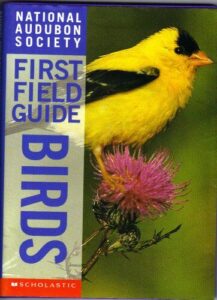
The National Audubon Society Field Guide covers over 800 North American species — that’s serious range for any classroom. Each entry pairs color photographs with voice descriptions, range maps, and highlighted field marks like eye rings and wing bars.
You’ll also find similar species listed side by side, which cuts down on misidentification. It follows taxonomic order, so once students understand bird families, using the guide feels straightforward.
Durable vinyl binding makes it a reliable companion from the feeder to the field.
| Best For | Kids ages 4–8 who are just getting into birdwatching and need a simple, durable guide they can actually take outside. |
|---|---|
| Species Count | ~50 species |
| Color Photos | Yes |
| Range Maps | Yes |
| Page Count | 160 pages |
| Price (USD) | $18.52 |
| Geographic Focus | North America |
| Additional Features |
|
- Tough vinyl-coated cover holds up to real outdoor use — spills, drops, and all
- Big color photos and data cards make it easy for young kids to match what they see
- Pocket-sized and light enough to toss in a backpack without a second thought
- Only covers about 50 common U.S. species, so it’ll fall short in areas with more diverse birdlife
- Published in 1998, meaning some range data and taxonomy may be out of date
- Used copies may have water-damaged or stuck-together pages
2. Stokes Beginner Bird Guide Western Region

If the Audubon feels like a lot for younger students, the Stokes Beginner’s Guide Western Region is a natural starting point. It covers 100 common western species, organized by plumage color with a color‑tab index — so students search by what they see, not by what they already know.
Each entry includes full‑color photographs of both male and female birds, plus concise notes on identification, voice, habitat, nesting, and attracting.
At 4.8 oz and $8.27, it’s genuinely pocket‑friendly.
| Best For | Beginners, kids, and casual backyard birdwatchers who want a fast, visual way to identify common western birds without feeling overwhelmed. |
|---|---|
| Species Count | 100 species |
| Color Photos | Yes |
| Range Maps | Yes |
| Page Count | 144 pages |
| Price (USD) | $8.27 |
| Geographic Focus | Western United States |
| Additional Features |
|
- Color-tab index lets you look up birds by what you actually see, which is a huge win for beginners
- Full-color photos of both male and female birds make identification way easier
- Tiny and light enough to toss in a pocket or backpack at under 5 oz and under $10
- Only 100 species, so you’ll hit its limits pretty quickly if you’re birding seriously
- Each entry is just 2-3 sentences — great for quick checks, not so great if you want the full story
- Published in 1996, so some range maps and color reproductions are a bit behind the times
3. Sibley Birds Guide Second Edition
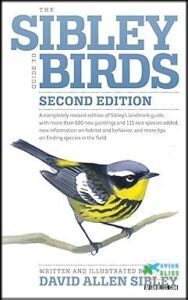
When your students are ready to go deeper, the Sibley Guide to Birds, Second Edition is worth every penny of its $27.18 price tag.
It packs 624 pages with nearly 7,000 digitally remastered paintings — all enlarged 15–20% for sharper detail. You’ll also get 700+ updated range maps and 600+ new paintings covering rare species and regional variants.
It’s a serious reference tool, though at roughly 3 lb, plan to keep it on the classroom shelf rather than in a backpack.
| Best For | Serious birders, wildlife photographers, researchers, and educators who want a comprehensive, visually rich reference for identifying every North American bird species. |
|---|---|
| Species Count | All North American species |
| Color Photos | Yes (paintings) |
| Range Maps | 700+ updated maps |
| Page Count | 624 pages |
| Price (USD) | $27.18 |
| Geographic Focus | North America |
| Additional Features |
|
- Nearly 7,000 remastered paintings enlarged for sharper detail, making it easier to spot the differences between similar-looking species.
- 700 updated range maps and 600 new illustrations — including rare species and regional variants — so you’re covered beyond the common backyard birds.
- Packed with habitat notes, vocalization descriptions, and field ID tips, making it useful well beyond just flipping to a picture.
- At around 3 lb, it’s more of a shelf reference than something you’ll want to haul on a long hike.
- The typeface runs small and narrow, which can be tough on the eyes after a while.
- Some print runs have had minor color inconsistencies and the occasional labeling error, so it’s not quite perfect.
4. Smithsonian Birds of North America Hardcover
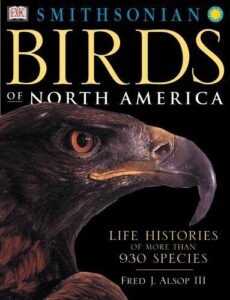
If shelf weight doesn’t bother you, the Smithsonian Birds of North America Hardcover earns its spot as a classroom reference anchor.
At $22.99, you get full-page profiles for over 930 North American species, annotated color photographs, schematic flight-pattern artwork, and seasonal range maps for every entry.
Life-history sections cover nesting, feeding, vocalizations, and conservation status.
It’s a dense 1,008 pages — closer to 7 lb than the listed spec — so treat it as your go-to desk resource, not a field companion.
| Best For | Serious home birders, students, and educators who want a detailed, beautifully illustrated reference they can dig into without leaving the house. |
|---|---|
| Species Count | 930+ species |
| Color Photos | Yes |
| Range Maps | Yes, seasonal |
| Page Count | 1,008 pages |
| Price (USD) | $22.99 |
| Geographic Focus | United States & Canada |
| Additional Features |
|
- Covers 930 species with full-page profiles, color photos, and seasonal range maps — hard to beat for depth
- Life-history sections go beyond ID tips, touching on behavior, nesting, and conservation
- At $22.99, it’s genuinely good value for a 1,000 page hardcover from a trusted name
- At roughly 7 lb, it’s not going anywhere near a trail — this is a desk book through and through
- No audio for bird calls, which is a real gap when you’re trying to ID by sound
- Published in 2006, so some taxonomy and range info is likely out of date by now
5. Birds of Michigan Field Guide
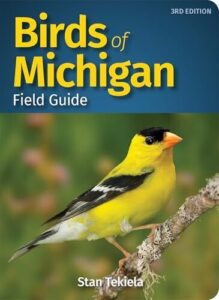
For Michigan classrooms, Birds of Michigan Field Guide is hard to beat. At $13.88 for 316 pages, it covers 118 species you’ll actually see in local parks, schoolyards, and wetlands.
The color-coded layout — organized by color rather than taxonomy — means students find species quickly without flipping through irrelevant entries.
Side-by-side comparisons help distinguish look-alikes, and "Stan’s Notes" add just enough natural history to spark curiosity.
Compact at 4.4 × 6.1 inches, it fits easily in a student backpack.
| Best For | Michigan teachers, parents, and young birdwatchers who want a simple, affordable guide to local species they can actually take outside. |
|---|---|
| Species Count | 118 species |
| Color Photos | Yes |
| Range Maps | Yes, updated |
| Page Count | 316 pages |
| Price (USD) | $13.88 |
| Geographic Focus | Michigan |
| Additional Features |
|
- Color-coded layout makes it fast to find a bird — no taxonomy knowledge needed
- Side-by-side comparisons and range maps help confirm what you’re actually looking at
- Pocket-sized and cheap at $13.88, so it’s easy to hand out or pack along on a field trip
- Only covers Michigan birds, so it’s useless the moment you cross state lines
- Thin on behavioral and ecological detail — it’s an ID guide, not a deep dive
- Color-based organization can get tricky with birds that mix multiple colors
6. Carolinas Bird Identification Guide
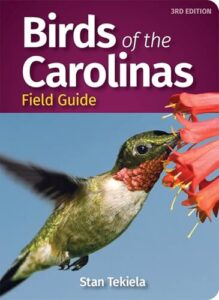
Teaching in the Carolinas? This guide was built for your backyard.
Pair this guide with a habit of logging tricky sightings using tips from common bird identification mistakes to avoid, so you get sharper with every Carolina outing.
At $12.79 for 376 pages, it covers 146 species native to North and South Carolina — from Northern Cardinals to coastal shorebirds.
color-coded tabs let students flip straight to a bird’s color section, cutting search time dramatically.
Full-page photographs and Stan’s Notes add natural history depth without overwhelming beginners.
Compact at 4.38 × 6 inches, it fits neatly in any student backpack for field walks.
| Best For | Teachers, students, and outdoor enthusiasts in North Carolina and South Carolina who want a practical, easy-to-use bird identification guide for field trips and backyard birdwatching. |
|---|---|
| Species Count | 146 species |
| Color Photos | Yes |
| Range Maps | Yes, updated |
| Page Count | 376 pages |
| Price (USD) | $12.79 |
| Geographic Focus | North & South Carolina |
| Additional Features |
|
- Color-coded tabs make it fast to find a bird by color — no flipping through the whole book
- Full-page photos and Stan’s Notes give real depth without feeling like a textbook
- Compact size fits easily in a backpack, perfect for field walks and nature outings
- Small print and images can be tough to read outdoors, especially in low light
- Paperback binding wears down quickly with heavy field use
- No app or audio companion, which some users from older editions will miss
7. Birds of Texas Field Guide
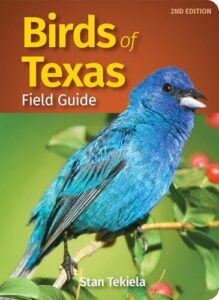
Texas teachers, this one’s tailor-made for you.
Stan Tekiela’s Birds of Texas Field Guide covers 176 species organized by feather color — so students can flip to a match in seconds. $13.30 for 456 pages, it punches well above its price.
Full-page photographs on glossy paper, updated range maps, and the built-in "Compare" section help students untangle look-alike species confidently.
Compact enough for any backpack at roughly one pound, it holds up through field walks, feeders, and everything in between.
| Best For | Texas teachers, students, and casual birdwatchers who want a fast, affordable field reference they can actually carry around. |
|---|---|
| Species Count | 176 species |
| Color Photos | Yes |
| Range Maps | Yes, updated |
| Page Count | 456 pages |
| Price (USD) | $13.30 |
| Geographic Focus | Texas |
| Additional Features |
|
- Color-organized layout makes it easy to ID a bird on the spot — no fumbling through dense text
- Full-page glossy photos and a "Compare" section take the guesswork out of look-alike species
- At $13.30 for 456 pages, it’s hard to beat the value for a pocket-sized guide
- Only covers Texas species, so it’s no help if you’re birding anywhere else
- Color-based sorting can trip you up with birds that are multi-colored or seen in low light
- Range maps can go stale as bird populations shift, and there’s no room for personal notes
8. Princeton Illustrated Birds of Mexico and Central America

Planning a Central America birding unit? This is the guide you’ll want in hand.
Princeton Illustrated Birds of Mexico and Central America covers more than 1,500 species across eight countries — Mexico through Panama — in a compact 5.25 × 7.75 in format weighing just 1.25 lb. At $18.99, 98 color plates pair adult, female, and juvenile plumages directly opposite species text. Range maps show exactly where birds appear. It’s best used as a quick-reference checklist alongside a more detailed primary guide.
| Best For | Birders heading to Mexico or Central America who want a lightweight, affordable quick-reference guide to carry in the field. |
|---|---|
| Species Count | 1,500+ species |
| Color Photos | Yes |
| Range Maps | Yes |
| Page Count | 336 pages |
| Price (USD) | $18.99 |
| Geographic Focus | Mexico to Panama |
| Additional Features |
|
- Covers 1,500 species across eight countries in one slim, travel-friendly book
- Facing-page layout puts illustrations and species text side by side — no flipping around
- Range maps help you know what to expect before you even step outside
- Illustrations are on the small side, which can make tricky IDs harder to nail
- A few plate errors (like swapped oriole illustrations) can trip you up if you’re not careful
- Taxonomic order feels unconventional, so finding what you’re looking for takes some getting used to
9. South America Songbirds Field Guide
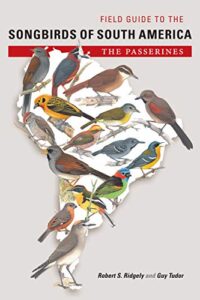
Nearly 2,000 songbird species in one volume — that’s what Ridgely and Tudor packed into this 760-page reference. The South America Songbirds Field Guide covers passerines from Andean valleys to the Amazon basin, with 121 full-color plates and roughly 1,800 range maps positioned directly across from the illustrations.
At $49.95, it serves as a serious research tool. Fair warning: it weighs 2.9 lb and skips non-passerines entirely, so pair it with a non-passerine guide for complete coverage.
| Best For | Serious birders and ornithologists who need a comprehensive, research-grade reference for identifying South American passerines across multiple countries. |
|---|---|
| Species Count | ~1,980 species |
| Color Photos | Yes |
| Range Maps | ~1,800 maps |
| Page Count | 760 pages |
| Price (USD) | $49.95 |
| Geographic Focus | South America |
| Additional Features |
|
- Nearly 2,000 species accounts with detailed notes on ID, voice, habitat, and range — all in one volume
- 121 full-color plates paired side-by-side with ~1,800 updated range maps, making comparisons quick and easy
- Consolidates two landmark volumes into one, saving both shelf space and money at just $49.95
- At 2.9 lb and 760 pages, it’s far too heavy and bulky for comfortable all-day field use
- Around 500 passerine species aren’t illustrated, so you may still need supplementary guides
- Covers passerines only — you’ll need a separate book for non-passerine species
10. Birds of Europe North Africa Middle East Guide
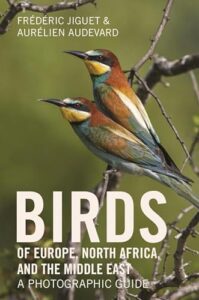
If your curriculum reaches beyond North America, this Princeton University Press guide earns a permanent spot on your shelf. It covers 860 species across Europe, North Africa, and the Middle East — residents, migrants, and rare vagrants alike — with 2,200 labeled photographs packed into 448 pages.
Each spread puts photos, species text, and range maps together, so students don’t lose time flipping back and forth.
At $16.94, it’s affordable.
Just note the 1.75 kg weight before planning field trips.
| Best For | Educators and birders whose focus extends into Europe, North Africa, or the Middle East — whether you’re a beginner learning the basics or an experienced birder tracking range shifts. |
|---|---|
| Species Count | 860 species |
| Color Photos | Yes |
| Range Maps | Yes, color |
| Page Count | 448 pages |
| Price (USD) | $16.94 |
| Geographic Focus | Europe, N. Africa, Middle East |
| Additional Features |
|
- All 860 species come with photos, text, and maps on the same page, so you’re not constantly flipping around mid-hike.
- At $16.94 for 2,200 labeled photos, the value is hard to beat for such a wide geographic range.
- Covers rare vagrants and range-expanding species, which is genuinely useful if you’re keeping up with climate-driven distribution changes.
- At 1.75 kg, it’s on the heavier side for a field guide — your shoulders will know it’s there by the end of the day.
- Some maps leave out chunks of North Africa and the Middle East, which is frustrating given those regions are in the title.
- Flight photos are limited, so if a bird is in the air, you might be left guessing.
Choose The Right Classroom Guide

Not every field guide works for every classroom, and the wrong pick can slow students down before they even spot their first bird.
A few key factors — age level, regional fit, and physical durability — make a bigger difference than you might expect. Here’s what to look for before you buy.
Match The Guide to Student Age and Reading Level
Not every bird identification book works for every student. Younger learners need picture-rich layouts, scaled font size, and simple captions — grade-specific language matters more than species count.
Older students can handle progressive content depth with detailed field note sections. Look for reading level tags on the cover.
Student-friendly visuals and NGSS-aligned content make even budget-friendly classroom materials genuinely useful across grade levels.
Compare Regional Guides With National Guides
Once you’ve matched reading level, the next focus is scope. Regional guides provide County-level Distribution maps, Regional Subspecies Emphasis, and Teacher Resource Notes tied to nearby habitats. National guides offer Standardized Indexing across every state.
- Regional guides update faster — better Update Cycle Frequency for local changes
- National guides cover transcontinental migrants that regional ones skip
- Regional formats often include laminated quick-reference pages
- National editions use reinforced bindings for shelf durability
- Regional guides link directly to local citizen science programs
Prioritize Species Coverage That Fits Your Location
Regional guides beat national ones for Local Habitat Matching. If you’re teaching near Saxony’s forests, wetlands, or park edges, choose bird identification books built around Regional Species Lists that put blackbirds, great tits, and migratory warblers front and center.
Seasonal Migration Peaks and Protected Species Emphasis matter here — and Urban Bird Inclusion ensures place-based learning stays grounded in what students actually see outside.
Look for Durable, Backpack-friendly Formats
Your field guide won’t last a semester stuffed in a backpack — not without the right durability features for field guide books. Look for spiral binding so pages lie flat on clipboards, waterproof covers, and water‑resistant pages that survive spills. Reinforced stitching prevents seam failure after daily transport, while lightweight materials keep bags manageable.
Choose bird identification books with:
- Spiral binding for hands‑free, flat‑opening use on clipboards
- Waterproof cover with laminated, coated pages resisting rain and spills
- Reinforced stitching at all seams to prevent tearing during frequent transport
- Lightweight materials keeping the guide under three ounces for student comfort
- Color‑coded tabs separating sections for quick, one‑handed navigation outdoors
Choose Large Print and Clear Pronunciation Help
When a student struggles to read tiny text or stumbles over "Pycnonotidae," the guide loses them fast. Choose bird identification books with Font Size Guidelines of 14-point or larger, High Contrast Design like black on pale yellow, and Phonetic Spellings beside tricky names. These features directly address common barriers to accessibility.
Accessibility Badges on the cover help you spot compliant editions quickly. This visual cue ensures materials meet necessary standards without requiring exhaustive searches.
Audio Pronunciation Links reinforce student-friendly visuals and support visual learning alongside bird calls. This multimedia approach enhances engagement and comprehension for diverse learners.
Select Guides With Simple Range Maps and Quick Facts
Every good field guide puts range maps and quick facts where you can find them in seconds. Look for species range maps with Seasonal Shading and Color‑coded Legends that show migration patterns at a glance.
Strong Fact Box Design uses bullet‑style text in larger print for outdoor readability.
Map Clarity and Compact Layout keep bird identification books, student-friendly and bird identification simple during fast‑paced field walks.
The Peterson Field Guide to Birds demonstrates an arrow‑point system design for quick visual identification of key field marks.
Teach Bird Identification Skills
Getting students to actually identify birds—not just guess—takes a set of real, teachable skills. The good news is that field guides are built around exactly these skills, and once students learn the system, everything clicks faster.
Here’s how to walk them through the core techniques that make identification stick.
Use Silhouettes to Separate Bird Groups

Before your students can name a bird, they need to group it — and silhouettes make that first step fast.
Strip away color, and Wing Shape Silhouettes do the heavy lifting: broad wings say "raptor," forked tails say "swallow."
Tail Proportion Cues, Flight Angle Silhouettes, and Habitat Silhouette Context all sharpen that reading.
Use Size Reference Objects nearby, and student-friendly visuals in your field guide turn visual learning into reliable bird identification.
Compare Bill Shape, Body Size, and Posture

Once you know the silhouette, bill shape clinches it. Morphology-Diet Links make this concrete: a slender pointed bill means insect hunter; a stout conical one means seed cracker.
Use Body Proportion Analysis and Posture-Behavior Indicators together in your field guide:
- Bill-Function Classification — match bill shape to diet
- Size-Flight Correlation — larger bodies soar; compact ones dart
- Posture-Behavior Indicators — upright stance signals ground forager
Visual learning clicks fast with bird identification books that show all three traits side by side.
Teach Field Marks Like Eye-rings and Wing Bars

Field marks are your sharpest shortcut. Eye-ring Variations — thin halos to bold bands — separate lookalike species fast. Wing Bar Patterns on folded wings stay visible at feeders, making them reliable for quick calls.
Teach Facial Mask Cues alongside Seasonal Plumage Shifts and Age-related Mark Changes, so students understand why the same bird looks different in October versus May.
bird identification books with illustrated identification make this visual learning stick.
Show Front, Side, and Silhouette Views

Three views enhance bird identification skills faster than any single angle can. Front View Emphasis reveals eye-ring thickness and bill symmetry. Side View Geometry shows beak curvature and body posture. Silhouette Outline Training builds shape recognition even in poor light.
Use Multi-View Matching drills with your illustrated identification field guide — Perspective Integration across all three views sharpens visual learning dramatically.
Explain Color Patterns and Plumage Differences

Color is your next diagnostic tool. Once silhouettes click, plumage variation tells the rest of the story.
Good field guides break color into three zones, students can actually learn:
- Melanin Carotenoid Contrast — dark wing bars versus bright throat patches
- Structural Iridescence — blues and greens that shift with light angle
- Seasonal Molt Shifts — same species, completely different plumage pattern functions
Pigment distribution zones make visual learning precise, not guesswork.
Practice Using Vocalizations for Confirmation

Once you’ve nailed plumage, sound seals the deal. Bird song identification adds a second layer of confirmation that visuals alone can’t provide. Use the Merlin Bird ID App to model Pitch Modulation and Intonation Patterns in real calls. Pair listening with Tag Question Usage, like "That’s a chickadee, right?" to check comprehension.
Nonverbal Pairing and Vocal Timing sharpen how students process what they hear.
Classroom Activities and Lesson Ideas

A good field guide is only as useful as the lessons built around it. The activities below help students actually use what they’re learning — not just read about birds, but notice, record, and talk about them.
Here are six classroom ideas worth trying.
Assign Each Student a Bird Species Expert Role
Giving each student a dedicated species expert role transforms passive reading into real ownership. Pair each role—migration specialist, plumage specialist—with a field guide entry and a Role Documentation Template to ensure expectations are clear from day one.
Cross-Role Collaboration and Role Rotation Schedules broaden skills, fostering teamwork and versatility.
Role-Based Assessment captures both individual growth and group contributions across classroom bird identification activities.
Run a Bird of The Day Routine
Once your student experts are settled into their roles, a Bird of the Day routine keeps momentum going all week.
Pick one species using a Rotating Species List tied to Seasonal Focus Selection — what’s actually outside right now.
A 60-second Audio Clip Integration sharpens listening skills fast.
Students log a Quick Visual Cue and one Time-Stamped Observation in their field guides, building real bird identification habits daily.
Create Bird Bingo and Bird Word Searches
Bird bingo and word searches pull double duty — they’re fun and genuinely useful for building vocabulary. Design your grid layout with 9 to 25 cells, and rely on smart species selection to match local birds students already know.
The Bird Word Search Puzzle Book (2023) offers 100 ready-made puzzles. Adjust accessibility options with large print, and try scoring variations like four-corners to keep everyone engaged.
Build a Class Bird Book With Student Pages
A class bird book turns research into something students actually keep. Build it with these four core page elements:
- Student Biography Integration — a short bio connects each student’s identity to their species
- Glossary Box Design — 3 to 5 field terms, simply defined
- Page Layout Consistency — 8×11 image area, two-column format, large sans-serif font
- Data Log Linking — connect sighting dates and locations directly to each page
Teacher Scoring Rubrics and literacy standard alignments go at the back, making this a solid tool for creating a classroom bird reference book that meets science goals.
Use Tally Sheets, Sketches, and Observation Notes
Three tools work better together than any one alone.
Use Color-Coded Tally Columns on your Bird Tally form to track species counts fast. Standardized Sketch Templates let students document wing bars and eye-rings without guessing what to draw.
Contextual Note Formatting keeps observation notes factual and clear.
Run a Cross-Referencing Workflow to confirm IDs across all three records using your field guide.
Add Bird-themed Literacy and Science Journal Work
Journals do more than capture data — they build writers.
Have students maintain entries with a Glossary Creation section for terms like plumage and migration, supported by a Bird Word Wall displayed in class.
Use Story Prompt Integration to connect sightings to personal experience, and Reflective Sketch Prompts for labeled drawings.
Data Narrative Writing turns weekly tallies into short analytical paragraphs — real science writing, not busywork.
Outdoor Observation and Citizen Science

Taking students outside turns field guide skills into real science. Once they’re at the feeder or woodland edge, a few simple habits make the difference between a fun walk and actual data worth keeping.
Here’s how to make every outdoor session count.
Lead Schoolyard Walks at Feeders or Woodlands
A well-planned schoolyard walk turns passive learners into real field scientists. Before heading out, run through your Equipment Checklist — field guides, tally sheets, pencils, binoculars. Route Planning matters: start at the bird feeder, then move to woodland edges within 15 minutes. Weather Considerations and Safety Protocols keep things smooth.
- Brief students on observation goals
- Assign adult roles — one models binoculars, one logs sightings
- Build in 5-minute quiet stops
- Distribute lightweight bird handouts
- Use Noise Management: whisper zones near feeders
Record Only Confidently Identified Species
Shaky sightings sink data quality fast.
Teach students to log a species only when they can point to at least two matching field marks — bill shape, wing bars, an eye-ring — using their field guide for Verification Workflow. Field Mark Documentation habit meets NGSS standards and builds Student Confidence Training into every outing, turning your class into reliable contributors to student citizen science platforms like eBird.
Teach students to log a species only after spotting two matching field marks
Use Habitat, Shape, and Behavior Clues
Once you’ve confirmed a sighting, three clues sharpen every identification: habitat, shape, and behavior. Habitat Matching narrows your list immediately — seed eaters favor open grasslands, insectivores work dense shrubs. Morphological Indicators like bill shape and wing proportions confirm what Behavioral Signatures — probing, fluttering, soaring — suggest.
Use these alongside your field guide to build real bird identification skills.
- Note vegetation type and water sources (Microhabitat Cues)
- Compare silhouette and bill shape against your bird identification books for classroom use
- Watch Movement Patterns — tail flicks, wing flashes, perch height
- Cross-reference habitat awareness with observed bird traits
Submit Sightings to EBird and Project FeederWatch
Those habitat and behavior clues your students just practiced? They’re ready for real citizen science.
Submit validated sightings to eBird by creating a checklist with a single date, map location, and species counts — Protocol Selection Guidance matters here, so choose "stationary" or "traveling" accurately.
For Project FeederWatch, schedule Weekly Count Scheduling every two weeks.
Student Submission Training builds lasting Data Quality Assurance habits.
Avoid Double-counting Moving Birds During Surveys
Moving birds are the trickiest part of any bird count.
Assign one Observer Assignment per flock, use Time Stamping on each sighting, and apply Transect Segmentation so students don’t recount birds crossing boundaries.
Duplicate Flagging on your data collection sheet catches repeat entries fast. A quick Protocol Training session before heading out keeps your citizen science projects and field guide observations clean and reliable.
Turn Observations Into Simple Data Logs
Once you’ve avoided double-counting, lock those sightings into a structured Bird Tally form using Standardized Entry Templates — date, time, location code, species name, and count in consistent Essential Data Fields. Quick Identification Clues, like bill shape and silhouette, keep entries sharp.
Follow solid Data Quality Practices, then run a CSV Export Workflow to share results with NatureCounts or SchoolyardBirdBlitz citizen science projects.
- Record date, time, and location using fixed, preloaded fields
- Note species confidence level alongside behavior, like foraging or perched
- Attach a sketch or photo when plumage looks unusual
- Export tallies as CSV to track counts across sessions
Digital Bird Learning Tools

Field guides don’t have to carry all the weight on their own. Pairing them with the right digital tools can sharpen your students’ identification skills and make bird learning stick well beyond the schoolyard.
Here are six resources worth adding to your classroom toolkit.
Use Merlin Bird ID for Clue-based Identification
Merlin turns guesswork into a teaching moment. Its Location Priors and Seasonal Filters surface only species your students are likely to see — right now, right there.
Multi-Photo Matching, Audio Spectrograms, and Confidence Scoring build real bird identification skills without replacing your field guide.
| Merlin Feature | Classroom Benefit |
|---|---|
| Location Priors | Filters regionally relevant species |
| Seasonal Filters | Matches sightings to current time of year |
| Multi-Photo Matching | Reinforces visual field marks |
| Audio Spectrograms | Facilitates vocalization lessons |
| Confidence Scoring | Teaches evidence-based claims |
Weave Merlin into your birding curriculum alongside any field guide for sharper, faster learning.
Explore All About Birds for Species Audio
All About Birds does something birding apps often miss — it pairs Audio Clip Integration with actual species pages, so students hear and see the bird at the same time. Audio-Visual Matching becomes second nature.
- Compare song versus call types
- Study Regional Dialect Samples across geography
- Run Student Listening Exercises with Vocalization Pattern Analysis
- Reinforce songbirds by tempo and pitch
It’s free, classroom-ready, and built for exactly this.
Watch Inside Birding Videos for Skill Building
Inside Birding’s four Skill‑Focused Video Modules — Size and Shape, Color Pattern, Behavior, and Habitat — give your bird watching curriculum a solid backbone.
Each ~10‑minute episode uses Step‑by‑Step Demonstrations and Cue‑Based Practice Sessions to teach avian field identification skills without overwhelming beginners.
Student Reflection Prompts and Assessment Quiz Integration keep engagement high, and utilizing digital tools for bird learning like these makes Bird ID genuinely stick.
Add Birding 1-2-3 Tutorials for Beginners
The Birding 123 tutorials are built around a Three-Step Method that keeps Bird ID approachable from day one. Step one builds Observation Journaling habits, step two introduces Simplified Species Profiles using silhouette and beak shape, and step three adds call recognition.
Interactive Quiz Flashcards and a Confidence Rating System help students self-assess.
These fit naturally into teaching avian field identification skills and integrating bird identification into classroom lessons without extra prep.
Pair Apps With Field Guide Cross-references
Think of apps and field guides as two halves of the same tool.
The Merlin Bird ID App uses Location Filtering to auto-suggest local species, while Adaptive Confidence Badges flag your best matches instantly.
Offline Guide Sync keeps content accessible without Wi-Fi.
Audio Clip Integration confirms vocalizations, and Custom Teacher Tags align cross-references with your lesson goals — turning any Bird ID Guide into a live classroom resource.
Support Bird Song Lessons With Multimedia Quizzes
Multimedia quizzes take bird song learning beyond passive listening. Pair audio clips with spectrogram feedback so students connect sound patterns to visual shapes in real-time.
Audio-visual integration keeps lessons grounded in both ear and eye. Adaptive difficulty adjusts challenge as accuracy improves, while gamified progress tracking logs growth by species.
Add multilingual pronunciation support and sound clip integration to reach every learner in your room.
Frequently Asked Questions (FAQs)
How do field guides support special needs students?
Field guides support special needs students through multisensory cues, tactile navigation tabs, audio call integration, and accessible visual design.
Guided observation prompts, student-friendly visuals, and hands-on activities make multimodal instruction natural for every learner.
What budget fits a classroom set of guides?
Plan for $1,000–$3,500 total for a 20–30 copy classroom set. Bulk discount tiers of 10+ copies cut cost per copy by 10–30%, keeping funding allocation practical and total ownership cost manageable.
Can guides be used across multiple grade levels?
Yes — many guides use Tiered Content Design and Adjustable Reading Levels, making them ideal across grades 6–12.
A Flexible Guide Layout with Expandable Field Marks facilitates Multi Grade Assessment and smooths curriculum integration without buying separate books.
How often should classroom field guides be updated?
classroom bird guides annually. Regional species lists shift faster than most teachers expect.
Digital tools refresh quarterly, but print editions usually lag four to six years — so pair both for accuracy.
Are bilingual bird field guides available for classrooms?
Bilingual guide availability has grown steadily.
Spanish-English field guides and dual-language editions now support multilingual classroom resources and cross-language curriculum needs, making bird identification activities for students more accessible across bilingual education settings.
Conclusion
Picture a third-grader pressing a finger to a painted bunting in a field guide, whispering, "I found it." That moment—recognition clicking into place—is exactly what the right bird field guides for classroom learning make possible.
Choose a guide matched to your students’ level, pair it with real outdoor time, and let citizen science platforms turn casual sightings into meaningful data. The skills students build outside travel straight back into the classroom.
- https://www.allaboutbirds.org/bird-id-skills-field-marks/
- https://www.youtube.com/watch?v=hflq6XIHVlw&feature=youtu.be&pid=1266&__hstc=266496273.3e346b34ea5c43f0c91f2bc8b0544143.1400264731934.1427417149314.1427740485709.242&__hssc=266496273.20.1436383030545&__hsfp=2137696023
- https://feederwatch.org/
- http://www.birds.cornell.edu/citscitoolkit/projects/clo/birdsleuth
- https://www.stri.si.edu/