This site is supported by our readers. We may earn a commission, at no cost to you, if you purchase through links.
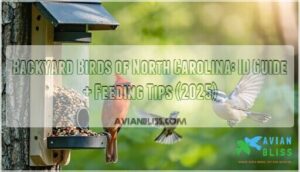 North Carolina’s backyard birds include year-round favorites like the vibrant Northern Cardinal (the state bird) and chatty Carolina Chickadee, plus seasonal visitors that’ll keep your feeders busy.
You’ll spot American Crows in nearly half of all bird counts, while White-breasted Nuthatches, Carolina Wrens, and Downy Woodpeckers frequent backyard feeders.
From Charlotte’s urban gardens to the Blue Ridge Mountains, North Carolina’s diverse habitats support an impressive variety of species.
The state’s coastal barrier islands and Appalachian forests create perfect conditions for both resident and migratory birds.
Different feeder types and strategic placement can transform your yard into a bird magnet throughout the seasons.
Table Of Contents
- Key Takeaways
- Common Backyard Birds in North Carolina
- North Carolina Bird Identification
- Attracting Birds to Your Backyard
- Birdwatching Hotspots in North Carolina
- Bird Habitats in North Carolina
- Year-Round Resident Birds
- Winter Visitor Birds
- Summer Resident Birds
- Common Backyard Birds by Location
- Tips for Birdwatching in North Carolina
- Frequently Asked Questions (FAQs)
- What is the most common bird in NC?
- How do I identify a bird in my backyard?
- What are the nuisance birds in NC?
- What is North Carolina’s main bird?
- What are the most common backyard birds in North Carolina?
- Where can you find a bird in North Carolina?
- Are blackbirds common in North Carolina?
- What is the cutest bird in North Carolina?
- What birds are common in North Carolina?
- What is a gray bird with a white belly in North Carolina?
- Conclusion
Key Takeaways
- You’ll find five year-round residents dominating most NC backyards: Northern Cardinals (the state bird), Carolina Chickadees, Tufted Titmice, Blue Jays, and American Crows make up the core species you’ll see at feeders throughout all seasons.
- Strategic feeder placement attracts diverse species: Use tube feeders with black oil sunflower seeds for cardinals and chickadees, suet feeders for woodpeckers, platform feeders for ground-feeding birds, and place them near vegetation with clear flight paths.
- Seasonal visitors double your backyard diversity: Winter brings American Robins and White-throated Sparrows from the north, while summer attracts colorful Indigo Buntings and Ruby-throated Hummingbirds for breeding season.
- Location determines your bird community: Coastal areas like Wilmington host different species than mountain towns like Asheville, with urban areas like Charlotte and Raleigh sharing common backyard visitors adapted to city life.
Common Backyard Birds in North Carolina
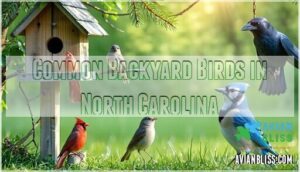
You’ll spot five common birds in most North Carolina backyards: the bright red Northern Cardinal, tiny Carolina Chickadee, crested Tufted Titmouse, bold Blue Jay, and intelligent American Crow.
These year-round residents make up the core of what you’ll see at your feeders and in your trees throughout the seasons.
Northern Cardinal
The Northern Cardinal stands out as North Carolina’s official state bird, bringing year-round color to your backyard.
You’ll recognize males by their brilliant red plumage and distinctive crest, while females display subtle brown tones with reddish accents.
Looking at the paragraph about Northern Cardinal identification, here’s a matching blockquote in the same tone:
Cardinals flash their signature red like nature’s own backyard beacon year-round.
Both sexes sport that iconic orange-red beak that’s perfect for cracking seeds.
Cardinals thrive in diverse habitats from woodlands to suburban gardens, maintaining stable populations through effective conservation efforts.
Their behavior includes distinctive "cheer-cheer-cheer" calls and complex courtship rituals.
These common birds NC residents love will visit your feeders regularly, especially for black oil sunflower seeds and mixed blends.
Carolina Chickadee
Carolina Chickadee ranks among North Carolina’s most beloved backyard birds, easily recognized by its distinctive black cap and bib contrasting with bright white cheeks.
These tiny acrobats measure just 4-5 inches and display remarkable Chickadee Behavior at feeders, often hanging upside-down while foraging.
Their Chickadee Diet consists primarily of insects, seeds, and black oil sunflower seeds.
Chickadee Sounds include their famous "chick-a-dee-dee-dee" call, which actually communicates danger levels—more "dees" mean greater threats.
Chickadee Habitat preferences include wooded suburban areas with mature trees for Chickadee Nesting.
These common birds NC residents adore remain active year-round, making backyard birding NC exceptionally rewarding for bird identification NC enthusiasts.
Tufted Titmouse
You’ll spot the tufted titmouse’s distinctive crest before hearing its whistled "peter-peter-peter" call.
These gray birds frequent suburban habitats, visiting feeders with curious confidence. Their feeding habits include caching seeds for winter storage.
As year-round visitors, they’re a welcome sight.
Key Tufted Titmouse traits:
- Distinctive crest: Pointed gray feathers create their signature mohawk look
- Vocalizations: Clear whistle songs and harsh scolding calls when threatened
- Nesting behavior: Cavity nesters that pluck hair from mammals for nest lining
Blue Jay
Blue Jays command attention with their brilliant blue crests and striking black necklaces.
These intelligent North Carolina birds dominate backyard birds with loud jay calls and bold personalities.
Blue Jay behavior includes caching food and mimicking other birds’ sounds.
Their jay diet consists of peanuts, sunflower seeds, and insects.
Jay intelligence shows through problem-solving abilities.
Jay habitat includes wooded suburban areas where they nest in tall trees, making bird identification easy for NC bird watchers.
American Crow
These glossy black birds with thick necks and large heads are highly intelligent North Carolina birds commonly seen in backyards.
American Crow behavior includes using tools and solving problems, while their omnivorous crow diet consists of insects, grains, and carrion.
Despite crow myths suggesting bad luck, these adaptable NC bird species thrive in various habitats from forests to urban areas, showcasing remarkable crow intelligence daily.
North Carolina Bird Identification
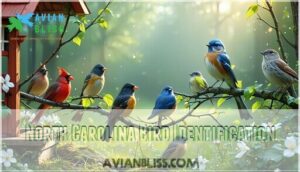
Identifying backyard birds in North Carolina becomes straightforward when you know what to look for. Start with body shape and size rather than colors, which can vary with seasonal plumage changes.
Listen for distinctive bird call identification patterns—each NC bird species has unique vocalizations that help distinguish similar species confusion like wrens from chickadees.
Use these identification strategies for bird watching North Carolina:
- Focus on proportions: Compare head size to body, tail length, and bill shape
- Note behavior patterns: Ground feeders versus tree climbers reveal species identity
- Consider regional bird variations: Coastal birds differ from mountain species
- Watch for uncommon NC birds: Rare visitors require careful field mark observation
This Carolina bird guide approach transforms identifying backyard birds from guesswork into systematic observation, making birds in my yard NC easier to recognize.
Attracting Birds to Your Backyard
You’ll find success attracting North Carolina’s backyard birds by choosing the right feeders and placing them strategically around your yard.
Different feeder types cater to specific bird preferences, from seed-loving cardinals to suet-craving woodpeckers, which is key to attracting a variety of species, including woodpeckers.
Seed Feeders
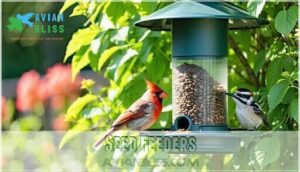
For attracting North Carolina backyard birds, seed feeders serve as your primary bird magnet.
Black oil sunflower seeds attract over 90% of common species, making them your best investment.
Place tube feeders near vegetation for quick bird discovery, and clean them biweekly to prevent disease.
Many enjoy offering sunflower seeds to attract birds.
Choose squirrel-proof designs to protect your birdseed investment and maintain consistent feeding schedules.
Suet Feeders
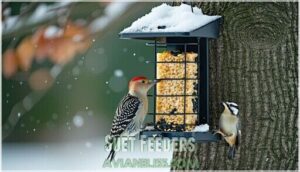
While seed feeders handle smaller birds, suet feeders attract North Carolina’s woodpeckers and nuthatches year-round.
These high-energy feeders work best during colder months when birds need extra calories. A quality feeder matters for woodpecker enjoyment.
Here’s how to maximize your suet feeder success:
- Choose quality suet types – beef suet mixed with peanut butter attracts red-bellied woodpeckers and downy woodpeckers most effectively
- Practice seasonal feeding – offer suet blocks with added seeds during winter for maximum woodpecker attraction
- Try DIY suet recipes – mix rendered beef fat with birdseed to create custom blends
Position your NC bird feeders away from squirrel access points. Caged suet feeders prevent larger pests while allowing smaller backyard birds easy access to this nutritious food source.
Platform Feeders
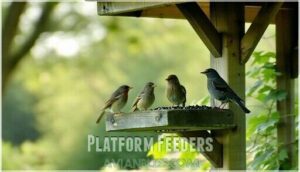
Platform feeders act like open-air restaurants for North Carolina backyard birds, welcoming ground-feeding species that can’t access tube feeders.
These flat surfaces attract doves, juncos, and sparrows while accommodating various seed types and fruits. You can find a wide variety online to suit your needs.
Essential Platform Feeder Setup:
- Feeder Design – Choose raised platforms with drainage holes and easy-access perches
- Seed Variety – Mix cracked corn, millet, and sunflower seeds for diverse bird preferences
- Bird Accessibility – Position 3-6 feet high with clear flight paths and nearby cover
- Cleaning Frequency – Clean weekly to prevent mold and disease spread among visiting birds
Ground Feeders
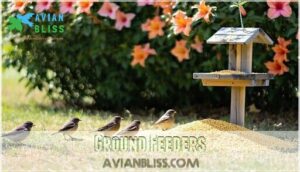
Ground feeders create feeding opportunities right where many North Carolina backyard birds naturally forage. You’ll attract sparrows, towhees, and juncos by scattering cracked corn and millet directly on clean ground or using low platform-style ground feeder types.
Seed spillage from elevated feeders often creates informal ground feeding areas. Placement strategies require positioning feeders near shrubs or brush piles for predator protection while maintaining clear sightlines.
Ground-feeding birds like dark-eyed juncos and various sparrow species prefer this natural feeding method, making ground feeders essential for complete bird feeding diversity in North Carolina backyards.
Birdwatching Hotspots in North Carolina
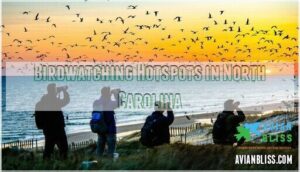
North Carolina offers excellent birdwatching opportunities beyond your backyard, from coastal refuges to mountain peaks.
These premier locations provide chances to spot both familiar backyard species and regional specialties you won’t find at your feeders.
Cape Hatteras National Seashore/Pea Island NWR
Cape Hatteras National Seashore and Pea Island National Wildlife Refuge offer North Carolina’s premier coastal birdlife experience.
This waterfowl haven hosts over 400 species along the Atlantic Flyway, making it perfect for seashore birding and observing Hatteras migration patterns year-round.
- Spring Migration: Witness thousands of shorebirds and warblers passing through Pea Island birds hotspots
- Summer Breeding: Spot Piping Plovers and Red Knots nesting along pristine beaches
- Fall Spectacle: Experience peak waterfowl migration with guided tours and observation decks
Great Smoky Mountains National Park
Great Smoky Mountains National Park offers exceptional birdwatching opportunities across diverse forest bird habitats.
With over 240 Smoky Mountain birds recorded, you’ll discover high elevation species and forest bird diversity along GSMNP birding trails.
Despite conservation challenges, this NC bird habitat remains prime for spotting:
- Red-cockaded Woodpecker in mature pine forests
- Scarlet Tanager throughout deciduous woodlands
- Black-throated Blue Warbler in mountain coves
- Veery singing from dense understory
Mt. Mitchell State Park
Mount Mitchell State Park offers exceptional birdwatching opportunities at North Carolina’s highest peak.
The elevation impact creates unique spruce-fir bird habitats where high-altitude species thrive. You’ll find Black-capped Chickadees and Golden-crowned Kinglets among the conifers—species rarely seen in typical NC bird habitats.
During fall migration, rare sightings of raptors soaring along ridgelines reward patient observers. The park’s hiking birding trails provide excellent vantage points for spotting these specialized backyard birds adapted to mountain conditions.
Blue Ridge Parkway
The Blue Ridge Parkway stretches 469 miles through North Carolina’s mountains, creating perfect parkway birding opportunities.
You’ll discover high-elevation species like Scarlet Tanagers and Eastern Towhees along scenic overlooks.
Parkway migration brings diverse bird species during spring and fall.
Multiple bird habitats support year-round residents and seasonal visitors, making this destination ideal for birdwatching enthusiasts exploring North Carolina’s diverse avian life.
Bird Habitats in North Carolina
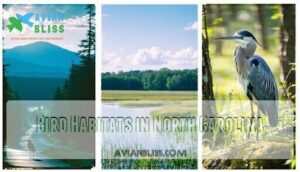
North Carolina’s diverse habitats create perfect homes for different bird species throughout the state.
You’ll find mountain birds in the Appalachians, forest dwellers in wooded areas, shorebirds along barrier islands, and wading birds in coastal salt marshes.
Appalachian Mountains
North Carolina’s Appalachian Mountains create stunning mountain birdsong experiences across elevation gradients from 1,000 to over 6,000 feet.
These high-altitude species thrive in diverse microhabitats, while Appalachian migration patterns bring over 200 bird species through this critical Atlantic Flyway corridor.
Climate impact and forest fragmentation challenge these bird habitats, yet old-growth forests still support cavity-nesters perfectly.
Key mountain birding highlights:
- Black-throated Blue Warbler and Scarlet Tanager breeding in higher elevations
- Woodpeckers and owls nesting in ancient snags and dead trees
- Migratory stopover sites supporting thousands of traveling bird species
Forests
Within North Carolina’s sprawling forests, covering 60% of the state’s land, you’ll discover incredible bird diversity.
Forest bird species like Northern Cardinals and Carolina Chickadees thrive in deciduous woodlands, while specialized forest nesting birds prefer old-growth areas.
These birdwatching habitats support over 200 species through varied forest bird diets and seasonal forest bird migration patterns.
Forest bird conservation efforts protect cavity-nesters and maintain the forest bird sounds that define North Carolina’s backyard birds experience across these essential ecosystems.
Barrier Islands
North Carolina’s barrier islands serve as critical stopover points for thousands of migratory birds during spring and fall migrations.
These dynamic coastal environments face constant challenges from saltwater intrusion and coastal erosion, yet they remain essential birdwatching locations where island birdlife thrives despite ongoing habitat loss.
These islands also provide essential bird habitats in wetlands that support diverse species.
Here’s what makes these islands special for bird species:
- Breeding grounds – Piping plovers and least terns nest directly in sandy dunes
- Migration highways – Serve as important rest stops along the Atlantic Flyway
- Diverse habitats – From beaches to maritime forests supporting varied backyard birds
Salt Marshes
Salt marshes along North Carolina’s coast create essential feeding grounds for specialized marsh birdlife. These tidal wetlands support herons, egrets, and Clapper Rails despite challenging salinity effects that limit plant diversity.
| Bird Species | Feeding Behavior |
|---|---|
| Great Blue Heron | Stalks fish in shallow water |
| Clapper Rail | Probes mud for crustaceans |
| Saltmarsh Sparrow | Feeds on insects and seeds |
Unfortunately, coastal erosion and habitat loss threaten these ecosystems. Marsh restoration projects across North Carolina help preserve critical birdwatching wetlands and birdwatching marshes for future generations of birdwatching coast enthusiasts.
Year-Round Resident Birds
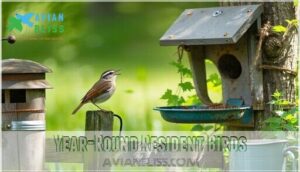
Many North Carolina backyard birds call the state home throughout the entire year, adapting their behaviors to seasonal changes while maintaining stable populations. These year-round residents have developed remarkable Feeding Adaptations that allow them to thrive in diverse Resident Bird Habitats across the state.
The Northern Cardinal, North Carolina’s state bird, demonstrates impressive Regional Abundance with over 70% occurrence in major cities. Their Breeding Habits include multiple broods per season, with males defending territories year-round. Carolina Chickadees and Tufted Titmice form mixed flocks during winter, sharing resources and predator alerts.
NC songbirds like Carolina Wrens adapt their diets seasonally, switching from insects in summer to seeds and suet in winter. Their Conservation Status remains stable due to adaptable feeding strategies and habitat flexibility.
Consider these key factors when attracting resident birds:
- Bird feeding stations should offer variety – sunflower seeds, suet, and mealworms cater to different species’ needs
- Native plants provide year-round food sources and nesting materials for sustained populations
- Consistent water sources support residents through all seasons, especially during drought or freezing periods
Winter Visitor Birds
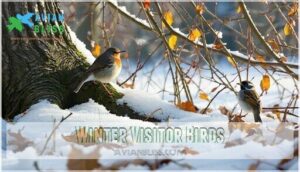
Winter brings a fresh cast of feathered visitors to North Carolina backyards, as cooler temperatures drive birds south in search of food and shelter.
You’ll spot species like American Robins, White-throated Sparrows, Yellow-rumped Warblers, and Song Sparrows that arrive from northern regions and stick around until spring warmth calls them back home.
American Robin
Through winter months, American Robins migrate south to North Carolina, bringing their distinctive orange breasts and cheerful presence to backyards statewide.
These NC songbirds rarely visit feeders, preferring to forage for earthworms and berries on lawns. Robin behavior includes ground-hopping while hunting insects.
Their melodious Robin song signals approaching spring.
Nest placement prioritizes safety and camouflage. Support Robin nesting by planting native berry-producing shrubs and providing fresh water for these beloved backyard birds.
White-throated Sparrow
White-throated Sparrows arrive in North Carolina from northern breeding grounds each fall, becoming reliable backyard birds through winter months.
Their plumage variations include tan-striped and white-striped morphs, with different song dialects across regions.
You’ll find them scratching through leaf litter beneath bird feeders, preferring mixed seeds scattered on the ground.
Their migration patterns bring them to habitat preferences including dense underbrush and woodland edges throughout North Carolina’s diverse landscapes, where they display distinctive white throat patches and bright yellow lores that make identification straightforward during birdwatching sessions.
Yellow-rumped Warbler
Yellow-rumped Warblers earn their "butter-butt" nickname from bright yellow rump patches that flash as they flit through North Carolina’s winter landscape. These hardy warblers showcase remarkable Migration Patterns, traveling from northern breeding grounds to enjoy our milder climate.
Their unique ability to digest waxy berries sets their Diet Specifics apart from other warblers.
Habitat Preferences include pine forests and coastal scrub areas where they forage actively.
Yellowrumped Warbler identification features:
- Grayish-blue backs with distinctive black streaking
- Bright yellow patches on sides and rump
- White wing bars and prominent tail spots
- Yellow crown patches (breeding males)
Song Sparrow
During winter months, Song Sparrows migrate to North Carolina from northern breeding grounds, bringing melodic entertainment to your backyard.
These streaked brown birds feature a distinctive central breast spot that makes Song Sparrow ID straightforward.
They inhabit marsh edges and brushy fields, consuming seeds, insects, and small fruits.
Sparrow Habitat preferences include dense underbrush where they forage actively.
Support Sparrow Conservation by providing native berry-producing plants and maintaining consistent bird feeders for supplemental feeding during birdwatching adventures.
Summer Resident Birds
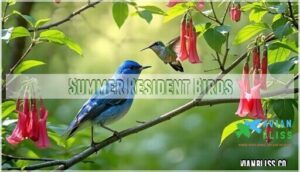
Summer brings some of North Carolina’s most colorful visitors to your backyard, including the brilliant blue Indigo Bunting and the tiny Ruby-throated Hummingbird.
These warm-weather residents arrive in spring to breed and raise their young before departing in fall, making them a notable part of the seasonal change.
Indigo Bunting
When do you first notice the brilliant blue flash that signals summer’s arrival in North Carolina? It’s likely the Indigo Bunting, one of the most stunning backyard birds visiting during breeding season.
These colorful birds NC residents cherish showcase dramatic sexual dimorphism – males display vibrant blue plumage while females sport practical brown feathers for camouflage.
Here’s your Indigo Bunting ID guide:
- Male Identification: Deep blue coloring appears black in poor lighting, with darker wing and tail feathers
- Female Features: Rich brown upperparts with lighter underparts and subtle streaking on breast
- Bunting Habitat: Prefer woodland edges, brushy areas, and overgrown fields near your backyard
Bunting Diet consists primarily of seeds, especially thistle and dandelion, plus insects during breeding.
Their Nesting Habits involve building cup-shaped nests in dense shrubs 3-10 feet high.
Conservation Status remains stable, making these spectacular bird attractants reliable summer residents throughout North Carolina’s diverse landscapes.
Ruby-throated Hummingbird
Ruby-throated Hummingbirds dart through North Carolina backyards from spring through fall, following incredible hummingbird migration routes.
These emerald-green speedsters showcase feeding habits focused on nectar from flowers and bird feeders filled with sugar water.
Males display ruby-red throats during nesting behavior season.
Attracting hummingbirds requires red tubular flowers or specialized feeders.
Their conservation status remains stable, making them reliable backyard birds for attracting birds NC enthusiasts throughout summer months.
Barn Swallow
During summer months, North Carolina’s backyard birds include the graceful Barn Swallow, a master of aerial acrobatics.
You’ll recognize these agile hunters by their deeply forked tails and steel-blue backs as they perform spectacular dives and swoops.
Their insect diet makes them natural pest controllers, snatching mosquitoes and flies mid-flight.
These skilled architects construct their distinctive mud nests under eaves and porches, mixing clay pellets with grass fibers.
Their migration patterns span thousands of miles, making their North Carolina visits truly special for bird watching enthusiasts.
- Barn Swallow identification features include deeply forked tails and metallic blue upperparts
- Nesting habits involve building cup-shaped mud nests attached to vertical surfaces
- Aerial acrobatics include sharp turns, dives, and figure-eight patterns while hunting
- Migration patterns cover up to 6,000 miles between breeding and wintering grounds
- Insect diet consists primarily of flies, mosquitoes, beetles, and flying ants
Red-eyed Vireo
High in the treetops of North Carolina’s forests, Red-eyed Vireos deliver constant commentary through their persistent songs.
These summer residents excel at vireo identification through their olive-green backs, white bellies, and distinctive red eyes.
Their vireo habitat spans deciduous woodlands where they forage for insects and berries.
Listen for their repetitive "here-I-am, where-are-you?" vireo song echoing through branches.
Vireo conservation benefits from preserving mature forests.
These skilled birdwatching targets build hanging cup nests, making them fascinating backyard birds for patient observers.
They’re active and noisy birds, and carotenoids cause this.
Common Backyard Birds by Location

Different regions of North Carolina attract distinct bird communities based on their unique habitats and geographic features.
You’ll find that coastal Wilmington hosts different species than mountain towns like Asheville, while urban areas like Charlotte and Raleigh share many common backyard visitors.
Charlotte
Looking at Charlotte’s urban landscape, you’ll discover a thriving community of backyard birds that have adapted beautifully to city life.
Urban Birding in Charlotte reveals consistent Seasonal Abundance patterns, with Northern Cardinals leading the pack at 72% frequency.
Their preference for bird feeders stocked with sunflower seeds makes them reliable yard visitors.
Carolina Chickadees appear in 61% of Charlotte backyards, while Tufted Titmice show up in half of all locations.
These small songbirds share similar Feeder Preferences, favoring mixed seed blends and black oil sunflower seeds.
Red-bellied Woodpeckers round out the top five at 48% occurrence.
Charlotte Habitats include mature neighborhoods with established trees, providing ideal nesting sites.
Parks like Freedom Park and residential areas with native plantings support diverse bird populations.
Local Conservation Efforts focus on creating bird-friendly spaces through native plant initiatives and proper feeder maintenance, ensuring these urban-adapted species continue thriving in North Carolina’s largest city.
Raleigh and Durham
Triangle City bird enthusiasts discover remarkable Urban Birding opportunities across Raleigh and Durham’s diverse neighborhoods.
Carolina Chickadees and Tufted Titmice dominate local bird feeders, while Red-bellied Woodpeckers showcase Seasonal Abundance patterns throughout the year.
Backyard Sanctuaries in these North Carolina metros support impressive conservation statistics:
- 75% of backyards host Northern Cardinals year-round
- 68% report Carolina Wrens nesting in residential areas
- 64% observe Carolina Chickadees at seed feeders daily
- 63% attract Tufted Titmice with sunflower offerings
- 53% welcome Red-bellied Woodpeckers to suet stations
Habitat Variation between urban cores and suburban edges creates unique viewing opportunities. Conservation Efforts thrive through local birding clubs and citizen science participation in annual bird counts.
Wilmington
In Wilmington’s coastal birdlife, you’ll find Northern Cardinals dominating at 49% of feeders, followed by Northern Mockingbirds at 44%.
Carolina Chickadees appear in 42% of backyard habitats, while salt marsh birds like Great Blue Herons visit nearby.
Wilmington migration patterns bring seasonal variety to your bird feeders.
This coastal setting offers unique birdwatching in North Carolina opportunities, supporting bird conservation through diverse backyard birds attracted to North Carolina’s maritime environment.
Greensboro
Greensboro’s backyard birds offer exceptional Greensboro Birding opportunities in diverse Local Habitats. You’ll regularly observe Northern Cardinals, Carolina Chickadees, and Tufted Titmice visiting your bird feeders. These North Carolina residents thrive year-round with consistent Feeding Greensboro practices.
Seasonal Variations bring exciting changes:
- Spring arrivals include Ruby-throated Hummingbirds and migrating warblers
- Summer breeding brings increased activity from resident backyard birds
- Winter visitors like White-throated Sparrows join your regular flock
Supporting Greensboro Conservation efforts through native plantings enhances local bird populations substantially.
Asheville
Asheville’s mountain setting creates unique Asheville Habitats for backyard birds.
Elevation Effects bring cooler temperatures, attracting species like Dark-eyed Juncos alongside common North Carolina residents.
Northern Cardinals, Carolina Chickadees, and Tufted Titmice dominate your bird feeders.
Explore Birding Trails around the Blue Ridge Mountains for Unique Species.
Support Local Conservation efforts while enjoying birdwatching in this mountain paradise.
Tips for Birdwatching in North Carolina
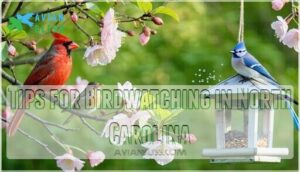
Successful birdwatching in North Carolina starts with mastering four key identification techniques that’ll turn you from a casual observer into a skilled birder.
You’ll need to focus on size and shape first, pay attention to habitat clues, use common species as reference points, and consider seasonal timing to accurately identify the 300+ bird species that call the Tar Heel State home.
Focus on Size and Shape
When observing backyard birds in North Carolina, start by comparing size to familiar species like robins or sparrows.
A Cardinal Body Shape appears bulky and sturdy, while Chickadee Size is compact and petite. Notice the Titmouse Head Size with its distinctive rounded appearance, contrasting with the Blue Jay Crest that creates a tall, pointed silhouette.
The Crow Neck Thickness is noticeably heavy and substantial. Focus on overall proportions rather than colors, which can vary with lighting.
Small birds NC residents like chickadees have short, stubby bills perfect for seeds, while woodpeckers sport long, chisel-like beaks. These bird identification tips help you distinguish species quickly.
Practice comparing body shapes, tail lengths, and bill types for reliable identification success.
Pay Attention to Habitat
Understanding habitat preferences transforms casual backyard watching into strategic bird spotting.
Different North Carolina birds gravitate toward specific environments, making habitat awareness your secret weapon for successful identification.
Cardinals prefer dense shrubs near bird feeders, while woodpeckers seek mature trees with nesting sites.
Water sources attract diverse species, especially during hot summers.
- Native Plants: Oak and dogwood trees provide natural food sources and attract insects that birds need
- Water Sources: Birdbaths, streams, and puddles create magnets for thirsty birds and bathing opportunities
- Nesting Sites: Cavity-nesting birds like chickadees prefer dead tree branches and nest boxes
- Shelter Needs: Dense evergreen shrubs offer protection from predators and harsh weather conditions
- Habitat Diversity: Mixed environments with trees, shrubs, and open areas support more backyard birds species
Use Key Species for Comparison
Once you’ve mastered habitat clues, compare unknown birds to familiar North Carolina species.
Use these common backyard birds as reference points: Northern Cardinal (robin-sized with thick bill), Carolina Chickadee (golf ball-sized), and Tufted Titmouse (between chickadee and cardinal).
When comparing Cardinal vs. Titmouse, note the cardinal’s heavier build. For Chickadee vs. Jay comparisons, jays are substantially larger.
Crow vs. Wren size differences are dramatic—crows tower over tiny wrens. This comparison method transforms confusing sightings into confident identifications by anchoring unknowns to species you already recognize, leading to a more complete understanding.
Consider The Time of Year
Throughout the year, seasonal migration transforms North Carolina’s backyard bird landscape dramatically.
Winter feeding attracts hardy residents like cardinals and chickadees, plus northern visitors seeking refuge. Breeding seasons bring spectacular plumage changes and increased backyard activity as birds establish territories.
During fall foliage season, bird migration peaks with warblers and thrushes passing through. Your bird feeders become essential pit stops for these travelers.
Bird migration NC patterns mean spring delivers colorful arrivals while autumn brings farewell flights, making timing vital for spotting diverse species in North Carolina.
Frequently Asked Questions (FAQs)
What is the most common bird in NC?
You’ll spot the Northern Cardinal most often in North Carolina backyards.
These bright red males and brownish females with their distinctive crests appear in roughly 70-75% of backyard bird counts across major cities.
How do I identify a bird in my backyard?
Don’t worry if you’re overwhelmed by all the birds – start with size, color, and location.
Notice whether it’s robin-sized or sparrow-sized, dominant colors, and where it’s perched to narrow down your options quickly.
What are the nuisance birds in NC?
You’ll encounter European Starlings, House Sparrows, and Grackles as North Carolina’s main nuisance birds.
They’re aggressive, compete with native species for food and nesting sites, and can overwhelm feeders with their large flocks.
What is North Carolina’s main bird?
Like a crown jewel among backyard visitors, the Northern Cardinal stands as North Carolina’s official state bird.
You’ll spot these brilliant red males and brown females with their distinctive crests throughout the state year-round, making them a notable sight.
What are the most common backyard birds in North Carolina?
You’ll frequently see Northern Cardinals, Carolina Wrens, Carolina Chickadees, and Tufted Titmice in your yard.
These year-round residents make up North Carolina’s most common backyard birds, with Cardinals appearing in over 70% of backyards statewide, and are thus common backyard birds.
Where can you find a bird in North Carolina?
You’ll spot birds throughout North Carolina’s diverse habitats: backyards with feeders attract cardinals and chickadees, while forests house woodpeckers and wrens.
Parks, gardens, wetlands, and coastal areas each support different species year-round.
Are blackbirds common in North Carolina?
You’ll encounter several blackbird species in North Carolina.
Common Grackles are frequent backyard visitors with their iridescent black feathers and yellow eyes.
European Starlings, though invasive, are also widespread throughout the state.
What is the cutest bird in North Carolina?
You’ll find the Carolina Chickadee absolutely adorable with its tiny round body, fluffy white underside, and distinctive black cap that makes it look like it’s wearing a cute little hat.
What birds are common in North Carolina?
North Carolina’s backyard tapestry weaves together vibrant cardinals, cheerful chickadees, and crested titmice as your most frequent visitors.
You’ll also spot blue jays, Carolina wrens, and red-bellied woodpeckers throughout the year.
What is a gray bird with a white belly in North Carolina?
You’re likely seeing a Carolina Chickadee, which displays gray upper parts and pale underparts.
These small, round birds feature distinctive black caps and white cheeks, making them easy to identify at your feeders.
Conclusion
From towering Blue Ridge peaks to coastal barrier islands, North Carolina’s diverse landscapes create perfect conditions for backyard birds throughout the year.
Your feeder setup can attract everything from flashy cardinals to tiny chickadees, regardless of location.
The backyard birds of North Carolina offer endless opportunities for observation and photography.
Strategic feeder placement, appropriate seed selection, and understanding seasonal patterns will transform your yard into a thriving bird habitat.
Start with basic feeders and gradually expand your setup as you discover which species frequent your area most often, creating a perfect setup for backyard birds.