This site is supported by our readers. We may earn a commission, at no cost to you, if you purchase through links.
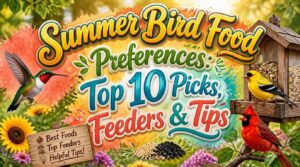
Most backyard birders don’t realize that summer feeding demands shift dramatically from winter. Birds aren’t just looking for calorie-dense seeds to survive the cold anymore—they’re raising young, molting worn feathers, and burning through energy in brutal heat.
A nesting female cardinal needs calcium-rich foods to form viable eggs. A molting goldfinch craves omega-rich fats. A hummingbird working a July afternoon can visit hundreds of flowers—or feeders—in a single day.
Understanding summer bird food preferences means matching the right nutrients to the right species at the right time. Here’s exactly how to do that.
Table Of Contents
- Key Takeaways
- Top 10 Summer Bird Food Picks
- 1. Kaytee Summer Nesting Bird Seed
- 2. Kaytee Nut Fruit Bird Seed
- 3. Audubon Cardinal Blend Bird Seed
- 4. Kaytee Ultimate Bird Seed Blend
- 5. Pennington Ultra Nut Fruit Blend
- 6. Kaytee No Mess Wild Bird Seed
- 7. Kaytee Wild Bird Seed Blend
- 8. Kaytee Wild Finch Blend
- 9. Pennington Wild Finch Bird Seed
- 10. Kaytee No Mess Seed Blend
- Favorite Summer Foods by Bird Type
- Nutrients Summer Birds Need Most
- Best Feeders for Summer Foods
- Safer Summer Feeding Habits
- Frequently Asked Questions (FAQs)
- Conclusion
Key Takeaways
- Summer bird feeding requires matching specific nutrients — protein, calcium, and healthy fats — to each species’ seasonal demands like nesting, molting, and heat stress.
- Feeder type matters as much as food choice: nyjer needs narrow-port finch feeders, fruit belongs on open platforms, and nectar feeders should be cleaned every two to three days to prevent fermentation.
- A handful of seed blends stand out for targeted use — oyster shell calcium mixes support nesting cardinals, while nyjer and hulled sunflower chips draw goldfinches without attracting larger birds.
- Fresh water, weekly feeder cleaning, and airtight seed storage are non-negotiable summer habits that protect bird health and prevent waste from spoilage, mold, and pests.
Top 10 Summer Bird Food Picks
Walking down the bird seed aisle can feel like pure guesswork, with dozens of bags all promising the same thing. You don’t have to sort through them alone this summer season. Here are ten blends that actually earn their price tag, each one suited to different birds and feeding goals.
Whether you’re stocking up or just starting out, browsing a well-curated bird seed and supply store in person can help you compare textures, mixes, and price points before committing.
1. Kaytee Summer Nesting Bird Seed
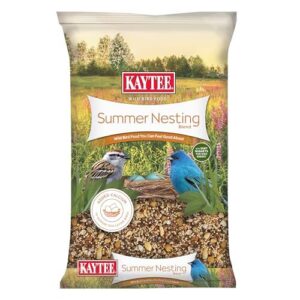
Picture a hen burning through calcium reserves just to lay a healthy clutch—that’s the problem Kaytee Summer Nesting Bird Seed solves.
This 8 lb mix pairs oyster shell flour with rendered beef suet nuggets, millet, peanuts, niger, sunflower, flax, corn, and oat groats.
The calcium strengthens eggshells, while suet fuels nest-building and chick-feeding.
It’s allergen-free and unflavored.
One catch: flax and niger often go untouched, so expect some cleanup underneath.
| Best For | backyard bird lovers who want to support nesting finches, sparrows, cardinals, and other wild birds with extra protein and calcium during the spring-summer breeding season. |
|---|---|
| Net Weight | 8 lb |
| Target Birds | Finches, sparrows, cardinals |
| Primary Seeds | Millet, sunflower, peanuts |
| Feeder Type | Platform, tray |
| Squirrel Risk | High |
| Seasonal Use | Nesting season |
| Additional Features |
|
- Oyster shell flour adds calcium that helps birds produce stronger eggshells
- Rendered beef suet nuggets give nesting birds the energy they need to build nests and feed chicks
- Allergen-free, unflavored blend works well for attracting a wide variety of backyard species
- Can draw in squirrels and other non-target wildlife along with the birds you want
- Flax and niger seeds are often left untouched, so you’ll likely deal with some cleanup underneath the feeder
- Needs to be stored somewhere dry to avoid spoilage or pests, and it’s best suited for nesting season rather than year-round use
2. Kaytee Nut Fruit Bird Seed
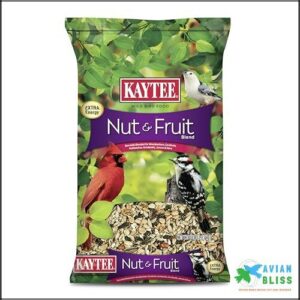
After all that calcium talk, your sunflower-and-suet eaters want something richer. Kaytee Nut Fruit Bird Seed packs sunflower seeds, peanuts, mixed nuts, raisins, and cherries into a chunky, high-fat, 5 lb mix.
Cardinals, chickadees, grosbeaks, and nuthatches keep coming back for the fat content, while woodpeckers favor the nut chunks. The cherry-infused sweetness adds quick energy during molt.
One downside: squirrels and chipmunks raid it fast, the price runs higher than basic mixes, so pair this with a baffled feeder.
| Best For | This blend is best for backyard bird watchers who want to attract a wide variety of songbirds like cardinals, woodpeckers, chickadees, and grosbeaks with a rich, high-energy mix. |
|---|---|
| Net Weight | 5 lb |
| Target Birds | Cardinals, woodpeckers, chickadees |
| Primary Seeds | Sunflower, peanuts, raisins |
| Feeder Type | Outdoor feeders |
| Squirrel Risk | High |
| Seasonal Use | Year-round |
| Additional Features |
|
- Attracts a diverse range of species, including cardinals, woodpeckers, chickadees, and grosbeaks
- High-energy, nutrient-dense formula supports sustained activity and longer feeding visits
- Cherry-infused sweetness adds an extra boost of quick energy for active birds
- Also draws non-target wildlife like squirrels, chipmunks, and deer, so extra feeder protection may be needed
- Costs more than basic seed mixes
- Gets eaten quickly, meaning more frequent refills
3. Audubon Cardinal Blend Bird Seed
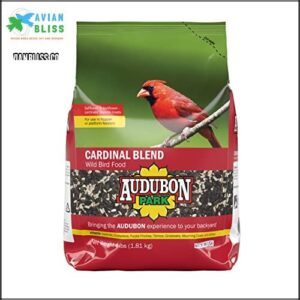
If squirrels cleaned out your last batch, Audubon Cardinal Mix fights back. It’s 100% black oil sunflower and safflower seed, no filler grains, packed into a 4 lb bag. Safflower’s tough hull turns squirrels away, while cardinals, titmice, chickadees, and grosbeaks crack it open with ease.
The mix delivers high energy content and fits hopper, tube, or platform feeders without clogging. Mix it with nuts for a backyard smorgasbord. Chipmunks still sneak in sometimes, and prices have crept up recently.
| Best For | Backyard bird enthusiasts who want to attract cardinals and other songbirds while keeping squirrels from raiding the feeder. |
|---|---|
| Net Weight | 4 lb |
| Target Birds | Cardinals, titmice, chickadees |
| Primary Seeds | Black oil sunflower, safflower |
| Feeder Type | Hopper, tube, platform |
| Squirrel Risk | Low to moderate |
| Seasonal Use | Year-round |
| Additional Features |
|
- Pure sunflower and safflower blend with no filler grains means every seed counts toward attracting quality birds
- Draws a wide variety of species — cardinals, chickadees, titmice, grosbeaks, and more — all in one mix
- Works with hopper, tube, and platform feeders, and can be mixed with nuts for even more variety
- Costs more than basic mixed seed blends, and prices have been trending upward
- Safflower deters squirrels but won’t stop chipmunks or determined squirrels entirely
- Packaging carries an allergen disclaimer covering peanuts, tree nuts, soy, wheat, and fish
4. Kaytee Ultimate Bird Seed Blend
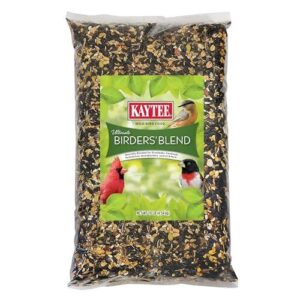
Kaytee’s Premium Bird Seed Mix takes a different approach than a safflower-only mix — it casts a wider net. The 10 lb bag combines sunflower seeds, safflower, millet, and cracked corn in a hulled, mess-free formula that leaves no shells scattered across your patio.
Cardinals, finches, nuthatches, and chickadees all find something worth staying for. It fits tube, hopper, and platform feeders equally well, making it a genuinely flexible pick for yards hosting mixed flocks.
| Best For | Backyard bird watchers who want to attract a wide variety of songbirds like cardinals, woodpeckers, blue jays, and finches to their feeders. |
|---|---|
| Net Weight | 10 lb |
| Target Birds | Cardinals, woodpeckers, blue jays |
| Primary Seeds | Safflower, sunflower, peanuts |
| Feeder Type | Hopper, platform |
| Squirrel Risk | High |
| Seasonal Use | Year-round |
| Additional Features |
|
- Covers a broad range of species with its diverse seed mix — safflower, peanuts, sunflower, millet, and cracked corn all in one bag.
- Backed by Kaytee’s 150-year reputation in bird nutrition, so you know it’s a quality, well-researched formula.
- Easy to pair with extras like dried mealworms if you want to draw in even more specific species.
- Costs more than basic single-seed options, which can add up if you’re refilling feeders frequently.
- Squirrels and chipmunks tend to crash the party, so you may need additional deterrents to keep feeders bird-only.
- Some birds skip the white millet, which means a portion of the mix might go untouched depending on what’s visiting your yard.
5. Pennington Ultra Nut Fruit Blend
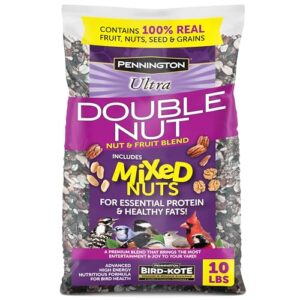
What sets this mix apart is how much it packs into one bag. The Pennington Ultra Nut Fruit Mix combines mixed nuts, real fruits, seeds, and grains — then fortifies everything with Bird Kote vitamin technology for added micronutrients your backyard birds won’t get from plain seed alone.
Birds struggling with signs of finch nutritional deficiency — like dull, brittle feathers — may benefit most from this kind of vitamin-fortified variety mix.
At 10 lb for $21.99, it works in gazebo, hopper, platform, and tube feeders. Cardinals, chickadees, and woodpeckers all respond well. Squirrels will too, so a pole baffle is worth having ready.
| Best For | Backyard birders who want to attract the widest variety of songbirds possible and don’t mind paying a little more for a nutrient-rich, all-in-one blend. |
|---|---|
| Net Weight | 10 lb |
| Target Birds | Cardinals, chickadees, woodpeckers |
| Primary Seeds | Mixed nuts, seeds, fruit |
| Feeder Type | Gazebo, hopper, platform, tube |
| Squirrel Risk | High |
| Seasonal Use | Year-round |
| Additional Features |
|
- Combines nuts, real fruit, seeds, and grains in one bag — no need to mix multiple feeds
- Bird Kote vitamin technology adds micronutrients that plain seed mixes simply can’t match
- Works with nearly any feeder style and draws in a broad range of species, including cardinals, chickadees, and woodpeckers
- Pricier per pound than basic bulk seed options
- Squirrels find it just as appealing as birds, so extra squirrel-proofing may be needed
- The dried fruit contains added sugar, which isn’t ideal for anyone looking for a sugar-free blend
6. Kaytee No Mess Wild Bird Seed
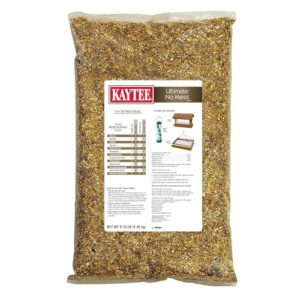
Cleaning up hulls after every feeding gets old fast. That’s where the Kaytee No Mess Wild Bird Seed earns its name — hulled sunflower seeds and shelled peanuts mean nothing but edible content hits the ground.
At 9.75 lb, it works in tube, hopper, and gazebo feeders. Cardinals, finches, chickadees, and woodpeckers all visit reliably. Calcium carbonate is blended in to support eggshell strength during nesting season — a small detail that makes a real difference for breeding females.
| Best For | Backyard bird enthusiasts who want a clean, no-mess feeding experience without sweeping up hulls and shells from patios or lawns. |
|---|---|
| Net Weight | 9.75 lb |
| Target Birds | Cardinals, finches, chickadees |
| Primary Seeds | Hulled sunflower, peanuts, millet |
| Feeder Type | Hopper, gazebo, tube |
| Squirrel Risk | High |
| Seasonal Use | Year-round |
| Additional Features |
|
- No hulls or shells means zero debris cleanup — your yard stays tidy after every feeding
- Attracts a wide variety of popular songbirds including cardinals, finches, chickadees, and woodpeckers
- Works year-round and fits most common feeder styles, including tube, hopper, and gazebo feeders
- Larger birds like crows and pigeons — plus squirrels — may crowd out the smaller songbirds you’re trying to attract
- The seed goes fast in busy yards, so you may find yourself refilling more often than expected
- Some buyers report that certain target species show less interest than the packaging suggests
7. Kaytee Wild Bird Seed Blend
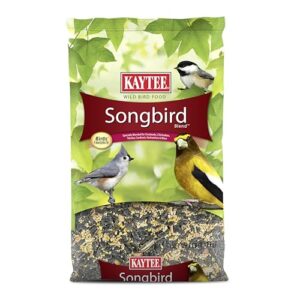
Few blends cast as wide a net as this one. The Kaytee Wild Bird Seed Mix packs black oil sunflower, striped sunflower, cracked corn, millet, and peanuts into a 7-pound resealable bag — covering cardinals, chickadees, grosbeaks, nuthatches, and finches in a single fill.
The sunflower seeds deliver high nutritional density, while millet and corn give ground-foraging birds quick carbohydrates. One trade-off: that same sunflower-heavy ratio draws squirrels, so a weight-activated feeder makes a smart pairing here.
| Best For | Backyard birdwatchers who want to attract a wide variety of songbirds with a single, convenient blend. |
|---|---|
| Net Weight | 7 lb |
| Target Birds | Cardinals, chickadees, titmice |
| Primary Seeds | Black oil sunflower, millet, corn |
| Feeder Type | Hopper, tray, platform |
| Squirrel Risk | High |
| Seasonal Use | Year-round |
| Additional Features |
|
- Covers a broad range of popular feeder birds — cardinals, chickadees, finches, nuthatches, and more — in one mix
- High-energy ingredients like sunflower seeds and peanuts keep birds well-fed year-round
- The resealable 7-pound bag keeps seed fresh and makes storage easy
- Sunflower-heavy blend is a magnet for squirrels and chipmunks, so you’ll likely need a squirrel-proof feeder
- Small birds that skip sunflower seeds may visit less often, limiting appeal for certain species
- Seed fragments can create ground mess, especially in open tray or platform feeders
8. Kaytee Wild Finch Blend
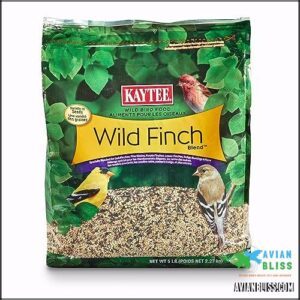
If you’re trying to attract goldfinches without feeding half the neighborhood, this mix is worth a close look. The 5 lb bag combines nyjer, millet, canary grass seed, hulled sunflower chips, and flax seed — small, oil-rich seeds that finches actively seek out.
Calcium carbonate helps eggshell health during nesting season.
The catch: those tiny seeds need a finch-specific tube feeder with narrow ports, or you’ll lose half the mix to the ground.
| Best For | Backyard birders who want to draw goldfinches, finches, and buntings without attracting larger birds or squirrels. |
|---|---|
| Net Weight | 5 lb |
| Target Birds | Finches, buntings |
| Primary Seeds | Millet, Nyjer, sunflower chips |
| Feeder Type | Tube, hopper |
| Squirrel Risk | Low |
| Seasonal Use | Year-round |
| Additional Features |
|
- High-oil seed blend gives finches a calorie-dense, year-round energy source
- Hulled sunflower chips boost nutrition and make the mix more appealing to a wider range of small birds
- Small seed size naturally limits interest from larger, unwanted feeder visitors
- Pricier per pound than most generic songbird mixes
- Tiny seeds can slip through standard feeder ports — you’ll need a finch-specific tube feeder
- Packaging is prone to tears, which can lead to messy spills before you even fill the feeder
9. Pennington Wild Finch Bird Seed
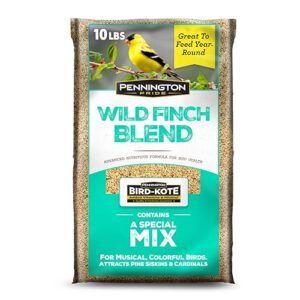
Pennington’s Wild Finch mix earns its spot by doing two things well: attracting the right birds and feeding them something useful. The 10 lb bag combines thistle, black oil sunflower chips, millet, and canary grass — seeds small enough for finch beaks, energy-rich enough to matter during molt and nesting.
The Bird-Kote vitamin coating adds vitamins A and D-3, which promotes feather quality and bone health. It works with hopper, gazebo, and tube feeders without any modifications.
High millet content may pull in doves and grackles, so watch your feeder traffic.
| Best For | Backyard bird watchers who want to attract small, colorful songbirds like finches, siskins, and sparrows with a nutritionally enriched seed blend. |
|---|---|
| Net Weight | 10 lb |
| Target Birds | Finches, cardinals, sparrows |
| Primary Seeds | Thistle, sunflower chips, millet |
| Feeder Type | Hopper, gazebo, tube |
| Squirrel Risk | Moderate |
| Seasonal Use | Year-round |
| Additional Features |
|
- Thoughtfully blended with thistle, sunflower chips, millet, and canary grass — seeds sized and selected specifically for small birds
- Bird-Kote vitamin coating (A, D-3, potassium iodide) actively supports feather quality and bone health year-round
- Works with hopper, gazebo, and tube feeders right out of the bag — no modifications needed
- High millet content tends to attract larger birds like doves and grackles, which can drain the feeder fast
- Small seed pieces and stick fragments may clog feeders or spark extra interest from squirrels
- Freshness depends on keeping the bag tightly sealed — moisture exposure shortens shelf life noticeably
10. Kaytee No Mess Seed Blend
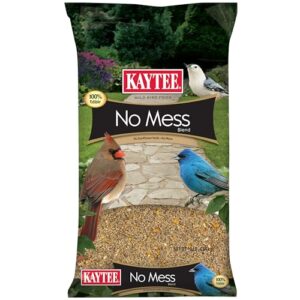
Round out your top 10 with this one — sunflower hearts, shelled peanuts, and cracked corn, zero hulls in the mix. That means no litter under your tube or platform feeder and no germinating seed in your flower beds.
Cardinals, nuthatches, and finches all take to it readily. Calcium carbonate promotes eggshell strength during nesting season, a real plus in June and July.
Corn gets ignored by pickier finches, so expect some leftover bits. Still, for clean feeding with broad appeal, it’s hard to beat.
| Best For | Bird lovers who want a clean, no-mess feeding experience with broad appeal across a wide variety of common backyard songbirds. |
|---|---|
| Net Weight | 10 lb |
| Target Birds | Cardinals, finches, woodpeckers |
| Primary Seeds | Hulled sunflower, peanuts, millet |
| Feeder Type | Tube, platform, bowl |
| Squirrel Risk | Moderate |
| Seasonal Use | Year-round |
| Additional Features |
|
- Hull-free seeds mean no litter buildup under feeders or in garden beds
- Calcium carbonate supports avian health, especially during nesting season
- Attracts a wide range of birds including cardinals, finches, nuthatches, and woodpeckers
- Cracked corn may go untouched by pickier species like finches, leading to some waste
- Higher price point compared to generic bulk seed blends
- Occasional packaging defects reported, such as torn or damaged bags
Favorite Summer Foods by Bird Type
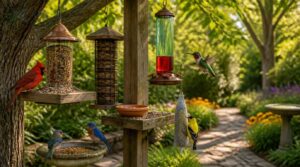
Not every bird at your feeder wants the same thing — and summer makes those preferences even more pronounced. Knowing what each species is actually after helps you feed smarter, waste less, and attract more of the birds you want to see. Here’s a closer look at which foods work best for the most common summer visitors.
Cardinals and Grosbeaks
Cardinals and grosbeaks share thick, conical bills — hallmarks of the Cardinalidae family — that crack sunflower and safflower seeds with ease.
Top picks for these birds:
- Black-oil sunflower seeds
- Safflower seeds
- Audubon Park Cardinal Mix
- Sunflower hearts
- Mixed nuts
Male cardinals display vivid red plumage; grosbeaks vary by species. Both thrive near wooded suburban edges where seed sources are naturally plentiful.
Goldfinches and Siskins
Switch from a thick-billed cracker to a finch with a tiny, precise tool: that’s the goldfinch’s stout conical bill, built for shelling nyjer seed. American goldfinches flash black-and-yellow against olive-brown pine siskins streaked overall. They use their narrow fine‑tipped bill to extract seeds from conifer cones.
| Trait | Goldfinch vs. Siskin |
|---|---|
| Bill | Stout vs. thin, pointed |
| Plumage | Bold yellow/black vs. streaked |
| Feeding | Open feeders vs. conifers |
| Flocking | Calls signal togetherness |
Use finch feeders for summer feeding success.
Bluebirds and Chickadees
Bluebirds scan open ground for beetles and grasshoppers, catching prey on short aerial sallies. Chickadees glean bark and foliage for hidden insects, caching what they find.
- Offer live mealworms near active bluebird boxes
- Use 1.5-inch entrance holes on nest boxes
- Add smaller nearby boxes for chickadee nesting
- Chickadees hoard cached seeds — refill feeders regularly
- Space boxes to minimize cavity competition
Orioles and Catbirds
Orioles and catbirds work the same garden from different angles. Male Baltimore Orioles — bright orange and black — favor orange halves and grape jelly on platform feeders, while slate-gray catbirds quietly raid berry shrubs below.
Both defend feeding spots actively.
Plant fruiting shrubs near a water feature, and you’ll attract both without much effort.
Hummingbirds and Nectar
Few backyard visitors demand as much precision as hummingbirds. Their 4:1 water-to-sugar ratio — one part white granulated sugar dissolved in four parts water — mirrors the sucrose concentration found in many tubular wildflowers.
Hummingbirds thrive on a precise 4:1 water-to-sugar mix that mirrors the sweetness of wildflowers
Skip red dye entirely.
Clean your nectar feeder every two to three days in summer heat, since fermentation sets in fast and can sicken them.
Nutrients Summer Birds Need Most
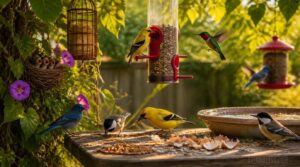
Summer birds are doing a lot of heavy lifting — raising young, replacing feathers, and surviving heat that would exhaust most of us. To keep up, they need specific nutrients at specific times, and what you offer at your feeder can make a real difference.
Here’s a closer look at the five nutrients that matter most during the summer months.
Protein for Nestlings
Nestlings are building machines — every gram of growth depends on protein quality.
Best sources to offer:
- Live mealworms — high digestibility
- Dried crickets — balanced amino acids
- Egg-based formulas — lysine-rich
- Commercial hand-rearing blends — complete profiles
- Soft insect matter — keratin synthesis support
Amino acid balance drives feather and muscle development. Slow growth or dull plumage signals a protein gap.
Calcium for Egg Production
Eggshells are 95% calcium carbonate — so nesting females burn through reserves fast. Without enough dietary calcium, shells thin out and crack easily.
Oyster shell supplements provide a slow-release, coarse-particle source that your feeder birds can absorb steadily.
Vitamin D3 and proper mineral balance both influence how well calcium reaches the shell gland, keeping eggs strong and bones intact.
Fats for Molting Birds
Molt is fundamentally feather construction at full speed — and that demands serious fuel. Omega fatty acids from flax seeds and nuts support keratin synthesis, giving new feathers flexibility and rich color quality.
Fat-rich suet nuggets deliver concentrated, energy-dense calories to sustain birds through molt’s elevated metabolic heat.
Just watch portions: too much fat risks avian obesity, especially when activity slows.
Carbohydrates for Quick Energy
Quick carbs act like a fast-release fuel tank for birds on hot summer days — glucose hits the bloodstream fast, powering brief flight bursts and foraging sprints.
- Nectar (4:1 water-sugar) delivers immediate glucose absorption
- Fresh fruit supplies natural simple sugars
- Fruit moisture helps rapid energy uptake
- Sunflower hearts offer energy-dense, hull-free calories
- Jelly gives orioles a quick carbohydrate boost
Hydration During Extreme Heat
Birds lose moisture rapidly in peak heat, making fresh water sources as critical as any seed mix.
| Hydration Need | Solution |
|---|---|
| Heat stress in birds | Shallow bird baths refreshed daily |
| Fluid absorption rates | Cool, clean water absorbs fastest |
| Water hygiene for hummingbirds | Change nectar every 1–2 days |
A simple pre-exposure hydration routine — topping off baths each morning — keeps birds resilient before temperatures peak.
Best Feeders for Summer Foods
The right feeder can make a bigger difference than the food itself. Different summer foods simply work better in specific feeder types — and pairing them correctly means more birds visiting and less waste. Here are the five feeder styles that do the best job all season long.
Tube Feeders for Hearts
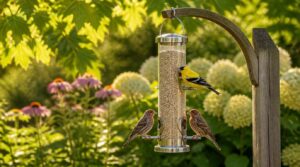
A tube feeder built for sunflower hearts is one of the most efficient setups you can run all summer. Clear polycarbonate tubes let you monitor seed levels at a glance, and port spacing design keeps multiple birds feeding without crowding.
- Polycarbonate durability withstands intense summer heat without cracking
- Weatherproof seals preserve seed freshness between refills
- Built-in seed deflectors greatly reduce ground spillage
Finch Feeders for Nyjer
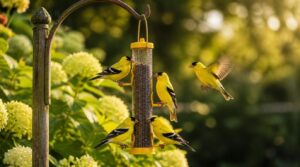
Nyjer demands a dedicated feeder. Port diameter of 2–3 mm keeps seeds flowing without clogging or spillage.
| Feature | Kaytee Wild Finch Bag | Pennington Wild Finch Mix |
|---|---|---|
| Port Size | 2–3 mm | 2–3 mm |
| Color Attraction | Yellow accents | Bright finish |
| Cleaning | Dishwasher-safe | Removable base |
| Durability | UV-resistant plastic | Weather-sealed lid |
| Spillage Control | Mesh inserts | Seed baffles |
Yellow feeder accents draw goldfinches reliably.
Platform Feeders for Fruit
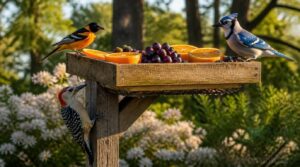
Compared to nyjer feeders’ precision ports, platform feeders take a broader approach — flat, open trays that welcome larger fruit-eating species like orioles, blue jays, and woodpeckers without restricting access.
Cedar and recycled plastic both handle outdoor moisture well, though cedar won’t affect fruit taste.
- Mesh or drainage-holed floors prevent standing liquid
- Halved oranges and grapes work best cut-side up
- Remove fruit daily to stop mold forming
Hopper Feeders for Blends
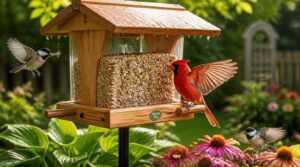
If platform feeders handle fresh fruit, hopper feeders take on mixed blends. Gravity-fed seed flow keeps supply steady without constant refilling, while a weatherproof roof shields sunflower hearts and nuts from summer rain that accelerates spoilage.
| Feature | Why It Matters |
|---|---|
| Gravity seed flow | Delivers a steady seed supply without manual shaking |
| Weatherproof roof | Protects nutritional density of nuts and sunflower hearts |
| Clear side panels | Monitor seed levels without opening the feeder |
| Drainage screens | Prevent moisture buildup and mold after summer rain |
| Large capacity | Reduces refill frequency during peak feeding activity |
Don’t overlook the drainage screen — standing water sours seed fast. Clear side panels let you check levels without opening the feeder, so you catch low stock before birds arrive hungry.
Nectar Feeders for Hummingbirds
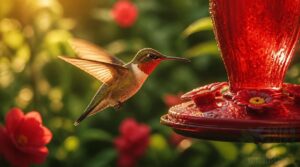
Hummingbirds need more than just a sugar water recipe — they need the right feeder for it.
- Choose a red reservoir feeder to draw ruby-throated hummingbirds
- Hang 5–6 feet high, shaded, away from foot traffic
- Clean weekly; hot soapy water prevents nectar spoilage fast
- Mix 4:1 water-to-sugar — skip honey, dye, or additives
A fresh water source nearby completes your summer setup.
Safer Summer Feeding Habits
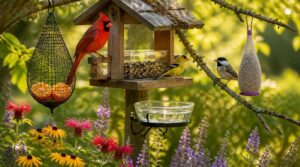
Feeding birds in summer is rewarding, but it comes with a few responsibilities you don’t want to overlook. The heat creates conditions where food spoils faster, pests get bolder, and birds need more than just seeds to stay healthy. Here are five habits that’ll make your setup safer for every bird that visits.
Clean Feeders Weekly
Hot summer weather turns a neglected feeder into a petri dish fast.
Wash all components weekly with warm soapy water, then rinse completely — soap residue can harm birds. If you suspect pathogens, use a 1:9 bleach-to-water solution, rinse thoroughly, and let everything air-dry before refilling. A soft brush reaches seed compartments and nectar ports where mold hides first.
Remove Spoiled Fruit Daily
Fruit spoils fast in summer heat — what looked fresh at noon can grow fuzzy mold by evening.
Check fruit portions daily and pull anything showing discoloration or growth within 24 hours. Seal discarded pieces in a bag before tossing them; loose scraps attract pests. Wipe the feeding surface with a mild vinegar solution, then add fresh fruit to keep birds coming back safely.
Store Seeds Airtight
Heat turns stored seeds rancid faster than you’d expect. Keep blends in airtight containers — glass jars or sealed plastic bins — placed somewhere cool and dry.
Tuck a silica gel packet inside to pull out lingering moisture, since even small humidity spikes can trigger mold.
Seeds stored this way stay fresh for up to six months without losing nutritional density.
Reduce Squirrel Access
Squirrels can empty a feeder in minutes. The good news is that a few smart barriers do most of the work:
- Mount squirrel baffles on poles below feeders
- Use weight-activated perches that close under heavier animals
- Apply squirrel deterrent scents like peppermint oil around stations
- Install motion-activated sprinklers nearby
- Set a dedicated squirrel station far from bird feeders
Add Fresh Water Sources
Birds need water as much as food in summer.
Place bird baths 2–4 inches deep in the shade to slow algae growth and keep water cooler.
Refresh daily to prevent mosquitoes from breeding.
Use containers with smooth, wide rims — pollinators can drink safely without crowding birds out.
A quick weekly scrub keeps your water source for birds clean and inviting.
Frequently Asked Questions (FAQs)
Can overfeeding affect birds natural foraging behavior?
Yes — overfeeding creates dependency, dulling natural foraging skills, lowering predator vigilance, and increasing social competition. It can even shift migration timing and reduce resource discovery, since easy food discourages exploring natural sources.
Moderation keeps wild instincts sharp and intact.
How long does birdseed stay fresh once stored?
Stored birdseed stays fresh 6 to 12 months under ideal conditions — cool, dry, and sealed tight. Nyjer is the exception, fading closer to 3 to 6 months once opened.
Why should nuts and seeds be stored separately?
Walnuts and other oily nuts transfer odor fast. Preventing rancidity means keeping them away from milder seeds.
Separate storage controls oxidation, blocks moisture migration, and protects nutritional balance—essential when nesting females need fresh, uncontaminated food during breeding season.
Does feeding birds help them survive drought conditions?
Supplemental feeding genuinely helps drought survival strategies when natural foraging declines.
Offering seeds plus a fresh water source eases heat stress, conserves foraging energy, and helps nesting females through tough conditions—pair feeding with consistent bird bath maintenance for real impact.
Conclusion
One feeder, stocked wrong, can empty a nest before the eggs even crack. That’s the stakes hiding behind every seed choice you make this season.
Mastering summer bird food preferences isn’t about luck. It’s about matching protein, calcium, and fat to the exact bird outside your window.
Get the mix right, and your yard becomes a nursery, a refueling station, a small piece of wild trust. Get it wrong, and the birds simply move on.
- https://blog.nwf.org/2024/01/year-round-bird-feeding
- https://www.kaytee.com/learn-care/wild-bird/how-to-feed-birds-in-summer
- https://malheurfriends.org/2026/03/its-feeding-time-orioles-and-hummingbirds
- https://extensionpubs.unl.edu/publication/g2003/na/html/view
- https://www.birdsandblooms.com/birding/attracting-birds/feeding-birds/what-do-orioles-eat