This site is supported by our readers. We may earn a commission, at no cost to you, if you purchase through links.
The first bird on most lifers’ lists is something embarrassingly ordinary—a house sparrow, a pigeon, a crow seen from a kitchen window. Mine was a red-tailed hawk perched on a highway sign, and I wrote it on the back of a gas station receipt because I had nothing else. That scrap of paper was a terrible system.
Keeping a life list sounds simple until you realize a year later that you can’t remember if that warbler was in Ohio or Indiana, or whether it was April or May. The details fade fast, and without a reliable method, sightings blur together into a vague sense of "I’ve seen a lot of birds."
The good news: birdwatchers have figured this out. From pocket journals to eBird checklists, the ways to track your life list have never been better—or easier to stick with.
Table Of Contents
- Key Takeaways
- Choose Your Life List Type
- Record Every Confirmed Bird Sighting
- Pick a Tracking Method
- Verify Birds Before Counting Them
- Grow and Organize Your List
- Frequently Asked Questions (FAQs)
- What are the 5 S’s of bird watching?
- How much do birdwatchers get paid?
- Do expert birdwatchers have brain differences?
- What colors not to wear when birding?
- Can beginners join organized birding clubs or groups?
- How does birding benefit mental health and well-being?
- What counts as a valid wild bird sighting?
- How do AI tools identify birds from photos or sound?
- How does eBird data support wildlife conservation efforts?
- Conclusion
Key Takeaways
- Your life list gets messy fast without a solid system—recording species name, date, GPS location, habitat, and behavior notes every time keeps sightings trustworthy years later.
- You’ve got real choices for tracking: a pocket journal works just as well as eBird or Merlin, so pick one method and actually stick with it rather than waiting for the "perfect" setup.
- Don’t tick a bird unless you’re sure—use silhouette, bill shape, calls, field guide range maps, and ideally a photo or audio clip to confirm the ID before it counts.
- Submitting your checklists to eBird turns your personal hobby into real conservation data, helping researchers track migration shifts and population changes worldwide.
Choose Your Life List Type

Not all life lists work the same way, and that’s actually a good thing. The type you keep shapes what you chase, where you go, and how you measure progress. Here are the main list types to explore.
Global Life List
The global life list is the biggest scoreboard in birdwatching. Every confirmed species you spot, anywhere on Earth, goes on it.
Think of it as your personal birding résumé — and if you’re wondering whether obsessively chasing species counts as a competitive sport, birdwatching absolutely qualifies.
That’s what makes it exciting — one trip to Costa Rica or Kenya can add dozens of entries at once.
Platforms like eBird track global species richness automatically, using standardized taxonomic checklists, so your sightings stay consistent worldwide.
Yard Bird List
While the global list chases the whole world, your yard bird list is closer to home — literally.
It tracks every species you spot from your property. Your backyard becomes a living lab. Here’s how to make it work:
- Record sightings with date and time
- Note habitat features like feeders and water
- Track seasonal yard patterns monthly
- Plan habitat improvement with new plantings
- Compare your yard bird checklist with neighbors
Consider joining a 20‑minute count survey to contribute to national bird monitoring.
County and State Lists
Yard lists keep you close to home. County and state lists push you a little further — but still on familiar ground.
Your county list tracks every species confirmed within a single county, each identified by its 5-digit FIPS code. Your state list logs birds across all counties in a state using standard two-letter postal abbreviations.
| List Type | What You Track |
|---|---|
| County List | Species per FIPS-coded county |
| State List | Species across all state counties |
Apps like eBird use TIGER boundary data to map your sightings accurately by region. That’s your recordkeeping system doing real work.
Trip Bird Lists
When you travel specifically to find birds, a trip bird list keeps all your sightings organized by that journey. Each entry logs the species, date, location stop, and habitat — building a complete birdwatching log of the whole route.
What makes trip lists different:
- Cover a defined time window across multiple locations
- Combine planned targets with incidental discoveries
- Pull from multi-day checklists into one record
- Include field notes on behavior, weather, and flock size
- Can be shared publicly to inspire other birders
Annual Big Year List
Some birders take things up a notch by chasing every species they can find within a single calendar year — that’s a Big Year List. Whether you’re targeting your county, your country, or attempting a GlobalBigYear across continents, the clock resets every January 1st.
Tracking your Big Year milestones gets even more rewarding when you pair the chase with solid habits from a birding journal guide — species counts mean more when you’re also capturing habitat notes and personal reflections along the way.
Migration timing becomes everything. Miss a seasonal wave, and that species is gone until next year.
Record Every Confirmed Bird Sighting

Every confirmed sighting deserves a proper record — one you’ll actually trust months or years later. The good news is you only need a handful of details to make each entry solid and complete. Here’s exactly what to capture every time you spot a new bird.
Species Name
Every bird on your life list needs a name — and not just any name. Write down the scientific binomial alongside the common name.
Turdus migratorius is an American Robin everywhere, but "robin" alone means something different in Britain. Latin names follow a simple rule: genus capitalized, species epithet lowercase, both italicized. That precision keeps your species checklist clean if taxonomies shift later.
Date and Time
The date of a sighting is just as important as the name. Write it in YYYY-MM-DD format — 2026-06-24, not "last Tuesday." Include the local time and your UTC offset, like 14:32 UTC+2, so your birding data entry holds up across time zones. Apps like eBird timestamp this automatically.
Exact Location
Log GPS coordinates to four decimal places — something like 40.7128 N, 74.0060 W. That precision puts you within about 11 meters, which is plenty for a solid birding checklist entry.
If you’re near a sensitive nesting site, most platforms let you blur or generalize the location so the birds stay protected without losing the record entirely.
Habitat and Weather
Weather shapes where birds are, not just whether they’re out.
Temperature and humidity shift foraging zones hour by hour — warblers drop to shaded leaf litter on hot afternoons, while a patch of damp soil pulls ground feeders after rain.
Jot down cloud cover, wind, and temperature. A few words are enough.
Behavior and Field Notes
What a bird does tells you as much as what it looks like.
- Foraging posture — gleaning, probing, or hover-catching
- Flight style — gliding, flapping, or undulating
- Vocalization cadence — call sequence, alarm or contact
- Social interactions — flock size, dominance cues
- Microhabitat preference — bark, leaf litter, water’s edge
A quick note in your birding journal locks it all in.
Pick a Tracking Method
Once you’ve got your sightings recorded, you need somewhere reliable to keep them. The good news is you’ve got real options — from old-school notebooks to smart phone apps that do half the work for you. Here are five tracking methods worth considering.
Paper Birding Journals

Some birders swear by the old-fashioned way — pen in hand, journal open on their knee.
A pocket-sized birding journal fits right into your jacket or daypack. Most measure around 5 by 7 inches. That’s small enough to carry everywhere without thinking about it.
The pages matter more than you’d expect. Heavier paper weight — usually 80 to 160 grams — keeps ink from bleeding through, so your handwritten bird diary stays clean and readable.
Here’s a quick look at what most paper journals include:
| Feature | What It Does | Why It Helps |
|---|---|---|
| Dedicated life list area | Logs species, date, location | Keeps records organized at a glance |
| Sketch boxes | Holds quick pencil drawings | Captures field marks you might forget |
| Weather and habitat fields | Records conditions per sighting | Reveals patterns over time |
| Ribbon bookmark | Marks your current page | Saves time in the field |
| Water-resistant cover | Protects pages in damp conditions | Journal durability in any weather |
That sketch box is underrated. A quick two-minute drawing of a wing pattern or bill shape locks in details your memory won’t hold.
Organizing entries by month or habitat makes reviewing your nature journaling genuinely useful — not just nostalgic.
Sibley Life List Diary

If paper journaling feels right but you want more structure, the Sibley Birder’s Life List diary is worth a look. It comes spiral bound — so it lies completely flat while you write — and the pages are durable enough to handle damp mornings.
David Allen Sibley’s artwork on the cover doesn’t hurt either.
Digital Spreadsheets

If the Sibley diary feels too analog, a digital spreadsheet might be your answer. Google Sheets stores everything in the cloud and syncs instantly across devices.
Here’s what you can track cleanly in one spreadsheet:
- Species name and date
- Exact location and habitat
- Weather conditions
- Behavior notes
- Running species count
You can even set data validation rules to keep entries consistent.
EBird Mobile Checklists
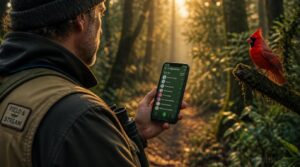
eBird Mobile takes things a step further than any spreadsheet can. One tap starts a new checklist, and you add birds as you go — no scribbled notes to decode later.
The offline data entry feature is a real win for remote spots without signal. Log everything in the field, then submit when you’re back in range.
Merlin Bird ID Syncing
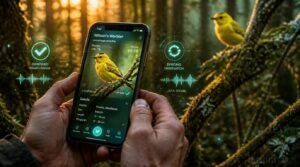
Merlin Bird ID does more than identify — it feeds directly into your digital lifelist without extra steps. Connect it to eBird in Settings, and every confirmed sighting syncs automatically.
Here’s what that connection provides for you:
- Automated life-list updates after each saved ID
- Offline data syncing when you’re out of range
- Media attachment of photos and audio to each record
- Cross-device sync across iOS and Android
- Privacy control settings for shared or private entries
Verify Birds Before Counting Them

Before you tick a bird off your list, you need to be sure about what you actually saw. A shaky ID can quietly undermine the whole point of keeping a record. Here are the key ways to confirm a sighting before it counts.
Visual Identification Clues
Before you count a bird, you need to be sure. Start with overall silhouette — a distant shape against the sky tells you a lot.
Is the tail forked or rounded? That one detail separates many warblers.
Check bill shape relative to head size, then scan for crown or chest color contrast.
These quick visual clues lock in the ID.
Bird Calls and Songs
Sometimes a bird stays hidden, but it still gives itself away. That whistle through the reeds, that sharp chip from a thicket — calls and songs are ID clues just as reliable as color or shape. Learn a few common ones, and your ears become your second field guide.
Field Guide Confirmation
A field guide is your final referee. When you think you’ve got a positive identification, open the guide and check the plumage pattern against the illustrated plates. Match bill shape, leg color, and size relative to familiar species.
Confirm the geographic range aligns with where you’re standing. If the habitat fits too, you can count it.
Photo and Audio Evidence
A good photo or recording can settle any lingering doubt. When you snap a shot, make sure it shows clear plumage and size markers from an unobstructed angle. Keep the original, unedited file — that’s your proof.
For audio, capture the call with minimal background noise and save it in a lossless format so no detail gets lost.
Avoid Captive Birds
A bird in a cage doesn’t count. Life list entries require birds observed in the wild, living freely. Captive birds — zoo exhibits, pet shops, sanctuary residents — are off the list, full stop.
| Counts | Doesn’t Count |
|---|---|
| Wild, unrestrained sightings | Zoo or aviary birds |
| Native range observations | Escaped pet sightings |
Grow and Organize Your List

Once your list starts filling up, keeping it organized makes the whole hobby more rewarding. There are a few practical ways to manage your growing records and push your birding further. Here’s what works.
Sort Sightings by Region
Sorting your sightings by region turns a long, chaotic list into something you can actually use.
- Regional sorting groups observations by continent, country, state, or county
- Local hotspot mapping shows exactly where each species appeared
- Regional heatmaps reveal where your sightings concentrate most
- Cross-border data needs careful labeling to avoid counting one bird twice
- Geographic sorting tools on eBird filter checklists by area instantly
Track Seasonal Patterns
Once you’ve got your sightings sorted by region, patterns start jumping out at you. Spring arrival windows can shift earlier by two to ten days depending on whether you’re birding near the coast, in a city, or up at elevation. Tracking those shifts year over year tells you more than any field guide will.
Set Target Species Goals
Seeing those seasonal shifts shows you which birds belong to your patch — and which ones you still need to chase. That’s the spark for setting target species goals.
Pick birds that live within their native wild range, check their conservation status, and set a minimum viable count as your success mark.
- Define a target year for each species
- Link goals to specific habitats like wetlands or forest edges
- Track annual recruitment rates to measure real progress
- Flag target birds as wishlist entries inside Merlin or eBird
Use Rare Bird Alerts
Once your wishlist is set, rare bird alerts turn it into live action.
Subscribe to regional alert settings inside eBird or a dedicated alert service, and you get notified the moment something uncommon lands in your county.
Tune your rarity filters so only genuinely rare sightings ping you — not every common sparrow passing through.
Share Citizen-science Checklists
Every checklist you submit to eBird becomes part of something bigger than your personal lifelist. Researchers and conservationists pull that data to track global migration patterns and spot population shifts.
Your single backyard sighting might complete a picture someone’s been building for years. Share openly, keep records honest, and you’re not just a birder — you’re contributing real science.
Your backyard sighting could complete a picture scientists have spent years building
Frequently Asked Questions (FAQs)
What are the 5 S’s of bird watching?
The quieter you stay, the more birds reveal themselves. The 5 S’s are Size, Shape, Shade, Sound, and Space — five fast checks that sharpen every sighting before it earns a spot on your life list.
How much do birdwatchers get paid?
Most birdwatchers do this purely for the love of it — no paycheck involved. But turn it professional? Ecotourism guides earn $35,000–$60,000 yearly, while wildlife biologists and ornithologists can reach $85,
Do expert birdwatchers have brain differences?
Yes. Expert birdwatchers show real brain structural differences — denser tissue in attention and perception regions, sharper visual pattern recognition, and stronger memory recall. Years of spotting subtle field marks literally rewire your brain.
What colors not to wear when birding?
Skip the bright stuff. Avoid neon hues, white, and anything reflective. Fluorescent colors alarm birds fast. In wetlands, wear dark browns or muted blues. Match your habitat — earth tones disappear; bright contrast doesn’t.
Can beginners join organized birding clubs or groups?
Beginners are absolutely welcome. Local Audubon chapters and ABA-affiliated groups keep dues modest and often let you attend a guest outing before committing. Many pair newcomers with mentors right away.
How does birding benefit mental health and well-being?
Birding is quiet medicine. Cortisol reduction happens naturally outdoors, and birdsong mindfulness resets your nervous system fast — even a 10-minute session helps ease stress and sharpen focus.
What counts as a valid wild bird sighting?
A wild bird sighting counts when you confidently identify a living, unrestrained bird in its natural habitat. Captive or released birds don’t qualify. Log the species, location, and date right away.
How do AI tools identify birds from photos or sound?
Think of it like facial recognition for birds. Apps like Merlin Bird ID scan wing patterns, beak shape, and calls using acoustic pattern matching, then return a confidence score so you know how reliable the ID is.
How does eBird data support wildlife conservation efforts?
Every checklist you submit to eBird feeds real conservation work. Researchers use that data to track species distribution, spot population declines, and guide habitat protection planning before critical wetlands or grasslands disappear.
Conclusion
You don’t need a perfect system before you start. That’s the trap—waiting until you have the right app, the right journal, the right method.
The truth is, how birdwatchers track their life list matters less than the habit of actually doing it. Pick one method and stick with it. A gas station receipt beats a blank page every time.
Your list is yours. Start messy. Polish it later. The birds aren’t waiting.