This site is supported by our readers. We may earn a commission, at no cost to you, if you purchase through links.

A tiny backyard in the city still pulls in chickadees, wrens, and even bluebirds, if you give them the right spot to nest. Size matters more than most gardeners think. A hole that’s off by even a quarter inch can turn away the birds you’re hoping to attract.
That’s the tricky part with nesting boxes for small gardens. Space is tight, so every choice, from material to mounting height, needs to earn its keep.
The good news? A few smart picks can turn your small patch of green into a busy little nursery. Here’s what actually works, and how to keep it running smoothly all season.
Table Of Contents
Key Takeaways
- Entrance hole size is critical: even a quarter-inch difference can determine which birds use your box, with chickadees needing 1 1/8–1 1/4 inch and bluebirds needing 1 1/2 inch.
- Choose rot-resistant, untreated materials like cedar, pine, or recycled plastic, and avoid toxic chemical treatments that can harm nesting birds.
- Mount boxes 2 to 3 meters high in sheltered spots facing northeast to east, spacing them 10 to 15 meters apart to prevent overcrowding and disease.
- Clean boxes thoroughly after nesting season ends, using a soapy water or bleach mix, and let them dry fully in the sun to prevent mold.
5 Best Small Garden Nesting Boxes
Small gardens need boxes that fit their space without crowding out the birds you want to attract. The right pick depends on your yard, your budget, and which species you’re hoping to welcome. Here are five solid options worth your attention.
If you’re aiming for smaller cavity-nesters, a nesting box design built for bird-friendly gardens can help you strike the right balance of size and appeal.
1. Cedar Box Wren and Chickadee House
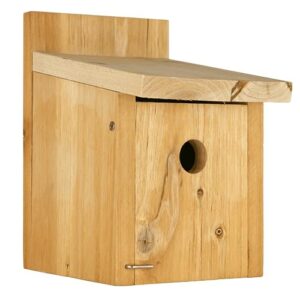
If you want wrens and chickadees only, this box gets it right. The 1 1/8 inch entrance hole keeps sparrows and bigger birds out.
Unfinished cedar resists rot without toxic coatings. Built-in vents and a clean-out door make care simple.
At 5.13 x 7 x 8 inches and just 1.32 pounds, it fits any small garden. A metal-guarded entry blocks pecking predators, so your tenants stay safe year-round.
| Best For | This cedar birdhouse is best for backyard birdwatchers and gardeners who want to attract small species like wrens and chickadees while keeping larger birds out. |
|---|---|
| Material | Cedar wood |
| Cleaning Access | Clean-out door |
| Ventilation | Wall and floor vents |
| Target Birds | Wrens, chickadees |
| Weight | 1.32 lbs |
| Mounting | Standalone hang |
| Additional Features |
|
- The 1 1/8 inch entrance hole keeps sparrows and larger birds from taking over the space
- Built from rot-resistant cedar wood that holds up well outdoors
- Integrated air vents and a clean-out door make upkeep and airflow easy to manage
- The small entrance hole limits use to specific small bird species only
- Requires regular manual cleaning through the access door to stay in good condition
- At just 1.32 pounds and under 8 inches tall, it may not suit larger yards or bigger bird populations
2. Kingsyard Recycled Plastic Bird House
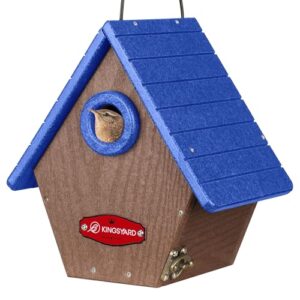
Want something tougher than wood? This one stands up to rain, snow, and blazing sun without cracking.
The recycled plastic body stays stable from -20°F to 120°F, so no warping. A metal-reinforced entrance blocks predators, while the side viewing panel lets you check on chicks without opening the box.
At 6x6x8.5 inches, it’s compact and preassembled. Bottom vents keep air moving, and cleanup takes just a quick wipe-down each season.
| Best For | This bird house is best for bird watching enthusiasts and nature lovers who want to attract wrens, finches, and chickadees with a durable, low-maintenance nesting option. |
|---|---|
| Material | Recycled plastic |
| Cleaning Access | Side door |
| Ventilation | Bottom air vents |
| Target Birds | Wrens, finches, chickadees |
| Weight | 1.85 lbs |
| Mounting | Standalone hang |
| Additional Features |
|
- Weather-resistant recycled plastic construction handles rain, snow, and sun year-round
- Side door design makes cleaning and nest removal quick and easy
- Integrated predator guard and bottom air vents support a safer, well-ventilated nesting space
- Only one unit is included per package
- Plastic may retain heat differently than a traditional wood birdhouse
- Cleaning still requires manually opening the side door each time
3. Natural Wooden Vintage Bird House
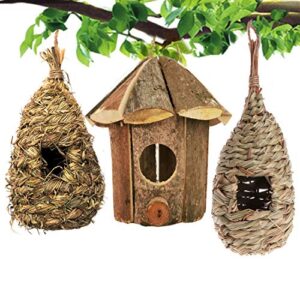
If plastic durability isn’t your style, this one brings back old-world charm. Made from untreated cedar or pine, it keeps that classic countryside look with visible wood grain.
The pitched roof sheds rain and snow, while a short front perch welcomes juvenile birds. Entrance holes run 1 to 1.5 inches, sized right for small garden species.
Hinged panels make cleaning easy, and brass hardware resists rust so nothing harms nestlings inside.
| Best For | Bird lovers who want a charming, natural-looking shelter for small songbirds like chickadees, wrens, and hummingbirds, whether it’s hung outdoors in the garden or used as rustic indoor decor. |
|---|---|
| Material | Wood and straw |
| Cleaning Access | Hanging open design |
| Ventilation | Natural ventilation |
| Target Birds | Chickadees, wrens, hummingbirds |
| Weight | 1.1 lbs |
| Mounting | Hanging installation |
| Additional Features |
|
- Made from 100% natural wood and straw for an authentic, countryside look
- Textured exterior and front perch give birds a secure, comfortable place to land and rest
- Built-in ventilation helps release heat and drain rainwater, keeping nests dry and comfortable
- Designed only for small bird species, so it won’t suit larger birds
- Natural materials can wear down over time and may need occasional monitoring
- Requires hanging installation, which means extra setup compared to freestanding options
4. Rypet Transparent Parakeet Nesting Box
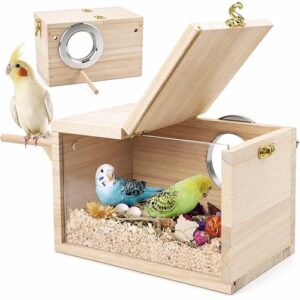
Now for something a little different. This one’s built for indoor cages, not garden trees, but it’s a favorite for parakeet keepers watching over eggs.
For guidance tailored to breeding parakeets rather than wild sparrows, check out this indoor nesting box setup guide for parakeet breeding pairs.
The clear acrylic front lets you check on nesting without lifting the lid. Made from paulownia and pine, it stays warm and cozy inside.
A hinged lid makes cleaning quick, and the stainless-steel entry hole won’t scratch tiny feet. Bolts and wing nuts keep it steady inside the cage.
| Best For | Owners of small cage birds like budgies, lovebirds, cockatiels, finches, and canaries who want to watch nesting and hatching up close without disturbing the birds. |
|---|---|
| Material | Paulownia and pine wood |
| Cleaning Access | Hinged lid |
| Ventilation | Insulated wood |
| Target Birds | Budgies, canaries, finches |
| Weight | 15.2 oz |
| Mounting | Bolt and wing-nut |
| Additional Features |
|
- Clear acrylic front lets you observe breeding and hatching without lifting the lid
- Hinged lid and stainless-steel entry hole make cleaning quick and keep tiny feet scratch-free
- Insulated paulownia and pine construction keeps the nest warm and cozy
- Only sized for small species, so larger parrots won’t fit comfortably
- Assembly with bolts and wing nuts can be a bit fiddly
- Not built for outdoor use, since rain or humidity can damage the wood over time
5. Natural Wood Transparent Bird Nest Box
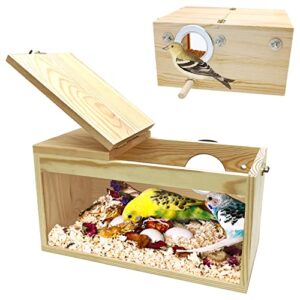
Round out your lineup with a box built for garden trees, not cages. The clear panel sits on the side, so you get a steady view without stressing the nesting pair.
Cedar or pine walls, left untreated, resist weather naturally. A hinged roof and removable back panel make cleaning simple each fall.
Predator guards around the entrance keep climbing critters out, while a shallow inner shelf helps fledglings find their way toward daylight when it’s time to go.
| Best For | Bird owners who breed or keep small cage birds like budgies, parakeets, canaries, or lovebirds and want to encourage natural nesting while easily monitoring eggs and chicks. |
|---|---|
| Material | Solid wood |
| Cleaning Access | Top opening |
| Ventilation | Solid wood insulation |
| Target Birds | Budgies, canaries, lovebirds |
| Weight | 12.3 oz |
| Mounting | Bolt-on hardware |
| Additional Features |
|
- Clear acrylic side panel lets you check on eggs and chicks without disturbing the nest
- Solid wood body offers natural insulation and a cozy feel for breeding pairs
- Top-opening design and bolt-on mounting make cleaning and setup quick and easy
- Acrylic panel can arrive cracked if shipping isn’t handled carefully
- Soft wood construction may not hold up against larger or more active birds that chew
- No built-in egg depression, so you might need to add a false bottom for proper egg support
Choose Boxes by Garden Birds
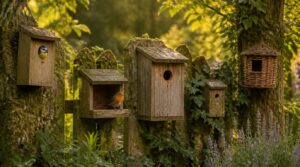
Not every bird wants the same house. The right box depends on who you’re hoping to attract. Here’s how to match your garden visitors with the right fit.
Tits, Wrens, and Chickadees
Small birds like tits, wrens, and chickadees need cozy, snug boxes to feel safe.
- Entrance hole: 25mm keeps out bigger competitors
- Floor space: 6-8 square inches minimum
- Nesting material: moss, hair, soft fibers
- Rough interior walls help fledglings climb out
Many species use natural tree cavities for their nesting sites.
These birds forage constantly, hoard food for winter, and join mixed flocks outside breeding season. Give them a snug box, and they’ll reward your garden with activity all year.
Sparrows and Nuthatches
House sparrows love your garden’s ground cover and feeders, while nuthatches want mature trees with bark to explore.
Nuthatches climb headfirst down trunks, probing crevices for insects. Both cache food for winter and join mixed flocks for safety.
For nesting boxes, sparrows nest in loose colonies near structures. Nuthatches defend their own territory, so give them separate spots to avoid conflict.
Entrance Hole Sizing
One tiny hole makes all the difference between a cozy nest and an empty box.
- Chickadees: 1 1/8–1 1/4 inch
- Bluebirds: 1 1/2 inch
- Nuthatches: 1 1/4 inch
- Larger birds: 3 inch or more
Smooth, sanded edges prevent injury to fledglings. Correct sizing also blocks predator entry and keeps competing species out, protecting your nesting cavity all season long.
Small-space Species Matching
Big city yards can still host great urban bird diversity, if the box fits the space.
Match dimensions to your visitors:
| Bird | Cavity Depth |
|---|---|
| Nuthatch | 80mm |
| Wren | 8-10mm clearance |
| Sparrow | 50x50mm floor |
Getting species-specific dimensions right means happier tenants and fewer empty boxes come spring.
Avoid Overcrowding Nesters
Ever wonder why one box sits empty while another gets fought over daily? Spacing matters more than style.
When it comes to nesting boxes, spacing matters more than style
- Boxes packed too close spark constant squabbles
- Crowded spots invite disease and parasites
- Shared entrances stress nesting pairs
- Empty boxes signal poor placement
Keep 10 to 15 meters between boxes in small gardens. Rotate box use each season, track occupancy, and add feeding stations away from nests to spread visitors naturally.
Materials, Safety, and Durability
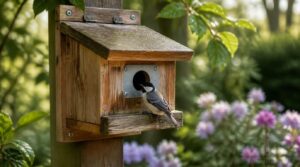
Picking the right species match is only half the job. The box also needs to hold up outside and keep predators out. Here’s what to look for in materials and safety features.
Untreated Wood Options
Skip the pressure-treated stuff and go straight for cedar or redwood. Both resist rot naturally, no chemicals needed.
Pine works too, and it’s easier on your wallet, though it warps faster. Untreated wood breathes well, but watch for moisture absorption near wet, shaded spots.
That weathering patina isn’t a flaw either. It’s your nest box earning some character over time.
Recycled Plastic Benefits
Wood isn’t your only option. Recycled plastic nesting boxes give small birds a sturdy, weather-resistant home while easing pressure on fossil fuels.
Choosing recycled materials means less virgin petroleum used, lower manufacturing energy, and less waste in landfills. It’s a small choice with real impact.
Plus, these boxes fit right into a circular economy, turning old plastic into something birds actually need.
Weather-resistant Construction
Rain and snow don’t stand a chance against good weatherproof construction. Look for a sloped roof design that sends water running off, not pooling near the entrance.
Tight joint sealing keeps moisture from creeping into seams. A good UV resistant coating also stops wood cracking, cutting damage by half over five years while preventing warping from constant wet-dry cycles.
No Toxic Treatments
Weatherproofing means nothing if it poisons the birds inside. Choose boxes with safe finishes like linseed oil and beeswax, cured offsite for full solvent evaporation.
- Natural sealants over chemical preservatives
- Non-toxic coatings on exterior only
- Chemical-free assembly with stainless fasteners
FSC certified timber and cedar wood keep nests healthy, proving weatherproof materials and sustainable garden products can work together.
Predator-safe Designs
Predator Protection starts before a raccoon ever tries the door. A predator block tunnel, paired with a metal entrance plate, stops teeth and claws cold.
| Feature | Function | Best For |
|---|---|---|
| Stovepipe baffle | Blocks climbing | Pole mounts |
| Metal plate | Stops gnawing | Entrance holes |
| No perch | Removes foothold | All predators |
Mount on anti-climbing poles, skip the perch, and your fledglings get real avian safety.
Placement and Seasonal Care
Where you put your nesting box matters just as much as what it’s made of. The right spot keeps birds safe, dry, and coming back year after year. Here’s what to know about placement and keeping your box in top shape all season long.
Best Mounting Height
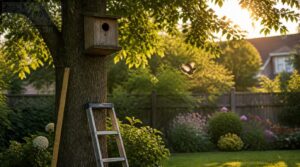
Height matters more than most gardeners realize. Aim for 2 to 3 meters off the ground to cut predator access by roughly 40%.
Urban cats struggle above 2.5 meters, while windy spots need sturdy mounting near 3 meters.
Come spring, start high for safety; after fledging, drop to 2.0–2.2 meters for easier cleaning and monitoring.
Sheltered Garden Locations
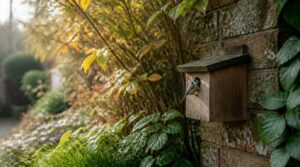
Where you place a nesting box matters as much as how high it sits. A spot tucked against a hedge or wall creates a microclimate that buffers cold snaps.
Windbreak effectiveness cuts chill for early fledglings, while nearby walls add thermal mass, holding warmth overnight. Layered plantings—shrubs, then groundcover—also conserve soil moisture, keeping backyard birds comfortable near their nesting site.
Sun and Wind Direction

Which way your box faces can make or break a nest’s success. Aim entrances northeast to east for gentle morning sun warmth, dodging harsh afternoon rays.
- Face away from prevailing winds
- Skip west-facing walls in summer
- Use shrubs for natural shade
- Adjust for seasonal sun angles
- Avoid wind funnel spots
Nearby shrubs deflect wind and shade the box, keeping nests cozy without overheating risk.
Cleaning After Nesting
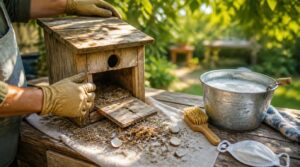
Empty nests need a good scrub before next season. Wait until nesting fully ends, then remove debris with gloves and a mask on.
| Step | Tool | Purpose |
|---|---|---|
| Scrub | Soapy water/bleach mix | Kill pathogens |
| Inspect | Eyes/hands | Find cracks |
| Dry | Sun | Prevent mold |
A cleanout door makes this simple, quick maintenance work.
Low-disturbance Monitoring
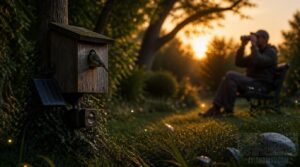
Want to check on your nesting boxes without scaring anyone off? Good monitoring means watching from a distance.
- Infrared Camera Surveys for night activity
- Acoustic Monitoring Tech to catch calls
- Remote Sensor Data on temperature and humidity
- Non-invasive RFID Tracking at the entrance
- Solar Surveillance Systems for steady power
These tools support bird watching while keeping nesting site selection stress-free and natural.
Frequently Asked Questions (FAQs)
When should I install a nesting box?
Late winter setup is your best bet, before nesting season kicks off.
Regional timing matters too: southern climates need boxes by mid-February, northern areas can wait until March.
Scouting behavior starts early, so timing your nesting site selection right boosts occupancy rates a lot.
How many nesting boxes fit in one garden?
One box feels sparse, ten feels crowded — the sweet spot follows garden size ratios: one box per 50–200 square meters. A compact plot suits 4 boxes; larger yards handle 6–8, keeping territorial spacing intact.
Can I use a birdhouse for decoration only?
An ornamental birdhouse works great for garden aesthetics alone. Skip ventilation and drainage, use non-toxic paint, and keep it hazard-free. Update seasonal decor often, and let it fit in with your birdhouse and feeder display as pure garden art.
What ceiling height and floor space work best?
Aim for 8 cm of clearance above the cavity and around 15 cm interior height. Floor space near 20 x 20 cm works well. This ideal cavity volume prevents nestling crowding and helps control internal humidity, lowering condensation risk inside the box.
Do nesting boxes need ventilation or drainage holes?
Small vents near the roofline keep airflow steady without cooling nestlings. Corner drainage holes stop moisture control risks, protecting nest material from mold.
Together, proper ventilation and drainage support a healthy microclimate and cut down on maintenance and upkeep over the season.
Conclusion
One quiet morning, you’ll hear a soft chirp from the box you almost forgot about. That’s when it clicks.
The right nesting boxes for small gardens don’t just fill empty space; they build a whole tiny world right in your yard.
Pick smart materials, size the holes with care, and mount them at the right height. Then step back and let nature do the rest.
Your small garden will feel bigger, full of wings, songs, and quiet life.
- https://nestwatch.org/learn/all-about-birdhouses/nest-box-placement
- https://uncharteddiy.com/protect-nests
- https://www.virginiabluebirds.org/nest-boxes-guards-signs
- https://www.ulsterwildlife.org/help-wildlife/help-wildlife-home/help-garden-birds/how-build-nest-box-birds
- https://www.rspb.org.uk/nestboxes