This site is supported by our readers. We may earn a commission, at no cost to you, if you purchase through links.
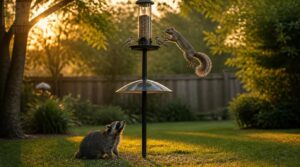
A hungry raccoon can jump 4 feet straight up and climb almost anything that isn’t slick metal. That single fact wrecks more backyard feeding setups than squirrels ever will. Hang your feeder at the wrong height, and you’re basically running a buffet with a welcome mat.
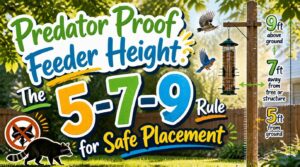
Get the predator proof feeder height right, though, and the math flips in your favor. Five feet off the ground, seven feet from anything a predator could launch off, nine feet clear of overhanging branches — that spacing does the heavy lifting most bird owners never think about.
Below, you’ll find exact heights for different threats, bird species, and seasons, so your feeder stays a dinner spot for birds, not raccoons.
Table Of Contents
Key Takeaways
- The 5-7-9 rule sets the foundation for predator-proof feeder placement: 5 feet above ground, 7 feet from structures, and 9 feet below overhanging branches.
- Baffles are essential alongside height, since a smooth pole with a properly sized baffle (4 feet up, 16-22 inches in diameter) blocks climbers that height alone can’t stop.
- Feeder height should match the bird species you want to attract, ranging from ground feeders at 0-3 feet to cardinals around 7 feet, so security doesn’t come at the cost of occupancy.
- Location matters as much as height, so clearing sightlines, spacing shrubs 5-10 feet away, and keeping safe window distances all reduce ambush and collision risks.
Best Predator Proof Feeder Height
Height is your first line of defense against every hungry visitor you don’t want at the feeder. Get it wrong, and even the fanciest baffle won’t save your seed. Here’s how to pick the right number for your yard.
For a deeper dive into keeping raccoons, snakes, and cats from raiding the nest, check out these outdoor bird house safety tips before you settle on a mounting height.
Standard 5–6 Foot Setup
Five to six feet high is the sweet spot for most setups — enough to keep raccoons from reaching up, low enough for easy filling.
- Use rust-resistant mounting hardware
- Pick a stable, wobble-free pole
- Weatherproof the housing seals
Check mounting integrity each season; wind and ice loosen bolts fast. This height alone won’t guarantee squirrelproof results, but it’s your foundation for predator avoidance.
When 7 Feet Works Better
Bumping to seven feet earns its keep once climbing pests get bold — that extra foot cuts their advantage dramatically. It also matches the 7-feet-from-structures piece of the 579 rule, keeping fences and walls out of jumping range.
Bonus: better predator detection across open yards, plus room for snow drift clearance in winter.
Still easy enough for human ergonomic refilling. A standard king-size bed also measures 7 feet in length.
Bear Country Height Rules
Bears change the math entirely. Standard 5–6 foot clearance still applies, but scent attraction means placement matters more than height alone.
Keep feeders clear of bear travel corridors and denning sites, use sturdy vertical structure placement, and rotate height seasonally—raise it during spring and fall activity peaks.
Smart bird feeding station placement isn’t just about the pole; it’s about the whole landscape around it.
Height Versus Bird Access
Go too high and you trade one problem for another. Small species face flight path obstructions and perch accessibility challenges when feeders sit above 8 feet, cutting occupancy even as predator risk drops.
Solar exposure and wind speed matter too—a feeder baking in afternoon sun or swaying in gusts gets fewer visits. Balance security with comfort, not just height and clearance.
Apply The 5-7-9 Rule
The 5-7-9 rule turns feeder placement into simple math, not guesswork. Each number targets a different predator problem, from jumpers to climbers to branch-walking threats. Here’s how to put all three numbers to work in your yard.
5 Feet Above Ground
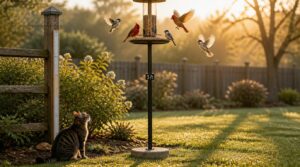
Ground clearance is the first number to nail down: 5 feet above the ground keeps seed out of reach for cats, rabbits, and most crawling pests, while staying easy for songbirds to spot.
If you’re hanging a hummingbird feeder specifically, check out this guide to picking the right height and location for hummingbird feeders for a few extra tricks.
Anchor your pole in concrete so it won’t sway.
Trim nearby shrubs for balance — enough cover for birds, not enough for ambush.
7 Feet From Structures
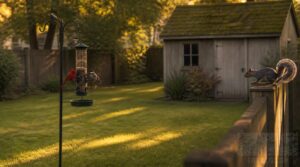
Fences, walls, and sheds double as squirrel launch pads — a squirrel can clear 6 feet horizontally in one jump. Keep 7 feet of clearance from any structure, and you break that route entirely.
- Fence lines: prime launch spots
- Wall clearance: 7 feet minimum
- Shed roofs: hidden ambush zones
- Windows: stay within 3 feet or beyond 30 to prevent collisions
- Support poles: freestanding, not attached
9 Feet Below Branches

Overhead branches aren’t just camouflage — they’re a hazard if you skip the math. Keep 9 feet of overhead clearance between your feeder and the lowest branch; this height and clearance zone blocks branch-to-feeder leaps while limiting overhead predator camouflage.
Watch canopy wind patterns and clear branch debris regularly — sagging limbs shift mounting hardware stability and solar exposure, undermining the whole setup for reliable bird feeding safety.
10 Feet From Jump Points
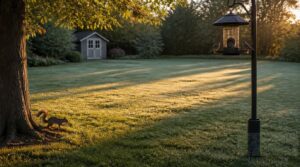
Squirrels can leap nearly 6 feet horizontally, so your safety math needs real breathing room. Keeping a full 10-foot clearance zone from trees, sheds, and shrubs covers jump point isolation and ambush zone reduction at once.
Map predator routes before you mount anything. This buffer zone maintenance blocks vertical staging prevention too — no launch pad, no landing.
Avoid Fence Launch Spots
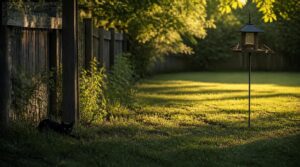
A fence line looks harmless until you realize it’s basically a launch pad with a snack bar attached. Fence ambush points and shadow-based stalking hazards let predators wait unseen, then strike. Watch for:
A fence line looks harmless until you realize it’s a launch pad with a snack bar attached
- Gate access security gaps
- Undergrowth near posts
- Corners creating two-sided traps
Keep feeders off nearby fences or decks, clear predator sightlines, and you’ve got a real squirrelproof bird feeder setup.
Match Height to Bird Species
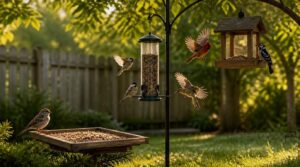
The 5-7-9 rule keeps predators out, but it won’t do you much good if the birds you want never show up. Different species feed at different heights, and matching your setup to theirs makes all the difference between a busy feeder and an empty one. Here’s how to dial in the height for the birds you’re actually trying to attract.
Songbirds at 5–6 Feet
Sparrows and chickadees have a sweet spot: 5 to 6 feet high balances ideal feeding visibility with avian safety guidelines, keeping seed off damp ground where mold breeds.
| Benefit | Why It Matters | Result |
|---|---|---|
| Predator sightlines | Birds spot threats early | Safer landings |
| Morning feeding energy | Refuels after overnight fast | Better survival |
| Native shrub proximity | Territorial songbirds defend zones | More visits |
Finches at 3–8 Feet
Finches want room to move — a 3 to 8 foot range that covers more ground than most songbirds need. This wider window suits their quick, darting habits.
Space perches 6 to 8 inches apart for rapid escape routes and wind resistant footing. Pick finch seed blends with small ports, and keep some mid-level shelter nearby so birds feel safe between bites.
Cardinals Around 7 Feet
Cardinals like a bit more altitude than your average finch — seven feet suits their mid-canopy foraging habits and gives clear sightlines for cardinal flight paths.
Mount feeders 7 feet from structures, with a 7–9 inch perch width for their sturdier frame. This bird feeder mounting height helps safe cardinal takeoff, letting them launch straight into open air instead of dodging branches.
Hummingbirds at Eye Level
Cardinals want altitude, but hummingbirds flip the script entirely. Hummingbird feeder height works best at 4 to 6 feet — true eye level — where nectar visibility stays sharp and hovering stability holds steady between sips.
That height sharpens predator detection and territorial displays alike, while partial shade for nectar cuts morning glare. It’s the sweet spot for birdwatching visibility, too — you’ll actually see them feed.
Ground Feeders at 0–3 Feet
Doves and juncos don’t want altitude — they want ground foraging safety. Set ground feeders at 0 to 3 feet, close to natural groundforager habitat.
Use shallow trays with drainage for moisture control methods, offer millet-heavy seed mixes to prevent seed spoilage, and keep water nearby. Skip cat deterrent height games here; instead, rely on 6-foot ground cover clearance so low hanging feeders stay predator-safe without stranding these short-legged feeders.
Block Climbers With Baffles
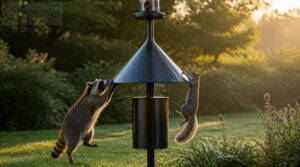
Height alone won’t stop a determined squirrel or raccoon from climbing straight up the pole. You need hardware that blocks the climb itself, not just distance that a good jumper can close. Here’s what actually works, piece by piece.
Smooth Metal Pole Placement
A wobbly pole undoes every squirrelproof height calculation you’ve made. Set it plumb within half a degree, anchored 18 inches into soil or concrete to handle wind load.
Smooth metal poles — stainless or galvanized, UV-coated — resist rust and climbing claws alike. Sink a sleeve at the base to stop corrosion and abrasion right where moisture collects.
Baffle Height at 4 Feet
Four feet is the magic number for baffle placement — high enough to stop ground-based climbers, low enough that birds barely notice it’s there.
Squirrel deterrent baffles work through vertical climbing barriers, not brute force. Smooth pole baffles need rock-solid installation stability, or raccoons exploit any wobble.
- Mount baffle top at exactly 4 ft
- Use rust-resistant hardware
- Verify plumb alignment
- Recheck after storms
Squirrel Baffle Diameter
Size matters more than shape for squirrel deterrent baffles. Go with 16 to 18 inches for dome styles, or 18-22 inches wraparound on pole setups.
Bold squirrels or big tree-dwelling species? Push toward 20-22 inches.
Match diameter to your pole width first, then verify mounting hardware doesn’t shrink that effective clearance below 15 inches.
Raccoon Stove-Pipe Baffles
Raccoons don’t quit at 4 feet—they need a real barrier. A stovepipe baffle mounted at that height, 6-8 inches wide, with a smooth, seam-free surface blocks their grip entirely.
Galvanized steel lasts 5-15 years against rust. Center it on smooth pole baffles, secure with sturdy mounting hardware, and clear ice buildup each winter for reliable predator exclusion.
Weight-Activated Feeder Perches
Why fight physics with brute force when you can let gravity do the work? Weight-activated ports snap shut the instant a squirrel lands, sparing songbirds under 2 oz. Tune sensitivity seasonally, keep sensors debris-free, and check metal perch durability each spring.
| Feature | Function |
|---|---|
| Port closing | Blocks seed within seconds |
| Sensitivity tuning | Adjusts for local pests |
| Metal perches | Resist corrosion |
| Debris cleaning | Keeps sensors accurate |
Choose Safe Feeder Locations

Height and baffles only do half the job. Where you put that pole matters just as much as how tall it stands. Here’s what to check before you pick a spot.
Clear Predator Sightlines
Picture a hawk’s-eye view of your yard: can it spot a cat sneaking up, or does clutter hide the approach? A clear visibility corridor matters more than height alone.
- 5-ft radius of open space around the feeder
- 20-ft sightline to open ground
- 15-ft low ground cover for ambush zone reduction
- 10-ft clear sky above—no perching shadows
- Bright light, no dusk shadows near posts
Shrubs 5–10 Feet Away
Shrubs 5–10 feet away strike the right balance—close enough for quick cover, far enough to block ambush routes. Evergreens like inkberry holly or yew give year-round screening.
Pick non-toxic, dense-leaved varieties, layer heights for tiered protection, and prune regularly for visibility and clear bird escape routes. Keep them clear of trees and structures to avoid creating predator launch points.
Safe Window Distance
Good cover means nothing if birds slam into glass on the way there. Keep feeders within 3 feet of a window, or push Beyond Thirty Feet entirely—anything in between raises collision risk.
Window decals or frosted film cut glare for years. Face feeders away from sunrise glare, and reduce glass reflections wherever sightlines allow.
Quick fixes:
- Apply anti-reflective decals
- Orient away from sunrise
- Choose 3-foot or 30-foot placement
Monthly Vegetation Trimming
Glass isn’t the only hazard—overgrown branches turn your safe zone into a predator’s ladder. Trim monthly, keeping an 8–12 foot radius clear and canopies under 6 feet.
Sharpen pruners, disinfect between plants, and never remove more than a third of any shrub’s mass. Growth spurts hit hardest in late spring—adjust your climate-based trimming schedule, remove stepping stones, and maintain sightlines accordingly.
Seasonal Height Adjustments
Trimming keeps sightlines open, but height needs seasonal work too. Raise feeders 6–12 inches in spring for ground predator activity, hold 6–7 feet through summer, then lower to 5–6 feet by autumn for migrating species access. Winter often means 4–5 feet given snowpack visibility.
Check thermal expansion monitoring on mountings as temperatures swing, and adjust with foliage density changes.
Frequently Asked Questions (FAQs)
How often should feeder seed be replaced weekly?
Toss old seed weekly to stop mold growth and spoilage. Wash the feeder with soap and water on the same schedule — this simple maintenance routine deters pests, protects nutrients, and keeps your feeding station sanitary for every visiting bird.
What decals reduce window collisions on feeders?
UV reflective patterns with 2-inch spacing, applied to the exterior, cut collisions best. Choose high contrast or opaque designs, use weather resistant vinyl, and keep decals within safe window distance for real bird visibility gains.
Which direction should feeders face to avoid glare?
Face feeders east or west, tracking the sun path to dodge harsh midday glare. Morning glare mitigation matters most—shade the east side.
Choose matte finishes over reflective surfaces, and skip south-facing spots where afternoon light blasts eye-level feeding zones and viewing windows.
How wide should a squirrel baffle diameter be?
Aim for a squirrel baffle diameter of 18–20 inches—wider domes outperform cylinders. Match the baffle’s collar to your pole size, and keep height proportional; a fifteen-inch baffle is the bare minimum for effective climbing deterrence.
How often should feeder poles be inspected monthly?
Once a month, walk the pole: check for rust spots, loose bolts, and cracking. Log findings for inspection accuracy. Tighten hardware, treat corrosion, and confirm the base stays clear—small fixes now beat a toppled feeder later.
Conclusion
A raccoon eyeing a low feeder is like a burglar spotting an unlocked door — the invitation is obvious. Once you nail predator proof feeder height, that invitation disappears.
Five feet up, seven feet clear, nine feet under branches: three numbers, one safe zone. Pair that spacing with a good baffle, and climbers hit a wall they can’t solve.
Birds don’t need luck to eat safely. They need math you’ve already done for them.
- http://www.nativenurseries.com/blog/2019/1/26/tricked-out-tips-for-keeping-squirrels-and-raccoons-out-of-the-bird-feeder
- https://neighborhoodfeed.com/keeping-birds-safe-tips-for-predator-proofing-your-yard
- https://springfieldil.wbu.com/stopping-raccoons
- https://ricksbrewery.com/raccoon-squirrel-proof-bird-feeder-plans