This site is supported by our readers. We may earn a commission, at no cost to you, if you purchase through links.

Michigan hosts over 450 bird species, but the small ones—the chickadees, goldfinches, and kinglets darting through your backyard—are the ones most people never learn to tell apart. A Golden-crowned Kinglet weighs about as much as two paperclips, yet somehow survives a Michigan winter by shivering all night long. That alone makes these tiny birds worth a closer look.
Knowing which species visit your yard, and when, turns every morning coffee on the porch into something more interesting. Whether you’re new to birding or just curious about that bright yellow flash in the shrubs, this guide covers the small birds in Michigan worth watching for.
Table Of Contents
- Key Takeaways
- Common Small Birds in Michigan
- Tiny Migratory Birds to Watch
- Identify Small Michigan Birds
- Where Small Birds Live
- Attract Small Birds Naturally
- Frequently Asked Questions (FAQs)
- What is the most common bird in Michigan?
- What is a small tiny bird called?
- What are the small blue-gray birds in Michigan?
- Why are unusual birds showing up in Michigan right now?
- What is the most common backyard bird?
- How do I identify a bird in my yard?
- What are the really small birds called?
- How do small birds survive Michigans harsh winters?
- Which small birds have the most unique vocalizations?
- What are the smallest bird species in Michigan?
- Conclusion
Key Takeaways
- Michigan’s Golden-crowned Kinglet weighs just 5 grams yet survives brutal winters by huddling with others and shivering through the night—proof that the tiniest birds are often the toughest.
- Learning a bird’s bill shape, body proportions, and movement patterns will get you to a correct ID faster than memorizing color charts alone.
- A few simple backyard additions—black oil sunflower seeds, native berry shrubs, a shallow birdbath, and a nest box—can reliably attract a dozen or more small Michigan species year-round.
- Many small birds look dramatically different across seasons, so the vivid yellow goldfinch you spot in summer and the dull olive bird at your winter feeder are actually the same species.
Common Small Birds in Michigan
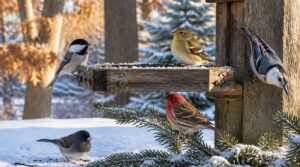
Michigan is home to dozens of small birds you’ll spot year-round, but a handful show up so reliably they’re practically neighbors. Getting familiar with them makes every backyard visit or trail walk more rewarding. Here are five you’re most likely to see.
If you’re ever birding across the border, small birds of Illinois offers a great look at over 25 species that share many of the same backyard habitats.
Black-capped Chickadee
The Black-capped Chickadee is probably Michigan’s most recognizable backyard bird. That bold black cap, white cheeks, and soft gray wings make it impossible to mistake. It measures around 12–14 cm and weighs just 11 grams — tiny, but tough.
Listen for its signature "chickadee-dee-dee" call, and you’ll know it’s nearby before you even spot it. These birds are commonly found in deciduous and mixed forests.
American Goldfinch
If the Chickadee is Michigan’s year-round cheerleader, the American Goldfinch is its sunshine-yellow rival for backyard attention.
Males turn vibrant yellow with sharp black wings each breeding season, which starts unusually late — around July — timed to peak seed availability. Females stay a softer olive-yellow.
They’re strict seed eaters. Sunflower seeds and thistle are their favorites at bird feeders.
Downy Woodpecker
Now meet the Downy Woodpecker — Michigan’s smallest woodpecker and a backyard regular worth knowing well.
Measuring just 6 to 7 inches, it punches above its weight. That stiff, bracing tail props it against bark while its chisel bill probes for beetle larvae. At bird feeders, it’ll happily grab suet or sunflower seeds.
Come winter, watch for it flocking with chickadees.
House Finch
If the Downy Woodpecker is Michigan’s quiet bark-clinger, the House Finch is its cheerful, seed-loving counterpart at the feeder.
Males are easy to spot — that rosy red face and breast make them stand out instantly. Females are brown and streaked, easy to overlook at first.
Together, they’re a common pair at backyard bird feeders across Michigan year-round.
White-breasted Nuthatch
One bird that’ll stop you mid-sip is the White-breasted Nuthatch — a chunky little acrobat you’ll often spot walking headfirst down tree trunks.
- Vertical foraging is its signature move
- Nasal calls carry easily through dense woods
- Nests in tree cavities year-round across Michigan
- Switches to seeds and nuts as its winter diet
Tiny Migratory Birds to Watch

Michigan’s migratory season brings some genuinely exciting small birds through the state, and a few of them are easy to miss if you don’t know what to look for. Timing matters a lot with these species — some pass through briefly, while others stick around for the warmer months. Here are five tiny migrants worth keeping an eye out for.
Ruby-throated Hummingbird
The Ruby-throated Hummingbird is Michigan’s only regularly breeding hummingbird — and it’s worth watching closely. Males flash a radiant ruby throat that can look almost black in shade.
If cats roam your yard, these outdoor cat deterrent tips for backyard birds can help keep hummingbirds safe while they feed.
They arrive each spring chasing blooming tubular flowers, then defend nectar feeders fiercely from rivals. On cold nights, they enter torpor to save energy — fundamentally a light hibernation.
Fill a feeder with plain sugar solution and you’ll have a loyal visitor.
Yellow Warbler
Few small birds in Michigan announce themselves quite like the Yellow Warbler. That bright, lemony flash in a willow thicket is unmistakable.
Here’s what makes this songbird stand out:
- Breeding plumage: Males wear bold chestnut streaks across a vivid yellow chest.
- Insect diet: They glean caterpillars, beetles, and spiders from foliage.
- Habitat preferences: Wetland edges, shrubby streamsides, and dense low branches.
- Song identification: A cheerful, whistled melody from willow thickets.
Pine Siskin
If there’s one bird that shows up without warning and disappears just as fast, it’s the Pine Siskin. This small, streaky brown finch turns up at Michigan bird feeders during winter irruptions — unpredictable mass movements triggered by food scarcity up north.
Watch for the yellow wing patches flashing in flight. They love sunflower seeds and travel in chatty, restless flocks.
Dark-eyed Junco
If there’s a bird that practically announces winter’s arrival, it’s the Dark-eyed Junco. These small, slate-gray birds with white bellies show up reliably at Michigan feeders from October through March.
Watch for their white outer tail flash when they take off — it’s the easiest field mark you’ll spot. They forage on the ground, scratching through leaf litter for millet and sunflower seeds.
Golden-crowned Kinglet
Weighing barely 5 grams, the Golden-crowned Kinglet is one of Michigan’s tiniest winter visitors — smaller than your thumb. That bright yellow crown patch, edged in black, is your best field mark.
Watch for wing-flicking while foraging through conifer branches; it’s almost restless. Amazingly, these small birds survive brutal Michigan nights by huddling together for warmth.
Identify Small Michigan Birds
Spotting a small bird is one thing — knowing exactly what you’re looking at is another. The good news is that a few reliable clues can crack the code almost every time. Here’s what to look for.
Size and Body Shape
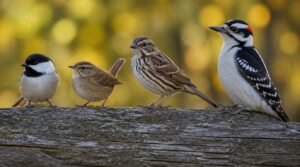
Size matters in birdwatching — and Michigan’s small birds give you a lot to work with. Most songbirds here measure between 4 and 6 inches, weigh just 0.3 to 0.8 ounces, and pack surprising personality into a tiny frame. That’s lighter than a handful of paperclips.
Key body features to notice during bird identification:
- Compact body design keeps weight low for quick, agile takeoffs
- Wingspan variation runs 6 to 9 inches depending on species and sex
- Proportional head size is noticeably large on chickadees relative to their bodies
- Tail length patterns differ — woodpeckers carry a shorter, stiffer tail for trunk support
- Body mass ratios shift slightly in fall as birds fatten up before migration
Once you start noticing these proportions during birdwatching, shapes become as useful as colors.
Plumage and Colors
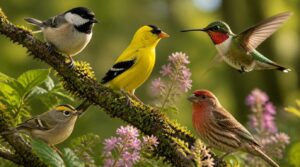
Once you’ve clocked the shape, color becomes your next best clue. Plumage tells a story — and once you learn to read it, Michigan bird identification gets a lot faster.
| Bird | Key Color Feature |
|---|---|
| American Goldfinch | Bright yellow with black wings (males, breeding) |
| Ruby-throated Hummingbird | Iridescent green back, shimmering red throat |
| Black-capped Chickadee | Black cap, white cheeks |
| House Finch | Rosy red face (males) |
| Golden-crowned Kinglet | Yellow-orange crown patch |
Sexual dimorphism plays a big role here. Male goldfinches flaunt vivid yellow in spring, while females stay muted greenish-yellow — great camouflage for nesting. House finch males develop stronger red tones based on diet; better carotenoid intake means richer color.
Seasonal color changes matter too. Spring molt brings out breeding colors, while fall plumage dulls down for winter survival. That bright bird you spotted in May might look almost unrecognizable by December.
Some colors aren’t pigment at all. The ruby-throated hummingbird’s throat uses structural iridescent coloration — microscopic feather structures bending light rather than absorbing it. Tilt your angle, and that red throat can flash nearly black.
The ruby-throated hummingbird’s throat isn’t pigmented — it bends light itself, flashing red or black depending on your angle
Bills and Tails
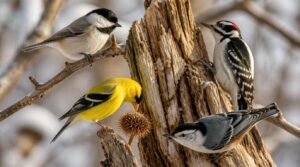
Color clues your eye in fast, but bills and tails seal the deal.
A chickadee’s slim, pointed bill is built for picking insects and small seeds. The downy woodpecker’s chisel-like bill hammers straight into bark. Goldfinches carry a short conical bill — perfect for cracking thistle husks.
Tails matter too:
- Nuthatches use long tails for balance while creeping down trunks
- Woodpeckers brace stiff tail feathers against bark like a kickstand
- Small warblers angle their tails mid-hop for precise landings
Bill wear shifts seasonally — winter diets leave visible marks.
Songs and Calls

Once your eyes catch the shape, let your ears finish the job. Bird songs and calls are just as reliable as any field mark.
The black-capped chickadee offers two easy cues: a whistled "fee-bee" and the classic "chickadee-dee-dee." The dawn chorus — that rich burst of singing right after sunrise — is your best window for catching these sounds clearly.
Seasonal Field Marks
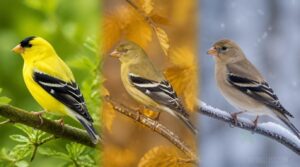
Seasons change birds more than most people realize. The same goldfinch that blazes yellow in late summer can look almost olive-drab by early spring. Here’s what to track as conditions shift:
- Breeding colors peak in spring — bold reds, crisp cap contrasts, and sharp wing bars.
- Winter plumage dulls everything: muted tones, buffed edges, softer facial marks.
- Juveniles look "unfinished" — softer, blurrier versions of adult patterns.
Where Small Birds Live

Michigan’s small birds don’t all share the same address. Each species has its preferred hangout, and knowing where to look makes all the difference between a blank walk and a memorable sighting. Here are the five key habitats worth knowing.
Backyard Feeders
Your backyard is one of Michigan’s most reliable small bird hotspots. Set up a tube feeder with black oil sunflower seeds and you’ll quickly draw chickadees, finches, and nuthatches. Add a suet cage for Downy Woodpeckers year-round.
| Feeder Type | Best Seed | Birds Attracted |
|---|---|---|
| Tube feeder | Nyjer/sunflower | Goldfinches, chickadees |
| Suet cage | Suet blocks | Woodpeckers, nuthatches |
| Platform tray | White millet | Sparrows, doves |
Place feeders 10 feet from windows to cut collision risk. Clean them every two weeks with a vinegar-water solution — wet seed spoils fast.
Deciduous Forests
Michigan’s deciduous forests are alive with small birds year-round. The layered canopy — oaks, maples, and beeches towering 20 to 40 meters — gives chickadees, nuthatches, and Downy Woodpeckers distinct feeding zones at every height.
Leaf litter on the forest floor fuels insects, which fuel the birds. Follow the sound of rustling leaves, and you’ll often find a foraging flock nearby.
Coniferous Woods
Pine forests feel like a different world. The year-round canopy stays dense overhead, filtering light all winter — and that’s exactly what birds like the Red-breasted Nuthatch depend on.
Its coniferous habitat preference sets it apart from its white-breasted cousin. Listen for that nasal "yank-yank-yank" between the mossy understory and snow-laden branches, and you’ve found your bird.
Wetlands and Marshes
Wetlands and marshes are some of Michigan’s most productive bird habitats — and they’re easy to overlook.
Red-winged Blackbirds thrive here, nesting in cattails and bulrushes along the water’s edge. Dense marsh vegetation shelters songbirds and nourishes the insects they depend on.
If you’re near standing water, slow down and listen.
Grasslands and Fields
Open fields and meadows might seem quiet at first, but they’re buzzing with activity.
Grassland bird habitat provides a habitat for species like the Song Sparrow, House Sparrow, and American Goldfinch — all easier to spot when you know what to look for in a good bird identification guide. Grasses and forbs together create layered cover for nesting and foraging.
Attract Small Birds Naturally
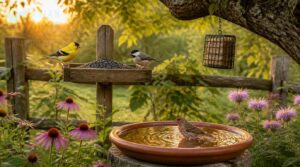
You don’t need a fancy setup to bring more birds into your yard. A few simple changes can make a real difference in who shows up — and how often. Here’s what actually works.
Black Oil Sunflower Seeds
If there’s one thing nearly every small Michigan bird agrees on, it’s black oil sunflower seeds. Chickadees, finches, and nuthatches flock to feeders stocked with them.
These seeds pack 40–50% oil content, giving birds the concentrated energy they need through cold winters. Store them sealed, cool, and dry so they stay fresh and don’t go rancid.
Native Berry Plants
Seeds bring birds fast, but native berry plants keep them coming back all season. Shrubs like serviceberry, elderberry, and black raspberry offer staggered fruit ripening from early summer into fall — a natural buffet for Michigan’s small native birds.
Here are five great options for your yard:
- Serviceberry — Sweet early-summer berries; chickadees love them
- American Elderberry — Dense clusters attract finches and warblers
- Black Raspberry — Midsummer fruit; excellent for avian diet variety
- Common Gooseberry — Tart berries extend the foraging window
- Red Huckleberry — Bright berries persist late, feeding migratory birds
Plant in full sun to partial shade with well-drained soil. Mulch around the base to hold moisture and reduce weeds.
Bird Baths
Berry plants feed birds, but a clean bird bath keeps them staying. Small Michigan birds — chickadees, goldfinches, finches — need fresh water daily for drinking and preening.
Keep the basin shallow, no deeper than 2 inches, with a textured bottom for safe footing. Place it near shrubs for cover, away from cat routes. Change water every 2–3 days.
In winter, a simple deicer prevents freezing.
Nest Boxes
A bird bath brings visitors — a nest box makes them neighbors. Michigan chickadees and wrens will gladly move in if the setup is right.
Use untreated wood with walls at least 15 mm thick. Mount the box 1.5 to 3 meters high, facing away from afternoon sun. Add ventilation holes, a sloped roof, and a predator guard on the pole.
Clean it out after breeding season ends.
Safe Backyard Cover
Shelter matters more than most backyard birders realize. Dense shrubs, brush piles, and low plantings give small birds in Michigan safe spots to hide, rest, and nest. Gravel underlayment benefits drainage too, keeping feeding areas dry and stable.
Three quick wins:
- Permeable paving options reduce mud and puddling near feeders
- Non-slip tape on stepping stones protects visiting birds and you
- Edging maintenance prevents overgrowth that hides ground-level hazards
Frequently Asked Questions (FAQs)
What is the most common bird in Michigan?
The American Robin holds that title. It’s been Michigan’s state bird since 1931 and appears consistently on birding checklists year-round, making it the species most backyard birders spot first.
What is a small tiny bird called?
Tiny feathered gems go by many names — songbird, passerine, or simply small bird species. In bird identification, compact birds under 5 inches are often called miniature birds or microbirds by enthusiasts.
What are the small blue-gray birds in Michigan?
Michigan’s blue-gray small birds include the Blue-gray Gnatcatcher, Eastern Bluebird, and Indigo Bunting. The tiny gnatcatcher, just 4 inches long, flicks its long tail while hunting insects through treetops.
Why are unusual birds showing up in Michigan right now?
As the old saying goes, "Every wind has its weather." Shifting wind patterns and warmer fronts are pushing unusual species into Michigan right now, with citizen scientists logging rare vagrant sightings across major flyways.
What is the most common backyard bird?
The black-capped chickadee tops the list for year-round backyard presence. Bold, curious, and feeder-friendly, it shows up reliably whether you’re in a suburb or surrounded by woods.
How do I identify a bird in my yard?
Look at the bill shape first — it tells you almost everything. Then check colors, tail length, and behavior. Does it creep down trunks? Hang at feeders? Movement identifies birds faster than markings alone.
What are the really small birds called?
Most tiny birds fall under songbirds or passerines — a huge group of perching birds. Golden-crowned Kinglets, at just 9 cm, rank among the smallest. Chickadees, wrens, and warblers all fit this miniature bird category.
How do small birds survive Michigans harsh winters?
Michigan winters are brutal, but small birds are tougher than they look. They fluff feathers, cache seeds, load up on suet and sunflower seeds, and even enter light torpor to survive until spring.
Which small birds have the most unique vocalizations?
Some birds just stop you mid-trail. Chickadee alarm calls shift in complexity with threat level. Yellow Warblers deliver bright, buzzy trills. Kinglets produce rapid, fluttering buzzes. Hummingbirds chip and whir during courtship.
What are the smallest bird species in Michigan?
Some of Michigan’s most petite songbirds punch well above their weight. The Golden-crowned Kinglet (5–1 inches) claims the smallest spot, followed closely by the Ruby-throated Hummingbird, weighing just 2–3 grams.
Conclusion
It’s no coincidence that once you learn to identify small birds in Michigan, you start noticing them everywhere—the chickadee at your feeder, the goldfinch on a seed stem, the kinglet shivering through a January dawn. That attention changes something real. You stop rushing past your own backyard.
The right seed, a simple nest box, a birdbath—small efforts that return something genuinely wild. These birds were always there. Now you can finally see them.
- https://eorganic.info/node/21871
- http://www.wildbirdsgpw.com/black-capped-chickadees-2
- https://www.michigan.gov/dnr/managing-resources/wildlife/wildlife-permits/threatened-endangered-species/threatened-and-endangered-species-list
- https://www.allaboutbirds.org/guide/Black-capped_Chickadee/lifehistory
- https://www.massaudubon.org/nature-wildlife/birds/bird-feeding