This site is supported by our readers. We may earn a commission, at no cost to you, if you purchase through links.
Most people assume pigeons eat whatever hits the pavement—and in cities, that’s not far off.
But what do pigeons eat when they’re living as nature intended?
A wild pigeon’s diet looks nothing like the bread crusts and chip fragments urban birds scavenge.
Seeds, grains, berries, and the occasional insect make up a carefully balanced menu that keeps them sharp, strong, and breeding successfully.
The gap between that natural diet and what city pigeons actually consume explains a lot about why urban flocks look rougher around the edges.
Understanding what pigeons need—versus what they get—matters whether you’re keeping one as a pet or just trying to feed the ones in your backyard responsibly.
Table Of Contents
- Key Takeaways
- What Do Pigeons Eat?
- Natural Diet of Wild Pigeons
- Urban Pigeon Diet
- Nutritional Requirements for Pigeons
- Recommended Foods for Pet Pigeons
- Foods to Avoid Feeding Pigeons
- Importance of Grit in Pigeon Diet
- Feeding Habits of Pigeons
- Seasonal Changes in Pigeon Diet
- Differences Between Wild and Domestic Pigeon Diets
- Impact of Diet on Pigeon Health
- Frequently Asked Questions (FAQs)
- Conclusion
Key Takeaways
- Wild pigeons naturally thrive on seeds, grains, berries, and insects, but urban birds survive mostly on human food scraps that leave them malnourished and shorter-lived.
- Your pigeon needs a balanced mix of protein (13–20% of diet), complex carbohydrates from whole grains, healthy fats from seeds like flax and hemp, and key micronutrients like calcium and vitamin A to stay healthy.
- Keep chocolate, avocado, onions, high-salt snacks, and sugary treats completely off the menu — these aren’t just unhealthy; they can be fatal.
- Grit isn’t optional: pigeons can’t chew, so they rely on it to grind food in their gizzard and absorb essential minerals like calcium and zinc.
What Do Pigeons Eat?
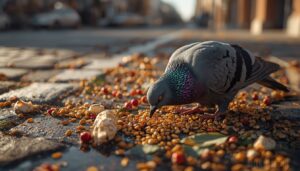
If you’ve ever watched a pigeon work on a sidewalk, you already know they’re not picky. Pigeons eat seeds, grains, fruits, leafy greens, and the occasional insect — but their diet shifts substantially depending on where they live.
In the wild, they lean heavily on what nature offers — seeds, grains, and seasonal produce that mirror a natural pigeon diet full of wholesome, nutrient-rich foods.
wild pigeons follow natural habitat foraging patterns, seeking out seed-rich fields and berry bushes. urban pigeons lean hard on human food scraps, including high-calorie items like bread, chips, and discarded fast food.
water availability shapes their daily routines just as much as food does. Understanding pigeon dietary requirements and nutrition helps you make smarter choices about what — and whether — to feed them.
Providing fresh leafy greens benefits their health.
Natural Diet of Wild Pigeons
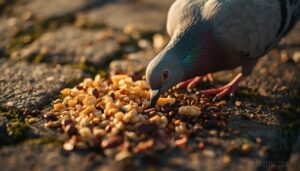
Wild pigeons aren’t picky eaters, but they do follow a fairly consistent pattern when left to their own devices. Their diet breaks down into three main categories, each playing a different role in keeping them healthy and active.
Here’s what they’re actually eating out there.
Seeds and Grains
Seeds and grains make up the bulk of a wild pigeon’s diet — and for good reason. Each grain kernel is basically a self‑contained nutrition package: starch content in the endosperm fuels daily activity, fiber‑rich bran helps digestion, and the mineral‑rich germ delivers oils and vitamins. Wild pigeons favor a natural seed mix that covers their pigeon nutrition requirements without much fuss.
Their preferred grains and seeds include:
- Millet — small seed size variation makes it easy to swallow and digest
- Wheat — a reliable protein source for birds, especially during active seasons
- Corn — gluten‑free grains that deliver steady, slow‑burning energy
- Barley — rounds out a balanced and nutritious diet with key minerals
Together, these choices aren’t accidental. Pigeons forage selectively, instinctively gravitating toward what keeps them healthy.
Fruits and Berries
Wild pigeons don’t stop at seeds. They round out their diet with fruits and berries — elderberries, mulberries, figs, and blackberries all make the list.
These healthy foods for pigeons deliver natural sugars for quick energy, antioxidant benefits that support immune function, and a hydration boost thanks to high water content. The fiber content aids digestion too.
For nutrient balance, small portions work best. Just keep avocado off the menu entirely — it ranks among the most toxic foods for pigeons.
Insects and Small Invertebrates
Beyond berries, wild pigeons also snack on insects and small invertebrates — especially when raising chicks. Protein demand spikes during breeding season, and seeds simply can’t cover it all.
Here’s what they usually hunt while foraging on the ground:
- Beetles, whose hard beetle exoskeleton that the gizzard grinds down efficiently
- Spiders, often found in crevices — their spider silk nests are a giveaway
- Earthworms, which surface after rain softens the earthworm soil
- Snails, a key invertebrate calcium source for bone development
- Caterpillars during active caterpillar molting stages, when they’re easiest to catch
These protein sources for pigeons keep their diet genuinely balanced.
Urban Pigeon Diet

City pigeons don’t have the luxury of foraging through fields or forests — they work with what’s available, and that usually means us. Their diet has shifted dramatically from wild seeds and berries to whatever humans leave behind.
Here’s what urban pigeons are actually eating out there.
Human Food Scraps
Urban pigeons are master scavengers, and human food waste is their main menu. Walk through any city and you’ll spot them picking through discarded pizza, French fries, and sandwich scraps — opportunistic feeding shaped by whatever lands on the pavement.
The problem is that processed foods carry serious Calorie Density Risks. Most of what pigeons pull from trash offers little nutritional value while piling on fat and salt. The food waste impact on pigeons shows up clearly in their health:
- Malnutrition from nutrient-poor scraps weakens immunity
- Obesity linked to high-fat processed foods
- Feather loss from vitamin deficiencies
- Digestive issues caused by seasoned or preserved items
- Reduced hydration from scraps with low moisture content
- Shorter lifespans than wild counterparts
Protein-Rich Scraps like plain cooked meat or eggs fare better than chips or pizza crusts. Low-Salt Alternatives and Mold Prevention Practices matter too — stale or spoiled food adds fungal risks on top of everything else.
For a complete picture of what keeps shells thick and strong, calcium-rich foods that support healthy eggshell formation matter just as much as cutting out the salty, moldy stuff.
Bread and Pastries
Bread and pastries are probably the most common things people toss to pigeons — and unfortunately, they’re also among the worst choices.
White bread’s gluten content and fermentation process make it calorie-dense but nutritionally hollow, offering little beyond empty carbohydrates. Croissants and puff pastries, built on lamination techniques that stack fat into every layer, add unnecessary oil to a bird’s diet.
That crumb texture pigeons seem to enjoy? It comes at a cost.
Regular consumption of these processed foods contributes to obesity, vitamin deficiencies, and weakened immunity. High salt content in flavored breads and pastries compounds the problem further. Human food waste like this quietly shortens a pigeon’s life.
Park Handouts
Tossing seeds at the park feels harmless, but those small handouts quietly reshape how pigeons live.
Most park giveaways — chips, crackers, bread crusts — offer no real nutrition.
Check the next park handout map: Safety Alerts and Event Schedules often include pigeon feeding regulations and public policy notices for good reason.
- Public health risks increase as droppings accumulate around high-traffic feeding zones
- Accessibility Icons near benches mark spots where urban pigeon foraging habits and scavenging concentrate
- Contact Information for rangers helps report overcrowding
Seeds beat scraps every time.
Nutritional Requirements for Pigeons
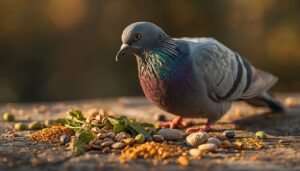
Pigeons might look like simple birds, but their bodies actually run on a surprisingly balanced set of nutrients. Getting that balance right makes a real difference — especially if you’re raising pigeons at home or caring for one that’s been injured.
Here’s what they need to stay healthy.
Proteins
Think of protein as the scaffolding behind everything you see in a healthy pigeon — strong flight feathers, firm muscle tone, consistent energy.
Adult birds need roughly 13–20% of their diet from quality protein sources for pigeons, including insects like beetles and earthworms, along with legumes such as peas and vetch. These supply essential amino acids that your bird can’t synthesize on its own, and protein digestibility matters just as much as quantity.
Breeding pairs have higher protein needs, since both sexes produce crop milk protein to nourish hatchlings.
A good commercial mix already covers the amino acid profile, but adding protein-rich treats or a targeted protein supplement during molt and breeding keeps your bird genuinely thriving.
Carbohydrates
Carbohydrates are the engine behind every wing beat your pigeon makes. They deliver 4 kilocalories per gram, making grains and seeds the most efficient daily fuel available. Complex starches in cracked corn, millet, and wheat release glucose steadily, supporting sustained flight without energy crashes. Simple sugars from fruit add quick bursts when needed. Fiber content aids gut motility and keeps digestion on track.
Grains and seeds power every wing beat, delivering steady fuel that keeps pigeons airborne from dawn to dusk
Here’s what to prioritize:
- Cracked corn and wheat for steady, high energy yield
- Millet for easily digestible complex starches
- Leafy greens and whole grains for fiber content and low glycemic impact
Skip bread — its refined carbohydrates spike blood sugar fast and deliver little nutritional value.
Fats
most energy-dense nutrient in your pigeon’s diet — delivering roughly 9 calories per gram, making it nearly twice as efficient as carbohydrates. That’s why energy-dense foods like sunflower seeds, hemp seeds, and flaxseeds earn a spot in a smart seed diet for pigeons.
These options are rich in essential fatty acids and unsaturated fat benefits that support fat metabolism in birds, from cellular function to feather condition.
Saturated fat sources should stay minimal. Aim for 2.5–7% dietary fat — enough to fuel endurance without tipping into obesity.
Vitamins and Minerals
Beyond fats, vitamins and minerals quietly do the heavy lifting. Without the right micronutrient balance, even a well-fed pigeon can slide into deficiency fast. Here’s what matters most:
- Calcium and Vitamin D work together to keep bones strong and support eggshell quality
- Water-soluble vitamins like B-complex fuel energy metabolism and nerve function
- Vitamin A and Vitamin E protect vision, immunity, and cell health — antioxidant fruits help here
- Mineral balance — especially iron and zinc — helps blood health and tissue repair
Micronutrient deficiencies are preventable. Variety is your best tool.
Recommended Foods for Pet Pigeons
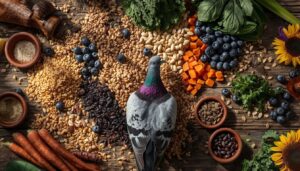
Feeding a pet pigeon well doesn’t have to be complicated, but it does require knowing what actually belongs in their bowl. A balanced diet covers three main categories, and getting each one right makes a real difference in their health and energy.
Here’s what you should be offering your bird regularly.
Commercial Pigeon Feed
Choosing the right commercial pigeon feed is one of the most straightforward ways to take the guesswork out of your bird’s nutrition. Most quality mixes are built around carefully calibrated grain ratios — corn, millet, wheat, and peas — with protein levels generally falling between 14 and 18 percent depending on life stage.
What separates a solid feed from a mediocre one is the vitamin premix: a concentrated blend of vitamins A, D3, E, calcium, and phosphorus that closes the nutritional gaps that plain seeds leave behind.
Pellets go one step further by preventing selective feeding, so your pigeon actually eats the nutrients it needs.
When you’re shopping, check for batch traceability on the packaging — it signals quality control you can trust. Storage conditions matter too: keep feed sealed, cool, and dry, and use it within six to twelve months.
Pellet size should match your bird’s age and breed.
Vegetables and Greens
Seeds keep your pigeon alive — fresh greens keep it thriving. Leafy green vegetables fill the gaps that even a good commercial feed can miss. Think vitamin K sources like kale, calcium‑rich greens like spinach, and antioxidant leafy options like broccoli. Digestive fiber from these vegetables promotes gut health noticeably.
Rotate seasonal green varieties to maintain interest and nutrition:
- Kale – strong calcium and vitamin K content
- Spinach – iron plus folate
- Broccoli – antioxidants and vitamin C
- Cabbage – gentle digestive fiber
Chop everything small and offer fresh greens daily.
Fruits in Moderation
Fresh greens round out your pigeon’s plate — fruits do the same, just with a catch.
Berries, seedless apple slices, and grapes all support vitamin balance and fiber intake, but sugar limits matter here. Grapes alone carry around 23 grams of sugar per cup, so keep portions small. few pieces a day are plenty.
Rotating fruit variety alongside fruit and vegetables keeps your pigeon’s balanced diet interesting without tipping into digestive trouble.
Foods to Avoid Feeding Pigeons
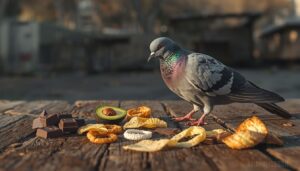
Not everything you offer a pigeon is safe, even if it seems harmless. Some foods can cause serious harm or even prove fatal, and pigeons can’t tell the difference between a treat and a threat.
Here’s what to keep off the menu.
Toxic Foods
Some foods aren’t just unhealthy for pigeons — they’re genuinely dangerous. Keep these off the menu entirely:
- Chocolate – Theobromine triggers seizures and heart failure; chocolate danger is real even in small amounts.
- Avocado – Avocado toxicity from persin causes respiratory distress rapidly.
- Onions, garlic, cyanogenic seeds, and moldy food – Sulfur compounds, mycotoxin risk, and moldy or spoiled food all damage organs silently.
Alcohol is equally harmful and should never be accessible to your bird.
High-Salt Foods
Salt might seem harmless, but for pigeons, it’s a genuine threat. Their kidneys aren’t built to handle sodium the way ours are, so even small amounts from chips, pretzels, or salted snacks can trigger Sodium Toxicity and serious Kidney Stress.
A single pretzel contains more sodium than a pigeon should encounter in days. The resulting Dehydration Risk and elevated Blood Pressure can quietly spiral into organ failure — no dramatic warning signs, just a bird that’s suddenly unwell.
Pigeons don’t have Salt Cravings guiding them away from harm, so they’ll eat what you offer. Food toxicity for birds from salt is easy to prevent — just keep salty foods out of reach entirely.
Sugary Treats
Sugary treats might look harmless, but they create real problems for pigeons. Sugar Toxicity disrupts metabolism, while Caloric Overload leads to Obesity Risk quickly.
Unlike salt, the danger here is quiet accumulation. Avoid these five offenders:
- Chocolate – directly toxic to pigeons
- Candy – pure sugar, zero nutrition
- Sugary cereals – empty calories crowd out real food
- Sweet pastries – dense Caloric Overload in one bite
- Ice cream – unnatural sugars cause digestive distress
Stick to seeds and greens instead.
Importance of Grit in Pigeon Diet
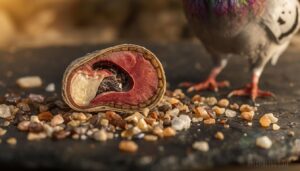
Grit might look like a small detail, but it plays a surprisingly important role in how pigeons digest their food. Without it, even a well-balanced diet doesn’t get broken down properly.
Here’s what grit actually does for your pigeon.
Digestive Aid
Think of grit as the gizzard’s grinding wheel — without it, your pigeon simply can’t break down tough seed coats effectively. Since pigeons can’t chew, they rely on supplemental grit to support digestive grit function inside the muscular gizzard, where fiber balance and mechanical grinding work together.
This process also enhances enzyme boosters like amylase and proteases, giving them time to do their job properly.
Prebiotic ingredients and probiotic blends thrive when digestion runs smoothly. Stick to a consistent water schedule and offer clean grit regularly — poor bird digestion often starts with something this simple.
Mineral Supplement
Grit isn’t just a digestive tool — it’s also your pigeon’s mineral lifeline. Calcium grit from oyster shells and limestone dissolves in the system, supporting bone strength and egg production. Magnesium supplementation and phosphorus levels matter too, especially during breeding and molt.
Key mineral benefits include:
- Zinc bioavailability for immune function and feather quality
- Potassium needs met through mineral-rich grit blends
- Mineral interaction effects balanced to prevent nutrient competition
Follow supplement dosing guidelines and offer cuttlebone freely — your bird’s body will regulate intake naturally.
Feeding Habits of Pigeons
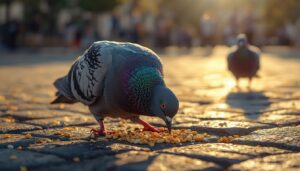
Pigeons aren’t random about when and how much they eat — their feeding habits follow a pretty consistent pattern. Whether you’re caring for a pet pigeon or just curious about the ones outside your window, understanding their routine helps you feed them better.
Here’s what you should know about frequency, amount, and timing.
Frequency
Pigeons are creatures of rhythm — and their feeding frequency reflects that. In the wild, Morning Foraging Peaks happen right after sunrise, when energy demand is highest after a night of roosting. Afternoon Feeding Intervals follow a few hours later, with Evening Foraging Bouts rounding out the day.
For your pet pigeon, mirroring this natural feeding frequency for pigeons works well:
- Morning — Offer the main seed meal at sunrise
- Midday/Afternoon — Provide a smaller portion with greens
- Evening — Light feeding before roost time
Rainy Day Foraging slows naturally, so adjust accordingly. Seasonal variations in pigeon diet — winter vs summer — also shift timing, since daylight length directly influences how often they feed.
Amount
Once you’ve settled into a consistent feeding frequency for pigeons, quantity becomes the next thing to get right.
Daily Intake Range varies by bird: most adults need 20–40 grams per day, while racing birds under heavy Training Load Feeding can hit 60 grams.
Breeding Pair Portions run higher too — around 30–50 grams each.
During molt, Molt Energy Needs push intake up slightly.
Weight-Adjusted Rations matter here — pigeon obesity and overfeeding issues are real, so watch the keel bone regularly.
Time of Day
How much you feed — but so does when you feed. Timing shapes everything about pigeon foraging behavior, and their daily feeding schedule is surprisingly consistent.
Dawn Feeding Surge kicks things off right after sunrise, when visibility improves and appetite peaks. Midday Foraging Peaks follow as light intensifies and birds scan for seeds, scraps, or anything scattered near urban feeding stations. Afternoon Snack Shift often brings a second wave of activity before the Evening Roost Meals — smaller, quieter feeds that prep birds for sleep. Nighttime Activity Reduction is almost total once roosting begins.
- Align your bird feeder design and timing with these natural windows for the best results.
Seasonal Changes in Pigeon Diet
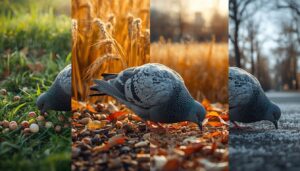
Pigeons don’t eat the same things year-round — season shapes what’s available, and they adapt accordingly. Wild pigeons especially shift their diet based on what nature puts in front of them.
Here’s how their food choices change from spring through winter.
Spring and Summer Foods
Warm months bring a genuine shift in what pigeons eat and how actively they forage. Fresh greens like spinach and clover become easy pickings, while berries, fruits, and insects surge in availability — all reflecting the seasonal variations in pigeon diet, winter vs. summer.
Stone fruit blooms, asparagus peas pairing, and hydrating cucumbers show up in their range too.
- Berries and fruits deliver vitamins essential during breeding
- Fresh greens support feather growth through molt
- Insects spike protein intake when chicks need it most
Fall and Winter Foods
As summer’s abundance fades, the pigeon diet in winter shifts toward calorie-dense survival foods.
Where spring offered soft berries and fresh greens, fall and winter demand something sturdier.
Root vegetables step in reliably — carrot feeding and turnip supplies give birds the fiber and stored nutrients that frozen ground can’t.
Pumpkin energy becomes a practical staple, while sunflower seeds deliver the fats needed to maintain body heat when temperatures drop.
Apple hydration helps too, keeping birds from dehydrating during dry indoor roosts or cold, wind-stripped days.
If you’re feeding pigeons through colder months, this seasonal diet variation matters.
Nutrient balance in pigeon diet shifts — less protein, more caloric density.
Understanding seasonal variations in pigeon diet winter vs summer helps you offer the right mix at the right time.
Differences Between Wild and Domestic Pigeon Diets
A wild pigeon and a pet pigeon might look the same, but what ends up in their stomachs is a different story. Their diets diverge in some pretty meaningful ways — variety on one side, careful control on the other.
Here’s how the two compare.
Variety in Wild Diets
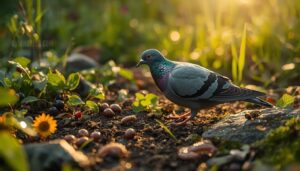
Wild pigeons don’t just eat whatever’s in front of them — they’re selective foragers. Their wild pigeon diet composition shifts constantly, driven by seasonal variation in pigeon feeding and what each microhabitat foraging zone actually offers.
Seed size preference plays a real role too; they tend to favor medium-sized seeds that are easy to crack and digest.
Come warmer months, fruit ripeness timing shapes their daily movement, pulling flocks toward elderberries, hawthorn, and crabapples.
Invertebrate diversity adds another layer — insects, beetles, and worms fill protein gaps, especially during molt and breeding.
When everything else runs short, fallback plant greens like clover and chickweed keep energy levels stable.
- Seeds from native grasses, weeds, and cultivated crops
- Ripe seasonal fruits rich in vitamins and quick-burn sugars
- Insects, larvae, and small invertebrates for essential amino acids
- Herbaceous shoots and greens as reliable backup nutrition
Controlled Nutrition in Captivity
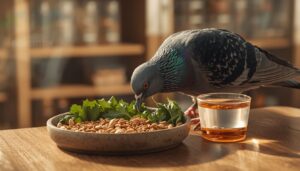
Captivity puts you in the driver’s seat of everything your pigeon consumes. Unlike wild birds that self-regulate through foraging, domestic pigeons depend entirely on your choices.
A balanced seed mix with brewer’s yeast and vitamin fortification covers the basics, while daily greens and measured portions support effective weight management protocol and calorie density control.
Body condition monitoring tells you when to adjust. Keep water containers clean — water sanitation isn’t optional.
Feeding pigeons in captivity rewards consistency.
Impact of Diet on Pigeon Health
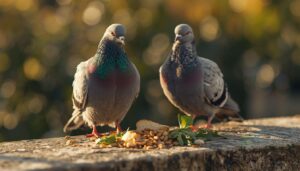
What goes into a pigeon’s crop shapes everything that comes out — their energy, immunity, even feather quality. Contaminated grains carry mycotoxins that trigger gut inflammation and disrupt microbiota balance, making birds more vulnerable to infections like Salmonella. Nutritional gaps weaken immune function and dull plumage noticeably.
To protect your bird, focus on three things:
- Offer varied, clean feed to reduce mycotoxin exposure
- Supplement with greens and grit for nutrient balance
- Eliminate human food waste, bread, and high-salt snacks entirely
Frequently Asked Questions (FAQs)
What should a pet pigeon eat?
A balanced diet for your pet pigeon starts with a quality seed mix — millet, corn, and wheat — paired with fresh greens, occasional fruit, and clean fresh water refreshed daily.
What do Urban pigeons eat?
Think of city pigeons as nature’s cleanup crew — they’ve traded meadows for sidewalks.
Urban pigeons survive on Street Food Waste, Park Seed Spills, Popcorn Chips, bread scraps, and Fruit Drop Foraging, practicing Insect Opportunism whenever green spaces allow.
Are pigeons omnivores?
Yes, pigeons are omnivores. While seeds dominate their diet, their omnivore behavior extends to insects, worms, and scraps — showing clear dietary opportunism and protein source variation depending on what’s available.
Do pigeons eat nuts?
Pigeons can eat nuts — like a small bonus in an otherwise grain-heavy diet. Offer unsalted, shelled pieces in moderation.
They provide useful fats and protein, but too many disrupt nutrient balance.
Do pigeons mate in October?
October mating does happen, though it’s less common. Pigeon breeding cycles slow as daylight fades, but mild climates and steady food sources can keep some pairs active well into fall.
What do feral pigeons eat?
Feral pigeons are opportunistic feeders—scavenging bread crusts, pizza scraps, and spilled seed wherever urban wildlife scavenging opportunities arise.
Human food waste drives feeding site competition and raises disease transmission risk among flocks.
What seeds do pigeons eat?
Their seed menu is surprisingly varied: millet, sunflower seeds, wheat, corn kernels, barley, sorghum, safflower, rice, and flax all make the list.
If it grows in a field, there’s a good chance they’ll eat it.
Can pigeons eat food?
Yes, pigeons can eat food — they’re natural foragers built for it.
Their core diet covers seeds, grains, fruits, and greens, giving them the balanced nutrition they need to stay healthy and active.
What fruits do pigeons eat?
Pigeons eat berries, grapes, apple slices, pears, melons, cherries, and bananas.
Always remove seeds, cut pieces small for fruit size considerations, rinse off pesticides, and offer fresh fruit in moderation alongside seeds and greens.
Can I feed wild pigeons?
Tossing a handful of seeds to a pigeon feels harmless — almost kind. And it can be if if you do it right.
Stick to millet, corn, or wheat, skip the bread, and keep portions small to avoid human dependency and disease risk.
Conclusion
Funny how pigeons get labeled as flying trash cans when left to their own devices, they’d prefer a clean spread of millet, berries, and the odd insect—hardly the diet of a scavenger.
What do pigeons eat when we stop feeding them our leftovers? Better than we’d expect.
Feed them right—quality grains, greens, grit—and you’ll see the difference in their feathers, energy, and health. The bird reflects exactly what you put in front of it.