This site is supported by our readers. We may earn a commission, at no cost to you, if you purchase through links.
Watch a robin work a lawn and you’ll notice something most people overlook—it’s not hunting worms the whole time. Between those familiar head‑tilts and quick dashes, it’s snatching ants.
Birds eat ants far more often than most people realize, and some species have built their entire hunting strategy around them.
Woodpeckers drill into bark specifically to reach ant galleries. Tropical antbirds follow army ant swarms like seasoned opportunists. Even burrowing owls sprint across grasslands to dig them up.
Ants pack up to 45 grams of protein per 100 grams—rivaling many commercial feeds.
Once you know what to look for, the bird‑ant connection shows up everywhere.
Table Of Contents
Key Takeaways
- Many birds — from backyard robins to tropical antbirds — actively hunt ants as a reliable, protein-rich food source, not just an occasional snack.
- Ants pack up to 45g of protein per 100g, plus key minerals like zinc and iron, making them nutritionally superior to seeds alone.
- Birds ramp up ant consumption during breeding season and migration, when their energy and protein demands are at their highest.
- Different species use specialized tactics to catch ants — woodpeckers drill into wood galleries, flickers scratch the soil, and swallows snatch flying ants mid‑air.
Birds That Eat Ants
Lots of birds enjoy ants more than you’d think. From backyard regulars to rainforest specialists, the list might surprise you. Here’s a quick look at who’s munching on ants and why.
The Gilded Flicker’s ant-heavy diet makes it one of North America’s most fascinating and specialized backyard foragers.
Woodpeckers and Flickers

Woodpeckers and flickers are expert ant hunters. Their zygodactyl feet grip tree trunks, and their chisel-like bills drill into wood for insects. The Northern flicker prefers ground foraging, using a long, sticky tongue to extract ants from soil. A black and white bird with a red neck perched on a tree trunk is the male Hairy Woodpecker, a common sight in Bryce Canyon. Woodpeckers drum on trees to mark territory and brace with stiff tails while searching for protein-rich ants.
- Zygodactyl feet grip bark
- Chisel-like bills drill wood
- Sticky tongues catch ants
- Drumming marks territory
Robins, Starlings, and Blackbirds
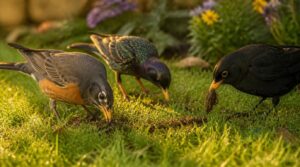
While woodpeckers dominate the treetops, robins, starlings, and blackbirds work the ground below.
The American Robin probes leaf litter and lawns for ants, using direct pecks to find this protein-rich food source.
European Starlings and Common Blackbirds do the same during breeding season, when ants deliver the nutrients growing chicks need most.
Tropical Antbirds
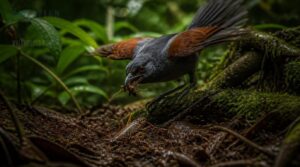
Head south to Central and South America, and you’ll meet birds built almost entirely around ants. Antbirds, antthrushes, and antpittas belong to the Thamnophilidae family, small forest birds with sturdy, hooked bills.
Many practice army ant following, snatching insects flushed by swarming ants. They hunt the tropical understory, use calls for vocal coordination, and nest low for protection — diet specialization shaping their whole ecological niche.
Owls and Ground Birds
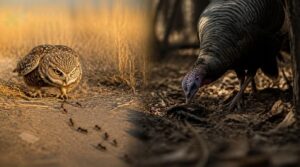
Not every ant-eater lives in trees.
Burrowing owls thrive in grassland habitats, using sharp nocturnal vision and asymmetric ear hearing to track invertebrate prey after dark. Their long, ground foraging legs help them sprint and dig fast.
Wild turkeys also scratch through leaf litter for ants, a handy protein source, with diets shifting seasonally toward more insects in warm months.
Baby Birds and Ants
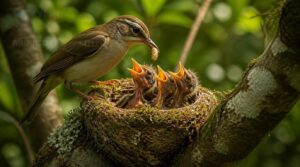
Once hatched, chicks rely on parents to bring protein-rich food straight to the nest. Ants and larvae supply essential amino acids and minerals for fast chick development. Parental foraging guidance ensures safe portions, meeting nestling protein needs and boosting immunity.
From mealworms to beetle larvae, the variety of insects parents deliver matters — explore what eastern bluebirds actually feed their chicks to see how diet shapes early growth.
- Wriggling larvae stuffed with nutrients
- Tiny ants tucked into beaks
- Soft bites sized just right
- Worker ants gathered near nests
Do Birds Eat Ants? Yes, Many Birds Do
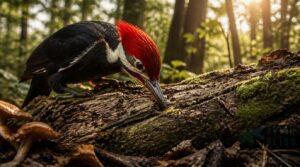
Yes, birds absolutely eat ants — and quite a few of them do it regularly. Insectivorous birds across multiple families, from woodpeckers to thrushes, include ants as a reliable part of their diet.
Ants are a protein-rich prey item that birds can find almost anywhere. That makes them a practical choice, especially when other insects are scarce. Avian diet diversity means some species eat ants daily, while others snack on them only when foraging leads them to a colony.
Ant consumption peaks during breeding season, when energy demands are highest. Some birds consume thousands of ants in a single session. It’s an efficient, low-effort strategy that promotes foraging success across many habitats.
Why Ants Are Good Food for Birds
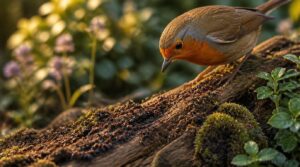
Ants aren’t just a nuisance crawling across your yard — for birds, they’re actually a solid meal. They pack more nutritional value than you might expect, covering everything from protein to key minerals. Here’s what makes ants such a worthwhile food source for birds.
High Protein for Growth
Ants are a protein-rich food source that rivals many commercial feeds. Black ants carry up to 45 g of protein per 100 g — that’s a serious nutritional punch.
For nestlings, this matters enormously. Juvenile organ growth, muscle tissue synthesis, and feather pigment development all depend on a steady amino acid supply, especially methionine and lysine, which seed-based diets often lack.
Fats for Energy
Fat isn’t just a backup fuel — it’s the premium option. Fats deliver 9 calories per gram, making them more energy-dense than protein or carbohydrates.
Ants carry dietary fats that support lipid metabolism and adipose reserves, giving birds a reliable energy buffer.
During migration, especially, fat oxidation keeps flight muscles running long after carbohydrate stores run dry.
Minerals and Amino Acids
Think of ants as a hidden multivitamin. Their tissues carry zinc, iron, and potassium — minerals that keep a bird’s enzymes firing, blood oxygenated, and heart regulated. Even their mineral-rich exoskeletons offer calcium and phosphorus.
Ants are a hidden multivitamin for birds, delivering zinc, iron, potassium, calcium, and phosphorus in every bite
Beyond minerals, ant protein delivers essential amino acids like lysine and methionine. These fill real micronutrient dietary gaps that seeds simply can’t cover, supporting muscle development and healthy feathers.
Breeding and Migration Needs
Breeding and migration push birds to their physical limits. That’s why peak food timing matters so much — birds time nesting to match insect abundance, and ants deliver exactly when it counts. The protein and fat in ants fuel rapid nestling growth and support juvenile feeding success during those critical early weeks.
During migration, birds rely on energy-dense refueling stops. Ants provide quick, reliable calories that replenish fat reserves for long flights.
Seed Diet Supplement
Birds get a protein rich food source from ants, but seed diet supplements boost bird nutrition.
Probiotic Seed Blends support gut microbiome health and Prebiotic Fiber Benefits feed bacteria. Essential Fatty Acids from seeds help feathers. Keep supplements cool and dry for Supplement Storage Safety.
- Bird seed versus insect diet
- Meets avian protein requirements
- Adds nutritional benefits
- Promotes gut health
How Birds Find and Eat Ants
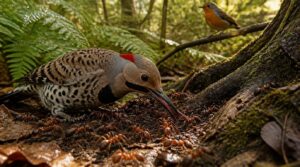
So how do birds actually catch ants? They use a few clever tricks, and each species has its own favorite method. Let’s look at five ways birds track down and eat these tiny insects.
Pecking Ant Nests
Pecking into a tree or rotting log isn’t random — woodpeckers know exactly what’s inside. Their elongated tongues reach up to 4 cm past the beak to pull ants from deep galleries.
| Foraging Method | Target Nest Type |
|---|---|
| Drilling bark | Carpenter ant nests |
| Probing crevices | Concealed entrance tunnels |
Ant colony architecture — with ventilation shafts and layered chambers — concentrates workers, making each peck rewarding.
Ground Foraging
Where woodpeckers drill into wood, ground foragers work a different angle — right beneath your feet.
Northern Flickers, Song Sparrows, and Wild Turkeys scratch and probe the soil to expose hidden ant colonies. Their strong leg muscles let them dig quickly and efficiently, even through compacted earth.
Here’s what shapes their success on the ground:
- Litter moisture keeps ants active near the surface and easier to catch.
- Soil temperature drives ants deeper in heat, so birds forage during early morning peak hours.
- Leg muscle strength powers rapid scratching to disrupt nest entrances.
- Ant trail following guides birds straight to high-density colonies.
- Disturbed or bare soil patches expose prey that dense vegetation would otherwise hide.
Ground-scratching behavior isn’t random. It’s a read of the landscape — patient, methodical, and remarkably effective.
Bark and Wood Probing
From soil to bark, woodpeckers like the Downy and Pileated woodpeckers switch tactics, gleaning tree bark for hidden ant tunnels.
Northern flickers sometimes join, tapping trunks before returning to the ground.
This wood interface sensing helps birds judge bark thickness estimation almost instinctively — a non-destructive probing method, much like forestry’s automated detection systems used for quality control on logging lines.
Catching Flying Ants
Ever notice birds suddenly darting through the air on a warm, sticky evening? That’s a nuptial flight — when ant colonies release winged alates to mate.
Swallows and warblers, both aerial insectivores, swoop in for aerial insect capture. These flying ants pack solid nutrition.
Rain followed by drying weather often triggers these seasonal feeding hubs, giving birds an easy aerial buffet.
Ant Colony Detection
Birds really don’t need fancy tools to find ants underground. Groundscratching behavior helps them follow ant trails straight to mounds. They sense colony disturbance patterns, vibrations, and warmth—nature’s own thermal nest signatures.
Scientists use pheromone trail mapping, subsurface radar technology, and acoustic vibration sensing to study ant foraging strategies and colony extraction, but birds just trust their sharp instincts.
Ants, Bird Habitats, and Backyard Safety
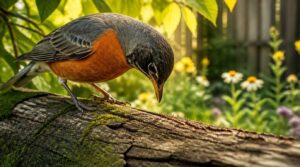
Ants show up in your yard for a reason, and birds notice too. But not every ant encounter is good news for your feathered visitors. Here’s what to know about keeping your space safe and welcoming.
Seasonal Ant Swarms
Warm, humid evenings trigger seasonal insect swarms, sending winged ants—alates—into sky for seasonal diet shifts birds love. Post-rain swarm waves follow dry spells, packing millions of alates into hours.
Temperate swarms peak in late spring; tropical swarming cycles run year-round. Alate dispersal patterns spread colonies, feeding nutrient web impacts, boosting ant consumption frequency, shaping bird foraging behavior across seasonal patterns.
Habitat Features Birds Prefer
Want more ant-eating birds in your yard? Give them layers. Vertical canopy layers, riparian buffer zones, and edge habitat diversity create rich foraging grounds. Decaying log microhabitats hide beetles and ants alike.
Native hedgerow corridors connect spaces and boost habitat diversity for foragers. Even suburban yards and other disturbed habitats can attract birds through smart habitat selection in human-altered landscapes.
Fire Ant Risks
Not all ants make safe meals or good neighbors. Fire ants deliver a venomous sting that causes burning pain and swelling.
Some people and pets face allergic response dangers, even anaphylaxis. Scratched stings can lead to secondary skin infections.
Invasive colony expansion means more mounds and pet safety concerns for everyone outdoors. Stay alert outside.
Bird-Safe Ant Control
Good news: keeping ants away doesn’t mean harming birds. Sprinkle food-grade diatomaceous earth near feeders to dry out ants safely. Plant rosemary or mint as natural scent barriers and non-toxic deterrents.
Fix leaky taps for smart moisture management, and place mechanical traps away from bird zones—simple, wildlife-friendly, bird-safe pest control. Keep it natural, eco-friendly, and bird-friendly pest management overall.
Protecting Feeders From Ants
Your bird feeders need defenses too. Effective feeder elevation—5 to 6 feet up—blocks most ants.
Add an ant moat right above the feeder, and refill it weekly for ant moat maintenance. Pick stainless steel or ceramic for lasting material durability.
Wipe spills fast to prevent sticky, lingering residue. These natural barriers and non-toxic deterrents make ant control bird‑safe and friendly.
Frequently Asked Questions (FAQs)
Why do birds eat ants?
Some birds get over half their diet from ants. That’s no accident. Ants are protein-rich, packing up to 53 g per 100 g — plus zinc, iron, and amino acids that seeds simply can’t match.
Are ants harmful to birds?
Most ants are harmless, but venomous species like fire ants can sting and injure nestlings. Birds usually crush or rub ants before eating to neutralize toxins. Pesticide-treated ants risk secondary poisoning, making bird-safe control essential.
Do pigeons eat ants?
Yes, pigeons eat ants occasionally. Wild and feral pigeons peck at ants during ground foraging, gaining small amounts of protein-rich nutrition. Domestic pigeons rarely bother — seeds stay their go-to meal.
Do blackbirds eat ants?
Blackbirds are no strangers to an ant-based meal. They forage on the ground, picking ants from soil and leaf litter — especially in summer, when post-rain swarms give chicks the protein boost they need to grow.
Which birds eat ants?
Many species hunt ants regularly. Northern Flickers, Downy Woodpeckers, American Robins, Carolina Wrens, and American Crows all eat ants. So do tropical antbirds and ground-foraging birds that scratch soil to uncover colonies.
Do birds eat fire ants?
Fire ants sting hard — yet some birds eat them anyway. Purple Martins and Northern Mockingbirds target smaller worker ants, flipping and crushing them first to reduce venom exposure before swallowing.
Do birds eat flying ants?
Absolutely — birds eat flying ants with enthusiasm. During nuptial swarms, swallows, swifts, and flycatchers dart through the air, snatching winged ants mid-flight. It’s a high-energy seasonal feast that many aerial insectivores rely on.
Are ants good for birds?
Short answer? Ants are basically nature’s multivitamin for birds. They deliver high protein content, key minerals like zinc and iron, and amino acids that seeds simply can’t match.
Do humans eat ants?
Yes, humans eat ants. It’s called entomophagy, and it’s common across Mexico, Africa, Asia, and Australia. Ants are roasted, fried, or chocolate-coated — delivering protein, iron, and zinc with a tangy, citrusy crunch.
Do birds like eating ants?
Many birds actively seek out ants as part of their avian diet. Ants are protein-rich prey, packed with minerals and amino acids that support feather growth, muscle development, and energy needs during migration and breeding.
Conclusion
Who knew something as common as an ant could matter so much to so many birds? The answer to ‘do birds eat ants’ isn’t just yes—it’s a resounding one, backed by real protein counts, migration fuel, and centuries of evolved foraging behavior.
From woodpeckers drilling into galleries to robins snatching them off your lawn, ants are woven deep into bird life.
Keep that in mind next time you spot a bird working the ground.