This site is supported by our readers. We may earn a commission, at no cost to you, if you purchase through links.
 You’ve likely watched birds puff up like feathered balloons during chilly mornings – they’re creating nature’s most efficient insulation system.
When birds fluff up their feathers, they trap warm air pockets close to their skin, reducing heat loss by up to 50%.
This thermoregulation trick works like adding extra blankets without the bulk.
Beyond staying warm, birds use feather fluffing for courtship displays, territorial intimidation, and social communication within flocks.
They’ll also ruffle feathers during preening to distribute waterproofing oils and shake off parasites.
However, persistent fluffing during warm weather often signals illness or stress, making this behavior a vital health indicator that reveals far more than simple temperature control.
Table Of Contents
- Key Takeaways
- Why Do Birds Fluff Up Their Feathers?
- What Does Fluffing Feathers Do for Birds?
- How Birds Use Feathers for Warmth
- Fluffing Feathers as a Social Signal
- Feather Fluffing and Bird Health
- Feather Maintenance Behaviors Explained
- Why Baby Birds Fluff Their Feathers
- Fluffing Feathers During Rest and Sleep
- Common Causes of Puffed-Up Feathers
- Tips for Supporting Healthy Feather Fluffing
- Frequently Asked Questions (FAQs)
- Why do birds fluff up their feathers in cold weather?
- Why do birds fluff up?
- Why do parrots raise their feathers?
- Why do birds puff up their feathers?
- Why do baby birds ruffle their feathers?
- Why do parakeets fluff their feathers?
- What does it mean when birds puff up their feathers?
- Do birds fluff up when happy?
- Do birds fluff up when cold?
- Why do birds ruffle their feathers?
- Conclusion
Key Takeaways
- You’ll see birds puff up their feathers primarily as nature’s thermostat – they’re trapping warm air between feathers to create insulation that can reduce heat loss by up to 50% during cold weather.
- Your bird’s feather fluffing serves as sophisticated communication, signaling everything from courtship displays and territorial dominance to happiness and contentment during social interactions.
- You can use persistent feather fluffing as an early health warning system – if your bird stays puffed up during warm daylight hours, it’s often signaling illness, fever, or stress that requires immediate veterinary attention.
- You’ll notice birds fluff their feathers for essential maintenance behaviors like distributing waterproofing oils during preening, removing parasites, and preparing for sleep by creating maximum insulation for nighttime temperature regulation.
Why Do Birds Fluff Up Their Feathers?
If you’ve ever watched a bird suddenly transform into what looks like a feathery puffball, you’re witnessing one of nature’s most versatile behaviors.
Birds fluff their feathers for essential reasons including temperature regulation, social communication, grooming maintenance, and health responses.
Thermoregulation and Insulation
When temperatures drop, you’ll notice birds puffing up like feathered marshmallows. This air trapping mechanism creates multiple feather layers that function as natural insulation techniques.
Birds transform into living thermostats, puffing up like feathery marshmallows when winter’s chill demands maximum insulation
Cold adaptation occurs as birds adjust their plumage to maximize heat regulation. During winter, some species increase feather count by thousands, enhancing their thermoregulation capabilities through sophisticated feather insulation systems.
The unique structure of bird feathers and plumage, including feather color patterns, plays a vital role in their ability to regulate temperature and survive in various environments, utilizing natural insulation and thermoregulation capabilities.
Communication and Social Signals
Birds’ feathers serve as sophisticated communication tools beyond simple temperature control.
When you observe a bird puffing up, it’s often sending deliberate Visual Cues to other birds or even humans about its emotional state and intentions.
Here’s how feather signals work in bird communication:
- Courtship Displays – Males fluff colorful plumage to attract potential mates
- Dominance Behaviors – Territorial birds appear larger to intimidate rivals
- Social Hierarchy – Fluffing establishes pecking order within flocks
- Emotional Expression – Happy pet birds show contentment through gentle ruffling
Feather Maintenance and Hygiene
Preening habits involve more than simple cleaning—you’re witnessing sophisticated feather maintenance in action.
Birds use their beaks to interlock microscopic barbules while distributing waterproofing preen oil across their plumage care routine.
This thorough feather cleaning process, combined with dust bathing and sunbathing, maintains peak feather health.
The molting process naturally replaces worn feathers, ensuring peak performance.
Health and Illness Indicators
When your bird constantly puffs up during daylight hours, it’s often signaling illness or fever.
Persistent fluffing serves as a key illness sign, helping sick birds conserve energy and maintain body temperature.
Watch for additional sickness indicators like lethargy, poor appetite, or respiratory distress.
These stress signals require immediate health monitoring and veterinary attention for proper illness detection.
What Does Fluffing Feathers Do for Birds?
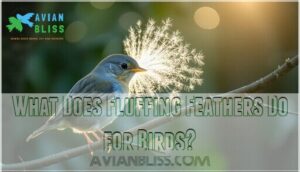
Feather fluffing serves multiple critical functions that affect avian physiology and survival.
When you observe this bird behavior, you’re witnessing a sophisticated biological response that impacts flight mechanics and overall health.
The adjustment of feather structure creates varying levels of insulation while supporting essential physiological processes.
Here’s what feather fluffing accomplishes:
- Temperature regulation – Birds manipulate plumage variation to control heat retention or loss
- Social communication – Fluffed feathers signal emotional states and territorial boundaries
- Feather maintenance – Ruffling helps distribute oils and remove parasites from plumage
This thermoregulation mechanism allows birds to maintain ideal body temperature without expending excessive energy.
The process directly influences their ability to conserve bird warmth during cold periods while enabling heat dissipation when temperatures rise.
How Birds Use Feathers for Warmth
You’ll notice that birds have mastered the art of using their feathers as a personal climate control system, adjusting their plumage to trap or release heat as needed.
This remarkable thermoregulation ability allows them to maintain ideal body temperature by creating insulating air pockets between their feathers during cold weather or flattening their plumage to dissipate excess heat when temperatures rise, which is a key aspect of their overall plumage management.
Trapping Air for Insulation
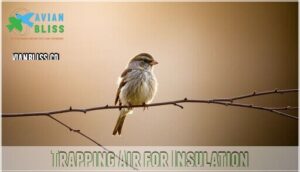
Think of feather fluffing as nature’s adjustable down jacket.
When you fluff their feathers, birds create microscopic air pockets between individual barbules that act as a thermal barrier. This air trapping mechanism works because trapped air heats up from body warmth, forming an insulating layer.
Down feathers excel at this insulation method through their woolly structure, while contour feathers provide the outer shell for cold adaptation and effective thermoregulation.
The unique structure of down feathers is a key factor in their ability to provide super insulation properties with super insulation and cold adaptation capabilities.
Fluffing During Cold Weather
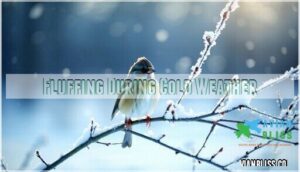
When temperatures drop, you’ll notice birds puffing up like feathered footballs.
This cold weather behavior creates multiple air pockets between feathers, forming a thermal barrier that prevents heat loss.
Small birds like sparrows expand their plumage dramatically during winter survival mode.
This feather trapping mechanism can reduce heat loss by up to 50%, making thermoregulation incredibly efficient for bird temperature regulation in harsh conditions.
The unique structure of feather insulation plays a vital role in maintaining the bird’s body heat during extreme cold, utilizing feather insulation to great effect.
Flattening Feathers in Hot Conditions
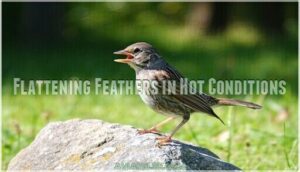
When summer heat strikes, you’ll notice birds do the opposite of feather fluffing – they flatten their plumage against their bodies.
This cooling mechanism reduces insulation by eliminating air pockets between feathers.
Heat dissipation occurs as flattened feathers allow better air circulation across the skin.
Combined with thermal comfort behaviors like panting, this feather flex helps maintain proper thermoregulation during scorching temperatures.
Adjusting Feather Layers for Temperature
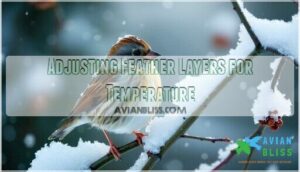
Birds constantly fine-tune their feather layers like adjustable thermal clothing.
When temperatures drop, they’ll ruffle specific feather groups while keeping others smooth, creating customized insulation zones.
This selective feather fluffing maximizes air trapping efficiency while conserving energy.
During heat regulation, they’ll flatten outer feathers while maintaining inner down layers, allowing precise thermoregulation without complete temperature vulnerability, which is made possible by their ability to create customized insulation zones.
Fluffing Feathers as a Social Signal

Birds use feather fluffing as a sophisticated communication system that extends far beyond temperature control.
You’ll observe this behavior during courtship rituals, territorial disputes, and everyday social interactions where birds need to convey specific messages to their flock mates or rivals, utilizing it as a means of sophisticated communication.
Courtship and Mating Displays
Male peacocks fan their magnificent tail feathers during courtship rituals, transforming into living rainbows that captivate potential mates.
You’ll observe feather displays across countless bird species where males puff up colorful plumage to signal their fitness.
These visual cues communicate genetic quality and health status through elaborate mating displays. Courtship behaviors combine strategic feather fluffing with synchronized movements, creating multi-sensory experiences that enhance mate attraction success rates substantially, which can be attributed to multi-sensory experiences.
Territorial and Dominance Signals
When you’re watching from a safe distance, fluffed feathers serve as powerful territorial displays and dominance signals.
These aggressive threat postures make birds appear larger and more intimidating to rivals.
Territorial birds expand their plumage to assert ownership over nesting sites, food sources, or prime habitat.
This intimidation tactic often prevents physical confrontations, saving energy while maintaining dominance hierarchies within bird communities, and is a key aspect of their aggressive threat postures.
Communication in Flocks and Groups
Within flocks, you’ll notice feather positioning creates a complex bird language system.
Group signals help establish social hierarchy and coordinate collective behaviors like feeding or roosting. These communication styles involve subtle feather adjustments that convey status, readiness to move, or alarm signals.
Bird behavior researchers have documented how flock dynamics rely on these visual cues for maintaining order and safety during group activities, which is crucial for the flock’s overall well-being and coordination.
Expressing Happiness or Excitement
When you observe your pet bird fluffing up during playtime or treat-giving, you’re witnessing pure joy in action.
These happiness displays serve as emotional expression that strengthens bonds between birds and their human companions.
- Joy Signals: Parrots often puff their head feathers when receiving gentle scratches, indicating trust and contentment cues
- Excitement Displays: Birds fluff their entire body when anticipating favorite foods or engaging in stimulating activities
- Happy Feathers: Relaxed fluffing combined with soft vocalizations demonstrates positive emotional states and comfort
Feather Fluffing and Bird Health
When you notice your bird staying puffed up during the day, it’s often signaling illness or discomfort rather than normal temperature regulation.
Persistent feather fluffing combined with lethargy, poor appetite, or changes in behavior requires immediate veterinary attention to prevent serious health complications.
Signs of Sickness or Fever
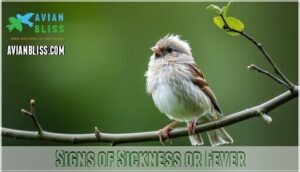
When your bird appears unusually puffed up during daylight hours, you’re likely witnessing fever signs or illness indicators.
A sick bird maintains fluffed feathers to conserve body heat, creating an insulating barrier against temperature drops caused by infection.
This persistent feather condition differs from normal thermoregulation—healthy birds don’t stay continuously fluffed.
Poor nutrition and weakened immune systems make birds more susceptible to infections that trigger this behavior, which can be a clear indicator of a bird’s overall health and potential need for medical attention related to illness indicators.
Stress and Discomfort Indicators
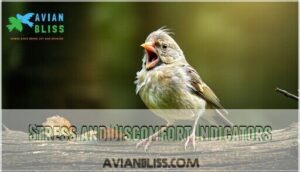
Several stress behaviors reveal when birds feel threatened or uncomfortable.
Fear signals include persistent feather fluffing combined with rapid breathing, hunched postures, or restless movement.
Anxiety indicators manifest as excessive preening, loss of appetite, or changes in vocalization patterns.
These discomfort signs often precede illness, making stress response recognition essential for bird health monitoring, which involves understanding and identifying key signals.
Monitoring for Early Illness
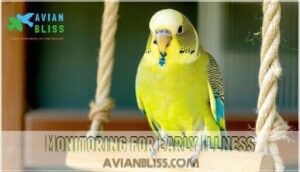
Early-detection strategies can save your feathered friend’s life.
Watch for persistent feather fluffing combined with changes in bird behavior—lethargy, appetite loss, or altered vocalizations signal trouble.
Healthy birds typically fluff only when cold or sleepy.
Chronic puffiness indicates your bird’s body is working overtime to maintain normal temperature, which is a sign of potential illness, and regular health checks of feather condition help identify illness signs before they become serious.
When to Seek Veterinary Help
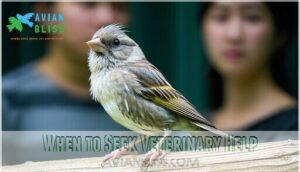
Recognizing when your feathered friend needs professional help can save their life. Persistent fluffing combined with other symptoms requires immediate Emergency Care from an experienced avian veterinarian.
Watch for these critical Veterinary Signs that demand urgent attention:
- Continuous puffed feathers during daytime hours – your bird’s body is working overtime
- Labored breathing with tail bobbing – respiratory distress signals serious illness
- Loss of appetite combined with lethargy – the body’s energy reserves are failing
- Discolored or bloody droppings – internal systems may be compromised
- Half-closed eyes with poor feather condition – multiple body systems are shutting down
Don’t wait for symptoms to worsen. Bird Emergencies escalate quickly because birds naturally hide illness until they’re critically sick.
These Feather Symptoms, especially when appearing together, indicate your pet needs professional diagnosis and treatment immediately.
Feather Maintenance Behaviors Explained

Beyond temperature control, birds fluff their feathers to maintain their plumage through several essential grooming behaviors.
These maintenance activities help guarantee feathers stay clean, waterproof, and properly arranged for peak function.
Preening and Spreading Preen Oil
Preening involves intricate feather cleaning where birds use specialized beaks and tongues to distribute preen oil from their glands.
This oil distribution creates essential waterproofing methods that protect plumage from moisture.
During preening techniques, birds carefully realign barbule maintenance by interlocking microscopic hooks on each feather.
This fastidious feather care process ensures proper feather structure integrity while maintaining the bird’s natural defense systems against environmental elements.
The use of preen oil products is vital for understanding the role of preen oil in bird feather maintenance.
Dust Bathing and Sunbathing
Beyond preen oil, you’ll find birds taking dust baths and sunbathing for perfect feather hygiene.
These complementary behaviors work together to maintain healthy plumage through natural cleaning methods.
Here’s how dust cleaning and sun exposure support feather health:
- Dust Bathing – Birds vigorously ruffle in loose soil to absorb excess oils
- Sun Exposure – UV rays help distribute preen oil evenly across feathers
- Parasite Control – Dry bathing suffocates mites and other external parasites
- Skin Health – Sunbathing promotes vitamin D synthesis for strong feather growth
- Thermoregulation – Solar heating aids in proper feather fluff positioning
These bird behavior patterns guarantee feathers remain waterproof, insulated, and parasite-free through natural maintenance routines.
Ruffling and Removing Parasites
Your bird’s ruffling behavior serves as nature’s pest control system.
When you watch your feathered friend vigorously shake and fluff their plumage, they’re actively dislodging unwanted hitchhikers like mites, lice, and other parasites that can irritate their skin and damage feathers.
| Parasite Control Method | How It Works |
|---|---|
| Feather Ruffling | Mechanical removal through vigorous shaking |
| Dust Bath Integration | Loose particles help suffocate parasites |
| Preening Follow-up | Beak removes loosened pests and debris |
This ruffling motion creates turbulence that makes it difficult for parasites to maintain their grip on feather shafts.
Your bird instinctively knows that healthy feather cleaning requires this energetic approach – it’s like giving themselves a good shake-out after walking through cobwebs.
Molting and Feather Replacement
After removing unwanted guests, your feathered friends face another maintenance challenge: the molting process. This natural replacement cycle involves systematic feather shedding as old, worn plumage gives way to fresh growth.
During plumage renewal, you’ll notice increased bird feather fluffing as new feathers emerge.
Here’s what makes molting remarkable:
- Feather growth requires 25% of a bird’s protein reserves
- New plumage emerges in perfectly synchronized patterns
- Feather function improves dramatically after replacement
- Birds time molts to avoid breeding seasons
- Complete feather replacement happens 1-2 times yearly
Why Baby Birds Fluff Their Feathers
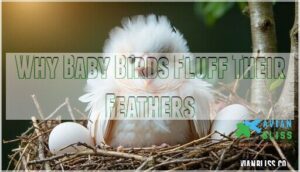
Baby birds fluff their downy feathers primarily to regulate their body temperature, as their developing thermoregulatory systems can’t efficiently maintain warmth like adult birds.
You’ll also notice chicks puffing up to communicate with their parents, signaling their need for brooding, food, or protection through this instinctive behavior.
Insulation for Warmth
Young chicks possess limited feather layers compared to adults, making air trapping through fluffing essential for survival.
Their developing down creates thermal barriers that prevent dangerous heat loss during cold nights.
This cold adaptation helps maintain proper body heat when parents aren’t brooding.
Baby bird thermoregulation relies heavily on feather fluff to regulate temperature, as their small bodies lose warmth rapidly without effective insulation.
Communication With Parents
Baby birds use feather fluff as sophisticated parental signals to communicate essential needs with their parents.
Chicks puff up their downy feathers to signal requirements for brooding behavior, triggering immediate parental attention.
This fledgling interactions system helps parents recognize when offspring need warmth, food, or protection.
The fluffed appearance creates visual nesting cues that activate caregiving instincts.
Through bird communication mechanisms, chick communication becomes an essential survival tool that guarantees proper care and development within the nest environment.
Early Grooming Behaviors
As chicks develop motor skills, they begin experimenting with grooming behaviors that’ll serve them throughout life.
These early attempts at feather maintenance help establish proper preening techniques and oil spreading patterns.
Watch for these developing grooming skills in young birds:
- Feather Preening – Chicks practice beak cleaning motions along their downy plumage, learning to coordinate movement
- Feather Ruffling – They shake and fluff their developing feathers to remove debris and position them correctly
- Dust Rolling – Young birds instinctively seek loose dirt for their first dust baths, mimicking adult maintenance behaviors
These fluffing movements aren’t just random – they’re essential practice sessions preparing birds for independent life.
Fluffing Feathers During Rest and Sleep
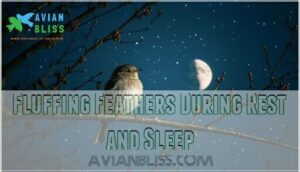
When birds prepare for sleep, you’ll notice them fluffing their feathers to create an insulating layer that traps warm air close to their bodies.
This nighttime behavior serves as their natural thermostat, helping them maintain ideal body temperature while conserving energy during rest periods when their metabolism slows down, which is a crucial aspect of their overall conserving energy strategy.
Nighttime Insulation
When darkness falls, sleep fluffing becomes your bird’s natural response to temperature drops.
This nighttime insulation strategy involves expanding feathers to create thicker body coverage, trapping warm air against the skin.
Like pulling on a down jacket, birds adjust their feather layers for ideal heat conservation.
Winter warmth depends on this bird thermoregulation mechanism, with fluffed up birds maintaining stable body temperatures through enhanced insulation and precise temperature regulation throughout cold nights.
This nighttime insulation strategy is crucial for the bird’s ability to survive cold temperatures, and the process of fluffed up birds maintaining stable body temperatures is essential for their overall health.
Sleep Postures and Fluffiness
Birds adopt specific sleep postures that maximize fluffed up birds’ nighttime insulation efficiency.
You’ll observe sleeping birds positioned to minimize heat loss through strategic feather arrangement and body positioning.
Common sleep comfort postures include:
- Tucked head position – Head turned and buried in back feathers for warmth
- Single-leg stance – One leg tucked into belly feathers while standing on the other
- Crouched body position – Lowered stance that reduces exposed surface area
- Fluffed feather layers – Maximum feather fluff expansion for insulation during temperature drops
These posture indicators help birds maintain ideal body temperature throughout sleep periods, preventing sleep deprivation from cold-related discomfort.
Signs of Comfort or Distress
When you’re watching your feathered friend during quiet moments, you’ll notice distinct patterns in their feather puffing that reveal their emotional state.
Happy fluffing appears gentle and relaxed, often accompanied by soft chirping or contentment calls.
However, fear signals show rapid, intense feather puffing with tense body posture and alert eyes scanning for threats.
Stress-related fluffing differs from normal bird comfort behaviors, appearing more rigid and sustained than natural thermoregulation.
Especially, these behaviors can also be physical signs of stress, requiring careful observation to identify stress-related issues.
Common Causes of Puffed-Up Feathers
Understanding why your bird suddenly appears puffed up helps you distinguish between normal behavior and potential health concerns.
Several environmental and physical factors can trigger this feather-fluffing response, each requiring different levels of attention from bird owners.
Seasonal and Temperature Changes
Weather patterns trigger dramatic feather adjustments throughout the year.
During winter insulation periods, you’ll notice birds puffing their feathers to trap warming air pockets.
Summer cooling requires the opposite – flattened plumage releases excess heat.
Climate adaptation drives seasonal molting cycles, replacing worn feathers with fresh ones optimized for upcoming conditions.
These bird thermoregulation responses guarantee survival across temperature extremes, ensuring survival is maintained through effective adaptation.
Poor Nutrition or Weak Immunity
Nutritional deficiencies create a devastating cycle where your bird can’t maintain proper feather quality or immune function.
Poor nutrition weakens their body’s defenses, making them vulnerable to infections that trigger chronic feather puffing as they struggle to regulate temperature and conserve energy.
Here are five key ways poor nutrition affects feather puffing:
- Dietary Deficiencies – Lack of vitamin A, protein, and essential amino acids like methionine directly impair feather development, causing dull, brittle plumage that birds constantly fluff to compensate for poor insulation.
- Immune Suppression – Malnourished birds develop compromised immune systems, making them susceptible to respiratory infections and diseases that manifest through persistent feather puffing and lethargy.
- Feather Quality Deterioration – All-seed diets lacking fresh produce result in frayed, unkempt feathers with poor structural integrity, forcing birds to fluff excessively to maintain warmth.
- Energy Level Depletion – Inadequate nutrition reduces metabolic efficiency, causing birds to conserve heat through constant puffing while displaying decreased activity and abnormal sleeping patterns.
- Disease Susceptibility Increases – Weak immunity from poor nutrition leads to frequent infections, with fluffed feathers becoming a chronic symptom of underlying health issues requiring immediate dietary correction.
A diet with sufficient protein supports proper feather development.
Sleep Deprivation and Stress
Chronic sleep deprivation wreaks havoc on your bird’s immune system, making them more susceptible to stress and illness.
You’ll notice behavioral changes like increased aggression, decreased activity, or persistent fluffing as stress indicators.
Sleep-deprived birds often maintain puffed feathers throughout the day, signaling their body’s attempt to conserve energy.
Poor feather condition and irregular preening patterns frequently accompany these stress responses, requiring careful monitoring and potential veterinary intervention.
Cage Cleanliness and Infections
Poor cage sanitation creates breeding grounds for harmful bacteria growth and parasites, leading birds to fluff their feathers as their immune systems fight infections.
Dirty environments compromise bird health, triggering defensive feather fluff responses that signal underlying illness requiring immediate attention.
Critical cleanliness factors affecting bird plumage:
- Daily cage cleaning prevents bacterial buildup – Remove droppings, old food, and contaminated water that harbor disease-causing organisms
- Safe cleaning products protect respiratory health – Use bird-safe disinfectants to eliminate pathogens without creating toxic fumes that stress birds
- Regular parasite control maintains feather condition – Monitor for mites, lice, and other external parasites that cause birds to ruffle feathers excessively
Tips for Supporting Healthy Feather Fluffing
Supporting your bird’s natural feather fluffing behaviors requires attention to their basic needs and environment.
You can promote healthy feather maintenance by providing proper nutrition, maintaining clean habitats, encouraging natural grooming, and monitoring for signs of illness.
Providing Proper Diet and Nutrition
A balanced diet forms the foundation for healthy bird plumage and proper feather function.
Essential nutrients like proteins, vitamins A and D3, and calcium support feather development and thermoregulation abilities.
Fresh fruits and vegetables provide antioxidants that maintain feather quality, while supplement needs vary by species and season.
| Nutrient | Sources | Feather Benefits |
|---|---|---|
| Protein (15-20%) | Pellets, cooked legumes | Strong feather structure |
| Vitamin A | Dark leafy greens, carrots | Prevents brittle feathers |
| Calcium | Cuttlebone, mineral blocks | Supports molt cycles |
| Omega fatty acids | Seeds, nuts (moderate amounts) | Feather sheen and flexibility |
| Vitamin D3 | Supplementation for indoor birds | Calcium absorption |
Food variety prevents nutritional gaps that can compromise feather integrity.
Hydration importance can’t be overstated – fresh water supports metabolic processes essential for healthy feather growth.
A high-quality diet with proper nutrition enables birds to regulate body temperature effectively through natural feather fluffing behaviors.
To promote optimal health, consider additional bird vitamins especially during molting season, and guarantee the best results by maintaining this regimen.
Maintaining Clean and Safe Habitats
Clean environments directly impact feather health and natural fluffing behaviors.
You’ll want to maintain cage cleanliness through daily spot-cleaning and weekly deep sanitization.
Proper ventilation prevents respiratory stress that causes abnormal puffing.
Remove food debris and droppings promptly to control pests and bacteria.
Utilizing a safe cage cleaner is essential for bird health.
Safe enrichment activities like perches of varying textures support healthy bird habits while reducing stress-induced fluffing behaviors.
Encouraging Natural Grooming Behaviors
When you create the right environment, your bird’s natural grooming instincts flourish like clockwork.
Supporting these behaviors requires strategic setup and understanding of avian behavior patterns.
- Preening station setup: Place natural branches at varying heights with different textures to encourage thorough feather maintenance and stretching during grooming sessions
- Dust bath benefits: Provide shallow dishes with fine sand or commercial dust bath mixtures, allowing birds to vigorously ruffle feathers and eliminate parasites naturally
- Sunbath safety: Make certain access to filtered sunlight or UV lamps for 10-15 minutes daily, helping distribute preen oil evenly across feathers while discouraging harmful microorganisms
- Molting support: Increase humidity levels and protein-rich foods during feather replacement periods, as proper nutrition directly impacts new feather quality and ruffling effectiveness
Recognizing and Addressing Health Issues
Watch for illness indicators like chronic fluffiness during warm days, poor feather condition, or lethargy.
These symptoms require immediate veterinary attention for proper diagnosis and treatment.
Early detection saves lives – don’t wait if you notice persistent puffed-up feathers combined with appetite loss, breathing changes, or unusual behavior patterns.
A key preventative measure is annual veterinary check-ups to facilitate early disease detection and save lives through proper diagnosis.
Frequently Asked Questions (FAQs)
Why do birds fluff up their feathers in cold weather?
You’ll notice birds fluff up their feathers in cold weather because trapping air between their plumage acts like a thermal blanket.
This clever move boosts insulation, keeping their body heat close and helping them weather chilly days with a technique that is quite clever.
Why do birds fluff up?
Surprisingly, fluffing isn’t just about looking bigger. You’ll see birds trap air between feathers for insulation, communicate emotions, maintain plumage health, and regulate body temperature efficiently.
Why do parrots raise their feathers?
Parrots raise their feathers for thermoregulation, creating insulation when cold or releasing heat when warm. They’ll also fluff up to show excitement, contentment, or communicate during social interactions with you.
Why do birds puff up their feathers?
Birds puff up their feathers primarily for thermoregulation – they’re creating an insulating air layer to trap body heat in cold weather.
This behavior also signals emotions, courtship displays, or illness.
Why do baby birds ruffle their feathers?
Baby birds ruffle their feathers for two main reasons: grooming and temperature control.
You’ll see them using this behavior to clean their developing plumage and trap warm air close to their bodies during cold weather, helping them maintain proper body heat, which is related to temperature control.
Why do parakeets fluff their feathers?
Picture your parakeet transforming into a feathery puff ball—you’re witnessing thermoregulation, social signaling, or comfort behavior.
They’ll fluff to trap warm air during cold spells, show contentment when relaxed, or communicate excitement during social interactions, which can be a form of social signaling.
What does it mean when birds puff up their feathers?
When you see a bird puffing up, they’re likely thermoregulating—trapping air between feathers for insulation in cold weather or releasing heat when warm.
It also signals emotions, illness, or social displays.
Do birds fluff up when happy?
Like a feather pillow plumping up, you’ll notice birds do fluff when content.
This behavioral display signals comfort, excitement, and trust—especially in pet birds.
It’s their way of showing they’re relaxed and happy in your presence, which can be a sign of trust.
Do birds fluff up when cold?
Yes, birds fluff up their feathers when cold to trap air and create insulation.
This behavior works like putting on a warm jacket, with air pockets between feathers acting as a thermal barrier that can reduce heat loss by up to 50%.
Why do birds ruffle their feathers?
Birds ruffle their feathers for multiple reasons: thermoregulation by trapping warm air or releasing heat.
They also ruffle their feathers for maintenance through preening and parasite removal.
Additionally, birds ruffle their feathers for social signaling during courtship or dominance displays, and comfort during rest or sleep.
Conclusion
Ironically, understanding why do birds fluff up their feathers reveals they’re far more complex than their simple appearance suggests.
You’ve learned that feather fluffing serves nine critical functions, from temperature regulation and social communication to health monitoring and maintenance behaviors.
By recognizing these patterns in your feathered companions, you’ll better understand their needs and detect potential health issues early, which transforms casual bird watching into informed caregiving.
This knowledge ensures your birds stay healthy and comfortable, making it a crucial aspect of their care.
- https://www.sciencedirect.com/topics/agricultural-and-biological-sciences/plumage
- https://pmc.ncbi.nlm.nih.gov/articles/PMC8697956/
- https://myrightbird.com/articles/how-to-decode-your-birds-body-language
- https://www.parrotfunzone.com/learn-about-parrots/parrot-behavior/why-does-my-bird/fluff-up
- https://www.sciencedaily.com/releases/2018/08/180822141023.htm