This site is supported by our readers. We may earn a commission, at no cost to you, if you purchase through links.
Walk through almost any Ohio meadow or woodland edge in May, and you might catch a flash of electric blue that stops you mid-stride.
Ohio hosts seven species of blue-plumaged birds—from the cobalt Eastern Bluebird perched on a fence post to the iridescent Tree Swallow arcing over a marsh—and each one occupies a distinct ecological niche that shapes where, when, and how you’ll spot it.
That diversity surprises even seasoned birders who assume "bluebird" means one thing.
Whether you’re setting up nest boxes in your backyard, planning a trip to Magee Marsh, or trying to tell an Indigo Bunting from a Cerulean Warbler, knowing what sets these species apart makes every encounter richer.
Table Of Contents
- Key Takeaways
- Blue Bird Species Found in Ohio
- How to Identify Blue Birds in Ohio
- Blue Bird Habitats and Nesting Habits in Ohio
- Attracting Blue Birds to Your Ohio Yard
- Conservation Status and Protection Efforts in Ohio
- Frequently Asked Questions (FAQs)
- What bird is blue but not a bluebird?
- Do bluebirds stay in Ohio all year?
- Do bluebirds mourn?
- What does it mean when a bluebird hangs around your house?
- What birds in Ohio are blue?
- What attracts bluebirds to your yard?
- What do bluebirds in Ohio eat?
- How can I attract bluebirds to my yard?
- What should I feed bluebirds in Ohio?
- What do bluebird nests look like?
- Conclusion
Key Takeaways
- Ohio is home to seven distinct blue-plumaged bird species—Eastern Bluebird, Indigo Bunting, Blue Jay, Tree Swallow, Cerulean Warbler, Belted Kingfisher, and Blue Grosbeak—each occupying a unique habitat niche that shapes when and where you’ll spot them.
- The vivid blue coloring you see isn’t pigment but structural coloration, where light bends through microscopic feather structures—a detail that helps explain why males often look dramatically different from females and why plumage shifts with the seasons.
- Setting up a cedar nest box at the right height, adding a predator baffle, skipping pesticides, and planting native berry-producing shrubs are the most effective steps you can take to attract bluebirds to your yard.
- Conservation programs like the Ohio Bluebird Society—which recorded nearly 15,000 fledglings in 2025—show that everyday citizen involvement in nest box monitoring and volunteer training directly drives population recovery.
Blue Bird Species Found in Ohio

Ohio is home to more blue-feathered birds than most people realize, and each one has its own personality, habitat, and habits worth knowing. Whether you’re just getting into birdwatching or you’ve been at it for years, learning to tell them apart makes every outing more rewarding.
From the iconic Eastern Bluebird to the lesser-known Indigo Bunting, this guide to common blue-feathered birds in Ohio makes it easy to put a name to every flash of blue you see on the trail.
Here are the blue bird species you’re most likely to spot across the state.
Eastern Bluebird
The Eastern Bluebird is widely considered Ohio’s most beloved blue bird. Males wear striking cobalt blue upperparts with a rusty-orange chest, while females show softer blue-gray tones — age-specific plumage makes juveniles appear brownish with faint blue hints.
Their habitat preferences lean toward open fields and farmlands, where nest boxes and conservation efforts have genuinely helped lifespan trends and population recovery thrive.
It’s a primary cavity nester, often using abandoned woodpecker holes for nesting.
Indigo Bunting
While the Eastern Bluebird claims farmlands, the Indigo Bunting thrives in brushy edges and overgrown meadows — a textbook example of Habitat Edge Preference among Ohio bluebirds. Males dazzle through structural coloration in Indigo Buntings, meaning no pigment creates that electric blue—just light bending through feather microstructure.
Watch for these identification tips:
- Breeding males: vivid cobalt blue, head to tail
- Females: plain brown, easy to overlook
- Winter Plumage Shift: males fade to streaky blue-brown
- Courtship Flight Displays: males sing persistently from exposed perches
Blue Jay
From electric blue buntings to bold Blue Jays — Ohio’s corvid is hard to miss. That loud jay-jay call cutting through your backyard? That’s Territorial Aggression in action.
Blue Jays display impressive Social Intelligence and Mimicry Behavior, imitating hawks to scatter competitors.
Their Cache Management skills — burying acorns for winter — actually help oak forests regenerate.
Backyard feeders stocked with peanuts are their favorite stops.
Tree Swallow
Unlike the bold, noisy Blue Jay, the Tree Swallow works quietly — a flash of iridescent blue-green skimming low over wetlands. Those long, swept-back wings aren’t just beautiful; Wing Morphology, built for speed, makes catching flying insects mid-air look simple.
They nest in boxes, raising chicks with impressive Fledgling Success — but Box Competition and Predator Defense keep every breeding season a real challenge.
Cerulean Warbler
Few Ohio birds rival the Cerulean Warbler — a sky-blue gem hiding high in mature forest canopies. Mature Forest Requirement is real: this species needs large, unfragmented woodlands to thrive.
Watch for:
- Upper Canopy Nesting above 30 meters
- Territory Defense Displays — dramatic aerial chases between males
- Juvenile Plumage Differences — paler, softer blue than adults
- Andean Wintering Grounds — thousands of miles away
Habitat loss threatens population monitoring of Cerulean Warbler efforts substantially.
Belted Kingfisher
If you spot a stocky, shaggy-crested bird rattling like a fishing reel over the water, you’ve found the Belted Kingfisher — one of Ohio’s most exciting blue birds.
Its Bank Digging Behavior produces burrow nests up to three feet deep.
Sexual Dimorphism shows in females’ rusty belly band.
Spotting this rusty belly band is a skill taught in bird conservation volunteer training programs that help enthusiasts contribute to meaningful field research.
Its Fish Capture Technique — hovering, then diving dagger-bill-first — is pure precision.
Blue Grosbeak
The Blue Grosbeak is a quiet showstopper — and spotting one in Ohio means you’re catching a bird riding the wave of climate change impacts and historical range shifts northward. Males flash deep blue with bold rusty wing bars, making identifying blue bird species in Ohio a little easier once you know what to look for.
- Plumage: Deep blue body, two broad chestnut wing bars, large silver-tipped conical bill
- Habitat preferences of Ohio blue birds: Brushy edges, hedgerows, open meadows, shrubby thickets near water
- Conservation efforts: Range expansion monitored as climate shifts push breeding territory north
- Predator avoidance strategies: Dense thicket nesting conceals eggs and young effectively
- Hybridization risks and molt timing: Post-breeding molt can briefly dull male plumage, causing confusion with Indigo Buntings
How to Identify Blue Birds in Ohio
Ohio’s blue birds might seem similar at first glance, but each one has its own set of clues that give it away. Knowing what to look for makes all the difference between a confident ID and a puzzled squint.
Here are the key features that help you tell them apart.
Physical Characteristics and Plumage
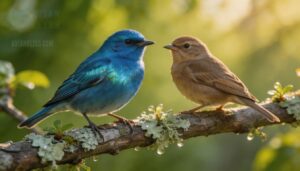
Each species carries its own blue signature — and knowing why helps you identify them fast.
That vivid color isn’t paint; it’s Structural Coloration Mechanisms at work, where Barbule Light Interference bends light within feather microstructures.
Male and female plumage differences in blue birds are sharp: male Indigo Buntings glow electric blue, while females stay brown.
Seasonal Plumage Molting refreshes these UV Reflective Patterns each breeding cycle.
Size and Body Shape
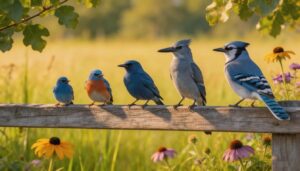
Size tells the story before color even registers. In your field guide, note that Body Mass Range shifts from a featherlight 0.5 oz Indigo Bunting to a stocky Blue Jay approaching 3 oz.
Tail Proportion, Bill Size Scaling, Wing Length Variation, and Posture Silhouette all sharpen your Identification of blue bird species in Ohio — compact bluebirds perch low and round, while kingfishers sit bolt-upright, dagger-billed.
Behavioral Traits and Foraging Patterns

Behavior is your best field clue.
Each species carves its own Temporal Niche and Patch Preference — Eastern Bluebirds pause-and-drop on open ground hunting soft-bodied insects, while Tree Swallows sweep wetlands in Social Foraging flocks.
Blue Jays show food caching behavior and territorial behavior at feeders, making them easy seed eater regulars.
Flight Efficiency and Predator Avoidance strategies differ just as sharply across species.
Vocalizations and Calls
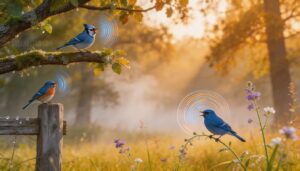
Once you’ve clocked their movements, tune your ears — sound is just as telling as sight. Each bird carries a distinct vocal signature: Alarm Call Types range from the Bluebird’s soft churr to the Jay’s piercing screech. Territorial Song Structure and Mating Duet Patterns shift with the season, reflecting Seasonal Pitch Shifts and Mimicry Behavior across Ohio’s blue birds.
- Eastern Bluebird: soft, flute-like "chur-lee" notes at dawn
- Blue Jay: harsh screeches, mimicking hawks to clear feeders
- Indigo Bunting: rapid, paired trills during breeding chorus
Seasonal Presence and Migration Timing
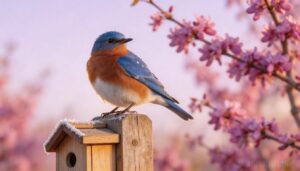
Knowing when to look matters just as much as knowing what to look for.
The Spring Arrival Window runs late February through April for Eastern Bluebirds, while Indigo Buntings peak in May. Fall Departure Timing shifts from August through September.
Winter Residency Zones favor Blue Jays year-round.
Migration Stopover Sites like Magee Marsh reveal seasonal variations in blue bird presence during Breeding Season Peaks.
Blue Bird Habitats and Nesting Habits in Ohio
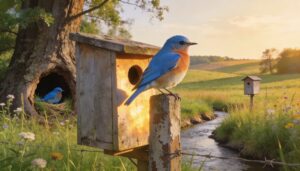
Ohio’s blue birds don’t just show up wherever they please — each species has figured out exactly where it wants to live and raise its young.
From hollow trees to muddy riverbanks to carefully placed nest boxes, the variety of nesting habits is surprisingly wide.
Here’s a closer look at where different species set up home and what their breeding lives actually look like.
Preferred Nesting Sites by Species
Each blue bird in Ohio has surprisingly specific nesting habitat preferences worth knowing:
- Eastern Bluebird — Use nest boxes placed 5–8 feet high in open fields; cavity size requirements matter, so keep entry holes at 1.5 inches.
- Tree Swallow — Mount boxes near water, prioritizing proximity to water and unobstructed flight paths.
- Indigo Bunting — Nests low in thick vegetation structures like brushy shrubs.
- Belted Kingfisher — Excavates burrows into sandy bank substrate type along riverbanks.
- Cerulean Warbler — Favors mature deciduous trees at forest edges rather than dense interiors.
Understanding these nesting habitat details helps you support cavity nesters effectively.
Breeding Season Timeline
Once you know where each species nests, timing becomes the next piece of the puzzle. Breeding season timing for blue birds in Ohio kicks off when Day Length Cues and Temperature Triggers signal birds to begin Courtship Displays — usually late February through March.
| Species | Breeding Window |
|---|---|
| Eastern Bluebird | March – July |
| Indigo Bunting | May – August |
| Tree Swallow | April – June |
Food Availability and Incubation Duration (12–14 days) shape how many broods each pair attempts.
Nesting Materials and Box Specifications
The right nest box can make or break a bluebird’s season. For cavity nesting species like Eastern Bluebirds, nesting habits depend heavily on what you provide:
- Use untreated wood for Wood Choice — chemicals harm nestlings
- Keep Entrance Size at 1½ inches to control occupancy
- Add Ventilation Openings and a Predator Guard Design at 2–4 meters Mounting Height
Diet and Foraging Behaviors
What a bluebird eats depends entirely on the season. Spring and summer bring an insect diet rich in caterpillars and beetles, fueling both adults and growing chicks. Come fall, seasonal prey shifts toward berries and sumac fruits.
Eastern Bluebirds use a classic sit-and-wait technique for insect capture, dropping from perches onto ground prey.
Foraging habitat preferences—open fields, farmland edges, and fruiting shrubs—shape everything they eat.
Monitoring and Maintaining Nest Boxes
Weekly inspections keep your nest boxes productive and safe. Check each box at least once a week during breeding season, logging egg counts, hatch dates, and clutch size for bird population monitoring.
After fledging, sanitation protocols matter — clean with hot soapy water and dry completely.
Predator guards on mounting poles, smart box placement in open areas, and consistent data logging all strengthen cavity nesting conservation efforts for Eastern Bluebirds.
Attracting Blue Birds to Your Ohio Yard

Getting blue birds to visit your yard is more about thoughtful setup than luck. A simple changes to your outdoor space can make a real difference for species like Eastern Bluebirds, Tree Swallows, and Indigo Buntings.
Here’s actually works.
Installing and Positioning Nesting Boxes
Setting up a nest box the right way can mean the difference between a thriving bluebird family and an empty box all season.
Here’s what solid nest box installation looks like:
- Mounting Height Guidelines: Mount boxes 6–12 feet high on a metal pole.
- Entrance Hole Dimensions: Use a 1.5‑inch hole for Eastern Bluebirds.
- Predator Guard Design: Add a metal baffle to stop climbing raccoons.
- Box Orientation Strategies: Face the entrance northeast, away from harsh afternoon sun.
- Maintenance Schedule: Clean and inspect boxes each late winter before nesting begins.
Planting Native Plants and Shrubs
Think of your yard as a living pantry — the native plants stock it year‑round for bluebirds and their neighbors.
| Plant Type | Example Species | Benefit |
|---|---|---|
| Native Shrub Layers | Viburnum, Sumac | Berry source, shelter |
| Pollinator-friendly Groundcovers | Creeping phlox, Wild indigo | Insect habitat, erosion control |
| Native Grasses | Little bluestem, Switchgrass | Nesting material, seed heads |
Soil Preparation, Water Management, and Seasonal Planting all shape habitat restoration success — healthy soil grows the insects that bluebirds depend on.
Providing Water Sources
Fresh, clean water is just as important as food — and bluebirds notice.
- Place a shallow birdbath with clean water near open ground
- Add a solar pump or misting station to attract passing migrants
- Keep water depth under 2 inches for safe wading
- Refresh daily, since water quality monitoring prevents disease
Ohio’s rivers, lakes, and wetlands naturally draw water habitat birds year-round — your yard can too.
Creating Insect-Friendly Landscaping
Beyond water, bluebirds need a yard full of life — because insects make up the bulk of their insectivore diet.
| Landscaping Feature | Why It Works |
|---|---|
| Seasonal Bloom Sequence | Keeps pollinators active, feeding native cavity nesters all season |
| Sun‑Shade Mosaic | Encourages diverse insects across microhabitats |
| Dead Wood Habitat & Mulch Habitat Layers | Shelters beetles and grubs bluebirds love |
Native plants like coneflowers and goldenrods, layered with Mossy Ground Cover, attract the bugs that attract the birds.
Avoiding Pesticides and Herbicides
All those insects you’ve cultivated won’t stick around if you’re spraying pesticides — and neither will the bluebirds depending on them. Protecting your insectivore diet-dependent visitors means embracing Integrated Pest Management: use Mulch Barriers to suppress weeds, lean on Native Plantings and Companion Planting to build Soil Health, and skip the chemical shortcuts.
Your conservation efforts at home directly counter habitat loss and human impact on nesting site availability.
Conservation Status and Protection Efforts in Ohio
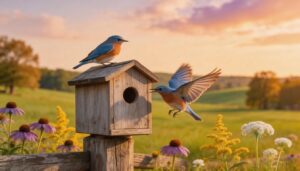
Ohio’s blue birds have made a real comeback over the decades, but that progress didn’t happen by accident. Behind the scenes, dedicated scientists, volunteers, and local organizations are working hard to keep these species thriving.
Here’s a closer look at where things stand today and what’s being done to protect them.
Population Trends and Threats
Ohio’s bluebird population tells a story of resilience mixed with real challenges.
Urban expansion and climate variability squeeze habitat from both ends, while house sparrows and predator competition threaten nest success. Wet springs and harsh winters drive short-term population declines.
Fortunately, active conservation efforts and population monitoring through nest box programs have pushed box occupancy rates to around 60 percent in favorable years.
Habitat Loss and Fragmentation
Habitat loss and fragmentation hit blue birds harder than most people realize.
When forests and fields get carved into smaller patches, Edge Effects shift temperature and humidity, reducing the insects that nestlings depend on. Smaller Patch Size means fewer nesting cavities.
Predator Edge pressure rises, and Genetic Isolation slowly weakens populations.
Corridor Connectivity between fragments gives birds their best fighting chance at survival.
Ohio Bluebird Society Initiatives
The Ohio Bluebird Society has been quietly doing significant work since 1987. Through nest box programs and habitat restoration, it’s helped reverse serious population declines in Eastern Bluebirds and other cavity-nesting birds.
Volunteer training, award programs, and educational materials keep community partnerships strong.
Annual fledgling counts — nearly 15,000 recorded in 2025 alone — turn everyday observers into contributors to real bird population monitoring and conservation of Eastern Bluebirds statewide.
Nearly 15,000 fledglings counted in 2025 prove that everyday birdwatchers are powering real statewide conservation
Citizen Science and Community Involvement
Citizen science turns everyday bird lovers into real conservation partners. When you join community monitoring events through groups like the Ohio Bluebird Society, your observations feed directly into bird population monitoring and fledgling counts that shape statewide decisions.
Here’s what makes these programs work:
- Volunteer Training sharpens your ID skills and ensures Data Quality Assurance across submissions.
- Youth Mentorship Programs pair beginners with experienced birders for hands‑on learning.
- Educational outreach for Ohio birdwatchers keeps community membership and volunteer engagement growing year after year.
Citizen Science Impact is real — and you’re part of it.
Best Locations for Birdwatching in Ohio
Knowing where to look makes all the difference when birdwatching in Ohio.
| Location Type | Top Spot | Blue Birds to Expect |
|---|---|---|
| Lake Erie Shoreline | Magee Marsh Wildlife Area | Cerulean Warbler, Tree Swallow |
| Forested River Valleys | Hocking Hills State Park | Indigo Bunting, Blue Jay |
| Prairie Grasslands & Urban Gardens | Battelle Darby Creek Metro Park | Eastern Bluebird, Blue Grosbeak |
State Park Reserves like Cuyahoga Valley National Park round out your list beautifully.
Frequently Asked Questions (FAQs)
What bird is blue but not a bluebird?
Plenty of blue birds aren’t actually bluebirds. The Indigo Bunting, Blue Jay, Cerulean Warbler, Belted Kingfisher, and Blue Grosbeak all flash stunning plumage pigments — pure visual signaling, zero bluebird DNA.
Do bluebirds stay in Ohio all year?
Yes, many Eastern Bluebirds stay in Ohio year-round.
They follow Partial Migration Patterns, where Resident vs Migrant behavior depends on temperature and Winter Food Sources, like berries, keeping some birds through winter.
Do bluebirds mourn?
Something quietly shifts when a bluebird loses its mate.
You might notice softer vocalizations, slower foraging, and nest site fidelity that lingers — real behavioral stress indicators suggesting loss runs deeper than instinct alone.
What does it mean when a bluebird hangs around your house?
A bluebird lingering near your home is likely scouting for territorial signaling, a nearby food source indicator, or nesting proximity.
It’s a sign your yard offers exactly what cavity-nesting birds need.
What birds in Ohio are blue?
Ohio’s skies hide more blue than you’d expect. From the Eastern Bluebird‘s rust-chested flash to the Indigo Bunting’s electric breeding plumage, several stunning species paint the landscape blue year-round.
What attracts bluebirds to your yard?
Start with a nest box built from cedar, add a predator guard, and open sightlines for perching. Mealworms and seasonal fruit plantings near sunlit perches do the rest.
What do bluebirds in Ohio eat?
Think of them as nature’s pest control: beetles, caterpillars, grasshoppers, and spiders dominate their seasonal insect preferences, while native berry sources and mealworm feeding strategies sustain them through winter’s lean months.
How can I attract bluebirds to my yard?
Set up a cedar nest box on an open pole with predator baffles. Face it toward clear foraging ground.
Skip pesticides to keep insects thriving, and add a shallow water feature nearby.
What should I feed bluebirds in Ohio?
bluebirds’ prime superfood — live or dried, they’re irresistible year-round. Supplement with winter fruit, sunflower seeds, and occasional peanut butter treats.
Keep your bird feeder clean and placement safe for best results.
What do bluebird nests look like?
A bluebird nest is a tidy cup shape built from fine grass weave and pine needles for rigidity. The nest cup depth cradles 3–5 powder-blue eggs snugly inside your nest box.
Conclusion
As you step into Ohio’s vibrant meadows, a world of electric blue unfolds, revealing the intricate lives of seven extraordinary species.
By embracing their unique stories, you’ll both improve your birding adventures and contribute to their conservation.
By installing nest boxes, planting native flora, and supporting local initiatives, you’re helping safeguard the continued existence of blue birds in Ohio.
Every small action weaves a safer haven for these avian treasures to thrive.