This site is supported by our readers. We may earn a commission, at no cost to you, if you purchase through links.
 You’re considering the pros and cons of clipping chicken wings, weighing safety against flight freedom.
Clipping can prevent escapes, reduce aggression, and protect your flock from predators.
However, it may also lead to injuries, phobias, and restricted natural behavior.
As you decide, you’ll want to balance your chickens’ need for freedom with your own need for safety and control – and that’s just the beginning of understanding the nuances of clipping chicken wings.
Table Of Contents
- Key Takeaways
- Benefits of Clipping Chicken Wings
- Reasons to Consider Before Clipping
- Risks of Clipping Chicken Wings
- Frequency and Feather Clipping Guidelines
- Impact on Natural Behavior and Ethical Considerations
- Frequently Asked Questions (FAQs)
- What are the disadvantages of wing clipping?
- Is wing clipping bad for chickens?
- Is clipping chicken wings ethical?
- What are the benefits of clipping wings?
- What are the cons of wing clipping?
- Is it good to clip chicken wings?
- Can chickens with clipped wings still roost?
- Is clipping chicken wings unethical?
- Should I clip my chicken’s wings?
- What is wing clipping a chicken?
- Conclusion
Key Takeaways
- Clipping your chickens’ wings keeps them safer and easier to manage, but it limits their natural behaviors and flight abilities.
- You’ll reduce the risk of escapes and predator attacks, yet clipped birds become more vulnerable to ground predators and may get hurt in falls.
- Chickens may experience stress or phobias after clipping, so you’ll need to monitor their well-being and flock dynamics closely.
- Weigh your flock’s safety against freedom—there’s no one-size-fits-all answer, and your decision should fit your birds and environment.
Benefits of Clipping Chicken Wings
Wing clipping offers practical benefits when you’re managing backyard chickens, though it comes with important trade-offs to keep in mind.
Wing clipping helps manage backyard chickens with trade-offs to consider
You’ll find this technique helps keep your birds safer and more contained, but it also limits their natural behaviors and requires ongoing maintenance.
Enables Safer Outdoor Play

You enable safer outdoor play by clipping chicken wings, reducing outdoor hazards.
This sets safe boundaries, allowing supervised foraging and enrichment activities while promoting predator awareness, thereby addressing chicken welfare concerns through chicken wing clipping for backyard chicken safety.
- Reduced flight risk
- Increased safety
- Better predator protection
Reduces Risk of Escape

Keeping chickens grounded isn’t just about building taller fences—wing clipping helps with escape prevention by limiting their ability to clear even standard fence height.
You’ll find chicken containment more manageable, reducing neighbor disputes and worries about garden protection.
With fewer escapes, you can focus on coop security and predator protection, keeping your flock safe and happy right where you want them.
Reduces Aggression in Dominant Birds
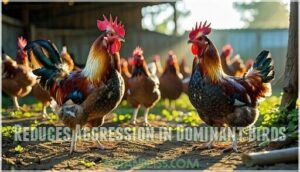
After trimming wings to limit escapes, you’ll likely notice a shift in the flock hierarchy.
Clipped wings restrict dominant chickens’ ability to launch into aerial displays or surprise attacks, leading to clear aggression reduction.
This change supports social harmony, softens dominance issues, and encourages positive behavioral changes, making integration easier and reducing stress for both newcomers and established flock members.
This is because flight restriction can lead to learned helplessness in birds.
Reasons to Consider Before Clipping
Before you reach for the scissors, you’ll want to weigh both the practical benefits and the challenges of clipping your chickens’ wings.
Taking a balanced look at escape prevention, safety, and flock dynamics helps you make the best decision for your birds.
Escape Prevention
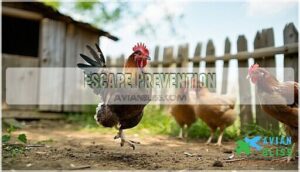
Preventing chickens from wandering beyond safe boundaries ranks as the top reason many owners choose wing clipping.
This practice substantially reduces your flock’s ability to clear standard fence heights, keeping birds contained within secure coop areas.
Consider these escape prevention benefits:
- Enhanced containment – Single wing clipping destabilizes lift, making fence-hopping nearly impossible
- Reduced roaming radius – Chickens stay closer to their designated areas instead of exploring neighbor yards
- Lower flight risk – Breed differences matter less when natural flight capabilities are limited
- Improved coop security – Even determined escapists struggle without full wing function
Protection From Danger

After considering chicken escape, it makes sense to look at how predator vulnerability can be managed.
Clipping your chickens’ wings adds an extra layer of predator protection and helps keep birds from wandering into ground hazards.
It boosts coop security and makes sure you’re not chasing hens into unsafe places.
Here’s how clipping can help with chicken safety:
- Less chance of predator encounters
- Better containment
- Fewer ground hazards
- Reduced stress from threats, which improves overall chicken safety.
Avoidance of Conflicts

After focusing on protection from danger, let’s talk flock harmony.
Clipping wings isn’t just about fencing and escape prevention—it can keep bickering down by limiting a dominant bird’s flight advantage.
This makes garden protection and coop containment easier, reduces property damage, and cuts down on noise complaints, ultimately making neighbor conflicts less likely.
Knowing how to perform a symmetric clipping technique is also essential for maintaining balance.
| Flock Harmony | Garden Protection | Coop Containment |
|---|---|---|
| Reduces fights | Fewer escapes | Easy to manage |
| Balanced flock | Less damage | Safer enclosure |
| Quiet nights | Happier neighbors | Predator control |
Risks of Clipping Chicken Wings
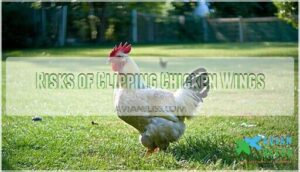
When you clip your chickens’ wings, you’ll limit their ability to escape danger, which can increase the risk of injury from falls or predator attacks.
Clipping wings limits escape from danger and increases injury risk
It’s important to weigh these risks, as clipping can also lead to behavioral issues like feather picking and anxiety.
Injuries From Crash Landings
You increase your chickens’ injury risk with crash landings when clipping their wings, affecting balance and perching, and raising bone fracture risk and muscle strain injuries.
This makes a safe environment essential to prevent accidents and maintain their well-being, reducing landing impact force.
This is done to achieve chicken containment, which is crucial for their overall well-being and to minimize injury risk.
Phobias and Feather Picking
After bumping into crash landings, it’s time to talk about what can go on in a chicken’s head.
Wing clipping sometimes triggers phobias and feather picking, leaving you with birds suffering from Clipping-Induced Stress.
Birds may show Behavioral Stereotypies and odd Fear Responses because they’re suddenly grounded, bored, or frustrated.
Welfare Implications? You bet—self-mutilation isn’t out of the question.
A contributing factor can be emotional stressors and anxiety.
Watch out for:
- Repeated feather plucking
- Reluctance to leave the perch
- Quick, panicked movements
- Nervous chattering
- Birds isolating themselves
Prevention Strategies start with enrichment and close, careful flock observation.
Inability to Escape Predator Attacks
Wing clipping puts your birds at a clear disadvantage if a hawk, fox, or raccoon comes calling.
With Limited Evasion Tactics and Reduced Escape Options, clipped chickens can’t fly up to safety or dodge well, which leads to Increased Attack Risk from both aerial predators and those lurking on the ground.
Flight restriction weakens natural defenses and can force you to rethink flock defense strategies against predator attacks.
Frequency and Feather Clipping Guidelines
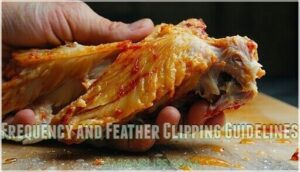
To keep your chickens safe and healthy, you’ll need to clip their wings about once or twice a year, usually after they finish molting.
You should focus on trimming only mature primary flight feathers, taking care to avoid blood-filled new ones.
Frequency of Clipping
Here’s when you’ll need to grab those scissors again. Clipping frequency depends on your flock’s molting schedule, which happens once or twice yearly.
Feather regrowth varies by breed and individual birds. Most chickens need clipping after each molt when new feathers fully develop.
Seasonal factors affect regrowth rate – spring molts often require attention. Monitor your birds’ feather condition regularly. Persistent fliers like Bantams may need more frequent trims.
Your clipping schedule should align with natural molting cycles for best results. Symmetric clipping is essential to maintain controlled descent.
Which Feathers to Clip
Target the primary flight feathers for effective wing clipping methods. These outer feathers control lift and maneuverability. Focus on symmetrical clipping of both wings, targeting about 10 primary feathers from the wing tip.
For proper feather trimming, consider investing in specialized wing trimmers.
- Primary vs Secondary: Cut only the long outer primaries, not the shorter secondary feathers closer to the body
- Pin Feather ID: Avoid new pin feathers with dark, blood-filled shafts – only trim mature feathers with pale, hollow quills
- Covert Overlap: Trim slightly longer than the overlapping covert feathers to maintain natural wing appearance
This flight feather trimming approach guarantees balanced, safe results.
Safety Precautions
To guarantee safe handling, use sharp scissors and proper technique.
Identify feathers correctly to prevent injury.
Many owners find a feather clipping kit useful for this task.
| Safety | Precautions | Tips |
|---|---|---|
| Handle gently | Use sharp scissors | Check quill color |
| Hold securely | Avoid sudden cuts | Prevent bleeding |
| Monitor behavior | Provide post-clip care | Maintain a safe environment |
When handling, remember to handle gently and monitor behavior to ensure a smooth process.
Impact on Natural Behavior and Ethical Considerations

You’re considering the impact of wing clipping on your chickens’ natural behavior, and this is a key factor to consider.
By clipping your chickens’ wings, you’re restricting their ability to fly, which can affect their social interactions, roosting habits, and overall well-being, particularly in terms of their natural behavior.
Restricts Natural Flight Behavior
You’re considering wing clipping, but first, assess its impact on natural behaviors.
Clipping alters energy expenditure, disrupts flight patterns, and interferes with feather growth.
It limits:
- Flying abilities
- Exercise reduction
- Foraging limitations
- Natural instincts, potentially leading to muscle atrophy and behavioral changes.
Social Interactions and Roosting
You’ll notice changes in your flock’s hierarchy as clipped wings affect social interactions and roosting preferences.
Leading to social disruption and potential dominance issues, altering the pecking order and causing behavioral changes in chicken behavior.
Ethical Concerns and Alternatives
You face ethical concerns with wing clipping, altering chickens’ natural flight.
Alternatives include:
- Secure enclosures
- Supervised free-range time
- Enrichment activities
- Environmental modifications, prioritizing animal welfare and humane chicken care to address ethical implications and promote ethical poultry practices.
It’s also important to bear in mind minimizing disturbance to birds in their natural habitats.
Frequently Asked Questions (FAQs)
What are the disadvantages of wing clipping?
Like a bird with clipped wings, you’ll find limitations, as wing clipping restricts natural behaviors, increases vulnerability to predators, and may cause stress, injury, or imbalance in your chickens.
Is wing clipping bad for chickens?
You’ll find wing clipping can be bad for chickens, restricting natural behaviors and potentially causing stress, injury, or discomfort if not done correctly and with proper care.
Is clipping chicken wings ethical?
You must consider the ethics of clipping chicken wings, weighing restrictions on natural behaviors against safety benefits, as leading welfare organizations discourage routine clipping due to potential harm.
What are the benefits of clipping wings?
Wing clipping keeps your chickens safely contained within designated areas, prevents escapes over fences, reduces predator risks, makes handling easier, and protects gardens from damage.
What are the cons of wing clipping?
Clipping wings is like grounding a teenager—it removes your chickens’ natural escape routes, making them sitting ducks for ground predators and reducing their ability to flee danger or reach preferred roosts.
Is it good to clip chicken wings?
You’ll need to weigh the trade-offs carefully. Wing clipping keeps chickens contained and safer from predators, but it restricts their natural flight behavior and may increase ground predator vulnerability.
Can chickens with clipped wings still roost?
Yes, chickens with clipped wings can still roost, though they’ll need lower perches or ramps to reach higher spots since they can’t fly up easily anymore.
Is clipping chicken wings unethical?
You’ll find that clipping chicken wings raises ethical concerns, as it restricts natural behaviors, potentially causing stress and affecting their quality of life, sparking debates about animal welfare and rights.
Should I clip my chicken’s wings?
Over 80% of backyard chicken owners clip wings for safety.
If your flock keeps soaring over fences, giving them a little trim lets you keep them grounded, secure, and easy to manage—especially if predators or traffic lurk nearby.
What is wing clipping a chicken?
Wing clipping is trimming the primary flight feathers on a chicken’s wing, usually to keep birds from flying over fences.
You’re not hurting them, just limiting their high-jump abilities—think of it as grounding with scissors, which is essentially trimming to restrict flight.
Conclusion
Imagine if chickens could vote—would they favor wing clipping or demand their full flight rights?
As you weigh the pros and cons of clipping chicken wings, remember, balancing safety and natural behavior isn’t a one-size-fits-all decision.
While clipping can protect your flock and prevent escapes, it alters instinctive habits and poses risks.
Consider your flock’s environment, their personalities, and your priorities, and by staying informed, you’ll make the best decision for your birds—and your peace of mind.
- https://heartysol.net/chicken-wing-clipping-guide-learn-how-to-cut-your-chickens-wings/
- https://www.chickenkeepingsecrets.com/keeping-chickens/clipping-chicken-wings-why-when-how/
- https://www.bird-vet.com/Wingclipping-proscons.aspx
- https://pmc.ncbi.nlm.nih.gov/articles/PMC8889189/
- https://www.petassure.com/maxscorner/pros-and-cons-of-clipping-bird-wings/