
This site is supported by our readers. We may earn a commission, at no cost to you, if you purchase through links.

Picture a black-and-white bird flying to your feeder wearing what looks like a splash of red paint across its chest. That’s your first clue you’ve spotted a rose-breasted grosbeak, one of the more striking visitors to eastern backyards each spring. Its thick, seed-cracking bill and bold pattern make it hard to miss once you know what you’re looking for.
Beyond the looks, this bird lives an active double life: insect hunter in summer, fruit forager come fall, and long-distance flyer twice a year. Get to know its size, colors, habits, and seasonal patterns, and you’ll spot one with confidence next time it lands nearby.
Table Of Contents
- Key Takeaways
- What is a Rose-Breasted Grosbeak?
- Rose-Breasted Grosbeak Habitat and Range
- Rose-Breasted Grosbeak Diet and Feeding
- Breeding, Nesting, and Life Cycle
- Songs, Migration, and Conservation
- Frequently Asked Questions (FAQs)
- Where do Rose-breasted Grosbeaks go in the summer?
- What does it mean when you see a Rose-breasted Grosbeak?
- Where do rose-breasted grosbeaks go in summer?
- Do grosbeaks eat grape jelly?
- Where do rose-breasted grosbeaks breed?
- Are rose-breasted grosbeaks aggressive?
- Are rose-breasted grosbeaks endangered?
- How rare is it to see a Rose-breasted Grosbeak?
- What does a female Rose-breasted Grosbeak look like?
- Are Rose-breasted Grosbeak both male and female?
- Conclusion
Key Takeaways
- Male rose-breasted grosbeaks show a bold black head, white underparts, and a rose-red chest patch, while females and juveniles wear streaked brown camouflage for nesting safety.
- Grosbeaks breed across the eastern U.S. and southern Canada in deciduous woodlands, then migrate to Central and South America for winter, favoring low-variation climate sites for survival.
- Their diet shifts seasonally, running about 52% insects during breeding season for protein and 48% seeds and fruit afterward, with black-oil sunflower seeds being a top backyard feeder choice.
- The species holds a Least Concern conservation status thanks to its broad diet, flexible habitat use, and wide range, though habitat loss and climate change remain ongoing concerns.
What is a Rose-Breasted Grosbeak?
A Rose-Breasted Grosbeak stands out the moment you spot one, but "what makes it a grosbeak" comes down to a handful of clear traits. You’ll want to know its size, shape, and coloring before you can call an ID with confidence. Here’s what to look for, starting with the basics and working through males, females, and juveniles.
If its rosy-red chest patch catches your eye, you might also enjoy exploring other red birds found in Virginia for comparison.
Species Overview
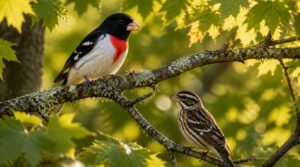
Picture a chunky finch wearing a tuxedo with a splash of red paint across the chest, and you’ve got the Rose-Breasted Grosbeak. Pheucticus ludovicianus belongs to the Cardinalidae family, showing strong sexual dimorphism.
Picture a chunky finch in a tuxedo with a splash of red paint across the chest—that’s the Rose-Breasted Grosbeak
- Medium-sized songbird
- Conical, seed-cracking bill
- Cardinal family member
- Breeds north, winters south
- Striking male/female contrast
That contrast is what makes this species so fun to spot.
Size and Shape
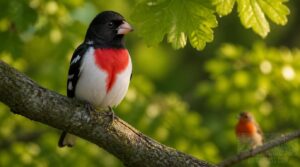
Grosbeaks run about 6.7 to 7.5 inches long, roughly the size of a Robin but with a stockier build. Wingspan hits 9.4 to 11 inches.
| Feature | Measurement |
|---|---|
| Length | 6.7–7.5 in |
| Wingspan | 9.4–11 in |
| Weight | 1.0–1.5 oz |
That sturdy build, short neck, and deep chest give it a compact, no-nonsense silhouette.
Male Appearance
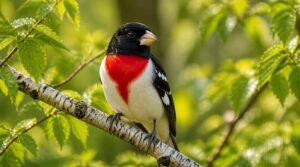
That build gets its finishing touch from color. A male’s black head sits atop stark white underparts, broken by a rosy triangle on the chest.
- Black head and back
- White underparts
- Rose-red chest patch
- Bold wing patches
- Thick, pale conical beak
The black-and-white pattern, paired with that rosy bib, makes males easy to spot at any feeder.
Female Appearance
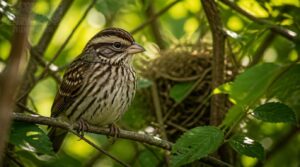
Females skip the flashy rose patch entirely. Instead you get brown and heavily streaked plumage, gray-brown above with a pale eyebrow stripe framing the face.
That cryptic look helps her vanish into leafy cover while nesting. She still carries the same stout beak as males, proportioned to about a third of her head length, and measures roughly 6 to 6.5 inches long.
For more on how this pattern compares across similar species, check out this guide to woodpeckers found throughout Rhode Island.
Juvenile Identification
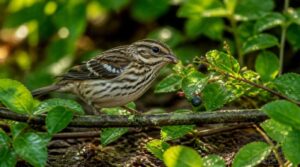
Since young grosbeaks look nothing like their flashy dads, telling them apart takes a practiced eye. Juveniles show brown and heavily streaked plumage, much like females, with olive-brown backs and a faint eyebrow stripe.
Watch for these clues:
- Buffy, duller underparts
- Narrower wing bars
- Ground-level foraging habits
- Softer, quieter calls
Their first molt starts in late summer, gradually shifting immature plumage toward an adult female look.
Rose-Breasted Grosbeak Habitat and Range

This bird covers a lot of ground over the course of a year, and knowing where it goes tells you a lot about how it lives. From breeding woods up north to winter forests far south, its address changes with the seasons. Here’s a look at where you’ll find a Rose-breasted Grosbeak, and why.
Breeding Range
Picture a wide green belt stretching from southern Canada down through the eastern U.S. — that’s grosbeak country. This North American passerine nests from Ontario and Quebec south through New England, favoring elevations under 1,000 meters.
| Region | Habitat | Notes |
|---|---|---|
| Great Lakes | Riparian woodland | Consistent nesting |
| New England | Mixed forest | Edge habitat density high |
| Upper Midwest | River corridors | Range expansion years |
Wintering Grounds
When that green belt empties out each fall, these birds don’t just vanish — they head south to Central and South American wintering grounds, from southern Mexico into northern South America.
There, tropical forests offer three things:
- Fruiting trees for quick energy
- Insects tucked in leaf litter
- Cover from predators
This migration refueling period matters. Forest loss and shifting climate patterns threaten these long-distance migrants’ traditional stopover connectivity. Studies indicate they select winter sites with low climatic variation sites to boost survival.
Preferred Woodlands
Picture a leafy woodland with a thick, tangled understory — that’s grosbeak country. They favor deciduous forest density, especially mixed forests of maples, oaks, and birches, over sparse conifer stands.
Riparian zones boost insect supply, while canopy gaps let sunlight spark ground-floor activity. Wooded edges near open fields round things out, giving these birds the layered, buggy habitat they need to thrive.
Suburban Shrub Habitats
Don’t overlook that overgrown hedge in your yard — grosbeaks love it. Suburban shrub habitats offer shrub microhabitats with varying light and cover, plus arthropod diversity for feeding.
Good backyard habitat features:
- Woody shrubs up to 5m tall
- Berry producers like elderberry
- Untrimmed hedgerows
- Edge zones near gardens
- Patch connectivity to woodlands
Nesting concealment improves where growth stays dense, making birdwatching here genuinely rewarding.
Seasonal Habitat Changes
Grosbeaks don’t sit still all summer. As breeding season progresses, pairs often shift toward elevation shifts into denser mixed forest, then move back down once fruiting shrubs ripen in late summer.
Edge habitat stays valuable through both phases, though resource timing matters most: insects peak early, berries take over later, and canopy disturbances like storm gaps can reshape which patch they favor next.
Rose-Breasted Grosbeak Diet and Feeding
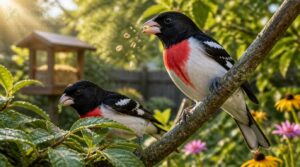
A Rose-breasted Grosbeak’s menu changes with the seasons, and so do its methods for finding a meal. You’ll see this bird switch between hunting bugs in the leaves and cracking open seeds without much effort. Here’s what makes up its diet, and how you can bring some of that action to your own backyard.
Insects and Caterpillars
Rose-breasted grosbeaks are true insectivorous birds during breeding season, with insects making up roughly 52% of their diet. They target beetles, true bugs, and especially caterpillars, hunting through foliage with sharp eyes tuned to spot camouflage tricks and warning colors alike.
Even bristly or toxic species aren’t always safe—this bird’s thick bill grapples with prey most songbirds avoid, fueling the high protein needs of active breeding adults.
Seeds and Berries
Once summer winds down, that insect hunger fades and seeds and fruit take over, making up about 48% of the diet. Grosbeaks crush seed coats with that thick bill, reaching nutritious oils and fats packed with linoleic acid.
Berries offer more than pulp—seeds inside carry antioxidants and aid dispersal through droppings. At feeders, offer black oil sunflower seed or safflower seed for a reliable draw.
Foraging Techniques
Watch one closely and you’ll catch a real hunting style: leaf litter searching on the ground, then bark crevice probing for hidden grubs. They’ll switch to arboreal gleaning through shrub foliage, picking mites off sunlight leaves.
Come fall, that same bird joins mixed-species flocks in fruiting trees, adjusting tempo to whatever’s available—insects, seeds, buds, or fruit.
Feeding Nestlings
Once eggs hatch, both parents switch to a protein-heavy insect diet, feeding soft-bodied bugs every 15 to 20 minutes through daylight. Food arrives finely mashed since chicks can’t handle whole prey yet.
Hydration comes through food moisture, not water drops. Parents watch each crop carefully, spacing meals to avoid overfeeding during the 9 to 12 day nestling phase before fledging begins.
Backyard Feeder Favorites
Once fledglings scatter, adult Rose-Breasted Grosbeaks turn to your feeders for easy fuel. Black-oil sunflower seeds, especially hulled chips, top their list, with safflower a solid backup on platform or hopper feeders.
Add chopped fruit in early season, fresh water for bathing, and suet during cool spells. That mix of backyard bird feeding options keeps them returning through fall migration.
Breeding, Nesting, and Life Cycle
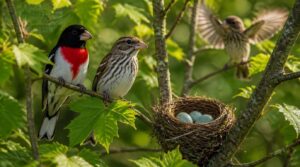
Once a rose-breasted grosbeak pair settles in for the season, a whole chain of events kicks into gear. From picking the right branch to watching young birds take their first flight, each stage has its own timeline and purpose. Here’s what that journey looks like, step by step.
Pair Formation
Love, for a grosbeak, starts with real estate. A male stakes out his breeding territory first, then sings to sell it.
Females judge on song quality, territory value, and food nearby — solid mate selection criteria. This pairing happens each spring, seasonally monogamous, built on courtship display and shared territorial defense strategies that set the stage for cooperative nesting behaviors to come.
Nest Site Selection
Once paired, both birds scout branches together, favoring dense foliage that hides the nest from hungry eyes above and below. They pick sturdy limbs 5–25 feet up, often over vines, balancing safety with easy flight access.
Shaded spots help regulate egg temperature, and nearby insect-rich trees mean less travel time once feeding begins.
Eggs and Incubation
Picture a robin’s egg, but smaller and freckled: that’s what you’ll find tucked in the nest cup of twigs, grass, and leaves. Females lay 3 to 5 eggs, pale blue-green with brown speckles, then incubate 13 to 14 days near 38°C.
- Embryo forms early, organs develop mid-term
- Pipping starts once fully grown
- Hatching spans a day or two
Nestling Care
Hatching kicks off a busy stretch that runs 9 to 12 days in the nest cup. Parents feed insects every 15 to 30 minutes, keeping chicks near 35-37°C early on.
Handling stays minimal—brief, gentle, gloved when possible. Watch for lethargy, fluffed feathers, or poor weight gain daily.
Steady care now sets up strong, coordinated fledglings ready for their next move.
Fledging Timeline
Fledging day arrives fast—right on schedule after that 9 to 12 day nestling phase. Wing feathers finally have enough lift for short, wobbly hops.
Young grosbeaks then spend days practicing:
- Short flights near the nest
- Landing on nearby branches
- Following parents while foraging
Parental guidance continues as juveniles disperse gradually, building flight skill and survival odds before venturing farther from home.
Songs, Migration, and Conservation
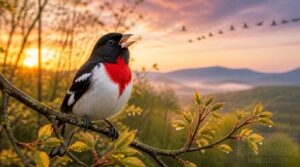
You’ll often hear a rose-breasted grosbeak before you spot one, and that voice tells its own story. This bird sings its way north each spring and calls its way south each fall, covering thousands of miles along the way. Here’s what you need to know about its sound, its journey, and how it’s holding up today.
Robin-Like Song
Listening for a Rose-breasted Grosbeak? Its song sounds like a robin that took singing lessons—gentler, slower, less choppy. Short phrases, one to three notes each, pause, then repeat in a steady marching rhythm.
The timbre stays bright and flute-like, crisp against forest noise. That clean, sunlit quality is your best auditory identification tip when the bird itself stays hidden in leaves.
Metallic Chink Calls
That song won’t always be soft. Grosbeaks also fire off a sharp, penetrating metallic "eek-eek"—a quick alarm call warning flockmates of danger or rivals nearby. This call note cuts through leaf noise fast, sitting in a higher frequency range than the warble.
It’s an effective territorial signal, too. Young birds learn it gradually, starting quieter before matching adult volume—typical vocal learning in songbirds.
Spring Migration
Come mid-March, Rose-Breasted Grosbeaks lift off from Central American wintering grounds, riding southerly tailwinds north. Departure timing shifts earlier when spring conditions look favorable.
Along the way, they stop in shrubby, insect-rich habitat to refuel before pushing on. Arrival back on breeding grounds—often by early May—lines up with leaf-out and caterpillar emergence, giving pairs a head start on nesting season.
Fall Migration
By late August, that northbound urge reverses. Grosbeaks head south in nocturnal flights, riding cool fronts toward Central America.
Fruit-rich stopovers matter most now—berries fuel long hauls better than scattered insects. Weather still calls the shots: calm nights push birds onward, storms stall them at forest edges.
Routes vary year to year, some hugging river valleys, others cutting inland, making timing genuinely unpredictable.
Conservation Status
Good news for backyard birders: the IUCN Red List rates this species as Least Concern, thanks to solid population stability.
Their hardiness comes from a few key factors:
- Broad diet
- Flexible habitat use
- Wide range
- Habitat connectivity along migration corridors
- Climate change hardiness
Threats like pesticide impacts and habitat loss remain worth watching, but current population trends give bird conservation groups reason for optimism.
Frequently Asked Questions (FAQs)
Where do Rose-breasted Grosbeaks go in the summer?
Think of it as trading one leafy address for another: these birds swap mixed deciduous forest habitat across eastern Canada and the northern U.S. for their summer range, favoring boreal woodland edges and forest-edge foraging through the breeding season.
What does it mean when you see a Rose-breasted Grosbeak?
Many naturalist traditions read this sighting as a sign of spring’s return, a nudge toward personal creativity, and proof of a healthy environment, since these grosbeaks need rich insect life and berries to breed successfully.
Where do rose-breasted grosbeaks go in summer?
Like snowbirds trading condos for cabins, they head north each spring. After northward spring migration, they settle into their summer breeding range across eastern deciduous forests, favoring riparian woodland edges and mature woodlots for nesting through August.
Do grosbeaks eat grape jelly?
Yes — grape jelly makes an easy migratory sugar source, especially during spring stopovers. It’s a supplemental fruit treat, not a diet staple; they’ll still favor insects, seeds, and buds. Offer jelly in shallow dishes for backyard feeder safety.
Where do rose-breasted grosbeaks breed?
From British Columbia to the Maritimes, then south through the Appalachians to northern Georgia, breeding territory establishment favors deciduous woodland edges, riparian corridors, and orchards or groves, from sea level up to several thousand feet.
Are rose-breasted grosbeaks aggressive?
Think of a homeowner who’s easygoing until someone crosses the fence line—that’s your grosbeak. Mostly peaceful, but territorial singing and nest defense kick in fast, with wing-flicks, chases, and mobbing predators near active nests during breeding season.
Are rose-breasted grosbeaks endangered?
No, the IUCN lists them as least concern, with stable populations overall. Some local declines tie to habitat loss and forest fragmentation, and climate change remains a watch-point—conservation monitoring keeps tabs on mature forest habitat that these birds depend on.
How rare is it to see a Rose-breasted Grosbeak?
Spotting one might take luck, or just knowing where to look. Within its eastern range, this bird isn’t rare at all—backyard feeder sightings are common during migration. Western appearances stay occasional, tied to migration corridors rather than regular range expansion.
What does a female Rose-breasted Grosbeak look like?
She’s dressed for camouflage: streaked brown plumage, a pale eyebrow stripe, and yellowish wing linings. This dark brown, sparrow-like pattern helps her merge into foliage—her most reliable field mark next to that stout, seed-cracking bill.
Are Rose-breasted Grosbeak both male and female?
Like night and day, males and females wear completely different outfits. Yes—this species shows strong sexual dimorphism: males flaunt bold black-and-rose plumage, while females sport streaked brown camouflage, making gender identification straightforward once you know what to look for.
Conclusion
A flash of rosy red against black and white, gone as fast as it landed—that’s the memory a rose breasted grosbeak leaves behind. You now know the bill, the song, the seasons that bring it through your yard.
Keep your feeders stocked with sunflower seeds each May, and watch the tree line closely. Mastery here isn’t complicated, it’s patience. One spring morning, that splash of color will be yours to name.
- https://www.nationalgeographic.com/animals/birds/facts/rose-breasted-grosbeak
- https://animaldiversity.org/accounts/Pheucticus_ludovicianus
- https://birdsoftheworld.org/bow/species/robgro/cur/introduction
- https://www.tn.gov/twra/wildlife/birds/forest-birds/rose-breasted-grosbeak.html
- https://fog.ccsf.edu/~jmorlan/grbkid.htm