This site is supported by our readers. We may earn a commission, at no cost to you, if you purchase through links.
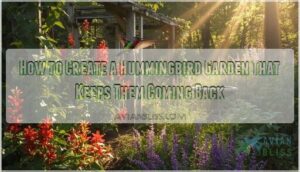
Hummingbirds beat their wings up to 80 times per second, but they won’t stick around your yard if you’re just hanging a feeder and calling it a day. These iridescent acrobats need a full ecosystem—nectar sources that bloom in succession, protein-rich insects to hunt, shallow water features for bathing, and layered vegetation that mimics their natural woodland edges.
Creating a hummingbird garden means thinking like a bird that burns calories faster than any other vertebrate on Earth. You’ll need to balance sun exposure for blooms with shade to keep nectar from spoiling, choose tubular flowers in reds and oranges that match their visual spectrum, and design perching spots where territorial males can survey their claimed turf. Get these elements right, and you won’t just attract passing visitors—you’ll create a destination these tiny dynamos return to season after season.
Table Of Contents
- Key Takeaways
- Planning Your Hummingbird Garden
- Selecting Plants for Hummingbirds
- Creating a Hummingbird-Friendly Habitat
- Essential Water Sources and Accessories
- Top Products for a Thriving Hummingbird Garden
- Frequently Asked Questions (FAQs)
- Is it better to put a hummingbird feeder in the sun or in the shade?
- Can you just put sugar water in a bowl for hummingbirds?
- How to set up a hummingbird garden?
- What is a hummingbird garden?
- What is the best plant for hummingbirds?
- What attracts hummingbirds the most?
- How do hummingbirds find new gardens?
- Can hummingbirds become dependent on artificial feeders?
- Do hummingbirds remember and revisit specific gardens?
- How do weather conditions affect hummingbird garden activity?
- Conclusion
Key Takeaways
- Hummingbirds need layered ecosystems with nectar flowers that bloom in succession, protein-rich insects, shallow water features, and mixed vegetation heights to create a habitat they’ll return to year after year.
- Plant selection should prioritize red tubular flowers and native species like bee balm, eastern columbine, and cardinal flower, positioned in full morning sun with afternoon shade to keep nectar fresh and birds comfortable.
- Moving water through misters, drippers, or fountain pumps attracts hummingbirds more effectively than still birdbaths, and water features should sit 10–15 feet from cover with depths under 1.5 inches for safe bathing.
- Skip pesticides completely since insects make up 80 percent of a hummingbird’s diet, and even small amounts of chemicals like neonicotinoids can cut their energy by 25 percent.
Planning Your Hummingbird Garden
Before a single flower goes in the ground, the planning stage is where your hummingbird garden either takes off or falls flat. Getting a few key decisions right early — location, light, layout, and sightlines — makes everything else so much easier.
Think about where hummingbirds will actually nest, too—choosing the right hummingbird house location near your feeders creates a cohesive habitat they’ll want to stick around in.
Here’s what to think through before you start digging.
Choosing The Ideal Location
For a hummingbird garden that truly delivers, proximity planning is everything. Keep your main flower clusters 3 to 10 feet from the house — close enough to watch from your kitchen window, far enough that daily foot traffic won’t spook them.
Factor in predator safety, noise reduction, and soil quality from the start, and your bird-friendly landscaping will hit the ground running.
Choose native plants and nectar-rich flower options to increase your chances of attracting vibrant visitors all season long.
Sunlight, Shade, and Wind Considerations
Once your location is set, light and wind shape everything else. Most nectar-rich blooms need 6 hours of direct sun, but afternoon shade keeps flowers fresh longer on hot days. Smart microclimate creation through layered bird-friendly landscaping gives hummingbirds both food and shelter without long flights between them.
For a complete guide on, consider how full sun, native plants, and wind barriers enhance these habitats.
- Sunlight requirements: aim for full sun in morning spots
- Shade benefits: afternoon cover protects blooms and keeps birds cooler
- Wind protection: dense shrubs on the windward side reduce gusts
- Light balance: mix sun and part-shade zones for continuous nectar
Garden Size and Layout Tips
Your garden size doesn’t have to be grand garden — a 10-by-5-foot bed with around 30 flowering plants pulls regular visits. Garden layout matters more than square footage.
Use layered design with low, mid, and tall plants for vertical gardening impact. Curved bed shapes improve flight paths, while plant density and native plant gardening keep your bird-friendly landscaping thriving without feeling cluttered.
Visibility for Bird Watching
Smart feeder placement turns your hummingbird garden into a front-row wildlife experience. Set feeders 10 to 15 feet from your main window — close enough for bird watching without crowding them.
- Position feeders at eye level, around 4 to 6 feet high
- Avoid window glare by favoring east-facing viewing angles
- Use dark foliage backdrops for garden visibility
- Hang feeders in dappled light for color contrast
- Space multiple feeders apart across your bird-friendly landscaping
Selecting Plants for Hummingbirds
The right plants are everything in terms of keeping hummingbirds loyal to your garden.
Not every flower makes the cut, so knowing which ones actually work saves you a lot of guesswork. Here’s what you’ll want to grow.
Top Nectar-Rich Native Flowers
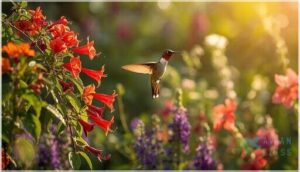
Native blooms are your secret weapon here. Eastern columbine kicks things off in spring, giving early migrants a reliable fuel stop, while bee balm bridges midsummer into fall.
Regional choices matter too — butterfly milkweed loves dry, sunny spots, and great blue lobelia thrives in wetter areas. Matching each plant’s soil needs and growth habits to your yard means nectar-rich flowers keep delivering all season.
Red and Tubular Flower Varieties
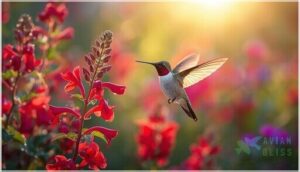
Red blooms are basically hummingbirds’ version of a neon “Open” sign. Their eyes are tuned to pick up scarlet flower color fast, so tubular flowers like scarlet sage and red penstemon are prime targets.
Planting these red favorites during hummingbird nesting season gives females easy fuel access while they’re raising chicks nearby.
These nectar-filled flowers store rewards deep inside their tubular shapes, matching the bird’s long tongue perfectly. Add them to your hummingbird garden and watch the traffic pick up.
Ensuring Continuous Bloom Seasons
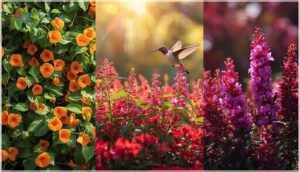
Think of bloom scheduling like a relay race — one plant passes the baton to the next. Map your seasonal blooming by pairing April columbine with summer bee balm, then hand off to late-season gayfeather.
This flower rotation keeps nectar-rich flowers open from spring through October. Strategic seasonal mapping ensures your hummingbird-friendly plants and tubular flowers never leave visiting birds without continuous blooming nectar sources.
Combining Annuals and Perennials
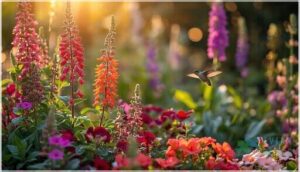
Perennials anchor your hummingbird garden, but annuals keep the party going between flushes. Together, they create bloom balance and plant diversity that no single plant type can deliver alone. Here’s why mixing both is your smartest move:
- Petunias and zinnias bloom nonstop from late spring until frost, filling every gap
- Bee balm and agastache return yearly, building deeper habitat support each season
- Native plants like cardinal flower handle moist spots while sun-loving annuals claim drier patches
- Tubular flowers in containers give you garden flexibility — move them wherever hummingbirds need coaxing
- Staggered nectar-rich flowers stretch seasonal maintenance across the year instead of hitting all at once
Weaving annuals between established perennial clumps keeps hummingbird-friendly plants productive even when one clump underperforms.
Creating a Hummingbird-Friendly Habitat
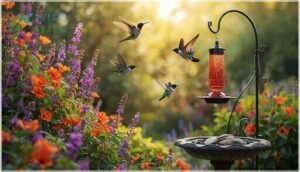
Flowers alone won’t keep hummingbirds around — they need a space that actually feels like home.
Think beyond the blooms and consider what makes a garden worth staying in, nesting in, and returning to season after season.
Here’s what your garden needs to make that happen.
Layered Planting and Tiered Heights
Layering your hummingbird garden like a tiered stage transforms a flat yard into a buzzing flight path network. Place low growers like creeping phlox up front, mid-height bee balm in the center, and tall trumpet vine on a trellis behind — vertical layers in action.
| Height Tier | Plants | Garden Structures |
|---|---|---|
| Low (under 12″) | Creeping phlox, low salvia | Ground borders |
| Mid (2–4 ft) | Bee balm, penstemon | Window boxes, railings |
| Upper (5+ ft) | Trumpet vine, sunflower | Trellises, arbors |
Even small patios get space savings from stacked containers. Hummingbird-friendly plants at every level keep nectar-rich flowers accessible, giving birds natural weaving flight paths through your garden design.
Providing Natural Shelter and Perches
Hummingbirds don’t just need flowers — they need places to breathe, hide, and own the yard. Build your shelter zone with intention.
- Plant an evergreen shrub like holly within 15 feet of feeders for quick cover
- Use a small tree as a natural perch and lookout post
- Add windbreak features using conifers along prevailing wind sides
- Leave bare twigs as ready-made natural perches near nectar beds
- Space shelter plants with multiple exit paths for predator-safe escapes
Safe Nesting Sites and Materials
Once your shelter is sorted, nesting comes naturally. Female hummingbirds prefer nest placement on pencil-thick branches, 5 to 20 feet up, away from foot traffic.
Leave small side branches unpruned — those are the safe perches they actually choose. Natural materials like milkweed fluff, spider silk, and plant down build the nest. Never offer yarn or dryer lint in your wildlife habitat hummingbird garden.
Attracting Insects for Protein
Nectar only tells half the story. Insects make up around 80 percent of a hummingbird’s diet, so your wildlife gardening strategy needs to feed both needs.
Hummingbirds get 80 percent of their diet from insects, not nectar, so skip the pesticides and let your garden feed both needs
Skip the pesticide free gardening shortcuts — neonicotinoids alone can tank their energy by 25 percent. Native plant selection like bee balm and coneflower pulls in gnats and aphids, turning your hummingbird garden into a protein rich foraging ground.
Essential Water Sources and Accessories
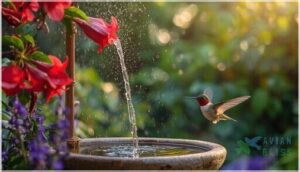
Hummingbirds need more than just flowers — water is a big part of what keeps them loyal to your garden.
The right setup doesn’t have to be complicated, but the details matter. Here’s what you need to know about choosing and placing water sources that actually work.
Choosing Birdbaths and Fountains
For your hummingbird garden, basin depth matters more than you’d think — keep edges around half an inch, sloping to no deeper than 1.5 inches at center.
Water movement draws them in fast, so fountain pumps with a gentle bubbler beat a still bath every time.
Choose textured birdbath materials for grip, and think smart about garden placement: partial sun, near nectar plants, visible from your window.
Setting Up Misters and Drippers
Beyond the birdbath, misters and drippers take your hummingbird garden to the next level. For mister placement, aim 4–6 feet high so droplets drift gently over foliage. Fine nozzle types with spray patterns under 0.5mm create that soft cloud birds love flying through.
Match dripper height to shallow basins, keep water flow slow and steady, and they’ll keep returning.
Keeping Water Clean and Safe
Fresh water makes or breaks your hummingbird garden. Stagnant water breeds bacteria fast, so swap it out every 1–2 days in summer heat. For birdbath maintenance, a 9-to-1 water-vinegar mix takes care of routine cleaning without leaving harmful residues.
Keep these water quality habits on your radar:
- Scrub birdbaths every 2–4 days
- Rinse all cleaning solutions thoroughly before refilling
- Use plain tap water — skip additives entirely
- Control algae by increasing water movement
Placement for Maximum Attraction
For distance optimization in your hummingbird garden, set water features 10–15 feet from thick shrubs—close enough for quick cover but far enough to dodge ambushes.
Sun shade balance matters too: morning light and afternoon shade keep things cool.
Pair misters near nectar-rich flowers so visibility lines pull birds toward moving water. Keep glass either within three feet or beyond ten to avoid window strikes with your birdfriendly landscaping design.
Top Products for a Thriving Hummingbird Garden
The right gear makes all the difference when you’re setting up a space that hummingbirds will actually use.
You’ll want tools that keep water flowing, soil healthy, and conditions just right for the plants these birds depend on. Here are six products that handle the basics without overcomplicating your setup.
1. Mademax Solar Bird Bath Fountain Pump
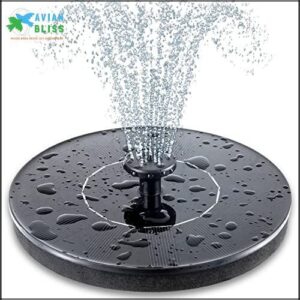
You want moving water that works off the grid and won’t send you hunting for outlets in the yard. The Mademax solar birdbath fountain runs on a 1.4-watt panel, starts in about three seconds when sunlight hits it, and shoots water roughly 20 to 28 inches high in full sun.
It comes with six interchangeable nozzles so you can switch between vertical jets and gentle bubbles depending on your birdbath size. The pump floats on the surface, anchors with small plastic stabilizers, and needs zero wiring or tools to set up.
| Best For | Anyone who wants a simple, plug-and-play fountain for their birdbath or small pond without dealing with wiring or electricity bills. |
|---|---|
| Primary Use | Water circulation |
| Power Source | Solar |
| Material | Plastic |
| Installation | No installation required |
| Target Users | Bird enthusiasts |
| Price Range | Budget |
| Additional Features |
|
- Starts up in seconds when sunlight hits it and includes six nozzle options to adjust spray height and pattern
- No installation needed—just drop it in water and let it float
- Attracts birds while aerating the water, which helps keep it fresher
- Only works in direct sunlight, so expect it to stop on cloudy days or at dusk
- You’ll need to clean it regularly since algae and debris can clog the pump
- Wind can blow the spray outside your birdbath, wasting water
2. Patio Misting System With Brass Nozzles
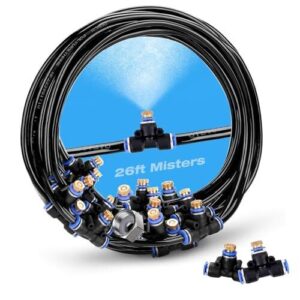
Hummingbirds fly straight through fine mist to bathe, and a patio system with brass nozzles gives them exactly that.
The Mademax 29-foot kit includes eight brass tips that create a cool, light spray instead of heavy droplets, so birds can hover and preen without getting drenched. You attach it to a standard garden hose, space the nozzles every two feet along your patio edge or near nectar plants, and run it during hot afternoons to keep both you and your hummingbirds comfortable for around seventeen dollars.
| Best For | Homeowners who want an affordable way to cool their patio while attracting hummingbirds with fine mist instead of heavy spray. |
|---|---|
| Primary Use | Outdoor cooling |
| Power Source | Water pressure |
| Material | Brass/PU tubing |
| Installation | Pre-assembled |
| Target Users | Homeowners |
| Price Range | Budget ($16.99) |
| Additional Features |
|
- Eight brass nozzles create a light, cool mist that works well for both outdoor cooling and hummingbird bathing
- Easy setup with pre-assembled 29-foot line that connects to any standard garden hose
- Budget-friendly at $16.99 with durable brass components and UV-resistant tubing
- Hose tends to kink easily, which blocks water flow and stops the misting
- Some nozzles squirt water instead of producing a fine mist, requiring adjustments or cleaning
- Makes surrounding furniture and surfaces wet, so you’ll need to plan placement carefully
3. Zoo Med Big Dripper System
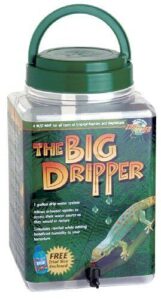
A slow drip on foliage catches a hummingbird’s attention faster than still water sitting in a dish.
The Zoo Med Big Dripper holds one gallon, hangs above your plants with a folding handle, and releases adjustable drops that mimic natural rainfall for seventeen to twenty-four dollars.
You thread the tubing through leaves near your nectar flowers, tweak the valve to get a gentle patter, and let gravity do the work without electricity or pumps while birds investigate the wet sparkle.
| Best For | Hummingbird enthusiasts who want a simple, electricity-free way to create movement in their bird garden and attract birds that prefer drinking from dripping water rather than standing dishes. |
|---|---|
| Primary Use | Reptile hydration |
| Power Source | Gravity |
| Material | Plastic |
| Installation | Simple setup |
| Target Users | Reptile owners |
| Price Range | Budget |
| Additional Features |
|
- One-gallon capacity provides steady dripping for extended periods without constant refills
- Adjustable drip rate lets you control the flow to match your birds’ preferences and weather conditions
- No electricity or pumps needed—just hang it above your plants and let gravity create natural rainfall effects
- Adjusting the drip rate can be tricky and may require some trial and error to get right
- The nozzle and tubing are fragile and can break or leak if not handled carefully during setup
- Some users receive units that arrive damaged or develop leaks over time if not properly maintained
4. Rapitest Soil Test Kit
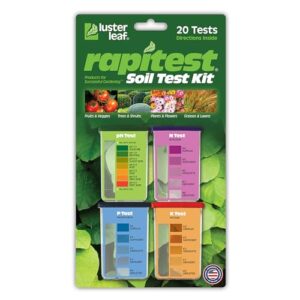
Thriving nectar flowers start with soil that delivers the right nutrients, and testing before you plant saves you from guessing what your beds need.
The Rapitest Soil Test Kit measures pH, nitrogen, phosphorus, and potassium in 40 quick at-home tests, so you can match conditions to the hummingbird favorites you want to grow. You fill the color-coded comparators with soil and water, add the capsule powder, shake, and read results in minutes without sending anything to a lab.
| Best For | Gardeners who want a quick, affordable way to check soil pH and nutrient levels before planting nectar flowers or any garden beds without waiting for lab results. |
|---|---|
| Primary Use | Soil pH testing |
| Power Source | Manual |
| Material | Plastic |
| Installation | Ready to use |
| Target Users | Gardeners |
| Price Range | Budget |
| Additional Features |
|
- Gives you pH, nitrogen, phosphorus, and potassium readings in minutes using a simple color-match system
- Includes 40 tests and a helpful pH preference list for over 450 plants
- No batteries or equipment needed—just soil, water, and the capsules
- Results aren’t as precise as professional lab testing
- Capsules can be tricky to open and pour without spilling
- Only 40 tests total with no refill option available
5. Luster Leaf Soil Test Kit
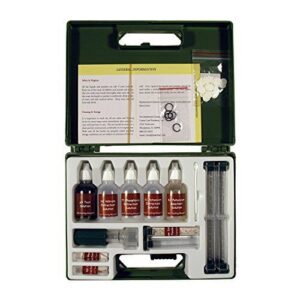
The Luster Leaf kit brings the same color-comparator approach with 80 tests instead of 40, which means you can monitor soil before planting and track changes after adding lime or compost. Each test uses color-coded capsules that match the comparator caps, so you grab the right reagent without fumbling through labels.
The kit includes a printed plant guide listing pH and nutrient ranges for over 100 common plants, helping you dial in conditions for salvias, bee balms, and other hummingbird magnets without sending samples out.
| Best For | Gardeners who want to test soil multiple times throughout the season and prefer a straightforward color-matching system with plant-specific guidance. |
|---|---|
| Primary Use | Soil nutrient testing |
| Power Source | Manual |
| Material | Plastic |
| Installation | Ready to use |
| Target Users | Gardeners/professionals |
| Price Range | Mid-range |
| Additional Features |
|
- Includes 80 tests total, letting you check soil before planting and again after amending
- Color-coded capsules match the comparator caps so you don’t mix up reagents
- Comes with a plant guide covering pH and nutrient needs for over 100 common plants
- Some users report inconsistent or inaccurate results
- PH scale maxes out at 7.5, which isn’t high enough for all soil types
- Replacement filters and solutions can be hard to find
6. MySoil Professional Soil Test Kit
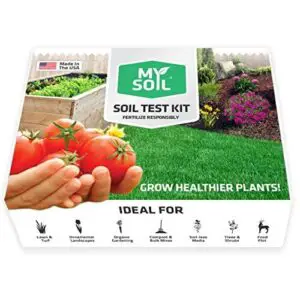
If you want lab-level accuracy without mixing reagents, the MySoil Professional Soil Test Kit measures 13 plant-available nutrients plus pH and provides results through an online portal.
You collect soil from five to seven spots, mix it in a clean container, scoop the composite sample into the provided jar, then mail it back in the prepaid envelope. Within six to eight days, you’ll get personalized fertilizer recommendations for organic or synthetic products, broken down per 1,000 square feet or per bed so you can match feeding to what your hummingbird plants actually need.
| Best For | Gardeners who want precise, lab-grade soil analysis and customized fertilizer recommendations without guessing what their lawn or garden actually needs. |
|---|---|
| Primary Use | Professional soil analysis |
| Power Source | N/A |
| Material | N/A |
| Installation | Mail-in service |
| Target Users | Lawn/garden owners |
| Price Range | Premium ($31.99) |
| Additional Features |
|
- Professional lab testing measures 13 nutrients plus pH with real accuracy, not color-matching guesswork
- Clear, actionable fertilizer recommendations tailored to your specific soil and whether you use organic or synthetic products
- Simple process with prepaid mailing and results in about a week
- Only available in the United States, so Canadian and international gardeners can’t use it
- Takes 6-8 days for results, which isn’t ideal if you need answers quickly
- Doesn’t test for soil diseases or fungal issues, only nutrient levels
Frequently Asked Questions (FAQs)
Is it better to put a hummingbird feeder in the sun or in the shade?
Shade wins this round—hot nectar spoils faster and stresses birds hovering in blazing sun.
Dappled light under a tree or eave keeps sugar water cool, fresh, and more inviting throughout the day.
Can you just put sugar water in a bowl for hummingbirds?
You shouldn’t put sugar water in an open bowl because it can coat a hummingbird’s wings and feathers, making flight difficult and creating serious health risks from contamination and spoilage.
How to set up a hummingbird garden?
Start by picking a sunny spot near a window where you’ll actually see the action, then layer in nectar plants, perches, and a mister to keep birds fueled and happy all season.
What is a hummingbird garden?
A hummingbird garden brings nectar-rich flowers, water features, and shelter together in one intentional space, creating a reliable pit stop where these tiny birds can fuel up, rest, and even nest.
What is the best plant for hummingbirds?
Bee balm stands out as a top choice because it delivers nectar-rich blooms from midsummer to early fall, giving birds a dependable food source when they need it most.
What attracts hummingbirds the most?
Nectar drives their search, but what really seals the deal is moving water, red tubular flowers packed close together, and perches where they can rest between feeding runs in your space.
How do hummingbirds find new gardens?
Birds fly along tree lines and streams, spotting bright reds and oranges from above.
They test promising flowers or feeders for nectar quality, then remember rewarding yards and add them to their foraging routes.
Can hummingbirds become dependent on artificial feeders?
Your feeder won’t trap wild visitors for life.
They naturally visit hundreds of flowers daily, so artificial nectar acts as one rich food patch in a larger territory they still patrol.
Do hummingbirds remember and revisit specific gardens?
Yes, hummingbirds have excellent spatial memory and often return to the same reliable yards year after year, sometimes on nearly identical dates, remembering individual feeder locations and the quality of your garden’s nectar supply.
How do weather conditions affect hummingbird garden activity?
Temperature swings shift when and how often hummingbirds visit flowers, rain forces them to work harder while hovering, and strong winds push them toward sheltered feeding spots where flight costs less energy.
Conclusion
Build it and they’ll come—but only if you build it right. A thriving hummingbird garden isn’t about luck, it’s about layering nectar sources with protein-rich insects, shallow water features, and strategic perches.
When you match their biological needs instead of just hanging a feeder, you create a refueling station these birds can’t ignore. Plant with intention, maintain with consistency, and watch your yard transform into their favorite stopover.
- https://www.monrovia.com/be-inspired/how-to-create-a-hummingbird-garden.html
- https://eartheim.com/2024/03/11/6-hummingbird-garden-design-ideas/
- https://www.longfield-gardens.com/blogs/how-to/how-to-design-a-hummingbird-garden
- https://www.ecologicalgardening.net/2013/03/creating-hummingbird-habitat.html
- https://gardenforwildlife.com/blogs/learning-center/plants-that-attract-hummingbirds-in-ny-garden-for-wildlife