This site is supported by our readers. We may earn a commission, at no cost to you, if you purchase through links.
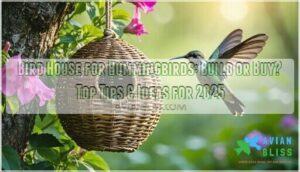 A traditional bird house won’t cut it for hummingbirds—they prefer open nesting platforms or cozy, hand-woven huts.
These tiny acrobats build their nests with spider silk and soft plant fibers, so offering similar materials nearby can help.
Place a small platform or a lightweight, breathable shelter like a rattan globe in a shaded spot, ideally near flowering plants they love.
Keep it safe from predators by hanging it 5-10 feet off the ground.
Whether you buy or build, remember: less is more. Hummingbirds value simplicity and safety over fancy designs.
Curious about DIY options or top-rated brands? There’s plenty to explore!
Table Of Contents
- Key Takeaways
- Hummingbird Nesting Habits and Preferences
- Hummingbird Nest Building Process
- Choosing The Right Hummingbird House
- DIY Hummingbird House Plans
- Hummingbird House Selection Tips
- Top Hummingbird Houses and Nesters
- Building a Hummingbird-Friendly Yard
- Frequently Asked Questions (FAQs)
- Do hummingbirds use birdhouses?
- How to build a birdhouse for hummingbirds?
- When do hummingbirds need a birdhouse?
- What is the best house for hummingbirds?
- How do you attract hummingbirds to a birdhouse?
- How do you get hummingbirds to nest in a birdhouse?
- How do you attract hummingbirds to a hummingbird house?
- What is the best material for a hummingbird house?
- Will a hummingbird use a birdhouse?
- Do hummingbirds use birdhouses in the winter?
- Conclusion
Key Takeaways
- Focus on open, natural designs like nesting platforms or woven huts instead of traditional birdhouses since hummingbirds prefer simplicity.
- Place the house 5–10 feet off the ground in a shaded, secluded spot near nectar-rich plants for safety and easy access.
- Provide soft materials like moss, spider silk, or cotton nearby to help hummingbirds build their nests.
- Avoid pesticides and keep predators away to create a safe, welcoming environment for these tiny visitors.
Hummingbird Nesting Habits and Preferences
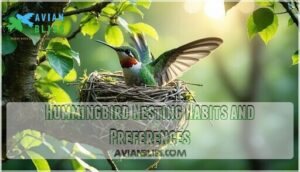
Hummingbirds are master builders, crafting tiny, flexible nests from materials like spider silk and moss to keep their eggs secure.
They prefer secluded spots high in trees, ensuring safety from predators and easy access to nectar.
Hummingbird Nesting Material
Hummingbirds masterfully use natural materials like spider silk, moss, and dandelion down to build nests that stretch and stay sturdy.
Their nest camouflage is perfect for dodging predators.
Want to help? Leave these soft items nearby:
- Cotton fluff or dryer lint for nesting materials.
- Lightweight twigs for structure.
- Spider silk blends for strength.
You’ll witness some next-level nestbuilding!
Ideal Nesting Environment
Creating a safe space for a hummingbird nest starts with understanding their love for secluded locations and dense cover.
Choose trees or shrubs with horizontal branches for predator protection and easy access to food or water. Keep the nest height between 5 and 90 feet; they feel secure in high spots.
- Blend materials: Leaves, lichen, and spider silk camouflage nests.
- Focus on safety: Avoid areas with human or pet activity.
- Natural surroundings: Opt for greenery that offers shade, shelter, and privacy.
Attracting Hummingbirds to Your Yard
Welcome hummingbirds by designing a charming habitat packed with nectar-rich flowers like Cardinal Flower and Beebalm.
Add a hummingbird feeder close to sheltered spots while including water features for extra appeal.
Prioritize native plants and avoid pesticides to keep their habitat safe.
Create shelter options by placing plants strategically and monitoring regularly. A hummingbird house may not suit them, but soft, natural DIY nests can help.
Keep predators like cats and squirrels far from their haven. Offering them fresh water sources can further enhance their habitat with fresh water.
Hummingbird Nest Building Process
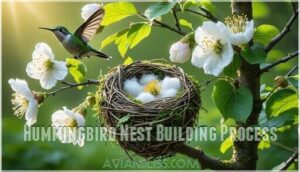
When hummingbirds build their nests, they focus on creating small, sturdy cups using lightweight materials like spider silk, moss, and plant fibers.
It’s fascinating how these tiny birds carefully craft shelters high in trees, blending them seamlessly into their environment for safety and warmth.
Nest Building Timeline
When it’s nesting season, female hummingbirds kick into gear, tackling the week-long nesting process solo.
Using spider silk and soft fibers, she builds a flexible, weather-resistant home high in tree forks, ensuring safety for her brood.
Nesting locations are strategically chosen for concealment.
Every detail matters, offering a cozy start for her nestlings.
- Timing: Before mating
- Secrecy: Hidden spots above ground
Nest Building Materials
Building a hummingbird nest is like crafting with Mother Nature’s toolkit.
Female hummingbirds carefully weave spider silk for strength, while lightweight dandelion down adds softness.
They blend moss and other natural materials like plant fibers for flexibility and camouflage—a clever survival tactic.
Some even purchase spider silk products to aid in nest construction.
You can help by leaving soft materials, like lint or feathers, outdoors.
Remember, their nests, small as a walnut, blend perfectly into tree forks, ensuring safety and comfort for tiny eggs.
DIY Nesting Platforms
You’ve got the materials—now let’s craft a DIY hummingbird nesting platform! Use natural materials like a small branch or scrap wood for your platform design.
For platform placement, pick a sheltered spot, ideally 5–10 feet high, near nectar-rich plants. Adding platform camouflage, such as moss or foliage, boosts its appeal.
Consider browsing options for a pre-made nesting platform to simplify the process. Platform maintenance is simple: make certain it’s secure, and let nature work its charm.
This low-cost DIY hummingbird house invites these tiny beauties to nest safely in your garden!
Choosing The Right Hummingbird House
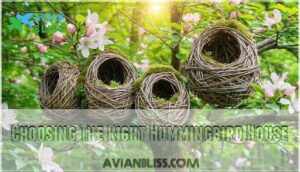
You’ll need to think carefully about what hummingbirds actually want before picking a house.
Since they’re selective and prefer open, natural nests, it’s all about creating a space that mimics their natural instincts while keeping them safe.
Hummingbird House Types
Picking the right hummingbird birdhouse doesn’t have to be a wild goose chase.
Hummingbirds aren’t into traditional birdhouses, but unique designs can work wonders.
To get started, consider these key factors:
- Materials Matter: Go for soft, natural materials like wood or plant fibers.
- Size Considerations: Hummingbirds prefer smaller, open spaces.
- Camouflage Importance: Blend houses into surroundings with moss or leaves.
- Weather Resistance: Guarantee durability against rain and sun.
- Mounting Options: Choose pole, hanging, or branch placements strategically.
Exploring different hummingbird house styles can provide inspiration.
Experiment, and create a buzzing retreat!
Hummingbird House Brands
Not all hummingbird houses are created equal! The right brand balances durability, quality, and charm.
Here are some trusted names:
- Duncraft: Renowned for innovation and nesting accessories.
- Bilantan: Offers cozy sanctuaries with swift delivery.
- OROGHT: Natural wooden designs with a rustic vibe.
- CaliKim Garden & Home: Eco-friendly craftsmanship for nature lovers.
- The Village Tinker: Handcrafted, one-of-a-kind pieces for unique gardens.
Consider also the feeder’s features, such as ant moats and bee guards, for easier maintenance.
Buying Vs Building a Hummingbird House
Why settle for store-bought when you can craft a DIY birdhouse suited for hummingbirds?
Building lets you control birdhouse design, sourcing soft, natural materials, and fitting your skill level.
Buying saves time, but DIY offers creativity and cost flexibility.
Whether purchasing or building, thoughtful birdhouse placement and a keen eye for construction details will make your yard irresistible to these tiny, dazzling visitors.
DIY Hummingbird House Plans
If you’re ready to build a hummingbird house, you’ll need the right materials and a plan that works with their natural instincts.
By mimicking the cozy, open environments they love, you can create a safe space that attracts these tiny creatures to your yard.
Simple Cedar Hummingbird House
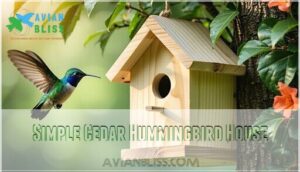
Ever wondered why cedar is perfect for a hummingbird birdhouse? Its natural oils guarantee pest-free durability while the birdhouse design caters to their nesting style.
Build a simple cedar house to invite these beauties.
- Natural Appeal: A perfect blend with nature.
- Easy Construction: Ideal for beginners.
- Cost-Effectiveness: Affordable and sustainable!
Wool & Foam Hummingbird Nest
Stepping into creative hummingbird nest ideas, a wool and foam combination offers unique insulation and safe materials for delicate hummingbird eggs.
Wool nest benefits include warmth and flexibility, while foam nest drawbacks center on reduced durability.
Layer it with spider silk or dandelion down for stabilization, this lightweight setup mimics natural hummingbird nests, promoting comfort without sacrificing safety or charm.
Private DIY Hummingbird House
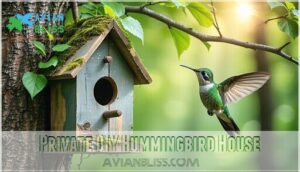
Looking for a personal touch? A DIY privacy hummingbird birdhouse can be magical.
Use safe, recycled wood for sturdy construction, and camouflage it with leaves or moss to deter predators.
Keep it in a sheltered tree fork for weather protection.
These budget-friendly birdhouse alternatives pair simple designs with predator-proofing, creating a cozy haven for hummingbirds.
Watch nature thrive!
DIY Terracotta Pot Hummingbird Home
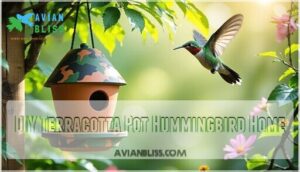
Make your backyard irresistible by crafting a DIY terracotta pot hummingbird home.
Choose a pot size that feels snug but allows room for airflow—essential for their tiny wings.
Add drainage holes to keep things dry, then use paints for a camouflage design to blend it into your hummingbird habitat.
Secure the hanging method with durable wire, keeping it away from predators.
For weather protection, situate it in partial shade.
Pair it with a hummingbird feeder and vibrant flowers, creating the perfect hummingbird garden.
Simple maintenance guarantees it stays welcoming!
Hummingbird House Selection Tips
Choosing the right hummingbird house can feel tricky, but focusing on key features will make it simpler.
You’ll want to take into account factors like materials, placement, and upkeep to create a space they’ll actually use.
Features to Consider
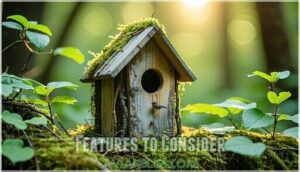
Choosing the right hummingbird birdhouse starts with getting the birdhouse size and shape perfect.
A compact 5×5-inch floor and a 1.5-inch entry hole respect their small frames.
Go for natural, durable materials like untreated wood for weather resistance.
Add camouflage design touches to mimic nature and deter predators.
Ventilation’s key, too—think airflow, not drafts.
Your guests will appreciate the thoughtful details!
Placement and Installation
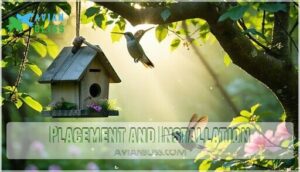
Picking the right birdhouse location is key to keeping hummingbirds happy.
Focus on these essentials:
- Optimal Height: Hang the house 5-8 feet high for safe birdhouse elevation and easy monitoring.
- Sun Exposure: Keep it shaded, avoiding harsh midday heat, but not in total darkness.
- Predator Avoidance: Choose a quiet, low-traffic spot with natural cover.
Secure mounting guarantees it stays stable during windy weather.
With thoughtful placement, your birdhouse becomes a cozy, safe retreat.
Maintenance and Upkeep

A sparkling clean hummingbird birdhouse is key, so stick to a regular cleaning frequency—no bird loves old leftovers.
Watch for material degradation or damage; quick repair strategies keep it safe.
Smart birdhouse placement avoids predators, while seasonal storage prevents wear.
With these birdhouse tips, your garden becomes a safe, cozy haven hummingbirds can’t resist returning to.
Top Hummingbird Houses and Nesters
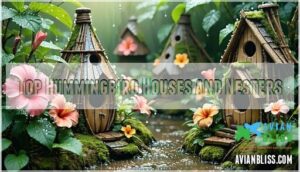
If you’re wondering which hummingbird houses are worth considering, a few options stand out for their clever designs and natural look.
These nesters mimic the cozy, flexible habitats hummingbirds prefer, helping you attract these tiny birds to your yard with their natural look.
Hand Woven Hanging Audubon Birdhouse
The Hand Woven Hanging Audubon Birdhouse combines natural charm with practicality, making it a favorite for attracting hummingbirds.
Its hand woven durability guarantees long-lasting use, while the lightweight materials offer hanging birdhouse safety. Plus, the rustic design enhances your yard’s birdhouse aesthetic appeal.
- Crafted with eco-friendly materials.
- Trusted for its Audubon brand reputation.
- Blends beautifully with outdoor decor.
- Provides a cozy, secure nesting space.
It’s a thoughtful way to welcome these tiny visitors!
Kimdio Hand Woven Hummingbird Hut
The Kimdio Hand Woven Hummingbird Hut is a charming addition to any garden, offering both beauty and function.
Made from sturdy, natural materials, it’s designed to last while blending seamlessly with your outdoor space.
Its easy-to-hang feature guarantees effortless setup, making it perfect for attracting hummingbirds.
Pair it with vibrant flowers and hummingbird feeders to boost nesting success.
Maintenance is straightforward, keeping the hut ready for returning guests.
Whether you’re hosting the delicate Ruby-throated or the energetic Rufous hummingbird species, this hut promises a welcoming space.
A true value proposition for anyone passionate about feeding hummingbirds and hummingbird care.
Collection Etc. Rattan Globe Hummingbird Nesters
Looking for a small bird house with charm? The Collection Etc. Rattan Globe Hummingbird Nesters combine the Globe Design Appeal with Nester Material Durability.
Their natural rattan structure suits many hummingbird species, blending well into your yard.
For best results, follow Nester Placement Tips: hang them securely, away from predators.
Plus, Cleaning Rattan Nesters is easy—just wipe gently.
Perfect for birdhouse decoration and attracting diverse types of hummingbirds!
Building a Hummingbird-Friendly Yard
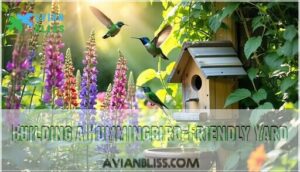
If you want hummingbirds to visit, you’ll need to create a yard that meets their needs for food, water, and shelter.
By planting the right flowers and offering safe nesting spots, you can turn your space into a hummingbird haven.
Planting Hummingbird-Friendly Flowers
Bright flowers are like neon signs for hummingbirds, drawing them into your yard.
Bright blooms act as irresistible beacons, inviting hummingbirds to feast and flutter in your garden.
To create a hummingbird-friendly garden, focus on these steps:
- Pick Vibrant Colors: Go for red or orange blooms like bee balm or trumpet vine, as their hues scream "nectar here!"
- Plan Bloom Times: Mix native plants with staggered blooming schedules for year-round floral nectar.
- Boost Nectar Production: Skip pesticides and guarantee pest control naturally, letting your best hummingbird plants thrive.
It’s a win-win for beauty and birds!
Providing Food and Water Sources
Boost your yard’s appeal with hummingbird feeders filled with a simple nectar recipe: four parts water to one part sugar—no red dye needed.
Place feeders in dappled shade to keep the nectar fresh and inviting. Add a shallow bird bath or a mister for water features they’ll love.
Plant nectar-rich plants like bee balm or trumpet vine nearby to complement natural nectar sources. To truly make them feel at home, consider the importance of a hummingbird garden design.
Keep feeders clean and filled, especially for winter feeding. Even Orioles might join the feast, adding extra life to your space!
Creating a Hummingbird-Friendly Environment
Now that your feeders and nectar recipe are in place, let’s focus on safety.
Use safe pesticides and set up predator deterrents to keep hummingbirds secure.
Add water features like shallow dishes and plant nectar-rich native plants for natural shelter options.
A hummingbird-friendly garden with dense shrubs and trees creates the perfect haven, ensuring these tiny visitors feel right at home.
Frequently Asked Questions (FAQs)
Do hummingbirds use birdhouses?
Picture a hummingbird darting through sunlit branches—it won’t stop at a birdhouse.
These tiny birds prefer crafting open, cup-shaped nests in tree forks using spider silk and moss, blending perfectly into their surroundings, which is a key aspect of their behavior, particularly in how they use spider silk.
How to build a birdhouse for hummingbirds?
Hummingbirds don’t use traditional birdhouses, but you can create a nest-friendly spot.
Use lightweight materials like moss, spider silk, and dandelion fluff.
Place it high in a tree fork, ensuring privacy and nearby nectar sources.
When do hummingbirds need a birdhouse?
Hummingbirds don’t actually need birdhouses, as they build their own nests in tree forks using soft materials like spider silk.
Instead, focus on providing food, water, and safe, secluded spots to attract them.
What is the best house for hummingbirds?
Did you know hummingbirds can flap their wings up to 80 times per second?
Instead of traditional birdhouses, they prefer open, cup-style nests made from soft materials like moss and spider silk, hidden in tree forks.
How do you attract hummingbirds to a birdhouse?
To attract hummingbirds, plant nectar-rich flowers nearby, hang sugar-water feeders, and provide soft nesting materials like moss or cotton.
Place the birdhouse in a quiet, shaded spot, ensuring safety from predators and harsh weather, which is crucial for the safety of the hummingbirds.
How do you get hummingbirds to nest in a birdhouse?
You can’t make hummingbirds nest in birdhouses since they prefer open, cup-style nests.
Instead, offer nearby soft materials like moss or spider silk, plant nectar-rich flowers, and create a safe, secluded environment.
How do you attract hummingbirds to a hummingbird house?
Think of your yard as a welcoming café.
Plant nectar-rich flowers, hang sugar-water feeders, and keep the area predator-free.
Offer soft nesting materials nearby, and make certain the space feels safe and undisturbed for visitors.
What is the best material for a hummingbird house?
The best materials for a hummingbird house are soft, lightweight, and natural, like moss, lichen, plant fibers, and spider silk.
These materials mimic their natural preferences, ensuring comfort and camouflage while keeping predators at bay, which is crucial for the hummingbirds’ comfort.
Will a hummingbird use a birdhouse?
Hummingbirds won’t use traditional birdhouses since they’re not cavity nesters.
Instead, they build tiny, open cup-shaped nests in tree forks, using spider silk and soft materials.
Providing these nearby can attract them to nest, using traditional methods is not necessary.
Do hummingbirds use birdhouses in the winter?
Winter’s chill won’t lure hummingbirds into birdhouses—they’re not cozy cabin dwellers.
These tiny architects stick to their cup-style nests, even in colder months, relying on secluded branches and soft materials for warmth and safety, which makes them tiny architects.
Conclusion
Let’s face it, a hummingbird mansion isn’t necessary—these little dynamos prefer simplicity.
Whether you’re crafting a DIY platform or snagging a top-rated bird house for hummingbirds, focus on breathable materials, safety, and strategic placement near their favorite blooms.
Keep it 5-10 feet off the ground, offer nesting fibers like spider silk, and maintain predator-free zones.
By creating a cozy, natural setup, you’ll invite these tiny wonders to your yard, proving less really is more.