This site is supported by our readers. We may earn a commission, at no cost to you, if you purchase through links.
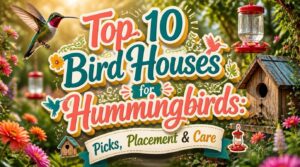
Here’s something that surprises most backyard birders: hummingbirds never actually sleep in those cute little houses you see at garden centers. They build fresh cup nests from spider silk and plant down each season, then abandon them for good.
So why buy a bird house for hummingbirds at all? Because the right design still pulls double duty, offering shelter from storms, a safe perch, and a magnet for these tiny acrobats to linger near your feeders.
Pick wisely, and you’ll turn your yard into the kind of spot hummingbirds actually want to visit, again and again.
Table Of Contents
- Key Takeaways
- Top 10 Hummingbird Birdhouses
- 1. Transparent Window View Hummingbird House
- 2. Natural Beech Hummingbird House
- 3. Small Wooden Hummingbird House
- 4. Wooden Hummingbird House Set
- 5. Natural Grass Hanging Bird House
- 6. Wdefun Handwoven Grass Hummingbird House
- 7. Handcrafted Rubber Wood Hummingbird House
- 8. Wooden Hanging Hummingbird House Set
- 9. Natural Coconut Hummingbird House Set
- 10. Wooden Hummingbird Nest House
- Do Hummingbirds Use Birdhouses?
- How to Choose One
- Best Materials Compared
- Placement for Better Results
- Pairing Feeders and Flowers
- Maintenance and Seasonal Care
- Safer Nesting Yard Setup
- Frequently Asked Questions (FAQs)
- What kind of bird house do hummingbirds like?
- What is a hummingbird’s biggest enemy?
- What do hummingbirds do at night?
- Are hummingbird houses a good idea?
- Do hummingbirds use birdhouses?
- How to build a birdhouse for hummingbirds?
- When do hummingbirds need a birdhouse?
- What is the best house for hummingbirds?
- How do you attract hummingbirds to a birdhouse?
- How do you get hummingbirds to nest in a birdhouse?
- Conclusion
Key Takeaways
- Hummingbirds never nest in birdhouses because they instinctively build open, exposed cup nests from spider silk, plant down, and moss, rather than settling into enclosed cavities.
- A hummingbird house still adds value by offering shelter, a safe perch, and a visual draw that keeps hummingbirds lingering near your feeders and garden.
- Open nesting platforms, twig forks, and soft supplemental materials work far better than enclosed boxes if your goal is to actually attract nesting hummingbirds.
- Success depends more on smart placement and habitat design—proper mounting height, wind shelter, morning sun with afternoon shade, and nearby nectar flowers and clean feeders—than on the birdhouse itself.
Top 10 Hummingbird Birdhouses
Shopping for a hummingbird house can feel overwhelming with so many styles, materials, and price points out there. To make it easier, you’ll find ten standout picks below, each with its own charm and practical perks. Here’s a closer look at what made the cut.
Whether you’re drawn to wood, metal, or resin, weighing the pros and cons of each helps you find the best hummingbird house near me for your specific yard.
1. Transparent Window View Hummingbird House
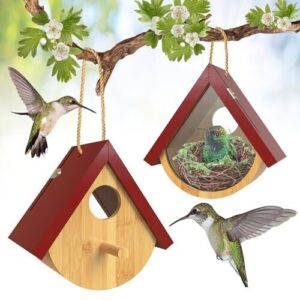
If you’ve ever wished you could peek inside a nest without spooking its tiny residents, this one’s built for exactly that. A clear acrylic panel slides out for cleaning and gives near-360-degree visibility into the cavity.
The wooden body measures 4.2" x 4.2" x 8.2" and weighs just 11.68 oz, with a red painted roof to catch hungry eyes. Comes as a dual-pack, so you can double your viewing spots around the yard.
| Best For | Bird lovers who want an up-close, window-side view of hummingbirds without disturbing them. |
|---|---|
| Material | Wood/Acrylic |
| Hanging Method | Hemp Rope |
| Package Qty | 2 |
| Weight | 11.68 oz |
| Target Bird | Hummingbirds |
| Placement | Indoor/Outdoor |
| Additional Features |
|
- Slide-out acrylic panel makes cleaning and refilling seed quick and easy
- Dual-pack lets you set up multiple viewing spots around your yard
- Red roof and hemp rope hanger add a decorative touch while attracting hummingbirds
- Acrylic panels can crack under rough handling or sudden temperature swings
- Only suited for small birds, so larger species like woodpeckers won’t fit
- Outdoor paint may fade with extended sun exposure
2. Natural Beech Hummingbird House
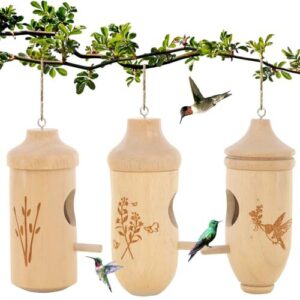
Prefer something more understated? This one swaps acrylic windows for the warm, natural grain of solid beech wood, prized for its tight grain and smooth, splinter-free surfaces.
The entrance runs 0.9" in diameter, snug enough for ruby-throats, while small drainage holes keep the interior dry. A gold hanging ring and included rope make setup painless.
At 5"x2"x2" and 10.23 oz, three houses come per pack—handy for scattering nesting spots without breaking your budget.
| Best For | Bird-watching enthusiasts and nature lovers looking for an affordable, decorative gift or a natural-material nesting spot for gardens, balconies, or porches. |
|---|---|
| Material | Beech Wood |
| Hanging Method | Rope + Ring |
| Package Qty | 3 |
| Weight | 10.23 oz |
| Target Bird | Hummingbirds |
| Placement | Indoor/Outdoor |
| Additional Features |
|
- Solid beech wood construction offers a breathable, durable, and handsome natural finish
- Thoughtful design details like drainage holes, a gold hanging ring, and included rope make setup and maintenance simple
- Comes three to a pack, making it easy and budget-friendly to place multiple nesting spots around your space
- Interior space is snug, which may not suit larger birds or multiple occupants at once
- Lacks weather-sealing, so heavy rain or snow exposure over time could affect the wood
- No guarantee hummingbirds will actually use it, especially in areas where they’re less common
3. Small Wooden Hummingbird House
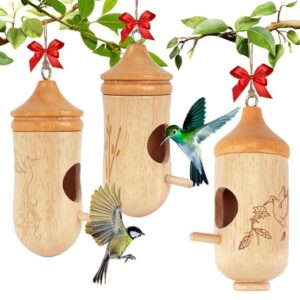
If space is tight in your garden, this little house solves that problem nicely, running just 4.5" to 5.8" long and about 2" to 2.5" wide.
The 1.0" to 1.25" entrance keeps things exclusive to hummingbirds, while a front perch gives visitors a spot to preen. A metal loop up top makes hanging from branches simple.
Non-toxic, water-based finishes protect the wood without risking harm to any curious nestlings that stop by.
| Best For | Gardeners and bird lovers with limited outdoor space who want a decorative touch that draws hummingbirds in to perch near feeders or flowers. |
|---|---|
| Material | Boxwood |
| Hanging Method | Ribbon + String |
| Package Qty | 3 |
| Weight | 9.91 oz |
| Target Bird | Hummingbirds |
| Placement | Patio/Gazebo |
| Additional Features |
|
- Compact size fits easily on patios, gazebos, or small gardens without crowding the space
- Durable, eco-friendly boxwood construction with an easy-to-hang ribbon and string
- Thoughtful entrance sizing keeps the perch welcoming to hummingbirds and other small birds
- Small footprint may be smaller than some buyers expect, so placement near plants matters
- Not actually meant for nesting, so use is limited to a perching and decorative spot
- Requires a bit of setup, since you’ll need to tie the ribbon and adjust the hanging height yourself
4. Wooden Hummingbird House Set
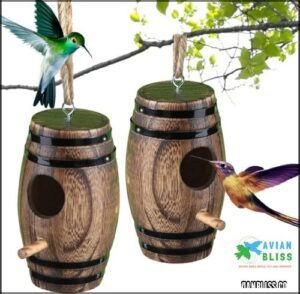
Two really is better than one, and this beech or rubber wood set proves it, giving you matching houses to hang throughout the yard.
Each entrance sits around 1 inch across, with a 4–6 inch cavity depth for secure nesting. Rounded edges around the openings protect delicate feathers on entry.
Pre-installed hooks make mounting a breeze, whether you’re working with a tree branch or a garden hook — no fuss, no extra hardware hunting required.
| Best For | Anyone who wants to attract hummingbirds to their yard while adding a charming, natural touch to a porch, balcony, or garden tree. |
|---|---|
| Material | Natural Wood |
| Hanging Method | Metal Ring + Nails |
| Package Qty | 1 |
| Weight | 4.97 oz |
| Target Bird | Hummingbirds |
| Placement | Indoor/Outdoor |
| Additional Features |
|
- Carbonized, waterproof wood construction keeps nests dry and protected from the elements
- Pre-installed hooks and a built-in metal ring make hanging quick and hassle-free
- Drainage holes and rounded entrance edges help keep nests safe, dry, and comfortable for hummingbirds
- Small interior size means it’s only suitable for hummingbirds, not larger bird species
- Wood may need periodic sealing or treatment if used in harsh outdoor climates
- Some mounting surfaces may still require a drill or screws for a secure fit
5. Natural Grass Hanging Bird House
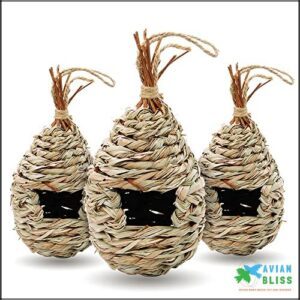
If rustic charm is what you’re after, this hand-woven hibiscus grass house delivers it in spades. Its water-drop shape and 1.6 x 2 inch entrance make it roomier than true hummingbirds need, so wrens and finches often move in instead.
At 4.7 x 4.7 x 9.4 inches and just 5.76 ounces, it hangs easily from a hemp rope loop on branches or fences. Just know heavy rain and UV exposure can wear the grass down over time.
| Best For | Gardeners hoping to attract wrens, finches, and other small nesting birds with a natural, decorative touch. |
|---|---|
| Material | Hibiscus Grass |
| Hanging Method | Hemp Rope |
| Package Qty | 1 |
| Weight | 5.76 oz |
| Target Bird | Hummingbirds+ |
| Placement | Garden/Window |
| Additional Features |
|
- Hand-woven hibiscus grass gives it an authentic, breathable, rustic look
- Sturdy hemp rope loop makes hanging on branches, vines, or fences quick and easy
- Lightweight design (5.76 oz) blends naturally into garden trees or window displays
- Entrance opening is too large for true hummingbirds
- Natural grass material can degrade with heavy rain or prolonged UV exposure
- No guarantee birds will occupy it, since results depend on species and placement
6. Wdefun Handwoven Grass Hummingbird House
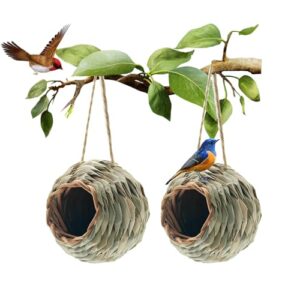
Another hibiscus grass option, but the Wdefun house leans harder into its teardrop-shaped chamber, with a narrow-necked entrance around 1.6–2 inches wide to cut down on drafts.
At roughly 4.7 by 9.4 inches, its tight weave sheds water fast and resists mildew when hung off the ground. The smooth entrance edge won’t snag delicate feathers, and drainage details at the base keep things dry after storms. A hemp cord makes hanging from branches or posts simple.
| Best For | Gardeners who want to attract hummingbirds and small finches with a decorative, nature-friendly nesting spot for their yard, fence, or window area. |
|---|---|
| Material | Natural Grass |
| Hanging Method | Mounting Hardware |
| Package Qty | 2 |
| Weight | N/A |
| Target Bird | Hummingbirds+ |
| Placement | Garden/Fence |
| Additional Features |
|
- Hand-woven natural grass construction adds charming, garden-friendly aesthetics
- Compact size fits easily on fences, windows, or hanging brackets
- Comes with mounting hardware for simple, hassle-free hanging
- Grass material can wear down faster in heavy rain or intense sun
- Only suited for small birds, so larger species won’t use it
- Needs occasional cleaning and re-weaving to stay sturdy over time
7. Handcrafted Rubber Wood Hummingbird House
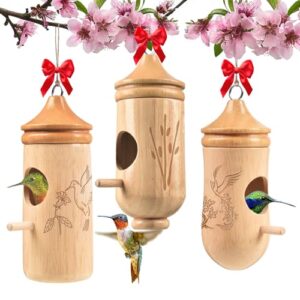
If solid wood over grass weave sounds appealing, this rubber wood house delivers real heft at 6.1 by 2.1 inches, with a 1.1-inch entrance and 0.8-inch crossbar for perching.
Pair this sturdy house with suet bird feeders that keep curious kids engaged nearby, spreading out feeding spots so visiting birds stay safer from predators.
Its sustainably sourced, breathable wood resists cracking, while the bottom drain hole keeps moisture from lingering. A red ribbon adds visual attraction, and the string hanger works well on patios or branches.
It’s sturdy, natural, and gift-worthy — though sun exposure will fade that ribbon eventually.
| Best For | Bird lovers and gardeners looking to attract hummingbirds with a durable, handcrafted wooden house for their patio, porch, or garden. |
|---|---|
| Material | Rubber Wood |
| Hanging Method | String + Ribbon |
| Package Qty | 1 |
| Weight | N/A |
| Target Bird | Hummingbirds |
| Placement | Patio/Porch |
| Additional Features |
|
- Solid rubber wood construction offers durability and breathability, resisting cracking over time
- Bottom drain hole helps control moisture and keeps the interior well-ventilated
- Wide 1.1-inch entrance and 0.8-inch crossbar make it easy for hummingbirds to access and perch
- Only suitable for hummingbirds and similarly small bird species, not larger birds
- Red ribbon may fade with prolonged sun and weather exposure
- Designed strictly for outdoor use, so it’s not an option for indoor bird enthusiasts
8. Wooden Hanging Hummingbird House Set
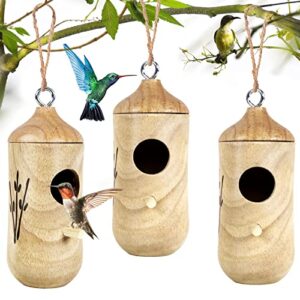
Three little cabins in one set — that’s the appeal here, giving you options to spread nesting spots across your whole yard.
Each house uses natural wood construction with a metal ring and hemp rope, so hanging from a tree limb or fence post takes seconds. At 5.1 by 1.9 inches, they’re sized right for hummingbirds and light enough to reposition on a whim.
Just watch for prolonged rain exposure, since untreated wood softens faster than sealed cedar over time.
| Best For | Gardeners or porch and balcony owners who want a natural-looking, low-effort way to invite hummingbirds into their outdoor space. |
|---|---|
| Material | Rubber Wood |
| Hanging Method | Hemp Rope + Ring |
| Package Qty | 3 |
| Weight | 8.78 oz |
| Target Bird | Hummingbirds |
| Placement | Indoor/Outdoor |
| Additional Features |
|
- Made from natural rubber wood, giving a breathable, natural-looking finish
- Comes with a metal hanging ring and hemp rope, so setup takes seconds with no assembly needed
- Includes three houses in one set, letting you spread nesting spots around the yard
- No guarantee hummingbirds will actually move in, since that depends on local bird activity
- Rubber wood can be vulnerable to heavy moisture or harsh weather over time
- Sized only for hummingbirds, so it won’t work for larger bird species
9. Natural Coconut Hummingbird House Set
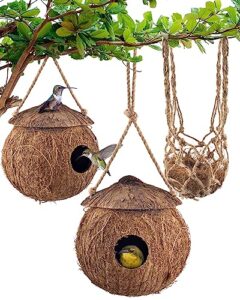
Nature already built the blueprint for this one, and this set just borrows it — three coconut shells transformed into cozy, tree-hollow-style hideaways.
Each shell measures 3.9 x 3.9 x 0.8 inches with a 1.1-inch entrance, sized just right for hummingbird bodies. Coconut fiber bedding adds warmth inside, while hanging ropes make setup tool-free.
Weathering happens over time, so keep an eye out for cracks after a few seasons in harsh sun or heavy rain.
| Best For | Gardeners and bird lovers who want to give hummingbirds a natural, cozy nesting spot on their patio, balcony, or garden. |
|---|---|
| Material | Coconut Shell |
| Hanging Method | Hanging Ropes |
| Package Qty | 3 |
| Weight | 14.39 oz |
| Target Bird | Hummingbirds |
| Placement | Patio/Balcony |
| Additional Features |
|
- Made from 100% natural coconut shell, giving it an eco-friendly, rustic look
- Comes with coconut fiber bedding for extra warmth and comfort
- Easy, tool-free hanging installation with included ropes
- Small 1.1-inch entrance only works for hummingbirds, not other bird species
- Coconut shell can weather, crack, or degrade after a few years outdoors
- Included rope may not be sturdy enough for all mounting locations, requiring extra hardware
10. Wooden Hummingbird Nest House
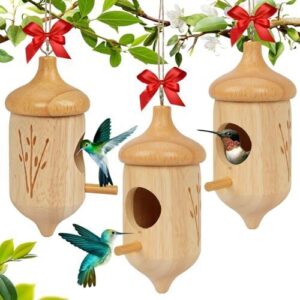
Rounding out the list, this classic-style house keeps things simple with a 1-inch entrance that’s snug enough to keep sparrows and finches out entirely.
The rubber wood build features a sloped roof and hidden drainage holes, so rain never pools where a nest would sit. A removable bottom panel makes fall cleanup painless.
Mount it 4 to 8 feet up, facing away from wind, and you’ve got a sturdy, weather-ready option that’ll hold up season after season.
| Best For | Bird lovers and gardeners who want a decorative, natural-wood touch that invites hummingbirds to visit their patio, balcony, or garden. |
|---|---|
| Material | Boxwood |
| Hanging Method | Rope + Ring |
| Package Qty | 1 |
| Weight | 12.31 oz |
| Target Bird | Hummingbirds |
| Placement | Indoor/Outdoor |
| Additional Features |
|
- Made from durable, breathable natural boxwood
- Entrance size and built-in perch pole are designed specifically for hummingbirds
- Gold hanging ring with rope makes it easy to hang indoors or outdoors
- No guarantee hummingbirds will actually use the house
- Unfinished wood may wear down faster in harsh weather without a protective coating
- Small entrance means only hummingbirds can use it, limiting versatility
Do Hummingbirds Use Birdhouses?
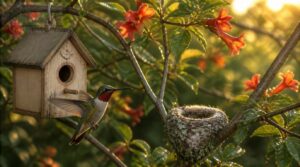
Before you buy one of those cute little houses, it’s worth asking an honest question: will hummingbirds actually move in? These tiny birds have their own ideas about nesting, and they don’t always match what’s on the shelf. Let’s look at what’s really going on inside that instinct, so you know what to expect.
Natural Nesting Behavior
Since instinct drives every decision a female hummingbird makes, she skips premade houses entirely and builds her own suspended cup nest using:
- Soft plant down for cushioning
- Spider silk for stretch and strength
- Lichen for camouflage
- Moss for insulation
This engineering, timed to breeding season nectar flow, keeps eggs warm while she alone incubates and feeds her young. This mirrors how hummingbirds bind plant fibers with spider silk to create compact, insulated nests.
Cavity Versus Cup Nests
Here’s the real divide: cavity nesters get walls, roofs, and buffered microclimates, while cup-style builders stay exposed but flexible. That structural support gap matters.
| Feature | Cavity Nest | Cup Nest |
|---|---|---|
| Predator exposure | Lower | Higher |
| Construction energy | Higher upfront | Site-dependent |
| Habitat availability | Needs hollows | Widely available |
A hummingbird house mimics cavities, but hummingbirds are cup builders by design.
Why Houses Go Unused
So why do so many hummingbird houses sit empty on the hook? Evolutionary instinct runs deep — females are wired to weave, not roost. Even a well-built box with proper entrance size and ventilation can’t override that biological nesting mismatch.
- Cavity nesting limitations reject enclosed spaces
- Artificial enclosure feels foreign, not sheltering
- Materials and cleaning schedules matter less than shape
Better Nesting Alternatives
Since females instinctively hang cup nests rather than settle into boxes, give them what actually works: open-front designs, twig platforms, or hanging holders mimicking branch forks.
Choose lightweight, UV-resistant materials—breathable bamboo or antimicrobial coconut linings—paired with adjustable entry sizes.
This shift in avian habitat design, from enclosed birdhouse to open nesting habitat, respects their wiring instead of fighting it.
How to Choose One
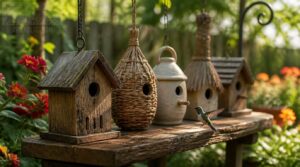
Not all hummingbird houses are created equal, and picking the right one takes a bit more than good looks. You’ll want to check for safe materials, proper sizing, and a few other details before buying. Here’s exactly what to look for so your choice actually holds up outdoors.
Safe Non-toxic Materials
Sustainable wood sourcing matters more than looks here—cedar, pine, and beech resist decay naturally; no chemical treatments needed.
Check for low VOC sealants and nontoxic paint on any birdhouse materials, plus water-based, non‑toxic adhesive safety in the joints.
Natural fiber ventilation (think coconut fiber or grass weaves) keeps things breathable.
When cleaning, stick with safe cleaning solutions like diluted vinegar—your feathered guests will thank you!
Proper Entrance Size
Grab a ruler before you buy: the ideal diameter sits between 1 and 1.25 inches, never entrance size 1.6 inches—that’s an open invitation for predation.
Round shapes beat square ones for shape efficiency and less wear.
Material expansion can shrink openings, so check entrance size 1.1 inches stays true.
A small wooden hummingbird house needs entrance maintenance twice yearly—smart birdhouse design depends on it!
Weather-resistant Construction
Weathering a summer storm shouldn’t rattle your hummingbird house—that’s where waterproof coating durability earns its keep, especially on cedar, pine, or boxwood builds.
Look for UV-resistant finishes that block graying, plus sealed seams acting as a moisture barrier against wind-driven rain.
Windproof mounting stability matters too—a wobbly house under gusty conditions stresses joints and shortens birdhouse durability fast.
Drainage and Ventilation
Ever wonder why a soggy nest is a dead nest? Ventilation and drainage work together to keep humidity low and rot away.
- Slatted vents near the top for airflow
- Drainage holes at the base
- Sealed, overhanging roofs
- Non-toxic sealant on seams
This passive airflow design creates a gentle chimney effect, pulling stale air out while blocking wind chill—protecting your hummingbird house naturally.
Easy Cleaning Access
A house you can’t clean is a house you’ll regret by August. Look for tool-free disassembly—quick-release latches or modular panels that pop open by hand, no screwdriver required.
Non-porous interiors resist grime, while accessible drainage holes and solid ventilation and drainage systems keep things dry between washes. That combo turns birdhouse maintenance from a chore into a quick five-minute rinse.
Best Materials Compared
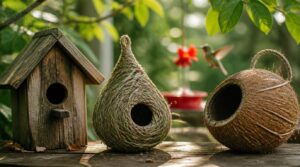
Not all birdhouse materials hold up the same way once weather and time get involved. From classic woods to woven grass and coconut shells, each option brings its own strengths to the table. Here’s how the most popular choices stack up against each other.
Cedar and Pine Wood
Cedar naturally resists rot and repels insects with its own oils, making it a smart pick for outdoor birdhouses exposed to rain.
Pine absorbs moisture more readily and needs sealing to match cedar’s durability.
Quick comparison:
- Cedar density: ~23-28 lb/ft³
- Pine density: ~30-42 lb/ft³
- Cedar lifespan: 15-25 years
- Pine needs treatment
- Cedar deters pests naturally
Beech and Rubber Wood
Beech brings a fine, straight grain that machines beautifully, letting builders shape crisp details on wooden hummingbird houses. Its Janka hardness (1300-1450 lbf) means durability, though it needs sealing for outdoor moisture resistance.
Rubber wood, a plantation byproduct, offers affordable, sustainable sourcing and stays dimensionally stable when kiln-dried. Both accept finishes cleanly, giving your bird nesting box a smooth, eco-friendly beech wood alternative to cedar.
Coconut Shell Designs
Natural coconut shells bring a rustic, one-of-a-kind look no lumber can copy, with 3-6mm walls that resist dings while staying lightweight for hanging. Sustainable shell sourcing makes them an eco-conscious pick, and artisanal carving reveals gorgeous grain patterns.
Natural oil finishes deepen the brown tones, while decorative inlay accents add flair.
Just check drainage regularly—this durability and maintenance-friendly build still needs occasional care!
Handwoven Grass Options
Woven from banana leaf, jute, reed, and abaca, handwoven hibiscus grass houses offer a breathable, textured alternative to wood.
Natural fiber durability comes from tight wicker weaves that shed water fast, curbing mold. Look for plant-based dyes—safe and non-toxic—plus reinforced edges.
For real moisture resistance, keep them sheltered from downpours; light, sustainable weaving patterns still need occasional care to last.
Eco-friendly Finishes
What coats the wood matters as much as the wood itself. Look for low VOC paints and natural oil finishes like tung or linseed—both keep fumes away from nesting birds.
Water-based polyurethanes and lime clay plasters offer breathable, weather-resistant wood protection, too. A UV-resistant finish with recycled content pigments rounds out a truly eco-friendly, sustainable build your hummingbirds (and the planet) will thank you for.
Placement for Better Results
Where you hang your hummingbird house matters just as much as which one you pick. The right spot can mean the difference between a house that sits empty and one that actually gets attention. Here’s what to keep in mind before you grab that hammer.
Ideal Mounting Height
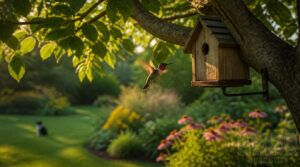
Height matters more than you’d think: mount your house too low, and you’re basically ringing the dinner bell for cats.
- 5 to 6 feet above ground for predator avoidance
- Secure brackets for wind load stability
- Ladder-friendly for cleaning ladder safety
- Avoids ground humidity buildup
- Tree branches or roof edges work great
That sweet spot keeps nests safe, dry, and easy to check without hauling out extension ladders!
Morning Sun Exposure
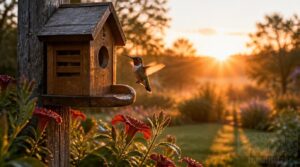
Right around sunrise, face your hummingbird house east so it soaks up those early rays between 6 and 10 am.
This east-facing exposure helps temperature regulation, decent birdhouse ventilation, and even mimics benefits like vitamin D synthesis for you, the caretaker, during morning setup or your birdhouse cleaning schedule—proving good birdhouse placement guidelines aren’t just for the birds!
Afternoon Shade Protection
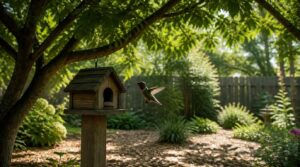
By noon, that same eastern sun swings around and turns into a heat problem, so afternoon shade becomes essential for temperature considerations.
Deciduous trees work great, offering summer relief while letting winter sun through once leaves drop. Skip bare, dark ground below—light mulch stays cooler.
This sun exposure balance keeps your birdhouse comfortable, not cooked, all season long!
Wind-sheltered Locations
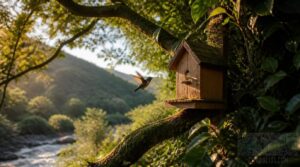
Ever notice how hummingbirds vanish during gusty afternoons? They’re tucked into wind-sheltered pockets—think valley ridges, forested slopes, or riparian nooks where foliage breaks the flow.
Mimic that by mounting your house against prevailing winds, using sturdy hardware on a sheltered branch or wall. Manmade windbreaks like hedges work too, cutting gusts considerably.
This shelter from wind and rain boosts wind resistance and keeps nests stable all season.
Distance From Windows
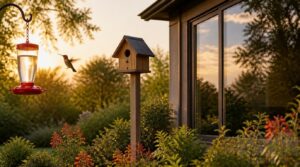
Glass looks invisible to a hummingbird zipping full speed, which makes collision prevention your top priority near any window.
Keep houses at least 3 feet away, ideally more for open flight paths and clear predator sightlines. Windows also affect window heat regulation, so avoid south-facing glare. You’ll still get great viewing distance for backyard birdwatching—just mount hardware smartly and skip the close-up collision risk!
Pairing Feeders and Flowers
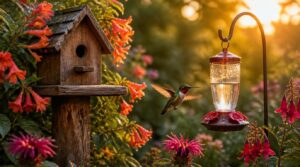
A well-placed birdhouse is only half the equation, since hummingbirds also need reliable food sources nearby to stick around. Pairing the right feeders with the right flowers turns your yard into a spot they’ll actually want to nest in. Here’s how to set up that winning combo.
Feeder Spacing Rules
Think of feeder spacing as air traffic control for your yard: keep at least 3 to 4 feet between stations to prevent crowding. This reduces territorial aggression and social tension among competing birds.
Stagger heights and microhabitats along your feeding line for smoother movement. Keep feeders 3-4 feet from windows, minimizing collision risk while multiple feeders spread across zones ease competition naturally.
Red Tubular Flowers
Once feeders are spaced out, add red tubular flowers nearby to boost pollinator attraction naturally. That trumpet-shaped corolla gives hummingbirds deep nectar access their long bills love, while anthocyanin pigments create the bold red pollination signal they can’t resist.
- Cardinal flower’s fiery blooms
- Nectar-rich clusters swaying in the breeze
- Tiny wings hovering like magic
These nectar sources turn any yard into a hummingbird feeding paradise!
Native Nectar Plants
Cardinal flowers make a great start, but pairing them with true native flowering plants builds a real pollinator garden. Bee balm and penstemons offer deep tubular anatomy matching hummingbird bills perfectly.
| Native Plant | Bloom Window |
|---|---|
| Bee Balm | Summer |
| Penstemon | Spring–Summer |
| Cardinal Flower | Summer–Fall |
| Trumpet Vine | Summer |
Staggered seasonal blooms sustain nectar production cycles, boost soil health, and strengthen your yard’s pollinator corridor benefits!
Multiple Feeding Zones
Once your native plants are blooming, spread your feeders out to match. Setting up multiple feeding zones across the yard eases territorial spacing strategies and gives shy birds their own escape routes.
- Vary height and orientation per zone
- Keep nectar sweetness around 40–50%
- Use bold visual attraction cues (red accents)
- Space zones 10+ feet apart
This mimics natural habitat and rewards patient birdwatching!
Clean Nectar Routine
Zones only work if the nectar inside stays fresh.
Get your sugar ratio accuracy right—4 parts water to 1 part sugar—and swap it every 3–4 days before signs of fermentation (cloudiness, sour smell) creep in.
Weekly scrubbing with hot water, plus a vinegar sanitizing soak, keeps every sugarwater feeder safe.
Rotating flavors slightly helps with nectar fatigue prevention across your hummingbird diet routine!
Maintenance and Seasonal Care
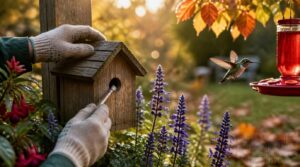
Setting up a hummingbird house is just the start; keeping it in good shape is what really counts. A little seasonal upkeep goes a long way toward protecting the birds you’re hoping to attract. Here’s what you need to know to keep your house safe, clean, and ready for action all year long.
Spring Setup Timing
Timing is everything with hummingbirds, and spring setup is no exception.
Once overnight lows hold above freezing for a full week, get houses mounted—ideally two to four weeks before migration arrives. Track local migration patterns and aim for daytime temps near 10-15°C.
Watch spring storms, too; heavy wind can spook early nesting attempts before breeding season even begins.
Cleaning Viewing Panels
Peeking through that clear acrylic window is one of the best perks of these houses, but only if you keep it clean. Wipe it daily with a microfiber cloth, never paper towels, to dodge scratches.
Skip ammonia-based sprays entirely—apply cleaner to the cloth, not the panel, to prevent liquid ingress. Dry with a second lint-free cloth for a streak-free view of your nesting guests.
Checking Drainage Holes
Grabbing a flashlight once a month keeps that bottom drain hole doing its job instead of clogging with soil and debris. Look for 1/8 to 1/4 inch openings—anything smaller invites soil erosion, anything bigger risks predator access.
Good drainage design isn’t just about water escape; it’s your best defense against mold growth and rot. A soft brush clears sediment without widening the hole, and proper ventilation keeps everything weather-resistant through soggy spring storms.
Off-season Storage
Winter doesn’t mean your hummingbird house should just gather dust in the shed! Clean and dry it fully, then dab on food-safe mineral oil for material preservation.
- Bag hardware separately
- Add silica packets for moisture control
- Raise off the floor
- Tuck in cedar blocks as pest deterrents
Label everything now, so spring reintroduction feels smooth, not chaotic.
Replacing Damaged Houses
Even the sturdiest cedar house eventually cracks, warps, or rots beyond saving. Before tossing it, check structural integrity and mounting hardware first.
| Assess | Replace |
|---|---|
| Foundation/frame cracks | Weatherproof, non-toxic wood |
| Rotted walls | Sloped roof, drainage holes |
| Rusted hardware | Correct entrance size (1.1") |
Recycle metal parts responsibly, and build a maintenance schedule so replacements last!
Safer Nesting Yard Setup
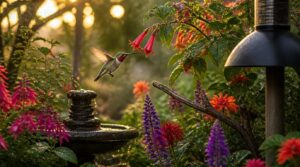
Since hummingbirds skip the traditional birdhouse anyway, your yard needs a few extra touches to actually seal the deal. Think less "house" and more "welcoming neighborhood" with the right help and safety nets in place. Here’s what to add so your feathered visitors feel right at home.
Open Nesting Platforms
Here’s the truth: hummingbirds don’t want a hummingbird house at all—they want a fork in a branch. Open nesting platforms mimic that shape, giving females a safe spot to build without the enclosed walls they instinctively avoid.
Hummingbirds don’t want a house at all—they want a fork in a branch
- Sloped roof for rain runoff
- Rounded, splinter-free edges
- Corrosion-resistant mounting hardware
- Drainage holes along the base
- 5–10 ft placement height
Skip the traditional birdhouse entrance size debate entirely—open platforms solve the problem differently.
Soft Nesting Materials
Once your platform’s in place, give her something soft to build with. Offer fine, dry grass bedding, small coconut fiber bits, or untreated cotton—never dyed or synthetic.
She’ll naturally weave in spider silk and moss for structure, but your supplemental fibers add insulation without irritation risk.
Swap materials each season, since moisture-resistant fibers degrade over time and old bedding can harbor mold long before nesting season rolls around again.
Dense Protective Foliage
Bedding means little without shelter around it. Surrounding your platform with dense cover—native shrubs layered at staggered heights—cuts wind by up to 40%, holds humidity near 70-90%, and drops afternoon temps several degrees.
That’s real microclimate temperature control, courtesy of good garden landscaping for hummingbirds. Pick small-leafed native shrubs, evergreen where possible, so your backyard wildlife habitat stays cozy and concealed year-round, not just during peak bloom.
Predator Deterrent Placement
Good cover keeps predators concealed, so counter that with a smart perimeter spacing strategy—deterrents every 6 to 12 meters. Add a predator guard at nest height, mount hardware on sturdy bases, and check orientation seasonally.
Combine motion sensors (calibrated for 2-4 meter range) with visual deterrent setup and safe sound frequency options. Use vegetation camouflage tactics so devices fit in while still guarding high locations near your feeder placement!
Shallow Water Sources
Once your predator deterrents are set, add a hummingbird bird bath nearby—shallow water under 1 meter deep, refreshed daily to stop mosquito breeding.
Warm water (15-25°C) draws thirsty birds, while gentle splash zones attract insects for bonus protein.
Gravel and wetland plants offer natural filtration, keeping your birdbath clean and appealing near the birdhouse and feeder.
Frequently Asked Questions (FAQs)
What kind of bird house do hummingbirds like?
Truth is, they don’t want a cavity at all — they crave open platforms mimicking bark or forked branches. Skip the enclosed box; offer a small ledge or hanging support instead, letting spider silk anchor their tiny cup nest naturally.
What is a hummingbird’s biggest enemy?
Cats are the cat’s out of the bag regarding top predator threats—ambushing feeders and nest sites. Hawks, snakes, and even praying mantises add danger, so pair predator protection with smart placement during breeding season for safer nesting success.
What do hummingbirds do at night?
At night, hummingbirds tuck into sheltered roosting sites and slip into torpor, dropping heart rate and body temperature to conserve energy. This restful state protects them from predators while conserving fat reserves for tomorrow’s foraging.
Are hummingbird houses a good idea?
As décor, sure—but as real nesting vs decor goes, not really. Hummingbirds build cup nests, not cavity homes, so a hummingbird house mostly attracts hummingbirds nearby without ever housing a nest itself.
Do hummingbirds use birdhouses?
Rarely, and their natural nesting instincts explain why.
Hummingbirds favor open cup nest construction using spider silk over enclosed cavities, so a typical hummingbird house sits ignored—an artificial habitat mismatch with real hummingbird nesting habits and bird nesting habitat needs.
How to build a birdhouse for hummingbirds?
Since 5-inch entrances actually deter tiny hummingbirds, focus on smooth, splinter-free interiors, a metal predator plate, non-toxic sealant, weatherproof joints, and sturdy mounting hardware, using sustainable cedar for a lasting DIY nesting box.
When do hummingbirds need a birdhouse?
Truthfully? Never, in the traditional nesting-box sense—natural nesting instincts push hummingbirds toward open cup nests, not cavities.
Instead, focus your timing on spring nesting season (March–May), offering nesting material and habitat support during their breeding cycle instead of a box.
What is the best house for hummingbirds?
Honestly? No enclosed birdhouse wins here—hummingbirds skip cavity nests entirely. Instead, offer an open nesting platform with twigs and soft plant fibers, mimicking natural forks in branches where they’d normally anchor a cup nest.
How do you attract hummingbirds to a birdhouse?
Funny how the same red hue that stops us at traffic lights also stops hummingbirds mid-flight.
Add red or yellow accents, nectar plants nearby, wind-sheltered placement, natural wood materials, and a nesting tray to make your hummingbird house irresistible.
How do you get hummingbirds to nest in a birdhouse?
Skip the enclosed box; instead try mimicking natural forks with an open platform or twig bundle, add soft nest construction materials nearby, and keep the site shaded and predator-free—
these natural nesting alternatives improve nesting success far more than traditional houses ever do.
Conclusion
Picture a tiny knight’s cottage swinging in your maple tree, cozy but never actually slept in. That’s the charming paradox here: a bird house for hummingbirds works best as an invitation, not a bedroom.
Pair it with nectar flowers, a clean feeder, and some sheltered foliage, and you’ve built a genuine welcome mat.
Skip the fanciest paint job. Focus on safe materials and smart placement instead.
Do that, and these dazzling little acrobats will keep coming back, season after season, calling your yard home.