This site is supported by our readers. We may earn a commission, at no cost to you, if you purchase through links.
A bluebird house with improper dimensions won’t just sit empty—it actively endangers the birds that attempt to use it. Entry holes positioned too low leave nestlings vulnerable to predators reaching inside, while inadequate floor space forces parents to build unstable nests that collapse under the weight of growing chicks.
The difference between a successful nesting season and a failed one often comes down to measurements as precise as a quarter-inch. Your bluebird house dimensions must account for three distinct species across North America, each with specific spatial requirements that affect their survival rates.
Getting the floor space, entry hole diameter, and interior height correct creates a secure cavity that mimics the natural tree hollows bluebirds evolved to use, while proper ventilation and drainage prevent the fatal overheating and moisture buildup that claim countless nestlings each spring.
Table Of Contents
- Key Takeaways
- Essential Bluebird House Dimensions
- Species-Specific Dimension Guidelines
- Designing The Ideal Bluebird House
- Materials Best Suited for Bluebird Houses
- Roof, Ventilation, and Drainage Features
- Step-by-Step Construction Instructions
- Mounting and Placement Best Practices
- Maintenance and Protection Tips
- Frequently Asked Questions (FAQs)
- What are the best dimensions for a bluebird house?
- What are common bluebird house problems?
- When Should I Put Up a Bluebird House?
- Which Way Should Bluebird House Face?
- How High From the Ground Should a Bluebird House be Mounted?
- Can I Mount a Bluebird House on a Tree?
- What is the ideal size for a bluebird house?
- How do you attract bluebirds to a bluebird house?
- Can I put a bluebird house on a tree?
- How big should a Bluebird house be?
- Conclusion
Key Takeaways
- Your bluebird house floor must measure at least 4.5 by 4.5 inches with entry holes positioned 5.5 to 8 inches above the floor, since incorrect dimensions directly threaten nestling survival through predator access and unstable nest construction.
- Entry hole diameter determines species success—Eastern and Western bluebirds require exactly 1.5 inches while Mountain bluebirds need 1 9/16 inches—and positioning these holes away from prevailing winds protects fledglings from weather exposure and overheating.
- Mount your bluebird house 5 to 6 feet above ground on smooth metal poles rather than trees, spacing multiple boxes 100 to 150 feet apart to reduce territorial conflicts while maintaining predator protection through cone baffles and guards.
- Use naturally decay-resistant heartwood like cedar or redwood with a sloped roof (12 to 18 degrees minimum), four quarter-inch drainage holes in floor corners, and ventilation holes near the top to prevent the fatal moisture buildup and overheating that kills nestlings each spring.
Essential Bluebird House Dimensions
Building a bluebird house that truly works starts with getting the dimensions right. These birds need specific interior measurements, entry hole sizes, and spacing to feel safe and raise their young successfully.
Getting these specs dialed in makes all the difference, and you can find detailed guidelines for attracting bluebirds successfully to help you build a home they’ll actually use.
Let’s walk through the three critical measurements you’ll need to create a home that bluebirds will actually use.
Minimum Interior Floor Space
Your bluebird nest box needs a floor at least 4.5 inches by 4.5 inches to give nestlings room to move and grow. Think of this interior clearance as your birds’ nursery—too cramped and fledglings can’t develop properly.
- Use untreated wood or sealed plywood for the cavity floor
- Keep the floor flat and free from sharp edges or protrusions
- Position entry holes 5.5 inches above the floor line
- Maintain smooth surfaces throughout the nesting area
For nest box builders, attention to essential floor planning principles is key to ensuring both safety and comfort for growing birds.
Recommended Height and Depth
Proper height requirements for your nest box start at 6 to 8 feet above ground, balancing predator protection with easy monitoring access.
Depth considerations focus on interior cavity space: aim for 6 to 8 inches from front to back to support nesting space without hindering fledgling movement.
Mounting options range from smooth conduit poles to fence posts, each offering secure birdhouse design when you pair appropriate nest box dimensions with stable installation hardware.
For a better grasp of how to describe height, depth, and width, see these dimension word guidelines.
Entry Hole Size and Placement
Once you’ve set your interior depth and height, turn your attention to the entry hole—quite possibly the most critical dimension in your design. Hole diameter determines which birds can enter: Eastern and Western bluebirds need 1½ inches, while Mountain bluebirds require 1⁹⁄₁₆ inches.
The entry hole diameter is the most critical dimension—1½ inches for Eastern and Western bluebirds, 1⁹⁄₁₆ inches for Mountain bluebirds
Entry height should sit 6 to 8 inches above the floor, allowing fledglings to hop safely upward while discouraging ground predators. Key placement principles include: – Round, smooth edges to prevent injury during entry and exit – Centered positioning on the front panel for balanced flight approaches – Predator guard compatibility below the opening to deter raccoons and snakes.
Proper hole size and ventilation design work together: position your entry on the leeward side in windy areas, and keep the opening free from nearby perches that invite unwanted visitors.
Species-Specific Dimension Guidelines
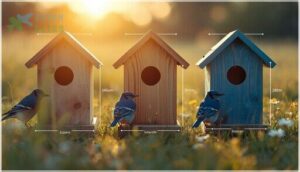
Not all bluebirds need the same house dimensions, and getting the measurements right matters for successful nesting.
The three North American bluebird species—Eastern, Western, and Mountain—have slightly different requirements that affect entry hole size and interior space. Here’s what you need to know for each species to create a welcoming home they’ll actually use.
Eastern Bluebird Requirements
You’ll find success with Eastern Bluebirds when you match your birdhouse dimensions to their nesting habits and territorial needs. Position nest boxes in open areas with scattered trees, mounting them 4 to 6 feet high on posts. Space boxes 100 to 150 feet apart to reduce competition. Orient the entry hole away from prevailing winds to protect fledglings and maintain stable temperatures inside.
| Dimension | Specification | Purpose |
|---|---|---|
| Floor Space | 5 x 5 inches | Accommodates nest material and brood |
| Entry Hole | 1.5 inches diameter | Suits adults while providing predator control |
| Hole Height | 6 inches above floor | Helps fledgling safety during growth |
| Box Spacing | 100-150 feet apart | Reduces territorial conflicts |
Western and Mountain Bluebird Differences
While both species will accept birdhouse plans with similar dimensions, their habitat preferences and nesting behaviors reveal why subtle adjustments matter for success. Mountain Bluebirds favor nest boxes at higher elevations—often above 5,000 feet—with entry holes enlarged to 1 9/16 inches, while Western Bluebirds thrive in open woodlands at lower altitudes using standard 1½-inch openings.
Both species also benefit from proper drainage and ventilation systems that keep nests dry and healthy throughout the breeding season.
Key Differences to Keep in Mind:
- Plumage Comparison: Males show distinct chest colors—rusty orange in Westerns versus uniform sky blue in Mountain Bluebirds—helping you identify which species you’re supporting.
- Habitat Preferences: Westerns settle near suburban groves and farmland edges; Mountains choose sagebrush steppes and alpine meadows with wide-open visibility.
- Nesting Behaviors: Mountain Bluebirds defend isolated territories and hover-hunt for insects, while Westerns readily adapt to nesting boxes near human activity and forage from perches.
Understanding dietary needs and migration patterns ensures your birdhouse materials and placement align with each species’ natural requirements.
Comparison Chart for Bluebird Species
You’ll notice critical differences when comparing all three species side by side. Eastern Bluebirds average 6.3 inches with 1½-inch entry holes, while Mountain Bluebirds reach 7 inches and need 1 9/16-inch openings.
Nesting habits and breeding patterns vary by region, so match your nest box dimensions to local species. Conservation efforts emphasize proper birdhouse specifications—floor space between 4½ to 5½ inches square facilitates successful bluebird migration and nesting box functionality across habitats.
Designing The Ideal Bluebird House
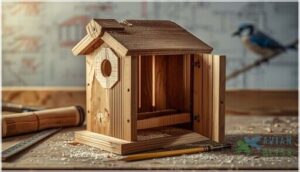
Building a bluebird house that works means getting the proportions right from the ground up. You’ll want to balance floor space with wall height, create a roof that keeps rain out, and texture the interior so fledglings can grip their way to freedom.
Let’s walk through the design elements that turn a simple wooden box into a safe home for bluebirds.
Floor, Walls, and Roof Proportions
Your bluebird house dimensions start with a floor depth of 5 to 6 inches and wall thickness around 3/4 inch for proper insulation. Interior texture should remain smooth to prevent splinter injuries while cleaning.
Roof overhang extends 1.5 to 2.5 inches beyond walls, shielding the nesting box specifications from harsh weather. Ventilation slots near the top promote airflow without creating drafts that chill eggs.
Slope and Overhang for Weather Protection
Your bluebird house roof needs a minimum slope of 12 to 18 degrees to guarantee proper water drainage away from the entrance. A 2 to 4 inch overhang design shields the front wall from wind-driven rain while improving weather resistance.
Steeper roof angles shed snow more efficiently, and wider overhangs prevent moisture from reaching ventilation holes—critical details in effective birdhouse plans.
Interior Surface Texture for Fledglings
Textured surfaces inside your bluebird house give fledglings the grip they need when they’re learning to climb and hop. You’ll want to create a safe environment that fosters their early development.
- Nest Floor Grip – Apply 1-2 millimeter deep wood shavings or dust to prevent slipping
- Wall Texture – Sand interior walls with light grit for claw traction during climbs
- Cavity Entrance – Roughen a 2-4 millimeter ring inside the entry hole
- Perch Surfaces – Use grooved natural wood, 1 centimeter diameter
- Material Safety – Choose non-toxic, cleanable finishes that resist moisture
Materials Best Suited for Bluebird Houses
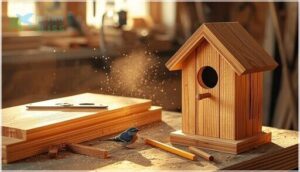
Choosing the right material for your bluebird house directly affects how long it lasts and how well it protects nesting birds from temperature extremes. You’ll want wood that can handle rain, snow, and sun without rotting or warping over multiple seasons.
Let’s look at the best material choices that balance durability, safety, and affordability.
Naturally Decay-Resistant Woods
Choosing weather-resistant wood ensures your bluebird house stands strong season after season. Heartwood durability in species like cedar and redwood provides natural protection through wood extractives—oils and tannins that repel moisture and fungi. Black locust and old-growth western red cedar offer outstanding longevity in varying climate impact zones, from humid regions to coastal areas.
| Wood Species | Decay Resistance | Key Benefits |
|---|---|---|
| Western Red Cedar | Very Resistant | Aromatic oils deter insects and fungi |
| Redwood (Heartwood) | Very Resistant | Long service life in moist conditions |
| Black Locust | Very Resistant | Strong extractives persist through weather |
| Cypress | Resistant | Reliable protection in humid climates |
Select heartwood sections over sapwood whenever possible, since heartwood contains the protective compounds that extend your birdhouse’s functional life. Regular maintenance—checking for cracks and applying natural oil finishes—enhances these natural materials for birdhouses without compromising bird safety.
Exterior Plywood Considerations
When cost or material availability steers you toward exterior plywood, choose panels with phenolic resin bonds and a minimum panel thickness of ½ inch for adequate moisture resistance.
CDX-grade plywood durability suits rough birdhouse plans, yet you’ll need to seal all wood grain surfaces and edges with weatherproofing treatments.
Unfinished exterior plywood dimensions meet bluebird house structural needs when protected from prolonged water exposure.
Sustainable and Safe Material Options
Beyond conventional exterior plywood and cedar, you can build with reclaimed timber or FSC-certified woods that protect forest habitats while offering weatherresistant wood performance.
Non toxic coatings like water-based polyurethane and mineral oil finishes safeguard fledglings from harmful fumes.
Recycled materials and eco friendly woods reduce your environmental footprint, transforming sustainable designs and green building principles into functional nest boxes that serve both bluebirds and the planet.
Roof, Ventilation, and Drainage Features
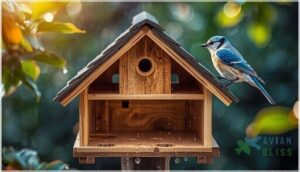
Your bluebird house needs three critical features to keep nesting birds healthy and dry: a properly sloped roof, adequate ventilation, and effective drainage. These elements work together to regulate temperature, prevent moisture buildup, and guarantee rainwater exits quickly.
Let’s examine the specific requirements for each component.
Sloped Roof Specifications
You’ll want your bluebird house roof angle between 14 and 32 degrees—that translates to a rise-run of 3:12 to 7:12. This slope ensures water shedding without creating drips near the entrance.
Add a 1½ to 2-inch overhang beyond the front wall to throw rain away from your bird house dimensions. Cedar roof materials resist decay better than plywood when managing drainage systems over time.
Ventilation Hole Placement and Size
Your roof keeps rain out, but proper ventilation keeps your birds comfortable. Place two ¼ to ⅜-inch holes near the top rear wall to promote cross ventilation without drafts hitting nestlings.
Here’s what works:
- Position vents opposite your front wall to encourage steady airflow
- Smooth hole edges prevent fledgling injuries during their climbing exit
- Plan seasonal adjustments by adding mesh caps during cold, rainy periods
This vent area ratio—about 1 to 2 percent of floor space—balances airflow with shelter.
Drainage Hole Design and Location
Water pooling threatens your nestlings, so drill four ¼-inch drainage holes near each floor corner—centered in the front half to guide debris management and water flow dynamics away from your entry hole.
Space these evenly to balance drainage patterns without weakening the floor. Hole size optimization ensures proper ventilation while preventing soil loss, and a subtle forward floor slope design enhances roof and bottom drainage during storms.
Step-by-Step Construction Instructions
Building a bluebird house doesn’t require sophisticated carpentry skills, but precise measurements and proper assembly techniques will guarantee your structure lasts for years.
The following steps guide you through cutting each piece, creating the necessary openings, and adding features that make monitoring and maintenance straightforward. With basic tools and attention to detail, you’ll construct a functional home that meets bluebirds’ specific nesting requirements.
Cutting and Assembling The House
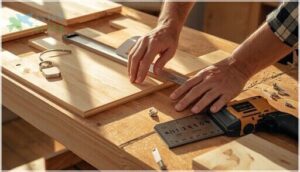
Begin with tool selection: you’ll need a handsaw or circular saw, measuring tape, drill, and stainless steel fasteners for your bluebird house. Measure your wood preparation carefully—an 8 by 12 inch floor panel provides stability, while walls should maintain nesting box specifications with 1/2 inch plywood.
Use assembly techniques like butt joints reinforced with wood blocks, ensuring measuring accuracy at every corner for proper bird house dimensions.
Drilling Entry and Ventilation Holes
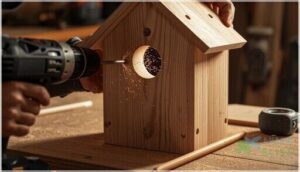
Drill the entrance hole precisely at 1½ inches diameter, centering it 6 to 8 inches above the floor on your front wall.
Add two ¼-inch ventilation holes near the top of opposite sides for cross airflow, keeping them 4 to 6 inches from the entrance. Smooth all edges carefully to prevent splinters that could harm nesting birds or fledglings climbing out.
Installing Hinged Access for Cleaning
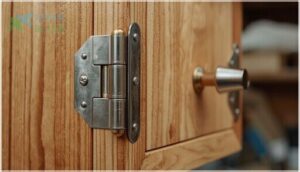
A hinged door transforms birdhouse maintenance from a struggle into a simple task, giving you easy cleaning access every season. Choose stainless steel hinges rated for outdoor use, and secure them with weatherproof gaskets to seal your nest box against moisture.
- Mount the panel on the side wall opposite prevailing winds for better weatherproofing
- Add a rubber seal around the hatch design perimeter to block drafts
- Install a one-hand latch for convenient cleaning access during monitoring
- Apply marine-grade silicone along panel materials edges to prevent leaks
Mounting and Placement Best Practices
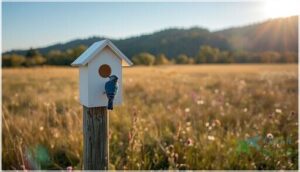
Building a quality bluebird house is only half the journey—where and how you mount it determines whether bluebirds will actually call it home.
Proper placement protects nesting birds from predators while giving them the open sightlines they need to hunt insects and raise their young. Let’s walk through the critical decisions you’ll make when installing your bluebird house.
Optimal Height Above Ground
Mount your bluebird house 5 to 6 feet above ground level for the sweet spot between accessibility and safety factors. At this height, you’ll easily monitor and clean the box while keeping predators like raccoons at bay.
For even better predator avoidance, consider height variations up to 8 feet on your pole. Ideal placement for birdhouses balances your reach with the birds’ security needs.
Pole Versus Tree Mounting
You’ll face a real fork in the road when choosing between pole and tree mounting for your bluebird house. Each option brings distinct advantages for predator protection for birdhouses and maintenance access.
Consider these three factors for ideal placement for birdhouses:
- Pole stability delivers exceptional predator guards and easier installation costs, keeping your box secure in wind while preventing climbing predators.
- Tree damage risks increase when straps aren’t adjusted for seasonal growth, though branches offer natural shelter.
- Mounting heights stay consistent on poles but shift unpredictably on living trees over time.
Poles win for long-term reliability and predator protection.
Entry Hole Orientation and Location
Once your pole’s in place, angle the entry hole away from prevailing winds to shield nestlings from harsh weather—a simple predator deterrent that protects them year-round.
Ideal placement for birdhouses means facing the hole northeast or east, ensuring morning sun without afternoon overheating. Correct hole placement and entry angle improve nest accessibility for bluebird house maintenance and cleaning while keeping your cavity safe from rain-driven moisture and climbing threats.
Maintenance and Protection Tips
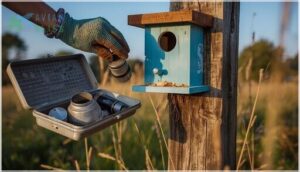
Once your bluebird house is installed, your work isn’t finished—regular maintenance protects both the structure and the birds that call it home.
A well-maintained house can serve multiple nesting seasons while keeping predators and parasites at bay. Here’s what you need to do to guarantee your bluebird house remains a safe, welcoming shelter year after year.
Annual Cleaning and Inspection
Each year, you’ll need to open your nest box and remove all nest debris to keep bird nesting boxes safe. Clean interior surfaces with mild soap, then sanitize using a 10% bleach solution before rinsing thoroughly.
During these cleaning schedules, inspect ventilation checks for obstructions and examine the entry hole for damage. Proper birdhouse maintenance and care protects returning bluebirds from disease and creates a welcoming home.
Predator Guards and Baffles
Once your box is clean, install a predator guard to shield nesting bluebirds from raccoons, snakes, and cats.
Effective predator deterrents include:
- Cone baffles mounted on poles to create climbing barriers
- Stainless steel or galvanized mesh guards surrounding the entrance for nest protection
- Smooth metal conduit poles that discourage grip and improve predator protection
Choose guard materials rated for outdoor durability, and position baffle designs at least four feet above ground for reliable predator deterrence.
Monitoring for Pests and Repairs
Beyond predator protection, regular inspections help you catch pests like mites, beetles, and moisture-related damage early. Check your house monthly during nesting season, looking for chewed wood, frass, or unusual odors that signal active infestations.
Seasonal monitoring intensifies in summer heat and damp periods when pest pressure peaks. Seal gaps with wildlife-safe caulk, replace softened wood, and clean interiors after each cycle to support bird conservation through effective pest prevention strategies.
Frequently Asked Questions (FAQs)
What are the best dimensions for a bluebird house?
Your bluebird nesting success starts with getting the floor just right—4 by 4 inches minimum, paired with an entrance hole of exactly 5 inches and ideal birdhouse depth near 9 to 10 inches interior height.
What are common bluebird house problems?
House sparrows, parasites, and predators pose threats to your nest box.
Installation errors like incorrect hole size or poor mounting placement reduce success.
Weather damage and maintenance issues—from blocked drainage to pest infestations—compromise bluebird safety.
When Should I Put Up a Bluebird House?
The early bird catches the worm, so mount your box by mid-February to early March—before nesting preparation begins—to give bluebirds time to discover the site during ideal placement for birdhouses.
Which Way Should Bluebird House Face?
Orient your entrance east or northeast to balance morning sun exposure with wind protection.
This placement shields the opening from harsh afternoon heat and prevailing winds while offering fledglings a clear flight path.
How High From the Ground Should a Bluebird House be Mounted?
Mount your bluebird house four to six feet above ground on a pole for ideal predator protection and maintenance access.
This height balances ground clearance with environmental factors while deterring climbing predators.
Can I Mount a Bluebird House on a Tree?
You can mount a Bluebird House on a tree, but pole installation offers better Nest Box Safety.
Tree Mount Risks include easier predator access, so always add Predator Guards and position boxes away from climbing routes.
What is the ideal size for a bluebird house?
You’ll want roughly 4 by 4 inches of floor space, an 8-inch birdhouse depth, and a 5-inch entrance hole placed 6 to 8 inches above the floor for successful bluebird nesting.
How do you attract bluebirds to a bluebird house?
Attracting bluebirds to your yard requires providing fresh water features, mealworms during nesting behavior peaks, and native berry shrubs near ideal birdhouse placement.
Keep garden layout open with sparse trees to encourage ground feeding and safe inspection.
Can I put a bluebird house on a tree?
You can attach a bluebird house to a tree using stainless mounting hardware on the bark, but pole mounting offers better wind stability, reduced predator access from tree branches, and easier height adjustment than tree placement.
How big should a Bluebird house be?
Your bluebird nest box should feature a 4-by-4-inch floor size with 12-inch interior height.
The entry hole diameter needs to measure 1½ inches, positioned 6 to 10 inches above the floor for ideal bluebird habitat.
Conclusion
The irony? Most bluebird houses fail not from lack of care, but from builders who skip the measurements that matter most. Your dedication to precise dimensions—that 1.5-inch entry hole, the 4×4-inch floor, the proper ventilation gaps—transforms simple lumber into a sanctuary where fledglings survive their first flight.
Mount your house five feet high in open habitat, clean it annually, and you’ve created something wild birds will return to season after season.